Table of Contents
Roasted Vegetable Stack of Butternut Squash, Zucchini & Potato with Goat Cheese & Honey Pecan Glaze – A Savory-Sweet Vegetarian Delight
Growing up in Morocco, my mother taught me that food was a canvas for both flavor and beauty. She always said, “Sara, even a simple vegetable can be a masterpiece if you treat it with respect.” This philosophy truly came alive for me when I created this stunning roasted vegetable stack. It’s a dish that brings together the earthy sweetness of butternut squash, the subtle notes of zucchini, and the comforting heartiness of potato, all gracefully layered with creamy goat cheese and
finished with a luscious honey pecan glaze. This isn’t just a side dish; it’s a vibrant, satisfying main course that always impresses my guests here in NYC.
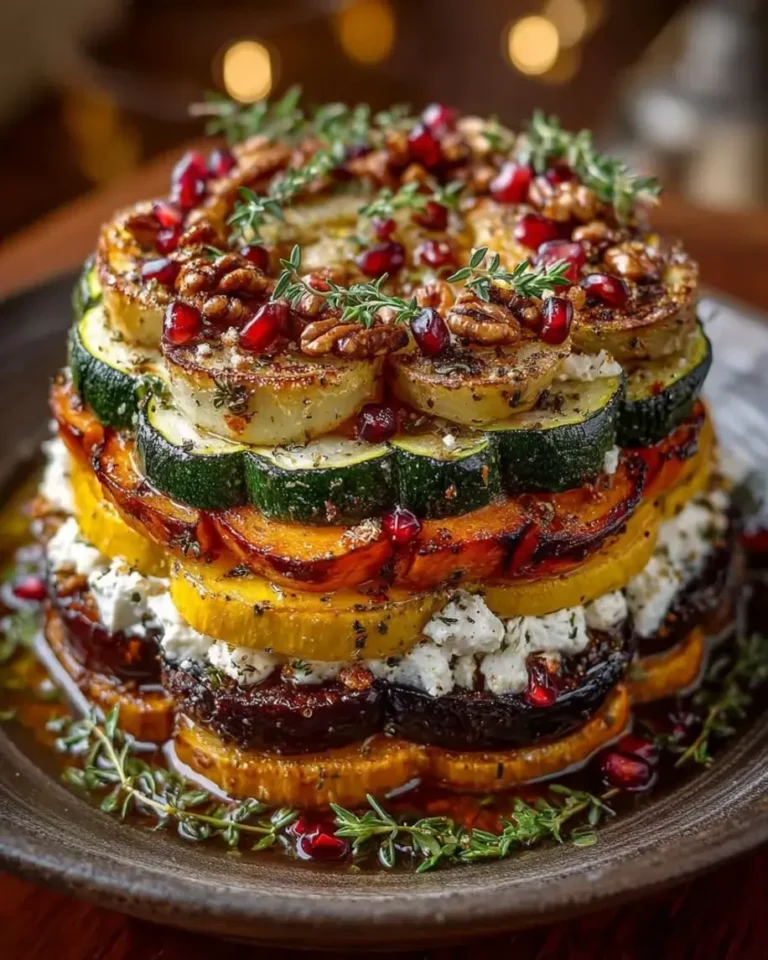
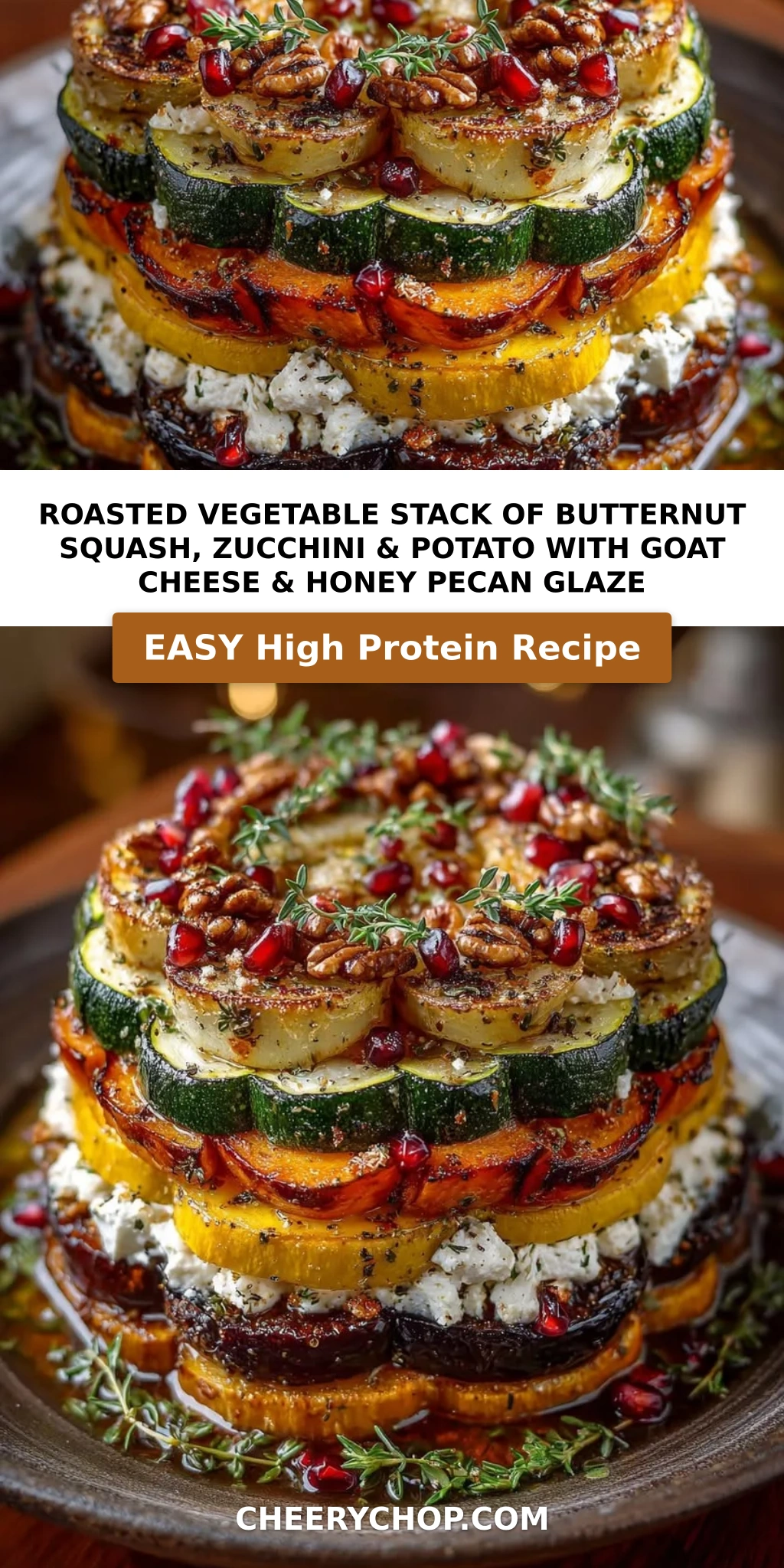
Imagine golden-brown roasted vegetable rounds, each perfectly tender yet holding its shape, interspersed with pockets of soft, tangy goat cheese. As you take your first bite, you’re greeted by the delicate crunch of toasted pecans, followed by a sweet and savory burst from the rich honey glaze. The fresh thyme adds an aromatic lift, tying all these harmonious textures and flavors together. It’s a sophisticated yet approachable dish, echoing the warmth of Moroccan spices and the elegant presentation I learned in Paris, all with a modern New York flair.
What sets this particular roasted vegetable stack recipe apart is my signature goat cheese honey glaze. I’ve found that balancing the richness of the goat cheese with the sweet, nutty crunch of the pecans elevates the entire dish, transforming simple roasted vegetables into something truly special. I’ll share my pro tips for achieving perfectly tender vegetables and a glaze that sticks just right, along with a common mistake to avoid when dealing with different vegetable cooking times.
Why This Roasted Vegetable Stack Recipe Is the Best
The true magic of this dish lies in its exquisite balance of flavors and textures, a direct result of my culinary journey. The hint of nuttiness from the butter in the honey pecan glaze, combined with the sharp tang of the goat cheese, creates a multi-layered taste profile that is both comforting and exciting. It’s a prime example of how simple, high-quality ingredients, when treated with care and a touch of French culinary precision, can create an unforgettable dining experience.
Achieving the perfect texture for each vegetable is crucial in a roasted vegetable stack. Through years of testing, I’ve perfected the roasting process to ensure each slice of butternut squash, zucchini, and potato is tender and caramelized without becoming mushy. This consistency allows the stacks to hold their elegant shape, making them not just delicious but also a feast for the eyes.
Don’t let its sophisticated appearance fool you; this recipe is surprisingly approachable! I’ve broken down each step to be straightforward, making it achievable for home cooks of all skill levels. With my clear instructions and valuable tips, you can confidently create a dish that looks like it came straight from a gourmet restaurant, right in your own kitchen.
Roasted Vegetable Stack Ingredients
Cooking should always start with amazing ingredients. When I’m at the NYC Greenmarket, I love picking out the freshest vegetables for dishes like this. My mother always said, “Good food starts at the source,” and that’s something I carry with me to this day. Choose vibrant, firm vegetables and quality goat cheese – it truly makes all the difference!
Ingredients List
- For the Vegetables:
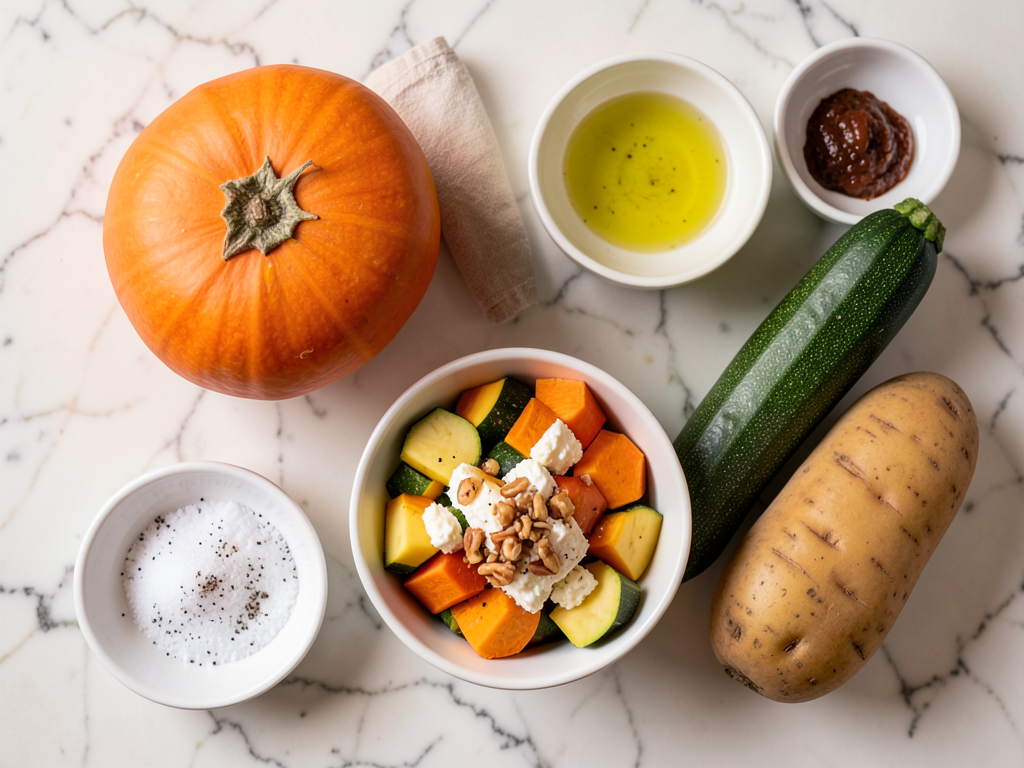
- 1 medium butternut squash, neck only, sliced into 1/2-inch thick rounds
- 2 large zucchini, sliced into 1/2-inch thick rounds
- 3 large russet potatoes, peeled and sliced into 1/2-inch thick rounds
- 3 tbsp olive oil
- Salt and freshly ground black pepper, to taste
- For the Honey Pecan Glaze:
- 1/2 cup pecans, roughly chopped
- 3 tablespoons honey
- 1 tablespoon unsalted butter
- Pinch of salt
- For Assembly:
- 4 oz goat cheese, crumbled
- Fresh thyme leaves, for garnish
Ingredient Spotlight
Butternut Squash: For this recipe, look for a squash with a long, straight neck, as this part yields perfectly uniform rounds. Avoid squash with soft spots or blemishes. Its natural sweetness will deepen during roasting, providing a lovely counterpoint to the savory elements. If you can’t find a good butternut, acorn squash can be used, but its flavor will be less sweet and more earthy.
Zucchini: Choose medium to large, firm zucchini with clear, unblemished skin. Zucchini adds a delicate freshness and a slightly softer texture to the stack. If zucchini isn’t in season, yellow summer squash works beautifully and offers a similar mild flavor and texture. Just be sure not to over-roast it!
Russet Potatoes: These starchy potatoes are key to the stack’s structural integrity and comforting base. Their mild flavor and ability to crispen on the edges while remaining soft inside are perfect. If russets are unavailable, Yukon Golds can be a good substitute, offering a creamier texture but still firm enough to hold their shape.
Goat Cheese: A high-quality, fresh goat cheese (chèvre) is essential for that creamy, tangy layer. Its bright acidity cuts through the richness of the vegetables and glaze. If you’re not a fan of goat cheese, a good quality feta or even a soft cream cheese with a pinch of lemon zest could offer a similar tangy profile, though the flavor will be different.
Pecans: These nuts provide a wonderful crunch and a buttery, rich flavor to the glaze. Source fresh, whole pecans and roughly chop them yourself for the best texture. Walnuts can be a suitable substitute if you prefer, but they have a slightly more bitter note. Always toast them for maximum flavor!
| Original Ingredient | Best Substitution | Flavor / Texture Impact |
|---|---|---|
| Butternut Squash | Acorn Squash | Sweeter, firmer texture; less creamy. |
| Zucchini | Yellow Summer Squash | Similar mild flavor and texture; may cook slightly faster. |
| Russet Potatoes | Yukon Gold Potatoes | Creamier texture but still holds shape well. |
| Goat Cheese | Feta (crumbled) or cream cheese with lemon zest | Feta is saltier and crumbly; cream cheese is milder and smoother. |
| Pecans | Walnuts | Slightly more bitter, earthy flavor; similar crunch. |
How to Make Roasted Vegetable Stack of Butternut Squash, Zucchini & Potato with Goat Cheese & Honey Pecan Glaze — Step-by-Step
Don’t be intimidated by the presentation—making these beautiful stacks is simpler than you think! Just follow along, and you’ll have an impressive vegetarian meal in no time.
Step 1: Prep and Roast Your Vegetables
Preheat your oven to 400°F (200°C) and line two large baking sheets with parchment paper. This ensures easy cleanup and prevents sticking. In a large bowl, combine the 1/2-inch thick slices of butternut squash, zucchini, and peeled russet potatoes. Drizzle generously with 3 tablespoons of olive oil, then season perfectly with salt and freshly ground black pepper. Toss everything gently to ensure each slice is evenly coated, allowing the flavors to meld beautifully as they roast. Arrange the seasoned vegetable slices in a single layer on your prepared baking sheets, ensuring they don’t overlap. Roast for 25-30 minutes, flipping them halfway through, until they are tender when pierced with a fork and possess a lovely, lightly golden-brown caramelization. Remove from the oven and let them cool slightly on the baking sheets.
💡 Sara’s Pro Tip: To ensure uniform cooking and beautiful presentation, slice all vegetables to approximately the same 1/2-inch thickness. A mandoline slicer (with caution!) can be a great tool for this, but a sharp chef’s knife and a steady hand work just as well. Consistent thickness means they’ll all be perfectly tender at the same time.
Step 2: Prepare the Honey Pecan Glaze
While your vegetables are roasting, turn your attention to the irresistible honey pecan glaze. In a small skillet, heat the 1/2 cup of roughly chopped pecans over medium heat. Toast them for 3-4 minutes, stirring frequently, until they become fragrant and lightly golden. This step is crucial for bringing out their rich, nutty flavor. Once toasted, add 3 tablespoons of honey, 1 tablespoon of unsalted butter, and a tiny pinch of salt to the skillet. Continue to cook, stirring constantly, for 1-2 minutes until the mixture is bubbly and well combined. The glaze will thicken slightly as it cools. Remove the skillet from the heat, keeping the glaze warm so it drizzles beautifully.
⚠️ Common Mistake to Avoid: Don’t rush the pecan toasting or walk away! Pecans can go from perfectly toasted to burnt in a matter of seconds. Keep them moving in the pan, and the moment you smell that warm, nutty aroma, they’re ready to add the other glaze ingredients.
Step 3: Assemble the Vegetable Stacks
Now for the fun part – assembling these edible towers! On individual serving plates, begin by placing one slice of the roasted potato as your base. On top of the potato, sprinkle a small amount of crumbled goat cheese. Next, add a slice of roasted zucchini, followed by more crumbled goat cheese. Then, layer a slice of the sweet butternut squash. Continue this pattern of potato, goat cheese, zucchini, goat cheese, and butternut squash, creating 3-4 layers per stack. Aim to finish each stack with a butternut squash round on top for a visually appealing finish. Depending on the size of your vegetables, you should be able to create 4-6 impressive stacks.
💡 Sara’s Pro Tip: For stability, choose the flatter, more uniform slices for the base and top layers. Don’t be shy with the goat cheese – it’s the luscious “glue” that holds your stack together and adds that wonderful tangy creaminess.
Step 4: Glaze, Garnish, and Serve
With your beautiful vegetable stacks assembled, it’s time for the crowning touch. Generously drizzle the warm honey pecan glaze over the very top of each stack, letting it cascade down the sides slightly. The warmth from the glaze will slightly soften the goat cheese, enhancing its creamy texture. Finally, sprinkle fresh thyme leaves over each stack for a pop of herbaceous freshness and vibrant color. Serve immediately, allowing your guests to enjoy this gorgeous, flavorful main course while everything is still perfectly warm.
⚠️ Common Mistake to Avoid: Avoid chilling the glaze too much before drizzling. If it’s too cold, it will be too thick to drizzle nicely. A few seconds in the microwave or gentle reheating on the stovetop can bring it back to the perfect pourable consistency.
| Step | Action | Duration | Key Visual Cue |
|---|---|---|---|
| 1 | Prep & Roast Vegetables | 25-30 min | Tender, lightly golden |
| 2 | Prepare Honey Pecan Glaze | 5-7 min | Pecans fragrant, glaze bubbly |
| 3 | Assemble Stacks | 10-15 min | 3-4 layers per stack, finish with squash |
| 4 | Glaze, Garnish & Serve | 2 min | Glaze cascaded, fresh thyme |
Serving & Presentation
Serving these roasted vegetable stacks is truly where the “chef” in you shines! For elegant plating, I like to place each stack slightly off-center on a beautiful white plate, perhaps with a small drizzle of extra virgin olive oil or a sprinkle of flaky sea salt around the plate for visual interest. The fresh thyme is non-negotiable for that pop of color and aromatic finish. This dish is hearty enough to be a standalone vegetarian main course, but it’s equally fantastic paired with a simple protein. Think of the beautiful rustic meals my family had in Morocco, elevated with Parisian grace.
In New York, I often serve these at brunches or for intimate dinner parties. Pair them with a light salad for a complete meal, or as an impressive side to grilled chicken or pan-seared scallops. The sweet-savory profile makes it incredibly versatile.
| Pairing Type | Suggestions | Why It Works |
|---|---|---|
| Side Dish | Quinoa salad with lemon vinaigrette, mixed greens, wild rice pilaf | Balances the richness; adds freshness and contrasting textures. |
| Sauce / Dip | Balsamic glaze, green goddess dressing (dairy-free option), creamy cashew sauce | Adds another layer of flavor or creamy counterpoint. |
| Beverage | Crisp Sauvignon Blanc, light-bodied Pinot Noir, sparkling apple cider, unsweetened iced tea | Complements the sweet and savory notes without overpowering. |
| Garnish | Toasted pumpkin seeds, fresh mint, pomegranate arils, a sprinkle of smoked paprika | Adds visual appeal, extra texture, and nuanced flavor. |
Make-Ahead, Storage & Reheating
Living in a fast-paced city like New York means I’ve mastered the art of meal prep, and this roasted vegetable stack is perfectly suited for it! Its components can be prepared in stages, which is a lifesaver for busy weeknights or when entertaining.
| Method | Container | Duration | Reheating Tip |
|---|---|---|---|
| Refrigerator | Airtight container | 3-4 days | Reheat gently in oven at 350°F (175°C) until warm, then assemble. |
| Freezer | Freezer-safe bag (vegetables only) | 2 months | Thaw overnight, reheat as above, then assemble. |
| Make-Ahead | Separate containers | Up to 1 day in advance | Roast vegetables, prepare glaze. Store separately. Assemble and glaze just before serving. |
The beauty of this dish is that the roasted vegetables hold up incredibly well. You can roast them a day in advance, let them cool completely, and store them in an airtight container in the refrigerator. The honey pecan glaze can also be prepared ahead of time and stored at room temperature; just gently warm it before drizzling for the best consistency.
When reheating, avoid the microwave if possible, as it can make the vegetables rubbery. A gentle warm-up in a 350°F (175°C) oven or even a toaster oven will maintain their texture and bring back that lovely caramelization. Assemble the stacks with fresh goat cheese and warm glaze just before serving to ensure the best flavor and presentation.
Variations & Easy Swaps
Part of the joy of cooking is experimenting! While the original recipe is a favorite, I encourage you to make it your own. Here are some variations inspired by my culinary background and what I love to find at the farmers’ market:
| Variation | Key Change | Best For | Difficulty Impact |
|---|---|---|---|
| Spicy Moroccan Twist | Add Harissa to glaze, sumac to vegetables | Those who love a kick; exotic flavor pairing. | Easy |
| Dairy-Free/Vegan Delight | Substitute dairy cheese/butter with plant-based alternatives and maple syrup | Vegans, dairy-sensitive guests. | Easy |
| Autumn Harvest Stack | Swap zucchini for beets or parsnips, add sage to glaze | Fall entertaining; deeper, earthier flavors. | Medium (different roasting times) |
Spicy Moroccan Twist
For a taste reminiscent of my mother’s kitchen, infuse the olive oil for roasting with a teaspoon of Harissa paste before coating the vegetables. You can also add a pinch of smoked paprika or a dash of Ras el Hanout. For the glaze, a tiny swirl of Harissa can add a wonderfully complex, spicy-sweet kick that pairs beautifully with the roasted vegetables and creamy goat cheese.
Dairy-Free or Vegan Delight
Making this recipe vegan is simple! Omit the goat cheese entirely or use a high-quality vegan “goat cheese” alternative (many excellent ones are available now). For the honey pecan glaze, simply swap the honey for an equal amount of pure maple syrup and the butter for a plant-based butter alternative. I’ve tested this with oat butter, and it works beautifully, maintaining the richness and flavor profile.
Autumn Harvest Stack
Embrace seasonal abundance by swapping out the zucchini for other fall vegetables. Thinly sliced rounds of roasted beets or parsnips would add a lovely depth of flavor and color. Instead of fresh thyme, consider using fresh sage in the glaze. I often find unique root vegetables at the Union Square Greenmarket in NYC that inspire these kinds of seasonal variations.
How do you slice the vegetables evenly for a roasted vegetable stack?
Achieving evenly sliced vegetables is key to a beautiful and consistently cooked roasted vegetable stack. I strongly recommend using a mandoline slicer for precision, set to a 1/2-inch thickness. If you don’t have one, a very sharp chef’s knife and a steady hand will do. Take your time and make slow, deliberate cuts. For butternut squash, use only the neck for uniform rounds. Consistent thickness ensures all vegetables cook at roughly the same rate, preventing some from being undercooked while others turn to mush.
Can I substitute goat cheese with another cheese in this recipe?
Absolutely! While goat cheese offers a unique tangy flavor and delightful creaminess that I love, you can certainly experiment. Crumbled feta is an excellent alternative if you enjoy a saltier, more robust flavor and crumbly texture. For a milder, more subtle note, a soft cream cheese, perhaps mixed with a pinch of lemon zest, could work. Just remember that the chosen cheese will significantly influence the overall flavor profile of your roasted vegetable stack, so pick one you truly enjoy!
What is the best way to make the honey pecan glaze for this dish?
The best way to create this honey pecan glaze is to toast the pecans first in a dry skillet over medium heat until fragrant – this truly unlocks their nutty potential. Then, add the honey, butter, and a pinch of salt to the skillet. Cook over medium-low heat, stirring continuously for just 1-2 minutes until everything is bubbly and well combined. The key is to not overcook it, as it will thicken slightly as it cools. Keep the glaze warm until you’re ready to drizzle it for the perfect pourable consistency.
How long does it take to roast butternut squash, zucchini, and potato for a stack?
When sliced to a consistent 1/2-inch thickness, the butternut squash, zucchini, and potato will typically roast for approximately 25-30 minutes in a 400°F (200°C) oven. It’s important to flip them halfway through to ensure even caramelization and tenderness. You’re looking for them to be tender when pierced with a fork and lightly golden-brown. Keep in mind that ovens can vary, so always check for doneness by sight and feel rather than strictly by time.
Can I prepare the roasted vegetable stack ahead of time?
Yes, you can absolutely prepare components of the roasted vegetable stack in advance. The roasted vegetables (butternut squash, zucchini, and potato) can be cooked up to a day ahead and stored in an airtight container in the refrigerator. The honey pecan glaze can also be made in advance and kept at room temperature. For the best experience, I recommend assembling the stacks and drizzling the warm glaze just before serving to ensure optimal freshness and presentation. This makes entertaining much less stressful!
What’s the best way to ensure the vegetable stacks hold their shape?
Ensuring your vegetable stacks hold their elegant shape comes down to a few factors. First, consistent slicing (1/2-inch thickness) is crucial. Second, don’t over-roast the vegetables; they should be cooked through but still firm. The goat cheese acts as a wonderful “glue” between the layers, so don’t skimp on it! Also, choose your flatter, more uniform vegetable slices for the base and top layers for better stability. Assemble them gently on the serving plate and don’t move them too much once built.
What can I serve alongside these roasted vegetable stacks?
These roasted vegetable stacks are quite versatile for pairing! As a main course, I love them with a simple green salad dressed with a light vinaigrette to cut through the richness. If you’re serving them as a side, they complement grilled proteins like chicken or salmon beautifully. For a heartier vegetarian meal, a side of quinoa or wild rice pilaf works wonderfully. Don’t forget a crisp white wine like a Sauvignon Blanc or even a sparkling cider to refresh the palate.
Can I freeze leftover roasted vegetable stack components?
While I recommend making and serving fresh if possible, you can freeze the roasted vegetable components. Store the roasted butternut squash, zucchini, and potato slices in a single layer in a freezer-safe bag or container for up to 2 months. When ready to use, thaw them overnight in the refrigerator. Reheat gently in a 350°F (175°C) oven until warmed through before assembling with fresh goat cheese and a freshly made or reheated glaze. Freezing assembled stacks is not recommended as the textures will suffer.
Is it necessary to peel the butternut squash and potatoes?
For this recipe, I do recommend peeling both the butternut squash and the potatoes. While some may leave the skin on for certain preparations, for a beautiful, smooth-textured stack, peeling is best. The skins of these particular vegetables can become tough or unevenly textured during roasting, which would detract from the elegance and consistent bite of the stacked rounds. Plus, the creamy interior of both adds to the luxurious feel of this specific dish.
What kind of olive oil is best for roasting these vegetables?
For roasting vegetables, a good quality extra virgin olive oil is always my choice. It doesn’t need to be your most expensive finishing oil, but one with a pleasant, slightly peppery or fruity flavor will enhance the natural sweetness of the vegetables. The olive oil helps caramelize the surfaces beautifully and prevents sticking to the baking sheet. A neutral oil like avocado oil could also work, but it won’t add the same depth of flavor that olive oil contributes to roasted vegetables.
Share Your Version!
I pour my heart into creating and sharing these recipes, drawing from my Moroccan heritage, Parisian culinary training, and the vibrant food scene here in NYC. This Roasted Vegetable Stack with Goat Cheese and Honey Pecan Glaze is truly a favorite, and I’d love to see how it comes alive in your kitchen!
Please leave a star rating and comment below to let me know how it turned out for you. Your feedback means the world to me! And if you share a photo on Instagram or Pinterest, don’t forget to tag @cheerychop so I can see your beautiful creations. What was your favorite part of making these elegant stacks?
From my NYC kitchen to yours — I hope this recipe brings as much warmth to your table as it does to mine. — Sara 🧡
Love This Recipe? Save It to Pinterest!
If you enjoyed this Roasted Vegetable Stack of Butternut Squash, Zucchini & Potato with Goat Cheese & Honey Pecan Glaze recipe, don’t let it get lost in your browser tabs! 😄 Pin it now so you can find it again anytime — and explore hundreds more tried-and-tested recipes waiting for you on my Pinterest boards.
👉 Follow Sara on Pinterest @chefrecipes2
📌 Pin this recipe · 🔁 Re-pin your favorites · 💬 Tag me when you make it — I love seeing your creations!
Roasted Vegetable Stack of Butternut Squash, Zucchini & Potato with Goat Cheese & Honey Pecan Glaze
A beautiful and flavorful vegetarian main dish featuring stacked rounds of roasted butternut squash, zucchini, and potato, layered with creamy goat cheese and topped with a sweet and crunchy honey pecan glaze.
- Prep Time: 20 minutes
- Cook Time: 30 minutes
- Total Time: 50 minutes
- Yield: 4 1x
- Method: Main Course
- Cuisine: American
Ingredients
- For the Vegetables:
- 1 medium butternut squash, neck only, sliced into 1/2-inch thick rounds
- 2 large zucchini, sliced into 1/2-inch thick rounds
- 3 large russet potatoes, peeled and sliced into 1/2-inch thick rounds
- 3 tbsp olive oil
- Salt and freshly ground black pepper, to taste
- For the Honey Pecan Glaze:
- 1/2 cup pecans, roughly chopped
- 3 tablespoons honey
- 1 tablespoon unsalted butter
- Pinch of salt
- For Assembly:
- 4 oz goat cheese, crumbled
- Fresh thyme leaves, for garnish
Instructions
- Preheat oven to 400°F (200°C). Line two large baking sheets with parchment paper.
- Place the butternut squash, zucchini, and potato slices in a large bowl. Drizzle with olive oil, season generously with salt and pepper, and toss to coat evenly.
- Arrange the vegetable slices in a single layer on the prepared baking sheets. Roast for 25-30 minutes, flipping halfway through, until tender and lightly golden. Remove from oven and let cool slightly.
- While vegetables roast, make the glaze: In a small skillet over medium heat, toast the pecans for 3-4 minutes until fragrant. Add the honey, butter, and a pinch of salt. Cook, stirring constantly, for 1-2 minutes until bubbly and combined. Remove from heat.
- To assemble stacks: On a serving plate, place one slice of roasted potato. Top with a small amount of crumbled goat cheese. Add a slice of zucchini, more goat cheese, then a slice of butternut squash. Repeat to create 3-4 layers per stack, finishing with a butternut squash round. You should have 4-6 stacks total.
- Drizzle the warm honey pecan glaze over the top of each stack. Garnish with fresh thyme leaves and serve immediately.
Notes
You can prepare the roasted vegetables up to a day in advance and store them covered in the refrigerator. Reheat gently in a 350°F oven before assembling. For a vegan version, omit the goat cheese and use maple syrup instead of honey.
Nutrition
- Calories: 420
- Sugar: 18g
- Fat: 21g
- Carbohydrates: 52g
- Protein: 10g
Tried This Recipe? Leave a Comment!
Did you make this recipe? I’d love to hear how it turned out! Please leave a comment and a rating below. Your feedback helps other home cooks and supports cheerychop.com!
For more delicious inspiration, follow me on Pinterest!