
Table of Contents
Roasted Vegetable Terrine with Goat Cheese, Cranberries & Honeyed Walnuts: Elegance in Layers
Growing up in Morocco, cooking wasn’t just about feeding the family; it was an art form, a symphony of layers and flavors. While my mother excelled at tagines, my time in Paris taught me the elegance of French charcuterie, leading me to create this stunning **roasted vegetable terrine**. This particular goat cheese terrine recipe combines those influences, marrying the rustic warmth of roasted garden vegetables with the sophisticated tang of goat cheese, the tart burst of cranberries, and the satisfying crunch of honeyed walnuts. It’s an appetizer that looks incredibly impressive but is surprisingly approachable, making it perfect for holiday gatherings or any meal where you want to add a touch of gourmet flair.
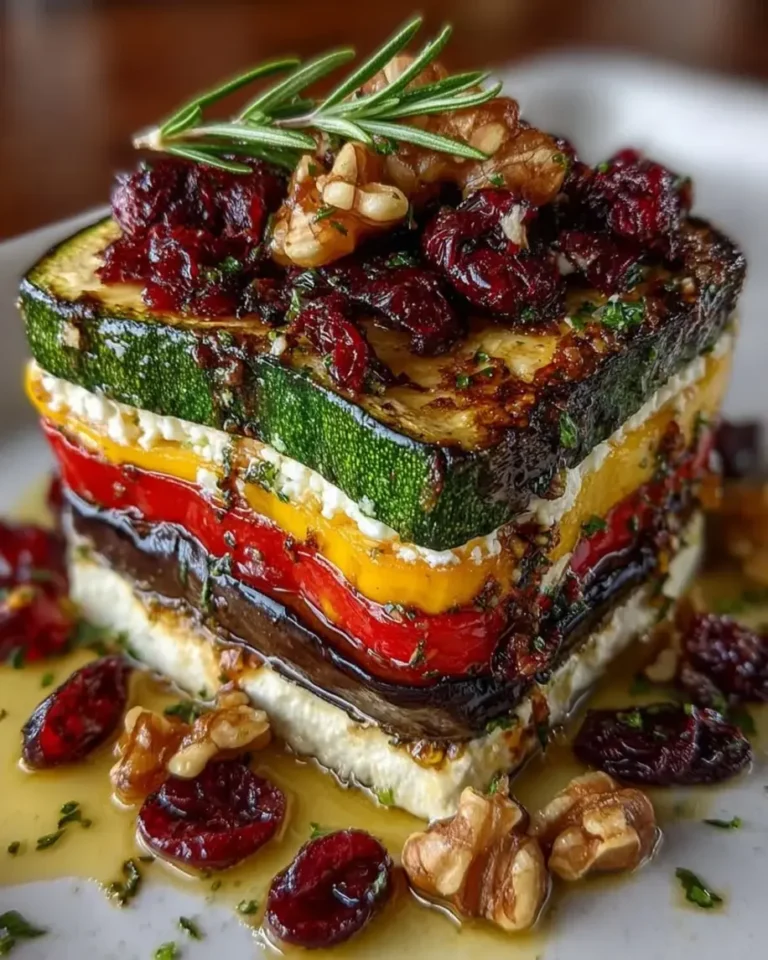
Imagine slicing into this terrine: distinct layers of perfectly roasted zucchini, eggplant, and red bell peppers, each holding its vibrant color. Then, the creamy embrace of a goat cheese and cream cheese blend, punctuated by jewel-toned cranberries that burst with tartness. Just when you think it can’t get any better, you hit the pockets of sweet, crunchy honeyed walnuts, adding a textural contrast that makes every bite a delightful surprise. The aroma of roasted vegetables mingling with the subtle sweetness of honey and the earthy undertones of goat cheese fills the air – it’s a feast for all the senses, a true celebration of fresh, seasonal produce.
My unique take on this classic dish comes from drawing inspiration from both my roots and my culinary training. While traditional terrines often feature meats, I wanted to craft a vegetarian centerpiece that didn’t compromise on flavor or presentation. I’ll share my chef’s secret to perfectly roasted vegetables that hold their shape, a brilliant technique for vibrant color, and how to avoid the common mistake of a watery terrine. With a few simple tricks, you’ll master this elegant showstopper, perfect for any special occasion that calls for a truly unforgettable appetizer or side dish.
Why This Roasted Vegetable Terrine Recipe Is the Best
As a professional chef, I’ve seen countless iterations of vegetable terrines, but this one truly stands out. The secret lies in the careful balance of flavors: the earthiness of eggplant and zucchini, smoky sweetness from the bell peppers, a creamy tang from the goat cheese, and the unexpected brightness of cranberries and the rich crunch of honeyed walnuts. It’s a complete flavor profile in every slice, reminiscent of the complex interplay of spices I grew up with in Moroccan cuisine, brought to life with a refined French application.
Texture is paramount in a terrine, and I’ve refined this recipe to ensure every layer retains its integrity without being rubbery or mushy. The vegetables are roasted just enough to be tender yet firm, not overcooked, preventing that common soggy texture. The goat cheese mixture is whipped with a touch of heavy cream, giving it a light, airy consistency that perfectly cradles the vegetables and sets beautifully when chilled. This textural harmony is what elevates it from a simple layered dish to a true culinary experience.
Don’t let its elegant appearance fool you; this roasted vegetable terrine is designed to be foolproof, even for the home cook. With my step-by-step guidance, anyone can achieve these Instagram-worthy layers. Plus, it’s an ideal make-ahead dish, meaning most of the work can be done a day in advance. This is a game-changer when entertaining, allowing you to enjoy your guests (or the NYC skyline, in my case!) instead of being stuck in the kitchen right before dinner. It’s a sophisticated solution for stress-free entertaining!
Roasted Vegetable Terrine Ingredients
For me, the best dishes start with the best ingredients. When I’m strolling through the Union Square Greenmarket here in NYC, I always look for the freshest, most vibrant produce. This terrine sings when made with seasonal vegetables, and the quality of your goat cheese really shines through. Don’t be afraid to invest in good quality cheese for that distinct creamy tang!
Ingredients List
- Roasted Vegetables:
- 2 large red bell peppers
- 2 medium zucchini, sliced lengthwise into 1/4-inch planks
- 1 large eggplant, sliced lengthwise into 1/4-inch planks
- 2 tbsp olive oil
- Goat Cheese Mixture:
- 8 oz goat cheese, softened
- 4 oz cream cheese, softened
- 1/4 cup heavy cream
- 1 clove garlic, minced
- 1/2 tsp salt
- 1/4 tsp black pepper
- Cranberry Layer:
- 1 cup dried cranberries
- 1/4 cup orange juice
- Honeyed Walnuts:
- 1 cup walnuts, chopped
- 2 tbsp honey
- 1 tbsp butter
- Pinch of salt
Ingredient Spotlight
Red Bell Peppers: These provide a wonderful sweetness and vibrant color that pops against the other layers. When selecting, look for plump, firm peppers with smooth, unblemished skin in your US grocery store. Roasting them until charred and then steaming them allows the skin to peel off easily, revealing their tender, smoky flesh.
Eggplant: The eggplant’s mild, earthy flavor and absorbent texture make it a perfect canvas. Choose firm eggplants that feel heavy for their size, with shiny, taut skin. Slicing them uniformly and roasting until lightly browned is key to ensuring they contribute to the structure without being watery.
Goat Cheese: This is the star of the creamy layers, offering a distinct tangy, earthy flavor that beautifully complements the roasted vegetables and sweet elements. Look for fresh, soft goat cheese (chèvre) in the dairy aisle. If you can’t find goat cheese, a good quality cream cheese mixed with a squeeze of fresh lemon juice could mimic some of the tang, but the flavor profile will be less complex.
Dried Cranberries: These add a burst of tartness and a chewy texture, essential for balancing the richness of the cheese and the sweetness of the walnuts. You can find them in the baking aisle. If dried cranberries aren’t available, chopped dried apricots or cherries could provide similar fruity notes, though they will alter the overall tartness.
Walnuts: The honeyed walnuts are crucial for adding a sweet, buttery crunch and nutty depth. They break up the smooth textures and introduce a delightful surprise. Buy whole or pre-chopped walnuts, ensuring they smell fresh and aren’t rancid — a common issue with older nuts. Pecans or almonds could work as a substitute, but the flavor profile will shift.
| Original Ingredient | Best Substitution | Flavor / Texture Impact |
|---|---|---|
| Red Bell Peppers | Yellow or Orange Bell Peppers | Slightly less intense color, but similar sweet flavor profile. Can also use roasted piquillo peppers for convenience. |
| Eggplant | Portobello Mushrooms (sliced) | Adds a deeper umami flavor and meaty texture, though mushrooms will release more moisture and may need longer roasting. |
| Goat Cheese | Cream Cheese + Lemon Zest/Juice | Less tangy and complex than goat cheese, but still creamy. Will need extra seasoning for depth. |
| Dried Cranberries | Chopped Dried Apricots or Cherries | Will be sweeter and less tart. Opt for unsweetened if possible to maintain balance. |
| Walnuts | Pecans or Almonds | Changes the nutty flavor profile slightly. Pecans have a similar buttery richness, almonds are firmer. |
How to Make Roasted Vegetable Terrine with Goat Cheese — Step-by-Step
Making this terrine is like building a delicious, edible masterpiece. Take your time with each step, and you’ll be rewarded with a truly impressive appetizer.
Step 1: Prepare Your Vegetables
Preheat your oven to 400°F (200°C). Thinly slice your zucchini and eggplant lengthwise into 1/4-inch planks – this uniform thickness is crucial for even roasting and elegant layering. Toss them gently with 2 tablespoons of olive oil, ensuring each slice is lightly coated. Spread them out in a single layer on a large baking sheet; do not overcrowd the pan, or they will steam instead of roast. Use two sheets if necessary.
💡 Sara’s Pro Tip: For perfect eggplant and zucchini, pat them dry before oiling. Excess moisture can lead to a soggy terrine. Drying them also helps them achieve that beautiful, lightly browned caramelization.
Step 2: Roast Those Veggies
Roast the zucchini and eggplant for 15-20 minutes, flipping them halfway through, until they are tender and lightly browned. Meanwhile, roast the red bell peppers. You can do this directly over a gas flame until charred, or under a broiler, turning frequently. Once charred, place them immediately in a bowl, cover tightly with plastic wrap, and let them steam for 10 minutes. This makes peeling the skin incredibly easy. Once steamed, peel off the skin, remove the seeds, and slice the peppers into wide strips, similar in width to your zucchini and eggplant.
⚠️ Common Mistake to Avoid: Don’t over-roast your vegetables! They should be tender but still have a slight firmness. Mushy vegetables will make your terrine lose its defined layers and become less stable when sliced.
Step 3: Rehydrate Cranberries
In a small bowl, combine the dried cranberries with 1/4 cup of orange juice. Microwave for about 30 seconds to gently warm the juice, then let them sit for 10-15 minutes. This step plumps up the cranberries, making them juicier and more flavorful, and ensures they don’t dry out the terrine.
Step 4: Caramelize Walnuts
In a small skillet over medium heat, melt 1 tablespoon of butter with 2 tablespoons of honey. Add the chopped walnuts and a pinch of salt. Stir constantly for 2-3 minutes until the walnuts are beautifully toasted and coated in the honey-butter mixture. Watch them carefully, as nuts can burn quickly! Remove from heat and spread onto a piece of parchment paper to cool completely. They will become wonderfully crunchy as they cool.
Step 5: Craft the Creamy Blend
In a medium bowl, combine the softened goat cheese, softened cream cheese, heavy cream, minced garlic, 1/2 teaspoon of salt, and 1/4 teaspoon of black pepper. Using a spoon or an electric mixer on low speed, mix until the mixture is completely smooth and well combined. The heavy cream helps create a lighter, more spreadable texture that won’t become too dense when chilled.
💡 Sara’s Pro Tip: Ensure your goat cheese and cream cheese are at room temperature. This is essential for achieving a perfectly smooth, lump-free mixture, just like in classic French pastry work.
Step 6: Line Your Loaf Pan
Line a 9×5-inch loaf pan with plastic wrap, making sure to leave a generous overhang on all sides. This overhang will be crucial for covering the terrine and for easy removal later. Press the plastic wrap firmly into the corners and sides of the pan to create a smooth surface.
Step 7: Layer Like a Pro
Now for the artistic part! Start by laying half of the roasted eggplant slices neatly on the bottom of the pan. Spread half of the creamy goat cheese mixture evenly over the eggplant. Next, arrange half of the roasted red pepper strips over the cheese. Evenly spread the rehydrated cranberries over the peppers. Add a layer of half the zucchini slices, followed by scattering half of the honeyed walnuts. Repeat these layers with the remaining ingredients: eggplant, goat cheese, red peppers, cranberries, zucchini, and finally, walnuts. Try to keep the layers as tight and uniform as possible.
Step 8: Chill and Set
Once all layers are in place, fold the plastic wrap overhang neatly over the top of the terrine. Press down gently but firmly to compact the layers. Place a small plate or another loaf pan on top to weigh it down slightly – this helps the layers meld and creates a more solid terrine. Refrigerate for at least 4 hours, or ideally, overnight. Chilling is absolutely essential for the terrine to set properly and allow for clean slicing.
Step 9: Serve with Flair
When ready to serve, simply uncover the terrine and invert it onto a beautiful serving platter. Carefully remove the plastic wrap. Using a sharp, thin knife, slice the terrine into thick, elegant portions, about 1/2 to 3/4 inch thick. Enjoy the oohs and aahs from your guests!
⚠️ Common Mistake to Avoid: Don’t rush the chilling process! A terrine that hasn’t fully set will fall apart when you try to slice it, ruining its visual appeal. Patience here is key to success.
| Step | Action | Duration | Key Visual Cue |
|---|---|---|---|
| 1 | Prepare Vegetables | 10 mins | Uniform 1/4-inch planks, lightly oiled |
| 2 | Roast Vegetables | 15-20 mins | Tender, lightly browned; peppers charred & peeled |
| 3 | Rehydrate Cranberries | 10-15 mins | Cranberries plump and soft |
| 4 | Caramelize Walnuts | 2-3 mins | Toasted, honey-glazed; cool and crunchy |
| 5 | Craft Creamy Blend | 5 mins | Smooth, lump-free cheese mixture |
| 6 | Line Loaf Pan | 2 mins | Plastic wrap covering all sides with overhang |
| 7 | Layer Terrine | 10-15 mins | Even, distinct layers of vegetables, cheese, fruit, nuts |
| 8 | Chill and Set | 4 hours – Overnight | Firm, stable terrine (won’t jiggle) |
| 9 | Serve | 5 mins | Cleanly sliced, beautiful layers revealed |
Serving & Presentation
A beautiful dish deserves a beautiful presentation! When I worked in fine dining in Paris, the plating was as important as the recipe itself. With this vegetarian terrine, the vibrant layers are its own garnish, but a few thoughtful touches can elevate it further. Once inverted onto your serving platter, remove the plastic wrap and use a very sharp, thin knife – warmed slightly under hot water and wiped dry for each slice – to get those clean, precise cuts. Arrange the slices artfully on a platter, perhaps with a slight overlap, to showcase the colorful cross-section.
For me, the best accompaniments enhance the flavors without overpowering them. A simple sprinkle of fresh parsley or chives adds a touch of green and a fresh aroma. You could also offer a side of crusty baguette slices or artisan crackers, allowing guests to savor individual components or build their perfect bite. I love serving it with a light, peppery arugula salad dressed simply with olive oil and lemon, inspired by the fresh salads I’d pick up from my NYC farmers market visits.
Think of this terrine as more than just an appetizer; it can be a vibrant side dish for a light meal, especially alongside grilled fish or chicken during warmer months. The combination of creamy, tangy, sweet, and savory elements makes it incredibly versatile. It’s a dish that genuinely delights both the eyes and the palate, bringing a touch of my French culinary training and Moroccan heart to your table.
| Pairing Type | Suggestions | Why It Works |
|---|---|---|
| Side Dish | Arugula Salad with Lemon Vinaigrette, Thinly sliced Prosciutto, Grilled Chicken Breast | The peppery arugula and bright vinaigrette cut through the richness. Prosciutto adds a savory, salty counterpoint. Grilled chicken makes it a light meal. |
| Sauce / Dip | Balsamic Glaze, Fig Jam, Marinated Olives | Balsamic glaze provides a sweet-tart acidity. Fig jam complements the cheese and fruit. Olives add a briny, salty punch. |
| Beverage | Crisp Sauvignon Blanc, Dry Rosé, Sparkling Cider | Sauvignon Blanc’s acidity and herbal notes complement the vegetables. Rosé offers fruity elegance. Sparkling cider is a refreshing non-alcoholic option. |
| Garnish | Fresh Parsley or Chives, Microgreens, Toasted Pine Nuts | Fresh herbs add color and brightness. Microgreens offer a delicate crunch. Pine nuts reiterate the nutty texture. |
Make-Ahead, Storage & Reheating
One of the greatest beauties of this roasted vegetable terrine is how wonderfully it adapts to make-ahead planning. In my busy NYC life, I rely on smart prep, especially when entertaining. This terrine is actually better when made a day in advance, as it gives all those incredible flavors time to meld and the layers to truly set, ensuring that perfect slice every time. It’s a lifesaver for holiday dinners or special occasions when you want to minimize last-minute stress.
| Method | Container | Duration | Reheating Tip |
|---|---|---|---|
| Refrigerator | Airtight container, wrapped tightly in plastic wrap once removed from loaf pan | Up to 3-4 days | Serve chilled straight from the fridge; no reheating necessary as it’s meant to be cold. |
| Freezer | Not Recommended | N/A | Freezing is not advised for this terrine, as the delicate cheese and roasted vegetables will likely become watery and mushy upon thawing, compromising the texture and integrity of the layers. |
| Make-Ahead | Loaf pan, covered in plastic wrap with a gentle weight on top. | Up to 2 days in advance | Assemble completely, chill overnight, then simply invert and slice just before serving. |
While this terrine is best enjoyed chilled, directly from the refrigerator, I’ve had many questions about freezing. Unfortunately, due to the high water content of the vegetables and the delicate nature of the goat cheese mixture, freezing and thawing will significantly degrade the texture. The vegetables will likely become watery and mushy, and the cheese mixture might separate. It’s truly a dish meant to be savored fresh and cold.
For optimal make-ahead success, I always recommend assembling the terrine the evening before your event. This gives it ample time to chill and firm up. Then, the day of, all you need to do is unmold, slice, and arrange – a chef’s secret to staying calm and enjoying the celebration! It’s the perfect elegant, make-ahead holiday vegetable appetizer.
Variations & Easy Swaps
While this roasted vegetable terrine recipe is fantastic as is, I always encourage home cooks to experiment! Just like in my mother’s kitchen in Morocco, where no recipe was truly fixed, there’s always room to adapt to what’s in season or what catches your fancy.
| Variation | Key Change | Best For | Difficulty Impact |
|---|---|---|---|
| Mediterranean Blend | Adding sun-dried tomatoes, basil, and a touch of feta cheese. | Those who love classic Mediterranean flavors and a saltier, herbaceous kick. | Slightly more complex due to additional chopping and arranging. |
| Dairy-Free or Vegan Version | Swapping cheeses for cashew cream or vegan cream cheese, omitting butter. | Guests with dairy restrictions or those following a plant-based diet. | Moderate, requires sourcing specific vegan ingredients and testing their consistency. |
| Spice Market Twist | Infusing the cheese with za’atar or smoked paprika, using pistachios instead of walnuts. | Adventurous palates who enjoy Middle Eastern-inspired flavors and a unique nutty crunch. | Easy, involves simple additions of spices and nut swaps. |
Mediterranean Blend
For a Mediterranean twist, consider adding a layer of finely chopped sun-dried tomatoes (oil-packed, drained) and fresh basil leaves along with the red peppers. You could also mix some crumbled feta cheese into the goat cheese mixture for an extra salty, briny kick. This variation adds a bright, herbaceous, and savory depth that’s utterly delicious, reminiscent of summer evenings in the south of France.
Dairy-Free or Vegan Version
Making this terrine vegan is surprisingly simple! Substitute the goat cheese and cream cheese with a high-quality cashew cream (blended soaked cashews with lemon juice, nutritional yeast, and salt) or your favorite store-bought vegan cream cheese. For the honeyed walnuts, simply use maple syrup instead of honey and a plant-based butter alternative, or omit the butter entirely and toast the walnuts with maple syrup. I’ve tested this with great success at a catering event in Brooklyn, and it was a huge hit!
Spice Market Twist
Embrace some of the bold flavors from my heritage by infusing the cheese mixture with a teaspoon of za’atar or smoked paprika for an earthy, aromatic note. Instead of walnuts, consider honey-glazed pistachios or even almonds for a different texture and flavor. A light sprinkle of finely chopped preserved lemon peel (if you can find it at a specialty food store or make your own, like my mother used to!) folded into the cheese blend would add a fantastic Moroccan-inspired brightness.
Can I make a roasted vegetable terrine with goat cheese ahead of time for a dinner party?
Absolutely, and I highly recommend it! This roasted vegetable terrine with goat cheese is one of my go-to recipes for entertaining, particularly because it tastes even better when made in advance. The flavors have ample time to meld and deepen, and the layers firm up beautifully, ensuring a clean, elegant slice. You can assemble the entire terrine a full day (up to 24 hours) before your event. Just keep it tightly covered with plastic wrap and weighted gently in the refrigerator. This allows you to focus on your guests and other dishes on the day of the party, a trick I learned quickly while cooking in bustling NYC kitchens.
What vegetables work best for a roasted vegetable terrine to keep it from becoming soggy?
To prevent a soggy terrine, selecting the right vegetables and preparing them correctly is key. I’ve found that eggplant, zucchini, and bell peppers are excellent choices because they roast beautifully, becoming tender without releasing excessive moisture. The crucial step is to slice them uniformly thin (about 1/4-inch) and roast them until they are lightly browned and tender, but not mushy. This process extracts some of their natural water content. Avoid water-rich vegetables like tomatoes, or if used, deseed them thoroughly and roast them separately to reduce moisture. Patting vegetables dry before roasting is also a little chef’s secret I picked up in Paris for superb texture.
How do you layer a roasted vegetable terrine so it holds together when sliced?
Layering a terrine so it holds together is a crucial technique. First, always line your loaf pan with plastic wrap, leaving plenty of overhang; this provides both structure and an easy way to unmold. When layering, ensure each vegetable slice is placed firmly and evenly. After each full layer of vegetables and cheese, gently press down to compact the ingredients and remove any air pockets. Once all layers are complete, fold the plastic wrap overhang over the top and place a smaller, weighted object (like another loaf pan or a few cans) on top. This gentle pressure during chilling significantly helps the layers adhere and fuse, creating a solid, sliceable terrine. Think of it as a culinary compression for perfect structure.
What can I substitute for goat cheese in a roasted vegetable terrine with cranberries and walnuts?
If goat cheese isn’t your preference or isn’t available, you have a few excellent substitution options to maintain a delicious vegetarian terrine with cranberries and walnuts. A good quality cream cheese is your closest bet for texture; to mimic the tang of goat cheese, fold in a teaspoon of fresh lemon zest and a squeeze of lemon juice, and perhaps a touch more salt and pepper to balance the flavor. For a dairy-free or vegan alternative, a homemade cashew cream (made from blending soaked cashews with water, nutritional yeast, and lemon juice) works beautifully, offering a similar creamy richness without the dairy. Just ensure whatever substitution you use is soft and easily spreadable when at room temperature.
How long does a roasted vegetable terrine need to chill to set properly?
For a beautifully firm and sliceable roasted vegetable terrine, chilling time is non-negotiable and incredibly important. I always recommend a minimum of 4 hours in the refrigerator, but for the very best results and the most stable layers, overnight chilling (12-24 hours) is ideal. The longer it chills, the more the goat cheese mixture firms up and the flavors meld together, allowing you to achieve those clean, impressive slices that make the terrine such a showstopper. Rushing this step will result in a soft, potentially collapsing terrine when you try to unmold and cut it, so patience truly pays off here.
Share Your Version!
I poured my heart into perfecting this roasted vegetable terrine, drawing from my Moroccan heritage, French training, and vibrant NYC culinary experiences. I truly hope it brings joy and an elegant touch to your table!
Did you make this recipe? I’d love to hear about it! Please leave a star rating and a comment below to let me know how it turned out for you. Your feedback inspires me to keep creating and sharing delicious recipes. If you snapped a photo, share it on Instagram or Pinterest and tag @cheerychop. I always love seeing your culinary creations! What was your favorite layer in this terrine?
From my NYC kitchen to yours — I hope this recipe brings as much warmth to your table as it does to mine. — Sara 🧡
Love This Recipe? Save It to Pinterest!
If you enjoyed this Roasted Vegetable Terrine with Goat Cheese, Cranberries & Honeyed Walnuts recipe, don’t let it get lost in your browser tabs! 😄 Pin it now so you can find it again anytime — and explore hundreds more tried-and-tested recipes waiting for you on my Pinterest boards.
👉 Follow Sara on Pinterest @chefrecipes2
📌 Pin this recipe · 🔁 Re-pin your favorites · 💬 Tag me when you make it — I love seeing your creations!
Roasted Vegetable Terrine with Goat Cheese, Cranberries & Honeyed Walnuts
A beautiful layered terrine featuring roasted vegetables, tangy goat cheese, tart cranberries, and sweet honeyed walnuts.
- Prep Time: 30 minutes
- Cook Time: 25 minutes
- Total Time: 5 hours (includes chilling)
- Yield: 8 1x
- Method: Appetizer
- Cuisine: American
Ingredients
- Roasted Vegetables:
- 2 large red bell peppers, roasted, peeled, and sliced into wide strips
- 2 medium zucchini, sliced lengthwise into 1/4-inch planks
- 1 large eggplant, sliced lengthwise into 1/4-inch planks
- 2 tbsp olive oil
- Goat Cheese Mixture:
- 8 oz goat cheese, softened
- 4 oz cream cheese, softened
- 1/4 cup heavy cream
- 1 clove garlic, minced
- 1/2 tsp salt
- 1/4 tsp black pepper
- Cranberry Layer:
- 1 cup dried cranberries
- 1/4 cup orange juice
- Honeyed Walnuts:
- 1 cup walnuts, chopped
- 2 tbsp honey
- 1 tbsp butter
- Pinch of salt
Instructions
- Preheat oven to 400°F (200°C).
- Toss the zucchini and eggplant slices with olive oil and spread on a baking sheet. Roast for 15-20 minutes until tender and lightly browned, flipping halfway.
- Roast the red bell peppers directly over a gas flame or under a broiler until skins are charred. Place in a bowl, cover with plastic wrap, and let steam for 10 minutes. Peel, remove seeds, and slice into wide strips.
- In a small bowl, combine dried cranberries and orange juice. Microwave for 30 seconds and let sit to rehydrate.
- In a small skillet over medium heat, melt butter and honey. Add walnuts and salt, stirring constantly for 2-3 minutes until toasted. Remove from heat and let cool.
- In a medium bowl, mix goat cheese, cream cheese, heavy cream, garlic, salt, and pepper until smooth.
- Line a 9×5-inch loaf pan with plastic wrap, leaving overhang on all sides.
- Layer half of the roasted eggplant slices on the bottom of the pan.
- Spread half of the goat cheese mixture over the eggplant.
- Arrange half of the roasted red pepper strips over the cheese.
- Spread the rehydrated cranberries over the peppers.
- Add a layer of half the zucchini slices.
- Scatter half of the honeyed walnuts over the zucchini.
- Repeat layers with remaining eggplant, goat cheese mixture, red peppers, cranberries, zucchini, and walnuts.
- Fold the plastic wrap over the top, press gently to compact, and refrigerate for at least 4 hours or overnight.
- To serve, invert the terrine onto a serving platter, remove plastic wrap, slice, and enjoy.
Notes
The terrine can be made a day ahead and refrigerated. For a vegetarian version, ensure all ingredients are plant-based if substituting goat cheese.
Nutrition
- Calories: 320
- Sugar: 16 g
- Fat: 22 g
- Carbohydrates: 24 g
- Protein: 10 g

Tried This Recipe? Leave a Comment!
Did you make this recipe? I’d love to hear how it turned out! Please leave a comment and a rating below. Your feedback helps other home cooks and supports cheerychop.com!
For more delicious inspiration, follow me on Pinterest!