Table of Contents
Roasted Veggie & Chickpea Bowls with Maple Dijon Tahini Dressing – Sweet, Tangy & Wholesome
Growing up in my mother’s kitchen in Morocco, I learned early that the best meals are built on contrasts — warm and cool, sweet and tangy, crisp and tender. This roasted veggie and chickpea bowl with my signature maple dijon tahini dressing is a love letter to that lesson. It brings together caramelized sweet potatoes, blistered bell peppers, and crunchy chickpeas, all draped in a dressing that’s equal parts maple sweetness, Dijon sharpness, and tahini creaminess. Every forkful takes me right back to those sun-drenched afternoons in Marrakech, now reimagined through my French culinary training and the vibrant produce I find at the Union Square Greenmarket here in New York City.
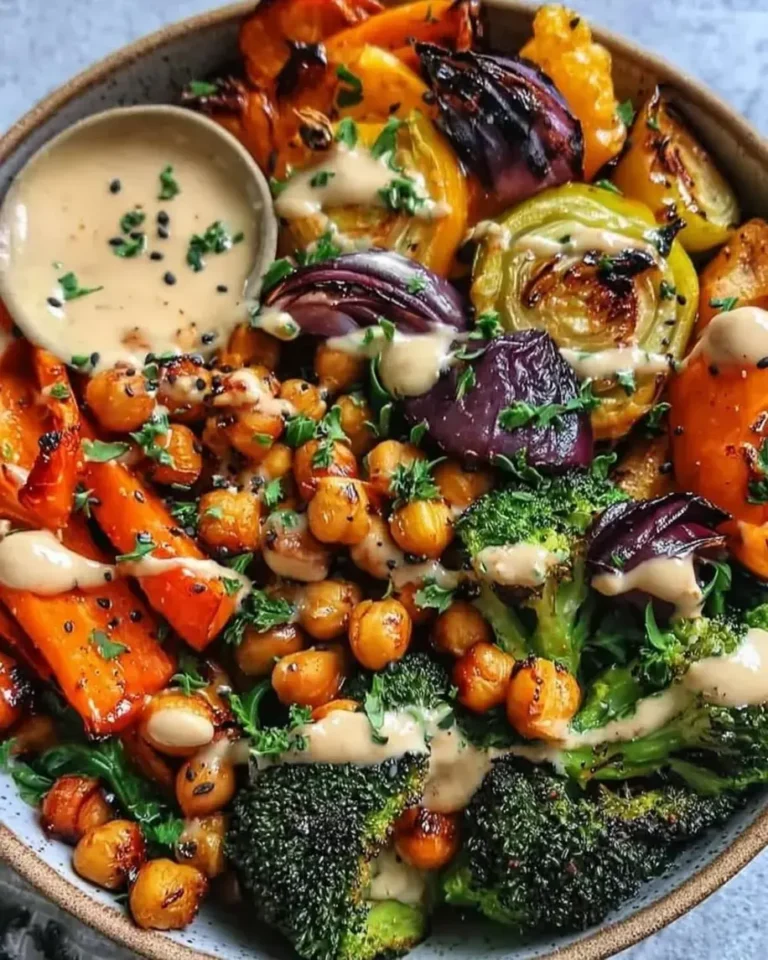
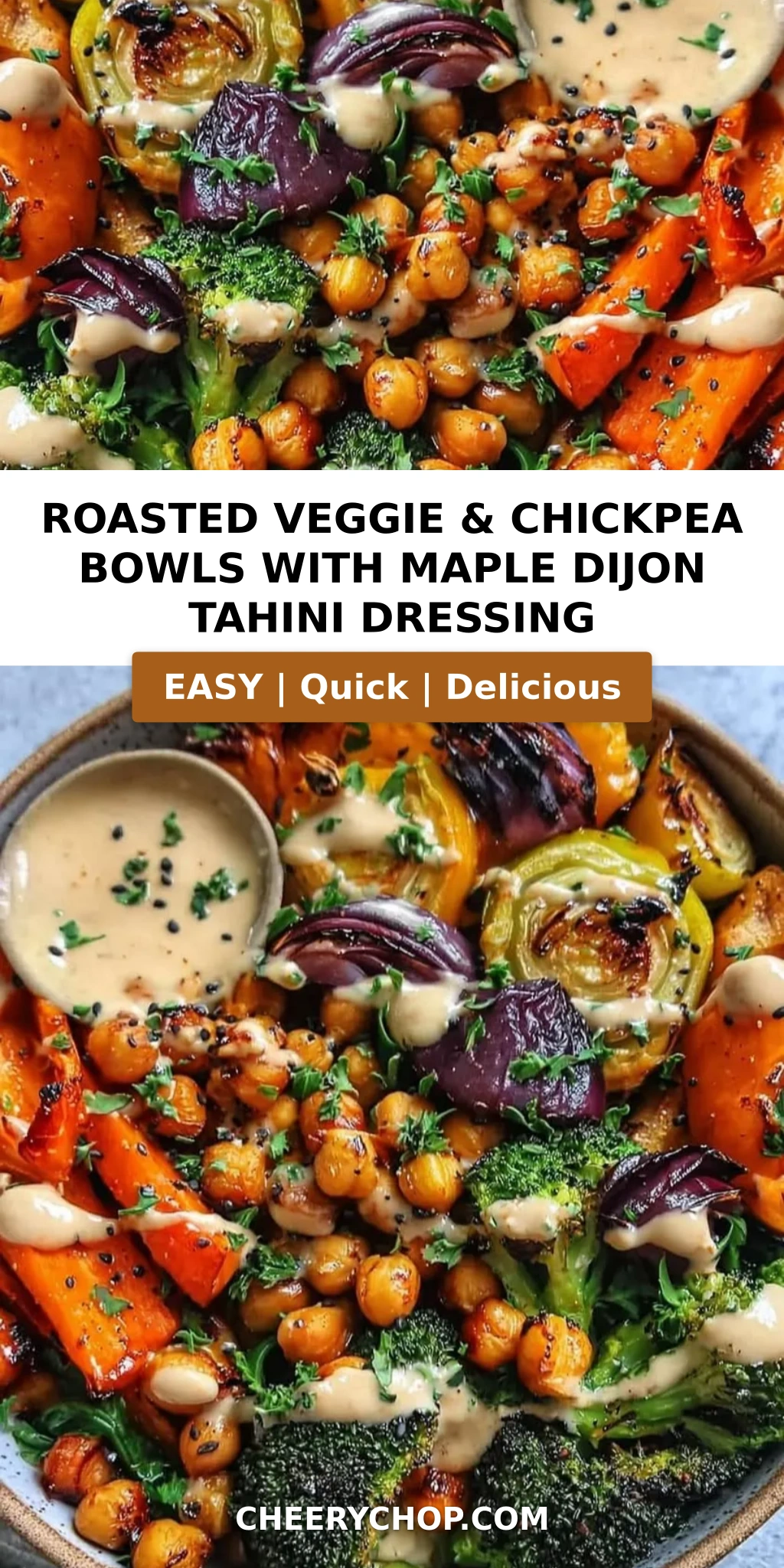
Let me paint you a picture: the sweet potato cubes turn golden at the edges, their natural sugars concentrating into almost-burnt caramel pockets. The chickpeas pop and crisp in the oven’s dry heat, developing a nutty crunch that contrasts beautifully with the tender zucchini. And then there’s the maple dijon tahini dressing — thick as heavy cream, pale ivory in color, with flecks of mustard seed and a finish so balanced it makes your taste buds sit up and pay attention. A whisper of lemon keeps everything bright. This isn’t just a healthy vegan bowl; it’s a bowl that demands to be eaten, slowly, with gratitude.
I’ve taught this chickpea bowl recipe in cooking classes from the Lower East Side to Brooklyn, and what always surprises people is how a handful of pantry ingredients — tahini, maple syrup, Dijon mustard, lemon — can transform humble roasted vegetables into something that feels special enough for company. After years of testing and tweaking in my tiny NYC kitchen, I’ve landed on a version that delivers crispy chickpeas every single time (no sogginess, I promise) and a dressing that stores beautifully for meal prep. Stick with me through this post and I’ll share the one trick that guarantees perfectly roasted vegetables, plus a common mistake even experienced home cooks make with tahini dressings.
Why This Roasted Veggie & Chickpea Bowl Recipe Is the Best
The Flavor Secret — Most roasted veggie bowls rely on a single flavor note. Not this one. My Moroccan roots taught me to layer sweet, savory, tangy, and bitter on one plate. The maple dijon tahini dressing is the star here: the maple syrup doesn’t just add sweetness — it coaxes out the natural sugars in the tahini, while Dijon mustard cuts through the richness with a vinegar-laced bite. A touch of lemon lifts everything. This is a dressing that would make my Parisian chef-instructors proud and my mother smile.
Perfected Texture — Through years of testing, I’ve cracked the code on getting both tender vegetables and crispy chickpeas from the same baking sheet. The secret? Toss the chickpeas separately with a bit of oil and salt, then add them to the pan halfway through roasting. This prevents them from steaming alongside the moisture-rich vegetables. It’s a tiny timing shift that makes all the difference — one I picked up from a pastry technique in Paris where we stagger ingredient additions to control moisture release.
Foolproof & Fast — This healthy vegan bowl comes together in 45 minutes flat, with only 15 minutes of active prep. No complicated chopping, no obscure equipment. You need one baking sheet, one bowl for the dressing, and a handful of ingredients you can find at any grocery store from the Bronx to Boulder. I’ve tested this recipe with complete beginners in my weekend workshops, and they nail it every single time. The tahini dressing recipe alone has become a weeknight staple in dozens of households — once you taste it, you’ll understand why.
Maple Dijon Tahini Dressing Ingredients
I pick up my sweet potatoes from the farmers market on Saturday mornings — the ones with the deep orange flesh that almost glow on the table. The tahini I source from a small batch producer in Brooklyn (though any well-stirred brand works beautifully). Every ingredient here tells a story: the maple syrup reminds me of a trip I took to Vermont during culinary school, the Dijon mustard takes me back to a tiny shop on the Rue du Bac in Paris. Here’s exactly what you’ll need to build this roasted veggie bowl.
Ingredients List
- 1 sweet potato, peeled and diced (about 2 cups)
- 1 red bell pepper, sliced into strips
- 1 zucchini, sliced into half-moons
- 1 can (15 oz) chickpeas, drained and rinsed
- 2 tablespoons olive oil
- Salt and freshly ground black pepper, to taste
- 4 cups cooked quinoa or rice (your choice)
- For the Maple Dijon Tahini Dressing:
- ¼ cup tahini (well stirred)
- 2 tablespoons pure maple syrup
- 1 tablespoon Dijon mustard
- 2 tablespoons fresh lemon juice (about ½ lemon)
- 2–3 tablespoons water, to thin
- Salt, to taste
Ingredient Spotlight
Tahini — This sesame seed paste is the backbone of the dressing. Look for a brand that lists only sesame seeds as the ingredient (no added oils). Before measuring, always stir the tahini well — the natural oils separate, and a well-emulsified tahini gives you that silky, pourable texture. My favorite brand is Seed + Mill, but any Middle Eastern or Greek tahini from a standard US grocery store will work beautifully. If your tahini is bitter, it may be old — buy fresh when possible.
Sweet Potato — Choose sweet potatoes that are firm with no soft spots. The orange-fleshed varieties (sometimes labeled “garnet” or “jewel”) caramelize especially well due to their higher sugar content. Dice them into uniform ½-inch cubes so they roast evenly. I leave the skin on for extra fiber and texture, but you can peel them if you prefer a more refined bowl.
Chickpeas — Canned chickpeas are perfectly fine here — just drain and rinse them thoroughly, then pat them extremely dry with a clean kitchen towel. Excess moisture is the enemy of crispiness. If you have the time and foresight, dried chickpeas soaked overnight and cooked until tender will yield an even crunchier exterior, but canned works beautifully for weeknight meals.
Maple Syrup — Use pure maple syrup, not pancake syrup. Grade A dark amber (sometimes labeled “robust taste”) has a deeper, more complex flavor that stands up to the tahini and mustard. The maple syrup in this maple dijon tahini dressing is not just a sweetener — it’s a flavor bridge that connects the nuttiness of the tahini to the sharpness of the Dijon. Don’t substitute honey or agave here; the texture and flavor profile shift noticeably.
| Original Ingredient | Best Substitution | Flavor / Texture Impact |
|---|---|---|
| Tahini | Sunflower seed butter (unsweetened) | Slightly earthier, less nutty; still creamy |
| Maple syrup | Date syrup (same amount) | Darker caramel flavor, slightly thicker dressing |
| Dijon mustard | Whole-grain mustard (same amount) | More texture, slightly milder heat |
| Sweet potato | Butternut squash (same dice) | Less sweet, more buttery; similar roasting time |
| Chickpeas | Butter beans (drained, patted dry) | Creamier interior, less crispy exterior |
How to Make Roasted Veggie & Chickpea Bowls — Step-by-Step
I’ve broken this down into five simple steps that will guide you from raw ingredients to a beautifully composed bowl. Trust the process, and don’t skip the roasting time — the caramelization is where the magic happens.
Step 1: Preheat and Prep
Preheat your oven to 400°F (200°C). While the oven comes to temperature, peel and dice the sweet potato into ½-inch cubes, slice the bell pepper into ½-inch strips, and cut the zucchini into half-moons about ¼-inch thick. Drain and rinse the chickpeas, then spread them on a clean kitchen towel and pat them very dry — this is non-negotiable for crispy results.
💡 Sara’s Pro Tip: Line your baking sheet with parchment paper for easy cleanup. For extra-crispy chickpeas, use a silicone baking mat — it promotes better air circulation underneath each bean.
Step 2: Season and Arrange
On a large baking sheet, combine the diced sweet potato, sliced bell pepper, zucchini, and the dried chickpeas. Drizzle with 2 tablespoons of olive oil, then season generously with salt and freshly ground black pepper. Use your hands to toss everything until every piece is coated. Spread the vegetables in a single, even layer — crowding will cause steaming, so use two baking sheets if needed.
⚠️ Common Mistake to Avoid: Crowding the pan. If the vegetables are piled on top of each other, they steam instead of roast. You want golden-brown edges, not pale, limp pieces. Give them room to breathe!
Step 3: Roast to Perfection
Place the sheet in the preheated oven and roast for 25–30 minutes, or until the sweet potato is tender when pierced with a fork and the chickpeas are deep golden and crispy. Halfway through (at about the 12-minute mark), give the pan a good shake or use a spatula to flip the vegetables and chickpeas for even browning. Keep an eye on the chickpeas toward the end — they can go from golden to burnt quickly.
💡 Sara’s Pro Tip: For maximum crunch, remove the chickpeas from the oven 2–3 minutes before the vegetables. They’ll continue to crisp as they cool, and this prevents them from over-darkening while the sweet potato finishes cooking.
Step 4: Make the Dressing
While the vegetables roast, prepare the maple dijon tahini dressing. In a small bowl, whisk together ¼ cup tahini, 2 tablespoons maple syrup, 1 tablespoon Dijon mustard, and 2 tablespoons lemon juice. The mixture will look thick and clumpy at first — that’s normal. Add 2 tablespoons of water and whisk vigorously until smooth. If the dressing is still too thick to drizzle, add another tablespoon of water. Season with a pinch of salt. Taste and adjust: more lemon for brightness, more maple for sweetness, more mustard for heat.
⚠️ Common Mistake to Avoid: Adding too much water at once. Start with 2 tablespoons and whisk thoroughly before adding more. A thin dressing won’t coat the vegetables the same way. You want a consistency similar to heavy cream — pourable but not watery.
Step 5: Assemble the Bowls
Divide the cooked quinoa or rice among four bowls. Top each with a generous portion of the roasted vegetables and chickpeas. Drizzle the maple dijon tahini dressing over the top — about 2 tablespoons per bowl. Serve immediately while the vegetables are still warm and the dressing is at its most luscious. Garnish with fresh parsley or a sprinkle of sesame seeds if you’re feeling fancy.
💡 Sara’s Pro Tip: Warm your bowls before assembling by rinsing them with hot water and drying them. It keeps the vegetables hot longer and makes the entire eating experience feel more intentional — a small trick I picked up in Parisian brasseries.
| Step | Action | Duration | Key Visual Cue |
|---|---|---|---|
| 1 | Preheat oven / Prep vegetables | 10 minutes | Chickpeas patted completely dry on towel |
| 2 | Toss with oil and season | 5 minutes | All pieces evenly glistening, single layer on sheet |
| 3 | Roast vegetables and chickpeas | 25–30 minutes | Sweet potato tender; chickpeas deep golden and crisp |
| 4 | Whisk together dressing | 5 minutes | Smooth, pourable, pale ivory, no lumps |
| 5 | Assemble bowls and drizzle | 5 minutes | Dressing coats vegetables without pooling |
Serving & Presentation
I love serving these roasted veggie and chickpea bowls family-style on a large wooden board, with the dressing in a small pitcher so everyone can drizzle their own. In my New York City apartment, this is my go-to dinner for busy weeknights when I still want something that looks and feels intentional. The contrast of colors — deep orange sweet potato, bright red bell pepper, golden chickpeas, green zucchini, and creamy white dressing — makes it as beautiful as it is nourishing.
For a finishing touch, I often sprinkle a handful of toasted pumpkin seeds over the top for extra crunch, or a few fresh pomegranate arils when they’re in season (a nod to the sweet-tart combinations I grew up with in Morocco). A pinch of Aleppo pepper or smoked paprika on the vegetables before roasting adds another layer of warmth. This healthy vegan bowl pairs beautifully with a simple side salad dressed in lemon and olive oil, or with warm pita bread on the side for scooping up every last drop of that maple dijon tahini dressing.
| Pairing Type | Suggestions | Why It Works |
|---|---|---|
| Side Dish | Simple arugula salad with lemon, warm pita bread | Peppery greens cut the richness; pita scoops up extra dressing |
| Sauce / Dip | Extra dressing on the side, harissa paste | Harissa adds smoky heat that plays off the maple sweetness |
| Beverage | Mint tea, dry Riesling, sparkling water with lemon | Mint tea echoes North African roots; Riesling matches the dressing’s sweetness |
| Garnish | Toasted pumpkin seeds, fresh parsley, pomegranate arils | Adds crunch, color, and a pop of brightness |
Make-Ahead, Storage & Reheating
As a busy NYC food blogger, meal prep is my survival strategy. This chickpea bowl recipe is one of my most-requested make-ahead dishes because it stores beautifully and the components can be prepped separately. I like to roast the vegetables and chickpeas on Sunday, make the dressing on Wednesday, and assemble fresh bowls all week long. The key is storing everything separately so the textures stay intact.
| Method | Container | Duration | Reheating Tip |
|---|---|---|---|
| Refrigerator | Airtight container, separate compartments | Up to 5 days | Reheat vegetables and chickpeas in a 350°F oven for 5–7 minutes to restore crispness |
| Freezer | Freezer-safe bag or container | Up to 2 months | Thaw overnight in the fridge, then reheat in a skillet over medium heat for 4–5 minutes |
| Make-Ahead | Store dressing separately in a jar | Up to 3 days in advance | Whisk dressing again before drizzling; add a splash of water if it has thickened |
Here’s my pro reheat method for this healthy vegan bowl: spread the roasted vegetables and chickpeas on a baking sheet and pop them into a 350°F oven for 5–7 minutes. This revives the crispy edges better than any microwave ever could. The quinoa or rice can be reheated in a covered saucepan with a tablespoon of water over low heat for about 3 minutes. And please — always add the maple dijon tahini dressing fresh, right before serving. Cold dressing on warm vegetables is a textural joy that shouldn’t be skipped.
Variations & Easy Swaps
One of the reasons I love this roasted veggie bowl recipe is how adaptable it is. Over the years, I’ve tested dozens of variations in my New York kitchen — some inspired by my Moroccan roots, others by seasonal finds at the farmers market, and a few born from the classic French technique of “composition” — balancing flavors, textures, and colors on one plate. Here are three of my favorite twists.
| Variation | Key Change | Best For | Difficulty Impact |
|---|---|---|---|
| Moroccan Spiced Bowl | Add 1 tsp ras el hanout + ½ tsp cumin to vegetables before roasting | Warm, aromatic depth; special occasion | No extra time, same method |
| Spring Vegetable Bowl | Replace sweet potato with asparagus and radishes; swap zucchini for peas | Lighter, bright, seasonal | Reduce roasting time to 15–18 minutes |
| Warm Grain Bowl | Swap quinoa for farro or freekeh; add a handful of massaged kale | Chewier texture, more substantial | Grains need 30–35 minutes to cook separately |
Moroccan Spiced Bowl
This is the variation that feels most like home to me. Before roasting, toss the vegetables and chickpeas with 1 teaspoon of ras el hanout — a fragrant Moroccan spice blend that typically includes cumin, coriander, cinnamon, ginger, and turmeric. Add ½ teaspoon of ground cumin for extra earthiness. The warm spices play beautifully with the sweet maple dijon tahini dressing, creating a bowl that’s both comforting and complex. I like to finish this version with a handful of fresh cilantro and a squeeze of lemon. It’s the kind of meal my mother would have made if she’d had tahini in her pantry — and it works beautifully as a healthy vegan bowl for dinner parties.
Spring Vegetable Bowl (Gluten-Free Naturally)
When the first asparagus appears at the Union Square market in April, I swap out the sweet potato for a bundle of thin asparagus spears (trimmed and cut into 2-inch pieces) and a handful of radishes (halved). The zucchini stays, and I add fresh or frozen peas in the last 5 minutes of roasting. The roasting time drops to about 15–18 minutes since the asparagus cooks quickly. This version is lighter, brighter, and perfect for the transitional season. The tahini dressing recipe remains the same — its creamy tanginess is a beautiful counterpoint to the crisp, fresh vegetables. This variation is naturally gluten-free and works beautifully for those who follow a gluten-free diet.
Warm Grain Bowl with Kale
For heartier appetites, I swap the quinoa for farro or freekeh — both ancient grains with a satisfying chew that holds up well to the roasted vegetables. While the grains cook (about 30 minutes for farro), I massage a handful of lacinato kale with a drizzle of olive oil and a pinch of salt until it softens and darkens. The kale goes into the bowl raw, and the warm vegetables and dressing gently wilt it further. This version is a meal prep champion because the farro stays tender for days and the kale doesn’t get soggy. It’s become a favorite among my NYC readers who need a lunch bowl that travels well and tastes even better the next day.
How do you roast vegetables so they are crispy and not soggy in this bowl recipe?
The secret to crispy roasted vegetables is threefold: First, pat your vegetables thoroughly dry before seasoning — any excess moisture turns to steam in the oven and prevents browning. Second, give them space on the baking sheet. Crowding traps steam, so use two sheets if needed. Third, roast at a high enough temperature — 400°F is ideal — and don’t flip them too often. For this chickpea bowl recipe, I also recommend tossing the chickpeas separately and adding them halfway through roasting. This staggered timing ensures the chickpeas get crunchy while the sweet potatoes, zucchini, and bell peppers caramelize without turning mushy. A silicone baking mat also promotes better air circulation than parchment paper.
What can I substitute for tahini in the maple Dijon dressing?
If you don’t have tahini or need a nut-free option, the best substitute is unsweetened sunflower seed butter. It has a similar creamy texture and earthy flavor profile. Use the same amount — ¼ cup — and whisk with the maple syrup, Dijon mustard, lemon juice, and water exactly as directed. The dressing will be slightly less nutty and a touch more earthy, but it’s still delicious. Another option is cashew butter (not raw, but roasted for deeper flavor), which yields a sweeter, milder dressing. For a completely different but still creamy result, you can blend ¼ cup of silken tofu with the same maple Dijon ingredients — it won’t taste like tahini, but it will be luscious and tangy. Avoid peanut butter here; its flavor is too strong and overpowers the maple dijon tahini dressing balance.
How long do you roast chickpeas to get them crunchy for these bowls?
For perfectly crunchy chickpeas in this roasted veggie bowl, roast them at 400°F for 25–30 minutes, but with a key timing adjustment: roast the chickpeas alongside the vegetables for the first 12 minutes, then remove the chickpeas from the oven 2–3 minutes before the vegetables. This staggered removal prevents the chickpeas from over-darkening while ensuring they dry out enough to become truly crunchy. The secret step that makes all the difference is patting the chickpeas extremely dry before roasting — use a clean kitchen towel and apply gentle pressure. Also, toss them in olive oil alone (no vinegar or lemon at this stage) because acid interferes with crispiness. As they cool, they’ll firm up even more, so don’t worry if they still feel slightly soft straight from the oven. They’ll continue to crisp as they sit.
Can I meal prep these roasted veggie and chickpea bowls ahead of time?
Absolutely — this chickpea bowl recipe is one of my favorite meal prep dishes. I recommend storing all components separately for best results. Roast the vegetables and chickpeas up to 5 days ahead and keep them in an airtight container in the refrigerator. Cook the quinoa or rice separately and store in its own container. The maple dijon tahini dressing can be made up to 3 days in advance; store it in a jar and give it a good whisk (or add a teaspoon of water) before using because it thickens as it sits. When you’re ready to eat, reheat the vegetables and chickpeas in a 350°F oven for 5–7 minutes to restore their crispy edges, warm the grains, and drizzle with fresh dressing. I don’t recommend freezing the fully assembled bowls because the dressing separates and the vegetables lose texture, but you can freeze the roasted vegetables and chickpeas alone for up to 2 months.
Can I use a different grain instead of quinoa or rice?
Yes, this healthy vegan bowl works beautifully with a variety of grains. My top recommendations are farro (for a chewy, nutty texture), freekeh (smoky and hearty), or couscous (quick-cooking and light — a nod to my North African roots). For a low-carb option, try cauliflower rice: sauté it in a skillet with a little olive oil for 5–7 minutes until tender. If you’re using farro or freekeh, note that they require longer cooking times — about 30 minutes versus quinoa’s 15 minutes — so plan accordingly. The grain base is incredibly forgiving, which makes this roasted veggie bowl a great foundation for using up whatever you have in your pantry. Just make sure to season the grains with a pinch of salt while they cook so they don’t taste bland next to the bold maple dijon tahini dressing.
How do I make the dressing thicker or thinner?
The consistency of this maple dijon tahini dressing is easy to adjust. If it’s too thick, add water one teaspoon at a time, whisking vigorously after each addition, until it reaches a pourable, heavy-cream consistency. Tahini brands vary in thickness, so you may need between 2 and 4 tablespoons of water total. If the dressing is too thin (which usually happens if you added too much water at once), you can thicken it by whisking in an extra teaspoon of tahini or a small squeeze of lemon juice. For a thicker, dip-like consistency, reduce the water to just 1 tablespoon — this works wonderfully as a sandwich spread or veggie dip. The key is to add liquid slowly and taste as you go. Remember that the dressing will thicken slightly as it sits in the fridge, so if you’re making it ahead, keep it a touch thinner than your ideal serving consistency.
Is this recipe suitable for a gluten-free diet?
Yes, this roasted veggie and chickpea bowl is naturally gluten-free when you use quinoa or rice as the base. All of the vegetables, chickpeas, and the maple dijon tahini dressing ingredients (tahini, maple syrup, Dijon mustard, lemon juice, water, salt) are gluten-free by nature. Just be sure to check the label on your Dijon mustard — most major brands are gluten-free, but some specialty or flavored mustards may contain gluten-derived ingredients. If you’re using store-bought cooked quinoa or rice, verify that it hasn’t been processed in a facility that shares equipment with gluten-containing grains. For extra assurance, you can also use certified gluten-free oats as the grain base. This recipe has been a hit with my gluten-free readers in NYC, and the dressing recipe is especially popular because it’s rich and satisfying without relying on any gluten-containing thickeners.
Can I add protein like chicken or tofu to make it more filling?
Absolutely — this chickpea bowl recipe is a fantastic canvas for extra protein. For a non-vegetarian version, I recommend adding grilled or baked chicken breast seasoned simply with salt, pepper, and a pinch of smoked paprika. Slice it and arrange it over the bowl before drizzling with the maple dijon tahini dressing. For a vegan protein boost, add baked tofu: press a block of extra-firm tofu for 20 minutes, cube it, toss with a little soy sauce and olive oil, and roast alongside the vegetables for the last 20 minutes. The dressing is also delicious over a fried or poached egg if you’re looking for a vegetarian option. The chickpeas themselves provide about 15 grams of protein per serving, but adding another protein source will make the bowl more substantial for active appetites. I oftenmake this with grilled chicken for my husband and keep it vegan for myself — the dressing works beautifully with both.
How do I keep the dressing from separating or getting watery?
Tahini-based dressings naturally separate when stored because the sesame paste and water don’t share the same density. The solution is simple: always whisk the dressing vigorously before each use, and if it has been refrigerated, let it sit at room temperature for 10 minutes before whisking. To prevent a watery dressing, never add more water than necessary — start with 2 tablespoons and add more only if needed. A useful trick I learned in Paris is to emulsify the dressing by adding the water drop by drop while whisking constantly, similar to making a vinaigrette. This creates a tighter emulsion that holds together better over time. If your dressing still separates after a day in the fridge, just whisk in an extra teaspoon of tahini and ½ teaspoon of mustard to re-emulsify. The flavor won’t be affected — the dressing will taste just as vibrant as the day you made it.
What other vegetables can I use in this bowl?
This healthy vegan bowl is wonderfully flexible when it comes to vegetables. Some of my favorite additions include: broccoli florets (toss with oil and roast alongside the sweet potato), cauliflower (a neutral canvas that takes on a beautiful golden color), red onion wedges (they caramelize and turn sweet), and cherry tomatoes (add them in the last 10 minutes to prevent bursting). For spring and summer, try asparagus, snap peas, or bell peppers of any color. In fall and winter, cubed butternut squash, Brussels sprouts (halved), or parsnips are excellent choices. Just keep a few things in mind: denser vegetables like sweet potato and butternut squash need the full 25–30 minutes, while quicker-cooking vegetables like zucchini, bell peppers, and tomatoes should be added later or cut into larger pieces so they don’t overcook. The beauty of this recipe is that you can clean out your crisper drawer and it will still taste amazing with that maple dijon tahini dressing tying everything together.
Share Your Version!
There’s something truly special about a recipe that adapts to what you have on hand — and this roasted veggie and chickpea bowl is exactly that. I’ve had readers tell me they’ve made it with leftover roasted broccoli, swapped in peanut butter for tahini in a pinch (not bad!), or piled the whole thing on a bed of spinach instead of grains. I’d love to hear how you make it yours. Did you add a pinch of cinnamon inspired by my Moroccan roots? Did you double the Dijon because you love the tang? Drop a comment below, leave a star rating, and let me know what worked for you.
And if you share a photo on Pinterest or Instagram, tag @cheerychop — I scroll through every single tag and it honestly makes my day to see these bowls coming to life in kitchens across the country. One reader from Oregon told me she’s made the maple dijon tahini dressing three times in one week and now keeps a jar of it in her fridge at all times. That’s the kind of kitchen win I love to hear about. So go ahead — roast those vegetables, whisk that dressing, and build a bowl that feels like home to you.
From my NYC kitchen to yours — I hope this recipe brings as much warmth to your table as it does to mine. — Sara 🧡
Love This Recipe? Save It to Pinterest!
If you enjoyed this Roasted Veggie & Chickpea Bowls with Maple Dijon Tahini Dressing recipe, don’t let it get lost in your browser tabs! 😄 Pin it now so you can find it again anytime — and explore hundreds more tried-and-tested recipes waiting for you on my Pinterest boards.
👉 Follow Sara on Pinterest @chefrecipes2
📌 Pin this recipe · 🔁 Re-pin your favorites · 💬 Tag me when you make it — I love seeing your creations!
Roasted Veggie & Chickpea Bowls with Maple Dijon Tahini Dressing
These roasted veggie and chickpea bowls are packed with flavor and drizzled with a sweet and tangy maple Dijon tahini dressing.
- Prep Time: 15 minutes
- Cook Time: 30 minutes
- Total Time: 45 minutes
- Yield: 4 1x
- Method: Main Course
- Cuisine: American
Ingredients
- 1 sweet potato, peeled and diced
- 1 red bell pepper, sliced
- 1 zucchini, sliced
- 1 can chickpeas, drained and rinsed
- 2 tablespoons olive oil
- Salt and pepper to taste
- 4 cups cooked quinoa or rice
- For the dressing:
- 1/4 cup tahini
- 2 tablespoons maple syrup
- 1 tablespoon Dijon mustard
- 2 tablespoons lemon juice
- 2–3 tablespoons water, to thin
- Salt to taste
Instructions
- Preheat oven to 400°F (200°C).
- On a baking sheet, toss sweet potato, bell pepper, zucchini, and chickpeas with olive oil, salt, and pepper.
- Roast for 25-30 minutes, until vegetables are tender and chickpeas are crispy.
- Meanwhile, make the dressing: In a small bowl, whisk together tahini, maple syrup, Dijon mustard, lemon juice, and water until smooth. Season with salt.
- Assemble bowls: Divide cooked quinoa or rice among bowls, top with roasted vegetables and chickpeas, and drizzle with dressing. Serve warm.
Nutrition
- Calories: 450
- Sugar: 12g
- Fat: 18g
- Carbohydrates: 55g
- Protein: 15g
Tried This Recipe? Leave a Comment!
Did you make this recipe? I’d love to hear how it turned out! Please leave a comment and a rating below. Your feedback helps other home cooks and supports cheerychop.com!
For more delicious inspiration, follow me on Pinterest!