“`html
Table of Contents
White Pearl Coconut Cream Pavlova Spheres – A Jewel of a Dessert
I still remember the first time I made pavlova in my tiny Parisian apartment during pastry school. My instructor, a fiercely precise French chef, told me that meringue was a lesson in patience — something I learned well growing up in Morocco, where my mother would slowly whisk eggs and sugar by hand for her famous chebakia syrup. When I moved to New York City and began experimenting in my own kitchen, I knew I wanted to create something that bridged those worlds. These white pearl coconut cream pavlova spheres are the result: a stunning, ethereal dessert that combines the crisp cloud of classic pavlova with the lush richness of coconut cream, all wrapped in a shimmering white chocolate pearl glaze. This is my coconut pavlova recipe reimagined for anyone who loves a showstopper that’s actually achievable at home.
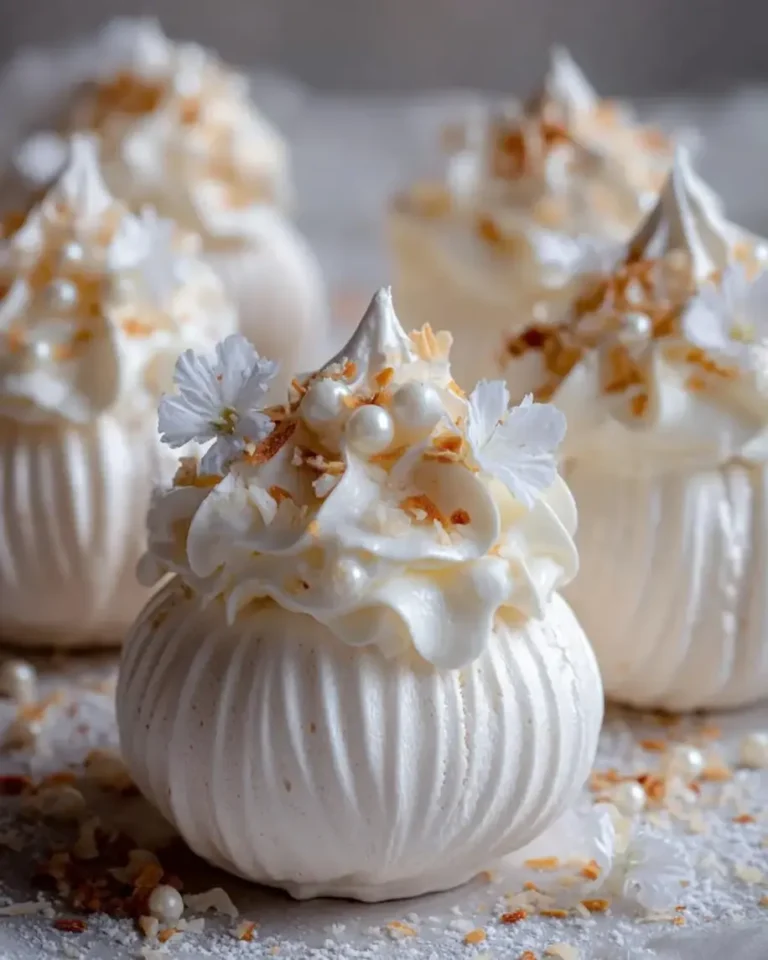
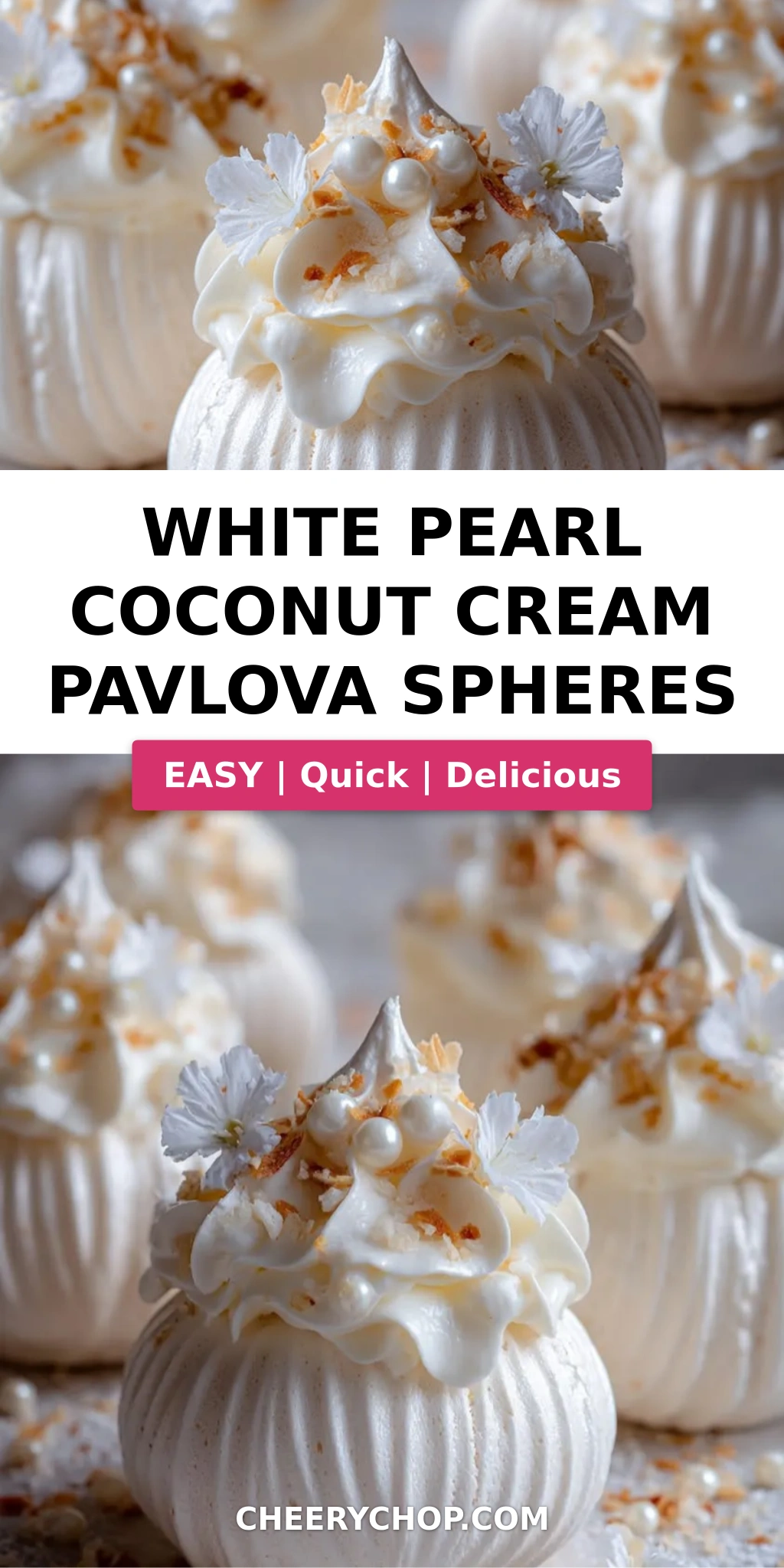
Imagine cracking through a delicate, airy meringue shell that practically dissolves on your tongue, only to be met with a velvety coconut cream filling that’s both cool and luxuriously smooth. The first bite offers a whisper of vanilla and toasted coconut, followed by the gentle sweetness of white chocolate pavlova glaze that shimmers like a pearl in candlelight. The visual is pure magic — glossy, ivory spheres dusted with luster dust and crowned with edible flowers, sitting on a plate like treasures from the sea. The aroma is subtle and warm: vanilla, toasted coconut, and a hint of cream. It’s the kind of dessert that makes people stop mid-conversation and just stare before they dig in.
What sets my version apart is the technique I developed during my time at Le Cordon Bleu in Paris: a foolproof meringue method using vinegar and cornstarch for unbeatable stability, paired with a coconut cream filling that won’t weep or deflate. I’ve tested this coconut cream dessert more times than I can count — through humid New York summers and dry winter days — and I’m confident this approach delivers the crispest shells, the creamiest center, and the most stunning glaze. 💡 Sara’s Pro Tip: The secret to perfect pavlova spheres is cooling them completely in the turned-off oven — never rush this step. And the most common mistake? Over-whipping the cream filling until it turns grainy. I’ll show you exactly how to avoid that.
Why This White Pearl Coconut Cream Pavlova Spheres Recipe Is the Best
The Flavor Secret: This isn’t just another pavlova — it’s a fusion of my Moroccan roots and French training. The coconut cream filling is inspired by the creamy, fragrant desserts my mother made with fresh coconut from the market in Marrakech, while the white chocolate pearl glaze is pure French elegance. The combination of toasted coconut, vanilla, and white chocolate creates a flavor profile that feels both familiar and utterly luxurious. I’ve balanced the sweetness so the coconut shines through without being cloying.
Perfected Texture: The hallmark of any great pavlova is that shatteringly crisp exterior with a soft, marshmallow-like interior. My method — using cornstarch and vinegar in the meringue — ensures the shells stay crisp for up to three days when stored properly. The coconut cream filling is whipped to the perfect point: stiff enough to hold its shape when you sandwich the spheres, yet light and airy on the palate. Every bite offers a contrast of textures that keeps you coming back for more.
Foolproof & Fast: I’ve taught this recipe to home cooks in my NYC cooking classes, and even beginners nail it on the first try. The steps are broken down into manageable stages, the glaze comes together in under five minutes, and the whole dessert can be prepped in advance. Whether you’re hosting a dinner party or treating yourself to something special, this recipe delivers restaurant-quality results without the stress.
White Pearl Coconut Cream Pavlova Spheres Ingredients
When I shop for ingredients for this recipe, I head straight to the Union Square Greenmarket in NYC for the freshest eggs and cream, then stop by my local specialty market for coconut cream and white chocolate. In Morocco, my mother would use fresh coconut grated by hand — here in the US, I rely on high-quality canned coconut cream and toasted shredded coconut. Every ingredient plays a role, and I’ve tested substitutions so you can make this work no matter where you shop.
Ingredients List
For the Pavlova Shells:
- 4 large egg whites, at room temperature
- 1 cup granulated sugar
- 1 tsp cornstarch
- 1 tsp white vinegar
- 1 tsp vanilla extract
- Pinch of salt
For the Coconut Cream Filling:
- 1 cup heavy cream, chilled
- 1/2 cup coconut cream (from a can, not the thin liquid)
- 2 tbsp powdered sugar
- 1 tsp vanilla extract
- 1/4 cup toasted shredded coconut
For the White Chocolate Pearl Glaze:
- 8 oz (225 g) white chocolate, finely chopped
- 1/4 cup heavy cream
- 1 tsp coconut oil
- White pearl luster dust
For Garnish (optional but gorgeous):
- White chocolate pearls
- Toasted coconut flakes
- Edible white flowers (such as chamomile or white violas)
Ingredient Spotlight
Egg Whites: The backbone of the pavlova shells. Use fresh, room-temperature egg whites for the best volume. Pasteurized egg whites from a carton work in a pinch but won’t whip as stiffly — I recommend fresh eggs from a local market for the sturdiest meringue. Tested substitution: Aquafaba (chickpea brine) can replace egg whites for a vegan version, but the texture will be slightly less crisp.
Coconut Cream: This is the star of the filling. Look for canned coconut cream (not coconut milk) — Thai Kitchen and Savoy brands work beautifully. The cream should be thick and rich, not watery. Chill the can overnight before opening, then scoop off the solidified cream. Tested substitution: Full-fat coconut milk can be used if you chill it and scoop the solid top layer, but you’ll need about 3/4 cup of the solid part to match the richness.
White Chocolate: Use a high-quality white chocolate with a high cocoa butter content — I prefer Valrhona or Guittard. Avoid white chocolate chips, which often contain stabilizers that prevent smooth melting. Tested substitution: For a dairy-free version, use a high-quality dairy-free white chocolate, but note the glaze will be slightly less glossy.
White Vinegar: This is the secret to a crisp, stable meringue. The acid helps the egg whites hold their structure and prevents the meringue from weeping. Don’t skip it, and don’t substitute with a strongly flavored vinegar — the small amount won’t affect the taste.
White Pearl Luster Dust: This gives the spheres their ethereal, pearl-like sheen. It’s available at baking supply stores or online. Tested substitution: A light dusting of powdered sugar mixed with a tiny pinch of edible glitter works beautifully if you don’t have luster dust.
| Original Ingredient | Best Substitution | Flavor / Texture Impact |
|---|---|---|
| Egg whites (4 large) | Aquafaba (1/2 cup) | Slightly less crisp, but fully vegan. Flavor is neutral. |
| Coconut cream (canned) | Chilled full-fat coconut milk, solid top only | Less rich and stable. Whip carefully to avoid separation. |
| White chocolate (8 oz) | Dairy-free white chocolate | Glaze slightly less glossy. Flavor still good. |
| White vinegar (1 tsp) | Lemon juice or cream of tartar (1/2 tsp) | Similar stability. Lemon adds a faint citrus note. |
| White pearl luster dust | Powdered sugar + edible glitter | Less shimmer, still pretty. Texture unchanged. |
How to Make White Pearl Coconut Cream Pavlova Spheres — Step-by-Step
Trust me — if you can whip egg whites and melt chocolate, you can make these stunning pavlova spheres. I’ll walk you through every step with the exact techniques I use in my NYC kitchen, including all the visual cues I look for.
Step 1: Prepare the Meringue
Preheat your oven to 250°F (120°C) and line two baking trays with parchment paper. In a clean, dry mixing bowl — make sure there’s not a trace of grease or yolk — beat the egg whites and salt on medium speed until soft peaks form. This takes about 2–3 minutes. The bubbles should be fine and uniform, not large and foamy.
💡 Sara’s Pro Tip: Use a glass or metal bowl — plastic can retain grease that prevents the whites from whipping properly. Also, wipe the bowl with a little lemon juice on a paper towel to remove any trace of fat.
Step 2: Shape and Bake the Shells
Gradually add the sugar, 1 tablespoon at a time, beating on high speed until stiff, glossy peaks form — about 4–5 minutes. The meringue should be thick enough that a peak stands straight up when you lift the whisk. Fold in the cornstarch, vinegar, and vanilla with a gentle hand. Pipe or spoon the meringue into silicone dome molds or shape free-form half-spheres on the parchment, making 16 total. Bake for 60–70 minutes, then turn off the oven and let the shells cool completely inside for at least 1 hour.
⚠️ Common Mistake to Avoid: Opening the oven door during baking or cooling. The sudden temperature drop will cause the meringue to crack and collapse. Resist the urge — let them rest undisturbed.
Step 3: Make the Coconut Cream Filling
In a chilled bowl, whip the heavy cream, coconut cream, powdered sugar, and vanilla on medium-high speed until fluffy and soft peaks form — about 2–3 minutes. Be careful not to over-whip; the mixture should be smooth and spreadable, not grainy or butter-like. Gently fold in the toasted shredded coconut with a spatula.
💡 Sara’s Pro Tip: Chill the bowl and beaters for 15 minutes before whipping. This helps the cream and coconut cream emulsify perfectly, giving you a silky, stable filling that won’t deflate.
Step 4: Assemble the Spheres
Take 8 of the cooled pavlova shells and place them flat-side up. Spoon or pipe the coconut cream filling onto each one, dividing it evenly. Gently press the remaining 8 shells on top, flat-side down, to create sandwich spheres. Use a gentle, even pressure so the shells don’t crack. Place the assembled spheres on a wire rack set over a baking sheet.
⚠️ Common Mistake to Avoid: Overfilling the shells. Too much cream will squeeze out when you sandwich them, making a mess and weakening the structure. Use about 2 tablespoons per sphere.
Step 5: Make the White Chocolate Pearl Glaze
Heat the heavy cream in a small saucepan until steaming — just below a simmer, with small bubbles around the edges. Pour it over the finely chopped white chocolate in a heatproof bowl. Let it sit undisturbed for 2 minutes, then stir gently in one direction until smooth. Add the coconut oil and stir until melted and glossy. Allow the glaze to cool for 5–7 minutes, until it thickens slightly but is still pourable.
💡 Sara’s Pro Tip: If the glaze looks separated or grainy, add a splash more warm cream and whisk vigorously. Overheating the chocolate is the usual culprit — always use gentle heat.
Step 6: Glaze and Garnish
Hold each assembled pavlova sphere over the bowl and spoon the glaze over the top, letting it cascade down the sides. Use a small offset spatula to smooth if needed. Lightly dust with white pearl luster dust using a small sieve or brush. Garnish with white chocolate pearls, toasted coconut flakes, and edible white flowers. Transfer to the refrigerator and chill for 20 minutes before serving — this sets the glaze and firms the filling.
⚠️ Common Mistake to Avoid: Applying the glaze when it’s too hot — it will melt the filling and soak into the meringue, ruining the crisp texture. Let the glaze cool to room temperature but still fluid before coating.
| Step | Action | Duration | Key Visual Cue |
|---|---|---|---|
| 1 | Whip egg whites with salt | 2–3 mins | Soft peaks that droop slightly |
| 2 | Add sugar gradually | 4–5 mins | Stiff, glossy peaks that stand upright |
| 3 | Bake shells | 60–70 mins | Pale ivory, dry to the touch, no cracking |
| 4 | Make coconut cream filling | 2–3 mins | Fluffy, soft peaks, smooth texture |
| 5 | Make white chocolate glaze | 5–7 mins | Smooth, glossy, pourable |
| 6 | Glaze and garnish | 10 mins | Glaze sets, garnish sticks, spheres shine |
Serving & Presentation
These white pearl coconut cream pavlova spheres are meant to be the centerpiece of any celebration. I like to serve them on a large white platter or individual dessert plates, with a light dusting of extra luster dust and a few edible flowers scattered around. In Morocco, we often serve delicate desserts like this with mint tea on the side — the contrast of warm, herbal tea with the cool, creamy pavlova is absolutely lovely. In my NYC dinner parties, I pair them with a chilled glass of Prosecco or a light vanilla bean custard sauce for extra indulgence.
For plating, place one sphere per person and add a small dollop of extra coconut cream on the plate, a sprinkle of toasted coconut, and a single edible flower. The visual impact is stunning — like a pearl sitting on a cloud. If you’re serving at a buffet or party, arrange the spheres on a tiered stand for a dramatic, elegant display. They’re also beautiful served alongside fresh berries or a passion fruit coulis for a pop of color.
| Pairing Type | Suggestions | Why It Works |
|---|---|---|
| Side Dish | Fresh berries, passion fruit coulis, mango slices | Adds brightness and acidity to balance sweetness |
| Sauce / Dip | Vanilla custard, chocolate sauce, caramel sauce | Extra richness — use sparingly |
| Beverage | Prosecco, mint tea, espresso, sparkling water with lime | Cuts sweetness and cleanses the palate |
| Garnish | Edible white flowers, toasted coconut, chocolate curls, mint leaves | Elevates visual appeal and adds texture |
Make-Ahead, Storage & Reheating
Living in NYC, I know how busy schedules can get. The beauty of this recipe is that nearly every component can be prepared in advance. I often bake the pavlova shells on a Sunday afternoon, then assemble and glaze them just before serving. Here’s my tested system — the same one I use when teaching my cooking classes in Manhattan.
| Method | Container | Duration | Reheating Tip |
|---|---|---|---|
| Refrigerator | Airtight container, single layer | Up to 3 days | Serve chilled — no reheating needed |
| Freezer | Freezer-safe container, parchment between layers | Up to 1 month | Thaw in fridge 2 hours, then glaze and serve |
| Make-Ahead | Store shells and filling separately | Shells: 3 days; Filling: 1 day | Assemble and glaze within 2 hours of serving |
The pavlova shells are best stored in an airtight container at room temperature — not in the fridge, where moisture can soften them. If you’re making the filling a day ahead, whip it and refrigerate in a covered bowl, then re-whip for 10–15 seconds before assembling. Once assembled and glazed, the spheres should be served within 4 hours for the best texture, though they’ll still be delicious the next day if stored in the fridge.
My favorite make-ahead strategy: bake the shells on Friday, make the filling and glaze on Saturday morning, assemble and glaze Saturday afternoon, and serve that evening. It breaks the work into manageable chunks and ensures everything is fresh.
Variations & Easy Swaps
One of the things I love most about this recipe is how versatile it is. I’ve tested dozens of variations in my NYC kitchen, drawing inspiration from my Moroccan heritage, my French training, and the seasonal produce I find at the Union Square market. Here are three of my favorite twists.
| Variation | Key Change | Best For | Difficulty Impact |
|---|---|---|---|
| Moroccan Rose Water | Add 1 tsp rose water to meringue + garnish with dried rose petals | Aromatic, floral, special occasion | Easy — same steps |
| Dairy-Free / Vegan | Aquafaba for shells, full-fat coconut milk whipped cream, dairy-free white chocolate | Dairy-free and vegan diets | Medium — aquafaba takes practice |
| Mango Passion Fruit | Add 1/4 cup passion fruit puree to filling + top with diced mango | Tropical, bright, summer-friendly | Easy — same steps |
Moroccan Rose Water Pavlova
This variation brings a taste of my childhood in Morocco. Fold 1 teaspoon of high-quality rose water into the meringue along with the vanilla. For the filling, replace the vanilla extract with another teaspoon of rose water. Garnish with dried organic rose petals and a drizzle of honey instead of the white chocolate glaze. The floral notes pair beautifully with the coconut cream, and the rose petals add a gorgeous pop of color. This version is incredibly romantic — perfect for weddings or Valentine’s Day.
Dairy-Free / Vegan Option
I developed this version for my friend who runs a vegan bakery in Brooklyn, and it’s surprisingly close to the original. For the shells, use 1/2 cup aquafaba (chickpea brine) in place of the egg whites — whip it with cream of tartar for stability. The baking time is the same, but the shells are slightly less crisp. For the filling, use the solid top of a chilled can of full-fat coconut milk whipped with 2 tablespoons powdered sugar and 1 teaspoon vanilla. Use dairy-free white chocolate in the glaze. The texture is a bit softer, but the flavor is still divine.
Mango Passion Fruit Twist
In the summer, when mangoes are at their peak at the NYC farmers market, I love this bright, tropical version. Fold 3 tablespoons of passion fruit puree (fresh or frozen, thawed) into the coconut cream filling — it adds a tangy, tropical kick that cuts through the richness. Top each glazed sphere with small cubes of fresh mango and a few passion fruit seeds. The combination of sweet mango, tart passion fruit, and creamy coconut is absolutely irresistible. No changes to the baking or glazing steps — just a simple flavor upgrade.
What is the best way to ensure the pavlova spheres stay crisp and don’t collapse?
The secret to crisp, stable pavlova spheres lies in three things: cornstarch, vinegar, and patience. The cornstarch and vinegar in the meringue act as stabilizers, helping the egg whites hold their structure and preventing weeping. But the most critical step is cooling the shells completely in the turned-off oven with the door closed — this gradual cooling prevents the sudden temperature drop that causes cracking and collapse. Also, never assemble the spheres more than 4 hours before serving, and store the unfilled shells in an airtight container at room temperature (not the fridge, where humidity softens them). If you live in a humid climate, add an extra teaspoon of cornstarch to the meringue for additional protection.
Can I substitute fresh coconut cream with canned coconut cream for this recipe?
Absolutely — in fact, I recommend canned coconut cream for this recipe. Fresh coconut cream is lovely but can vary widely in fat content and wateriness, which affects the stability of your filling. Canned coconut cream (like Thai Kitchen or Savoy brands) is consistent, thick, and rich. The key is to chill the can overnight in the refrigerator, then open it and scoop off the solid, thick cream that has risen to the top — discard or save the thin liquid for smoothies. For the best results, use full-fat coconut cream with no added gums or stabilizers. If you can only find coconut milk, chill it and use only the solid top portion, which gives you about 3/4 cup per can.
How far in advance can I assemble the White Pearl Coconut Cream Pavlova Spheres?
For the best texture, I recommend assembling the pavlova spheres no more than 2–4 hours before serving. The meringue shells begin to soften once they come into contact with the coconut cream filling, and the glaze can also cause slight softening over time. However, you can prepare the components well in advance: bake the shells up to 3 days ahead and store them airtight at room temperature, whip the coconut cream filling up to 1 day ahead and refrigerate it, and make the white chocolate glaze up to 2 days ahead (reheat gently before using). Then, assemble and glaze the spheres within a few hours of serving for the perfect crisp-yet-creamy texture.
What can I use instead of white pearls or pearl dust for decoration on the pavlova?
There are several beautiful alternatives if you don’t have white pearl luster dust or white chocolate pearls. For shimmer, a light dusting of powdered sugar mixed with a tiny pinch of edible glitter works wonderfully — it catches the light and gives a subtle sparkle. Silver or white edible sprinkles, dragées, or nonpareils also add a festive touch. For a more natural look, garnish with toasted coconut flakes, crushed pistachios, or finely chopped white chocolate curls. Edible flowers like chamomile, white violas, or small rose petals add elegance without any specialty ingredients. If you want a pearl-like effect without the dust, a thin drizzle of white chocolate thinned with a touch of coconut oil creates a glossy, pearl-like sheen on its own.
Can I make pavlova in humid weather without it getting sticky?
Yes, but you need to adjust your technique. Humidity is the enemy of meringue — the sugar absorbs moisture from the air, making the shells sticky and soft. To combat this, add an extra teaspoon of cornstarch to the meringue mixture to absorb excess moisture. Bake the shells a little longer — up to 80 minutes — until they are completely dry and firm. Cool them in the turned-off oven with the door slightly ajar for the first 30 minutes, then close it completely. Once cooled, transfer immediately to an airtight container with a silica gel packet if you have one, or layer with parchment paper and seal tightly. Assemble as close to serving time as possible. If the shells do get sticky, you can re-crisp them in a 200°F oven for 10 minutes, then cool completely before assembling.
Can I freeze the assembled pavlova spheres for later?
Freezing assembled pavlova spheres is not recommended, as the texture of both the meringue and the cream filling suffers significantly. The meringue becomes soft and chewy rather than crisp, and the coconut cream filling can become watery and grainy upon thawing. However, you can freeze the unassembled components successfully. Bake the meringue shells, cool them completely, and freeze them in an airtight container with parchment paper between layers for up to 1 month. Thaw at room temperature for 30 minutes before assembling. The coconut cream filling can be frozen for up to 2 weeks — thaw overnight in the fridge and re-whip for 10 seconds before using. Always assemble and glaze fresh for the best results.
Why did my pavlova crack or collapse during baking?
Cracking or collapsing pavlova is usually caused by one of three issues. First, sudden temperature changes — opening the oven door during baking or cooling lets in cold air, causing the meringue to crack. Always cool the pavlova in the turned-off oven with the door closed for at least 1 hour. Second, under-whipped egg whites — if the meringue isn’t beaten to stiff, glossy peaks, it won’t have enough structure to hold its shape. Third, too much sugar added too quickly — add sugar gradually, 1 tablespoon at a time, so it dissolves fully. If your pavlova cracks, it’s still delicious! Serve it as a “rustic” pavlova with extra cream and fruit to hide the cracks. I’ve had plenty of cracked pavlovas in my NYC kitchen, and they always taste amazing.
Can I use a different type of chocolate for the glaze?
Absolutely, and each chocolate creates a different effect. Dark chocolate (60–70% cacao) makes a rich, dramatic glaze that pairs beautifully with the coconut cream — use 6 oz dark chocolate with 1/3 cup heavy cream and omit the coconut oil for a darker sheen. Milk chocolate yields a sweeter, milder glaze that’s still lovely. For a colorful twist, use ruby chocolate (naturally pink) for a stunning blush-toned sphere. If you use a different chocolate, adjust the cream ratio slightly: dark chocolate needs a bit more cream (about 1/3 cup) to stay pourable, while milk chocolate works well with the same 1/4 cup. Keep the coconut oil for gloss in all versions.
Share Your Version!
I absolutely love seeing how these white pearl coconut cream pavlova spheres turn out in your kitchen. Every time someone in my NYC cooking classes makes them, they add their own personal touch — a different flower, a unique garnish, a twist on the glaze. Did you add a pinch of cardamom like we do in Morocco? Or swap the coconut for a passion fruit filling? I want to hear about it! Leave a star rating and comment below — your feedback helps other home cooks know what to expect, and I read every single one.
Snap a photo of your creation and share it on Instagram or Pinterest — tag me @cheerychop so I can feature your work in my stories. And here’s a question for you: What flavor combination would you use to make this recipe your own? I’m always experimenting with new ideas, and your suggestions might just inspire my next recipe. From my NYC kitchen to yours — I hope this recipe brings as much warmth to your table as it does to mine. — Sara 🧡
Love This Recipe? Save It to Pinterest!
If you enjoyed this White Pearl Coconut Cream Pavlova Spheres recipe, don’t let it get lost in your browser tabs! 😄 Pin it now so you can find it again anytime — and explore hundreds more tried-and-tested recipes waiting for you on my Pinterest boards.
👉 Follow Sara on Pinterest @chefrecipes2
📌 Pin this recipe · 🔁 Re-pin your favorites · 💬 Tag me when you make it — I love seeing your creations!
“`
Print
White Pearl Coconut Cream Pavlova Spheres
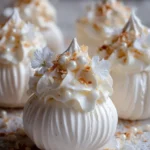
A stunning dessert featuring crisp meringue shells filled with coconut cream, coated in a white chocolate pearl glaze and garnished elegantly.
- Yield: 8 1x
Ingredients
- For the Pavlova Shells:
- 4 large egg whites
- 1 cup granulated sugar
- 1 tsp cornstarch
- 1 tsp white vinegar
- 1 tsp vanilla extract
- Pinch of salt
- For the Coconut Cream Filling:
- 1 cup heavy cream, chilled
- 1/2 cup coconut cream
- 2 tbsp powdered sugar
- 1 tsp vanilla extract
- 1/4 cup toasted shredded coconut
- For the White Chocolate Pearl Glaze:
- 8 oz (225 g) white chocolate, finely chopped
- 1/4 cup heavy cream
- 1 tsp coconut oil
- White pearl luster dust
- For Garnish (optional):
- White chocolate pearls
- Toasted coconut flakes
- Edible white flowers
Instructions
- 1. Preheat the oven to 250°F (120°C) and line two baking trays with parchment paper.
- 2. Beat the egg whites and salt until soft peaks form.
- 3. Gradually add the sugar, beating until stiff, glossy peaks develop.
- 4. Fold in the cornstarch, vinegar, and vanilla.
- 5. Pipe or shape the meringue into 16 half-spheres using silicone dome molds or by hand.
- 6. Bake for 60–70 minutes, then turn off the oven and let the shells cool completely inside.
- 7. Whip the heavy cream, coconut cream, powdered sugar, and vanilla until fluffy. Fold in the toasted coconut.
- 8. Fill half of the pavlova shells with the coconut cream and gently sandwich them together.
- 9. Heat the heavy cream until steaming, then pour it over the white chocolate. Let sit for 2 minutes before stirring smooth. Mix in the coconut oil.
- 10. Cool the glaze slightly and coat each pavlova sphere with a thin, even layer.
- 11. Dust lightly with white pearl luster dust.
- 12. Garnish with white chocolate pearls, toasted coconut flakes, and edible white flowers. Chill for 20 minutes before serving.
Nutrition
- Calories: 345
- Sugar: 31 g
- Fat: 22 g
- Carbohydrates: 34 g
- Protein: 3 g
Tried This Recipe? Leave a Comment!
Did you make this recipe? I’d love to hear how it turned out! Please leave a comment and a rating below. Your feedback helps other home cooks and supports cheerychop.com!
For more delicious inspiration, follow me on Pinterest!