“`html
Table of Contents
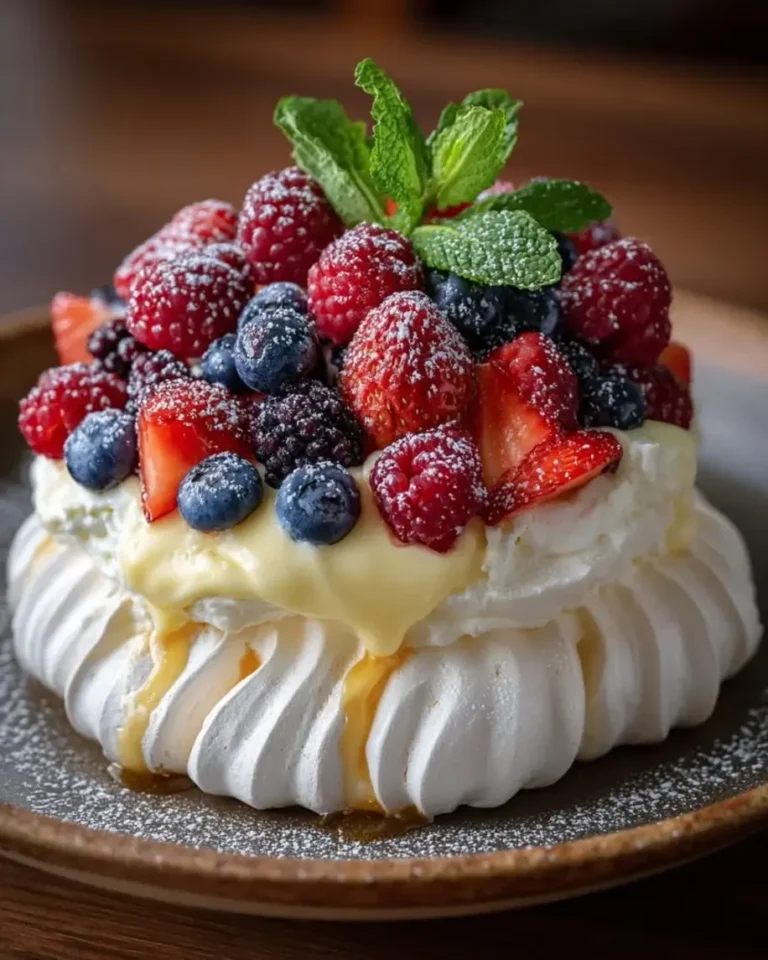
Vanilla Custard Berry Pavlova Clouds – Light, Elegant Mini Meringue Desserts
Growing up in my mother’s kitchen in Morocco, I learned that the simplest desserts often leave the deepest impression. She would make rosewater-scented pastries and honey-soaked treats that filled our home with warmth. Years later, after training at Le Cordon Bleu in Paris and settling into my own kitchen here in New York City, I found myself craving something that bridged those worlds — something light, elegant, and deeply satisfying. That’s how these Vanilla Custard Berry Pavlova Clouds came to life. They combine the ethereal crunch of a classic French meringue with a silky vanilla custard that nods to the crème pâtissière I spent hours perfecting in Paris. And then come the berries — bright, juicy, and finished with a whisper of mint and lemon zest. This is the kind of dessert that feels special without being fussy, and I am so excited to share my version with you.
Imagine cracking through a delicate, crisp meringue shell only to find a soft, marshmallow-like center beneath. Now layer that with a velvety vanilla custard that’s rich but not heavy, and top it all with a tumble of fresh strawberries, blueberries, and raspberries tossed in honey and lemon. The berries burst with every bite, their tartness cutting through the sweetness of the meringue and custard. A final garnish of fresh mint and a dusting of powdered sugar adds brightness and a touch of elegance. These mini pavlovas are a study in contrasts — crunchy and creamy, sweet and tangy, rustic and refined. Every element has a purpose, and every flavor is meant to linger. I’ve tested this recipe dozens of times to get the texture just right, and I promise you, the result is nothing short of cloud-like perfection.
What makes my version of this pavlova recipe different? It’s the custard. Most pavlovas are topped with whipped cream, but I swap in a French-style vanilla custard that is luscious, stable, and deeply flavorful. I use vanilla bean paste for those beautiful specks and that intense aroma — a trick I picked up in Paris. I also bake the meringue clouds low and slow, then leave them in the oven to cool completely, which is the secret to preventing cracks. One common mistake I see is rushing the cooling process; trust me, patience here pays off. In this post, I’ll walk you through every step, share my best pro tips, and show you how to make these Vanilla Custard Berry Pavlova Clouds your new go-to dessert. Whether you’re hosting a dinner party or treating yourself on a quiet evening, these little clouds deliver pure joy.
Why This Vanilla Custard Berry Pavlova Clouds Recipe Is the Best
The Flavor Secret — The combination of a classic pavlova with a rich vanilla custard instead of whipped cream is my signature twist. The custard is made with real vanilla bean paste, whole milk, and egg yolks, giving it a luxurious depth that pairs beautifully with the bright, honey-kissed berries. This isn’t just a dessert; it’s a harmony of textures and flavors that feels both indulgent and refreshing. My Moroccan upbringing taught me to balance sweet with savory, and that principle shines here — the custard is sweet but not cloying, the berries add acidity, and the meringue brings that pure, airy sweetness.
Perfected Texture — Achieving the perfect pavlova texture — crisp on the outside, soft and marshmallow-like on the inside — requires precise technique. I bake the meringue clouds at 250°F for 70 to 75 minutes, then let them cool completely inside the oven with the door slightly open. This gradual cooling prevents the dreaded cracking and collapsing. The cornstarch and vinegar in the meringue stabilize the egg whites and create that signature chewy center. Every batch I’ve tested in my NYC kitchen has come out consistently beautiful, and I’m sharing all my chef-tested tips so yours will too.
Foolproof & Fast — While pavlova has a reputation for being temperamental, this recipe is designed for home cooks. I break down each step with clear visual cues and detailed instructions. The custard comes together in under 15 minutes, and the berry topping requires zero cooking. You can make the meringue clouds and custard a day ahead, then assemble just before serving. This makes it an ideal dessert for entertaining — impressive yet totally manageable. Even if you’ve never made a pavlova before, I promise you can do this.
Vanilla Custard Berry Pavlova Clouds Ingredients
I source my eggs from the farmers market at Union Square — fresh, farm-fresh eggs make a real difference in both the meringue and the custard. The berries I pick up from the greenmarket or my local grocery store, always choosing the ripest, most fragrant ones I can find. There’s something about using peak-season fruit that makes this dessert sing. Here’s everything you’ll need to create these beautiful Vanilla Custard Berry Pavlova Clouds.
Ingredients List
- For the Pavlova Clouds: 4 large egg whites (room temperature), 1 cup granulated sugar, 1 tsp cornstarch, 1 tsp white vinegar, 1 tsp vanilla extract, 1/8 tsp kosher salt
- For the Vanilla Custard: 2 cups whole milk, 4 egg yolks, 1/3 cup granulated sugar, 2 tbsp cornstarch, 1 tsp vanilla bean paste, 1 tbsp unsalted butter
- For the Berry Topping: 1 cup fresh strawberries (halved), 1/2 cup fresh blueberries, 1/2 cup fresh raspberries, 1 tbsp honey, 1 tsp fresh lemon juice
- For Garnish (optional): Fresh mint leaves, powdered sugar, lemon zest
Ingredient Spotlight
Egg Whites (Meringue): Room-temperature egg whites whip to a greater volume than cold ones, giving you a lighter, airier pavlova. Separate your eggs when cold, then let the whites sit on the counter for about 30 minutes before beating. For the custard, the yolks provide richness and help thicken the pastry cream. I recommend using large, fresh eggs for the best results. Substitution: Pasteurized egg whites from a carton can work in a pinch, but they won’t whip up as stiffly — expect a slightly denser meringue.
Vanilla Bean Paste: This is my secret weapon for the custard. It has a thicker, syrupy consistency and contains real vanilla seeds, giving the custard a beautiful speckled appearance and an intense, pure vanilla flavor. You can find it in the baking aisle of most US grocery stores. Substitution: Use 1 whole vanilla bean (split and scraped) or 2 teaspoons of pure vanilla extract. The extract won’t give you the specks, but the flavor will still be lovely.
Cornstarch: This ingredient plays a dual role. In the meringue, it helps stabilize the egg whites and creates that soft, marshmallow-like interior. In the custard, it acts as a thickener, giving the pastry cream its silky, smooth texture. Substitution: For the meringue, you can use 1 tsp of potato starch or arrowroot powder. For the custard, use an equal amount of all-purpose flour, but note that the custard will be slightly less glossy and a bit heavier.
| Original Ingredient | Best Substitution | Flavor / Texture Impact |
|---|---|---|
| Egg whites (meringue) | Pasteurized egg whites (carton) | Less volume; slightly denser meringue |
| Vanilla bean paste | 1 vanilla bean or 2 tsp vanilla extract | No specks; flavor slightly less intense |
| Cornstarch (meringue) | 1 tsp potato starch or arrowroot | Very similar; slightly less chewy center |
| Cornstarch (custard) | 2 tbsp all-purpose flour | Less glossy; slightly heavier custard |
| Whole milk (custard) | 2% milk + 1 tbsp heavy cream | Slightly less rich; still creamy |
How to Make Vanilla Custard Berry Pavlova Clouds — Step-by-Step
Making these beautiful pavlova clouds is easier than you think, especially when you follow my chef-tested steps. I’ll guide you through each stage with clear instructions, pro tips, and common mistakes to avoid. Let’s get started!
Step 1: Prepare Your Meringue Base
Preheat your oven to 250°F (120°C) and line a baking sheet with parchment paper. In a clean, dry mixing bowl, beat the 4 room-temperature egg whites and the 1/8 tsp kosher salt on medium speed until soft peaks form — this means the peaks curl over when you lift the whisk. Gradually add the 1 cup of granulated sugar, about 1 tablespoon at a time, while beating on high speed. Continue beating until the meringue is stiff, glossy, and holds firm peaks. This should take about 5 to 7 minutes. You’ll know it’s ready when you rub a tiny bit between your fingers and it feels smooth, not grainy. Fold in the 1 tsp cornstarch, 1 tsp white vinegar, and 1 tsp vanilla extract gently with a spatula until just combined.
💡 Sara’s Pro Tip: Make sure your bowl and whisk are completely grease-free. Any trace of fat or yolk will prevent the egg whites from whipping properly. I wipe my bowl with a lemon wedge or a splash of vinegar before starting — it’s a trick my Paris pastry chef taught me.
Step 2: Shape and Bake the Pavlova Clouds
Spoon the meringue onto the prepared baking sheet in 6 equal mounds, shaping each one into a cloud-like oval or round. Use the back of your spoon to create a shallow well in the center of each mound — this will hold the custard and berries later. Make sure the edges are slightly higher than the center. Bake for 70 to 75 minutes, or until the meringues are dry to the touch and easily lift off the parchment. Then, turn off the oven and leave the pavlovas inside to cool completely with the door slightly open (about 1 hour). This gradual cooling is essential to prevent cracking.
⚠️ Common Mistake to Avoid: Don’t open the oven door while the meringues are baking! The rush of cool air can cause them to crack. Also, resist the urge to remove them from the oven immediately after baking — the sudden temperature change is the #1 cause of collapsing pavlovas.
Step 3: Make the Silky Vanilla Custard
While the pavlovas are baking, start the custard. In a medium saucepan, heat the 2 cups of whole milk over medium heat until it’s just steaming — small bubbles will form around the edges, but don’t let it boil. In a separate bowl, whisk together the 4 egg yolks, 1/3 cup granulated sugar, and 2 tbsp cornstarch until smooth and pale. Slowly pour the warm milk into the egg mixture, whisking constantly to temper the eggs. Then, pour the mixture back into the saucepan. Cook over medium heat, stirring constantly with a wooden spoon or spatula, until the custard thickens and just begins to bubble — about 3 to 5 minutes. Remove from the heat and stir in the 1 tsp vanilla bean paste and 1 tbsp unsalted butter. Transfer the custard to a bowl, press plastic wrap directly onto the surface to prevent a skin from forming, and chill completely in the refrigerator (about 1 hour).
💡 Sara’s Pro Tip: For an even silkier custard, strain it through a fine-mesh sieve before chilling. This removes any bits of cooked egg that might have formed, leaving you with a perfectly smooth pastry cream. It’s a small step that makes a big difference.
Step 4: Prepare the Berry Topping
In a medium bowl, combine the 1 cup halved strawberries, 1/2 cup blueberries, and 1/2 cup raspberries. Drizzle with 1 tbsp honey and 1 tsp fresh lemon juice, then toss gently to coat. Let the berries sit for about 10 minutes to release their juices and create a light syrup. This simple maceration enhances the natural sweetness of the fruit and adds a beautiful glossy sheen. Set aside at room temperature while you assemble the dessert.
⚠️ Common Mistake to Avoid: Don’t toss the berries too vigorously, especially the raspberries — they’re delicate and can break apart. Use a gentle folding motion to keep them intact. Also, avoid letting the berries sit for too long (more than 30 minutes), or they’ll become mushy.
Step 5: Assemble and Serve
Once the pavlova clouds and custard are completely cool, it’s time to assemble. Place each meringue cloud on a serving plate. Spoon a generous amount of the chilled vanilla custard into the well of each pavlova. Top with the honey-lemon berry mixture, dividing it evenly among the 6 clouds. Garnish with fresh mint leaves, a light dusting of powdered sugar, and a sprinkling of lemon zest. Serve immediately — the meringue will start to soften once it meets the custard, so this dessert is best enjoyed right away.
💡 Sara’s Pro Tip: For a show-stopping presentation, arrange the berries artfully on top of the custard, leaving some edges of the meringue visible. The contrast of the white meringue, golden custard, and bright berries is absolutely stunning. A tiny pinch of flaky sea salt on top can also elevate the flavors beautifully.
| Step | Action | Duration | Key Visual Cue |
|---|---|---|---|
| 1 | Beat egg whites with salt until soft peaks, then add sugar gradually | 5–7 min | Stiff, glossy peaks that hold firm |
| 2 | Fold in cornstarch, vinegar, vanilla | 1 min | Uniform, glossy meringue |
| 3 | Shape meringue into 6 clouds with wells | 5 min | Cloud shapes with shallow centers |
| 4 | Bake pavlova clouds | 70–75 min | Dry to touch, lifts off parchment easily |
| 5 | Cool in oven with door ajar | ~1 hour | Completely cool, no cracks |
| 6 | Heat milk, whisk yolks with sugar and cornstarch | 5 min | Milk steaming, yolk mixture pale |
| 7 | Temper and cook custard until thickened | 3–5 min | Custard thickens, bubbles appear |
| 8 | Stir in vanilla bean paste and butter, chill | 1 hour | Smooth, thick, completely chilled |
| 9 | Toss berries with honey and lemon juice | 5 min | Berries glossy, lightly syrupy |
| 10 | Assemble pavlovas with custard and berries | 5 min | Beautiful layered clouds, ready to serve |
Serving & Presentation
These Vanilla Custard Berry Pavlova Clouds are a showstopper on any table. I love serving them on individual dessert plates or a large wooden board for a family-style presentation. The contrast of the snowy white meringue, the pale golden custard, and the jewel-toned berries is absolutely gorgeous. A few fresh mint leaves, a light dusting of powdered sugar, and a sprinkle of lemon zest add the perfect finishing touches. In the summer, I sometimes add a few edible flowers for an extra pop of color — it reminds me of the gardens in Marrakech.
For a truly memorable dessert experience, pair these pavlovas with a light, refreshing beverage. A crisp Prosecco or a floral iced tea complements the sweetness beautifully. If you’re serving these after a heavy meal, the lightness of the meringue and the acidity of the berries make for a perfect palate cleanser. I also love to serve them alongside a small bowl of extra berries and a dollop of lightly whipped cream for anyone who wants a little more indulgence. This berry pavlova is versatile enough for a spring brunch, a summer garden party, or a cozy winter dessert when you want a taste of sunshine.
| Pairing Type | Suggestions | Why It Works |
|---|---|---|
| Side Dish | Extra fresh berries, a dollop of whipped cream | Adds freshness and richness without overpowering |
| Beverage | Prosecco, floral iced tea, espresso | Crisp bubbles or bold coffee contrast the sweetness |
| Garnish | Fresh mint, powdered sugar, lemon zest, edible flowers | Adds color, aroma, and a touch of elegance |
| Occasion | Brunch, garden parties, holidays, date night | Light, elegant, and impressive for any celebration |
Make-Ahead, Storage & Reheating
One of the things I love most about this vanilla custard dessert is how well it works for make-ahead entertaining. As a busy NYC cook, I’m all about recipes that let me prep in advance without sacrificing quality. The meringue clouds and the custard can both be made a day ahead, which means all you have to do on serving day is assemble and garnish. Here’s how to store everything properly so your pavlovas stay perfect.
| Method | Container | Duration | Reheating Tip |
|---|---|---|---|
| Refrigerator | Airtight container (meringues), covered bowl (custard) | Meringues: 2 days / Custard: 3 days | Meringues: re-crisp in 250°F oven for 10 min. Custard: stir gently before using. |
| Freezer | Airtight container with parchment between layers | Meringues: 1 month / Custard: not recommended | Thaw meringues at room temp for 30 min, then re-crisp in 250°F oven for 10 min. |
| Make-Ahead | Store components separately | Meringues: 1 day / Custard: 1 day / Berries: day of | Assemble just before serving for best texture |
Here’s my best advice: never assemble the pavlovas more than 15 to 20 minutes before serving. Once the custard hits the meringue, it will begin to soften the crisp shell. If you’re bringing this dessert to a party, transport the components separately and assemble on site. The meringue clouds are surprisingly sturdy — I’ve stacked them in a container with parchment between layers and they’ve survived the NYC subway. The custard travels well in a sealed jar. And the berries are best tossed in honey and lemon just before serving. With this approach, you get that perfect crackly-yet-soft texture every single time.
Variations & Easy Swaps
One of the things I love about this pavlova recipe is how endlessly adaptable it is. Whether you’re catering to dietary needs, using what’s in season, or just feeling creative, there are so many ways to make these Vanilla Custard Berry Pavlova Clouds your own. I’ve tested all of these variations in my kitchen, and they’re all absolutely delicious.
| Variation | Key Change | Best For | Difficulty Impact |
|---|---|---|---|
| Chocolate Drizzle Variation | Drizzle melted dark chocolate over assembled pavlovas | Chocolate lovers, special occasions | Easy (no extra cooking) |
| Dairy-Free / Vegan | Use coconut cream in place of custard, aquafaba for meringue | Dairy-free & vegan diets | Medium (aquafaba requires patience) |
| Tropical Fruit Twist | Replace berries with mango, kiwi, passion fruit | Summer entertaining, exotic flavor | Easy (same method) |
Chocolate Drizzle Variation
For an extra layer of indulgence, drizzle the assembled pavlovas with melted dark chocolate. Simply melt 1/2 cup of high-quality dark chocolate chips with 1 tsp of coconut oil in the microwave in 30-second bursts, then drizzle it back and forth over the custard and berries using a fork. The chocolate sets into a beautiful shell that cracks when you bite into it. This twist reminds me of the chocolate-drenched pastries I loved in Paris — it adds a touch of sophistication and a hint of bitterness that balances the sweetness. You can also sprinkle a few cacao nibs on top for crunch.
Dairy-Free / Vegan Option
To make this recipe dairy-free and vegan, replace the custard with a coconut cream-based alternative. Chill a can of full-fat coconut milk overnight, then scoop out the solid cream and whip it with a little powdered sugar and vanilla extract until light and fluffy. For the meringue, use aquafaba (the liquid from a can of chickpeas) in place of egg whites. Whip 1/2 cup of aquafaba with a pinch of cream of tartar until stiff peaks form, then fold in the sugar, cornstarch, and vinegar just like the original. The texture is remarkably similar to traditional meringue, though it may be slightly less crisp. I’ve tested this version for my plant-based friends and they absolutely love it.
Tropical Fruit Twist
When summer hits its peak here in New York, I swap the berries for a tropical medley of diced mango, sliced kiwi, and passion fruit pulp. The passion fruit adds a tangy, aromatic note that pairs beautifully with the vanilla custard. I also like to add a pinch of chili powder to the fruit — a nod to the street fruit vendors in Marrakech who sprinkle chili and salt on mango slices. It sounds unexpected, but the heat really makes the sweetness pop. Just follow the same method: toss the fruit with a little honey and lime juice instead of lemon, then pile it onto the custard-filled pavlovas. It’s a vibrant, sunny variation that’s perfect for warm-weather entertaining.
What is the best way to prevent a pavlova from cracking or collapsing while baking?
The most important step is to let the pavlova cool completely inside the oven after baking. Turn off the heat and leave the oven door slightly ajar — I usually prop it open with a wooden spoon — and let the meringue cool for at least an hour. This gradual temperature change prevents the sudden shift that causes cracking. Also, make sure you bake the pavlovas at a low temperature (250°F) and avoid opening the oven door during baking. Using cornstarch and vinegar in the meringue also helps stabilize the egg whites and creates a more forgiving structure. Finally, make sure your egg whites are at room temperature and your bowl is completely grease-free for the best volume and stability.
Can I use frozen berries for the topping on vanilla custard berry pavlova clouds?
Yes, you can use frozen berries, but I recommend thawing them first and draining off any excess liquid so they don’t make the meringue soggy. Frozen berries release more juice than fresh ones, so after thawing, pat them dry gently with a paper towel before tossing them with honey and lemon juice. Keep in mind that frozen berries will be softer and may not hold their shape as well as fresh ones, so the texture will be a bit more jammy. This can actually be quite delicious — you’ll get a beautiful berry compote effect. If you’re using frozen berries, I suggest adding them just before serving to minimize moisture absorption.
How far in advance can I assemble vanilla custard berry pavlova clouds before serving?
I recommend assembling the pavlovas no more than 15 to 20 minutes before serving. Once the custard and berries are added to the meringue, the moisture will start to soften the crisp shell. The beauty of this dessert is the contrast between the crunchy meringue and the creamy custard, so you want to preserve that texture as long as possible. You can absolutely prepare the components in advance: bake the meringue clouds up to 2 days ahead and store them in an airtight container at room temperature, and make the custard up to 3 days ahead and keep it chilled. Then just assemble right before serving for the best results.
What is a good substitute for cornstarch when making the meringue for pavlova clouds?
If you don’t have cornstarch on hand, you can substitute it with an equal amount of potato starch or arrowroot powder — both work beautifully and produce a very similar texture. These starches help stabilize the egg whites and create that soft, marshmallow-like interior that makes pavlova so special. You can also use rice flour, though it may result in a slightly grainier texture. Avoid using all-purpose flour or other gluten-containing flours as a substitute for cornstarch in the meringue, as they will make the meringue dense and heavy. For the custard, you can substitute cornstarch with 2 tablespoons of all-purpose flour, but the custard will be less glossy and slightly heavier.
Why did my pavlova turn out chewy instead of crisp?
A chewy pavlova is usually the result of underbaking or storing it improperly. The meringue needs to be baked at a low temperature long enough to dry out the interior while keeping that soft marshmallow center. If your pavlova is chewy throughout, it likely needed more time in the oven. Make sure you bake for the full 70 to 75 minutes at 250°F, and test by gently touching the surface — it should feel dry and firm, not sticky. Humidity is another culprit; pavlovas absorb moisture from the air, so if you live in a humid climate, store them in an airtight container immediately after cooling. You can also try re-crisping a chewy pavlova in a 250°F oven for about 10 minutes before serving.
Can I make the vanilla custard ahead of time?
Absolutely! The vanilla custard can be made up to 3 days in advance, which makes this dessert perfect for entertaining. After cooking the custard, transfer it to a bowl and press plastic wrap directly onto the surface to prevent a skin from forming. Let it cool to room temperature, then refrigerate. When you’re ready to use it, give it a gentle whisk to smooth it out — it will have thickened slightly during chilling. If it seems too thick, you can thin it with a tablespoon or two of milk. I often make the custard the day before so that everything is ready to go when I’m ready to assemble and serve.
What’s the difference between pavlova and meringue?
While both are made from whipped egg whites and sugar, the key difference lies in the texture and ingredients. A classic meringue is typically baked until completely dry and crisp throughout, often at a slightly higher temperature. Pavlova, on the other hand, is baked at a lower temperature and includes cornstarch and vinegar or lemon juice, which create a soft, marshmallow-like interior while keeping the outside crisp. Pavlova also usually has a slightly chewy center, whereas meringue is uniformly crisp. The name “pavlova” is said to honor the Russian ballerina Anna Pavlova, with the dessert’s light, airy texture meant to evoke her graceful dancing. In short, all pavlovas are meringues, but not all meringues are pavlovas!
Can I use other fruits besides berries for this pavlova recipe?
Yes, this recipe is very flexible when it comes to fruit. Sliced peaches, nectarines, or plums are wonderful in the summer — just toss them with a little honey and lemon juice like you would the berries. In the fall, try sliced figs or poached pears. For a tropical twist, use diced mango, kiwi, and passion fruit. You can also use drained canned fruit in a pinch, but fresh fruit gives the best texture and flavor. The key is to choose fruit that is ripe but still firm enough to hold its shape, and to avoid fruit that releases too much liquid (like watermelon) which would make the meringue soggy. Always pat fruit dry if it’s very juicy.
How do I know when the pavlova clouds are fully baked?
You’ll know the pavlova clouds are fully baked when they feel dry to the touch on the surface and easily lift off the parchment paper without sticking. The outside should be firm and crisp, but you’ll still see a slight softness when you press gently — that’s the marshmallow center. The baking time of 70 to 75 minutes at 250°F works well for the cloud-sized pavlovas in this recipe. If you’re making larger or smaller pavlovas, adjust the time accordingly. After baking, always let them cool completely in the oven with the door slightly open — this slow cooling ensures the interior sets properly without cracking. If in doubt, it’s better to bake a little longer rather than take them out too soon.
Can I freeze the baked pavlova clouds?
Yes, you can freeze baked pavlova clouds for up to 1 month. Let them cool completely, then place them in a single layer in an airtight container with parchment paper between the layers to prevent them from sticking. When you’re ready to use them, thaw them at room temperature for about 30 minutes, then re-crisp them in a 250°F oven for 10 minutes. This will restore their crunchy exterior and soft interior. Avoid freezing the assembled pavlovas, as the custard and berries will make the meringue soggy. Freezing the meringue components separately is a great make-ahead strategy — I often do this when I’m preparing for a party, so I only need to make the custard and prep the berries the day of serving.
Share Your Version!
I’d love to see how your Vanilla Custard Berry Pavlova Clouds turn out! Leave a star rating and a comment below to let me know what you think — your feedback helps me create even better recipes for you. Tag me on Instagram or Pinterest when you make these, and don’t forget to save this recipe to your favorite board. What’s your favorite berry combination? I’d love to hear your twist on this recipe!
⭐ Rate this recipe: ⭐⭐⭐⭐⭐
From my NYC kitchen to yours — I hope this recipe brings as much warmth to your table as it does to mine. — Sara 🧡
Love This Recipe? Save It to Pinterest!
If you enjoyed this Vanilla Custard Berry Pavlova Clouds recipe, don’t let it get lost in your browser tabs! 😄 Pin it now so you can find it again anytime — and explore hundreds more tried-and-tested recipes waiting for you on my Pinterest boards.
👉 Follow Sara on Pinterest @chefrecipes2
📌 Pin this recipe · 🔁 Re-pin your favorites · 💬 Tag me when you make it — I love seeing your creations!
“`
Print
Vanilla Custard Berry Pavlova Clouds
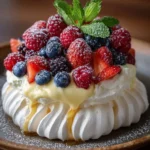
Delicate meringue clouds filled with silky vanilla custard and topped with fresh berries, finished with a hint of mint and lemon zest.
- Yield: 6 1x
Ingredients
- For the Pavlova Clouds:
- 4 large egg whites, room temperature
- 1 cup granulated sugar
- 1 tsp cornstarch
- 1 tsp white vinegar
- 1 tsp vanilla extract
- 1/8 tsp kosher salt
- For the Vanilla Custard:
- 2 cups whole milk
- 4 egg yolks
- 1/3 cup granulated sugar
- 2 tbsp cornstarch
- 1 tsp vanilla bean paste
- 1 tbsp unsalted butter
- For the Berry Topping:
- 1 cup fresh strawberries, halved
- 1/2 cup fresh blueberries
- 1/2 cup fresh raspberries
- 1 tbsp honey
- 1 tsp fresh lemon juice
- For Garnish (optional):
- Fresh mint leaves
- Powdered sugar
- Lemon zest
Instructions
- 1. Preheat the oven to 250°F (120°C) and line a baking sheet with parchment paper.
- 2. Beat the egg whites and salt until soft peaks form.
- 3. Gradually add the sugar, beating until stiff, glossy peaks develop.
- 4. Fold in the cornstarch, vinegar, and vanilla extract.
- 5. Spoon the meringue into 6 cloud-shaped mounds, creating a shallow well in the center of each.
- 6. Bake for 70–75 minutes, then turn off the oven and let the pavlovas cool completely inside with the door slightly open.
- 7. In a saucepan, heat the milk until just steaming.
- 8. In a bowl, whisk together the egg yolks, sugar, and cornstarch until smooth.
- 9. Slowly whisk the warm milk into the egg mixture, then return everything to the saucepan.
- 10. Cook over medium heat, stirring constantly, until the custard thickens. Remove from the heat and stir in the vanilla bean paste and butter. Chill completely.
- 11. Toss the strawberries, blueberries, and raspberries with the honey and lemon juice.
- 12. Spoon the chilled vanilla custard into each pavlova cloud, top with the berry mixture, and garnish with fresh mint, a light dusting of powdered sugar, and lemon zest. Serve immediately.
Nutrition
- Calories: 315
- Sugar: 46 g
- Fat: 10 g
- Carbohydrates: 51 g
- Protein: 6 g
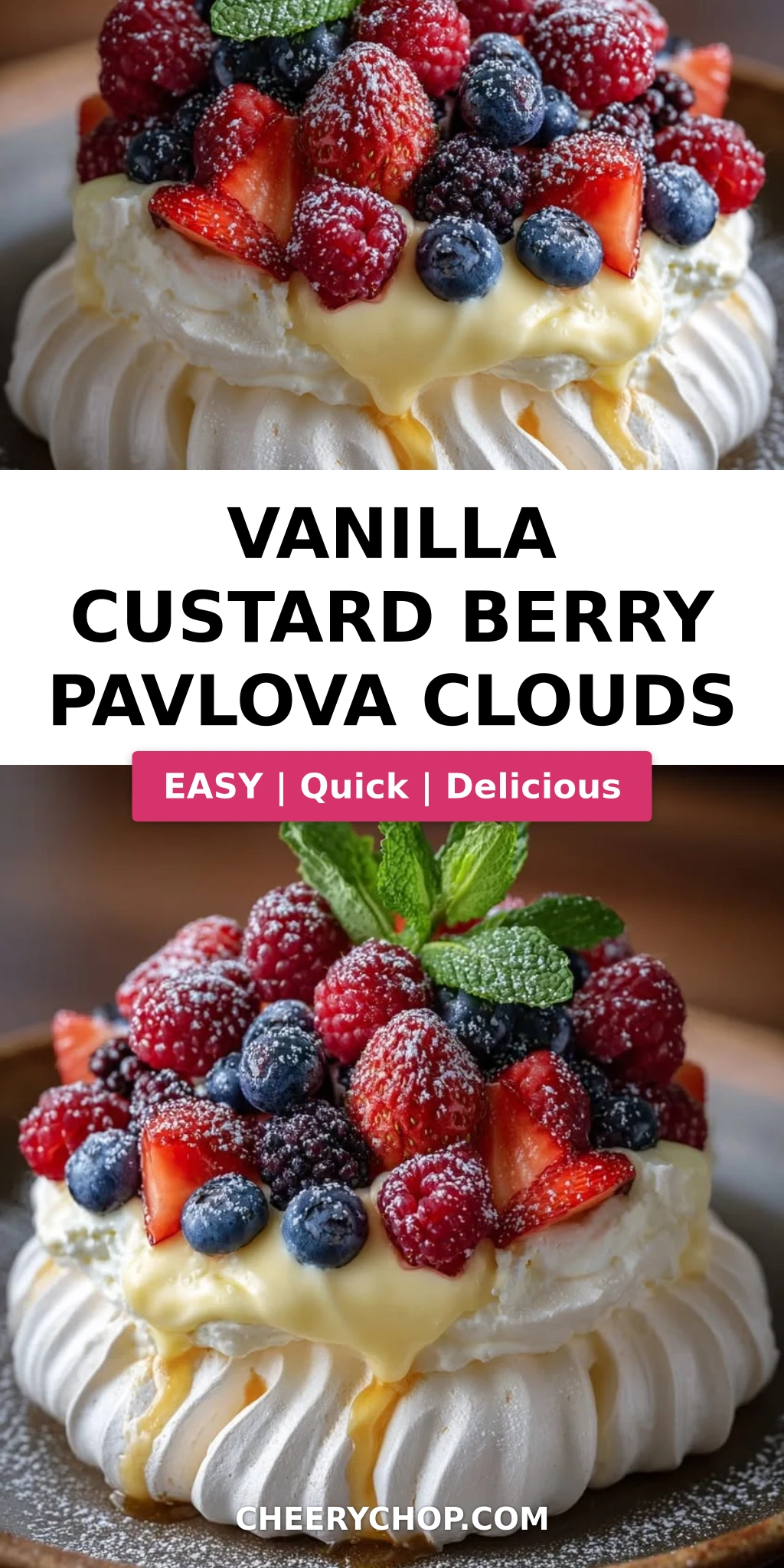
Tried This Recipe? Leave a Comment!
Did you make this recipe? I’d love to hear how it turned out! Please leave a comment and a rating below. Your feedback helps other home cooks and supports cheerychop.com!
For more delicious inspiration, follow me on Pinterest!