Table of Contents
Caramelized Butternut Squash, Carrots, Brussels Sprouts & Sweet Potato with Feta, Walnuts & Cranberry-Honey Glaze — The Ultimate Roasted Fall Vegetable Medley
I still remember the first time I made these caramelized butternut squash with a cranberry-honey glaze — it was a chilly November afternoon in my tiny NYC apartment, and the smell that filled the kitchen instantly transported me back to my mother’s home in Morocco. She would roast vegetables with honey and warm spices for hours, letting the natural sugars caramelize into something deeply savory and sweet. This roasted fall vegetables recipe is my love letter to that memory, blended with the French techniques I learned in Paris and the vibrant seasonal produce I find at the Union Square Greenmarket. Every forkful brings together tender caramelized butternut squash, earthy roasted root vegetables with feta, and the bright pop of cranberries — it’s the healthy holiday side dish you didn’t know you needed.
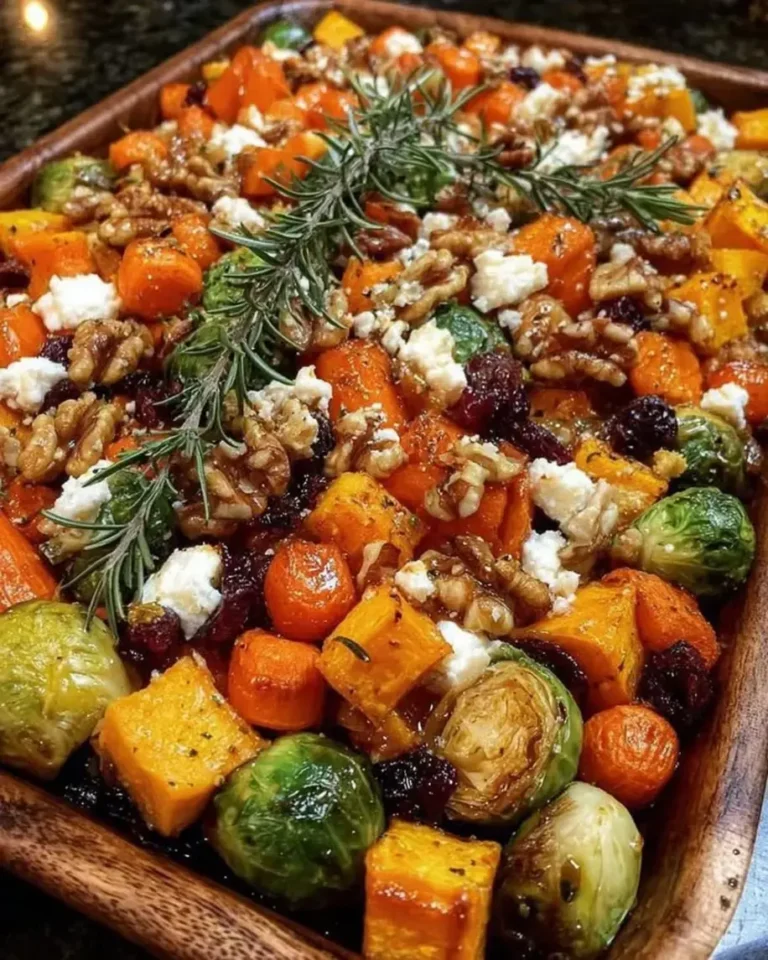
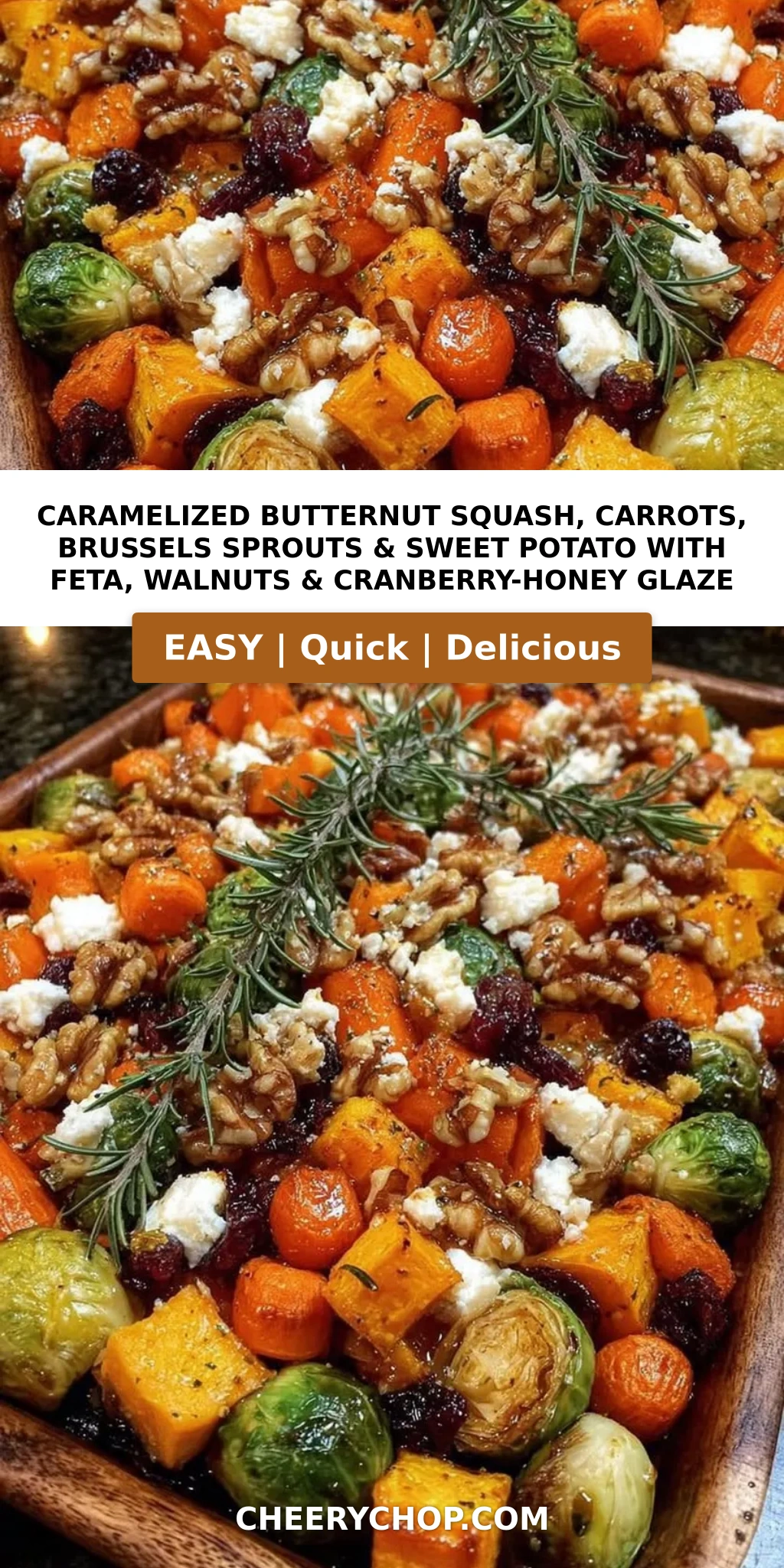
Imagine this: golden-edged butternut squash cubes, their edges sticky and bronzed from the glaze; sweet potato slices that have turned almost candied on the outside while staying fluffy within; Brussels sprouts with charred, crispy leaves that shatter when you bite into them. Now drizzle all of that with a warm cranberry-honey glaze that thickens into a glossy, tart-sweet ribbon, then shower it with salty crumbled feta and toasted walnuts. The contrast of temperatures, textures, and flavors — warm and cool, soft and crunchy, sweet and salty — is exactly the kind of layered eating I fell in love with at the cooking schools in Paris. This honey glazed brussels sprouts and root vegetable dish is a celebration of what happens when you treat humble vegetables with a chef’s respect.
What sets my version apart from other roasted vegetable recipes is the two-step caramelization technique I developed during my years as a line cook in NYC. Most recipes will tell you to just toss and roast, but I’ve found that giving the vegetables enough space — and the right oven temperature — makes all the difference between soggy and spectacular. The cranberry-honey glaze isn’t just a drizzle; it’s reduced separately so it concentrates in flavor without making the vegetables steam. I’ve tested this recipe for readers who told me they “don’t like Brussels sprouts” and watched them go back for thirds. 💡 Sara’s Pro Tip: Don’t crowd the pan! That’s the single biggest mistake home cooks make, and it’s the difference between caramelized and steamed. Let me show you exactly how to nail it every time.
Why This Caramelized Butternut Squash, Carrots, Brussels Sprouts & Sweet Potato with Feta, Walnuts & Cranberry-Honey Glaze Recipe Is the Best
The Flavor Secret: I learned early in my French culinary training that the key to exceptional roasted vegetables is building layers of flavor. Here, the natural sweetness of butternut squash and sweet potato gets amplified by a honey glaze that’s infused with tart dried cranberries — a trick I borrowed from the Moroccan tagines my mother would make, where fruit and meat cook together until the sweetness concentrates. The feta adds a sharp, salty tang that cuts through the richness, and the walnuts bring an earthy bitterness that ties everything together. It’s a flavor architecture that works on every level: sweet, salty, tart, bitter, and umami from the caramelization. This isn’t just another side dish — it’s a main event.
Perfected Texture: The biggest complaint I hear about roasted vegetables is that they turn out mushy. In my Paris training, we spent an entire module on dry-heat cooking methods, and I learned that the secret to perfect caramelization is surface area and high heat. I cut each vegetable to a specific size — butternut squash and sweet potato into 1-inch cubes, carrots into ½-inch rounds, and Brussels sprouts halved — so they all finish cooking at the same time. Roasting at 425°F on a single layer with parchment paper ensures maximum browning without burning. The result is vegetables that are tender on the inside with deeply golden, almost crispy edges that make every bite texturally exciting.
Foolproof & Fast: Despite how impressive this dish looks and tastes, it’s remarkably simple to pull together. The active prep time is just 20 minutes — mostly chopping vegetables — and the oven does the heavy lifting. I’ve designed this recipe so that even a beginner cook can achieve restaurant-quality results on their first try. The glaze comes together in one saucepan while the vegetables roast, so there’s no last-minute scrambling. Whether you’re cooking for a Thanksgiving crowd, a Sunday meal-prep session, or a weeknight dinner that feels special, this recipe delivers consistent, gorgeous results. I’ve taught it to friends who claimed they could barely boil water, and they’ve all made it again on their own. That’s the kind of recipe I’m most proud to share.
Roasted Fall Vegetables Ingredients
When I walk through the Union Square Greenmarket in early autumn, I feel like a kid in a candy store — piles of knobby butternut squash in every shade of beige and orange, carrots with their feathery green tops still attached, sweet potatoes that look like rustic treasures, and Brussels sprouts still clinging to their stalks. I source most of my produce from Norwich Meadows Farm and the guys at Migliorelli Farm, who have never steered me wrong. This ingredient list is built around what’s freshest and most flavorful during the fall harvest, and each component plays a specific role in the final dish. Here’s everything you’ll need to create this caramelized butternut squash recipe at home.
Ingredients List
- 1 small butternut squash, peeled, seeded, and cut into 1-inch cubes (about 3 cups)
- 2 large carrots, peeled and sliced into 1/2-inch rounds (about 1½ cups)
- 1/2 lb Brussels sprouts, trimmed and halved (about 2 cups)
- 1 large sweet potato, peeled and cut into 1-inch cubes (about 2 cups)
- 3 tablespoons olive oil
- 1/2 teaspoon salt
- 1/4 teaspoon black pepper
- 1/2 cup dried cranberries
- 1/4 cup honey
- 1/4 cup water
- 1/2 cup crumbled feta cheese
- 1/4 cup chopped walnuts
Ingredient Spotlight
Butternut Squash: The star of this caramelized butternut squash recipe. Look for a squash that feels heavy for its size with a matte, beige skin — shiny skin usually means it was harvested too early. The neck (the long part) is easier to peel and has fewer seeds than the bulbous bottom. If you’re short on time, many grocery stores sell pre-cut butternut squash cubes, though they tend to be drier than fresh-cut. 💡 Sara’s Pro Tip: Use a sharp vegetable peeler instead of a knife to remove the skin — it’s safer and you lose less flesh. One small butternut squash yields about 3 cups of cubes, which is perfect for this recipe.
Brussels Sprouts: For the best honey glazed brussels sprouts, choose sprouts that are firm, bright green, and tightly closed — loose or yellowing leaves mean they’re past their prime. I prefer smaller sprouts (about the size of a walnut) because they’re sweeter and more tender. When you halve them, leave the core intact so the leaves stay attached during roasting. If you see brown spots on the outer leaves, just peel them off and discard. I buy my Brussels sprouts still on the stalk when I can find them — they last weeks longer that way and look stunning in a kitchen display.
Feta Cheese: A good-quality feta makes all the difference in this roasted root vegetables with feta dish. I use a block-style feta (not pre-crumbled) from a Mediterranean market or the specialty cheese section — it’s creamier, saltier, and doesn’t dry out. French feta tends to be milder and creamier, while Greek feta is more tangy and crumbly. Both work beautifully here. If you’re dairy-free, see the variations section for excellent alternatives. 💡 Sara’s Pro Tip: Let the feta come to room temperature for 15 minutes before crumbling — it will be softer and easier to distribute evenly over the warm vegetables.
Walnuts: I use raw walnuts and toast them myself — it takes just 2-3 minutes in a dry skillet and makes a world of difference in flavor. Pre-toasted walnuts can taste stale or rancid because the oils oxidize after sitting on the shelf. Fresh walnuts should smell mild and nutty, not bitter or like paint thinner. I buy mine in bulk from the nut guy at the Grand Central Market and store them in the freezer so they stay fresh for months. For this recipe, you want them roughly chopped so every bite gets a little crunch.
Dried Cranberries: These are the backbone of the glaze, providing both sweetness and tartness. I prefer unsweetened or lightly sweetened dried cranberries — the honey in the glaze adds enough sweetness on its own. Look for cranberries that are plump and moist, not hard and shriveled. If you can find orange-infused dried cranberries, they’re spectacular in this dish. Make sure to use the water in the glaze as specified — it rehydrates the cranberries so they become juicy and tender rather than chewy and tough.
| Original Ingredient | Best Substitution | Flavor / Texture Impact |
|---|---|---|
| Butternut Squash | Kabocha or Delicata Squash | Kabocha is sweeter and denser; delicata has edible skin and cooks faster |
| Feta Cheese | Goat cheese, dairy-free feta, or toasted pine nuts (for dairy-free) | Goat cheese is tangier and creamier; pine nuts add crunch without dairy |
| Dried Cranberries | Dried cherries, chopped dried apricots, or golden raisins | Cherries are tarter; apricots add floral sweetness; raisins are milder |
| Walnuts | Pecans, hazelnuts, or almonds | Pecans are sweeter; hazelnuts are earthier; almonds are crunchier |
| Honey | Maple syrup or agave nectar (vegan) | Maple syrup adds smoky depth; agave is milder and thinner |
How to Make Caramelized Butternut Squash, Carrots, Brussels Sprouts & Sweet Potato with Feta, Walnuts & Cranberry-Honey Glaze — Step-by-Step
Trust me when I say this: if you can chop vegetables and turn on an oven, you can make this showstopping dish. I’ve broken it down into simple, foolproof steps that will guide you to perfectly caramelized results every single time. Let’s get cooking!
Step 1: Prep and Preheat
Preheat your oven to 425°F (220°C). Line a large baking sheet with parchment paper — this is non-negotiable for easy cleanup and to prevent sticking. While the oven heats, peel and chop all your vegetables: butternut squash into 1-inch cubes (peel first with a sharp vegetable peeler), sweet potato into matching 1-inch cubes, carrots into ½-inch rounds, and Brussels sprouts trimmed and halved through the core. Try to keep the pieces uniform in size so they roast evenly. 💡 Sara’s Pro Tip: If your butternut squash is particularly hard, microwave it whole for 2 minutes before peeling — it softens the skin just enough to make peeling effortless.
💡 Sara’s Pro Tip: Cut the butternut squash and sweet potato slightly larger than the Brussels sprouts and carrots — the denser vegetables take a bit longer to cook, so this ensures everything finishes at the same time.
Step 2: Season and Toss
In a large mixing bowl, combine all the chopped vegetables: butternut squash, carrots, Brussels sprouts, and sweet potato. Drizzle with 3 tablespoons of olive oil, then sprinkle with ½ teaspoon salt and ¼ teaspoon black pepper. Use your hands (I recommend taking off any rings first!) to toss everything together until every piece is evenly coated. The oil helps the seasoning stick and promotes even browning. Don’t be shy — really get in there and make sure every nook and cranny is covered. ⚠️ Common Mistake to Avoid: Don’t add the oil directly to the baking sheet and then add vegetables — you’ll end up with uneven coating and some pieces will burn while others stay pale.
⚠️ Common Mistake to Avoid: Using too small a bowl means you’ll miss spots. Use a bowl big enough to comfortably toss everything without spilling over the sides.
Step 3: Roast to Caramelized Perfection
Spread the seasoned vegetables in a single, even layer on your prepared baking sheet. Make sure no pieces are overlapping — if they’re crowded, they’ll steam instead of caramelize. Roast for 25-30 minutes, stirring once halfway through (at the 15-minute mark). You’re looking for deep golden-brown edges, tender interiors that yield easily to a fork, and Brussels sprouts with crispy, charred outer leaves. The high heat of 425°F is the secret to that beautiful caramelization without drying out the vegetables. 💡 Sara’s Pro Tip: If your oven runs hot, check at 22 minutes. Every oven is different — get to know yours! For extra browning, switch to the broil setting for the last 1-2 minutes, watching carefully so nothing burns.
💡 Sara’s Pro Tip: Don’t stir the vegetables too often — you want them to sit undisturbed so a deep golden crust can form. One stir at the halfway point is all they need.
Step 4: Make the Cranberry-Honey Glaze
While the vegetables roast, combine ½ cup dried cranberries, ¼ cup honey, and ¼ cup water in a small saucepan. Bring to a gentle simmer over medium heat, then reduce the heat to low and cook for 5 minutes, stirring occasionally. You’ll see the cranberries plump up as they absorb the liquid, and the mixture will thicken slightly into a glossy, syrupy glaze. Remove from heat and set aside. The glaze will continue to thicken as it cools. If it becomes too thick to drizzle, stir in a teaspoon of warm water to loosen it. ⚠️ Common Mistake to Avoid: Don’t let the glaze boil vigorously — it can turn bitter as the honey sugars over-caramelize. A gentle simmer is all you need.
⚠️ Common Mistake to Avoid: Skipping the water and using only honey + cranberries will result in a glaze that’s too thick and sticky — the water is essential for rehydrating the cranberries and creating the right consistency.
Step 5: Assemble and Serve
Transfer the hot roasted vegetables to a large serving platter — I like to use a wide, shallow dish so everything is visible and inviting. Drizzle the cranberry-honey glaze evenly over the top, letting it pool in the crevices. Immediately sprinkle with ½ cup crumbled feta cheese and ¼ cup chopped walnuts. The warmth of the vegetables will slightly soften the feta and release the oils in the walnuts, making every bite incredibly aromatic. Serve warm, and watch everyone reach for seconds. 💡 Sara’s Pro Tip: For the prettiest presentation, arrange the vegetables in a single layer on the platter rather than piling them — the glaze glistens more beautifully and the colors pop against each other.
💡 Sara’s Pro Tip: Toast the walnuts in a dry skillet over medium heat for 2-3 minutes before adding — it takes almost no time and transforms them from good to unforgettable.
| Step | Action | Duration | Key Visual Cue |
|---|---|---|---|
| 1 | Preheat oven & prep vegetables | 15 minutes | Oven at 425°F; vegetables cut into uniform 1-inch pieces |
| 2 | Toss vegetables with oil & seasoning | 5 minutes | Every piece evenly glistening with oil |
| 3 | Roast vegetables, stir once halfway | 25-30 minutes | Deep golden-brown edges; fork-tender interiors |
| 4 | Simmer cranberry-honey glaze | 5 minutes | Cranberries plump; glaze syrupy and glossy |
| 5 | Assemble & serve | 5 minutes | Glaze drizzled; feta crumbled; walnuts scattered |
Serving & Presentation
This dish is a showstopper on any table, whether it’s a casual weeknight dinner or a holiday feast. I love serving it on a large, rustic wooden platter — the kind I picked up at a flea market in Brooklyn — so the colors of the roasted vegetables really pop against the dark wood. For the most beautiful presentation, arrange the vegetables in a single layer rather than piling them, then drizzle the glaze in a zigzag pattern across the top. The feta and walnuts should be the final layer, scattered generously so every serving gets some of each. I always add a few extra toasted walnuts right at the center for height and drama.
This healthy holiday side dish pairs beautifully with so many mains. During the holidays, I serve it alongside a classic roast turkey or herb-crusted pork loin — the sweetness of the glaze complements the savory meat perfectly. On regular weeknights, it’s wonderful with simply grilled chicken or seared salmon. The leftovers (if there are any!) are fantastic cold in salads or reheated with a fried egg on top for breakfast. In my NYC kitchen, I’ve even piled it onto grain bowls with farro and a dollop of yogurt for a meatless Monday dinner that feels indulgent.
💡 Sara’s Pro Tip: For a Moroccan-inspired twist that honors my roots, sprinkle a pinch of cinnamon and a touch of smoked paprika over the vegetables before roasting. It adds a warmth that makes the dish even more memorable.
| Pairing Type | Suggestions | Why It Works |
|---|---|---|
| Side Dish | Roast turkey, herb-crusted pork loin, grilled salmon | Savory proteins balance the sweet-tart glaze and earthy vegetables |
| Sauce / Dip | Plain Greek yogurt, tahini drizzle, or balsamic reduction | Creamy or tangy sauces cut the sweetness and add richness |
| Beverage | Dry Riesling, crisp cider, or a light Pinot Noir | Acidity in the wine/cider echoes the cranberry-tartness |
| Garnish | Fresh thyme leaves, pomegranate arils, or a drizzle of olive oil | Fresh herbs and bright garnishes add color and a fresh finish |
Make-Ahead, Storage & Reheating
Between running my blog, testing recipes, and navigating the chaos of NYC life, I’m a huge proponent of make-ahead cooking. This dish is incredibly forgiving and actually tastes even better the next day as the flavors meld together. Here’s my tried-and-true system for prepping, storing, and reheating so you can enjoy this caramelized butternut squash recipe with zero stress, whether you’re planning a holiday dinner or a week of easy lunches.
| Method | Container | Duration | Reheating Tip |
|---|---|---|---|
| Refrigerator | Airtight container (glass preferred) | Up to 5 days | Reheat at 375°F for 10 minutes to restore crispness |
| Freezer | Freezer-safe ziplock bag (squeeze out air) | Up to 3 months | Thaw overnight in fridge, then reheat at 400°F for 12-15 minutes |
| Make-Ahead | Glaze in sealed jar; veggies in baking dish | Up to 2 days in advance | Reheat vegetables, then add glaze and toppings fresh |
The best make-ahead strategy is to roast the vegetables and prepare the glaze separately up to two days in advance. Store the vegetables in a covered baking dish in the refrigerator, and keep the glaze in a sealed jar. When you’re ready to serve, reheat the vegetables in a 375°F oven for about 10 minutes (they’ll crisp back up beautifully), then drizzle with the warmed glaze and add the feta and walnuts. Never store the assembled dish with the feta and walnuts on top — the feta will dry out and the walnuts will lose their crunch. Add those fresh just before serving.
💡 Sara’s Pro Tip: If you’re reheating in a microwave (I get it — busy weeknights!), spread the vegetables on a microwave-safe plate in a single layer and heat in 30-second bursts. They won’t be as crispy as oven-reheated, but they’ll still be delicious. For best results, a toaster oven is a great middle ground.
Variations & Easy Swaps
One of the things I love most about this roasted fall vegetables recipe is how adaptable it is. Over the years, I’ve tested countless variations for readers with different dietary needs, seasonal cravings, and pantry limitations. Here are my top three go-to variations, each one tested and loved in my NYC kitchen.
| Variation | Key Change | Best For | Difficulty Impact |
|---|---|---|---|
| Moroccan Spiced Version | Add 1 tsp ras el hanout + ½ tsp cinnamon to the oil | Warming, aromatic twist on the classic | No change — just add spices |
| Dairy-Free / Vegan Version | Replace feta with dairy-free feta or toasted pine nuts + use maple syrup | Plant-based diets and dairy sensitivities | No change — simple swap |
| Winter Root Vegetable Medley | Swap butternut squash for parsnips + add celery root | Winter produce and a nuttier flavor profile | No change — same prep method |
Moroccan Spiced Version
This variation is especially close to my heart. Growing up in Morocco, my mother would fragrance her roasted vegetables with ras el hanout — a complex spice blend that typically includes cumin, coriander, ginger, turmeric, cinnamon, and cardamom. To make this version, simply add 1 teaspoon of ras el hanout and ½ teaspoon of ground cinnamon to the olive oil before tossing with the vegetables. The warmth of the spices complements the sweet cranberry-honey glaze in a way that feels both exotic and comforting. If you don’t have ras el hanout, you can make a quick version by mixing equal parts cumin, paprika, and turmeric with a pinch of cinnamon. This is my favorite way to serve the dish during the holidays — it always sparks conversation and feels special without any extra work.
Dairy-Free / Vegan Version
I’ve tested this version for a reader whose daughter has a dairy allergy, and it’s become one of the most popular requests on my blog. To make this roasted root vegetables with feta recipe dairy-free, replace the feta with a high-quality dairy-free feta (the brand Violife makes an excellent one) or use ⅓ cup of toasted pine nuts for a crunchy, savory alternative that adds richness without any dairy. For the glaze, swap the honey for maple syrup or agave nectar to keep it fully vegan. The texture and flavor profile shift slightly — the pine nuts add a buttery, piney note that’s beautiful with the cranberries — but the dish remains every bit as satisfying. 💡 Sara’s Pro Tip: If using dairy-free feta, add it just before serving and don’t let it sit on the hot vegetables too long — some dairy-free cheeses can become rubbery when overheated.
Winter Root Vegetable Medley
When butternut squash is out of season or you’re craving something different, this winter variation is a fantastic option. Replace the butternut squash with 2 medium parsnips (peeled and cut into 1-inch chunks) and add 1 small celery root (peeled and cut into ½-inch cubes). Parsnips have a sweet, nutty flavor that caramelizes beautifully, and celery root adds an earthy, slightly celery-like note that pairs wonderfully with the cranberry-honey glaze. The prep is identical to the original recipe, and the roasting time remains the same — just keep an eye on the celery root, as it can go from tender to mushy quickly. I love serving this version with a dollop of crème fraîche or Greek yogurt for a creamy contrast. It’s a wonderful way to celebrate the heart of winter while still enjoying a bright, colorful dish.
How do you prevent the vegetables from getting soggy when roasting butternut squash, carrots, Brussels sprouts, and sweet potatoes together?
The number one reason roasted vegetables turn soggy is overcrowding the pan. When the vegetables are too close together, they steam instead of roast, releasing moisture that prevents caramelization. For this caramelized butternut squash recipe, use a large baking sheet and spread everything in a single layer with a little space between each piece — if they’re touching, that’s fine, but they shouldn’t be stacked. Second, make sure your oven is fully preheated to 425°F before the vegetables go in — a hot oven creates instant steam that quickly evaporates, setting the stage for browning. Third, don’t skip the parchment paper; it helps wick away moisture. Finally, pat the Brussels sprouts dry after washing — any excess water on the surface will turn to steam in the oven. Follow these steps and you’ll get perfectly caramelized, never soggy, results every time.
What can I substitute for feta cheese in this roasted vegetable recipe?
There are several excellent substitutes for feta in this roasted root vegetables with feta dish, depending on your dietary needs and flavor preferences. For a similar salty-tangy profile, goat cheese is the closest match — it’s creamier than feta but brings the same bright, acidic note that cuts through the sweet glaze. If you need a dairy-free option, I recommend using toasted pine nuts (⅓ cup) or a good dairy-free feta like Violife — pine nuts add a wonderful buttery crunch without any dairy. For a completely different but delicious twist, try crumbled cotija cheese (it’s saltier and drier than feta) or even a sprinkle of nutritional yeast for a cheesy, umami flavor without any cheese at all. Each substitute will change the flavor profile slightly, but all are delicious in their own right. If you’re avoiding dairy for health reasons, the toasted pine nut version has become a reader favorite on my blog.
How long should you roast mixed root vegetables and Brussels sprouts for the best caramelization?
For the best caramelization on mixed root vegetables and Brussels sprouts, roast at 425°F (220°C) for 25 to 30 minutes, stirring once halfway through. The high temperature is crucial — it creates the Maillard reaction that produces those deep golden-brown edges and concentrated flavors. In this recipe, the butternut squash, sweet potato, carrots, and Brussels sprouts are all cut to specific sizes so they finish cooking at the same time: the denser squash and sweet potato are cut into 1-inch cubes, while the carrots are ½-inch rounds and the Brussels sprouts are halved. At the 25-minute mark, check for doneness — the vegetables should be tender enough to pierce easily with a fork, with caramelized spots and crispy edges on the Brussels sprouts. If you want extra browning, switch the oven to broil for the last 1-2 minutes, watching closely so nothing burns. Every oven is different, so get to know yours and adjust accordingly.
Can I make the cranberry-honey glaze ahead of time for this dish?
Absolutely — making the cranberry-honey glaze ahead of time is not only possible, it’s actually a great time-saving strategy. Prepare the glaze up to 5 days in advance and store it in a sealed glass jar or airtight container in the refrigerator. The glaze will thicken as it cools, so when you’re ready to serve, simply warm it gently on the stovetop or in the microwave (in 15-second bursts, stirring in between) until it’s loose enough to drizzle. If it’s too thick after reheating, stir in a teaspoon of warm water to reach the desired consistency. I often make a double batch of the glaze because it’s fantastic drizzled over oatmeal, yogurt, pancakes, or even roasted chicken later in the week. Just keep in mind that the cranberries will continue to soften and plump as the glaze sits, which is exactly what you want — they’ll be even more tender and flavorful by the time you use them.
Can I use frozen vegetables for this roasted fall vegetables recipe?
I don’t recommend using frozen vegetables for this recipe, and here’s why: frozen vegetables contain a high amount of water from the freezing and thawing process, which releases steam during roasting and prevents the caramelization that gives this dish its signature flavor and texture. The whole point of this caramelized butternut squash recipe is those deep golden-brown edges and concentrated sweetness, which only happen when the vegetables are dry and exposed to high, dry heat. If you’re in a pinch and must use frozen vegetables, thaw them completely first, then pat them very dry with paper towels or a clean kitchen towel before tossing with oil and seasoning. You’ll still get a decent result, but it won’t have the same level of caramelization as fresh. For the best experience, stick with fresh seasonal vegetables — they’re worth the extra few minutes of prep.
How do I toast walnuts for this honey glazed brussels sprouts dish?
Toasting walnuts is incredibly easy and transforms their flavor from bland and slightly bitter to rich, nutty, and aromatic. For this honey glazed brussels sprouts and root vegetable dish, start with ¼ cup of raw walnut pieces (not pre-toasted). Heat a dry skillet — I use a cast-iron skillet — over medium heat. Add the walnuts in a single layer and cook for 2-3 minutes, stirring or shaking the pan frequently so they toast evenly and don’t burn on one side. You’ll know they’re done when they become fragrant and the color deepens slightly; they should look a shade darker and smell wonderfully nutty. Immediately transfer them to a plate or bowl to cool — they’ll continue to toast from residual heat if left in the hot pan. Let them cool completely before using, then roughly chop them into smaller pieces if desired. Toasted walnuts can be stored in an airtight container at room temperature for up to a week, though I doubt they’ll last that long once you taste them.
What other vegetables can I add to this roasted root vegetables with feta dish?
This roasted root vegetables with feta recipe is wonderfully adaptable, and I’ve tested many vegetable combinations over the years. Some of my favorite additions include: 1) Cauliflower florets — they caramelize beautifully and soak up the glaze like a sponge. 2) Red onion wedges — they add a sweet, savory depth and beautiful purple color. 3) Parsnips — their natural sweetness complements the butternut squash and sweet potato. 4) Red bell pepper strips — they add a pop of color and a slightly smoky sweetness when roasted. 5) Cubed celery root — it brings an earthy, celery-like note that’s lovely with the cranberries. If you’re adding any of these, keep the total volume of vegetables to about 6-7 cups so they still fit in a single layer on your baking sheet. Adjust the roasting time slightly if needed — less dense vegetables like cauliflower may cook a few minutes faster, so you can add them halfway through if you’re mixing very different textures.
Is this caramelized butternut squash recipe suitable for Thanksgiving or holiday entertaining?
Absolutely — this healthy holiday side dish is one of the most popular recipes on my blog during Thanksgiving and Christmas, and for good reason. It’s colorful enough to stand out on a holiday table, sophisticated enough to impress guests, and simple enough that you can make it without stress. The make-ahead options are a lifesaver for holiday cooking: you can roast the vegetables and make the glaze up to two days in advance, then simply reheat and assemble before serving. The cranberry-honey glaze gives it a festive, seasonal feel that pairs beautifully with turkey, ham, or roast beef. Plus, it naturally accommodates many dietary preferences — it’s gluten-free, can be made vegan or dairy-free, and is packed with nutrients. I’ve served it at Friendsgiving gatherings, Christmas dinners, and New Year’s brunches, and it never fails to get compliments. Just double the recipe if you’re serving a crowd — it disappears fast!
Can I use maple syrup instead of honey in the glaze?
Yes, you can absolutely substitute maple syrup for honey in the cranberry glaze, and it works beautifully. Use the same amount — ¼ cup of pure maple syrup (not pancake syrup) in place of the honey. The flavor profile shifts slightly: maple syrup adds a deeper, more complex sweetness with subtle smoky and woody notes, while honey is more floral and bright. Both are delicious with the cranberries and roasted vegetables. If you’re making this recipe vegan, maple syrup is the perfect swap. One thing to note: maple syrup is thinner than honey, so the glaze may be slightly less thick and syrupy. If you want a thicker consistency, simmer it for an extra minute or two to reduce it further, or add a tiny pinch of cornstarch mixed with water (slurry) and stir until it thickens. Taste the glaze after swapping and adjust — you may want to add a pinch of salt or a squeeze of lemon to balance the sweetness.
How do I store leftovers and reheat them without losing the caramelized texture?
Storing and reheating this dish properly is key to enjoying those delicious caramelized textures a second time. For storage, place leftover vegetables (without the feta and walnuts — add those fresh later) in an airtight container and refrigerate for up to 5 days. The glaze can be stored separately in a jar. For reheating, the oven is your best friend: spread the vegetables on a baking sheet and reheat at 375°F for 8-10 minutes until they’re hot and the edges crisp up again. A toaster oven works great for smaller portions. If you’re short on time, the microwave will work but the texture won’t be as crisp — spread the vegetables on a microwave-safe plate in a single layer and heat in 30-second bursts. Add the glaze after reheating, then top with fresh feta and walnuts. Avoid reheating the assembled dish with the toppings — the feta will dry out and the walnuts will lose their crunch. I often make extra specifically for leftovers; they’re fantastic cold in salads or piled onto toast with a smear of ricotta.
Share Your Version!
I absolutely love hearing from you — it’s the best part of what I do. When you make this caramelized butternut squash, carrots, Brussels sprouts & sweet potato with feta, walnuts & cranberry-honey glaze, I want to know how it turned out! Did you try the Moroccan spiced version? Did your kids (or your picky partner) go back for seconds? Did you discover a substitution that worked even better than you expected? Drop a comment below with your star rating and any tweaks you made — every single one helps another reader who’s about to make the recipe for the first time.
And if you’re on social media, snap a photo of your creation and tag @cheerychop on Instagram or Pinterest — I scroll through every single tag and it genuinely makes my day to see my recipes coming to life in kitchens around the world. Let me know: what’s your favorite way to enjoy these roasted fall vegetables? As a holiday side, a weeknight dinner, or a meal-prep star? I’m always looking for new ideas and I can’t wait to hear from you.
From my NYC kitchen to yours — I hope this recipe brings as much warmth to your table as it does to mine. — Sara 🧡
Love This Recipe? Save It to Pinterest!
If you enjoyed this Caramelized Butternut Squash, Carrots, Brussels Sprouts & Sweet Potato with Feta, Walnuts & Cranberry-Honey Glaze recipe, don’t let it get lost in your browser tabs! 😄 Pin it now so you can find it again anytime — and explore hundreds more tried-and-tested recipes waiting for you on my Pinterest boards.
👉 Follow Sara on Pinterest @chefrecipes2
📌 Pin this recipe · 🔁 Re-pin your favorites · 💬 Tag me when you make it — I love seeing your creations!
⭐ Loved this recipe? Share the love!
If you made this Caramelized Butternut Squash, Carrots, Brussels Sprouts & Sweet Potato with Feta, Walnuts & Cranberry-Honey Glaze, leave a star rating and comment below — I read every single one! Your feedback helps other home cooks discover their new favorite dish.
📸 Tag @cheerychop on Instagram or Pinterest for a chance to be featured in my stories!
Caramelized Butternut Squash, Carrots, Brussels Sprouts & Sweet Potato with Feta, Walnuts & Cranberry-Honey Glaze
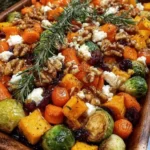
A colorful and flavorful roasted vegetable dish with a sweet and tangy cranberry-honey glaze, topped with crumbled feta and crunchy walnuts.
- Prep Time: 20 minutes
- Cook Time: 30 minutes
- Total Time: 50 minutes
- Yield: 6 1x
- Method: Side Dish
- Cuisine: American
Ingredients
- 1 small butternut squash, peeled, seeded, and cut into 1-inch cubes
- 2 large carrots, peeled and sliced into 1/2-inch rounds
- 1/2 lb Brussels sprouts, trimmed and halved
- 1 large sweet potato, peeled and cut into 1-inch cubes
- 3 tablespoons olive oil
- 1/2 teaspoon salt
- 1/4 teaspoon black pepper
- 1/2 cup dried cranberries
- 1/4 cup honey
- 1/4 cup water
- 1/2 cup crumbled feta cheese
- 1/4 cup chopped walnuts
Instructions
- Preheat oven to 425°F (220°C). Line a large baking sheet with parchment paper.
- In a large bowl, toss together the butternut squash, carrots, Brussels sprouts, and sweet potato with olive oil, salt, and pepper until evenly coated.
- Spread the vegetables in a single layer on the prepared baking sheet. Roast for 25-30 minutes, stirring once halfway through, until tender and caramelized.
- While the vegetables roast, make the glaze: In a small saucepan, combine the dried cranberries, honey, and water. Bring to a simmer over medium heat, then reduce heat and cook for 5 minutes, stirring occasionally, until the cranberries are plump and the mixture thickens slightly. Remove from heat.
- Transfer the roasted vegetables to a serving platter. Drizzle with the cranberry-honey glaze.
- Sprinkle with crumbled feta cheese and chopped walnuts. Serve warm.
Notes
For extra crunch, toast the walnuts in a dry skillet over medium heat for 2-3 minutes before adding. The glaze can be made ahead and reheated gently. This dish pairs well with roasted chicken or grilled fish.
Nutrition
- Calories: 320
- Sugar: 28g
- Fat: 14g
- Carbohydrates: 45g
- Protein: 7g
Tried This Recipe? Leave a Comment!
Did you make this recipe? I’d love to hear how it turned out! Please leave a comment and a rating below. Your feedback helps other home cooks and supports cheerychop.com!
For more delicious inspiration, follow me on Pinterest!