
Table of Contents
Mediterranean Layered Beet, Sweet Potato & Feta Gratin with Walnuts — A Hearty, Vibrant Side Dish
I still remember the first time I built a proper gratin in Paris — my instructor, a no-nonsense Breton with a gold tooth, watched as I layered potatoes, cream, and cheese. “Not thin enough, Sara,” he said, shaking his head. “A gratin is not a lasagna. Every slice must be paper-thin so the cream can marry the starch.” That lesson came rushing back the day I was wandering the Union Square Greenmarket in New York City and spotted candy-stripe beets next to jewel-toned sweet potatoes. I grabbed a bunch of each, and by the time I got home, this Mediterranean beet and sweet potato gratin was already forming in my mind — a dish that weaves my Moroccan roots, my French training, and the vibrant energy of a NYC autumn into one beautiful, bubbling casserole. The earthy sweetness of roasted beets, the creamy richness of feta, and the crunch of walnuts — all held together by a garlic-oregano cream sauce — this layered vegetable gratin recipe is comfort food with a Mediterranean passport.
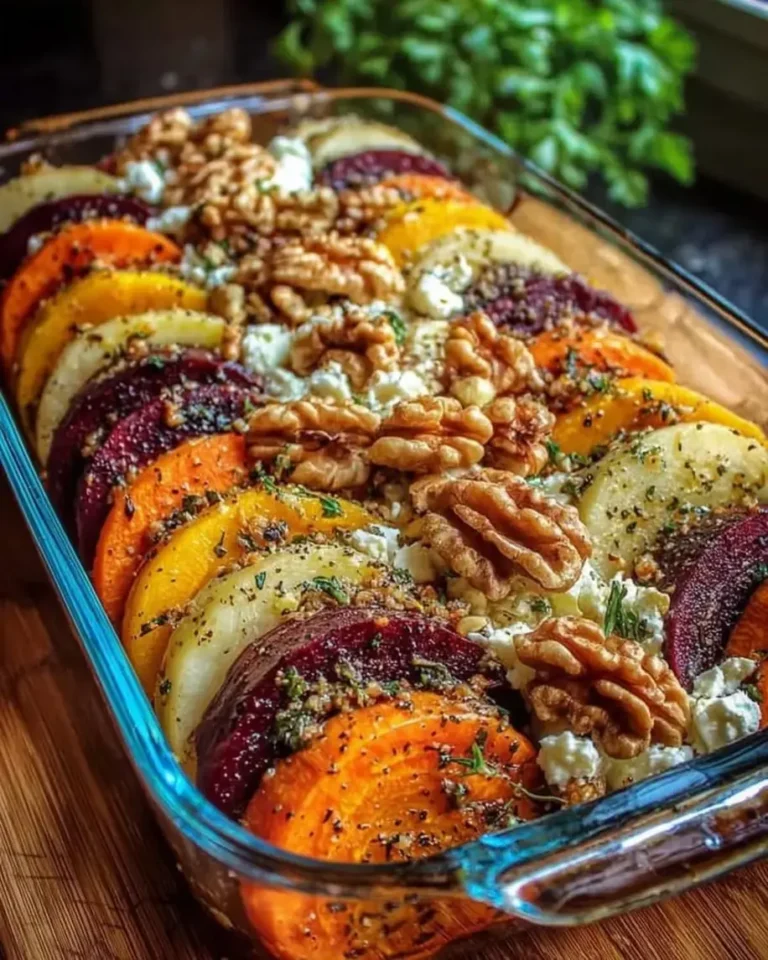
Let me paint you a picture of this dish fresh out of the oven: the top is golden and bubbling, with little pockets of feta that have turned into salty, tangy custard. The walnuts — toasted by the dry heat — offer a brittle, nutty counterpoint to the soft, yielding vegetables. When you cut into it, the layers reveal themselves like geologic strata: deep magenta beet, bright orange sweet potato, and creamy white feta, all glistening with a garlicky cream sauce scented with oregano. The aroma that fills your kitchen is intoxicating — sweet, earthy, savory, and faintly floral from the walnuts. It’s the kind of healthy Mediterranean casserole that makes you feel virtuous and decadent at the same time. In my mother’s kitchen in Morocco, we would have served this alongside a fragrant lamb tagine; in Paris, it would have been the star of a winter buffet. Here in my NYC apartment, I serve it as a main dish with a green salad, and it never lasts more than 20 minutes.
What sets my version apart from other gratins is a technique I call “cream layering” — instead of pouring all the cream at once, I drizzle it between every two layers so that every single slice of beet and sweet potato gets bathed in the garlic-oregano infusion. This is the trick that ensures every bite is as flavorful as the last, and it’s the same method I learned in that Paris kitchen. I also take the time to toast the walnuts separately before adding them — trust me, this small step makes all the difference between a beet feta walnut gratin that’s merely good and one that’s absolutely unforgettable. One common mistake I see home cooks make is slicing the vegetables too thick; if they’re thicker than ⅛ inch, they won’t cook through in the same time the cream reduces. So grab your sharpest knife or a mandoline, and let’s make this beautiful roasted beet and sweet potato bake together. 💡 Sara’s Pro Tip: If you’re new to mandoline work, always use the guard — your fingertips will thank you!
Why This Mediterranean Layered Beet, Sweet Potato & Feta Gratin Recipe Is the Best
The Flavor Secret: The genius of this Mediterranean beet and sweet potato gratin lies in the way the three main ingredients — beets, sweet potatoes, and feta — interact. Beets bring an earthy, mineral sweetness that is very different from the caramelized sweetness of roasted sweet potatoes. Feta adds a sharp, salty tang that cuts through the richness of the cream, while the walnuts contribute a toasted bitterness that keeps every bite interesting. I’ve drawn on my Moroccan pantry instincts here: that combination of sweet, salty, and nutty is the same flavor architecture we use in dishes like pastilla and briouates. It’s a flavor that feels both exotic and deeply familiar.
Perfected Texture: The “cream layering” technique I mentioned is non-negotiable. By drizzling the cream mixture between every two layers rather than dumping it all on top, you ensure the cream penetrates every slice. The result is a gratin that is creamy all the way through, not just on top. And because I toast the walnuts before adding them, they retain their crunch even after an hour in the oven — no sad, soggy nuts here. This is the difference between a home cook’s gratin and a chef’s gratin, and it’s a technique I carried with me from Paris to New York.
Foolproof & Fast: Despite the elegant result, this layered vegetable gratin recipe is surprisingly forgiving. As long as you slice your vegetables thin and layer them evenly, the oven does the rest of the work. There’s no standing over a stovetop, no complicated sauce-making — just whisk, layer, and bake. It’s the perfect dish for a busy weeknight when you want something that tastes like you spent hours in the kitchen, or for a holiday table where you need a showstopping side. And because it’s a healthy Mediterranean casserole loaded with vegetables and a modest amount of cream, you can feel good about going back for seconds.
Mediterranean Beet and Sweet Potato Gratin Ingredients
When I shop for this roasted beet and sweet potato bake, I head straight to the farmers market at Union Square. I look for beets that are firm and heavy for their size, with fresh leaves still attached — that’s a sign they were recently harvested. For the sweet potatoes, I prefer the ones with deep orange flesh, like Garnet or Jewel varieties; they’re sweeter and creamier than the pale-fleshed ones. The feta — I always buy a block in brine rather than pre-crumbled; it’s creamier and more flavorful. And the walnuts: get the freshest you can find, and give them a sniff before you buy — they should smell nutty and sweet, not sour or bitter.
Ingredients List
- 2 large beets, peeled and thinly sliced (⅛-inch)
- 2 large sweet potatoes, peeled and thinly sliced (⅛-inch)
- 1 cup crumbled feta cheese (from a block in brine)
- 1/2 cup chopped walnuts, toasted (optional but highly recommended)
- 1/2 cup grated Parmesan cheese
- 1 cup heavy cream
- 2 cloves garlic, minced
- 1 teaspoon dried oregano
- 1/2 teaspoon salt
- 1/4 teaspoon black pepper
- 2 tablespoons olive oil (for drizzling)
Ingredient Spotlight
Beets: Beets are the star of this gratin — they provide an earthy, sweet depth that sweet potatoes alone can’t match. When shopping, look for beets that are firm with no soft spots. The skin should be smooth and the color vibrant. You can use red beets for the classic magenta effect, or try golden or candy-stripe beets for a milder, sweeter flavor and a beautiful visual. If you’re using red beets, wear gloves when slicing to avoid staining your hands — a lesson I learned the hard way before a dinner party in Paris!
Sweet Potatoes: Sweet potatoes bring a creamy, caramelized sweetness that balances the earthy beets. They also hold their shape beautifully during baking, giving the gratin structure. I recommend Garnet or Jewel sweet potatoes for their deep orange color and rich flavor. Avoid yams, which are starchier and less sweet. In a pinch, you can substitute Yukon Gold potatoes for a less sweet, more savory gratin — but honestly, the sweetness is part of the magic.
Feta Cheese: Feta is the tangy foil to all that sweetness. Its salty, briny flavor cuts through the cream and keeps the dish from feeling heavy. Always buy feta in a block stored in brine — it’s creamier, more flavorful, and crumbles beautifully. Avoid pre-crumbled feta, which is often dry and coated with anti-caking agents that prevent it from melting properly. For a dairy-free version, try a plant-based feta alternative; the texture will be different, but the tangy flavor can be replicated.
Walnuts: Toasted walnuts add a crunchy, nutty element that transforms this gratin from a simple vegetable bake into something truly special. To toast them: spread the chopped walnuts on a baking sheet and bake at 350°F for 5-7 minutes, shaking the pan halfway through, until fragrant and lightly browned. Watch them closely — they burn quickly! You can substitute pecans or pine nuts, or omit them entirely if you prefer a nut-free version. 💡 Sara’s Pro Tip: Toasting the walnuts before adding them to the gratin ensures they stay crunchy rather than turning soft and chewy during baking.
| Original Ingredient | Best Substitution | Flavor / Texture Impact |
|---|---|---|
| Beets | Golden beets or parsnips | Milder, less earthy; parsnips add a peppery note |
| Sweet Potatoes | Yukon Gold potatoes or butternut squash | Less sweet, more savory; squash is softer |
| Feta Cheese | Goat cheese or plant-based feta | Goat cheese is tangier, creamier; plant-based is less salty |
| Walnuts | Pecans, pine nuts, or omit | Pecans are sweeter; pine nuts are more delicate |
| Heavy Cream | Coconut cream (for vegan) or half-and-half | Coconut cream adds a hint of coconut; half-and-half is less rich |
How to Make Mediterranean Layered Beet, Sweet Potato & Feta Gratin — Step-by-Step
Making this beet feta walnut gratin is a labor of love, but I promise every step is worth it. Here’s how to build those gorgeous layers.
Step 1: Prepare the Vegetables and Oven
Preheat your oven to 375°F (190°C). Lightly grease a 9×13 inch baking dish with a little olive oil or butter. Peel the beets and sweet potatoes, then slice them as thinly as possible — aim for ⅛-inch thickness. A mandoline is your best friend here for even, consistent slices. If you don’t have a mandoline, use a very sharp knife and take your time. The thinner the slices, the faster and more evenly the gratin will cook. Place the sliced beets and sweet potatoes in separate bowls so you can layer them easily.
💡 Sara’s Pro Tip: If you’re sensitive to beet stains, wear disposable kitchen gloves while peeling and slicing. And if you get beet juice on a cutting board, rub it with a cut lemon half — the acid helps lift the stain.
Step 2: Make the Cream Mixture
In a small bowl, whisk together the heavy cream, minced garlic, dried oregano, salt, and black pepper. Give it a taste — the cream should be well-seasoned, with the oregano and garlic coming through clearly. Set the mixture aside. This is the liquid that will carry all the flavor through every layer of your gratin. Don’t skip the oregano — it’s the herb that sings “Mediterranean” in every bite.
⚠️ Common Mistake to Avoid: Don’t use stale oregano! Dried oregano loses its punch after about 6 months. If yours has been sitting in the back of your spice cabinet for years, replace it. The difference is night and day.
Step 3: Layer the Gratin
Now comes the fun part — building the layers. Start with a layer of beet slices arranged in a single, slightly overlapping layer on the bottom of the prepared dish. Drizzle a little of the cream mixture over the beets — about 2 tablespoons, just enough to lightly coat. Next, add a layer of sweet potato slices, followed by a sprinkle of feta and a few toasted walnuts. Repeat the pattern: beets, cream, sweet potatoes, feta, walnuts — until you’ve used all the vegetables. You should end with a top layer of sweet potatoes. This is important: ending with sweet potatoes gives you a beautiful golden-brown top as they caramelize in the oven.
💡 Sara’s Pro Tip: Reserve a handful of feta and walnuts to sprinkle on top during the last 10 minutes of baking — it makes for a prettier, more textured finish.
Step 4: Add the Topping and Bake
Pour any remaining cream mixture evenly over the top layer of sweet potatoes. Sprinkle the grated Parmesan cheese over the entire surface, then drizzle with the 2 tablespoons of olive oil. The Parmesan will create a golden, crispy crust, while the olive oil helps everything brown beautifully. Cover the dish tightly with foil and bake for 40 minutes. After 40 minutes, remove the foil and bake for another 20 minutes, or until the vegetables are tender when pierced with a fork and the top is deep golden and bubbling.
⚠️ Common Mistake to Avoid: Don’t skip the foil stage — if you bake it uncovered the whole time, the cream will reduce too quickly and the vegetables may not cook through before the top burns. The foil traps steam to cook the vegetables, and removing it at the end allows the top to brown.
Step 5: Rest and Serve
Once the gratin is out of the oven, let it rest for 10 minutes before serving. This resting period is critical — it allows the cream to absorb back into the vegetables and the layers to set, so you get clean, beautiful slices rather than a soupy mess. I know it’s tempting to dig in right away, but trust me on this one. After 10 minutes, use a sharp spatula to cut and serve. Garnish with a few extra toasted walnuts and a sprinkle of fresh oregano or parsley if you have it.
💡 Sara’s Pro Tip: For the cleanest slices, use a serrated knife to cut the gratin — it saws through the layers without squishing them.
| Step | Action | Duration | Key Visual Cue |
|---|---|---|---|
| 1 | Preheat & slice vegetables | 15 minutes | Slices are ⅛-inch, uniform, see-through thin |
| 2 | Make cream mixture | 2 minutes | Cream is smooth, garlic and oregano are well mixed |
| 3 | Layer vegetables with cream, feta, walnuts | 10 minutes | Layers are neat, slightly overlapping, ending with sweet potato |
| 4 | Add Parmesan, oil; bake covered then uncovered | 60 min total (40 + 20) | Top is golden brown, edges are bubbling, vegetables are tender |
| 5 | Rest before serving | 10 minutes | Layers set, cream is absorbed, slices hold their shape |
Serving & Presentation
This Mediterranean beet and sweet potato gratin is as versatile as it is beautiful. I love serving it as a showstopping side dish alongside roasted chicken, lamb chops, or a simply grilled fish. It also works beautifully as a vegetarian main — just pair it with a crisp green salad dressed with lemon vinaigrette and some crusty bread to soak up any extra cream sauce. In my house, we often eat it topped with a poached egg for a decadent weekend brunch — the runny yolk mingling with the creamy gratin is pure magic.
For presentation, I like to serve the gratin directly from the baking dish — it’s rustic and inviting. If I’m feeling fancy, I’ll use a round cutter to stamp out neat cylinders and stack them on individual plates, garnished with a small handful of arugula and a drizzle of balsamic glaze. The deep magenta and orange layers are stunning against a white plate. In the winter, I sometimes add a sprinkle of pomegranate seeds on top for a pop of bright red and a burst of tartness — a trick I picked up from a Persian chef at the Chelsea Market.
When it comes to beverages, this healthy Mediterranean casserole pairs wonderfully with a crisp white wine like Assyrtiko from Greece or a dry rosé. For a non-alcoholic option, try a sparkling water with a splash of pomegranate juice and a sprig of mint — it echoes the flavors of the dish beautifully.
| Pairing Type | Suggestions | Why It Works |
|---|---|---|
| Side Dish | Roasted chicken, lamb chops, grilled fish, or a simple green salad | The gratin’s richness complements lean proteins; its acidity cuts through fatty meats |
| Sauce / Dip | Lemon vinaigrette, balsamic glaze, or a dollop of Greek yogurt with za’atar | Bright, tangy sauces balance the gratin’s creamy sweetness; yogurt adds cooling contrast |
| Beverage | Assyrtiko (Greek white wine), dry rosé, or sparkling water with pomegranate | Crisp, dry wines cut through the cream; fruity sparklers echo the beet sweetness |
| Garnish | Fresh oregano, parsley, pomegranate seeds, or extra toasted walnuts | Fresh herbs add color and brightness; pomegranate seeds add tart pops and visual drama |
Make-Ahead, Storage & Reheating
One of the things I love most about this layered vegetable gratin recipe is how well it works for meal prep. Living in NYC means my schedule is always a little chaotic, so I often assemble the gratin a day ahead, keep it covered in the fridge, and bake it fresh when I’m ready. The flavors actually deepen overnight as the vegetables marinate in the cream and garlic. Here’s my complete guide to storing and reheating this dish so it stays as delicious as the day you made it.
| Method | Container | Duration | Reheating Tip |
|---|---|---|---|
| Refrigerator | Covered baking dish or airtight container | Up to 5 days | Reheat covered at 350°F for 15-20 min, then uncovered for 5 min to crisp the top |
| Freezer | Well-wrapped baking dish or freezer-safe container | Up to 3 months | Thaw overnight in fridge, then reheat covered at 350°F for 25-30 min |
| Make-Ahead | Assemble in dish, cover, refrigerate | Up to 24 hours in advance | Add 10-15 minutes to the covered baking time if baking straight from the fridge |
If you’re reheating individual portions, the microwave works in a pinch, but the oven is always better for restoring that crispy top. I’ll often reheat leftovers in a 350°F oven for 15 minutes, then hit them with the broiler for 1-2 minutes to re-crisp the Parmesan crust. One thing I’ve learned from my Paris days: never reheat a gratin on high power in the microwave — it will turn the cream grainy and the vegetables rubbery. Low and slow is the way to go. 💡 Sara’s Pro Tip: If your gratin seems dry after reheating, drizzle a tablespoon of warm cream or milk over the top before putting it in the oven — it will rehydrate the layers beautifully.
Variations & Easy Swaps
Over the years, I’ve played with this roasted beet and sweet potato bake in countless ways — some inspired by my Moroccan roots, others by what I find at the Union Square market. Here are some of my favorite variations, along with a quick-reference table so you can adapt this beet feta walnut gratin to whatever you have on hand.
| Variation | Key Change | Best For | Difficulty Impact |
|---|---|---|---|
| Moroccan Spiced | Add 1 tsp ras el hanout and ½ tsp cinnamon to cream | Adding warmth and complexity | Easy — just stir in the spices |
| Dairy-Free / Vegan | Use coconut cream + plant-based feta + omit Parmesan | Dairy-free and plant-based diets | Medium — coconut cream changes the flavor profile slightly |
| Winter Root Vegetable Gratin | Swap beets for parsnips and sweet potatoes for celery root | A cozy, earthy winter twist | Easy — parsnips don’t bleed color |
Moroccan Spiced Version
This is the version that most reminds me of my mother’s kitchen in Morocco. Stir 1 teaspoon of ras el hanout and ½ teaspoon of ground cinnamon into the cream mixture before layering. The warm, floral spices — coriander, cumin, cardamom, rose petals — elevate the sweetness of the beets and sweet potatoes in a way that feels both exotic and comforting. Garnish with toasted almonds instead of walnuts and a sprinkle of fresh cilantro. Serve it alongside a lamb tagine or a simple roasted chicken for a dinner that sings of North Africa.
Dairy-Free / Vegan Version
I developed this version for my friend Amira, who’s vegan, and it’s become a staple in her kitchen. Replace the heavy cream with full-fat coconut cream — the one from a can, not the refrigerated kind. Use a plant-based feta that crumbles well (I like the one from Violife or Follow Your Heart). Omit the Parmesan or use a vegan Parmesan alternative. The coconut cream gives the gratin a subtle tropical sweetness that pairs surprisingly well with the beets and oregano. If you want to keep the nutty crunch, use toasted pepitas (pumpkin seeds) instead of walnuts. 💡 Sara’s Pro Tip: To prevent the coconut cream from separating, bring it to room temperature before whisking with the garlic and oregano.
Winter Root Vegetable Gratin
When winter hits and I’m craving something earthy and substantial, I swap the beets for parsnips and the sweet potatoes for celery root (celeriac). The parsnips bring a sweet, peppery flavor that’s milder than beets, and the celery root adds a subtle celery-like savoriness that’s absolutely delicious with the feta and walnuts. This version is less sweet and more savory, and it pairs beautifully with roasted pork or duck. It also has the benefit of not turning everything pink — perfect if you’re serving picky eaters who are intimidated by beets. I like to add a tablespoon of fresh thyme to the cream mixture for this variation.
Can I make this Mediterranean beet and sweet potato gratin ahead of time and reheat it?
Absolutely — this is one of my favorite make-ahead recipes. You can assemble the entire gratin up to 24 hours in advance, cover it tightly with foil, and store it in the refrigerator. When you’re ready to bake, add about 10-15 minutes to the covered baking time since you’re starting from cold. If you’ve already baked the gratin, it will keep beautifully in the fridge for up to 5 days. To reheat, cover with foil and warm at 350°F for 15-20 minutes, then uncover for the last 5 minutes to re-crisp the top. I don’t recommend freezing this gratin because the cream can separate upon thawing, but if you must, thaw it overnight in the fridge and reheat gently.
What can I substitute for feta cheese in this layered gratin recipe?
If you don’t have feta on hand or need a dairy-free option, you have several great choices. For the closest flavor and texture, use a block of goat cheese — it’s tangy, creamy, and crumbles similarly. If you want to keep the Mediterranean vibe, ricotta salata (a salted, pressed ricotta) is another excellent option; it’s firmer and saltier than regular ricotta, and it grates or crumbles beautifully. For a dairy-free version, look for a plant-based feta made from tofu or coconut oil — brands like Violife and Follow Your Heart make good ones. Just keep in mind that plant-based fetas tend to be less salty, so you may need to add an extra pinch of salt to your cream mixture. Avoid pre-shredded or pre-crumbled feta substitutes, as they often contain anti-caking agents that prevent them from softening properly during baking.
Should I boil or roast the beets before layering them in the gratin?
No — there’s no need to pre-cook the beets (or the sweet potatoes) before layering them in this gratin. As long as you slice them thinly — about ⅛-inch thick — they will cook through perfectly during the hour-long bake. The covered baking time (40 minutes) creates steam that gently cooks the vegetables, and the final 20 minutes uncovered allows the top to brown and the vegetables to finish tenderizing. If you pre-boil or pre-roast the beets, they’ll become too soft and may turn mushy during the second bake. That said, if you have leftover roasted beets from another meal, you could use them — just reduce the covered baking time to 25 minutes, since the beets are already cooked. But for the best texture and flavor, start with raw, thinly sliced vegetables.
How do I prevent the walnuts from getting soggy in the gratin topping?
This is a great question, and the answer lies in two simple techniques. First, toast the walnuts before adding them to the gratin — spread them on a baking sheet at 350°F for 5-7 minutes until fragrant and lightly browned. Toasting drives off excess moisture and creates a protective layer of oil that helps the walnuts stay crunchy even after baking. Second, add most of the walnuts in the middle layers of the gratin rather than all on top, and reserve a small handful to sprinkle on top during the last 10 minutes of baking (after the foil comes off). This way, the walnuts on top are exposed to dry heat rather than steam, which keeps them crisp. If you’re using walnuts in the middle layers, they will soften slightly as they absorb some of the cream, but they’ll still have a pleasant bite — especially if they were toasted first.
Can I use golden beets instead of red beets in this gratin?
Absolutely — golden beets are a wonderful substitute in this recipe. They have a milder, sweeter flavor than red beets, with less of that earthy, “dirt” taste that some people find off-putting. They also don’t bleed as much, so your gratin will maintain cleaner, more distinct layers of orange and yellow rather than turning uniformly pink. If you use golden beets, you can skip the gloves while slicing, and you won’t have to worry about staining your cutting board or serving dish. The cooking time remains exactly the same. One thing to note: golden beets are sometimes slightly denser than red beets, so make sure your slices are truly ⅛-inch thin to ensure they cook through in the same time. You can also combine red and golden beets for a beautiful rainbow effect — just be aware that the red beets will tint the cream slightly pink as they bake.
Is this healthy Mediterranean casserole suitable for a gluten-free diet?
Yes — this recipe is naturally gluten-free, as long as you check your ingredient labels carefully. The vegetables, cream, feta, Parmesan, walnuts, garlic, oregano, salt, pepper, and olive oil are all naturally gluten-free. The only potential hidden source of gluten is the dried oregano — some spice blends can contain trace amounts of wheat flour as an anti-caking agent, so I recommend buying single-ingredient dried oregano from a trusted brand. Also, if you’re using a store-bought feta, check that it doesn’t contain any gluten-based stabilizers (though most feta is gluten-free). For those with celiac disease or severe gluten intolerance, I also suggest using a dedicated cutting board and knife to avoid cross-contamination. With these simple precautions, this roasted beet and sweet potato bake is a safe and delicious gluten-free side dish for any occasion.
Can I add other vegetables to this layered vegetable gratin recipe?
Definitely — this gratin is very flexible when it comes to vegetable additions. Some of my favorite additions include thinly sliced fennel bulbs (they add a subtle licorice note that pairs beautifully with beets), parsnips (for extra sweetness), or thinly sliced zucchini or yellow squash (great in summer). If you add zucchini, I recommend salting the slices and letting them drain for 15 minutes first, then patting them dry — this prevents the gratin from becoming watery. You can also add a layer of sautéed spinach or kale between the beet and sweet potato layers for a nutritional boost. Just keep in mind that the total volume of vegetables should remain roughly the same — if you add extra vegetables, you may need to increase the cream mixture by about half to ensure everything stays moist. And always slice the additions to the same ⅛-inch thickness for even cooking.
What is the best way to slice the vegetables thinly for this gratin?
The best tool for the job is a mandoline slicer — it gives you perfectly even ⅛-inch slices in seconds, and it’s the tool I use in my NYC kitchen every time I make this dish. If you don’t have a mandoline, a sharp chef’s knife and a steady hand can achieve the same results; just take your time and try to keep the slices as uniform as possible. I recommend peeling the vegetables first, then using a sharp knife to cut a thin slice off one side of each vegetable to create a flat surface. This flat side allows the vegetable to sit securely on the mandoline or cutting board, preventing wobbling and ensuring even slices. For the beets, wear gloves to protect your hands from staining. A food processor with a slicing disc can also work in a pinch, but the slices may be slightly thicker and less uniform. Remember: the thinner the slice, the faster and more evenly the gratin will cook.
Can I use a different cheese instead of Parmesan for the topping?
Absolutely — I’ve experimented with several cheeses on top of this gratin, and they all bring something different to the table. Pecorino Romano is my favorite substitution: it’s saltier and sharper than Parmesan, with a more pronounced sheep’s milk flavor that stands up beautifully to the sweetness of the vegetables. Grana Padano is another excellent option — it’s very similar to Parmesan but slightly milder and nuttier. For a more indulgent topping, try Gruyère or Comté; these Swiss-style cheeses melt into a glossy, stretchy crust that’s absolutely decadent. If you’re dairy-free, use a vegan Parmesan alternative or skip the cheese topping entirely and just drizzle extra olive oil on top before the final uncovered bake — the vegetables will caramelize and form a beautiful crust on their own. Just keep in mind that a different cheese will change the salt level of the dish, so taste and adjust your cream mixture accordingly.
How do I know when the gratin is fully cooked?
The best way to test for doneness is to insert the tip of a sharp knife or a thin skewer into the center of the gratin — it should slide through all the vegetable layers with no resistance, meaning the beets and sweet potatoes are completely tender. You can also use a fork to gently lift a slice from the center; the vegetables should be soft and the cream should be thick and bubbly, not runny. Visually, you’re looking for a deep golden-brown top with darker spots where the Parmesan has caramelized, and the edges of the dish should be bubbling with thick, creamy sauce. If the top is browning too quickly but the center is still hard, tent a piece of foil loosely over the top and continue baking until the center is tender. And don’t forget the crucial 10-minute rest after baking — this allows the cream to set and the layers to firm up, so your slices hold their shape beautifully on the plate.
Share Your Version!
There’s something incredibly satisfying about pulling a bubbling, golden gratin out of the oven — especially when you know you’ve built it layer by layer with your own hands. I hope this Mediterranean layered beet, sweet potato & feta gratin with walnuts becomes as beloved in your kitchen as it is in mine. I’d love to hear how it turns out for you! Did you try the Moroccan-spiced version? Add a vegetable I didn’t mention? Serve it with something unexpected? Drop a comment below and let me know — your tweaks and discoveries might inspire someone else’s dinner tonight.
And if you snap a photo of your creation, please tag me on Instagram or Pinterest @cheerychop — I love seeing your beautiful interpretations of my recipes. It’s the next best thing to sharing a meal together in my NYC kitchen. Until next time, happy cooking, and remember: the best dishes are the ones made with patience, love, and a little bit of spice. From my NYC kitchen to yours — I hope this recipe brings as much warmth to your table as it does to mine. — Sara 🧡
Love This Recipe? Save It to Pinterest!
If you enjoyed this Mediterranean Layered Beet, Sweet Potato & Feta Gratin with Walnuts recipe, don’t let it get lost in your browser tabs! 😄 Pin it now so you can find it again anytime — and explore hundreds more tried-and-tested recipes waiting for you on my Pinterest boards.
👉 Follow Sara on Pinterest @chefrecipes2
📌 Pin this recipe · 🔁 Re-pin your favorites · 💬 Tag me when you make it — I love seeing your creations!
Did you make this recipe? I’d love to hear from you! ⭐ Rate it below, leave a comment with your twist, and tag @cheerychop on social media so I can see your beautiful gratin. What did you serve it with? I’m always looking for new pairing ideas!
Mediterranean Layered Beet, Sweet Potato & Feta Gratin with Walnuts

A vibrant and hearty gratin featuring layers of roasted beets, sweet potatoes, creamy feta, and crunchy walnuts, all baked in a Mediterranean-inspired sauce.
- Prep Time: 20 minutes
- Cook Time: 1 hour
- Total Time: 1 hour 20 minutes
- Yield: 6 1x
- Method: Side Dish
- Cuisine: Mediterranean
Ingredients
- 2 large beets, peeled and thinly sliced
- 2 large sweet potatoes, peeled and thinly sliced
- 1 cup crumbled feta cheese
- 1/2 cup chopped walnuts
- 1/2 cup grated Parmesan cheese
- 1 cup heavy cream
- 2 cloves garlic, minced
- 1 teaspoon dried oregano
- 1/2 teaspoon salt
- 1/4 teaspoon black pepper
- 2 tablespoons olive oil
Instructions
- Preheat oven to 375°F (190°C). Lightly grease a 9×13 inch baking dish.
- In a small bowl, mix together cream, garlic, oregano, salt, and pepper.
- Arrange a layer of beet slices in the bottom of the prepared dish. Drizzle with a little cream mixture.
- Add a layer of sweet potato slices, then sprinkle with feta and walnuts. Repeat layers until all vegetables are used, ending with a layer of sweet potatoes.
- Pour remaining cream mixture over the top. Sprinkle with Parmesan cheese and drizzle with olive oil.
- Cover with foil and bake for 40 minutes. Remove foil and bake for another 20 minutes, until vegetables are tender and top is golden brown.
- Let rest for 10 minutes before serving.
Notes
For a vegan version, substitute feta with a plant-based alternative and use coconut cream instead of heavy cream. Walnuts can be omitted or replaced with pine nuts.
Nutrition
- Calories: 380
- Sugar: 12g
- Fat: 26g
- Carbohydrates: 28g
- Protein: 10g
Tried This Recipe? Leave a Comment!
Did you make this recipe? I’d love to hear how it turned out! Please leave a comment and a rating below. Your feedback helps other home cooks and supports cheerychop.com!
For more delicious inspiration, follow me on Pinterest!