“`html
Table of Contents
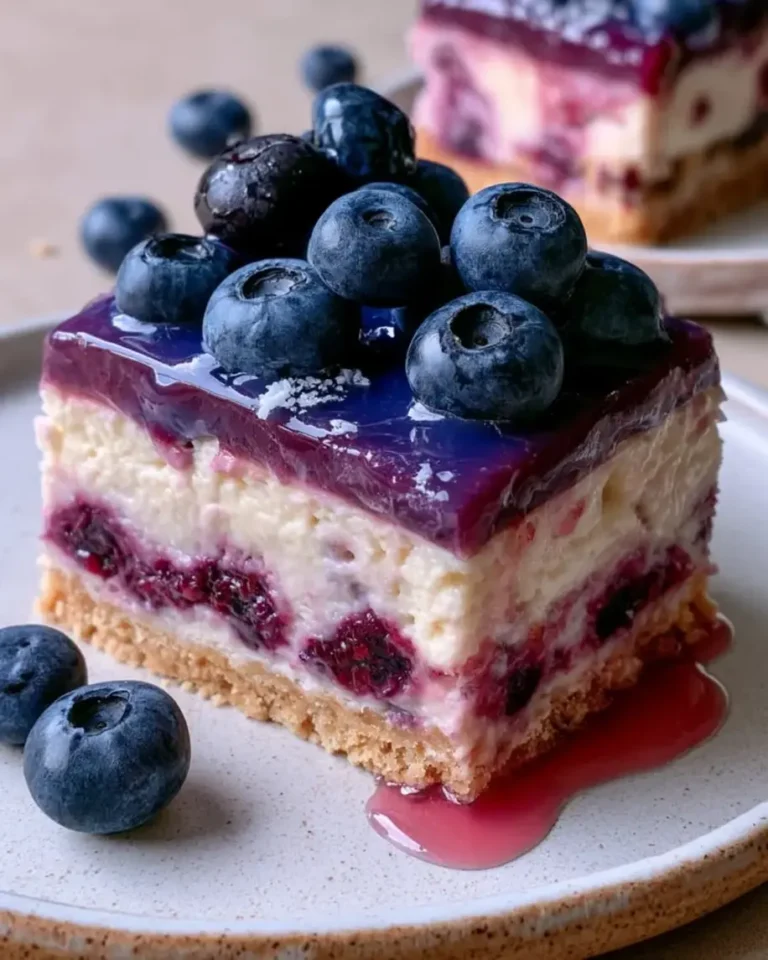
Blueberry Vanilla Mirror Bars with Hidden Cream Layer & Glossy Finish — This Blueberry Mirror Bars Recipe Is a Showstopper

I still remember the first time I tried a blueberry vanilla mousse bar in a tiny pâtisserie tucked near the Place de la Madeleine in Paris. The glossy mirror glaze shimmered like a sapphire under the soft café lights, and the hidden cream layer caught me completely by surprise — it was the most luxurious thing I’d ever tasted. I was in culinary school then, learning the precision that French pastry demands, and I made it my mission to recreate that same blueberry mirror bars recipe at home in New York. Years later, after countless tests in my own kitchen, I’m sharing the version that finally makes me close my eyes and smile — because this is exactly the kind of gorgeous, glossy dessert I dreamed of mastering back then. And trust me, if I can pull this off between farmers market runs and busy Manhattan days, so can you.
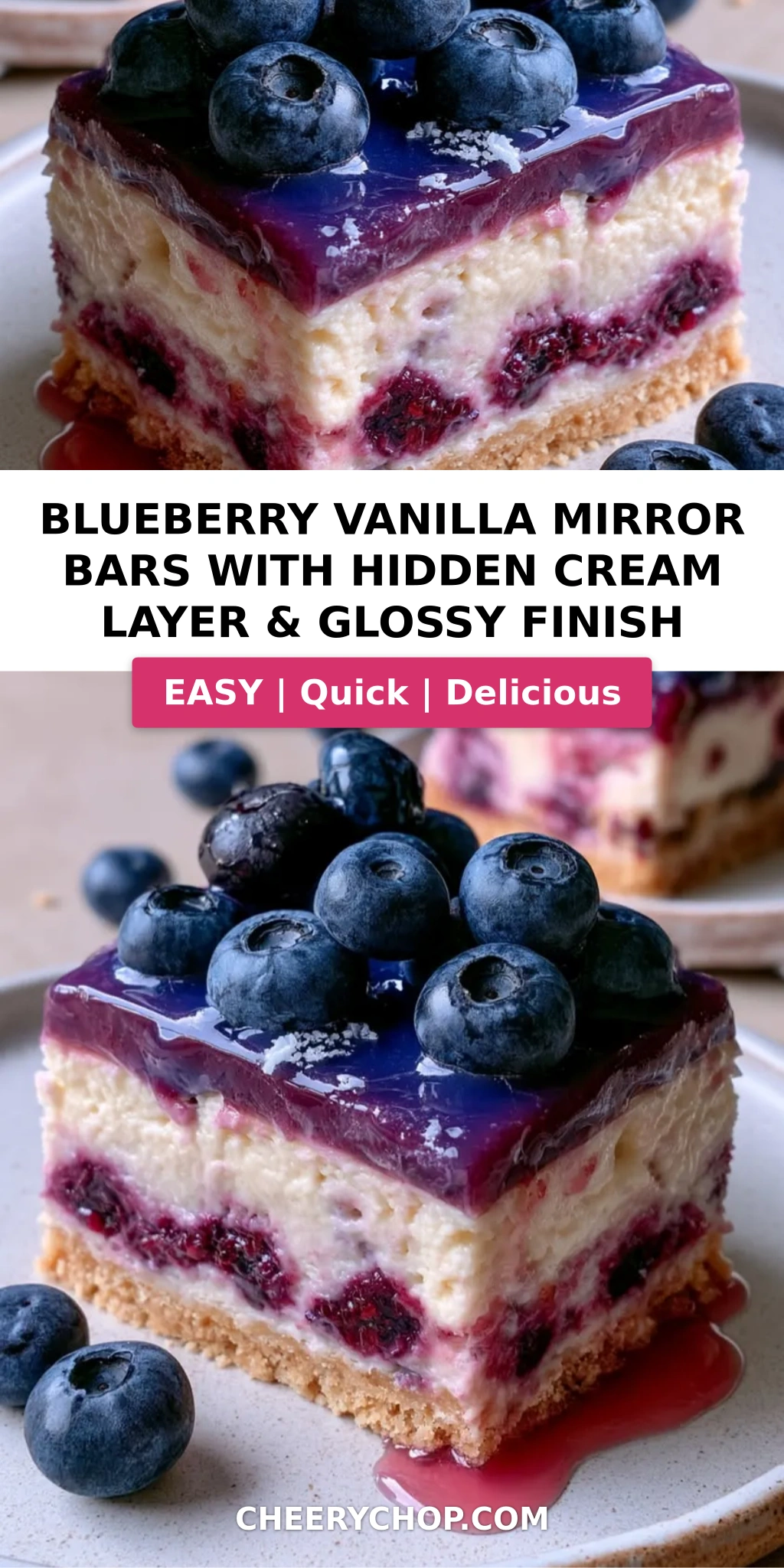
There’s something almost magical about the way the mirror glaze catches the light on these blueberry vanilla mirror bars. The deep blue surface is glossy like polished glass, with just a hint of violet warmth and pearl shimmer that makes it look like edible jewelry. When you slice through, you reveal three distinct layers: the crisp white chocolate cookie base, the cloud-like blueberry vanilla mousse that practically melts on your tongue, and that glorious hidden cream layer — a silky mascarpone ribbon that adds richness and depth. The first bite is a symphony: the snap of the base, the luscious mouthfeel of the mousse, the subtle tang of blueberry purée lifted by a squeeze of lemon, and the sweet vanilla finish that lingers. Freed from the fuss of complicated pastry dough or temperamental ovens, these blueberry vanilla mousse bars feel both elegant and achievable.
My version of this glossy mirror glaze dessert draws on everything I learned in those Parisian pastry kitchens — and a little bit of Moroccan hospitality from my mother’s table back home. She taught me that the best desserts are generous ones: never stingy with vanilla, never afraid of butter, and always made with the person you’re serving in mind. That philosophy is baked into every layer of these bars. The technique seems intimidating, but I’ll walk you through each step, including my foolproof method for nailing the mirror glaze temperature, the best way to freeze and slice the bars so every edge stays razor-sharp, and one sneaky mistake that can dull the glaze’s shine — I’ve made it so you don’t have to. Grab a good bar of white chocolate and let’s get started.
Why This Blueberry Mirror Bars Recipe Is the Best
The flavor secret of this blueberry mirror bars recipe lies in the triple-layered structure. Most mousse bars give you one texture and call it a day — but here, the hidden vanilla cream layer adds a silky, condensed-milk richness that balances the bright, tangy blueberry purée. It’s a technique inspired by French entremets, where contrasts are the whole point. The cookie base is made with vanilla wafer crumbs and white chocolate, so it’s more delicate and buttery than a standard graham cracker crust, and it stays superbly crisp even after days in the freezer.
I’ve tested this recipe more times than I can count, and the texture is what keeps me coming back. The blueberry mousse is stabilized with just the right amount of gelatin — enough to hold clean slices, but light enough to feel airy on the fork. Whipping the cream to soft peaks and folding it gently into the mascarpone mixture makes all the difference between a heavy slab and a cloud-like bite. And the mirror glaze, when poured at exactly 90°F, sets to a jelly-like smoothness that isn’t sticky or rubbery. Every element has its own voice, but they all sing in harmony.
For such an impressive dessert, these glossy mirror glaze dessert bars are surprisingly approachable. There’s no rolled dough, no fussy baking times, no water bath anxiety — everything comes together with a few bowls and a whisk. If you can make a sandwich, you can press the cookie base into a pan. If you can stir, you can make the glaze. The hardest part is waiting for the freezer to do its job, and honestly, that’s a pretty delicious problem to have. The white chocolate blueberry bars also keep beautifully in the freezer, which means you can always have a showstopping dessert ready when the moment calls.
Blueberry Vanilla Mousse Bars Ingredients
When I develop a dessert like this, I shop the way my mother taught me back in Morocco and the way my French chef instructors drilled into me in Paris: seek out the best-quality ingredients you can find, and treat them with respect. In New York City, I love picking up fresh blueberries at the Union Square Greenmarket in summer, but I’ve also made these absolutely delicious bars with frozen berries in January. Good white chocolate matters here — it’s the backbone of the mousse, the base, and the glaze, and I’ll show you exactly what to look for at your local grocery store.
Ingredients List
For the White Chocolate Cookie Base:
- 1½ cups vanilla cookie crumbs
- ¼ cup (55 g) unsalted butter, melted
- 2 oz (55 g) white chocolate, melted
- Pinch of fine sea salt
For the Blueberry Vanilla Mousse:
- 8 oz (225 g) cream cheese, softened
- ½ cup (120 g) mascarpone cheese
- ¾ cup (180 ml) blueberry purée
- 6 oz (170 g) white chocolate, finely chopped
- ¼ cup (60 ml) whole milk
- 1 cup (240 ml) heavy whipping cream
- 2 tsp powdered gelatin
- 3 tbsp cold water
- 1 tsp vanilla bean paste
- 1 tsp fresh lemon juice
For the Hidden Vanilla Cream Layer:
- ½ cup (120 g) mascarpone cheese
- ¼ cup (60 ml) heavy whipping cream
- 2 tbsp sweetened condensed milk
- 1 tsp vanilla bean paste
For the Glossy Blueberry Mirror Glaze:
- ½ cup (120 ml) water
- ½ cup (100 g) granulated sugar
- ⅓ cup (80 g) sweetened condensed milk
- 6 oz (170 g) white chocolate, finely chopped
- 2 tsp powdered gelatin
- 3 tbsp cold water
- Deep blue gel food coloring
- Violet gel food coloring
- Edible pearl luster dust
For Garnish:
- Fresh blueberries
- White chocolate curls
- Edible silver leaf
- Freeze-dried blueberry powder
- Tiny edible flowers (optional)
Ingredient Spotlight
The quality of the white chocolate can make or break this entire recipe. Italian white chocolate like Valrhona Ivoire or Callebaut is ideal, but a good supermarket brand works too. Look for one with real cocoa butter listed in the ingredients — it melts more smoothly and gives a richer flavor. If you use white chocolate chips instead of a chopped bar, expect a slightly thicker melt and a marginally less glossy glaze. For the hidden cream layer bars, this is one ingredient I never compromise on.
For the most vibrant flavor and color, I prefer to purée fresh blueberries with a squeeze of lemon and a spoonful of sugar, then strain them through a fine-mesh sieve to remove the skins. You can find blueberry purée in specialty baking stores, or use frozen blueberries — just thaw, drain well, and purée them yourself. The purée is what gives the mousse both its gorgeous violet hue and its bright, jammy flavor in these blueberry vanilla mirror bars.
Mascarpone is the ingredient that gives both the hidden cream layer and the mousse their velvety richness. It’s softer and more buttery than American-style cream cheese, which is why I don’t suggest swapping it 1:1. If you can’t find mascarpone at your local grocery store, you can approximate it by straining cream cheese through cheesecloth to remove excess moisture, but for a special glossy mirror glaze dessert like this, I’d really recommend seeking out the real thing.
| Original Ingredient | Best Substitution | Flavor / Texture Impact |
|---|---|---|
| White chocolate (bar) | High-quality white chocolate chips | Slightly thicker melt, marginally less glossy glaze |
| Mascarpone | Strained cream cheese | More tangy, less rich flavor |
| Blueberry purée | Frozen blueberries, thawed & puréed | Same flavor, slightly more liquid — drain well |
| Vanilla bean paste | 1 tsp pure vanilla extract | No visible specks, slightly less intense floral note |
| Powdered gelatin (2 tsp) | 3 sheets sheet gelatin | Same setting power, soak sheets in cold water first |
Nutrition Information
| Nutrition Facts | Per Serving (1 bar) |
|---|---|
| Calories | 385 kcal |
| Carbohydrates | 34 g |
| Fat | 26 g |
| Protein | 5 g |
| Sugar | 29 g |
How to Make Blueberry Mirror Bars Recipe — Step-by-Step
Take a deep breath, friend — this blueberry mirror bars recipe looks fancy, but each step is really quite doable. I’ve broken it down into tiny, manageable pieces with visual cues so you always know exactly what you’re looking for. If I can juggle this between Manhattan farmers market trips and a toddler who loves “helping,” you’ve got this.
Step 1: Prepare the Pan
Line an 8-inch (20 cm) square baking pan or silicone bar mold with parchment paper. Use a sheet of parchment long enough to overhang two opposite sides of the pan — those “handles” will make releasing the frozen block so much easier. Press the paper firmly into the corners and smooth out any creases; any irregular folds will show up as ridges on the surface of your final bars.
💡 Sara’s Pro Tip: Use two overlapping strips of parchment paper — one running horizontally and one vertically — so every side of the pan is covered. Smooth it down with your fingers; you want the paper as flat against the metal as possible for perfectly smooth bar edges.
Step 2: Make the Cookie Base
Combine 1½ cups of vanilla cookie crumbs, ¼ cup of melted unsalted butter, 2 oz of melted white chocolate, and a pinch of fine sea salt in a bowl. Stir until every crumb is coated and the mixture holds together when pressed between your fingers. Tip it into the prepared pan and press firmly and evenly across the bottom. I like to use the flat base of a measuring cup for a really even, compact layer. Refrigerate for 20 minutes.
⚠️ Common Mistake to Avoid: Don’t press the crust too loosely — a crumbly base will fall apart when you slice. Press it firmly and evenly into the pan, all the way to the edges, and make sure it is level before chilling.
Step 3: Bloom the Gelatin
Measure out 3 tbsp of cold water into a small bowl and sprinkle 2 tsp of powdered gelatin evenly on top. Do not stir. Let it sit for 5 minutes until it swells and becomes spongy — that’s “bloomed.” Bloomed gelatin dissolves smoothly into warm liquid without lumps, giving the mousse its perfect structure.
💡 Sara’s Pro Tip: Use ice-cold water for the bloom — cold water prevents premature melting and gives you a silky, lump-free gelatin mixture. This tiny French pastry habit makes a big difference.
Step 4: Melt the White Chocolate
Heat ¼ cup of whole milk in a small saucepan until just steaming — don’t boil it. Remove from heat, add the bloomed gelatin, and stir until fully dissolved. Pour the milk mixture over 6 oz of finely chopped white chocolate and let it sit for about 1 minute, then stir slowly until the chocolate is fully melted and glossy. The mixture should look like thick, pale custard.
⚠️ Common Mistake to Avoid: White chocolate is delicate — if the milk is too hot, the chocolate will seize into a grainy, separated mess. Keep your heat gentle and stir patiently.
Step 5: Make the Blueberry Mousse
In a large mixing bowl, beat 8 oz of softened cream cheese, ½ cup of mascarpone, ¾ cup of blueberry purée, 1 tsp of vanilla bean paste, and 1 tsp of fresh lemon juice until completely smooth and silky. Scrape down the sides of the bowl at least once. Stir in the melted white chocolate mixture until fully incorporated. You should end up with a beautifully pale violet cream that tastes like a blueberry cheesecake cloud.
💡 Sara’s Pro Tip: Make sure your cream cheese is truly room temperature — it takes about 30 minutes on the counter, but in a cold NYC apartment I often give it an extra 10. Cold cream cheese leaves lumps no beater can fix.
Step 6: Fold in Whipped Cream
In another bowl, whip 1 cup of cold heavy cream to soft peaks — you’re looking for ribbons that hold their shape but droop slightly at the peak. Gently fold the whipped cream into the blueberry mixture using a spatula, cutting down through the center and sweeping up the sides. Fold only until just incorporated; you want the mousse to stay light and airy.
⚠️ Common Mistake to Avoid: Over-folding deflates the mousse. Stop as soon as you no longer see streaks of white cream. The mixture will look billowy and almost soufflé-like.
Step 7: Make the Hidden Cream Layer
In a separate bowl, whisk ½ cup of mascarpone, ¼ cup of heavy cream, 2 tbsp of sweetened condensed milk, and 1 tsp of vanilla bean paste until smooth and slightly thickened. Spread this mixture into a thin, even square on a parchment-lined baking sheet — about ¼ inch thick. Freeze until firm, about 30 minutes. This hidden cream layer is what makes these hidden cream layer bars so uniquely delightful.
💡 Sara’s Pro Tip: Use the same 8-inch square pan to mark the size on the parchment before you spread — trace the perimeter with a pencil, then flip the parchment over. That way your hidden cream layer will nest perfectly inside the mousse.
Step 8: Assemble the Bars
Spread half of the blueberry mousse over the chilled cookie base in a smooth, even layer. Carefully lift the frozen vanilla cream layer and place it on top, pressing gently so it sits flush. Cover with the remaining mousse, spreading it to the edges to completely encase the cream layer. Tap the pan lightly on the counter to settle any air bubbles, then freeze for at least 6 hours or overnight.
⚠️ Common Mistake to Avoid: Don’t rush the freeze time. If the bars aren’t completely solid, the layers will smudge together and your mirror glaze will pool unevenly. Patience is the secret ingredient here.
Step 9: Make the Mirror Glaze
Bloom 2 tsp of powdered gelatin in 3 tbsp of cold water for 5 minutes. In a small saucepan, heat ½ cup of water, ½ cup of granulated sugar, and ⅓ cup of sweetened condensed milk, stirring until the sugar completely dissolves. Remove from heat, stir in the gelatin, then pour the hot liquid over 6 oz of finely chopped white chocolate. Let it sit for a minute, then blend with an immersion blender or whisk until completely smooth.
💡 Sara’s Pro Tip: An immersion blender is ideal here — it emulsifies the glaze perfectly and keeps it airy. Be careful not to over-blend, which can introduce air bubbles. Tap the container on the counter to release any bubbles that do form.
Step 10: Tint and Cool the Glaze
Add deep blue gel food coloring and a small touch of violet gel coloring to the warm glaze, then mix in 1 tsp of edible pearl luster dust. Insert an immersion blender and carefully blend until the color is uniform and the glaze is glossy. Cool to exactly 90°F (32°C), stirring occasionally. This is the critical temperature for a flawless mirror finish on your glossy mirror glaze dessert.
⚠️ Common Mistake to Avoid: Never skip the thermometer. Guessing the glaze temperature is the most common reason for a dull or patchy finish. At 90°F, the glaze flows like warm honey and sets to a glass-like shine.
Step 11: Glaze the Bars
Remove the frozen dessert from the pan by lifting the parchment handles. Place it on a wire rack with a baking sheet underneath to catch excess glaze. Pour the mirror glaze evenly over the top center, letting it cascade down the sides naturally. Work quickly but smoothly, covering all four sides. Let the glaze set at room temperature for 10–15 minutes.
💡 Sara’s Pro Tip: For a perfect glass-like finish, pour the entire glaze in one continuous stream starting from the center, and let gravity do the work. Do not touch the surface or try to spread it with a spatula.
Step 12: Garnish and Slice
Once the glaze has set, transfer the dessert to a cutting board. Dip a sharp chef’s knife in very hot water, wipe it dry, and slice into 10 bars with one clean downward press per cut. Wipe and re-dip the knife between each slice for razor-sharp edges. Garnish with fresh blueberries, white chocolate curls, edible silver leaf, a dusting of freeze-dried blueberry powder, and tiny edible flowers if you have them.
⚠️ Common Mistake to Avoid: Don’t use a serrated bread knife for slicing — sawing drags through the layers and ruins the edges. A straight-edged chef’s knife dipped in hot water is the only way to go.
| Step | Action | Duration | Key Visual Cue |
|---|---|---|---|
| 1 | Line pan with parchment | 5 min | Paper sits flat, no creases |
| 2 | Make cookie base | 10 min | Crumbs hold shape when pressed |
| 3 | Bloom gelatin | 5 min | Gelatin turns opaque and spongy |
| 4 | Melt white chocolate | 5 min | Smooth and glossy, no lumps |
| 5 | Mix blueberry mousse | 10 min | Silky, light violet cream |
| 6 | Fold in whipped cream | 5 min | Airy, no white streaks visible |
| 7 | Chill cream layer | 30 min | Firm enough to lift without bending |
| 8 | Assemble & freeze | 6+ hours | Solid, layers are level |
| 9 | Make mirror glaze | 10 min | Completely smooth, no lumps |
| 10 | Tint & cool glaze | 10 min | Thermometer reads 90°F (32°C) |
| 11 | Glaze the bars | 5 min | Even, glossy coverage on all sides |
| 12 | Slice & garnish | 15 min | Sharp edges, gorgeous shine |
Serving & Presentation
As a New Yorker, I’m not afraid of bold presentation — and these blueberry vanilla mirror bars are made to be the center of attention. Serve them chilled straight from the fridge (never room temperature, or the mousse becomes soft and the glaze loses its shine). Arrange the bars on a simple white platter to let the deep blue glaze pop, and garnish each bar with fresh blueberries, white chocolate curls, and a tiny pinch of freeze-dried blueberry powder for a gorgeous matte contrast. In Morocco, we learned to serve guests generously and beautifully — a dessert like this would arrive with a flourish of mint tea or strong, sweetened coffee.
In Paris, these beauties would be paired with a glass of Sauternes or a delicate champagne. Here in NYC, I love serving them after a dinner party with a big pot of pour-over coffee or a citrusy herbal tea. The bright blueberry and creamy vanilla make them a natural partner for everything from espresso to a crisp sparkling wine. However you choose to plate them, these white chocolate blueberry bars are guaranteed to make someone feel completely special.
| Pairing Type | Suggestions | Why It Works |
|---|---|---|
| Side Dish | Fresh berries, berry compote, vanilla bean ice cream | Complementary flavors and textural contrast |
| Sauce / Dip | Warm blueberry coulis, raspberry sauce, salted caramel | Adds moisture and richness to each bite |
| Beverage | Espresso, champagne, mint tea, citrus herbal tea | Cuts through richness and cleanses the palate |
| Garnish | Fresh blueberries, chocolate curls, edible silver leaf | Adds visual interest and textural variety |
Make-Ahead, Storage & Reheating
My life is busy — between testing recipes, running to farmers markets, and chasing all my many food projects around NYC — so I’m all about smart make-ahead strategies. The great news is that this is one dessert that actually improves with time. The bars must be frozen before glazing, so you can very easily assemble them two to three days ahead, keep them frozen, and pour the glaze an hour before serving. In fact, this hidden cream layer bars recipe begs for a schedule like that — it makes hosting that much easier.
| Method | Container | Duration | Reheating Tip |
|---|---|---|---|
| Refrigerator | Airtight container | Up to 3 days | Serve chilled, no reheating needed |
| Freezer | Plastic wrap + foil | Up to 3 months | Thaw 10–15 min at room temp before serving |
| Make-Ahead | Freeze unglazed bars | Up to 3 days before | Glaze on the day of serving |
One important note: these bars spend most of their life in the freezer, so “reheating” is not really part of the plan. Remove them from the freezer, let the glaze set for 10–15 minutes at room temperature, and slice with a warm knife. If you’re serving from the fridge, take them out 10 minutes before slicing so the mousse has a chance to soften slightly. Freeze the bars for at least 6 hours or overnight to ensure clean slicing — and always remember that the glaze should be at 90°F (32°C) for the best pouring consistency.
Variations & Easy Swaps
| Variation | Key Change | Best For | Difficulty Impact |
|---|---|---|---|
| Raspberry-Rose Riff | Swap blueberry purée for raspberry, add 1 tsp rose water | Romantic occasions, bridal showers | No change |
| Citrus Zest Adaptation | Add orange zest, use orange juice instead of lemon | Spring gatherings, brunches | No change |
| Gluten-Free & Dairy-Free | Use GF cookies, dairy-free white chocolate & coconut cream | Serving guests with dietary restrictions | Slightly easier |
Variation 1: Raspberry-Rose Riff
Growing up in Morocco, my mother would perfume everything with rose water — even the sugar on our morning bread. Here, swapping blueberry purée for raspberry and adding a teaspoon of rose water to the blueberry vanilla mousse gives it an exotic floral lift that pairs gorgeously with the vanilla cream. Use the same quantities, and expect a slightly more intense pink-red glaze instead of deep blue. Brush a little rose water on the platter for a dramatic, aromatic presentation that will have your guests asking questions.
Variation 2: Citrus Zest Adaptation
If you find yourself with gorgeous strawberries at the New York farmers market, this twist is for you. Swap the blueberry purée for an equal amount of strawberry purée, add the zest of one orange, and use fresh orange juice in place of the lemon juice. Strawberry is lighter and slightly more floral, and the orange zest adds a bright perfume that wakes up the white chocolate. One thing I learned in Paris: always zest your orange before you juice it, while the oils are at their most fragrant.
Variation 3: Gluten-Free & Dairy-Free Adaptation
Many friends have asked me how I make this accessible for their dietary restrictions. For a gluten-free version, use gluten-free vanilla wafer cookies in the base — it genuinely works with no other changes. For dairy-free, choose a high-quality oat-based white chocolate alternative, swap the mascarpone for a thick coconut cream, the heavy cream for full-fat coconut cream, and the condensed milk for sweetened condensed coconut milk. The texture will be slightly softer because coconut cream has less butterfat, but the flavor is still rich and indulgent. I’ve tested this version with lemon-blueberry, and it’s a real crowd-pleaser at every dinner party.
Blueberry Vanilla Mirror Bars Recipe — Frequently Asked Questions
What is the best way to achieve a perfectly glossy mirror glaze for these blueberry vanilla bars?
The best way to achieve a perfectly glossy mirror glaze is to bring your glaze to exactly 90°F (32°C) before pouring. I cannot stress this enough — too warm, and the glaze will run right off the dessert, leaving thin patches; too cool, and it will seize into a dull, thick mess. Use an instant-read thermometer every single time. Also, make sure your frozen bars are level and smooth before glazing. Blend the glaze thoroughly with an immersion blender to eliminate air bubbles, and strain it through a fine-mesh sieve for an immaculately smooth surface.
Can I use frozen blueberries instead of fresh for the hidden cream layer in this recipe?
Yes, you can absolutely use frozen blueberries instead of fresh for this hidden cream layer bars recipe — and honestly, frozen blueberries are often sweeter and more consistent than out-of-season fresh ones. Thaw them completely, then drain off the excess liquid before puréeing, otherwise your mousse can become watery and not hold structure. I used frozen blueberries all winter long here in NYC and the results were just as vibrant. Just make sure to pat them dry before you purée, and reduce the water in the glaze slightly if your purée seems very runny.
How far in advance can I make blueberry vanilla mirror bars with a glossy finish?
You can make these blueberry vanilla mirror bars up to three days in advance. The assembled, unglazed bars should stay frozen in the pan, tightly wrapped in plastic wrap and foil. On serving day, unmold, glaze, and let the glaze set for 10–15 minutes. The mirror glaze itself can be made ahead and stored in the fridge for up to a week; reheat it gently to 90°F (32°C), stir well, and pour. I’ve served this glossy mirror glaze dessert at a number of dinner parties with this make-ahead schedule and it’s an absolute lifesaver for entertaining.
What can I substitute for vanilla extract to enhance the flavor of the hidden cream layer?
For the hidden cream layer, I highly recommend vanilla bean paste — it has the most beautiful concentrated vanilla flavor with those little flecks that make desserts look bakery-worthy. If you don’t have vanilla bean paste, pure vanilla extract is a great substitute at the same 1:1 ratio. Use a good quality pure extract, not imitation vanilla, and add a tiny pinch of fine sea salt. The salt might seem odd, but it rounds out the sweetness of the condensed milk in the most wonderful way and makes the vanilla flavor sing.
Do I need a special mold to make these mirror bars?
No, you don’t need a special mold for these blueberry vanilla mousse bars. A standard 8-inch square baking pan lined with parchment paper works perfectly. For a more professional look, I love using a silicone bar mold — ideally one with smooth, rounded corners — because the silicone releases the frozen bars without any sticking, and the smooth sides help the glaze flow evenly. But a regular metal pan lined with parchment gives equally delicious results; you’ll just want to be gentle when unmolding. Either way, the frozen bars release cleanly thanks to your parchment handles.
Why did my mirror glaze look dull or cracked?
A dull or cracked mirror glaze is almost always caused by one of two problems: temperature or moisture. If the glaze is poured when it’s too cold, it will set with a matte finish, so always use a thermometer and warm it to 90°F (32°C). Cracks appear when the dessert is not completely frozen or when condensation forms on the surface. After glazing, do not refrigerate the dessert too quickly — let it set at room temperature so no condensation can develop. If tiny bubbles appear, pass the glaze through a sieve before pouring, and use an immersion blender for an extra-smooth finish.
Can I skip the gelatin in this blueberry vanilla mousse bar recipe?
Gelatin is essential in this particular recipe, because it provides the structure that allows the blueberry vanilla mousse to hold its shape when sliced into bars. Without gelatin, the mousse will be deliciously soft — more like a mousse pudding — and won’t create clean portions. If you’re vegetarian, you can substitute agar-agar powder at about half the gelatin amount, but the texture will be slightly more jelly-like. For the classic glossy mirror glaze dessert bar, though, I’ll always use gelatin and recommend you do too — it’s really the backbone of the whole build.
What’s the easiest way to slice these glossy mirror glaze dessert bars cleanly?
The easiest way is to use a sharp, straight-edged chef’s knife and dip it in very hot water before each cut. Wipe the blade dry between cuts, then press down with one clean, confident motion — no sawing. Working quickly between dips keeps every slice smooth and sharp. I like to cut the bars into 10 even rectangles, about 2 inches wide. For extra clean edges, score the glaze lightly with the tip of the knife first, then press through. This technique comes straight from my pastry training in Paris and it works like a charm every time.
Can I use a different berry purée for the mirror glaze?
Absolutely — this glossy mirror glaze dessert is like a canvas for your favorite berries. Raspberry creates a stunning deep pink-purple, strawberry gives a bright coral, and blackberry produces an almost mystic dark violet. Just remember that many berries contain slightly higher acid and water levels, so reduce the water in the glaze by a tablespoon or two if your purée is very runny. Blueberry purée, with its naturally thick pectin content, is my personal favorite for structure and shine, but feel free to experiment and make the recipe your own.
Why is the glaze temperature so important in this blueberry mirror bars recipe?
The temperature is everything in a mirror glaze. At 90°F (32°C), the glaze is just thin enough to flow over the surface and settle into an even, glass-like coat, but thick enough that it doesn’t run off entirely. Too warm, and it leaves bald spots. Too cold, and it sets with a bumpy, matte finish. This is a patience game — let your glaze cool in a tall glass jar, stirring occasionally, and check the temperature often. Using a good instant-read thermometer takes the guesswork right out, and you’ll get that perfect glossy mirror finish every single time.
Share Your Version!
Now it’s your turn! Have you tried this blueberry mirror bars recipe yet? I’d love to hear how it turned out — leave a star rating in the comments below or snap a photo and tag me on Instagram or Pinterest at @cheerychop. Tell me: which variation are you dying to try? The raspberry-rose twist, the citrus burst, or the dairy-free adaptation? And if there’s a technique you’d love me to break down in more detail, let me know in the comments. Your feedback truly helps shape the recipes I share next, and I read every single message.
From my NYC kitchen to yours — I hope this recipe brings as much warmth to your table as it does to mine. — Sara 🧡
Love This Recipe? Save It to Pinterest!
If you enjoyed this Blueberry Vanilla Mirror Bars recipe, don’t let it get lost in your browser tabs! 😄 Pin it now so you can find it again anytime — and explore hundreds more tried-and-tested recipes waiting for you on my Pinterest boards.
👉 Follow Sara on Pinterest @chefrecipes2
📌 Pin this recipe · 🔁 Re-pin your favorites · 💬 Tag me when you make it — I love seeing your creations!
Did you make these blueberry vanilla mirror bars? I’d love to hear how they turned out! Leave a comment, rate the recipe, and don’t forget to share your gorgeous glossy creation on Pinterest — tag me so I can cheer you on. Your stars and comments tell me exactly what recipes to create next.
⭐⭐⭐⭐⭐
Blueberry Vanilla Mirror Bars with Hidden Cream Layer & Glossy Finish
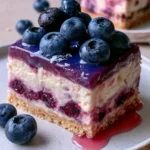
Luxurious blueberry vanilla mousse bars with a white chocolate cookie base, a hidden vanilla cream layer, and a glossy blueberry mirror glaze, garnished with fresh berries and edible flowers.
- Yield: 10 bars 1x
- Method: Dessert
Ingredients
- For the White Chocolate Cookie Base:
- 1½ cups vanilla cookie crumbs
- ¼ cup (55 g) unsalted butter, melted
- 2 oz (55 g) white chocolate, melted
- Pinch of fine sea salt
- For the Blueberry Vanilla Mousse:
- 8 oz (225 g) cream cheese, softened
- ½ cup (120 g) mascarpone cheese
- ¾ cup (180 ml) blueberry purée
- 6 oz (170 g) white chocolate, finely chopped
- ¼ cup (60 ml) whole milk
- 1 cup (240 ml) heavy whipping cream
- 2 tsp powdered gelatin
- 3 tbsp cold water
- 1 tsp vanilla bean paste
- 1 tsp fresh lemon juice
- For the Hidden Vanilla Cream Layer:
- ½ cup (120 g) mascarpone cheese
- ¼ cup (60 ml) heavy whipping cream
- 2 tbsp sweetened condensed milk
- 1 tsp vanilla bean paste
- For the Glossy Blueberry Mirror Glaze:
- ½ cup (120 ml) water
- ½ cup (100 g) granulated sugar
- ⅓ cup (80 g) sweetened condensed milk
- 6 oz (170 g) white chocolate, finely chopped
- 2 tsp powdered gelatin
- 3 tbsp cold water
- Deep blue gel food coloring
- Violet gel food coloring
- Edible pearl luster dust
- For Garnish:
- Fresh blueberries
- White chocolate curls
- Edible silver leaf
- Freeze-dried blueberry powder
- Tiny edible flowers (optional)
Instructions
- 1. Line an 8-inch (20 cm) square pan or silicone bar mold with parchment paper.
- 2. Mix the cookie crumbs, melted butter, melted white chocolate, and sea salt until evenly combined. Press firmly into the pan and refrigerate for 20 minutes.
- 3. Bloom the gelatin in the cold water for 5 minutes.
- 4. Heat the milk until just steaming and stir in the bloomed gelatin until completely dissolved. Pour over the white chocolate and stir until smooth.
- 5. Beat together the cream cheese, mascarpone, blueberry purée, vanilla bean paste, and lemon juice until silky. Stir in the white chocolate mixture.
- 6. Whip the heavy cream to soft peaks and gently fold it into the blueberry mixture to create a light mousse.
- 7. In a separate bowl, whisk together the mascarpone, heavy cream, condensed milk, and vanilla bean paste until smooth. Spread into a thin square on parchment and freeze until firm.
- 8. Spread half of the blueberry mousse over the chilled cookie base. Place the frozen vanilla cream layer on top, then cover with the remaining mousse. Freeze for at least 6 hours or overnight.
- 9. Bloom the remaining gelatin for the mirror glaze. Heat the water, sugar, and condensed milk until the sugar dissolves. Remove from the heat, stir in the gelatin, then pour over the white chocolate and blend until smooth.
- 10. Tint the glaze with deep blue and a touch of violet gel coloring. Mix in the pearl luster dust and cool the glaze to 90°F (32°C).
- 11. Remove the frozen dessert from the mold and place it on a wire rack. Pour the mirror glaze evenly over the top and sides until completely coated.
- 12. Let the glaze set for 10–15 minutes, then slice into bars with a warm knife. Garnish with fresh blueberries, white chocolate curls, edible silver leaf, freeze-dried blueberry powder, and edible flowers before serving.
Notes
Freeze the bars for at least 6 hours or overnight to ensure clean slicing. The glaze should be at 90°F (32°C) for best pouring consistency.
Nutrition
- Calories: 385
- Sugar: 29 g
- Fat: 26 g
- Carbohydrates: 34 g
- Protein: 5 g
Tried This Recipe? Leave a Comment!
Did you make this recipe? I’d love to hear how it turned out! Please leave a comment and a rating below. Your feedback helps other home cooks and supports cheerychop.com!
For more delicious inspiration, follow me on Pinterest!