“`html
Table of Contents
Golden Passionfruit Cardamom Pyramids — A Golden Passionfruit Dessert Worth Every Bite
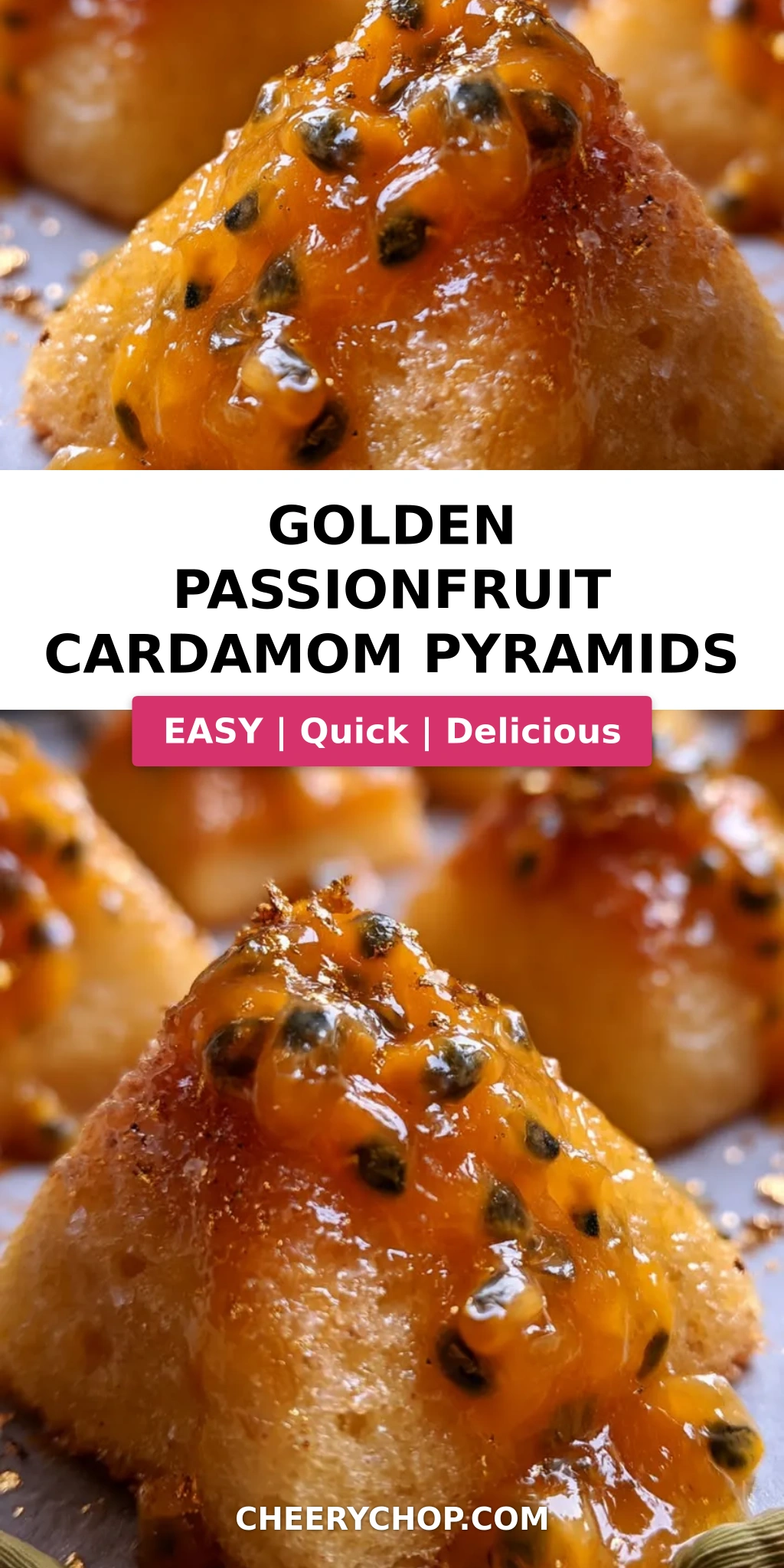
I still remember the first time I tasted passionfruit — it was at a tiny French patisserie in Paris, and the tart, floral burst caught me completely off guard. It reminded me of the za’atar-scented afternoons in my mother’s kitchen in Morocco, where cardamom and honey were never far from reach. This Golden Passionfruit Cardamom Pyramid recipe is my love letter to both worlds: a tender cardamom sponge cake recipe with a bright passionfruit filling, all crowned with a shimmering golden passionfruit glaze. It’s the perfect golden passionfruit dessert for anyone who loves layers of flavor and a touch of elegance.
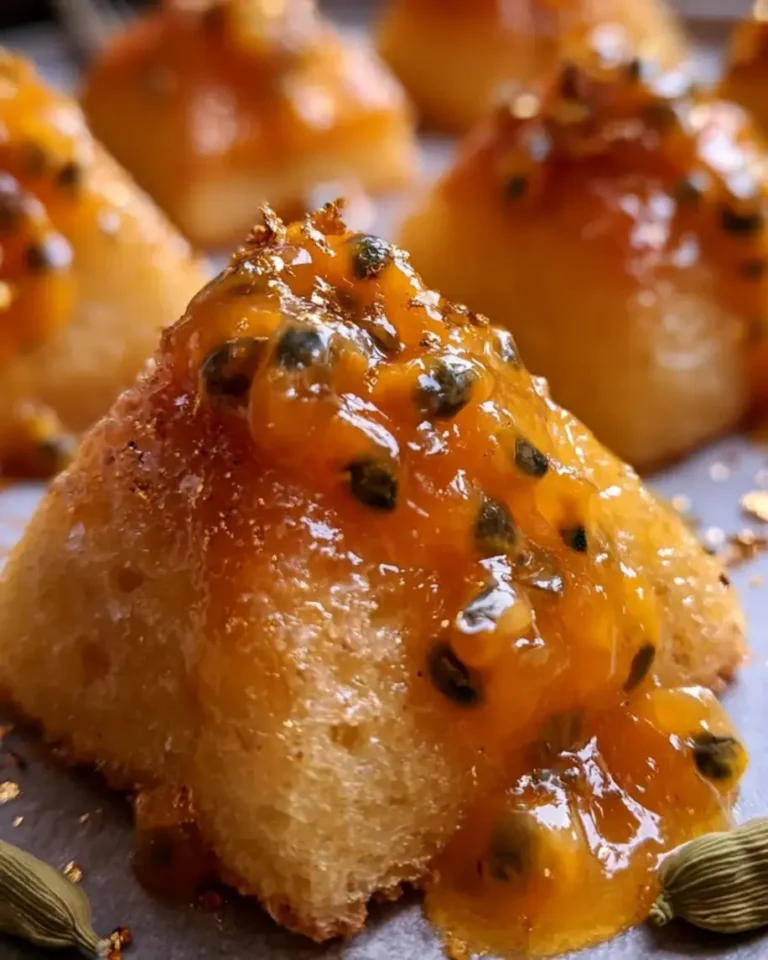
Imagine cutting into a perfectly golden pyramid and finding a silky passionfruit filling tucked inside. The sponge is impossibly soft, perfumed with ground cardamom that whispers warmth without overwhelming. The glaze — made with real passionfruit juice, honey, and a whisper of cream — sets into a glossy, crackly shell that shatters ever so slightly when you take a bite. Every mouthful is a dance between bright tropical acidity and cozy spice, finished with a delicate crunch from edible gold sugar and fresh passionfruit seeds.
With my Paris-trained pastry background and a lifetime of Moroccan home cooking, I’ve tested this passionfruit cardamom cake recipe more times than I can count. The result? A foolproof sponge that bakes up golden and even, a simple stovetop filling that thickens in minutes, and a glaze technique that gives you that beautiful drip every single time. In this post, I’ll show you how to infuse cardamom into the batter, the best way to cut perfect pyramid shapes, and one common mistake that can make your sponge dense — so you can nail it on your very first try.
Why This Golden Passionfruit Cardamom Pyramids Recipe Is the Best
The Flavor Secret — Most passionfruit desserts lean one-note sweet or one-note tart. My version layers three distinct flavor moments: the warm, aromatic cardamom in the sponge, the bright and honeyed passionfruit filling, and the floral, creamy glaze. It’s a technique I absorbed in Paris — building flavor in stages rather than dumping everything into one bowl. The cardamom doesn’t compete with the passionfruit; it lifts it, the way my mother would add a pinch of cinnamon to orange salads in Morocco.
Perfected Texture — This is where French pastry training really shines. The sponge uses the classic creaming method: butter and sugar beaten until pale and fluffy, then eggs added one at a time, and dry ingredients alternated with milk. That technique creates a fine, even crumb with just enough structure to hold the pyramid shape without turning tough. The filling uses a touch of cornstarch to set into a jammy, spoonable consistency, and the glaze is thinned with passionfruit juice and cream so it sets glossy — never chalky.
Foolproof & Fast — Despite the fancy name, this is an approachable bake. If you can cream butter and sugar, you can make these pyramids. There’s no complicated layering, no water bath, no tempering chocolate. The whole thing comes together in about 50 minutes, and the ingredients are easy to find at any US grocery store. When I first moved to NYC, I tested this recipe in a tiny Manhattan apartment oven — if it worked there, it will work in your kitchen. That’s the standard I hold every recipe on cheerychop.com to.
Passionfruit Cardamom Cake Recipe Ingredients
I love shopping for these ingredients at the Union Square Greenmarket in NYC — the honey comes from a local beekeeper, and I’ll grab fresh passionfruit from the specialty aisle at my neighborhood market. But this recipe is wonderfully forgiving: everything is pantry-friendly, and the flavors come together beautifully no matter where you shop. Let’s walk through what you’ll need for this cardamom sponge cake recipe.
Ingredients List
- For the Cardamom Sponge:
- 1 cup all-purpose flour
- 1 tsp baking powder
- 1/4 tsp salt
- 1/2 tsp ground cardamom
- 1/2 cup unsalted butter, softened
- 2/3 cup granulated sugar
- 2 large eggs
- 1 tsp vanilla extract
- 1/4 cup whole milk
- For the Passionfruit Filling:
- 1/2 cup passionfruit pulp
- 2 tbsp honey
- 1 tsp cornstarch
- 1 tbsp water
- 1 tsp lemon juice
- For the Golden Glaze:
- 1 cup powdered sugar
- 2 tbsp passionfruit juice
- 1 tbsp heavy cream
- 1/4 tsp ground cardamom
- 1 tsp honey
- For Garnish (optional):
- Fresh passionfruit seeds
- Edible gold sugar
- Cardamom pods
Ingredient Spotlight
Ground Cardamom: This is the soul of the entire recipe. Use freshly ground cardamom from whole pods if you can — the aromatic oils are far more potent. In the US, you’ll find ground cardamom in the spice aisle at any major grocery store. If you only have whole pods, crack them open and grind the seeds with a mortar and pestle. Don’t skip it — the sweet, slightly citrusy warmth is what sets this apart from a plain passionfruit dessert.
Passionfruit Pulp / Juice: For the filling, you can use fresh passionfruit pulp (about 4-5 fruits) or store-bought pulp found in the freezer section. For the glaze, strained passionfruit juice works best — you can strain fresh pulp to extract the juice, or buy bottled passionfruit juice. The tartness is non-negotiable; it balances the sweetness of the honey and powdered sugar beautifully.
Unsalted Butter: Use good-quality unsalted butter for the sponge. The creaming method depends on butter that is properly softened — not melted, not fridge-cold, but yielding gently when pressed. European-style butter with higher fat content will give you an even more tender crumb, but standard American butter works perfectly. My Paris training taught me: always taste your butter — if it tastes fresh and sweet, your cake will too.
Honey: A good floral honey — orange blossom or wildflower — brings another layer of perfume to both the filling and the glaze. In Morocco, we’d use pure bee honey from the Atlas Mountains; in NYC, I love sourcing local honey from the Greenmarket. A neutral honey works in a pinch, but skip strong buckwheat or manuka honey, which can overpower the delicate passionfruit flavor.
| Original Ingredient | Best Substitution | Flavor / Texture Impact |
|---|---|---|
| Ground Cardamom | Ground cinnamon + a pinch of nutmeg | Warmer, spicier; less floral — still delicious |
| Passionfruit Pulp (filling) | Mango pulp + 1 tsp lime juice | Less tart, more tropical; slightly less bright |
| Heavy Cream (glaze) | Whole milk or coconut cream | Coconut cream adds subtle tropical note; milk makes thinner glaze |
| Granulated Sugar | Coconut sugar | Slightly caramel notes; drier crumb, less tender |
How to Make Golden Passionfruit Cardamom Pyramids — Step-by-Step
This is one of those recipes where the method truly matters. I’ve broken every step down with the exact visual cues you’re looking for — so you’ll know exactly when your batter is ready, when your glaze is thin enough to drip, and when your sponge is perfectly baked. Let’s get started!
Step 1: Preheat and Prepare the Pan
Preheat your oven to 350°F (175°C). Grease a square baking pan (8×8 or 9×9 works best) and line it with parchment paper, leaving some overhang on two sides — this will make lifting the cake out so much easier. If you only have a round pan, you can still make this; just adjust your cutting pattern.
💡 Sara’s Pro Tip: Lightly grease the pan before laying in the parchment — the parchment will cling to the butter and stay put while you pour in the batter. No slippery paper, no crumpled edges.
Step 2: Mix the Dry Ingredients
In a medium bowl, whisk together 1 cup all-purpose flour, 1 tsp baking powder, 1/4 tsp salt, and 1/2 tsp ground cardamom. Whisking aerates the flour and ensures the baking powder and cardamom are evenly distributed — no bitter pockets of baking powder or spice bombs in your finished cake.
⚠️ Common Mistake to Avoid: Don’t skip the whisking step! If you just dump the dry ingredients into the batter, the baking powder can clump, and you’ll get uneven rising and a lumpy crumb.
Step 3: Cream Butter and Sugar
In a large mixing bowl, beat 1/2 cup softened unsalted butter with 2/3 cup granulated sugar until light, pale, and fluffy — about 3 to 4 minutes with an electric mixer on medium-high. Add 2 large eggs one at a time, beating well after each addition, then mix in 1 tsp vanilla extract. The mixture should look like a thick, glossy paste.
💡 Sara’s Pro Tip: The butter must be actually soft — room temperature, around 65–70°F. If you’re in a rush, cut it into small cubes and microwave in 5-second bursts until just barely softened. You don’t want it melted — melted butter collapses the air you’re trying to beat in.
Step 4: Alternate Dry and Wet
With the mixer running on low, add the dry ingredients in three additions, alternating with 1/4 cup whole milk in two additions. Start and end with the dry mixture. Mix just until combined — stop the moment you no longer see streaks of flour. Overmixing develops gluten, and gluten means a tough, chewy cake instead of a tender crumb.
⚠️ Common Mistake to Avoid: Overmixing is the #1 reason sponge cakes turn out dense. Once you see the last flour streaks disappear, stop the mixer immediately. It’s okay if the batter is a tiny bit lumpy — that’s actually perfect.
Step 5: Bake the Sponge
Spread the batter evenly in your prepared pan. Bake at 350°F (175°C) for 22–25 minutes, or until the top is golden brown and a toothpick inserted into the center comes out clean. Let the cake cool in the pan for 10 minutes, then transfer it to a wire rack to cool completely — you don’t want to cut it while it’s still warm, or it will crumble.
💡 Sara’s Pro Tip: Every oven runs a little differently, so start checking at 20 minutes. The cake’s edges should pull slightly away from the parchment, and the top should spring back when gently pressed. My NYC oven runs hot — I start checking at 20 minutes and pull at 23.
Step 6: Cook the Passionfruit Filling
In a small saucepan, combine 1/2 cup passionfruit pulp, 2 tbsp honey, 1 tsp cornstarch dissolved in 1 tbsp water, and 1 tsp lemon juice. Cook over medium heat, stirring constantly, until the mixture thickens and begins to bubble — about 3–4 minutes. Reduce the heat and simmer for 1 more minute, then remove from heat and let it cool completely.
⚠️ Common Mistake to Avoid: Don’t skip dissolving the cornstarch in cold water before adding it to the saucepan. If you dump cornstarch straight into warm liquid, it clumps instantly and makes lumpy, floury-tasting filling.
Step 7: Cut and Fill the Pyramids
Once the cake is fully cool, cut it into 8 equal rectangles (4 rows by 2 columns). Then cut each rectangle diagonally in half to create triangular “pyramid” shapes. Take a small serrated knife and carefully slice each triangle horizontally through the middle, creating a top and bottom half. Spoon about 1 tsp of the cooled passionfruit filling onto the bottom half, then gently press the top back on.
💡 Sara’s Pro Tip: For perfectly even pyramids, use a ruler to mark the cuts before you slice. And when cutting the triangles in half horizontally, use a slow sawing motion — pressing down too hard will crush the delicate sponge. If the cake is even slightly warm, it’ll tear, so patience is everything here.
Step 8: Make the Golden Glaze
In a medium bowl, whisk together 1 cup powdered sugar (sifted, if it’s lumpy), 2 tbsp passionfruit juice, 1 tbsp heavy cream, 1/4 tsp ground cardamom, and 1 tsp honey. Whisk until completely smooth — you’re looking for a thick but pourable consistency, like honey. If it’s too thick, add a few more drops of passionfruit juice; if it’s too thin, add a little more powdered sugar.
⚠️ Common Mistake to Avoid: Don’t over-thin the glaze! It should coat the back of a spoon and slowly drizzle off — not run through it like water. If the glaze is too thin, it’ll pool at the base of the pyramid and make a sticky mess instead of a beautiful drip.
Step 9: Glaze the Pyramids
Place the filled pyramids on a wire rack set over a baking sheet. Spoon the glaze over each pyramid, starting at the top peak and letting it drip naturally down the sides. Let the glaze set for 5–10 minutes at room temperature before moving them — this gives it time to firm up just enough so it won’t slide off when you pick them up.
💡 Sara’s Pro Tip: For the most even coverage, use a spoon to drizzle the glaze in a back-and-forth motion, like you’re painting. Start with a thin layer, let it set for 3 minutes, then add a second coat — this creates a beautiful, smooth, professional-looking finish.
Step 10: Garnish and Serve
Before the glaze fully sets, sprinkle the pyramids with fresh passionfruit seeds, a dusting of edible gold sugar, and a few crushed cardamom pods (if using). The seeds add a satisfying pop of tart juice, and the gold sugar gives them a truly regal finish. Serve at room temperature for the best flavor and texture.
⚠️ Common Mistake to Avoid: Don’t refrigerate these right after glazing — the cold air can cause the glaze to crack and turn sticky. Let them set at room temperature and serve within a few hours for the crispiest glaze. If you must refrigerate, do it before glazing, then add the glaze just before serving.
| Step | Action | Duration | Key Visual Cue |
|---|---|---|---|
| 1 | Preheat and prep pan | 10 mins | Parchment sits flat with overhang |
| 2 | Whisk dry ingredients | 2 mins | No visible clumps of baking powder |
| 3 | Cream butter and sugar | 3–4 mins | Pale, fluffy, increased volume |
| 4 | Add eggs and vanilla | 2 mins | Glossy, well-combined paste |
| 5 | Fold in dry/wet alternately | 2 mins | Smooth batter, no flour streaks |
| 6 | Bake sponge | 22–25 mins | Golden top; toothpick comes out clean |
| 7 | Cook passionfruit filling | 4 mins | Thickens and bubbles |
| 8 | Cool cake; cut into shapes | 30 mins | Clean, even triangles |
| 9 | Fill and glaze | 10 mins | Glaze drips naturally, no pooling |
| 10 | Garnish and serve | 5 mins | Gold sugar glistens on set glaze |
Serving & Presentation
These golden passionfruit cardamom pyramids deserve a beautiful stage. I love serving them on a simple white platter with a few extra cardamom pods scattered around and a light dusting of powdered sugar. The gold sugar catches the light in a way that feels festive and elegant — perfect for a dinner party, a bridal shower, or just a Tuesday treat that makes you feel fancy.
For a truly indulgent presentation, serve each pyramid with a dollop of lightly sweetened whipped cream or a scoop of vanilla bean ice cream. The cool cream softens the glaze slightly and makes a lovely contrast with the tart passionfruit. If you want to impress guests, arrange three pyramids on a plate in a small triangle, drizzle a little extra passionfruit juice around them, and garnish with fresh mint leaves. My mother would have served these with mint tea — and honestly, that’s still one of my favorite ways to enjoy them.
In NYC, I often bring these to potlucks and dinner parties. They travel surprisingly well if you pack them in a single layer with parchment paper between each pyramid. The glaze stays glossy for several hours at room temperature, so they’re perfect for making ahead and carrying across town — I’ve even taken them on the subway to Brooklyn without a single broken pyramid.
| Pairing Type | Suggestions | Why It Works |
|---|---|---|
| Side Dish | Vanilla bean ice cream, crème fraîche, whipped mascarpone | The cool tangy dairy balances the sweet-tart glaze and spice |
| Sauce / Dip | Warm honey drizzle, extra passionfruit pulp, salted caramel | Enhances the tropical notes and adds a salty-sweet contrast |
| Beverage | Moroccan mint tea, sparkling rosé, honey latte, chai | Herbal and spiced drinks echo the cardamom’s warmth |
| Garnish | Fresh passionfruit seeds, edible gold sugar, crushed pistachios, mint | Adds color, texture crunch, and a pop of fresh tartness |
Make-Ahead, Storage & Reheating
Life in NYC is busy — I get it. That’s why I designed this recipe to be as practical as it is beautiful. You can easily bake the sponge a day ahead and store it (unfilled, unglazed) tightly wrapped in plastic wrap at room temperature. On the day you’re serving, cut, fill, glaze, and garnish. The components are forgiving, and the final assembly takes only about 15 minutes. For my own meal prep, I’ll bake the sponge on a Sunday, make the filling on Monday, and assemble on Tuesday — everything stays delicious.
| Method | Container | Duration | Reheating Tip |
|---|---|---|---|
| Refrigerator | Airtight container, single layer | Up to 3 days | Let sit at room temperature 20 mins before serving |
| Freezer | Freezer-safe airtight container, parchment between layers | Up to 2 months | Thaw overnight in fridge; re-glaze if desired |
| Make-Ahead | Wrap sponge in plastic wrap; filling in sealed jar | Sponge 1 day; filling 4 days | Assemble and glaze on serving day |
One thing I’ve learned from years of recipe testing: glazed pyramids don’t love the fridge. The glaze can absorb moisture and turn slightly tacky, and the sponge’s delicate crumb can dry out. If you have leftovers (which honestly never happens in my apartment), store them in an airtight container at room temperature for up to 1 day — the glaze will stay glossy and the sponge will stay tender. For longer storage, freeze the unglazed pyramids and add the glaze after thawing for a just-baked taste.
To reheat, I actually recommend not reheating at all — these taste best at room temperature. If you absolutely want them warm, pop one in a 300°F oven for 3–4 minutes. The glaze will soften and the cardamom aroma will bloom. Just don’t microwave them — the texture turns rubbery, and the glaze melts into a sticky puddle. Trust me, I learned that one the hard way.
Variations & Easy Swaps
This passionfruit cardamom cake recipe is wonderfully adaptable. Over the years, I’ve experimented with everything from gluten-free flours to seasonal fruit swaps. Here are my three favorite variations — each one tested in my New York kitchen and approved by my pickiest taste testers.
| Variation | Key Change | Best For | Difficulty Impact |
|---|---|---|---|
| Gluten-Free | 1:1 GF all-purpose flour blend | Celiac or GF diets | Easy — same method |
| Dairy-Free | Vegan butter + oat milk + coconut cream | Dairy-free or vegan | Easy — softened vegan butter creams well |
| Seasonal Twist | Mango or guava instead of passionfruit | Summer entertaining or tropical cravings | Easy — swap pulp 1:1 |
Gluten-Free Version
Swap the all-purpose flour with a good quality 1:1 gluten-free baking blend — my go-to is King Arthur Measure for Measure. The crumb will be slightly more tender and a little more delicate, so be extra gentle when cutting your pyramids. You won’t need to adjust the baking time or any other ingredient. I tested this version at a friend’s gluten-free Passover seder, and no one at the table could tell the difference. Just make sure your baking powder and cardamom are certified gluten-free if that’s a concern.
Dairy-Free Version
Use softened vegan butter (like Miyoko’s or Earth Balance) in place of dairy butter — make sure it’s the stick version, not a spread, so the fat ratio is right. Replace the whole milk with unsweetened oat milk, and swap the heavy cream in the glaze for full-fat coconut cream. The coconut adds a subtle tropical note that actually sings with passionfruit. This version works beautifully; the crumb is barely distinguishable from the original, and the glaze sets just as glossy.
Mango or Guava Twist
When passionfruit is hard to find, I reach for mango pulp or guava paste thinned with a little water. Mango makes the filling sweeter and more mellow — you’ll want to add an extra squeeze of lemon to balance the tartness. Guava adds an incredible floral perfume. I discovered this swap at my local NYC market during winter, and it’s become my cold-weather go-to. The cardamom works beautifully with all three fruits, honestly.
What is the best way to infuse cardamom flavor into the passionfruit dough for these pyramids?
The best way is to use freshly ground cardamom from whole pods. Cardamom loses its aromatic oils quickly once ground, so whole pods will always give you a more vibrant flavor. Crush the pods, remove the seeds, and grind them with a mortar and pestle or a spice grinder. Sift the freshly ground cardamom with your flour so it distributes evenly throughout the batter. If you’re using pre-ground cardamom, check that it’s not stale by rubbing a pinch between your fingers — it should smell intensely sweet and floral.
Can I use fresh passionfruit instead of pulp or concentrate in this recipe?
Absolutely! Fresh passionfruit is actually the gold standard for this passionfruit cardamom cake recipe. To get pulp from fresh passionfruit, cut the fruit in half and scoop out the seeds and juicy flesh with a spoon. Strain it through a fine mesh sieve if you want seedless pulp for the filling, or leave the seeds in for texture and visual appeal. You’ll need about 4 to 5 whole passionfruits to yield the 1/2 cup of pulp for the filling. For the 2 tablespoons of passionfruit juice in the glaze, strain the pulp and use the liquid that passes through.
How should I store Golden Passionfruit Cardamom Pyramids to keep them fresh and crisp?
Glazed pyramids are best enjoyed within a few hours, but you can store them in an airtight container at room temperature for up to 24 hours. The glaze will stay glossy and the sponge remains tender. Do not refrigerate assembled and glazed pyramids — the moisture from the fridge makes the glaze tacky and can cause the sponge to dry out faster. If you need to keep them longer, store the unglazed sponge and unfilled portions separately, then assemble and glaze the day you plan to serve them. Individual pyramids can be frozen without glaze for up to 2 months.
What is the ideal baking time and temperature to achieve the golden color without over-browning the pyramids?
Bake the sponge at 350°F (175°C) for 22–25 minutes in a preheated oven. This moderate temperature allows the cake to rise evenly and develop that beautiful golden color without burning the edges. The top should be a light golden brown — not deep amber — and the cake should spring back when gently pressed in the center. Start checking at the 20-minute mark, because every oven is different. My NYC apartment oven runs hot, so I usually pull mine at 23 minutes. The toothpick test — inserting it into the center — should come out clean with no wet batter clinging to it.
Can I make these pyramids gluten-free?
Yes! I’ve tested this recipe with a 1:1 gluten-free all-purpose flour blend, and it works beautifully. Use a blend that contains xanthan gum, such as King Arthur Measure for Measure or Bob’s Red Mill 1:1. The texture will be slightly more delicate, so let the cake cool completely before cutting and handle each pyramid gently. You won’t need to change the baking time or temperature. The cardamom and passionfruit flavors shine through just as vividly, and the golden glaze covers any minor crumb differences.
What can I substitute for passionfruit if I can’t find it?
If passionfruit is unavailable, the best substitutes are mango and guava. Use mango pulp with an extra squeeze of lemon or lime to replicate the tartness. Guava paste (thinned with a bit of water) adds an incredible floral sweetness and pairs beautifully with cardamom. Frozen passionfruit pulp from the freezer section is another great option — I’ve used the Goya brand many times. Even a combination of pineapple juice and lime zest can work in a pinch. Just know that the final flavor will be slightly less tart and more mellow than the original passionfruit version.
How do I cut the cake into perfect pyramid shapes?
Start by making sure the cake is completely cool — this is essential for clean cuts. Using a sharp chef’s knife, trim the edges of the cake if they’re domed or uneven. Cut the cake into 4 equal strips, then cut each strip crosswise into 2 rectangles, giving you 8 pieces total. Then cut each rectangle diagonally from corner to corner, creating 16 triangles. Each triangle becomes your pyramid. If the triangles look uneven, gently reshape them by trimming the edges. Use a ruler for precision, and wipe the knife clean between cuts for the neatest edges.
Can I freeze these cardamom sponge cakes before glazing?
Yes, freezing before glazing is the smartest strategy. Bake and cool the sponge completely, then wrap it tightly in plastic wrap and then a layer of aluminum foil. You can freeze the whole slab or pre-cut pyramids. It will keep well for up to 2 months. When you’re ready to serve, thaw overnight in the refrigerator or at room temperature for a few hours. Cut, fill, glaze, and garnish just before serving. In my experience, frozen-then-thawed cake is actually easier to cut into clean pyramid shapes because it’s slightly firmer.
What makes this passionfruit glaze stay glossy without turning sticky?
The secret is the balance between powdered sugar, passionfruit juice, and cream. Powdered sugar provides the structure and sets up into a crisp, crackly shell. The small amount of heavy cream adds fat, which helps the glaze set with a soft sheen rather than a sticky, wet texture. Honey adds a touch of flexibility. The key is not to over-thin the glaze — it should be thick enough to coat the back of a spoon. Glaze at room temperature and let it set at room temperature, not in the fridge, for the best glossy finish.
Why is this called a pyramid cake recipe — do I need a special pan?
No special pan is needed! The pyramids are created by cutting a simple square sheet cake into triangles. Bake the sponge in a regular 8×8 or 9×9 square baking pan lined with parchment paper. Once cooled, cut the cake into rectangles, then cut each rectangle diagonally to form triangular pyramids. This technique is totally accessible to home bakers, and it’s a fun, creative way to present a classic cardamom sponge cake recipe. Kids especially love these — they look like little gold treasure mountains on the plate.
Share Your Version!
I would genuinely love to see how your Golden Passionfruit Cardamom Pyramids turn out! There’s so much room to make this recipe your own — whether you try the mango twist, go gluten-free, or add an extra pinch of cardamom because you’re a spice lover like me. If you make this passionfruit cardamom cake recipe, leave a star rating and a comment below to let me know how it went. Your feedback helps me create even better recipes for you.
Snap a photo and share it on Instagram or Pinterest, and tag @cheerychop — I feature my readers’ creations all the time, and nothing makes me happier than seeing my recipes bringing joy to kitchens across the country. If you have any questions about the pyramid-cutting technique, the glaze consistency, or anything else, drop them in the comments. I answer every single one!
From my NYC kitchen to yours — I hope this recipe brings as much warmth to your table as it does to mine. — Sara 🧡
🎉 Craving more golden treats?
This pyramid trick works with any sponge cake — try it with my Moroccan orange-almond cake or a simple vanilla sponge, and tell me what flavor combo you’d love to see next!
Love This Recipe? Save It to Pinterest!
If you enjoyed this Golden Passionfruit Cardamom Pyramids recipe, don’t let it get lost in your browser tabs! 😄 Pin it now so you can find it again anytime — and explore hundreds more tried-and-tested recipes waiting for you on my Pinterest boards.
👉 Follow Sara on Pinterest @chefrecipes2
📌 Pin this recipe · 🔁 Re-pin your favorites · 💬 Tag me when you make it — I love seeing your creations!
“`
Print
Golden Passionfruit Cardamom Pyramids

- Yield: 8 1x
Ingredients
- For the Cardamom Sponge:
- 1 cup all-purpose flour
- 1 tsp baking powder
- 1/4 tsp salt
- 1/2 tsp ground cardamom
- 1/2 cup unsalted butter, softened
- 2/3 cup granulated sugar
- 2 large eggs
- 1 tsp vanilla extract
- 1/4 cup whole milk
- For the Passionfruit Filling:
- 1/2 cup passionfruit pulp
- 2 tbsp honey
- 1 tsp cornstarch
- 1 tbsp water
- 1 tsp lemon juice
- For the Golden Glaze:
- 1 cup powdered sugar
- 2 tbsp passionfruit juice
- 1 tbsp heavy cream
- 1/4 tsp ground cardamom
- 1 tsp honey
- For Garnish (optional):
- Fresh passionfruit seeds
- Edible gold sugar
- Cardamom pods
Instructions
- 1. Preheat the oven to 350°F (175°C). Grease a square baking pan and line with parchment paper.
- 2. Whisk together the flour, baking powder, salt, and ground cardamom.
- 3. Beat the butter and sugar until light and fluffy. Add the eggs one at a time, then mix in the vanilla.
- 4. Alternate adding the dry ingredients and milk until a smooth batter forms.
- 5. Spread the batter evenly in the prepared pan and bake for 22–25 minutes, or until a toothpick comes out clean. Cool completely.
- 6. In a small saucepan, combine the passionfruit pulp, honey, cornstarch, water, and lemon juice. Cook over medium heat until slightly thickened. Cool.
- 7. Cut the cooled cake into pyramid-shaped portions. Slice each pyramid horizontally and fill with the passionfruit mixture.
- 8. Whisk together the powdered sugar, passionfruit juice, heavy cream, cardamom, and honey until smooth.
- 9. Spoon the glaze over each pyramid, allowing it to drip naturally down the sides.
- 10. Garnish with passionfruit seeds, edible gold sugar, and cardamom pods before serving.
Nutrition
- Calories: 295
- Sugar: 30 g
- Fat: 12 g
- Carbohydrates: 43 g
- Protein: 4 g
Tried This Recipe? Leave a Comment!
Did you make this recipe? I’d love to hear how it turned out! Please leave a comment and a rating below. Your feedback helps other home cooks and supports cheerychop.com!
For more delicious inspiration, follow me on Pinterest!