“`html
Table of Contents
Bougatsa: Irresistible Greek Custard Phyllo Pastry Recipe
What is Bougatsa?
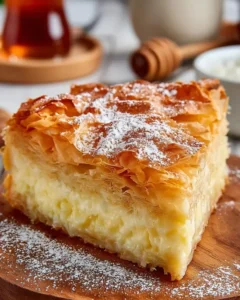
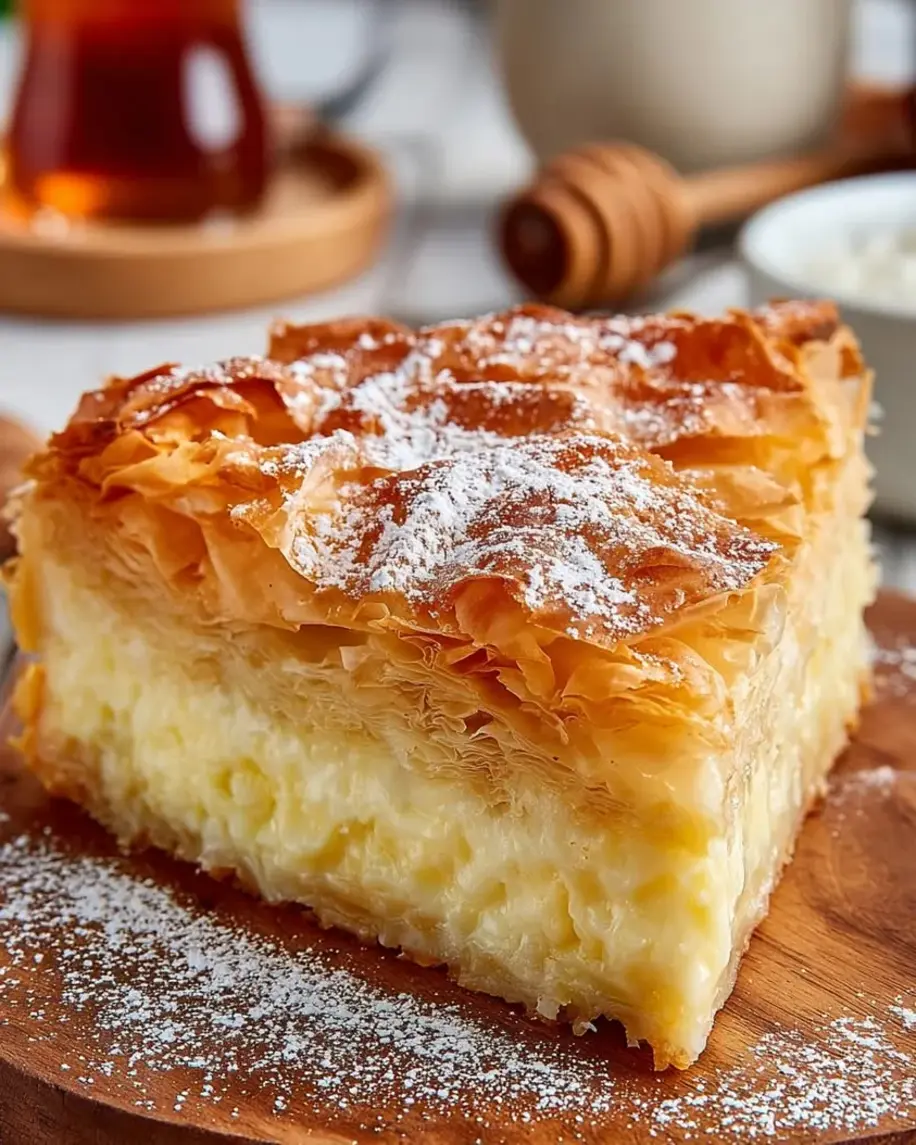
Have you ever dreamt of biting into a pastry that’s both incredibly comforting and delightfully decadent? If you’re a fan of flaky layers and creamy fillings, you’re likely to fall head over heels for Bougatsa! But what exactly is this enchanting Greek specialty? Bougatsa is a traditional Greek pastry that showcases the magic of thin, crispy phyllo dough embracing a rich, velvety custard. Often enjoyed for breakfast or as a sweet treat, its simple yet profound flavors have captivated taste buds for centuries. Unlike many elaborate desserts, Bougatsa’s charm lies in its elegant simplicity, where high-quality ingredients are allowed to shine. This recipe will guide you through creating your own authentic Bougatsa at home, bringing a taste of the Aegean into your kitchen.
Ingredients
The beauty of Bougatsa lies in its straightforward yet impactful ingredient list. We’re aiming for a creamy, luscious custard nestled within shatteringly crisp phyllo layers.
For the Custard Filling
- 4 cups Whole Milk: The richer, the better for a luxurious custard. (Substitution: You can use 2% milk, but the custard might be slightly less creamy. Avoid skim milk as it can lead to a watery texture.)
- 1 cup Granulated Sugar: For sweetness that balances the richness.
- 7 large Egg Yolks: These are crucial for thickening and adding a beautiful golden hue and velvety texture. (Substitution: If you’re concerned about raw eggs, you can temper them carefully, or use a portion of whole eggs, though yolks provide the best richness.)
- ½ cup Semolina Flour: This gives the custard its characteristic smooth, slightly toothy texture and helps it set. (Substitution: Fine-ground cornmeal can work in a pinch, but semolina is preferred for its delicate texture. All-purpose flour can be used in a 1:1 ratio, but the texture will be slightly different, more like a pudding.)
- 2 tablespoons Unsalted Butter: For richness and a smooth finish.
- 1 teaspoon Vanilla Extract: Enhances the sweet, creamy flavor.
- Zest of 1 Lemon (optional): Adds a subtle, bright citrus note that cuts through the richness beautifully.
For the Phyllo and Assembly
- 1 (16-ounce) package Phyllo Dough: Thawed according to package directions. This is the heart of the crispiness! Handle with care.
- 1 cup Unsalted Butter: Melted, for brushing the phyllo layers. This ensures that glorious golden crunch. (Substitution: You can use margarine or a combination of butter and neutral oil like vegetable or canola oil, but melted butter yields the best flavor and crispness.)
- Powdered Sugar: For dusting generously on top. Essential for the signature look and taste.
- Ground Cinnamon: To complement the sweetness and add warmth.
Timing Your Bougatsa Masterpiece
Compared to many complex pastries, Bougatsa is relatively quick to prepare, especially if you focus on the custard while the phyllo thaws. While the average time for elaborate desserts can easily exceed 2-3 hours, this recipe focuses on efficiency without compromising on that authentic, delicious result. The ‘Total time’ includes chilling the custard slightly to make it easier to handle.
Step-by-Step Instructions
Let’s get baking! Follow these steps carefully to achieve perfect Bougatsa.
Step 1: Prepare the Custard
- In a medium saucepan, whisk together the semolina flour and sugar. Gradually whisk in the milk, ensuring there are no lumps.
- Place the saucepan over medium heat and cook, stirring constantly, until the mixture begins to thicken. This usually takes about 8-10 minutes. The consistency should be like a thick soup.
- In a separate bowl, whisk the egg yolks until smooth.
- Once the milk mixture is thickened, remove it from the heat. Slowly ladle about 1 cup of the hot milk mixture into the egg yolks, whisking continuously to temper the eggs. This prevents them from scrambling.
- Pour the tempered egg yolk mixture back into the saucepan with the remaining milk mixture.
- Return the saucepan to medium-low heat and continue to cook, stirring constantly, until the custard thickens considerably, coating the back of a spoon. Do NOT boil. This should take another 5-7 minutes.
- Remove from heat and stir in the butter, vanilla extract, and lemon zest (if using) until the butter is melted and everything is well combined.
- Pour the custard into a clean bowl. Cover the surface directly with plastic wrap to prevent a skin from forming. Let it cool to room temperature, then refrigerate for at least 1 hour, or until it’s firm and cold. This makes it easier to spread.
Step 2: Assemble the Bougatsa
- Preheat your oven to 350°F (175°C). Grease a 9×13 inch baking dish or similar-sized pan well with some of the melted butter.
- Unroll your thawed phyllo dough. Keep the sheets covered with a damp kitchen towel while you work to prevent them from drying out and becoming brittle.
- Lay one sheet of phyllo dough in the prepared baking dish. Brush it generously with melted butter.
- Continue layering the phyllo sheets, brushing each one with butter, until you have about 8-10 layers in the bottom. Let the edges overhang slightly; you can trim them later or fold them in.
- Spread the chilled custard evenly over the buttered phyllo base.
- Now, layer the remaining phyllo sheets on top of the custard, brushing each layer generously with melted butter. Aim for at least 8-10 layers for a good crisp crust. Tuck any overhanging edges neatly into the sides of the dish, or fold them inwards. For a rustic look, you can also gently crumple some top layers slightly.
- Brush the very top layer generously with butter. You can score the top layers of phyllo with a sharp knife into serving portions, but do not cut all the way through the custard. This will help with slicing after baking and allows steam to escape.
Step 3: Bake to Golden Perfection
- Place the baking dish in the preheated oven.
- Bake for 45-50 minutes, or until the top is a beautiful golden brown and the edges are crisp and slightly pulled away from the sides of the pan. Keep an eye on it, as ovens can vary. If the top starts browning too quickly, you can loosely tent it with foil.
Step 4: Finish and Serve
- Once baked, remove the Bougatsa from the oven. Let it cool in the pan for at least 15-20 minutes. This resting period is crucial for the custard to set further and for the pastry to become easier to handle.
- Dust the top generously with powdered sugar. Don’t be shy!
- Dust with ground cinnamon.
- Carefully cut into squares or wedges using the scored lines. Serve warm.
Nutritional Information
While Bougatsa is a treat, here’s a general estimate per serving (assuming 10 servings):
- Calories: Approximately 450-550 kcal
- Protein: 10-15g
- Fat: 25-35g (includes saturated fat from butter and milk)
- Carbohydrates: 50-60g (includes sugar from ingredients and phyllo)
- Fiber: 1-2g
Note: These are estimates and can vary based on exact ingredient quantities and brands used.
Healthier Alternatives
Want to enjoy Bougatsa with a lighter touch? Consider these swaps:
Lighter Custard: Use a mix of whole milk and a non-dairy milk (like unsweetened almond or oat milk) for the custard. You can also slightly reduce the sugar or swap some with a natural sweetener like stevia (adjusting for sweetness levels).
Whole Wheat Phyllo: While not readily available, if you can find whole wheat phyllo dough, it would add fiber.
Reduced Butter: Use less butter for brushing the phyllo. While it may not be as shatteringly crisp, it will still be delicious. Consider using cooking spray for some layers, or a lighter brushing.
Portion Control: The simplest “healthier” approach is to enjoy a smaller slice!
Serving Suggestions
Bougatsa is traditionally enjoyed warm. The contrast between the warm, crisp pastry and the creamy, smooth custard is divine. It’s perfect for a leisurely breakfast, a delightful brunch item, or a satisfying dessert alongside a cup of Greek coffee or black tea. For an extra touch, you could add a dollop of Greek yogurt or a few fresh berries, though the classic dusting of powdered sugar and cinnamon is perfection on its own.
Common Mistakes to Avoid
- Letting Phyllo Dry Out: This is the most common pitfall. Always keep phyllo sheets covered with a damp towel when not actively using them.
- Overcooking the Custard: Be careful not to boil the custard after adding the egg yolks, as this can cause it to curdle. Cook gently and stir constantly.
- Skipping the Butter: While tempting to reduce butter, it’s essential for the crispiness and flakiness of the phyllo. Don’t skimp too much!
- Cutting Too Soon: Allow the Bougatsa to cool and set slightly before cutting. Cutting it when piping hot will result in a messy custard explosion.
Storing and Reheating Tips
Bougatsa is best enjoyed fresh. However, if you have leftovers:
- Store cooled Bougatsa in an airtight container at room temperature for up to 1 day, or in the refrigerator for up to 2 days. The phyllo will lose some crispness over time.
- To reheat, place slices on a baking sheet and warm in a 300°F (150°C) oven for about 10-15 minutes, or until heated through and slightly crisped. Microwaving is not recommended as it will make the phyllo soggy.
Frequently Asked Questions about Bougatsa
***Can I make the custard ahead of time?***
Yes! The custard can be made a day in advance and stored in the refrigerator. This is actually recommended, as chilled custard is much easier to spread onto the phyllo layers. Just make sure to cover its surface directly with plastic wrap to prevent a skin from forming.
***What is semolina flour?***
Semolina flour is coarsely ground durum wheat. It’s commonly used in Mediterranean and Middle Eastern cuisines. For Bougatsa, it provides a wonderful texture to the custard – smooth yet with a slight body, and it helps it thicken beautifully. Fine semolina is preferred.
***My phyllo dough is tearing, what can I do?***
Ensure your phyllo dough is fully thawed and at room temperature (but still covered with a damp towel). Work gently and quickly. If a sheet tears slightly, don’t worry too much; just layer it in and brush with butter. The layers will hide minor imperfections, especially if you use enough butter and layers.
***Can I use whole eggs instead of just yolks?***
You can use whole eggs, but the custard will likely be a bit thinner and paler than traditional Bougatsa. For the richest, creamiest, and most golden custard, egg yolks are definitely key.
***Is Bougatsa always sweet?***
The most famous version of Bougatsa is sweet, typically filled with custard and dusted with sugar and cinnamon. However, savory versions exist, particularly in Northern Greece, with fillings like cheese (tirovolia) or minced meat. This recipe focuses on the classic sweet custard version.
Conclusion
Making Bougatsa at home is incredibly rewarding. The process, from simmering the creamy custard to layering the delicate phyllo, is a labor of love that culminates in a truly spectacular pastry. The crisp, golden layers giving way to a warm, velvety custard is an experience that will transport you straight to a Greek bakery. Whether you’re serving it for breakfast, brunch, or dessert, this Irresistible Greek Custard Phyllo Pastry is sure to impress. So, gather your ingredients, embrace the phyllo, and enjoy your homemade slice of Greek sunshine!
PrintBougatsa: Irresistible Greek Custard Phyllo Pastry Recipe
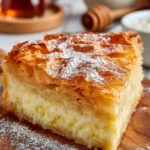
A traditional Greek pastry with creamy custard filling wrapped in crispy phyllo dough, dusted with powdered sugar and cinnamon.
Ingredients
- 1package phyllo dough (16 oz, thawed)
- 1 cupunsalted butter (melted)
- 4 cupswhole milk
- 1 cupgranulated sugar
- 1/2 cupsemolina flour
- 3large eggs
- 1 tspvanilla extract
- 1/2 cuppowdered sugar
- 1 tspground cinnamon
Instructions
- Preheat oven to 350°F (175°C). Grease a 9×13-inch baking dish.
- In a saucepan, heat milk over medium heat until steaming. Whisk in sugar and semolina, stirring constantly until thickened (about 5 minutes). Remove from heat.
- Beat eggs in a bowl, then slowly whisk into the milk mixture. Stir in vanilla. Let custard cool slightly.
- Layer 8 sheets of phyllo in the baking dish, brushing each with melted butter. Spread custard evenly over phyllo.
- Top with remaining phyllo sheets, brushing each with butter. Tuck edges in and score the top layers lightly.
- Bake for 30-35 minutes until golden brown. Cool for 15 minutes, then dust with powdered sugar and cinnamon. Serve warm or at room temperature.
Notes
You can customize the seasonings to taste.
“`