“`html
Table of Contents
- Introduction
- Delicious Mango Coconut Cream Verrines: Tropical Dessert Bliss
- Timing for Tropical Perfection
- Crafting Your Tropical Dessert Bliss
- Nutritional Insights
- Healthier Swaps for a Lighter Tropical Treat
- Serving Your Tropical Masterpieces
- Avoiding Common Verrine Pitfalls
- Storing Your Tropical Delights
- Frequently Asked Dessert Questions
Delightful Mango Coconut Cream Verrines: Tropical Dessert Bliss
Are you dreaming of an escape to a sun-drenched beach with every bite? If so, you’re in for a treat! Many of us crave desserts that are both decadent and refreshing, offering a burst of exotic flavors without being overly heavy. The combination of sweet, ripe mango and creamy, tropical coconut is a classic for a reason, transporting your taste buds to paradise. This recipe for Delightful Mango Coconut Cream Verrines delivers exactly that – an elegant and utterly delicious dessert that’s surprisingly simple to make.
Embrace the Tropical Escape
Craving a dessert that screams tropical vacation? You’re not alone! Millions of home cooks are searching for delightful ways to combine the vibrant sweetness of mango with the rich creaminess of coconut, seeking a dessert that feels both indulgent and light. This recipe for Delightful Mango Coconut Cream Verrines is your answer. These individual layered desserts are not only visually stunning but also bursting with flavor, making them perfect for special occasions or an everyday moment of bliss. Get ready to impress your guests (and yourself!) with this taste of paradise.
The Stars of Our Tropical Show
The magic of these verrines lies in the quality and synergy of their key ingredients. We’re aiming for a harmonious balance of sweet, tangy, and creamy, with each component playing its part beautifully.
- Ripe Mangoes: The heart and soul of this dessert. Choose vibrant, fragrant mangoes that yield gently to pressure. The sweetness and slight tang are crucial.
- Sensory Note: Look for mangoes with a rich, fruity aroma. The flesh should be a deep golden-orange, smooth, and free of fibrous strings.
- Substitution: If fresh mangoes are out of season, high-quality frozen mango chunks (thawed) or canned mango pulp (ensure it’s unsweetened for better control) can work. You can also experiment with Ataulfo, Kent, or Tommy Atkins varieties.
- Full-Fat Coconut Milk: This provides the luxurious creaminess. Make sure it’s full-fat for the best texture and flavor; light coconut milk won’t achieve the same richness.
- Sensory Note: The coconut milk should be thick and creamy, with a naturally sweet, tropical aroma. Shake the can well before opening.
- Substitution: Coconut cream is an even richer option if you can find it. Ensure it’s pure coconut milk without added thickeners or stabilizers if possible.
- Sweetener (Agave Syrup or Maple Syrup): To enhance the natural sweetness of the mango and coconut without overpowering them.
- Sensory Note: A liquid sweetener integrates seamlessly without grittiness.
- Substitution: Honey (if not vegan) or simple syrup can be used. Adjust the amount to your preference and the sweetness of your mangoes.
- Lime Juice: A touch of acidity to brighten the flavors and cut through the richness.
- Sensory Note: Freshly squeezed lime juice offers the most vibrant, zesty flavor.
- Substitution: Lemon juice can be used in a pinch, but lime offers a more authentic tropical profile.
- Vanilla Extract: A subtle warmth that complements both mango and coconut.
- Sensory Note: Pure vanilla extract provides a more complex aroma than imitation.
- Substitution: Vanilla bean paste or a tiny pinch of ground vanilla bean can be used for a more intense flavor.
- Optional Garnish: Toasted coconut flakes, fresh mint leaves, or a small slice of mango.
- Sensory Note: Garnish adds a final textural and visual flourish.
Timing for Tropical Perfection
This dessert is wonderfully straightforward, allowing you to create a showstopper without spending hours in the kitchen. The chilling time is crucial for the flavors to meld and the textures to set.
Compared to many elaborate desserts, this verrine recipe is quite efficient. While the active preparation is minimal (about 20 minutes), the chilling period ensures the best results. Many layered desserts require baking or more complex steps, making this a refreshingly simple yet elegant option.

Crafting Your Tropical Dessert Bliss
Let’s get started on creating these beautiful and delicious tropical treats. The process is designed to be easy and rewarding.
Step 1: Prepare the Luscious Mango Puree
Start by preparing your mangoes. If using fresh mangoes, peel and dice them, discarding the pit. You’ll need about 2 cups of diced mango. Place the diced mango into a blender or food processor. Add 1-2 tablespoons of your chosen liquid sweetener (start with less, you can always add more) and 1 teaspoon of fresh lime juice. Blend until you achieve a very smooth, velvety puree. Taste and adjust sweetness or tanginess if needed. If your mangoes are particularly fibrous, you might want to strain the puree through a fine-mesh sieve for an extra-smooth texture, though this step is usually unnecessary with ripe, good-quality mangoes.
Step 2: Create the Silky Coconut Cream
Open a can of full-fat coconut milk (about 13.5 oz or 400ml). It’s best if you’ve chilled the can in the refrigerator overnight so the cream separates from the water. Scoop out the thick, solid cream from the top into a mixing bowl. Reserve the liquid coconut water for another use (like smoothies!). To the coconut cream, add 1-2 tablespoons of your liquid sweetener (adjust to taste), 1 teaspoon of vanilla extract, and another teaspoon of fresh lime juice. Using a whisk or an electric mixer on low speed, whip the coconut cream until it’s smooth and slightly thickened. Be careful not to over-whip, as it can sometimes split. You want a luscious, spoonable consistency.
Step 3: Layer the Tropical Magic
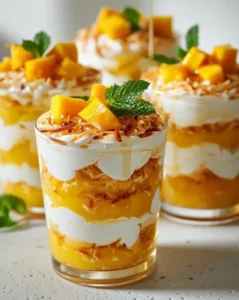
Now for the fun part! Grab your serving glasses or verrines. Start by spooning a layer of the vibrant mango puree into the bottom of each glass, filling it about one-third of the way up. Gently spoon or pipe the silky coconut cream mixture over the mango layer, filling the glass further. You can create distinct layers or swirl them slightly for a more artistic look. Ensure each glass has a good ratio of mango to coconut cream.
Step 4: Chill and Serve Your Masterpiece
Once your verrines are assembled, cover them tightly with plastic wrap or lids. Place them in the refrigerator to chill for at least 2 hours. This chilling time is essential not only to allow the dessert to set slightly but also for the flavors to meld beautifully. Before serving, garnish your Delightful Mango Coconut Cream Verrines with toasted coconut flakes for a delightful crunch, a sprig of fresh mint for color and aroma, or a tiny slice of fresh mango. Serve chilled and enjoy the tropical bliss!
Nutritional Insights
While this is a rich and decadent dessert, understanding its nutritional profile can help you enjoy it mindfully.
- Calories: Approximately 250-350 kcal per serving (varies based on sweetener and mango sweetness).
- Fat: Primarily from coconut milk, mostly saturated fat.
- Carbohydrates: From the natural sugars in mango and added sweetener.
- Fiber: A good source from the mango.
- Vitamins & Minerals: Mangoes are rich in Vitamin C and Vitamin A. Coconut milk provides some minerals like manganese.
Note: These are approximate values and can vary significantly based on exact ingredients and portion sizes.
Healthier Swaps for a Lighter Tropical Treat
Want to lighten up this tropical delight without sacrificing flavor? Here are a few swaps you can try:
- Reduce Sweetener: Rely more on the natural sweetness of ripe mangoes and use only a touch of liquid sweetener, or omit it entirely if your mangoes are very sweet.
- Lighter Coconut Base: Use a blend of full-fat and light coconut milk for the cream layer, or opt for a coconut yogurt (unsweetened) as a base. Keep in mind this will yield a slightly less rich result.
- Add Chia Seeds: For a nutritional boost and to help thicken the layers, you can add a tablespoon of chia seeds to both the mango puree and coconut cream mixtures. Let them sit for about 10-15 minutes to gel before layering.
- Portion Control: Serving in smaller verrines naturally controls portion sizes.
Serving Your Tropical Masterpieces
These verrines are designed for individual servings, making them perfect for:
- Elegant Dinner Parties: Serve as a sophisticated dessert after a main course.
- Brunches: A refreshing and beautiful addition to a brunch spread.
- Picnics or Potlucks: Their individual servings make them easy to transport.
- A Solo Treat: Sometimes, you just need a little taste of paradise all to yourself!
Always serve chilled. The contrast between the cold dessert and the tropical flavors is part of the appeal.
Avoiding Common Verrine Pitfalls
To ensure your verrines turn out perfectly every time, keep these common mistakes in mind:
- Using overripe or underripe mangoes: Underripe mangoes will be tart and fibrous; overripe ones can be mushy and lack distinct flavor.
- Using light coconut milk: This will result in a thin, less creamy texture. Always opt for full-fat.
- Not chilling long enough: Insufficient chilling time means the layers might be too soft and the flavors won’t have melded.
- Over-sweetening: Taste as you go! The sweetness of mangoes varies, and it’s easy to add too much sweetener.
- Not chilling the coconut milk: This makes it harder to separate the thick cream from the watery part, impacting the final texture.
Storing Your Tropical Delights
These verrines are best enjoyed fresh, but they can be stored for a short period.
- Refrigeration: Cover the verrines tightly with plastic wrap or lids and store them in the refrigerator.
- Shelf Life: They are best consumed within 1-2 days. The texture of the coconut cream may change slightly over time, and the mango puree can become a bit watery.
- Do not freeze: Freezing can alter the delicate texture of the cream and fruit.
Frequently Asked Dessert Questions
***Can I make this dessert vegan?***
Yes! This recipe is naturally vegan as it uses mango, coconut milk, and plant-based sweeteners. Ensure your sweetener of choice is vegan (e.g., avoid honey).
***How can I make the layers more defined?***
Ensure your mango puree is very smooth and at room temperature before layering. For the coconut cream, make sure it’s chilled and thick, but not overly whipped or airy. Spooning it gently over the mango layer using a piping bag or a spoon can help create neat separation.
***What kind of glasses should I use?***
Small glass jars, shot glasses, wine glasses, or any clear serving dishes work wonderfully. The key is that they are small enough for individual dessert portions and ideally clear to showcase the beautiful layers.
***Can I add other fruits?***
Certainly! You could add a layer of passionfruit puree for extra tang, or finely diced pineapple for texture. However, keep the focus on mango and coconut for the classic flavor profile.
***Why is my coconut cream separating?***
This can happen if you over-whip the coconut cream or if it becomes too warm. Whip on low speed and stop as soon as it becomes smooth and slightly thickened. If it starts to look oily or separated, gently whisk it back together or briefly chill it.
Ready to Taste Paradise?
Whipping up these Delightful Mango Coconut Cream Verrines is more than just making dessert; it’s crafting an experience. The vibrant colors, the tropical aromas, and the luscious textures will transport you. So, gather your ingredients, get ready for a taste of pure bliss, and dive into this delightful tropical escape!
Delightful Mango Coconut Cream Verrines: Tropical Dessert Bliss
A delicious tropical dessert combining the rich flavors of mango and coconut, served in elegant verrines.
Ingredients
- 2ripe mangoes, peeled and diced
- 1 cupcoconut cream
- 1 tablespoonhoney
Instructions
- Dice the mangoes and place them in a blender. Blend until smooth to make a mango puree.
- In a separate bowl, whisk the coconut cream with honey until smooth.
- Layer the mango puree and coconut cream alternately in verrine glasses and refrigerate for 2 hours before serving.
Notes
You can customize the seasonings to taste.
“`