
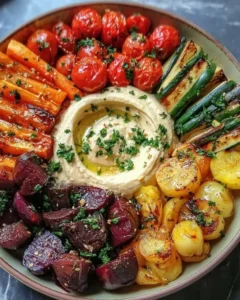
“`html
Table of Contents
- Introduction: What Makes a Perfect Roasted Veggie Bowl?
- Ingredients: The Heart of Your Bowl
- Timing: Your Culinary Timeline
- Step-by-Step Instructions
- Nutritional Information: Power Up Your Plate
- Healthier Alternatives: Flavor Without the Fuss
- Serving Suggestions: Elevate Your Experience
- Common Mistakes to Avoid
- Storing Tips: Keep the Freshness
- Frequently Asked Questions (FAQs)
Perfect Roasted Veggie and Hummus Bowl Recipe for Healthy Eating
Introduction: What Makes a Perfect Roasted Veggie Bowl?
Are you looking for a meal that’s both incredibly satisfying and packed with nutrients? In today’s fast-paced world, finding a dish that nourishes your body without compromising on taste can feel like a challenge. But what if we told you that a vibrant, wholesome bowl filled with perfectly roasted vegetables and creamy, flavorful hummus could be your new go-to? This isn’t just another salad; it’s a symphony of textures and tastes designed to fuel your day and delight your senses. We’re talking about the ultimate perfect roasted veggie and hummus bowl recipe for healthy eating – a meal that proves healthy food can be exciting and deeply fulfilling.
Ingredients: The Heart of Your Bowl
The magic of this bowl lies in the quality and freshness of its components. Each ingredient plays a vital role, contributing to an explosion of flavors and a spectrum of nutrients. Let’s dive into what you’ll need to create this culinary masterpiece.
For the Roasted Veggies
- 2 cups broccoli florets: Look for bright green, firm florets – they roast up beautifully with slightly crispy edges and a tender bite. Feel free to substitute with cauliflower florets for a similar texture and mild flavor.
- 1 large sweet potato (about 1.5 cups cubed): Opt for sweet potatoes with smooth, unblemished skin. Their natural sweetness caramelizes during roasting, adding a delightful depth. Butternut squash or even chunks of pumpkin work wonderfully as alternatives.
- 1 red bell pepper, seeded and chopped: Choose vibrant, firm peppers. Roasting brings out their inherent sweetness and softens them to a perfect, slightly chewy texture. Yellow or orange bell peppers can be used interchangeably.
- 1 red onion, quartered and separated into wedges: Red onions caramelize beautifully when roasted, offering a sweet, mild onion flavor rather than a sharp bite. Shallots or even leeks cut into similar sizes can offer a nuanced alternative.
- 2 tablespoons olive oil: Extra virgin olive oil provides a lovely fruity base and helps the vegetables crisp up. Avocado oil or melted coconut oil are also excellent choices, offering different flavor profiles and high smoke points.
- 1 teaspoon dried herbs (e.g., Italian seasoning, rosemary, or thyme): These add an aromatic layer that complements the sweetness of the vegetables. Fresh herbs, finely chopped, can be used in a pinch (use about 1 tablespoon).
- Salt and freshly ground black pepper to taste: Essential for enhancing all the natural flavors. Don’t be shy with the pepper for a little warmth!
For the Hummus
- 1 (15-ounce) can chickpeas, drained and rinsed: These are the creamy foundation of your hummus. Ensure they are well-rinsed to remove the canning liquid, which can affect the taste. If you have time, using dried chickpeas that you’ve soaked and cooked yourself will yield an even creamier texture.
- 1/4 cup tahini: This toasted sesame paste is crucial for authentic hummus flavor and smooth texture. Stir it well before measuring, as the oil can separate. If tahini is unavailable or you’re not a fan, a good quality, smooth cashew butter can be a surprising substitute, though it will alter the flavor profile slightly.
- 2-3 tablespoons fresh lemon juice: The brightness of lemon juice cuts through the richness and adds a zesty kick. Start with 2 tablespoons and add more to your preference. Lime juice can be used in a pinch for a different citrus note.
- 1-2 cloves garlic, minced: Fresh garlic provides a pungent, savory depth. Adjust the amount to your liking – raw garlic can be quite potent! If you prefer a milder flavor, you can roast the garlic first.
- 2-3 tablespoons ice water: This is the secret to ultra-creamy hummus! Adding ice water gradually helps to emulsify the ingredients and achieve a silky smooth consistency.
- Pinch of cumin: Cumin adds a warm, earthy spice that is characteristic of traditional hummus.
- Salt to taste: Crucial for balancing all the flavors.
For Assembly
- 4 cups mixed greens or spinach: A fresh, leafy base to provide volume and nutrients.
- Optional toppings: Toasted seeds (pumpkin, sunflower), a sprinkle of feta cheese, Kalamata olives, a drizzle of extra tahini, or a few fresh parsley leaves.
Timing: Your Culinary Timeline
This recipe is designed for efficiency without skimping on flavor. Let’s break down the time commitment so you can plan your delicious meal.
20 minutes
30-40 minutes
50-60 minutes
Compared to many complex recipes, this one is quite manageable, making it an excellent option for busy weeknights or a healthy weekend lunch. The active prep is minimal, with the oven doing most of the heavy lifting.
Step-by-Step Instructions
Step 1: Preheat and Prep the Veggies
Before you do anything else, get your oven roaring! Preheat it to 400°F (200°C). This high heat is crucial for achieving those desirable crispy edges on your vegetables. While the oven heats up, wash all your produce. Chop the broccoli into bite-sized florets. Peel and cube the sweet potato into roughly 1-inch pieces. Core, seed, and chop the red bell pepper into similar-sized pieces. Cut the red onion into quarters and then separate the wedges. Consistency in size ensures even roasting.
Step 2: Roast to Perfection
In a large bowl, combine all the chopped vegetables – broccoli, sweet potato, red bell pepper, and red onion. Drizzle them generously with the olive oil. Sprinkle with your chosen dried herbs, salt, and a good grinding of black pepper. Toss everything together thoroughly, ensuring each piece is lightly coated in oil and seasonings. Spread the seasoned vegetables in a single layer on a large baking sheet. Avoid overcrowding the pan, as this will cause the vegetables to steam rather than roast, hindering that coveted caramelization. If necessary, use two baking sheets. Roast for 30-40 minutes, or until the vegetables are tender and slightly browned, with those delightful crispy bits you’re aiming for. Flip them halfway through roasting to ensure even cooking.
Step 3: Prepare the Hummus
While the vegetables are roasting, let’s whip up that creamy hummus. In a food processor, combine the drained and rinsed chickpeas, tahini, fresh lemon juice, minced garlic, cumin, and a pinch of salt. Process until the mixture is crumbly. Now, for the magic: gradually add the ice water, one tablespoon at a time, while the food processor is running. Continue processing until the hummus is incredibly smooth and creamy. You might need to scrape down the sides of the bowl a few times. Taste and adjust seasonings – add more lemon juice for tanginess, salt for savoriness, or garlic for a bolder kick. If it’s too thick, add another tablespoon of ice water.
Step 4: Assemble Your Masterpiece
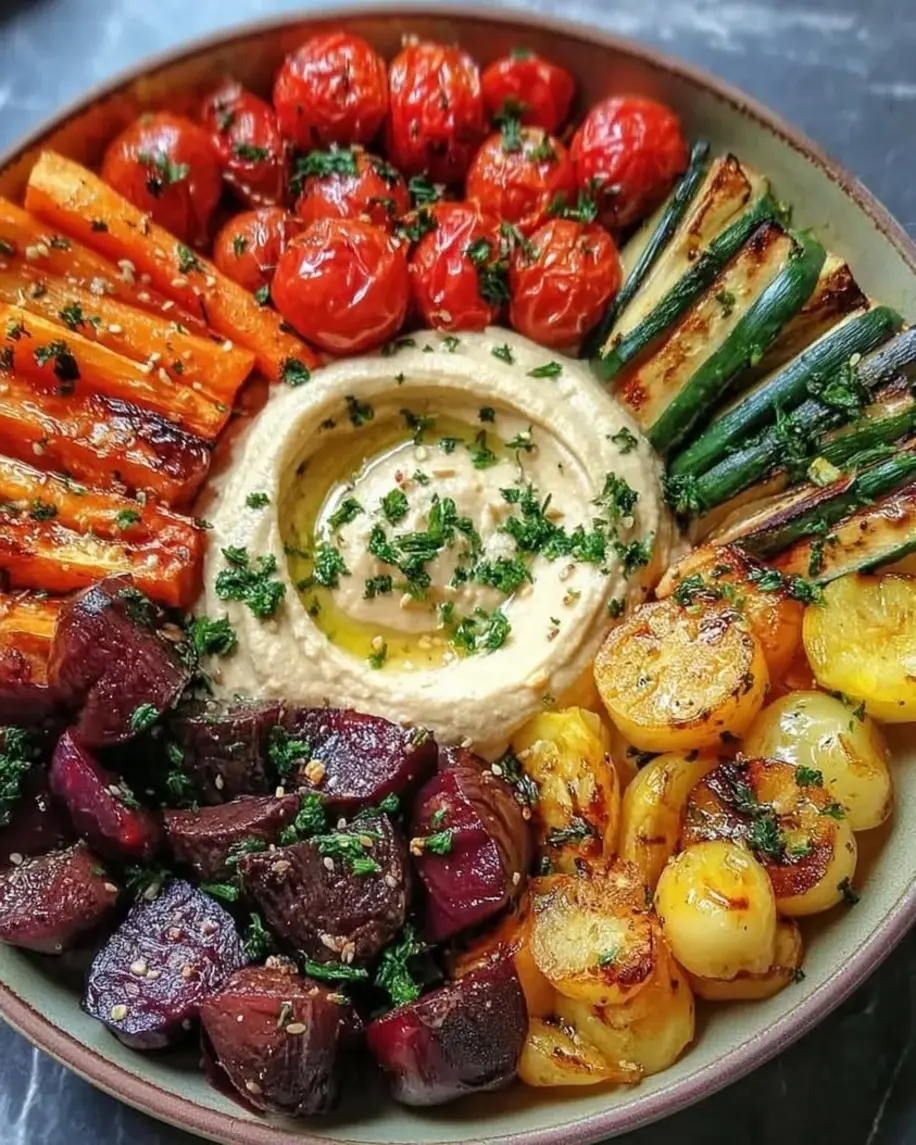
Once your vegetables are perfectly roasted and your hummus is lusciously smooth, it’s time to build your bowl. Start with a generous bed of mixed greens or spinach in each serving bowl. Spoon a hearty dollop of your freshly made hummus onto the greens. Arrange the warm, roasted vegetables artfully around the hummus. Add any of your favorite optional toppings – a sprinkle of crunchy seeds, briny olives, or a crumble of feta cheese can add wonderful texture and flavor. A final drizzle of olive oil or tahini, and perhaps some fresh parsley, will complete the presentation. Enjoy immediately while the vegetables are warm and fragrant!
Nutritional Information: Power Up Your Plate
This Roasted Veggie and Hummus Bowl is a powerhouse of nutrition. While exact values will vary based on portion sizes and specific ingredients used, a typical serving offers:
- Calories: Approximately 350-450 kcal (depending on oil and topping amounts)
- Protein: Good source from chickpeas and optional toppings like seeds or feta.
- Fiber: High in fiber from the abundance of vegetables and chickpeas, aiding digestion and promoting satiety.
- Vitamins & Minerals: Rich in Vitamin A (sweet potato), Vitamin C (bell pepper, broccoli), Vitamin K (greens), potassium, and iron.
- Healthy Fats: Provided primarily by olive oil and tahini.
Healthier Alternatives: Flavor Without the Fuss
While this recipe is already incredibly healthy, here are some ways to customize it further or make swaps:
- Lower Oil Roast: Use cooking spray or a very light mist of olive oil instead of 2 tablespoons. The vegetables will still roast, though perhaps with less crispiness.
- Lighter Hummus: Reduce the amount of tahini slightly and increase the ice water to achieve a similar creamy texture, or blend in a small cooked zucchini for extra creaminess and volume with fewer calories.
- Lean Protein Boost: Add grilled chicken breast, baked salmon, or pan-seared tofu for an extra protein punch without significantly increasing unhealthy fats.
- Whole Grain Base: Serve over a bed of quinoa, brown rice, or farro for added complex carbohydrates and sustained energy.
- Spice it Up: Add a pinch of red pepper flakes to the vegetables before roasting for a gentle heat.
Serving Suggestions: Elevate Your Experience
This bowl is a complete meal on its own, but here are a few ideas to enhance it:
- Add Grains: Serve as mentioned above over quinoa, brown rice, or even a small portion of whole wheat couscous.
- Crunch Factor: Top with toasted slivered almonds, a sprinkle of crunchy chickpeas (baked until crispy), or a handful of toasted sunflower seeds.
- Pickled Accents: Add some pickled red onions, capers, or a few sliced cornichons for a briny, tangy contrast.
- Fresh Herbs: A generous hand of chopped fresh parsley, cilantro, or dill can brighten the whole dish.
Common Mistakes to Avoid
To ensure your roasted veggie bowl is a roaring success, steer clear of these common pitfalls:
- Overcrowding the Baking Sheet: This is the cardinal sin of roasting. It leads to steamed, soggy vegetables instead of beautifully caramelized ones. Give your veggies space!
- Not Cutting Veggies Uniformly: Unevenly cut vegetables won’t cook at the same rate, leading to some being perfectly done while others are undercooked or burnt.
- Skipping the Salt: Salt is a flavor enhancer. Without enough, your roasted vegetables and hummus will taste bland and one-dimensional.
- Undercooking the Chickpeas for Hummus: If your chickpeas are too hard, your hummus won’t be as smooth. Ensure they are cooked until very tender.
- Watery Hummus: Adding too much liquid too quickly can make hummus too thin and unappealing. Add ice water gradually.
Storing Tips: Keep the Freshness
Leftovers can be stored, but it’s best to keep the components separate for optimal texture.
- Roasted Vegetables: Once cooled, store in an airtight container in the refrigerator for up to 3-4 days. Reheat gently in a skillet or oven.
- Hummus: Store in an airtight container in the refrigerator for up to 5 days. If a skin forms on top, simply scrape it off or stir it in.
- Assembled Bowls: It’s best not to assemble the entire bowl until you’re ready to eat, as the greens will wilt and the roasted vegetables may become soggy.
Frequently Asked Questions (FAQs)
Can I use different vegetables?
Absolutely! This recipe is very adaptable. Zucchini, cauliflower, Brussels sprouts, carrots, and sweet potatoes are all excellent choices. Just ensure they are cut to a similar size for even roasting.
How do I make my hummus creamier?
The key is gradually adding ice water while blending. Some people also find peeling the chickpeas before blending to yield an even smoother texture, though this is quite time-consuming.
Can I make this recipe vegan?
Yes, this recipe is naturally vegan as written! Ensure any optional toppings you add are also vegan-friendly.
How long does it take to roast the vegetables?
Typically 30-40 minutes at 400°F (200°C), but this can vary depending on the size of your vegetable pieces and your oven. They should be tender and have some browned, crispy edges.
Can I make the hummus ahead of time?
Yes! Hummus keeps well in the refrigerator for up to 5 days, making it a great component to prepare in advance for quick meals.
Ready to Taste the Goodness?
This Perfect Roasted Veggie and Hummus Bowl is more than just a meal; it’s a celebration of fresh ingredients and mindful eating. Whether you’re looking for a healthy lunch, a light dinner, or a post-workout refuel, this recipe delivers on all fronts. Give it a try and let us know how you customize your bowl in the comments below!
Perfect Roasted Veggie and Hummus Bowl Recipe for Healthy Eating

A delicious and healthy bowl filled with roasted vegetables and creamy hummus, perfect for a nutritious meal.
Ingredients
- 1 cupcherry tomatoes
- 1zucchini, sliced
- 1red bell pepper, diced
- 2 tablespoonsolive oil
- Salt and pepper to taste
- 1 cuphummus
- 1 tablespoonlemon juice
- 2 cupscooked quinoa
- Fresh parsley for garnish
Instructions
- Preheat oven to 400°F (200°C).
- Toss the cherry tomatoes, zucchini, and red bell pepper with olive oil, salt, and pepper. Roast on a baking sheet for 20-25 minutes until vegetables are tender.
- Divide the roasted vegetables and quinoa into bowls. Drizzle with lemon juice, add a dollop of hummus, and garnish with fresh parsley.
Notes
You can customize the seasonings to taste.
“`