Table of Contents
Colorful Beetroot and Goat’s Cheese Carpaccio Stack: The Elegant Layered Appetizer
Growing up in Morocco, food was always a celebration of color and flavor, just like the vibrant souks of Marrakech. While this Colorful Beetroot and Goat’s Cheese Carpaccio Stack might not be a traditional Moroccan dish, the philosophy of showcasing fresh, seasonal produce and creating something beautiful holds true. This elegant layered appetizer combines the earthy sweetness of roasted red and golden beets with the creamy tang of goat’s cheese, creating a stunning visual and culinary experience perfect for any gathering. It’s truly a showstopper, and what I love most is how effortlessly it comes together, making it an ideal choice for entertaining in my bustling NYC kitchen.
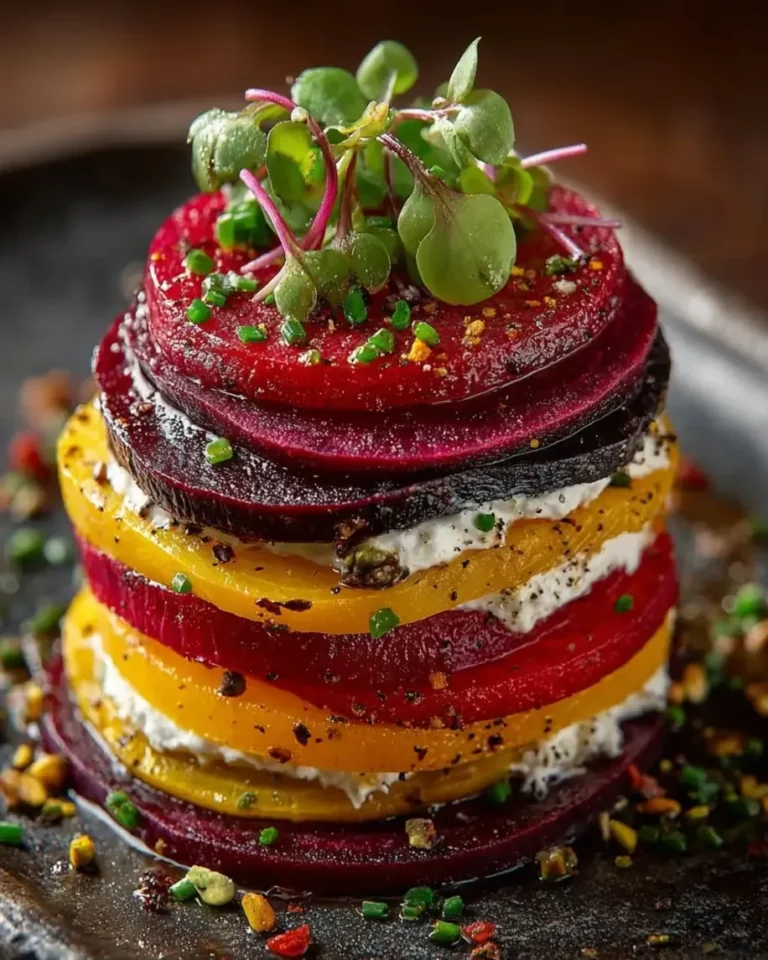
Picture this: ruby-red and sun-kissed golden beet slices, paper-thin and glistening, artfully interleaved with a rich, herbaceous goat’s cheese spread. Each bite delivers a harmonious blend of textures—the delicate bite of the beet, the yielding creaminess of the chèvre, and the satisfying crunch of toasted pine nuts. The balsamic reduction adds a touch of sophisticated sweetness and acidity, a nod to the refined palate I cultivated during my culinary training in Paris. The fresh dill or basil leaves provide that final aromatic flourish, elevating this simple collection of ingredients into an unforgettable symphony of taste. It’s like a little piece of edible art on your plate.
This isn’t just any beetroot and goat’s cheese salad; it’s a meticulously crafted stack designed for maximum impact and flavor balance, a unique angle that sets it apart. I’ve refined this beet carpaccio recipe over countless dinner parties, ensuring that each layer contributes to a perfect bite. I’ll show you my secret for perfectly roasted beets and a pro tip for slicing them razor-thin, as well as a common mistake to avoid when preparing the goat’s cheese mixture. Trust me, with these techniques, you’ll be creating culinary magic that impresses every guest at your table.
Why This Beetroot Carpaccio Recipe Is the Best
The true allure of this recipe lies in its sophisticated simplicity and the incredible depth of flavor it achieves with minimal fuss. The combination of earthy beets and tangy goat’s cheese is a classic for a reason, but it’s the careful roasting that transforms the beets from basic to utterly brilliant. Baking them wrapped in foil ensures they become melt-in-your-mouth tender and intensely sweet, a technique I often use for vegetables picked fresh from the farmers market here in NYC, allowing their natural sugars to caramelize beautifully. This careful preparation is the foundation for an exceptional vegetarian beet appetizer.
Texture is paramount in this dish. Achieving those almost translucent, paper-thin beet slices is key to the carpaccio experience. I’ll guide you through using a mandoline—a tool I swear by from my days in Parisian kitchens—to get that delicate, consistent cut that makes all the difference. This technique isn’t just about aesthetics; it ensures each layer of beet is tender, allowing the creamy goat’s cheese and crunchy nuts to shine through without competition, creating a truly luxurious mouthfeel that you won’t find in a regular roasted beet salad.
Despite its elegant appearance, this colorful beetroot and goat’s cheese carpaccio is remarkably foolproof and can even be prepared mostly ahead of time. The steps are straightforward, and I’ve designed it so you can focus on enjoying the process rather than stressing over complicated techniques. Plus, the vibrant colors of the red and golden beets make for an incredibly visually appealing dish that requires very little extra effort to present artfully. It’s a testament to how simple, quality ingredients, treated with respect, can create a truly memorable dining experience.
Beet Carpaccio Recipe Ingredients
Crafting this vibrant beetroot and goat cheese salad begins with selecting the freshest ingredients, much like how my mother taught me to choose produce at the market back in Morocco. Here in NYC, I’m spoiled for choice at places like Union Square Greenmarket, where I can find the most beautiful red and golden beets.
Ingredients List
- For the Beetroot Layers:
- 2 large red beets (roasted, peeled, and chilled)
- 2 large golden beets (roasted, peeled, and chilled)
- 1 tbsp extra virgin olive oil
- 1 tsp balsamic vinegar
- Salt and freshly ground black pepper, to taste
- For the Goat’s Cheese Layer:
- 150g (approx 5.3 oz) soft goat’s cheese (chevre)
- 2 tbsp fresh cream or crème fraîche
- Zest of 1 lemon
- 1 tbsp chopped fresh chives
- For Assembly and Garnish:
- 2 tbsp balsamic reduction (or glaze)
- A handful of microgreens or baby arugula (rocket)
- 2 tbsp toasted pine nuts or walnuts, roughly chopped
- Fresh dill or basil leaves, for garnish
- Extra virgin olive oil, for drizzling
Ingredient Spotlight
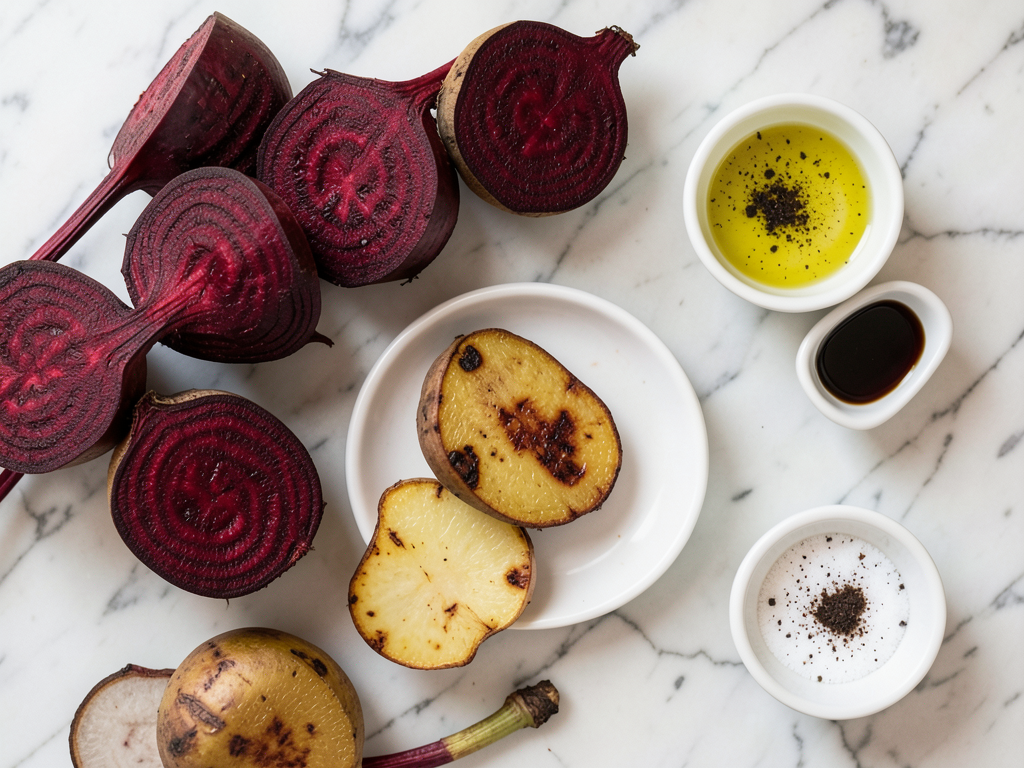
Red and Golden Beets: These are the stars of our colorful beet carpaccio. Their distinct colors add visual appeal, and their earthy sweetness is foundational. When selecting beets, look for firm, unblemished roots with fresh-looking greens if still attached. They should feel heavy for their size. If golden beets are hard to find, you can use all red beets, but you’ll miss the beautiful color contrast. Roasted beets are essential here for tenderness and concentrated flavor.
Soft Goat’s Cheese (Chèvre): This provides the creamy, tangy counterpoint that makes a beetroot and goat cheese salad so addictive. Choose a good quality fresh chèvre, as its flavor will really shine. Avoid older, harder goat cheeses. If you can’t find fresh cream, a good quality full-fat sour cream or a mild cream cheese can work in a pinch, though the tang will be slightly less pronounced. For a delightful alternative, a sheep’s milk feta can offer a similar salty zing.
Balsamic Reduction: This acts as a sweet and tart dressing, intensifying the flavors of the carpaccio. You can buy a pre-made balsamic glaze, which is a convenient shortcut often found in gourmet sections of US supermarkets. Alternatively, you can easily make your own by simmering balsamic vinegar until it reduces and thickens, a simple technique I learned in culinary school. If you’re out, a good quality fig jam thinned slightly with a touch of red wine vinegar can mimic the sweet-tart profile.
| Original Ingredient | Best Substitution | Flavor / Texture Impact |
|---|---|---|
| Soft Goat’s Cheese (Chèvre) | Feta (sheep’s milk) or Cream Cheese | Feta is saltier and crumblier; cream cheese is milder and less tangy. |
| Fresh Cream / Crème Fraîche | Full-fat Sour Cream or Greek Yogurt | Sour cream adds tanginess; Greek yogurt adds tang and a thicker texture. |
| Balsamic Reduction | Fig Jam (thinned with red wine vinegar) | Adds a similar sweet and tangy profile, but with a distinct fig flavor. |
| Pine Nuts | Toasted Walnuts or Pecans | Walnuts or pecans offer a different nutty flavor and slightly less delicate crunch. |
How to Make Colorful Beetroot and Goat’s Cheese Carpaccio Stack — Step-by-Step
Don’t let the elegant presentation intimidate you; this roasted beet salad is surprisingly straightforward to assemble. Just follow these steps, and you’ll have a stunning starter in no time!
Step 1: Prepare and Chill the Beets
Preheat your oven to 400°F (200°C). Thoroughly scrub the red and golden beets. It’s important to roast them separately to prevent the red beets from staining the golden ones, maintaining that beautiful color contrast we’re aiming for in our golden beet carpaccio. Wrap each color individually in aluminum foil. Roast for 45-60 minutes, or until they’re tender enough to be easily pierced with a knife. Let them cool completely before peeling their skins, which should slip off with ease after roasting. Once peeled, chill them in the refrigerator for at least 1 hour; this firming up is crucial for thin slicing.
💡 Sara’s Pro Tip: Roasting your beets the day before will save you significant time on the day of assembly. Chilled beets are much easier to slice thinly and hold their shape better, making your carpaccio stack more stable and visually appealing.
Step 2: Make the Creamy Goat’s Cheese Mixture
In a medium bowl, combine the soft goat’s cheese, fresh cream (or crème fraîche), the bright zest of one lemon, and the finely chopped fresh chives. Using a fork or a small whisk, mix everything together until it’s smooth and lump-free. Season with a pinch of salt and freshly ground black pepper, tasting as you go to ensure the balance is just right. Set this mixture aside. The lemon zest brightens the flavor, a little trick I picked up in Paris to lift richer ingredients.
⚠️ Common Mistake to Avoid: Over-mixing the goat’s cheese can make it too runny, especially if your chèvre is very soft. Mix just until combined and smooth. If it’s too soft, chill it for 15-20 minutes to firm it up slightly before spreading.
Step 3: Slice and Season the Beets
Now for the delicate part! Using a very sharp knife or, ideally, a mandoline slicer, carefully slice the chilled red and golden beets into rounds, aiming for a thickness of about 2-3mm (less than 1/8 inch). The thinner, the better for a true carpaccio experience! In a large, separate bowl, gently toss the beet slices with 1 tablespoon of extra virgin olive oil, 1 teaspoon of balsamic vinegar, and a light seasoning of salt and pepper. Be extra gentle with the red beets to avoid any staining on your hands or golden beets if you’re mixing them.
Step 4: Assemble the Carpaccio Stacks
On individual serving plates, begin your stack with a single slice of red beet. Place a small dollop (about ½ teaspoon) of the goat’s cheese mixture on top, spreading it gently to the edges. Next, top with a golden beet slice, then another dollop of cheese. Continue this colorful layering, alternating between red and golden beets, until you’ve created a stack of 4-5 layers per serving, finishing with a beet slice on top. Aim for an even look, much like assembling delicate French pastries.
Step 5: Garnish and Serve
To finish, drizzle each beautifully stacked carpaccio with a little extra balsamic reduction (or glaze) and a final whisper of extra virgin olive oil. Scatter a handful of fresh microgreens or baby arugula around the base of the stack for a fresh, peppery contrast. Sprinkle generously with toasted pine nuts or walnuts, and crown with fresh dill or basil leaves for an aromatic touch. Serve immediately, letting your guests admire the artistry before diving into this delightful vegetarian beet appetizer.
| Step | Action | Duration | Key Visual Cue |
|---|---|---|---|
| 1 | Roast & Chill Beets | 1 hour (plus 1 hr chilling) | Beets are tender, peel easily, and firm from chilling. |
| 2 | Make Goat’s Cheese Mixture | 10 mins | Smooth, creamy texture; well-combined. |
| 3 | Slice & Season Beets | 15 mins | Beet slices are paper-thin, evenly coated. |
| 4 | Assemble Stacks | 10 mins | Evenly layered, alternating colors, stable stack. |
| 5 | Garnish & Serve | 5 mins | Drizzled, garnished, vibrant presentation. |
Serving & Presentation
The beauty of this Colorful Beetroot and Goat’s Cheese Carpaccio Stack lies not just in its taste, but also in its striking presentation. Plating is where you truly bring the ‘art’ to this layered appetizer. Arrange your carpaccio stacks symmetrically on crisp white plates to make the vibrant red and golden hues pop. A sprinkle of fresh microgreens or peppery baby arugula around the base creates a lovely ‘nest,’ reminiscent of the fresh produce I always seek out at the NYC farmer’s markets.
For garnishes, beyond the suggested pine nuts and fresh herbs, consider a few edible flowers for an extra touch of elegance, or a fine grating of lemon zest over the entire dish just before serving to release an aromatic burst. In my Moroccan household, guests always eat with their eyes first, and this dish is designed to be admired. It’s fantastic served as a light starter for a dinner party, perhaps alongside a crusty baguette and a thoughtful appetizer spread.
This elegant vegetarian beet appetizer pairs wonderfully with bright, crisp flavors. Think alongside a light, peppery salad if you want to make it part of a larger meal, or as a vibrant component on a mezze platter. A chilled glass of dry rosé or a crisp Sauvignon Blanc would complement the tanginess of the goat’s cheese and the earthiness of the beets beautifully, drawing out the delightful nuances of this roasted beet salad.
| Pairing Type | Suggestions | Why It Works |
|---|---|---|
| Side Dish | Crusty French Baguette, Small Green Salad, Olive Tapenade | Baguette for texture, salad for freshness, tapenade for salty contrast. |
| Sauce / Dip | Honey-Dijon Vinaigrette, Truffle Oil Drizzle | Honey-Dijon adds sharpness; truffle oil adds an earthy, luxurious aroma. |
| Beverage | Dry Rosé, Sauvignon Blanc, Sparkling Water with Mint | Rosé/Sauvignon Blanc cuts through richness; water/mint for refreshing palate cleanser. |
| Garnish | Toasted Pistachios, Chervil, Edible Flowers | Pistachios for different crunch, chervil for delicate anise flavor, flowers for visual appeal. |
Make-Ahead, Storage & Reheating
Living in NYC taught me the art of efficiency, and that includes making delicious food ahead of time! This beetroot carpaccio recipe is wonderfully adaptable for meal prep, allowing you to enjoy elegant dining even on a busy weeknight or for seamless entertaining.
| Method | Container | Duration | Reheating Tip |
|---|---|---|---|
| Refrigerator | Airtight container | 3-4 days (unassembled) | Not applicable, serve cold. |
| Freezer | Not Recommended | N/A | Beets and goat cheese do not freeze well for this dish. |
| Make-Ahead | Separate containers | Beets up to 3 days, cheese mixture 2 days. | Assemble just before serving for best appearance and texture. |
The beauty of this beetroot and goat cheese salad is that most of the components can be prepared in advance. You can roast and chill your beets up to three days ahead. Simply store them peeled and sliced, separated by color, in an airtight container in the refrigerator. The goat’s cheese mixture can also be made two days in advance and kept chilled. This separate storage is critical – if you assemble the stacks too far in advance, the beet juices will bleed into the cheese, affecting its appearance and slightly altering the texture.
When you’re ready to serve, simply pull out your prepped ingredients, quickly slice the beets if you haven’t already, mix them with the oil and vinegar, and then artfully stack them with the goat’s cheese. Add your garnishes, and in just a few minutes, you’ll have an impressive beet carpaccio recipe ready to wow your guests, without sacrificing any of that fresh, vibrant flavor.
Variations & Easy Swaps
Part of the joy of cooking, for me, is experimenting and adapting. While this Colorful Beetroot and Goat’s Cheese Carpaccio Stack is perfect as is, there are always ways to introduce new flavors or cater to different dietary needs, drawing from my diverse culinary background.
| Variation | Key Change | Best For | Difficulty Impact |
|---|---|---|---|
| Vegan Beetroot Stack | Whipped Cashew Cheese, Avocado Crema | Dairy-free guests, richer texture, nutty flavor. | Slight increase (making cashew cheese). |
| Fresh Herb and Citrus Twist | Different fresh herbs (mint, tarragon), orange zest, white balsamic | Brighter, more aromatic profile for summer. | Minimal. |
| Spiced Hazelnut Crunch | Toasted hazelnuts with a pinch of cumin and coriander in goat’s cheese or garnish. | Adds Moroccan-inspired warmth and spice. | Minimal. |
Vegan Beetroot Stack
For a plant-based version of this delightful golden beet carpaccio, substitute the goat’s cheese mixture with a creamy whipped cashew cheese or an avocado crema. To make the cashew cheese, soak raw cashews, then blend with a touch of nutritional yeast, lemon juice, and water until smooth. This offers a rich, tangy, and satisfying alternative that seamlessly carries the dish, ensuring everyone can enjoy this vibrant vegetarian beet appetizer. It’s a wonderful way to adapt French techniques to modern dietary needs.
Fresh Herb and Citrus Twist
To give your carpaccio a brighter, more summery profile, experiment with different fresh herbs. Instead of chives, try finely chopped mint or delicate chervil in the cheese mixture. You can also swap the lemon zest for a touch of orange zest, and use a white balsamic reduction for a milder, fruitier acidity. This variation brightens the flavors, making it even more refreshing on a warm day, a little like the fresh, zesty salads my mother would prepare in the Moroccan spring.
Spiced Hazelnut Crunch
For a unique textural and flavor twist that hints at my Moroccan heritage, swap the pine nuts for finely chopped, toasted hazelnuts. Before toasting, give them a light dust of ground cumin and a pinch of coriander. These warm spices will infuse a subtle, aromatic depth into each bite. The hazelnut’s rich, buttery crunch pairs exceptionally well with the earthy beets and creamy goat’s cheese, offering an unexpected layer of complexity that elevates this simple dish.
Can I make beetroot and goat’s cheese carpaccio stack ahead of time?
Absolutely, and I highly recommend it for easy entertaining! You can roast, peel, and slice the beets up to 3 days in advance. Store the red and golden beet slices separately in airtight containers in the refrigerator. The goat’s cheese mixture can also be prepared ahead of time, up to 2 days, and kept in a sealed container in the fridge. For the best presentation and texture, assemble the individual carpaccio stacks just before serving. This prevents the beet juices from bleeding into the goat’s cheese and ensures everything looks fresh and vibrant.
What can I use instead of goat’s cheese in this beetroot carpaccio?
If goat’s cheese isn’t your preference, there are several delicious alternatives for this roasted beet salad. A good quality, creamy feta (preferably sheep’s milk feta) offers a similar salty tang. For a milder flavor, try a whipped cream cheese blended with a touch of fresh herbs like dill or parsley. If you’re looking for a vegan option, a homemade whipped cashew cheese or cashew cream provides a wonderful richness and tang. You could also try a dairy-free cream cheese alternative mixed with a little fresh lemon juice to replicate the bright flavors.
How do you slice beetroot thinly for a carpaccio stack?
For truly paper-thin slices, a mandoline slicer is your best friend. After roasting and thoroughly chilling your beets (which makes them firmer and easier to slice), carefully run them across the mandoline blade set to its thinnest setting (about 2-3mm). Always use the safety guard to protect your fingers. If you don’t have a mandoline, a very sharp chef’s knife and a steady hand can also work. Take your time, ensure your knife is honed, and apply even pressure to get those delicate, uniform rounds essential for a beautiful beet carpaccio recipe.
What dressing goes best with a beetroot and goat’s cheese stack?
The classic and most complementary dressing for a beetroot and goat’s cheese stack is a good quality balsamic reduction or glaze. Its sweet and tangy notes beautifully balance the earthy beets and the creamy, piquant goat’s cheese. A simple drizzle of extra virgin olive oil also adds richness and a silky mouthfeel. For a brighter touch, you could whisk together a very light lemon-herb vinaigrette, perhaps with a touch of honey, or even a specialized fig balsamic for an even sweeter, fruitier dimension. Avoid heavy, creamy dressings that might overpower the delicate flavors of the carpaccio.
Can I use raw beetroot for carpaccio?
While some recipes use raw beetroot for carpaccio, for this particular Colorful Beetroot and Goat’s Cheese Carpaccio Stack, I highly recommend roasting the beets first. Roasting them brings out their natural sweetness, softens their texture, and deepens their earthy flavor, which is crucial for balancing the tangy goat’s cheese. Raw beets will have a much crunchier, more fibrous texture and a sharper, less mellow flavor that might not integrate as harmoniously with the creamy cheese. Plus, the vibrant colors really pop after roasting! So for this recipe, stick to roasting your beets for the best results.
Share Your Version!
I pour my heart into developing recipes like this Colorful Beetroot and Goat’s Cheese Carpaccio Stack, and nothing makes me happier than seeing them come to life in your kitchens. If you tried this beet carpaccio recipe, please leave a star rating and a comment below – your feedback means the world to me and helps other home cooks discover delicious new dishes.
Did you try a different kind of nut or perhaps another fresh herb? Share a photo of your vibrant creation on Instagram or Pinterest and don’t forget to tag @cheerychop (that’s me!) so I can see your beautiful masterpiece. I’m always curious: What’s your favorite way to incorporate golden beets into an appetizer? Let me know below!
From my NYC kitchen to yours — I hope this recipe brings as much warmth to your table as it does to mine. — Sara 🧡
Love This Recipe? Save It to Pinterest!
If you enjoyed this Colorful Beetroot and Goat’s Cheese Carpaccio Stack recipe, don’t let it get lost in your browser tabs! 😄 Pin it now so you can find it again anytime — and explore hundreds more tried-and-tested recipes waiting for you on my Pinterest boards.
👉 Follow Sara on Pinterest @chefrecipes2
📌 Pin this recipe · 🔁 Re-pin your favorites · 💬 Tag me when you make it — I love seeing your creations!
Colorful Beetroot and Goat’s Cheese Carpaccio Stack

A vibrant and elegant starter featuring thinly sliced roasted red and golden beets layered with creamy goat’s cheese, drizzled with a balsamic reduction and topped with fresh herbs and nuts.
- Prep Time: 30 minutes
- Cook Time: 1 hour
- Total Time: 1 hour 30 minutes (plus chilling)
- Yield: 4 1x
- Method: Starter, Appetizer
- Cuisine: Modern European
Ingredients
- For the Beetroot Layers:
- 2 large red beets (roasted, peeled, and chilled)
- 2 large golden beets (roasted, peeled, and chilled)
- 1 tbsp extra virgin olive oil
- 1 tsp balsamic vinegar
- Salt and freshly ground black pepper, to taste
- For the Goat's Cheese Layer:
- 150g soft goat's cheese (chevre)
- 2 tbsp fresh cream or crème fraîche
- Zest of 1 lemon
- 1 tbsp chopped fresh chives
- For Assembly and Garnish:
- 2 tbsp balsamic reduction (or glaze)
- A handful of microgreens or baby arugula (rocket)
- 2 tbsp toasted pine nuts or walnuts, roughly chopped
- Fresh dill or basil leaves, for garnish
- Extra virgin olive oil, for drizzling
Instructions
- Prepare the Beets: Preheat oven to 200°C (400°F). Scrub the red and golden beets, wrap each color separately in aluminum foil, and roast for 45-60 minutes, or until tender when pierced with a knife. Let cool, then peel and chill in the refrigerator for at least 1 hour.
- Make the Goat's Cheese Mixture: In a bowl, combine the goat's cheese, cream (or crème fraîche), lemon zest, and chopped chives. Mix until smooth and well combined. Season with a pinch of salt and pepper. Set aside.
- Slice the Beets: Using a sharp knife or a mandoline, slice the chilled red and golden beets into very thin rounds (about 2-3mm thick).
- Season the Beet Slices: In a large bowl, gently toss the beet slices with 1 tbsp extra virgin olive oil, 1 tsp balsamic vinegar, and a pinch of salt and pepper.
- Assemble the Stacks: On individual serving plates, start with a slice of red beet. Spread or dot with a small amount of the goat's cheese mixture. Top with a slice of golden beet, then more cheese. Repeat, alternating colors, to create a stack of 4-5 layers per serving, finishing with a beet slice on top.
- Garnish and Serve: Drizzle each stack with balsamic reduction and a little extra virgin olive oil. Scatter over the microgreens (or arugula), toasted nuts, and fresh herb leaves. Serve immediately.
Notes
For a vegan version, substitute the goat’s cheese with a creamy vegan cheese or a whipped cashew cheese. The beets can be roasted a day ahead and kept chilled. Use a mandoline for perfectly even, paper-thin slices. Handle the beet slices gently to prevent breaking.
Nutrition
- Calories: 280
- Sugar: 14g
- Fat: 19g
- Carbohydrates: 18g
- Protein: 9g
Tried This Recipe? Leave a Comment!
Did you make this recipe? I’d love to hear how it turned out! Please leave a comment and a rating below. Your feedback helps other home cooks and supports cheerychop.com!
For more delicious inspiration, follow me on Pinterest!