
Table of Contents
No-Knead Cranberry & Herb Bread with Garlic Butter: An Easy Rustic Loaf You Will Adore
Growing up in Morocco, the aroma of freshly baked bread was the soundtrack to my childhood mornings. My mother’s kitchen was always warm, filled with the comforting scent of yeast and flour. While her traditional breads often involved hours of kneading and waiting, my culinary journey from Paris to bustling NYC taught me the art of efficiency without sacrificing flavor. That’s why I’m so excited to share my go-to recipe for No-Knead Cranberry & Herb Bread with Garlic Butter. This easy cranberry bread recipe requires barely any effort but delivers a spectacular, crusty loaf, studded with sweet-tart cranberries and fragrant herbs. It’s the perfect harmony of rustic charm and modern convenience, making it a homemade artisan bread accessible to everyone.
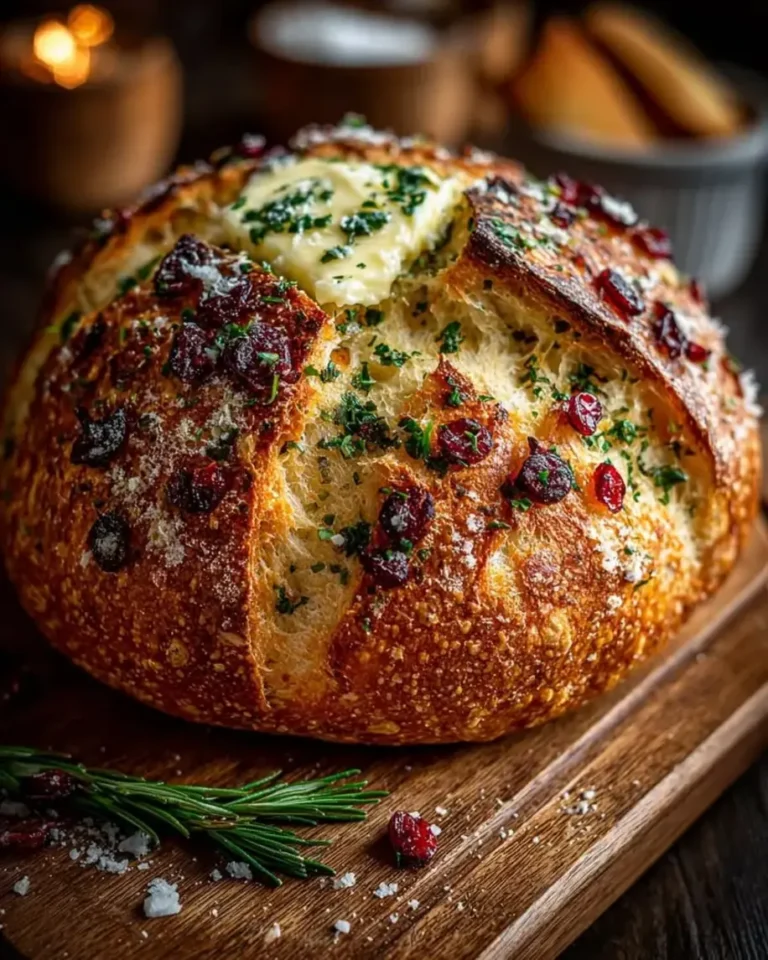
Imagine tearing into a slice of this magnificent cranberry herb bread: the satisfying crunch of a richly browned crust giving way to an airy, chewy crumb. Each bite offers a delightful burst of sweetness from the dried cranberries, balanced by the subtle earthiness of your chosen herbs – I love a mix of rosemary and thyme here. And let’s not forget the showstopper: the velvety, aromatic garlic butter that melts into every crevice, elevating this simple loaf into an unforgettable experience. It’s truly a sensory feast, reminiscent of the artisanal breads I encountered in French boulangeries but with a New York City twist of bold, approachable flavors.
What sets this no-knead bread with garlic butter apart is its incredible simplicity combined with maximum flavor development. The long, slow fermentation does all the work for you, creating complex notes usually found in professional bakeries. I’ll walk you through my perfected technique, including a crucial pro tip for handling the sticky dough and a common mistake to avoid. Whether you’re a seasoned baker or just dipping your toes into the world of homemade artisan bread, this recipe guarantees success and a warm, inviting aroma throughout your home!
Why This Cranberry Herb Bread Recipe Is the Best
The secret to this recipe’s superiority lies in its elegant simplicity and the power of time. My culinary training in Paris emphasized the importance of good ingredients and allowing them to speak for themselves. This no-knead method, a staple in my NYC kitchen for its efficiency and incredible results, harnesses a slow fermentation process that develops deep, complex flavors in the dough. The cranberries and herbs are infused throughout during this long rest, ensuring every slice is a delightful surprise.
Achieving a perfect crust and crumb can seem daunting, but my method for this easy cranberry bread recipe guarantees it. The high heat of the Dutch oven creates the ideal steaming environment for that coveted crackly, golden crust, while the long fermentation contributes to an open, airy interior. This technique, something I picked up and refined while working in professional kitchens, mimics a baker’s oven, giving you true homemade artisan bread texture without the fuss.
For anyone intimidated by bread making, this recipe is your gateway to success. It’s practically foolproof. With minimal active prep time – literally minutes – the oven and time do most of the heavy lifting. I’ve streamlined the steps to ensure clarity, making it easy for even beginners to achieve a bakery-quality loaf. Forget complicated kneading and endless proofing; this no-knead cranberry herb bread is all about delicious results with minimal stress.
No-Knead Cranberry Herb Bread Ingredients
When I shop for ingredients for my no-knead cranberry herb bread, I often head to the Union Square Greenmarket here in NYC. Even for pantry staples, I find the quality just can’t be beat. For the herbs, I love finding fresh, fragrant bundles that remind me of the vibrant spices my mother used in Morocco.
Ingredients List
- 3 cups (about 360g) all-purpose flour, plus extra for dusting
- 1 ½ cups warm water (about 110°F, or comfortably warm to the touch)
- ½ cup dried cranberries, roughly chopped
- 1 ½ tsp sea salt (or kosher salt)
- 1 tsp instant yeast (optional, for a slightly quicker rise)
- 2 tbsp fresh herbs, finely chopped (such as rosemary, thyme, or sage)
- ½ cup (1 stick) unsalted butter, softened
- 2 cloves garlic, minced
Ingredient Spotlight
All-Purpose Flour: This forms the structure of your no-knead cranberry herb bread. While ‘all-purpose’ implies versatility, the protein content varies between brands. I always recommend King Arthur Flour for consistent results. For best accuracy, weigh your flour with a digital scale – a trick I learned in Paris to ensure perfect ratios. If using bread flour, your crumb might be slightly chewier; cake flour will result in a more delicate, less rustic texture.
Dried Cranberries: These provide the delightful bursts of sweet-tart flavor. Look for unsweetened or lightly sweetened dried cranberries for the most natural taste. Chopping them ensures they distribute evenly throughout the dough. You can easily substitute with other dried fruits like chopped apricots, golden raisins, or even dried cherries for a different flavor profile, though the sweetness level may vary.
Fresh Herbs: The herbs are crucial for that aromatic, savory balance in this cranberry herb bread. Rosemary and thyme are my absolute favorites, offering a classic, robust flavor. When buying, look for vibrant, firm leaves without any wilting. You can experiment with other sturdy herbs like sage or finely chopped chives. Dried herbs can be used in a pinch, but reduce the quantity to about 1 teaspoon as their flavor is more concentrated.
Instant Yeast: While not strictly necessary for a true no-knead, I like to add a tiny amount of instant yeast for a slightly more predictable rise, especially if my kitchen is cooler. It helps to ensure a vibrant dough. Active dry yeast can be used, but bloom it in a tablespoon of the warm water first until frothy before adding to the dry ingredients. If you skip the yeast entirely, allow for a slightly longer initial rise time.
| Original Ingredient | Best Substitution | Flavor / Texture Impact |
|---|---|---|
| All-Purpose Flour | Bread Flour | Chewier texture, slightly denser crumb. |
| Dried Cranberries | Chopped Dried Apricots or Cherries | Similar texture, different fruit sweetness/tartness. |
| Fresh Herbs | 1 tsp Dried Herb Blend | More concentrated flavor, less fresh aroma. |
| Unsalted Butter | Salted Butter (omit salt from garlic butter) | Garlic butter saltiness will need adjustment. |
How to Make No-Knead Cranberry Herb Bread — Step-by-Step
Don’t let the word “bread” intimidate you! This process is truly simple and yields results that will impress everyone. Just follow these steps, and you’ll have a beautiful loaf of no-knead cranberry herb bread.
Step 1: Mix the Dough
In a large bowl, combine the 3 cups of all-purpose flour, 1 ½ tsp salt, ½ cup chopped dried cranberries, and 1 tsp instant yeast (if using). Give it a good whisk to ensure everything is evenly distributed. Add the 1 ½ cups of warm water (about 110°F) and stir with a wooden spoon or spatula until a shaggy, wet dough forms, ensuring no dry spots remain. This will be very sticky – embrace it! Cover the bowl tightly with plastic wrap and let it rest at room temperature (ideally around 70-75°F) for 12-18 hours. The longer the rise, the more flavor will develop in this easy cranberry bread recipe.
💡 Sara’s Pro Tip: For a perfectly flavored dough, I often prepare this mixture late in the evening and let it ferment overnight on my kitchen counter. By morning, it’s ready for baking, making fresh bread feel effortless for breakfast or brunch.
Step 2: Preheat and Prepare
About 30 minutes before you plan to bake, place your covered Dutch oven (a heavy pot with a lid, around 6-quart capacity) into your oven and preheat to 450°F. While the oven preheats, generously flour a clean work surface. Gently scrape the sticky dough onto the floured surface. Using floured hands, lightly fold the edges of the dough towards the center a few times to create some surface tension, then gently shape it into a loose ball. Avoid overworking it. Loosely cover the dough with a clean kitchen towel and let it rest for another 30 minutes while your Dutch oven heats up. This short rest helps the dough relax and makes it easier to handle.
⚠️ Common Mistake to Avoid: Don’t skip the Dutch oven preheat! This step is crucial for achieving that signature crispy, golden crust on your homemade artisan bread, as it simulates a professional baker’s steam oven.
Step 3: Bake to Golden Perfection
Carefully remove the hot Dutch oven from the oven. Using oven mitts, remove the lid. Gently lift the dough and carefully place it into the hot Dutch oven. Replace the lid and bake for 30 minutes. After 30 minutes, remove the lid and continue baking for another 15-20 minutes, or until the cranberry herb bread is a deep golden brown and sounds hollow when tapped on the bottom. Remove the bread from the Dutch oven and place it on a wire rack to cool completely before slicing. This is vital for the crumb to set properly.
💡 Sara’s Pro Tip: Resisting the urge to slice warm bread is tough, but it really makes a difference! Cooling completely allows the internal steam to redistribute, resulting in a more even texture and preventing a gummy crumb.
Step 4: The Garlic Butter Finish
While the bread cools, prepare your amazing garlic butter. In a small bowl, combine ½ cup softened unsalted butter with 2 cloves of minced garlic and 2 tbsp of your finely chopped fresh herbs. Mix thoroughly until well combined. Once the no-knead cranberry herb bread has cooled, slice it with a serrated knife and serve immediately with generous dollops of the savory garlic butter. The bread’s texture is best when freshly sliced, pairing perfectly with the melting butter.
⚠️ Common Mistake to Avoid: Don’t use cold butter for the garlic butter. Softened butter ensures an even blend with the garlic and herbs, preventing clumping and allowing for smooth spreading onto the rustic bread.
| Step | Action | Duration | Key Visual Cue |
|---|---|---|---|
| 1 | Mix Dough & Long Rise | 12-18 hours | Shaggy, wet dough; bubbly surface after rise. |
| 2 | Preheat Oven & Shape Dough | 30 mins | Dough formed into a loose ball, oven at 450°F. |
| 3 | Bake in Dutch Oven | 30 mins (covered), 15-20 mins (uncovered) | Deep golden brown crust, hollow sound when tapped. |
| 4 | Make & Serve Garlic Butter | 5-10 mins (during cooling) | Evenly mixed butter with garlic and herbs. |
Serving & Presentation
This No-Knead Cranberry & Herb Bread with Garlic Butter is a star on its own, but a beautiful presentation elevates it even further. I love serving it on a rustic wooden board, perhaps with a branch of fresh rosemary or thyme alongside the bowl of garlic butter. The rich golden crust and the vibrant flecks of cranberry and green herbs deserve to be showcased. It’s a focal point for any brunch spread or dinner with friends.
This versatile cranberry herb bread pairs wonderfully with both sweet and savory dishes. In Morocco, bread is the centerpiece of most meals, and this loaf carries on that tradition perfectly. I often serve it alongside a hearty lentil soup or a light salad with a vinaigrette. For brunch, it’s incredible toasted with a smear of cream cheese, or even with a drizzle of local NYC honey to play up the cranberry’s sweetness. The savory garlic butter also makes it an ideal accompaniment to roasted meats or a rich stew.
The interplay of sweet cranberries and savory herbs, brightened by the pungent garlic butter, makes this a truly special loaf. When serving, remember the simple elegance of French cuisine: let the quality of the ingredients shine. Offer extra garlic butter in a small ramekin, maybe with a sprinkle of flaky sea salt, allowing guests to customize. It’s an experience, not just a meal.
| Pairing Type | Suggestions | Why It Works |
|---|---|---|
| Side Dish | Hearty soups (lentil, minestrone), green salads, roasted vegetables | The bread’s rustic texture and flavor complement comforting and fresh sides. |
| Sauce / Dip | Olive oil and balsamic, goat cheese spread, fig jam | Offers a variety of sweet and savory accents to enhance the bread. |
| Beverage | Dry red wine (Pinot Noir), robust coffee, herbal tea | Pairs well with beverages that can stand up to the bread’s earthy and fruity notes. |
| Garnish | Fresh herb sprigs (rosemary, thyme), flaky sea salt | Adds visual appeal and a final aromatic touch. |
Make-Ahead, Storage & Reheating
Living in NYC means my schedule is often packed, so I’m always looking for ways to enjoy homemade meals without constant daily cooking. This No-Knead Cranberry & Herb Bread is fantastic for making ahead, ensuring you can enjoy fresh-tasting bread whenever the craving strikes!
| Method | Container | Duration | Reheating Tip |
|---|---|---|---|
| Refrigerator | Airtight bag/container | 3-4 days | Slice and toast, or warm whole loaf in foil for 10-15 mins at 350°F. |
| Freezer | Double-wrapped in plastic wrap then foil | Up to 3 months | Thaw at room temp, then refresh in oven as above. |
| Make-Ahead | Dough can rise in the fridge | Up to 2-3 days | Allow dough to come to room temp for 1-2 hours before baking. |
When storing, truly make sure the bread has cooled completely before wrapping. Trapping steam will lead to a soggy crust, and we definitely want to preserve that wonderful crispness. For reheating a whole loaf from the freezer, I usually thaw it overnight in the fridge, then bring it to room temperature for about an hour before wrapping in foil and popping it into a preheated oven. This gentle heat warms it through and helps the crust regain some of its crunch.
For individual slices, a quick toast in a toaster oven is perfect. The garlic butter can also be made ahead and stored in an airtight container in the fridge for up to a week. Just let it come to room temperature for about 30 minutes before serving with your warmed bread. This preparation flexibility truly embodies the easy aspect of this no-knead cranberry herb bread, making it a go-to for busy weeknights or special gatherings.
Variations & Easy Swaps
This no-knead cranberry herb bread is wonderfully adaptable! Don’t be afraid to experiment with different flavor combinations to suit your preference or what you have on hand. As a chef, I always encourage home cooks to play with their food!
| Variation | Key Change | Best For | Difficulty Impact |
|---|---|---|---|
| Savory Herb Delight | Omit cranberries, add sun-dried tomatoes (chopped) and black olives. | Hearty meals, charcuterie boards. | No change. |
| Gluten-Free Cranberry Bread | Use a 1:1 gluten-free flour blend. | Dietary restrictions. | Slightly more delicate crumb, potentially denser. |
| Orange Rosemary Cranberry Bread | Add orange zest to dough, use rosemary. | Brunch, holiday meals. | No change. |
Savory Herb Delight
For a bread that leans more savory, simply omit the dried cranberries. Instead, try adding ¼ cup of finely chopped Kalamata olives and 2 tablespoons of sun-dried tomatoes (oil-packed, drained, and chopped). The briny olives and umami-rich tomatoes will create a wonderfully savory loaf, perfect for dipping in olive oil or serving with Mediterranean-inspired dishes. This variation reminds me of some of the rustic olive breads I adored during my culinary training in Europe.
Gluten-Free Cranberry Bread
If you need a gluten-free option, simply substitute the all-purpose flour cup-for-cup with a high-quality 1:1 gluten-free all-purpose flour blend (one that contains xanthan gum). The dough may be a bit more fragile, but the no-knead method is quite forgiving for gluten-free flours. I’ve tested this variation in my kitchen, and while the texture is a little different—often a bit denser—it still yields a delicious and satisfying easy cranberry bread recipe, especially when served with that amazing garlic butter.
Orange Rosemary Cranberry Bread
For a delightful citrusy twist that enhances the cranberries, add the zest of one large orange to your dough along with the flour and other dry ingredients. Continue using fresh rosemary as your herb of choice. The fragrant orange zest brightens the entire loaf and complements the cranberries beautifully, making this cranberry herb bread perfect for a holiday spread or a weekend brunch. I often pick up organic oranges from the local NYC farmers market for this specific variation.
What is the best way to incorporate fresh or dried herbs into no-knead bread dough without overmixing?
The key to incorporating herbs into your no-knead dough without overmixing, and thus developing too much gluten early on, is to add them right at the start with your dry ingredients. When I make this no-knead cranberry herb bread, I combine the flour, salt, yeast (if using), and all your chopped dried ingredients and herbs first. Give it a good whisk to ensure everything is evenly distributed. Then, add the water and gently mix until just combined. This method ensures that the herbs are well integrated without needing extra mixing once the water is added.
Can I substitute dried cranberries with another dried fruit in this no-knead cranberry herb bread?
Absolutely! Dried cranberries are wonderful, but this no-knead cranberry herb bread recipe is very forgiving and open to substitutions. I often experiment depending on what I have in my pantry. Good options include chopped dried apricots, golden raisins, or even dried cherries. Keep the quantity the same (½ cup), and remember that the flavor profile will shift slightly with different fruits. Chopping larger fruits will ensure they are evenly dispersed throughout your easy cranberry bread. Just like in my Moroccan kitchen, use what you love!
How long should I let the no-knead cranberry herb bread dough rise for the best texture?
For the best flavor and texture in this homemade artisan bread, a long, slow rise is crucial. I recommend letting your no-knead cranberry herb bread dough rise at room temperature (ideally around 70-75°F) for 12 to 18 hours. The longer end of that range, closer to 18 hours, will result in a more developed, complex flavor and a more open, airy crumb. If your kitchen is cooler, you might need the full 18 hours. This extended fermentation is what makes the “no-knead” magic happen, so don’t rush it!
What is the easiest way to make and apply the garlic butter for serving with this bread?
Making the garlic butter is incredibly simple for this no-knead bread with garlic butter! Ensure your unsalted butter is softened to room temperature first; this is key for a smooth blend. In a small bowl, combine the softened butter with minced garlic and your finely chopped fresh herbs. Mix thoroughly with a fork until all ingredients are well combined and the butter is aromatic. To apply, simply slice your cooled cranberry herb bread and spread generous dollops of the butter on each slice. You can also offer it in a small dish for guests to serve themselves, allowing it to melt tantalizingly on warm slices.
Can I add nuts to this no-knead cranberry herb bread?
Absolutely! Adding nuts can provide an extra layer of texture and flavor to your homemade artisan bread. I often add a handful of chopped walnuts or pecans to my cranberry herb bread. About ¼ to ½ cup of chopped nuts stirred in with the flour, cranberries, and herbs at the very beginning of the mixing process works wonderfully. The nuts will toast slightly during baking, adding a rich, nutty crunch that beautifully complements the sweet cranberries and fragrant herbs. It’s an easy way to elevate the loaf even further, reminiscent of the rustic additions I saw in French country baking.
Do I need a Dutch oven to make this easy cranberry bread recipe?
While a Dutch oven is highly recommended for achieving the perfect crust on this no-knead cranberry herb bread, it’s not strictly essential. The Dutch oven creates a steamy environment that mimics a professional baker’s oven, which is key for a truly crusty exterior. However, you can achieve good results with a heavy-bottomed, oven-safe pot with a tight-fitting lid, or even by placing a pan of hot water on the bottom rack of your oven to create steam during the initial covered baking phase. You’ll still get a delicious homemade artisan bread, just perhaps with a slightly less dramatic crust.
How do I know if my water is the perfect temperature for the yeast?
The water temperature is critical when working with yeast, even in a no-knead recipe. For instant yeast (or active dry yeast, if blooming), the water should be warm, around 105-115°F (40-46°C). If it’s too cold, the yeast won’t activate; too hot, and it will kill the yeast. The simplest way to check without a thermometer is that it should feel comfortably warm to the touch, like a warm bath, not hot. My mother used to teach me this trick in Morocco, and it’s a reliable method even for professional chefs in NYC!
Can I use a stand mixer for this no-knead bread dough?
While you theoretically could use a stand mixer with a dough hook for the initial mixing, it largely defeats the purpose of “no-knead” and might lead to over-developing the gluten prematurely for this specific style of bread. The beauty of this easy cranberry bread recipe lies in minimal intervention; a simple spoon or spatula is all you need to bring the ingredients together. The long fermentation does the work of gluten development for you. So, save your mixer for other baking projects and enjoy the simplicity here!
My dough is too sticky to handle during shaping. What should I do?
It’s completely normal for no-knead dough to be very sticky – embrace it! The high hydration is what gives this no-knead cranberry herb bread its wonderful open crumb. If you find it too challenging to handle, the solution is always more flour. Generously flour your work surface, your hands, and even lightly dust the top of the dough. Work quickly and minimally. The goal isn’t vigorous kneading, but gentle folds to create surface tension. A bench scraper can also be a useful tool to help lift and turn the dough without it adhering to your hands. Don’t worry, a little extra flour won’t compromise the final loaf!
Why is cooling the bread completely before slicing so important?
This is one of the most crucial tips I can offer from my years in French patisseries! When the no-knead cranberry herb bread comes out of the oven, it’s still cooking internally because of residual heat. The crumb structure is delicate, and the moisture inside is still distributing. If you slice it too early, the texture will be gummy, moist, and unset, and will likely stick to your knife. Allowing it to cool completely, ideally on a wire rack for at least 1-2 hours, allows the steam to escape and the crumb to set properly, resulting in that perfect, chewy interior we all love in a homemade artisan bread.
Share Your Version!
I pour my heart into every recipe I create, blending the vibrant flavors of my Moroccan heritage with the sophisticated techniques learned in Paris and the dynamic food scene of NYC. This No-Knead Cranberry & Herb Bread with Garlic Butter is truly one of my favorites, a testament to how simple ingredients and a little patience can create pure magic.
Now it’s your turn! I’d love to hear how this easy cranberry bread recipe brings joy to your table. Please leave a star rating and a comment below to let me know how it turned out for you. Did you try a fun herb variation? Did you serve it with a special dish? Share your creations with me on Instagram or Pinterest by tagging @cheerychop – I absolutely adore seeing your culinary adventures! And tell me, what’s your favorite way to enjoy warm, crusty bread?
From my NYC kitchen to yours — I hope this recipe brings as much warmth to your table as it does to mine. — Sara 🧡
Love This Recipe? Save It to Pinterest!
If you enjoyed this No-Knead Cranberry & Herb Bread with Garlic Butter recipe, don’t let it get lost in your browser tabs! 😄 Pin it now so you can find it again anytime — and explore hundreds more tried-and-tested recipes waiting for you on my Pinterest boards.
👉 Follow Sara on Pinterest @chefrecipes2
📌 Pin this recipe · 🔁 Re-pin your favorites · 💬 Tag me when you make it — I love seeing your creations!
No-Knead Cranberry & Herb Bread with Garlic Butter
A rustic, crusty no-knead bread studded with dried cranberries and herbs, served with a flavorful garlic butter.
- Prep Time: 15 minutes
- Cook Time: 50 minutes
- Total Time: 13 hours (including resting)
- Yield: 8 servings 1x
- Method: Bread
- Cuisine: American
Ingredients
- 3 cups all-purpose flour (plus extra for dusting)
- 1 1/2 cups warm water (about 110°F)
- 1/2 cup dried cranberries, roughly chopped
- 1 1/2 tsp salt
Instructions
- In a large bowl, combine flour, salt, and dried cranberries. Add warm water and stir until a shaggy dough forms. Cover with plastic wrap and let rest at room temperature for 12-18 hours.
- Preheat oven to 450°F with a covered Dutch oven inside for 30 minutes. Turn dough onto a floured surface, shape into a ball, and let rest 30 minutes.
- Carefully place dough in hot Dutch oven, cover, and bake for 30 minutes. Remove lid and bake for another 15-20 minutes until golden brown. Let cool completely before slicing.
- For garlic butter: mix softened butter with minced garlic and herbs. Serve with warm bread.
Notes
The dough will be very sticky—use plenty of flour when handling. The long fermentation develops flavor. For best texture, use a digital scale for flour.
Nutrition
- Calories: 220
- Sugar: 8g
- Fat: 2g
- Carbohydrates: 42g
- Protein: 6g

Tried This Recipe? Leave a Comment!
Did you make this recipe? I’d love to hear how it turned out! Please leave a comment and a rating below. Your feedback helps other home cooks and supports cheerychop.com!
For more delicious inspiration, follow me on Pinterest!