Table of Contents
Velvet Lemon Thyme Cheesecake Hearts – The Ultimate Heart-Shaped Dessert
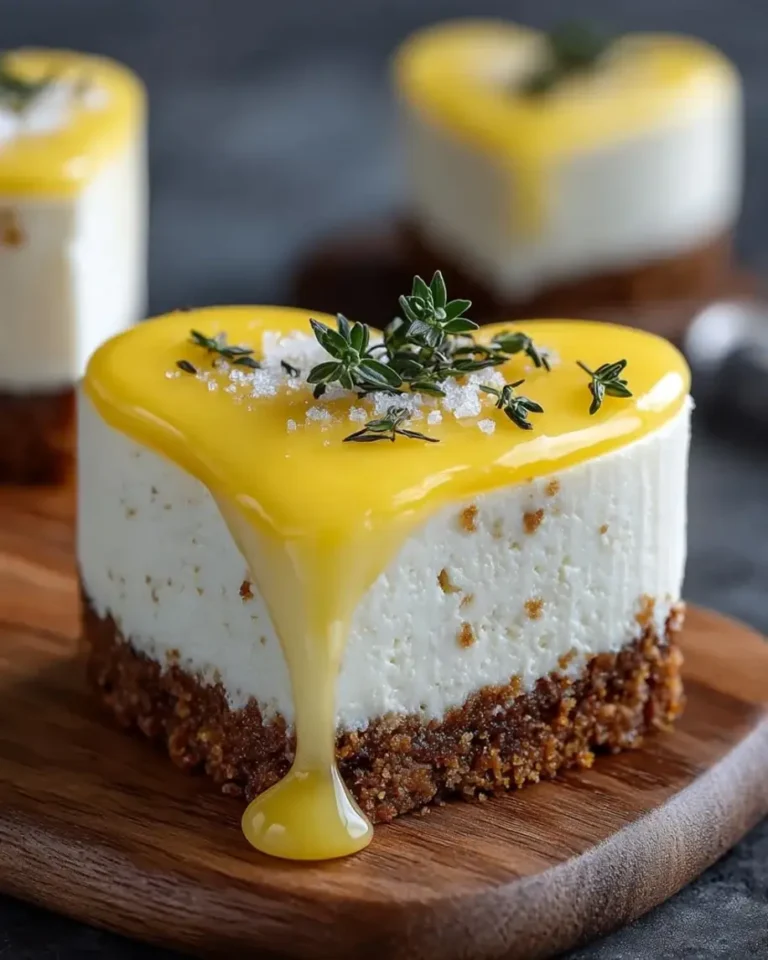
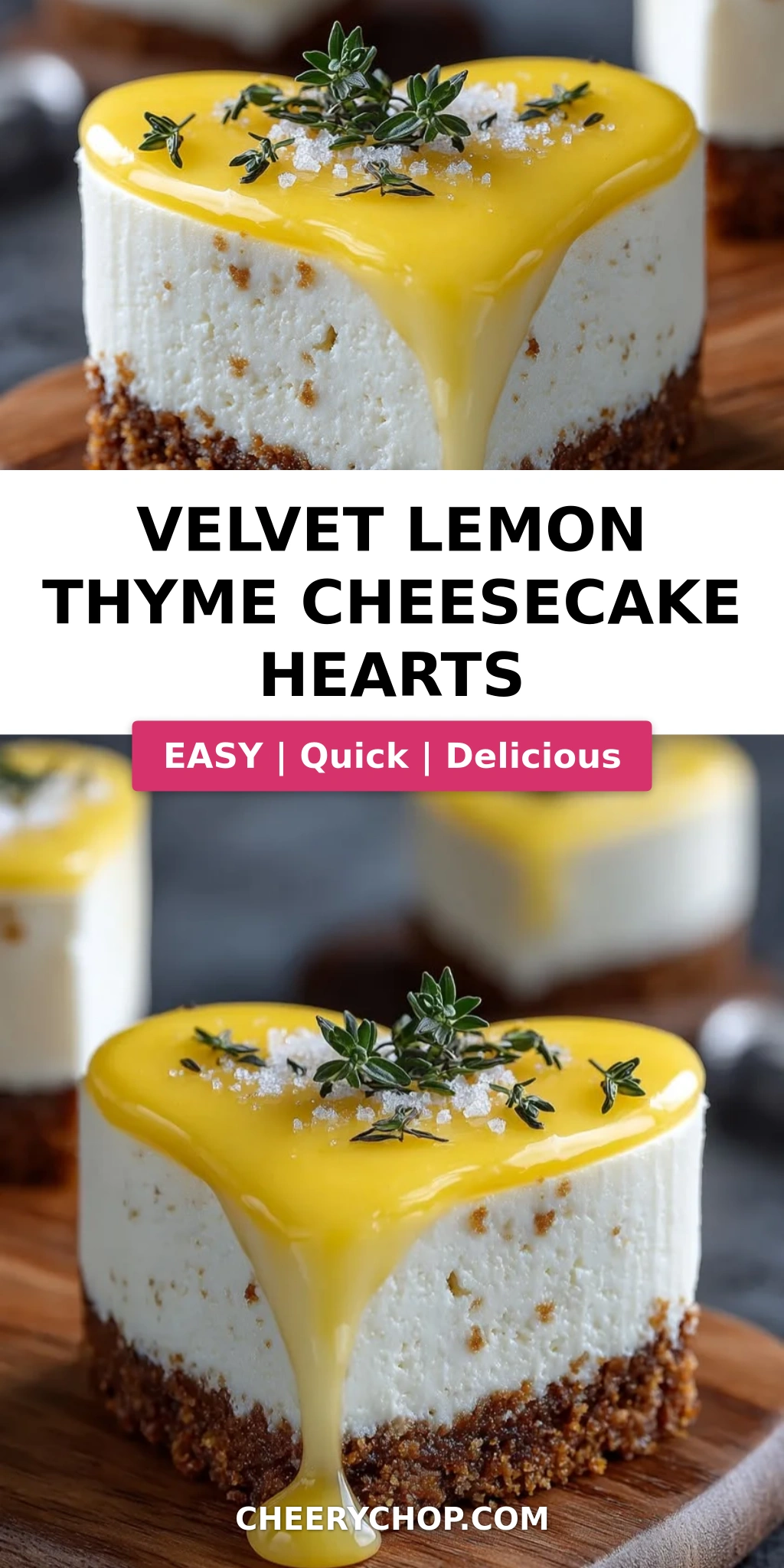
I still remember the first time I tasted thyme in a dessert—it was at a tiny patisserie in the 6th arrondissement of Paris, during my pastry training. The chef had infused a simple lemon cream with fresh thyme, and the combination was nothing short of revelatory. That moment stayed with me, and years later, here in my New York City kitchen, I knew I had to recreate that magic in a form that felt both elegant and deeply personal. These lemon thyme cheesecake hearts are the result: a velvety, herb-kissed cheesecake nestled on a buttery graham shortbread crust, finished with a glossy white chocolate lemon glaze. Every bite whispers of Parisian patisserie, but the heart shape? That’s pure love—and pure NYC romance.
Picture this: a fork glides through a perfectly set cheesecake heart, revealing a filling so smooth it nearly melts on the tongue. The first thing you taste is bright lemon—zesty and clean—followed by the soft, woodsy whisper of fresh thyme. Then comes the white chocolate glaze, rich and silky, with just a hint of lemon to keep it from tipping into cloying. The graham shortbread crust provides a gentle crunch and a buttery warmth that anchors every bite. It’s a dessert that feels sophisticated but deeply comforting—the kind of thing you’d serve at a spring brunch, a bridal shower, or a Galentine’s Day gathering where every detail matters.
What makes this thyme cheesecake recipe truly special is the technique: freezing the cheesecake hearts solid before glazing them. This trick, which I learned during my pastry days in Paris, ensures the glaze sets in a flawless, drip-free shell—no smudges, no streaks, just pure velvet. I’ll walk you through every step, from infusing the cream to unmolding the frozen hearts, and I’ll share a few pro tips I’ve picked up along the way (including one crucial mistake to avoid with the water bath). Whether you’re a seasoned baker or trying a heart shaped cheesecake for the first time, this recipe is designed to impress without the stress.
Why This Velvet Lemon Thyme Cheesecake Hearts Recipe Is the Best
The Flavor Secret. The combination of lemon and thyme is a classic French pairing—bright citrus meets earthy herb—and it works because both ingredients share a natural affinity for cream and butter. I use fresh thyme leaves (never dried for the infusion) and finely grate the lemon zest directly into the cream cheese mixture to release the essential oils. The white chocolate glaze adds a layer of sweetness that softens the herb’s edge without overwhelming it. This is a dessert that tastes grown-up, but still feels like a celebration.
Perfected Texture. The secret to an ultra-creamy cheesecake is low and slow baking with a water bath, plus a crucial step: freezing the cheesecake hearts before glazing. This technique, which I honed during my Paris pastry training, allows the glaze to set in a smooth, even layer without any drips or streaks. The crust stays crisp because it’s baked separately and assembled after freezing. The result is a dessert that’s visually stunning and texturally perfect—silky, crunchy, and glossy all at once.
Foolproof & Fast. I’ve tested this recipe with home bakers in mind. The water bath prevents cracking (no one wants a cracked heart!), and the freezing step makes glazing practically foolproof. Even if you’ve never made a lemon cheesecake heart before, you’ll be able to pull this off. I’ve included visual cues and timing markers for every step, so you’ll know exactly when the cheesecake is set, when the glaze is ready, and how to unmold like a pro. Trust me—if I can juggle a busy NYC schedule and still make these for a dinner party, you can too.
Lemon Thyme Cheesecake Hearts Ingredients
I find my cream cheese at the Union Square Greenmarket—the local dairy farms upstate make the most beautiful, rich cream cheese that really elevates this recipe. The thyme comes from my tiny fire escape herb garden (yes, really—NYC gardeners make it work!), and the lemons are always organic because the zest is front and center. Here’s everything you’ll need:
Ingredients List
For the Lemon Thyme Cheesecake:
- 12 oz cream cheese, softened
- 1/2 cup granulated sugar
- 1/3 cup sour cream
- 1 tbsp lemon juice
- 1.5 tsp fresh lemon zest, finely grated
- 1 tsp fresh thyme leaves, finely minced
- 2 large eggs
- 1 tsp vanilla bean paste
For the Graham Shortbread Crust Base:
- 3/4 cup graham cracker crumbs
- 1/4 cup all-purpose flour
- 3 tbsp unsalted butter, melted
- 1 tbsp granulated sugar
- 1 pinch salt
For the Velvet Lemon Glaze:
- 1/2 cup heavy cream
- 4 oz white chocolate, finely chopped
- 1 tbsp fresh lemon juice
- 1/2 tsp fresh thyme leaves, for infusion
- 1 drop yellow gel food coloring (optional)
For Garnish:
- 6 tiny fresh thyme sprigs
- 1 tsp lemon zest, cut into fine strips
Ingredient Spotlight
Cream Cheese. This is the backbone of your cheesecake, so use a full-fat block cream cheese (not the spreadable kind in a tub). Philadelphia is my go-to—it has the right fat content and a clean, tangy flavor that lets the lemon and thyme shine. Let it come to room temperature before mixing; cold cream cheese creates lumps that are nearly impossible to smooth out.
Fresh Thyme. Fresh thyme is non-negotiable in this recipe. Dried thyme has a more concentrated, almost medicinal flavor and lacks the delicate floral notes that make this dessert special. Look for thyme with bright green leaves and no signs of wilting or browning. To mince it, strip the leaves from the stems and chop them finely—you want the flavor distributed evenly throughout the cheesecake.
White Chocolate. Use a good-quality white chocolate that contains cocoa butter (check the label). Callebaut or Ghirardelli work beautifully. Avoid white “melting wafers” or candy coating, which contain palm oil and won’t give you the same silky texture. Finely chop the chocolate so it melts evenly in the warm cream.
| Original Ingredient | Best Substitution | Flavor / Texture Impact |
|---|---|---|
| Cream cheese | Full-fat Greek yogurt + mascarpone (1:1) | Lighter texture, tangier flavor; less rich |
| Sour cream | Full-fat Greek yogurt | Similar tang, slightly thicker |
| Graham cracker crumbs | Shortbread cookie crumbs or digestive biscuits | Sweeter, more buttery crust |
| White chocolate | High-quality white chocolate chips (e.g., Ghirardelli) | Slightly less smooth; still delicious |
How to Make Velvet Lemon Thyme Cheesecake Hearts — Step-by-Step
Let me walk you through this—think of me as your personal pastry chef, right there in your kitchen. Each step builds on the last, and I’ve included visual cues so you’ll know exactly what to look for.
Step 1: Make the Graham Shortbread Crust
Combine the graham cracker crumbs, flour, melted butter, sugar, and salt in a bowl until the mixture resembles wet sand. Pack the mixture firmly into flat heart shapes using a cookie cutter or stencil on a parchment-lined baking sheet. Bake at 350°F for 8 minutes, then remove and cool completely.
💡 Sara’s Pro Tip: Use a 3-inch heart-shaped cookie cutter as a mold. Press the crust mixture firmly into the cutter with the back of a small measuring cup to get clean, sharp edges. Slide the cutter off before baking.
Step 2: Make the Cheesecake Batter
Beat the softened cream cheese and sugar in a large bowl until smooth and fluffy. Blend in the sour cream, lemon juice, lemon zest, vanilla bean paste, and minced thyme leaves until uniform.
⚠️ Common Mistake to Avoid: Don’t overbeat the cream cheese and sugar. Beat just until smooth—overbeating incorporates too much air, which can cause cracks during baking.
Step 3: Add the Eggs
Add the eggs one at a time, mixing on low speed just until combined to avoid incorporating excess air into the batter.
💡 Sara’s Pro Tip: Crack each egg into a small bowl first, then add it to the batter. This way, if you get any shell fragments, they won’t end up in your cheesecake.
Step 4: Bake in a Water Bath
Pour the cheesecake batter into silicone heart-shaped molds. Place the molds into a larger baking pan and fill the pan with hot water halfway up the sides of the molds. Bake at 300°F for 22 minutes until the centers are set but slightly jiggly.
⚠️ Common Mistake to Avoid: Don’t skip the water bath! The steam keeps the oven moist and prevents the cheesecake from cracking. Wrap the bottom of your baking pan in foil if you’re worried about leaks.
Step 5: Freeze the Cheesecakes
Remove the cheesecakes from the water bath, let cool to room temperature, then transfer to the freezer for at least 3 hours until completely frozen solid.
💡 Sara’s Pro Tip: Freezing the cheesecake hearts solid is the secret to a flawless glaze. The cold surface makes the glaze set instantly, creating a smooth, drip-free finish. Don’t rush this step—3 hours minimum, or overnight for best results.
Step 6: Make the Velvet Lemon Glaze
Bring the heavy cream and 1/2 teaspoon of thyme leaves to a simmer in a small saucepan, then remove from heat and let infuse for 5 minutes. Strain out the thyme leaves and return the cream to a simmer. Turn off the heat, add the chopped white chocolate and lemon juice, and whisk until completely melted and smooth. Stir in the yellow food coloring if desired, then cool to lukewarm.
⚠️ Common Mistake to Avoid: Don’t let the cream boil after adding the chocolate—it can seize and become grainy. Whisk gently off the heat until smooth.
Step 7: Glaze and Garnish
Unmold the frozen cheesecake hearts and place them onto the baked shortbread bases on a wire rack. Pour the velvet lemon glaze smoothly over each heart, ensuring the sides are fully coated.
💡 Sara’s Pro Tip: Place a baking sheet under the wire rack to catch the drips. You can re-use the drips (strain them first) for a second coat if needed.
Step 8: Rest and Serve
Let the excess glaze drip off for 2 minutes, then garnish the top of each heart with a small fresh thyme sprig and a few strips of lemon zest. Refrigerate for 1 hour to thaw completely before serving.
⚠️ Common Mistake to Avoid: Don’t skip the 1-hour refrigeration step. Serving the cheesecakes while still frozen will make the texture icy rather than creamy.
| Step | Action | Duration | Key Visual Cue |
|---|---|---|---|
| 1 | Make crust | 8 min bake | Golden edges, firm to touch |
| 2 | Make batter | 5 min | Smooth, no lumps |
| 3 | Add eggs | 2 min | Fully incorporated, no streaks |
| 4 | Bake in water bath | 22 min | Center jiggly, edges set |
| 5 | Freeze | 3+ hours | Solid, no give when pressed |
| 6 | Make glaze | 10 min | Smooth, glossy, coats spoon |
| 7 | Glaze & garnish | 5 min | Even coating, no bare spots |
| 8 | Refrigerate to thaw | 1 hour | Glaze set, hearts soft to touch |
Serving & Presentation
These lemon thyme cheesecake hearts are showstoppers on their own, but I love to elevate them with a few thoughtful touches. Place each heart on a small dessert plate and dust with a tiny pinch of flaky sea salt—it enhances the lemon and thyme beautifully. A small dollop of lightly sweetened crème fraîche on the side adds a lovely tangy contrast. In the spring, I’ll scatter a few edible pansies or violas around the plate for a garden-fresh look that reminds me of the markets in Paris. When I’m feeling especially nostalgic for Morocco, I’ll add a tiny spoonful of orange blossom honey on the rim of the plate—the floral notes pair unexpectedly well with the lemon and thyme.
For a truly memorable dessert table, arrange the glazed hearts on a marble slab or a wooden board with clusters of fresh berries (raspberries and halved strawberries are my favorites) and a few sprigs of fresh thyme. The red berries against the pale lemon glaze and green thyme create a stunning visual that photographs beautifully. Serve with chilled dessert wine like a late-harvest Riesling or a sparkling Moscato—the sweetness complements the tangy cheesecake without overwhelming it.
| Pairing Type | Suggestions | Why It Works |
|---|---|---|
| Side Dish | Fresh berries, citrus salad, candied ginger | Brightness and texture contrast |
| Sauce / Dip | Crème fraîche, orange blossom honey, berry coulis | Adds tang, sweetness, or floral notes |
| Beverage | Late-harvest Riesling, sparkling Moscato, jasmine iced tea | Sweetness complements tangy cheesecake |
| Garnish | Flaky sea salt, edible flowers, lemon zest strips | Enhances flavor and visual appeal |
Make-Ahead, Storage & Reheating
As a busy NYC food blogger, I’m all about recipes that work with my schedule—and these cheesecake hearts are a dream for make-ahead entertaining. The beauty of this recipe is that most of the work happens in advance, and the final assembly is quick and stress-free. Here’s how I plan it: I bake and freeze the cheesecake hearts up to a week ahead, then glaze and garnish them the morning of my party. The crusts can be baked and stored at room temperature for up to 3 days. On the day, I simply unmold, glaze, garnish, and let them thaw in the fridge while I finish prepping everything else. It’s the kind of workflow that lets you actually enjoy your own party!
| Method | Container | Duration | Reheating Tip |
|---|---|---|---|
| Refrigerator | Airtight container | Up to 5 days | Serve cold; no reheating needed |
| Freezer | Wrap each in plastic, then foil | Up to 2 months | Thaw overnight in fridge; glaze after thawing |
| Make-Ahead | Freeze unglazed hearts | Up to 1 week | Glaze while frozen, then thaw in fridge |
If you’re storing leftover glazed cheesecake hearts in the fridge, place them in a single layer in an airtight container with a piece of parchment between layers to prevent the glaze from sticking. They’ll keep beautifully for up to 5 days, though the crust may soften slightly over time. To restore a bit of crunch to the crust, you can place the hearts on a baking sheet in a 300°F oven for 3-4 minutes (just until the crust warms through—don’t melt the glaze!). I’ve done this many times when making these ahead for a party, and it works like a charm.
Variations & Easy Swaps
One of the things I love most about this white chocolate lemon glaze cheesecake recipe is how adaptable it is. Over the years, I’ve tested dozens of variations—some inspired by my Moroccan roots, others by seasonal ingredients from the NYC farmers markets. Here are a few of my favorites:
| Variation | Key Change | Best For | Difficulty Impact |
|---|---|---|---|
| Orange Blossom & Thyme | Replace lemon with orange + orange blossom water | Moroccan-inspired twist | Easy |
| Gluten-Free | Use gluten-free graham crackers + GF flour | Gluten-sensitive guests | Easy |
| Dark Chocolate Glaze | Replace white chocolate with dark (70%) | Chocolate lovers, deeper flavor | Easy |
Orange Blossom & Thyme Variation
This variation is close to my heart—it’s inspired by the flavors of my childhood in Morocco. Replace the lemon juice and zest with orange juice and zest (use 2 tbsp juice and 1.5 tsp zest), and add 1 teaspoon of orange blossom water to the cheesecake batter along with the vanilla. The glaze becomes a dreamy orange-white chocolate, infused with a strip of orange peel instead of lemon. Garnish with a tiny piece of candied orange peel and a thyme sprig. The floral notes of orange blossom pair beautifully with the earthy thyme, creating a dessert that feels both exotic and familiar.
Gluten-Free Version
I’ve tested this with several gluten-free graham cracker brands, and the results are consistently excellent. Use 3/4 cup gluten-free graham cracker crumbs (I like the Kinnikinnick brand) and 1/4 cup gluten-free all-purpose flour (Bob’s Red Mill 1-to-1 works perfectly). The crust will be slightly more delicate, so handle it gently when packing into the cookie cutter. The baking time and temperature remain the same. The cheesecake filling itself is naturally gluten-free, so this is an easy swap that opens up the recipe to more guests without any sacrifice in flavor.
Dark Chocolate Glaze Variation
For those who prefer a richer, more intense flavor, swap the white chocolate for 4 oz of high-quality dark chocolate (70% cacao). Omit the lemon juice from the glaze and instead add 1/2 teaspoon of vanilla extract. The dark chocolate adds a deep, bittersweet note that contrasts beautifully with the bright lemon and herbal thyme in the cheesecake. I sometimes add a pinch of cayenne or cinnamon to the dark chocolate glaze for a hint of warmth—a trick I picked up from a chocolatier in Brooklyn’s Smorgasburg market. It’s unexpected, but absolutely divine.
Frequently Asked Questions
How do you make the texture of lemon thyme cheesecake hearts extra creamy and smooth?
The key to an ultra-creamy texture is threefold. First, make sure your cream cheese is at room temperature before mixing—cold cream cheese creates lumps that are difficult to smooth out. Second, mix on low speed and only until just combined, especially after adding the eggs. Overmixing incorporates excess air, which can cause cracks and a spongy, less creamy texture. Third, use a water bath during baking. The gentle, moist heat ensures the cheesecake cooks evenly without curdling or drying out. I also recommend using full-fat cream cheese and sour cream; lower-fat versions contain more water and can result in a less luxurious texture. Finally, freezing the cheesecakes solid before glazing not only makes the glaze flawless but also helps the texture stay silky and dense rather than watery.
Can I substitute fresh thyme with dried thyme in velvet lemon thyme cheesecake hearts?
I strongly recommend using fresh thyme for this recipe. Dried thyme has a more concentrated, almost medicinal flavor and lacks the delicate floral notes that make fresh thyme so special in a dessert. Fresh thyme also has a softer texture that blends seamlessly into the cheesecake batter, whereas dried thyme can be slightly gritty. If you absolutely must use dried thyme, use only 1/4 teaspoon (dried herbs are about three times more potent than fresh) and steep it in the warm cream for the glaze for at least 10 minutes to soften it. But honestly—fresh thyme is widely available in any grocery store’s produce section, and it makes such a difference in this recipe that I encourage you to seek it out. It’s worth the small effort.
What is the best way to set velvet lemon thyme cheesecake hearts without cracking?
Cracks are usually caused by overbaking, overmixing, or thermal shock. Here’s my foolproof method: Bake the cheesecakes in a water bath at a low temperature (300°F) for about 22 minutes—the centers should still jiggle slightly when you gently shake the pan. Overbaking is the number one cause of cracks. After baking, let the cheesecakes cool gradually to room temperature in the pan before transferring to the freezer. The slow cooling prevents the sudden temperature change that can cause cracks. Another tip: Don’t open the oven door during baking. The rush of cool air can cause the cheesecakes to sink and crack. Finally, make sure your cream cheese is truly at room temperature (about 70°F) before mixing—cold cream cheese creates lumps that require more mixing to smooth out, and more mixing means more air, which can lead to cracks.
How far in advance can I prepare velvet lemon thyme cheesecake hearts for a party?
This is one of my favorite make-ahead desserts! You can prepare the cheesecake hearts (baked and frozen) up to one week in advance. The baked crusts can be stored at room temperature in an airtight container for up to 3 days. The glaze is best made fresh on the day you plan to serve, but you can prepare it up to 24 hours ahead and store it in the fridge—just reheat it gently in a warm water bath or microwave in 10-second bursts, stirring frequently, until it’s pourable again. On the day of your party, here’s my timeline: Unmold the frozen cheesecakes, place them on the crusts, glaze them, and garnish. Then refrigerate for 1 hour to thaw. That gives you a full hour to finish setting up before guests arrive. For best results, I recommend glazing and garnishing within 4 hours of serving.
Can I use a different shape for this cheesecake recipe?
Absolutely! While heart shapes are perfect for Valentine’s Day, weddings, or Galentine’s brunch, you can use any silicone mold you like. Round mini cheesecake molds, square molds, or even rectangular bar molds all work beautifully. The key is to use silicone molds that are sturdy enough to hold their shape during baking and freezing. If you’re using a different shape, adjust the baking time slightly: smaller molds may need 18-20 minutes, while larger ones may need 25-28 minutes. The visual cue remains the same—the centers should jiggle slightly when gently shaken. I’ve made these as mini rounds for a bridal shower and as petit four squares for a birthday party, and they were a hit every time.
Is it necessary to use a water bath for this lemon thyme cheesecake hearts recipe?
Yes, I highly recommend using a water bath for this recipe. The water bath serves two critical purposes: it provides gentle, even heat that prevents the edges from cooking faster than the center, and it creates a moist environment that significantly reduces the risk of cracks. Without a water bath, the cheesecake is much more likely to develop surface cracks as it bakes and cools. If you’re worried about water leaking into your silicone molds, wrap the bottom of your baking pan in a layer of heavy-duty aluminum foil before placing the molds inside. I’ve been using this method for years, and I’ve never had a leak. The small extra step is absolutely worth the perfect, crack-free results.
Can I make this recipe dairy-free or vegan?
I’ve tested a dairy-free version with good results. For the cheesecake, use a high-quality dairy-free cream cheese (like Kite Hill or Miyoko’s) and replace the sour cream with a dairy-free yogurt or coconut cream. The eggs are harder to replace—I’ve had the best luck with a flax egg (1 tbsp ground flax + 3 tbsp water per egg, let sit for 5 minutes) for the two eggs, but note that the texture will be slightly less creamy and more custard-like. For the crust, use a vegan butter substitute (Miyoko’s or Earth Balance work well). The glaze can be made with full-fat coconut cream and dairy-free white chocolate (Enjoy Life makes a good one). The result is a lovely dessert, but it won’t be identical to the original. I recommend making the classic version first, then experimenting with dairy-free once you’re comfortable with the technique.
What if I don’t have vanilla bean paste? Can I use vanilla extract?
Absolutely—vanilla extract is a fine substitute. Use 1.5 teaspoons of pure vanilla extract in place of the 1 teaspoon of vanilla bean paste. The difference is subtle: vanilla bean paste contains the actual seeds, which adds tiny black specks to the batter and a more intense vanilla flavor. Extract is slightly less intense but still perfectly delicious. If you’re using vanilla extract, add it with the sour cream and lemon juice in Step 2. You can also use the seeds scraped from half a vanilla bean pod—just add the seeds directly to the batter and steep the pod in the cream for the glaze for even more vanilla flavor. In a pinch, vanilla powder works well too—use about 1/2 teaspoon.
How do I get the white chocolate lemon glaze to be perfectly smooth?
A smooth glaze starts with properly chopped white chocolate—the smaller and more uniform the pieces, the more evenly it will melt. Heat the cream with the thyme just until small bubbles appear around the edges (don’t let it boil vigorously). After straining out the thyme, let the cream cool for 30 seconds off the heat before adding the chocolate. Whisk gently in a figure-eight motion, starting from the center and working outward. The glaze should come together into a smooth, glossy ribbon. If the glaze is too thick, whisk in a teaspoon of warm milk or cream. If it’s too thin, let it cool for another minute. The ideal consistency is like warm honey—it should coat the back of a spoon and then slowly drizzle off in a smooth ribbon. One drop of yellow gel food coloring helps achieve that beautiful pale lemon hue.
Can I use bottled lemon juice instead of fresh for this thyme cheesecake recipe?
I really encourage you to use fresh lemon juice here. Bottled lemon juice often contains preservatives and has a flat, slightly bitter taste that can’t compare to the bright, clean acidity of freshly squeezed lemons. Since lemon is a dominant flavor in this thyme cheesecake recipe, the quality of the juice matters. You’ll also need fresh lemon zest, which is impossible to replicate with bottled juice—the zest contains essential oils that add intense, aromatic lemon flavor. For the best results, choose organic lemons with smooth, thin skin (they’re juicier and zestier). One medium lemon will give you about 2 tablespoons of juice and 1.5 teaspoons of zest, which is exactly what you need for this recipe. If you’re in a pinch, bottled juice will technically work, but I promise fresh makes a world of difference.
Share Your Version!
I absolutely love seeing how these lemon cheesecake hearts turn out in your kitchen! Did you try the orange blossom variation? Did you add a special garnish that made your heart-shaped cheesecake uniquely yours? Drop a star rating and a comment below—I read every single one and I promise to answer your questions personally. Your feedback helps me create better recipes and also helps other readers know what to expect. If you’re on social media, snap a photo of your creation and tag @cheerychop on Instagram or Pinterest. I feature my favorites on my stories every week!
One question I’d love for you to answer in the comments: What’s the one flavor pairing you’ve always wanted to try in a cheesecake but haven’t yet? I’m always looking for new inspiration, and your idea might just become my next recipe! From my NYC kitchen to yours — I hope this recipe brings as much warmth to your table as it does to mine. — Sara 🧡
Love This Recipe? Save It to Pinterest!
If you enjoyed this Velvet Lemon Thyme Cheesecake Hearts recipe, don’t let it get lost in your browser tabs! 😄 Pin it now so you can find it again anytime — and explore hundreds more tried-and-tested recipes waiting for you on my Pinterest boards.
👉 Follow Sara on Pinterest @chefrecipes2
📌 Pin this recipe · 🔁 Re-pin your favorites · 💬 Tag me when you make it — I love seeing your creations!
Velvet Lemon Thyme Cheesecake Hearts
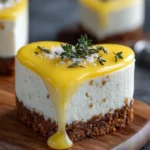
Delicate heart-shaped cheesecakes with a lemon-thyme infusion, a buttery graham shortbread crust, and a velvety white chocolate lemon glaze, topped with fresh thyme and lemon zest.
- Prep Time: 30 minutes
- Cook Time: 30 minutes
- Total Time: 4 hours (includes freezing and resting)
- Yield: 6 1x
- Method: Dessert
- Cuisine: American
Ingredients
- For the Lemon Thyme Cheesecake:
- 12 oz cream cheese, softened
- 1/2 cup granulated sugar
- 1/3 cup sour cream
- 1 tbsp lemon juice
- 1.5 tsp fresh lemon zest, finely grated
- 1 tsp fresh thyme leaves, finely minced
- 2 large eggs
- 1 tsp vanilla bean paste
- For the Graham Shortbread Crust Base:
- 3/4 cup graham cracker crumbs
- 1/4 cup all-purpose flour
- 3 tbsp unsalted butter, melted
- 1 tbsp granulated sugar
- 1 pinch salt
- For the Velvet Lemon Glaze:
- 1/2 cup heavy cream
- 4 oz white chocolate, finely chopped
- 1 tbsp fresh lemon juice
- 1/2 tsp fresh thyme leaves, for infusion
- 1 drop yellow gel food coloring (optional)
- For Garnish:
- 6 tiny fresh thyme sprigs
- 1 tsp lemon zest, cut into fine strips
Instructions
- 1. Combine the graham cracker crumbs, flour, melted butter, sugar, and salt in a bowl until the mixture resembles wet sand. Pack the mixture firmly into flat heart shapes using a cookie cutter or stencil on a parchment-lined baking sheet. Bake at 350°F for 8 minutes, then remove and cool completely.
- 2. Beat the softened cream cheese and sugar in a large bowl until smooth and fluffy. Blend in the sour cream, lemon juice, lemon zest, vanilla bean paste, and minced thyme leaves until uniform.
- 3. Add the eggs one at a time, mixing on low speed just until combined to avoid incorporating excess air into the batter.
- 4. Pour the cheesecake batter into silicone heart-shaped molds. Place the molds into a larger baking pan and fill the pan with hot water halfway up the sides of the molds. Bake at 300°F for 22 minutes until the centers are set but slightly jiggly.
- 5. Remove the cheesecakes from the water bath, let cool to room temperature, then transfer to the freezer for at least 3 hours until completely frozen solid.
- 6. Bring the heavy cream and 1/2 teaspoon of thyme leaves to a simmer in a small saucepan, then remove from heat and let infuse for 5 minutes. Strain out the thyme leaves and return the cream to a simmer. Turn off the heat, add the chopped white chocolate and lemon juice, and whisk until completely melted and smooth. Stir in the yellow food coloring if desired, then cool to lukewarm.
- 7. Unmold the frozen cheesecake hearts and place them onto the baked shortbread bases on a wire rack. Pour the velvet lemon glaze smoothly over each heart, ensuring the sides are fully coated.
- 8. Let the excess glaze drip off for 2 minutes, then garnish the top of each heart with a small fresh thyme sprig and a few strips of lemon zest. Refrigerate for 1 hour to thaw completely before serving.
Nutrition
- Calories: 430
- Sugar: 26g
- Fat: 30g
- Carbohydrates: 34g
- Protein: 7g
Tried This Recipe? Leave a Comment!
Did you make this recipe? I’d love to hear how it turned out! Please leave a comment and a rating below. Your feedback helps other home cooks and supports cheerychop.com!
For more delicious inspiration, follow me on Pinterest!