Table of Contents
Seared Sesame Tuna & Edamame Protein Bowl – A 20-Minute Protein Powerhouse with a Miso-Ginger Drip
I still remember the first time I had a really good seared sesame tuna bowl — it was at a tiny Japanese place near Union Square, right after a long morning wandering the farmers market. I sat at the counter, watched the chef work, and took mental notes. Back then I was just a cook trained in Parisian techniques, but New York was already teaching me how to layer bold flavors fast. This seared sesame tuna protein bowl is my love letter to that moment: the crunch of the crust, the velvety rare center, and that heavy, glossy miso-ginger drip that coats every single bite. It’s a healthy low carb tuna bowl that doesn’t skimp on satisfaction — and honestly, it comes together in the time it takes to decide what to order for delivery.
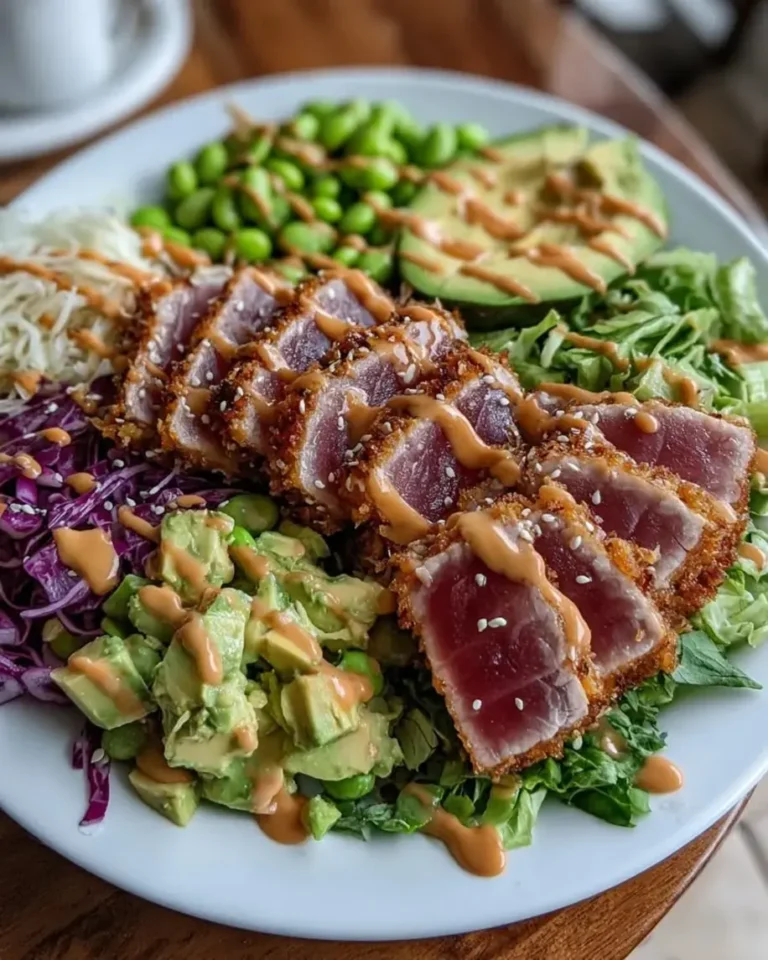
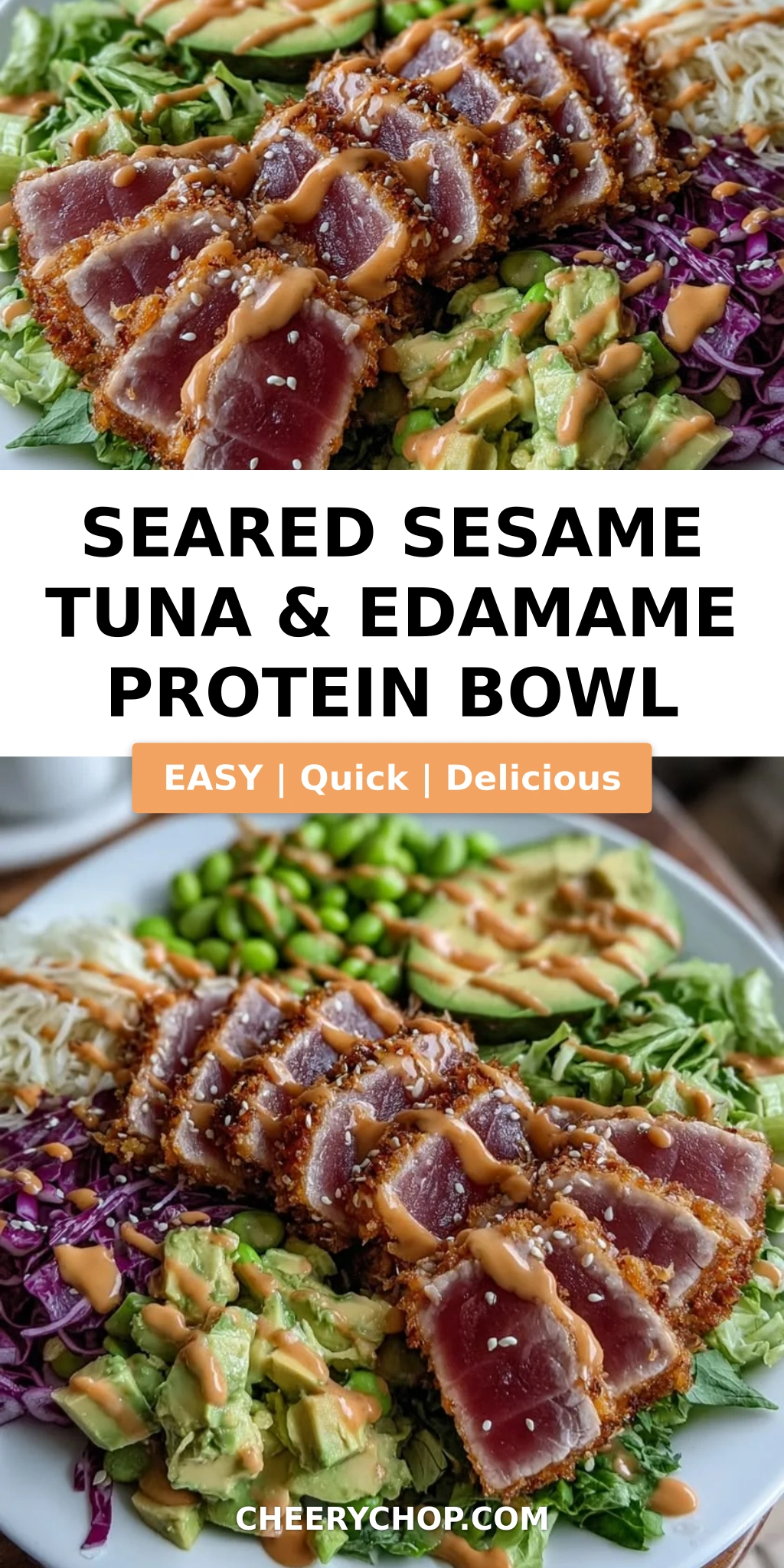
Let me paint the picture for you: bright red ahi tuna, pressed into a blanket of toasted sesame seeds, seared just until the crust crackles and the inside stays cool and tender. Underneath, a bed of warm cauliflower rice gets topped with a vibrant purple cabbage slaw that’s been quick-pickled in rice vinegar for just the right tang. Then comes the edamame for that pop of green and extra protein, creamy avocado, and cool cucumber slices. And then — the moment that makes this bowl unforgettable — you flood everything with a thick, creamy miso-ginger sauce that’s equal parts savory, bright, and rich. The sauce doesn’t run thin; it clings, it drips, it makes the whole bowl look like a magazine cover.
What sets this sesame crusted tuna bowl apart from others you’ve seen? I’ve built it with a French-trained saucier’s attention to the dressing — that miso-ginger sauce is thickened with a touch of mayo or Greek yogurt so it stays heavy and luxurious, not watery. I also add a quick-pickle step to the cabbage that most recipes skip, and it makes all the difference. Plus, I’ll share my tested trick for getting that perfect rare sear every single time, and the one mistake home cooks most often make with tuna. This high protein tuna bowl recipe is weeknight-easy but impressive enough to serve to guests — exactly the kind of cooking I love to teach from my NYC kitchen.
Why This Seared Sesame Tuna Protein Bowl Recipe Is the Best
The Flavor Secret: The magic lies in that thick miso-ginger drip. Growing up in Morocco, my mother taught me that a sauce should never be an afterthought — it should be the thing that ties a dish together. Here, white miso paste brings deep umami, fresh ginger adds a warm kick, and a touch of mayo (or Greek yogurt) gives it a velvety body that clings to every piece of tuna and every shred of cabbage. It’s a sauce that stands up to the sesame crust without overwhelming the fish.
Perfected Texture: My time at culinary school in Paris drilled into me the importance of contrast. This bowl has it all: the crackle of the sesame crust against the buttery raw tuna, the crunch of the cabbage slaw next to the creamy avocado, the pop of edamame against the tender cauliflower rice. The quick-pickle step for the cabbage — just a splash of rice vinegar — wakes up the whole bowl and keeps every bite bright.
Foolproof & Fast: Twenty minutes is all you need. No marinating, no complicated techniques. The tuna sears in under two minutes per side, the sauce whisks together in one bowl, and the veggies just need assembly. Even if you’ve never cooked tuna at home, my step-by-step guidance will give you a restaurant-quality result on your first try. This miso ginger tuna bowl is built for busy people who refuse to compromise on flavor.
Seared Sesame Tuna Protein Bowl Ingredients
I source my sushi-grade ahi tuna from the fish counter at Citarella in Chelsea Market, but any reliable fishmonger or high-end grocery store will have it. The purple cabbage I grab from the Union Square Greenmarket — it’s always so crisp and vibrant. And the miso paste? I keep a tub of white miso in my fridge at all times; it’s one of those ingredients that transforms everything it touches. Here’s everything you’ll need for this seared sesame tuna protein bowl.
Ingredients List
- The Seared Sesame Tuna
- 2 ahi tuna steaks (sushi-grade, bright red)
- 2 tbsp sesame seeds (white, black, or a mix)
- 1 tbsp olive oil or sesame oil
- Salt and black pepper to taste
- The Crunchy Base & Veggies
- 2 cups cauliflower rice (or brown rice for a heartier bowl)
- 1 cup shredded purple cabbage
- 1/2 cup shelled edamame (thawed if frozen)
- 1/2 cucumber, sliced
- 1 ripe avocado, diced
- The Thick Miso-Ginger Drip
- 2 tbsp miso paste (white or yellow)
- 1 tbsp fresh ginger, minced
- 1 tbsp soy sauce (or tamari for gluten-free)
- 1 tbsp rice vinegar
- 2 tbsp mayonnaise or Greek yogurt (to thicken the drip)
- 1 tsp sesame oil
Ingredient Spotlight
Sushi-Grade Ahi Tuna: This is the star, so quality matters. Look for bright red, firm flesh with no fishy smell. At the store, ask the fishmonger if it’s sushi-grade — this means it’s been frozen to kill parasites and is safe to eat raw or rare. If you can’t find ahi, yellowfin or even salmon work beautifully with the same searing method.
White Miso Paste: Miso is fermented soybean paste, and white miso (shiro miso) is the mildest and sweetest — perfect for this sauce. It dissolves smoothly and adds a depth that you just can’t get from any other ingredient. Red miso is saltier and more intense; you can use it, but start with half the amount. I always keep mine in the fridge door so it’s ready for dressings and soups.
Purple Cabbage: This isn’t just for color — purple cabbage has a peppery bite and stays crunchy even after dressing. Tossing it with rice vinegar and a pinch of salt turns it into a quick slaw that cuts through the richness of the tuna and avocado. It’s my go-to shortcut for adding texture without any cooking.
| Original Ingredient | Best Substitution | Flavor / Texture Impact |
|---|---|---|
| Ahi Tuna | Salmon or yellowfin tuna | Salmon is richer; yellowfin is leaner — both sear well |
| White Miso Paste | Red miso (use half) or chickpea miso | Red miso is saltier and bolder; chickpea miso is milder |
| Purple Cabbage | Green cabbage or napa cabbage | Green cabbage is similar but less vibrant; napa is more delicate |
| Cauliflower Rice | Brown rice or quinoa | Adds more carbs but heartier texture; quinoa adds protein |
| Mayonnaise | Greek yogurt or avocado | Yogurt is tangier; avocado makes it greener and fruitier |
How to Make Seared Sesame Tuna Protein Bowl — Step-by-Step
This comes together in about 20 minutes flat — I promise. Just follow these steps in order, and you’ll have a bowl that looks like it came from a fancy restaurant.
Step 1: Quick-Pickle the Slaw
In a medium bowl, toss the shredded purple cabbage with 1 tablespoon of rice vinegar and a pinch of salt. Massage it with your hands for about 30 seconds — this softens the cabbage just enough while keeping it crunchy. Set it aside to let the flavors meld while you prepare everything else. This simple step transforms the cabbage from plain to bright and tangy.
💡 Sara’s Pro Tip: Use your hands to massage the vinegar into the cabbage — the heat from your hands helps it absorb faster and more evenly.
Step 2: Make the Thick Miso-Ginger Drip
In a small bowl, combine 2 tablespoons miso paste, 1 tablespoon minced fresh ginger, 1 tablespoon soy sauce, 1 tablespoon rice vinegar, 2 tablespoons mayonnaise or Greek yogurt, and 1 teaspoon sesame oil. Whisk vigorously until completely smooth and glossy. The mixture should be thick but pourable — if it’s too thick, add a teaspoon of water. This sauce is the soul of the bowl, so taste it and adjust the ginger or soy to your liking.
⚠️ Common Mistake to Avoid: Don’t skip the whisking — miso paste is dense and needs a good minute of vigorous mixing to fully incorporate into a silky sauce.
Step 3: Crust and Sear the Tuna
Pat the tuna steaks dry with paper towels. Season them generously with salt and black pepper. Spread the sesame seeds on a plate and press each tuna steak firmly into the seeds, coating all sides. The seeds should form a thick, even crust. Heat 1 tablespoon of olive oil or sesame oil in a cast-iron or nonstick skillet over medium-high heat until shimmering. Carefully place the tuna in the hot pan and sear for exactly 1 to 2 minutes per side — no more. The crust should be golden and toasted, and the center should remain bright red and cool. Transfer to a cutting board and let rest for 1 minute, then slice thinly against the grain.
💡 Sara’s Pro Tip: For the perfect rare center, the tuna should feel slightly firm on the outside but still give easily when pressed. Use a timer — 90 seconds per side is my sweet spot for 1-inch thick steaks.
Step 4: Assemble and Drip
Divide the warmed cauliflower rice between two bowls. Top each with a generous handful of the pickled purple cabbage slaw, then scatter the edamame, cucumber slices, and diced avocado evenly. Fan the sliced seared tuna artfully on top. Now for the grand finale — drizzle the thick miso-ginger sauce heavily over everything. Use the full amount; this bowl is meant to be flooded. Serve immediately while the tuna is still warm and the slaw is crunchy.
⚠️ Common Mistake to Avoid: Slicing the tuna too thick — aim for 1/4-inch slices so each piece has the perfect ratio of crust to rare center.
| Step | Action | Duration | Key Visual Cue |
|---|---|---|---|
| 1 | Quick-pickle slaw | 2 minutes | Cabbage softens slightly, turns brighter purple |
| 2 | Whisk miso-ginger sauce | 3 minutes | Smooth, glossy, thick but pourable |
| 3 | Sear sesame-crusted tuna | 2–4 minutes total | Golden crust, bright red center, firm exterior |
| 4 | Assemble bowls | 5 minutes | Colorful layers, sauce dripping over edges |
Serving & Presentation
This seared sesame tuna protein bowl is a full meal in one bowl, but how you plate it makes all the difference. I like to use wide, shallow bowls so every ingredient gets its moment. Start with a base of warm cauliflower rice, then build the layers: slaw, edamame, cucumber, avocado, and finally the tuna fanned out like a deck of cards. The sauce should be drizzled in a zigzag pattern — it’s not just about flavor, it’s about the visual drama of that thick, glossy drip.
For garnish, I sprinkle a few extra sesame seeds and some thinly sliced green onions on top. If I have them, pickled ginger or a sprinkle of furikake (Japanese seasoning) adds another layer of authenticity. This bowl is fantastic on its own, but it also pairs beautifully with a simple miso soup or a side of steamed edamame sprinkled with sea salt. For a drink, a crisp white wine like Sauvignon Blanc or a cold Japanese lager complements the sesame and ginger perfectly.
| Pairing Type | Suggestions | Why It Works |
|---|---|---|
| Side Dish | Miso soup, seaweed salad, steamed edamame | Light umami flavors that echo the bowl’s ingredients |
| Sauce / Dip | Extra miso-ginger sauce, soy-wasabi dip, ponzu | Adds brightness or heat — customize your spice level |
| Beverage | Sauvignon Blanc, Japanese lager, iced green tea | Crisp and clean — cuts through the richness of the sauce |
| Garnish | Green onions, furikake, pickled ginger, extra sesame seeds | Adds color, crunch, and a pop of flavor |
Make-Ahead, Storage & Reheating
This bowl is best enjoyed fresh — the contrast of warm tuna and cool slaw is part of the magic. But I know life gets busy, and I often prep components ahead for my own NYC weeknights. Here’s how to do it without sacrificing quality.
| Method | Container | Duration | Reheating Tip |
|---|---|---|---|
| Refrigerator | Airtight container, components separate | Up to 2 days | Tuna is best served cold or at room temp — do not microwave |
| Freezer | Freezer-safe bag (tuna only) | Up to 1 month | Thaw overnight in fridge, then sear fresh — do not refreeze |
| Make-Ahead | Slaw and sauce in separate containers | Slaw: 2 days, sauce: 5 days | Assemble bowls just before serving |
The slaw and sauce are the best candidates for make-ahead prep. The pickled cabbage actually gets better after a day in the fridge — the flavors meld and deepen. The miso-ginger sauce keeps beautifully for up to 5 days; just give it a good stir before using. For the tuna, I always sear it fresh, but you can slice it and serve it cold over the bowl if you’re meal-prepping for the next day’s lunch. Just keep the components separate and assemble right before eating to keep the textures distinct.
Variations & Easy Swaps
| Variation | Key Change | Best For | Difficulty Impact |
|---|---|---|---|
| Spicy Sesame Tuna Bowl | Add sriracha or chili crisp to the sauce | Heat lovers | Easy (no change in technique) |
| Gluten-Free Miso Tuna Bowl | Use tamari instead of soy sauce | Gluten-sensitive diets | Easy (direct swap) |
| Rice Noodle Tuna Bowl | Replace cauliflower rice with rice noodles | A heartier, carb-friendly version | Easy (cook noodles per package) |
Spicy Sesame Tuna Bowl
If you like heat, this is your version. Add 1 to 2 teaspoons of sriracha or a spoonful of chili crisp to the miso-ginger sauce before whisking. The spicy kick cuts through the richness of the avocado and the sesame oil beautifully. I love this variation on cold winter nights when I want something bright but also warming. The best part? It doesn’t change the technique one bit — just stir and go.
Gluten-Free Miso Tuna Bowl
This one is simple: swap the soy sauce for tamari or a gluten-free soy sauce. Tamari is made from soybeans with little or no wheat, so it’s naturally gluten-free and has a slightly richer flavor than standard soy sauce. All other ingredients remain the same, and the taste is nearly identical — just as deeply savory and umami-packed. I always keep tamari on hand for my gluten-sensitive friends who stop by for dinner.
Rice Noodle Tuna Bowl
For a heartier, more carb-forward bowl, swap the cauliflower rice for cooked rice noodles. The noodles soak up the miso-ginger sauce in the most satisfying way, and the texture becomes more like a cold noodle salad. I discovered this variation one summer when I had leftover rice noodles from making pad thai — it was such a hit that it’s now a regular in my kitchen. Just cook the noodles according to the package, rinse under cold water, and toss with a little sesame oil before assembling.
Share Your Version!
I absolutely love seeing how you make this seared sesame tuna protein bowl your own. Leave a star rating and a comment below — tell me which variation you tried, or if you came up with your own twist. Did you use Greek yogurt instead of mayo? Add mango for sweetness? Swap edamame for something else? I want to hear about it!
And if you share a photo on Instagram or Pinterest, tag @cheerychop so I can see your beautiful bowl. Nothing makes me happier than knowing this recipe is bringing a little warmth and flavor to your table. From my NYC kitchen to yours — I hope this recipe brings as much warmth to your table as it does to mine. — Sara 🧡
What is the best way to sear tuna so it stays rare in the middle?
The key to perfect rare seared tuna is a combination of high heat, a dry surface, and precise timing. Start by patting the tuna steaks completely dry with paper towels — moisture is the enemy of a good sear. Season with salt and pepper, then press firmly into sesame seeds (or just cook them plain). Heat your skillet over medium-high until it’s shimmering hot, add your oil, then gently place the tuna in the pan. Sear for 90 seconds to 2 minutes per side for a 1-inch thick steak — no more. The center should stay bright red and cool. Use a timer and trust the visual cue: the crust should be golden and the sides should look opaque about 1/4 inch in from the edge. Let the tuna rest for 1 minute before slicing against the grain for the most tender result.
Can I use frozen edamame instead of fresh for this protein bowl?
Absolutely — frozen edamame is actually my go-to for this recipe, and it works perfectly. Most edamame sold in US grocery stores is frozen because it’s blanched and flash-frozen at peak freshness, which locks in its bright green color and firm texture. Simply thaw the frozen shelled edamame by running it under cold water for a minute or leaving it in the fridge overnight. Pat it dry with a paper towel before adding it to the bowl to avoid watering down your sauce. Frozen edamame tends to be slightly softer than fresh, but in this bowl, it blends beautifully with the crunchy slaw and creamy avocado. No need to cook it further — it’s already pre-cooked and ready to eat.
How long should I marinate the tuna in sesame before searing?
You don’t need to marinate the tuna at all — this is actually a common misconception. For this recipe, you simply press the sesame seeds onto the seasoned tuna right before searing. Marinating tuna in sesame seeds or oil for an extended period can actually make the crust soggy and cause the seeds to fall off during cooking. Instead, pat the tuna dry, season it, and then press it firmly into the sesame seeds just seconds before it hits the hot pan. The heat will toast the seeds and create a beautiful, crunchy crust. If you want more sesame flavor, feel free to toast the seeds in a dry pan for 30 seconds before pressing them onto the tuna — that extra step adds a nutty depth that I love.
What can I substitute for edamame in a sesame tuna bowl?
If you don’t have edamame or want to switch things up, there are several great substitutes that keep the protein and texture intact. Sugar snap peas (blanched and sliced) offer a similar pop and crunch. Green peas — either fresh or frozen — work well and add a touch of sweetness. For a nuttier flavor, try shelled pistachios or even chopped peanuts for extra crunch. If you’re looking to maintain the protein content, cooked chickpeas or black beans are a hearty alternative, though they’ll change the flavor profile slightly. My personal favorite substitute when I’m out of edamame is blanched asparagus cut into small pieces — it adds a lovely green color and a tender crunch that pairs beautifully with the sesame crust.
Can I make this sesame crusted tuna bowl ahead for meal prep?
Yes, but with a few strategic steps to keep everything fresh. The best make-ahead approach is to prepare the components separately and assemble just before eating. The pickled purple cabbage slaw and the miso-ginger sauce can be made up to 2 days in advance and stored in airtight containers in the fridge. The cauliflower rice can be cooked and stored for up to 3 days. For the tuna, I recommend searing it fresh on the day you plan to eat it, but you can slice it and serve it cold over the bowl if you’re meal-prepping for lunch the next day. Keep the avocado whole and slice it fresh to prevent browning. Store all components in separate containers in the fridge and assemble right before serving to maintain the best texture and flavor.
Is this miso ginger tuna bowl healthy and low carb?
Yes, this bowl is designed to be a healthy, low-carb option that doesn’t compromise on flavor. With approximately 450 calories and 35 grams of protein per serving, it’s a nutrient-dense meal that will keep you full and satisfied. The cauliflower rice keeps the carb count low compared to traditional rice bowls, and the purple cabbage slaw adds fiber, vitamins, and antioxidants. The tuna is an excellent source of lean protein and omega-3 fatty acids, while the avocado provides healthy monounsaturated fats. The miso-ginger sauce is made with wholesome ingredients — miso paste, fresh ginger, and yogurt or mayo in moderation. If you’re following a specific low-carb or keto diet, you can further reduce carbs by using less edamame or swapping it for extra cucumber and avocado.
What type of sesame seeds work best for crusting tuna?
Both white and black sesame seeds work beautifully, and I actually love using a mix of both for visual contrast. White sesame seeds have a milder, nuttier flavor and are more common in Japanese cooking. Black sesame seeds have a slightly more earthy, pronounced taste and create a striking dark crust on the bright red tuna. For the best of both worlds, use a 50/50 blend — the white seeds toast to a golden color while the black seeds add dramatic visual appeal. Toasted sesame seeds are even more flavorful; you can toast them yourself in a dry skillet over medium heat for about 2 minutes until fragrant, shaking the pan frequently to avoid burning. Whatever you choose, press the seeds firmly onto all sides of the tuna so they form a cohesive crust that won’t fall off during searing.
Can I use canned tuna instead of fresh ahi for this protein bowl?
While canned tuna can be used in a pinch, it will give you a completely different texture and flavor — this recipe really shines with fresh sushi-grade ahi tuna. Canned tuna is cooked and flaky, so it won’t give you that beautiful rare center or the satisfying crust from searing sesame seeds. If you only have canned tuna on hand, I recommend using it as a protein topping in a different style: drain the tuna well, flake it, and toss it with a little of the miso-ginger sauce. Serve it over the same slaw and veggies for a deconstructed tuna salad bowl. It will still be tasty and nutritious, but it won’t have the dramatic visual appeal or texture contrast of the seared version. For the full experience, fresh ahi is absolutely worth seeking out at your local fish counter.
What can I use instead of mayonnaise in the miso-ginger sauce?
Greek yogurt is my top recommended substitute for mayonnaise in this sauce — it adds the same creamy thickness with a slightly tangier flavor that complements the miso beautifully. Use full-fat or 2% Greek yogurt for the best consistency. For a dairy-free option, try mashed avocado (about 2 tablespoons) or a thick coconut cream. Avocado will make the sauce greener and fruitier, while coconut cream will add a subtle sweetness. You can also use a silken tofu blended until smooth for a neutral, protein-rich base. Whatever substitute you choose, the key is to whisk it thoroughly with the miso paste and other liquid ingredients until the sauce is completely smooth and glossy. If the sauce becomes too thick, thin it with a teaspoon of water or rice vinegar at a time until it reaches a pourable consistency.
How do I know if my tuna is sushi-grade and safe to eat rare?
Sushi-grade tuna has been frozen at extremely low temperatures (typically -4°F or lower) for a specific duration to kill any potential parasites, making it safe to eat raw or rare. When buying tuna for this recipe, always ask your fishmonger directly if it’s sushi-grade or labeled as such. Look for bright red, firm flesh with no brown spots or fishy odor. The tuna should look glossy and feel dense, not mushy. Reputable grocery stores like Whole Foods, Citarella, and many Asian markets clearly label their sushi-grade fish. If you’re unsure, you can also look for previously frozen tuna — most sushi-grade fish is sold previously frozen for safety. Never use tuna that has a strong fishy smell or slimy texture. When in doubt, cook the tuna to medium (pink throughout) instead of rare, or choose a different protein for this bowl.
Love This Recipe? Save It to Pinterest!
If you enjoyed this Seared Sesame Tuna & Edamame Protein Bowl recipe, don’t let it get lost in your browser tabs! 😄 Pin it now so you can find it again anytime — and explore hundreds more tried-and-tested recipes waiting for you on my Pinterest boards.
👉 Follow Sara on Pinterest @chefrecipes2
📌 Pin this recipe · 🔁 Re-pin your favorites · 💬 Tag me when you make it — I love seeing your creations!
⭐️ Made this bowl? Leave a star rating and tell me your favorite twist in the comments! Your feedback helps others discover this recipe, and I personally read every single comment. — Sara 🧡
Seared Sesame Tuna & Edamame Protein Bowl
A healthy, low-carb leaning protein bowl packed with massive flavor! Beautifully seared sesame-crusted bright red tuna served over a vibrant purple cabbage slaw and fresh edamame for that ultimate crunchy seafood and slaw contrast. Every single bite is flooded with a massive, heavy, scroll-stopping thick creamy miso-ginger sauce drip!
- Prep Time: 15 minutes
- Cook Time: 5 minutes
- Total Time: 20 minutes
- Yield: 2 1x
Ingredients
- The Seared Sesame Tuna
- 2 ahi tuna steaks (sushi-grade, bright red)
- 2 tbsp sesame seeds
- 1 tbsp olive oil or sesame oil
- Salt and black pepper to taste
- The Crunchy Base & Veggies
- 2 cups cauliflower rice (or brown rice)
- 1 cup shredded purple cabbage
- 1/2 cup shelled edamame
- 1/2 cucumber, sliced
- 1 ripe avocado, diced
- The Thick Miso-Ginger Drip
- 2 tbsp miso paste
- 1 tbsp fresh ginger, minced
- 1 tbsp soy sauce
- 1 tbsp rice vinegar
- 2 tbsp mayonnaise or Greek yogurt (to thicken the drip)
- 1 tsp sesame oil
Instructions
- Prep the Base: Toss the shredded purple cabbage with a splash of rice vinegar to create a vibrant crunchy slaw base. Warm your cauliflower rice and set aside.
- Make the Thick Drip: In a small bowl, heavily whisk the miso paste, minced ginger, soy sauce, rice vinegar, mayonnaise, and sesame oil until completely smooth. This creates a rich, thick, and glossy creamy miso-ginger sauce.
- Crust and Sear the Tuna: Season the bright red tuna steaks with salt and black pepper, then press them firmly into the sesame seeds until heavily coated on all sides. Heat the olive oil in a skillet over medium-high heat. Sear the tuna for just 1 to 2 minutes per side so the crust gets beautifully toasted but the center stays bright red and tender. Remove from the heat and slice thinly.
- Assemble and Drip: Lay down an even bed of the cauliflower rice in your serving bowls. Heavily load the top with the vibrant crunchy purple cabbage slaw, green edamame, sliced cucumber, and diced avocado. Fan out the beautifully seared bright red tuna slices on top. Flood the entire bowl with a massive, heavy, scroll-stopping thick creamy miso-ginger sauce drip! Serve immediately.
Nutrition
- Calories: ~450 kcal per serving
- Protein: ~35g per serving
Tried This Recipe? Leave a Comment!
Did you make this recipe? I’d love to hear how it turned out! Please leave a comment and a rating below. Your feedback helps other home cooks and supports cheerychop.com!
For more delicious inspiration, follow me on Pinterest!