Table of Contents
Citrus Burst Diamond Cheesecake Domes with Crystal Mirror Glaze – A Jewel-Like Dessert That Shines
I still remember the first time I saw a mirror-glazed dessert in a Parisian pâtisserie window. It was a glossy, jewel-like dome catching the afternoon light, and I literally stopped mid-step on the cobblestone street. The French call it glaçage miroir, and for years I thought it was something only master pastry chefs could achieve. But after training at Le Cordon Bleu in Paris and spending countless late nights perfecting the technique in my own NYC kitchen, I realized that with the right method and a little patience, anyone can create these stunning Citrus Burst Diamond Cheesecake Domes with Crystal Mirror Glaze. The secret is in the temperature of the glaze and the frozen surface of the dome — and I am going to walk you through every single detail so you can wow your family and friends.
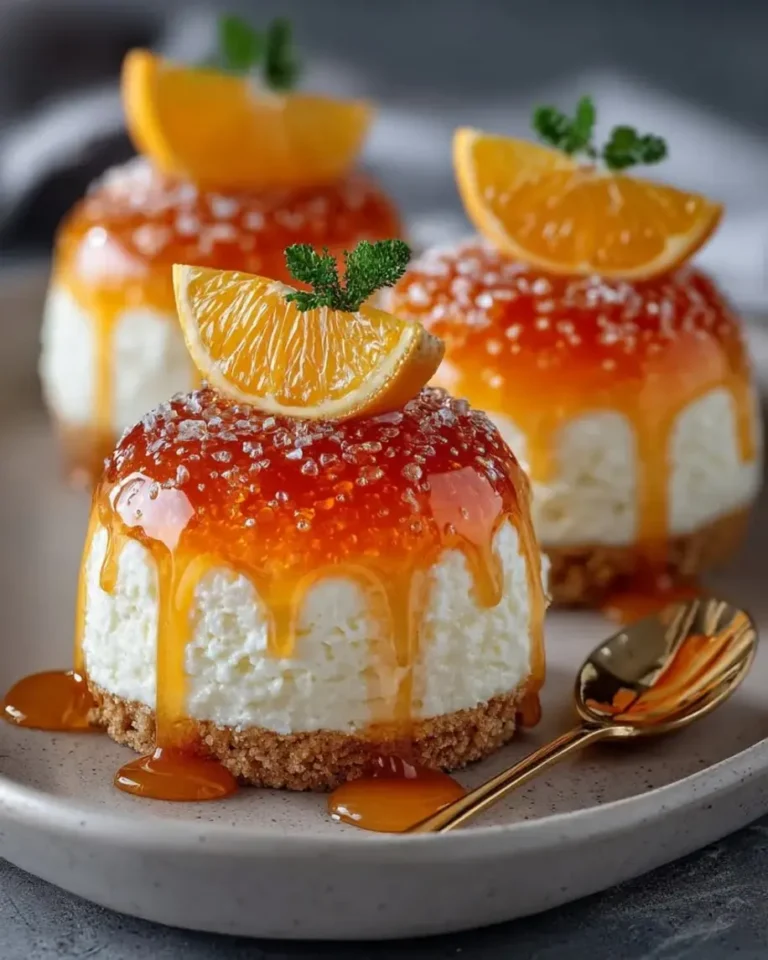
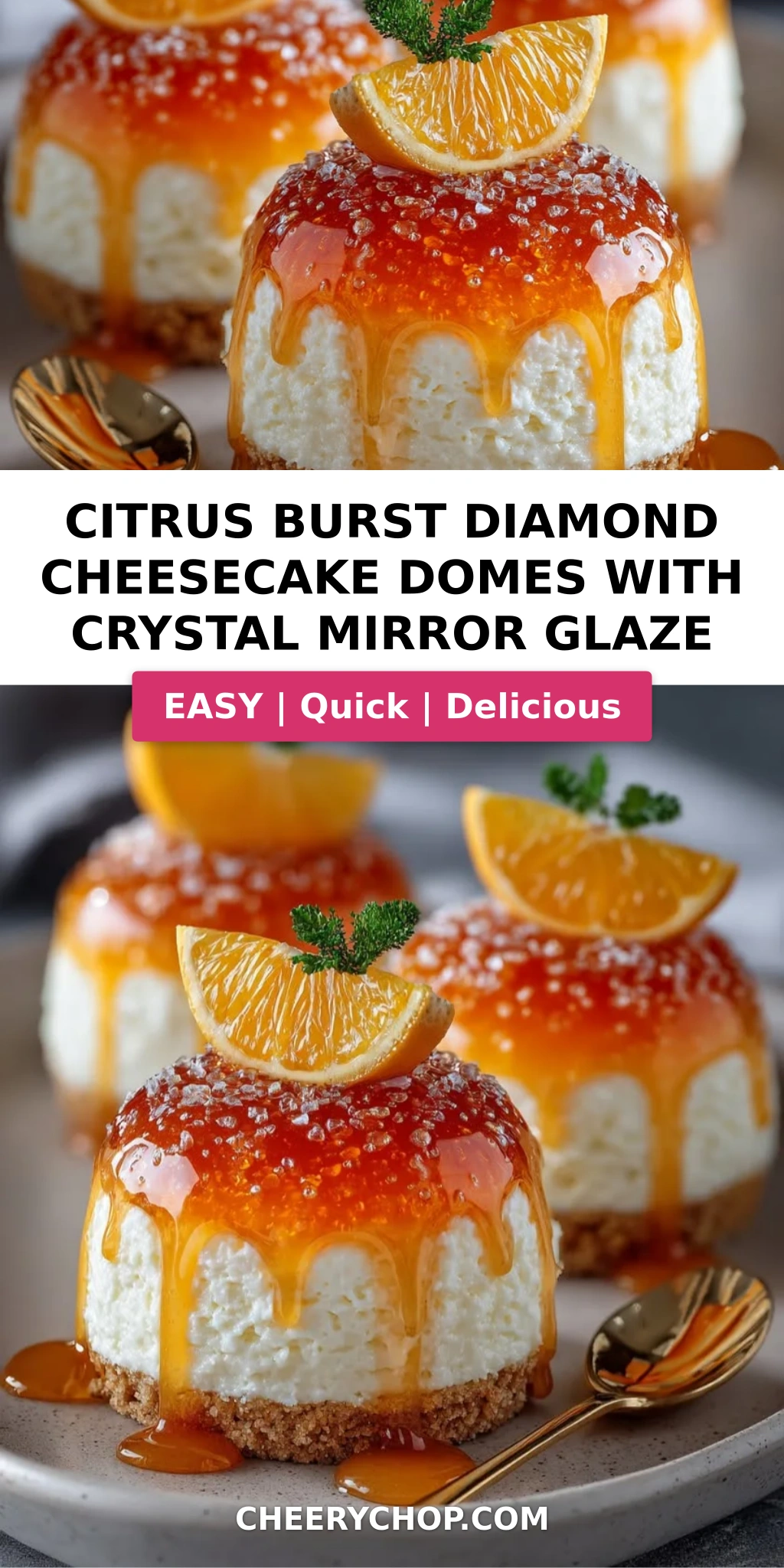
Imagine this: a perfectly smooth, mirror-like shell in shades of golden citrus that cracks ever so slightly when you tap it with a spoon. Beneath that glossy surface lies a creamy, dreamy cheesecake filling infused with fresh lemon and orange zest, a buttery biscuit base, and a hidden center of bright, tangy citrus jelly that bursts onto your tongue like a ray of sunshine. The combination of textures — the firm glaze, the silky cheesecake, the soft jelly, and the crunchy base — is nothing short of spectacular. Every bite is a layered experience that starts bright and citrusy, finishes creamy and smooth, and leaves you reaching for another dome before you have even swallowed the first.
What makes my version of this crystal mirror glaze cheesecake recipe truly special is the “diamond” approach — I use a combination of lemon, orange, and grapefruit to create a complex citrus profile that feels both familiar and surprising. The grapefruit adds a sophisticated bitterness that cuts through the sweetness of the white chocolate glaze and keeps every bite balanced. I have tested this recipe more times than I can count (my NYC neighbors have become very willing taste-testers), and I have refined every step to eliminate the common pitfalls that cause mirror glaze to crack, streak, or lose its shine. 💡 Sara’s Pro Tip: The key to a flawless mirror glaze is patience — let the glaze cool to exactly 90°F before pouring, and make sure your domes are frozen solid.
Why This Citrus Burst Diamond Cheesecake Domes Recipe Is the Best
The Flavor Secret — I grew up in Morocco, where citrus is practically a religion. My mother would bring home bags of oranges, lemons, and grapefruits from the market, and we would eat them with a sprinkle of salt and cinnamon. That memory inspired the citrus jelly center in these domes. Instead of using just one citrus fruit, I layer three — lemon for brightness, orange for sweetness, and grapefruit for a subtle, grown-up edge. This triple-citrus approach gives the dessert a complexity that plain lemon cheesecake simply cannot match. It is bright without being sour, sweet without being cloying, and sophisticated enough to serve at a dinner party.
Perfected Texture — During my pastry training in Paris, I learned that the difference between a good cheesecake and a great one is the texture. Many recipes over-bake or over-whip the cream cheese, leading to a dense, heavy result. For these domes, I use a no-bake method that keeps the filling incredibly light and mousse-like. The gelatin provides just enough structure to hold the dome shape while keeping the inside silky and smooth. The mirror glaze, meanwhile, is designed to be thin enough to coat evenly but thick enough to set into that signature glass-like finish. I have tested the gelatin ratios six ways from Sunday to ensure your glaze flows like silk and sets like crystal.
Foolproof & Fast — I know mirror glaze desserts can feel intimidating, which is why I have broken this recipe into clear, manageable steps. The active preparation time is only about 45 minutes — the rest is freezing and waiting. I have also included substitution options for every tricky ingredient, so if you cannot find something or need to work around a dietary restriction, you are covered. Whether you are a home baker looking to impress at a holiday gathering or a confident cook ready to try your first mirror glaze, this recipe is designed to make you look like a pro. The hardest part? Waiting for the domes to freeze.
Citrus Burst Diamond Cheesecake Domes Ingredients
I source most of my citrus from the Union Square Greenmarket here in New York City, where the seasonal varieties are incredible. In the winter, I love using Honey tangerines and Meyer lemons for their extra sweetness and floral aroma. If you are shopping at a standard grocery store, look for firm, heavy fruit with bright, unblemished skin — that is the sign of juicy, flavorful citrus. My mother in Morocco would always say, “The heavier the fruit, the sweeter the juice,” and she was never wrong.
Ingredients List
- For the Cheesecake Filling: 8 oz cream cheese, softened; 1/2 cup granulated sugar; 1 cup heavy cream; 1 tsp vanilla extract; 1 tbsp lemon juice; 1 tbsp orange juice; 1 tsp lemon zest; 1 tsp orange zest; 2 tsp powdered gelatin; 2 tbsp cold water
- For the Biscuit Base: 1 cup digestive biscuits, finely crushed; 3 tbsp melted butter
- For the Citrus Jelly Center: 1/2 cup orange juice; 1/2 cup grapefruit juice; 2 tbsp sugar; 1 tsp powdered gelatin; 1 tbsp cold water
- For the Crystal Mirror Glaze: 1 cup granulated sugar; 1/2 cup water; 1/2 cup condensed milk; 1 cup white chocolate, finely chopped; 1 tbsp powdered gelatin; 3 tbsp cold water; 1/2 cup clear citrus juice (strained lemon-orange mix); Yellow and orange food coloring (optional)
- For Garnish (optional): Candied citrus peel; Edible gold flakes; Micro mint leaves
Ingredient Spotlight
White Chocolate (for the mirror glaze): This is the backbone of your crystal mirror glaze. Do not use chocolate chips — they contain stabilizers that prevent smooth melting. Instead, buy a high-quality white chocolate bar or callets (Callebaut or Valrhona are my go-to brands). The cocoa butter content needs to be at least 30% for the glaze to set properly. If you use a low-quality white coating or “white melting wafers,” your glaze will be cloudy and thick rather than clear and glossy.
Powdered Gelatin: This is what gives both the cheesecake filling and the mirror glaze their structure. I use Knox brand gelatin, which is widely available in US grocery stores. For this recipe to work, you must “bloom” the gelatin in cold water before dissolving it — this step ensures there are no lumps and the gelatin activates evenly. Never use flavored gelatin, and do not substitute with agar-agar without adjusting the liquid ratios, as they set differently.
Heavy Cream: For the cheesecake filling, you need heavy cream with at least 36% milk fat. This is what gives the mousse its light, airy texture. I have tested this with half-and-half, and the result was too thin to hold the dome shape. If you are dairy-free, you can use full-fat coconut cream (the kind in a can, not the refrigerated kind), but the flavor will shift noticeably toward coconut — which is lovely, just different.
Citrus Juices: Freshly squeezed is non-negotiable here. Bottled citrus juice contains preservatives and often has a flat, metallic taste that will ruin the bright flavor of your dessert. For the mirror glaze, you need the juice to be clear — strain it through a fine-mesh sieve or cheesecloth to remove any pulp. Pulp in the glaze will create bubbles and streaks that disrupt the mirror finish.
| Original Ingredient | Best Substitution | Flavor / Texture Impact |
|---|---|---|
| White chocolate (glaze) | High-quality white chocolate callets | Smoother melt, glossier finish, cleaner flavor |
| Heavy cream (filling) | Full-fat coconut cream (canned) | Lighter coconut flavor, still fluffy but slightly less stable |
| Digestive biscuits (base) | Graham crackers or shortbread cookies | Slightly sweeter base, still crunchy; graham crackers add honey notes |
| Powdered gelatin | Sheet gelatin (same bloom strength) | Easier to bloom; identical result by weight (1 tsp powder ≈ 1 sheet) |
| Grapefruit juice (jelly) | Blood orange or tangerine juice | Sweeter, less bitter; still bright and citrusy |
How to Make Citrus Burst Diamond Cheesecake Domes — Step-by-Step
I know this recipe has several components, but I promise you — if you follow these steps in order and give yourself enough time for the freezing stages, you will end up with a dessert that looks like it came from a high-end pâtisserie. Let me walk you through it the way I would if you were standing right next to me in my NYC kitchen.
Step 1: Prepare the Biscuit Base
Finely crush the digestive biscuits in a food processor or by placing them in a sealed zip-top bag and smashing them with a rolling pin. You want a fine, sandy texture — no large chunks. Mix the crumbs with the melted butter until every particle is moistened. Press about 1 tablespoon of the mixture firmly into the bottom of each dome mold. Use the back of a small spoon or a flat-bottomed shot glass to compress it evenly. Chill the molds in the refrigerator for 15 minutes while you prepare the filling.
⚠️ Common Mistake to Avoid: Pressing the crust too loosely. If the base is not compacted firmly, it will crumble apart when you unmold the domes. Take the extra 30 seconds to really press it down.
Step 2: Bloom the Gelatin for the Cheesecake Filling
In a small bowl, sprinkle the 2 teaspoons of powdered gelatin over 2 tablespoons of cold water. Do not stir — just let it sit for 5 minutes. The gelatin will absorb the water and form a firm, jiggly block. This process is called “blooming” and it is essential for ensuring the gelatin dissolves evenly into your filling without lumps.
💡 Sara’s Pro Tip: Always use cold water for blooming gelatin. Hot water will cause the gelatin to dissolve unevenly and lose its setting power.
Step 3: Make the Cheesecake Base
In a large mixing bowl, beat the softened cream cheese, sugar, vanilla extract, lemon juice, orange juice, lemon zest, and orange zest together until perfectly smooth. Scrape the bowl and beaters several times — you want absolutely no lumps. In a small saucepan, warm about 2 tablespoons of the heavy cream over low heat until it is steaming but not boiling. Remove from heat, add the bloomed gelatin, and whisk until completely dissolved. Pour this gelatin mixture into the cream cheese mixture and beat until well combined.
Step 4: Whip and Fold the Cream
In a separate chilled bowl, whip the remaining heavy cream to soft peaks — this means the cream holds its shape briefly but the peaks flop over slightly when you lift the whisk. Do not over-whip, or the cream will turn into butter. Gently fold the whipped cream into the cream cheese mixture in three additions, using a flexible spatula and a light hand. The goal is to maintain as much air as possible.
⚠️ Common Mistake to Avoid: Over-mixing the whipped cream into the base. Fold just until you see no more white streaks. Over-mixing deflates the mousse and makes the domes dense.
Step 5: Fill the Molds and Add the Jelly Center
Spoon the cheesecake mixture into the chilled dome molds, filling them about halfway. Tap the molds gently on the counter to release any air bubbles. Place a small scoop of the prepared citrus jelly (see step 6) in the center of each mold, then cover with the remaining cheesecake mixture, spreading it level with the top of the mold. Freeze for at least 6 hours, or overnight — the domes must be completely frozen solid before you add the mirror glaze.
Step 6: Make the Citrus Jelly Center
While the cheesecake bases are chilling, make the jelly. In a small saucepan, combine the orange juice, grapefruit juice, and sugar. Heat gently until the sugar dissolves. Meanwhile, bloom the 1 teaspoon of gelatin in 1 tablespoon of cold water for 5 minutes. Add the bloomed gelatin to the warm citrus juice and stir until fully dissolved. Pour the mixture into a small shallow dish (like a ramekin or small loaf pan) and refrigerate for at least 2 hours, until firm. Once set, cut the jelly into small cubes or scoop small teaspoon-sized portions.
💡 Sara’s Pro Tip: If you want the jelly to be extra clear, strain the citrus juice through a coffee filter before heating it. This removes any remaining pulp that could cloud the jelly.
Step 7: Make the Crystal Mirror Glaze
Bloom the 1 tablespoon of gelatin in 3 tablespoons of cold water for 5 minutes. In a medium saucepan, combine the sugar, 1/2 cup water, and condensed milk. Heat over medium heat, stirring gently, until the mixture is steaming and the sugar has dissolved — do not let it boil. Remove from heat and add the chopped white chocolate and bloomed gelatin. Stir until the chocolate is completely melted and the mixture is smooth. If the chocolate does not melt fully, you can use an immersion blender to smooth it out. Add the 1/2 cup of clear citrus juice and stir well. If using food coloring, add a drop or two of yellow and orange and stir to combine. Cool the glaze to 90°F (32°C) before using — this is critical.
⚠️ Common Mistake to Avoid: Pouring the glaze too hot or too cold. If it is above 95°F, it will be too thin and run off the dome, leaving bare spots. If it is below 85°F, it will be too thick and will not self-level into a smooth mirror finish. Use an instant-read thermometer for accuracy.
Step 8: Glaze the Domes
Remove the frozen domes from the molds. Place them on a wire rack set over a baking sheet (to catch the excess glaze). Working quickly, pour the cooled mirror glaze over each dome, covering it completely. The glaze should flow smoothly over the surface and coat it evenly. Let the excess drip off for a few seconds, then use a small offset spatula to clean the bottom edge. Transfer the glazed domes to a serving plate and refrigerate for at least 30 minutes to set the glaze.
💡 Sara’s Pro Tip: For the most dramatic “diamond” effect, pour the glaze in a spiral motion starting from the top center of the dome. This creates a beautiful, even coating with no bare spots.
Step 9: Garnish and Serve
Once the glaze is set, garnish each dome with a piece of candied citrus peel, a few edible gold flakes, and a tiny sprig of micro mint. The gold flakes catch the light and make the domes look even more jewel-like. Serve immediately, or keep refrigerated until ready to serve. Bring to room temperature for about 10 minutes before serving for the best texture.
| Step | Action | Duration | Key Visual Cue |
|---|---|---|---|
| 1 | Prepare biscuit base | 10 mins + 15 mins chill | Firm, compacted crumb layer |
| 2 | Bloom gelatin for filling | 5 mins | Firm, jiggly gelatin block |
| 3 | Make cheesecake base | 10 mins | Smooth, lump-free, glossy |
| 4 | Whip and fold cream | 5 mins | Soft peaks, airy mousse |
| 5 | Fill molds with jelly center | 10 mins + 6 hrs freeze | Fully frozen, solid domes |
| 6 | Make citrus jelly | 5 mins + 2 hrs set | Firm, translucent jelly |
| 7 | Make mirror glaze | 15 mins + cooling | Silky, glossy, 90°F |
| 8 | Glaze the domes | 5 mins + 30 mins set | Smooth, mirror-like coating |
| 9 | Garnish and serve | 5 mins | Jewel-like, glossy domes |
Serving & Presentation
These Citrus Burst Diamond Cheesecake Domes are a showstopper on any dessert table. I love serving them on a large white platter or a slab of dark marble — the contrast makes the citrus tones pop beautifully. For a dinner party, arrange the domes in a staggered row or a circle, and scatter a few candied citrus peels and gold flakes around the plate for an extra touch of elegance. If you are feeling extra fancy, drizzle a thin ribbon of passion fruit coulis or raspberry sauce across the plate before setting the dome on top — the deep red or purple against the golden glaze is absolutely stunning.
In my Moroccan home, we would serve something like this with a pot of fresh mint tea on the side. The tea’s brightness and slight sweetness complement the citrus flavors beautifully. For a New York-style pairing, I recommend a dry sparkling wine like Prosecco or a citrus-forward cocktail — something with gin and a twist of lemon. The bubbles help cut through the richness of the cheesecake and cleanse your palate between bites. And do not forget the micro mint — it is not just for looks. The fresh, cool flavor of the mint provides a beautiful contrast to the sweet, tangy glaze.
| Pairing Type | Suggestions | Why It Works |
|---|---|---|
| Side Dish | Fresh berries, citrus salad, light sorbet | Adds freshness and acidity to balance the rich, creamy dome |
| Sauce / Dip | Passion fruit coulis, raspberry sauce, salted caramel | Fruit sauces enhance citrus notes; caramel adds buttery depth |
| Beverage | Prosecco, gin and tonic, Moroccan mint tea | Bubbles and botanicals cut richness; mint tea complements citrus |
| Garnish | Candied citrus peel, edible gold flakes, micro mint | Adds texture, visual sparkle, and a fresh herbal note |
Make-Ahead, Storage & Reheating
One of the best things about this mirror glaze dessert recipe is how well it fits into a busy schedule. I often make the components over two days: the jelly and biscuit base on day one, the cheesecake filling and assembly on day two, and the glaze on day three. The domes actually benefit from a full night in the freezer — it makes them easier to unmold and glaze cleanly. Here is exactly how to store everything so your dessert stays perfect.
| Method | Container | Duration | Reheating Tip |
|---|---|---|---|
| Refrigerator | Airtight container, single layer | Up to 3 days | Serve chilled; no reheating needed |
| Freezer | Freezer-safe container, parchment between layers | Up to 1 month | Thaw in fridge 2 hours before serving |
| Make-Ahead | Unglazed domes in freezer | Up to 2 weeks before glazing | Glaze directly from frozen; add 5 mins to set time |
If you are storing glazed domes in the refrigerator, place them in a single layer in an airtight container and put a piece of parchment paper between the domes and the lid to prevent the glaze from sticking. Do not stack them — the glaze is delicate and can smudge. For longer storage, freeze the unglazed domes and glaze them the day you plan to serve. The mirror glaze is best applied fresh, as it can lose its high-gloss shine after more than 24 hours in the fridge. If you notice the glaze looking a little dull after refrigeration, you can gently warm the domes with a hair dryer on low heat for a few seconds to restore the shine. This is a trick I learned from a pastry chef in Paris, and it works like magic.
Variations & Easy Swaps
| Variation | Key Change | Best For | Difficulty Impact |
|---|---|---|---|
| Tropical Citrus | Replace grapefruit with passion fruit and lime | Summer parties, tropical-themed desserts | No change in difficulty |
| Berry Bliss | Replace citrus jelly with mixed berry coulis center | Valentine’s Day, berry lovers | Easier — fruit coulis is simpler than jelly |
| Dairy-Free | Use coconut cream, dairy-free cream cheese, and white chocolate alternative | Dairy-free guests, vegan-friendly option | Slightly harder — dairy-free white chocolate can be fussy |
Tropical Citrus Variation
For a sunnier take on this dome cheesecake recipe, swap the grapefruit juice in the jelly center for passion fruit pulp (strained) and the juice of one lime. The passion fruit adds a heady, floral tartness that pairs beautifully with the creamy cheesecake. I make this version during the summer when I can find ripe passion fruit at the Union Square market. You can also add a teaspoon of finely grated fresh ginger to the cheesecake filling for a subtle warmth that echoes my Moroccan mother’s love of ginger in sweet dishes.
Berry Bliss Variation
If citrus is not your thing, or if you want a red dessert for Valentine’s Day, replace the citrus jelly center with a simple mixed berry coulis. Simmer 1 cup of frozen mixed berries with 2 tablespoons of sugar and a squeeze of lemon juice until thickened, then strain out the seeds. Let it cool completely, then spoon a small amount into the center of each dome before freezing. The berry flavor is a classic pairing with white chocolate and cream cheese, and the deep red color peeking out of the golden glaze is gorgeous.
Dairy-Free Citrus Domes
I have tested a dairy-free version of this crystal mirror glaze cheesecake using full-fat coconut cream (for the whipped element), a high-quality dairy-free cream cheese alternative (Miyoko’s is my favorite), and a dairy-free white chocolate made from cocoa butter and rice milk powder. The coconut cream adds a lovely tropical note that works beautifully with the citrus. For the mirror glaze, you will need to use a dairy-free condensed milk alternative — coconut condensed milk works well, though the glaze will have a slightly different mouthfeel. The dairy-free version is a bit more temperamental, so I recommend making the original version first before attempting this swap.
What is the best way to achieve a smooth crystal mirror glaze for citrus cheesecake domes?
The best way to achieve a perfectly smooth mirror glaze is to control the temperature carefully and strain your ingredients. First, make sure your gelatin is fully bloomed in cold water and completely dissolved into the warm glaze base. Use an immersion blender to eliminate any lumps — this is a game-changer for getting that silky, glass-like finish. Second, cool the glaze to exactly 90°F (32°C) before pouring. If it is too hot, it will be too thin and run off the dome; too cold, and it will be too thick and will not self-level. Third, always strain the citrus juice through a fine-mesh sieve or cheesecloth to remove pulp, which can create bubbles and streaks. Finally, pour the glaze over frozen-solid domes — the extreme temperature difference helps the glaze set instantly into a flawless mirror surface.
Can I use a different citrus fruit instead of the one specified in the recipe?
Absolutely — this recipe is very flexible when it comes to citrus choices. The recipe uses lemon, orange, and grapefruit, but you can substitute based on what is available and what you love. For the jelly center, try blood orange, tangerine, or Meyer lemon for a sweeter, less tart result. If you swap grapefruit for pomelo or even yuzu (if you can find it), the flavor will shift but remain beautifully bright. Just keep a few things in mind: the acidity level affects how the gelatin sets, so if you use a very acidic fruit like lime, you may need to add a tiny pinch of sugar to balance it. Also, for the mirror glaze, make sure any juice you add is clear and strained — pulp will ruin the mirror finish. I have made this with calamansi juice before, and the result was incredible — deeply floral and tart.
How far in advance can I make the diamond cheesecake domes before serving?
You can make the components of these citrus cheesecake domes several days ahead, and the finished glazed domes will keep beautifully in the refrigerator for up to 3 days. For the best results, I recommend a two-day schedule: on day one, make the jelly center and the biscuit base, and assemble the domes through the freezing step. On day two, make the mirror glaze, unmold the frozen domes, glaze them, and let them set in the fridge. You can also freeze the unglazed domes for up to 2 weeks and glaze them the day you plan to serve. The mirror glaze is at its shiniest and most dramatic within the first 24 hours after application, so for a dinner party, I suggest glazing them the morning of or the evening before. If the glaze dulls after a day in the fridge, a quick pass with a hair dryer on low heat will restore the shine.
What can I use as a substitute for gelatin in the mirror glaze to keep it clear?
If you need a vegetarian or vegan alternative to gelatin for the mirror glaze, agar-agar is the best option for maintaining a clear, glossy finish. Use about 1 teaspoon of agar-agar powder for every 1 tablespoon of powdered gelatin called for in the recipe. However, there is an important difference in how it sets: agar-agar needs to be boiled for 2-3 minutes to activate fully, whereas gelatin simply needs to be dissolved in warm liquid. Agar also sets at room temperature and has a firmer, less elastic texture than gelatin. For the mirror glaze, this means the coating may be slightly more brittle and less forgiving when you pour it. Another option is pectin (the kind used for high-methoxyl jams), but it requires a specific sugar and acid balance to set properly, which is trickier to achieve in a mirror glaze. If you are making this for a vegetarian guest, I recommend testing the agar-agar version at least once before serving it to company.
Why did my mirror glaze crack or peel off the cheesecake dome?
Cracking or peeling mirror glaze is almost always a temperature issue. The most common cause is pouring the glaze over domes that are not frozen solid enough — the surface needs to be below 32°F (0°C) so the glaze sets immediately on contact. If the dome is only partially frozen, the warm glaze will create condensation, which prevents it from adhering properly and causes peeling. Another cause is pouring the glaze when it is too cold — if the glaze is below 85°F, it will be too thick and will not flow evenly, leading to thick spots that crack as they set. A third possible cause is that the dome surface was not smooth before glazing. If your cheesecake filling had lumps or the mold was not perfectly clean, the glaze will have trouble adhering to uneven areas. Always unmold carefully and use a small offset spatula to smooth any rough spots before glazing.
Can I make these cheesecake domes without a dome mold?
Yes, you can make these citrus cheesecake domes without specialized dome molds, though the shape will be slightly different. The easiest alternative is to use a standard 12-cup muffin tin — line each cup with a strip of parchment paper for easier removal, then press the biscuit base into the bottom and fill with the cheesecake mixture and jelly center as directed. The resulting shape will be more like a rounded muffin top than a perfect dome, but it will still be beautiful and delicious. Another option is to use small silicone egg molds or half-sphere silicone molds, which are widely available online and at kitchen supply stores. If you want a truly hemispherical dome, silicone half-sphere molds in the 2.5-inch to 3-inch size are ideal and relatively inexpensive. I bought my first set on Amazon for under ten dollars, and I have been using them for years.
What is the secret to getting the mirror glaze to perfectly cover the dome?
The secret to a perfect mirror glaze coating is the pour itself. Here is exactly how I do it in my NYC kitchen: place your frozen dome on a wire rack over a baking sheet. Hold the bowl of glaze about 6 inches above the dome and pour in a steady spiral starting from the very top center. Pour generously — do not try to be conservative. The glaze should flow over the top and cascade down the sides in one smooth, continuous motion. Let the excess drip off for about 5 seconds, then use a small offset spatula to cleanly wipe the bottom edge of the dome before the glaze sets. The key is to pour enough glaze to cover the entire dome in one go — if you stop and start, you will get visible lines. I typically use about 1/4 to 1/3 cup of glaze per dome, depending on the size. The excess glaze can be strained and reused within 24 hours.
How do I store leftover mirror glaze, and can I reuse it?
Yes, you can absolutely reuse leftover mirror glaze, which is great because this recipe makes more than you need for 8 domes. Store the leftover glaze in an airtight container in the refrigerator for up to 5 days. When you are ready to use it again, gently reheat it in a double boiler or in the microwave in 10-second bursts, stirring frequently, until it reaches 90°F again. You may need to add a teaspoon of warm water if the glaze has thickened too much during storage. Strain the glaze through a fine-mesh sieve before reusing to remove any bits of set gelatin or chocolate that may have formed. One important note: if the glaze has been refrigerated for more than a day, it may have lost some of its high-gloss shine. Adding a drop or two of clear vegetable oil (like grapeseed) and blending with an immersion blender can help restore the gloss. I often keep leftover glaze in the fridge for glazing extra domes or even small cakes later in the week.
Can I use store-bought citrus juice for the jelly center and mirror glaze?
I strongly recommend using fresh-squeezed citrus juice for both the jelly center and the mirror glaze. Store-bought bottled citrus juice is usually pasteurized, which gives it a cooked, metallic flavor that will dull the bright, vibrant taste of this dessert. Additionally, bottled juice often contains preservatives and added sugars that can affect how the gelatin sets and how the mirror glaze clears. If you are in a pinch and absolutely must use bottled juice, look for a brand that is 100% juice with no added sugar or preservatives, and be prepared for the flavor to be less bright. For the mirror glaze, you also need the juice to be perfectly clear — bottled juice is often cloudy and may contain sediment that will ruin the mirror finish. I always strain fresh juice through a fine-mesh sieve or cheesecloth anyway, but with bottled juice, it is even more important. Trust me on this one — the extra 5 minutes of squeezing fresh citrus makes a world of difference.
What type of white chocolate works best for the crystal mirror glaze?
For a crystal-clear mirror glaze with a smooth, glossy finish, you need to use a high-quality white chocolate that contains real cocoa butter — at least 30% cocoa butter content is ideal. My top recommendations are Callebaut and Valrhona white chocolate callets or bars, which are available at specialty baking stores and online. These professional-grade chocolates melt smoothly and create a glaze that sets with a brilliant, glass-like shine. Avoid white chocolate chips, which are formulated to hold their shape during baking and contain stabilizers that can make the glaze grainy or cloudy. Also avoid “white melting wafers” or “candy melts,” which are not real chocolate and will not produce the same glossy, clear finish. If you can only find standard grocery store white chocolate bars, look for a brand like Ghirardelli or Lindt, which have a higher cocoa butter content than most store brands. The quality of your white chocolate directly determines the quality of your mirror glaze — it is worth spending a little more here.
Share Your Version!
I absolutely love seeing how you make these Citrus Burst Diamond Cheesecake Domes your own. Whether you stick to the original recipe or try one of the variations — tropical citrus, berry bliss, or dairy-free — I want to hear about it. Leave a star rating and a comment below to let me know how it turned out, what swaps you made, and who you served it to. Did your family go silent after the first bite? Did your friends ask for the recipe before the plate even hit the table? Tell me all about it — those are the moments that make me love what I do.
And if you share a photo on Instagram or Pinterest, please tag @cheerychop so I can see your masterpiece. I always re-share my favorites in my stories, and I love featuring your creations. If you have a question that was not answered in the FAQ above, drop it in the comments too — I read every single one and answer as quickly as I can. From my NYC kitchen to yours — I hope this recipe brings as much warmth to your table as it does to mine. — Sara 🧡
Love This Recipe? Save It to Pinterest!
If you enjoyed this Citrus Burst Diamond Cheesecake Domes recipe, don’t let it get lost in your browser tabs! 😄 Pin it now so you can find it again anytime — and explore hundreds more tried-and-tested recipes waiting for you on my Pinterest boards.
👉 Follow Sara on Pinterest @chefrecipes2
📌 Pin this recipe · 🔁 Re-pin your favorites · 💬 Tag me when you make it — I love seeing your creations!
⭐ Did you make this recipe? I would love to hear from you!
Leave a star rating ⭐⭐⭐⭐⭐ in the comments below and tell me about your experience. What citrus combo did you use? Who did you share it with? Every story makes my day — and it helps other readers know exactly what to expect. Thank you for being here, friend. 🧡
🔥 Share your photo on Instagram and tag @cheerychop for a chance to be featured!
Citrus Burst Diamond Cheesecake Domes with Crystal Mirror Glaze
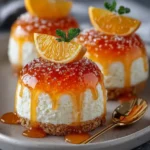
A stunning dessert featuring creamy citrus cheesecake domes with a jewel-like mirror glaze, bursting with bright citrus flavors.
- Total Time: 6 hours 30 minutes (including freezing)
- Yield: 8 1x
Ingredients
- For the Cheesecake Filling:
- 8 oz cream cheese, softened
- 1/2 cup granulated sugar
- 1 cup heavy cream
- 1 tsp vanilla extract
- 1 tbsp lemon juice
- 1 tbsp orange juice
- 1 tsp lemon zest
- 1 tsp orange zest
- 2 tsp powdered gelatin
- 2 tbsp cold water
- For the Biscuit Base:
- 1 cup digestive biscuits, finely crushed
- 3 tbsp melted butter
- For the Citrus Jelly Center:
- 1/2 cup orange juice
- 1/2 cup grapefruit juice
- 2 tbsp sugar
- 1 tsp powdered gelatin
- 1 tbsp cold water
- For the Crystal Mirror Glaze:
- 1 cup granulated sugar
- 1/2 cup water
- 1/2 cup condensed milk
- 1 cup white chocolate, finely chopped
- 1 tbsp powdered gelatin
- 3 tbsp cold water
- 1/2 cup clear citrus juice (strained lemon-orange mix)
- Yellow and orange food coloring (optional)
- For Garnish (optional):
- Candied citrus peel
- Edible gold flakes
- Micro mint leaves
Instructions
- Mix crushed biscuits with melted butter and press into dome molds as a base. Chill for 15 minutes.
- Bloom gelatin for cheesecake filling in cold water for 5 minutes.
- Beat cream cheese, sugar, vanilla, citrus juices, and zest until smooth.
- Warm a small portion of cream and dissolve bloomed gelatin, then mix into cheesecake base.
- Whip remaining cream to soft peaks and fold into mixture.
- Fill dome molds halfway with cheesecake mixture.
- Place a small scoop of citrus jelly center into each mold, then cover with remaining cheesecake mixture.
- Freeze domes for at least 6 hours until fully set.
- Bloom gelatin for mirror glaze in cold water.
- Heat sugar, water, and condensed milk until steaming (do not boil).
- Remove from heat, add white chocolate and gelatin, then blend until smooth.
- Add citrus juice and colorings, then cool glaze to about 90°F (32°C).
- Unmold frozen domes and place on a rack.
- Pour glaze evenly over domes until fully coated.
- Let set in the fridge for 30 minutes before serving.
- Garnish with candied citrus peel, gold flakes, and micro mint.
Notes
Nutritional Info (per serving, serves 8) Calories:320 Protein:4 g Carbohydrates:36 g Fat:18 g Fiber:1 g Sugar:30 g Sodium:70 mg
Nutrition
- Calories: 320
- Sugar: 30 g
- Fat: 18 g
- Carbohydrates: 36 g
- Protein: 4 g
Tried This Recipe? Leave a Comment!
Did you make this recipe? I’d love to hear how it turned out! Please leave a comment and a rating below. Your feedback helps other home cooks and supports cheerychop.com!
For more delicious inspiration, follow me on Pinterest!