Table of Contents
Ruby Blood Orange Cream Bombs with Shiny Jewel Shell – A Show-Stopping Dessert That Shines
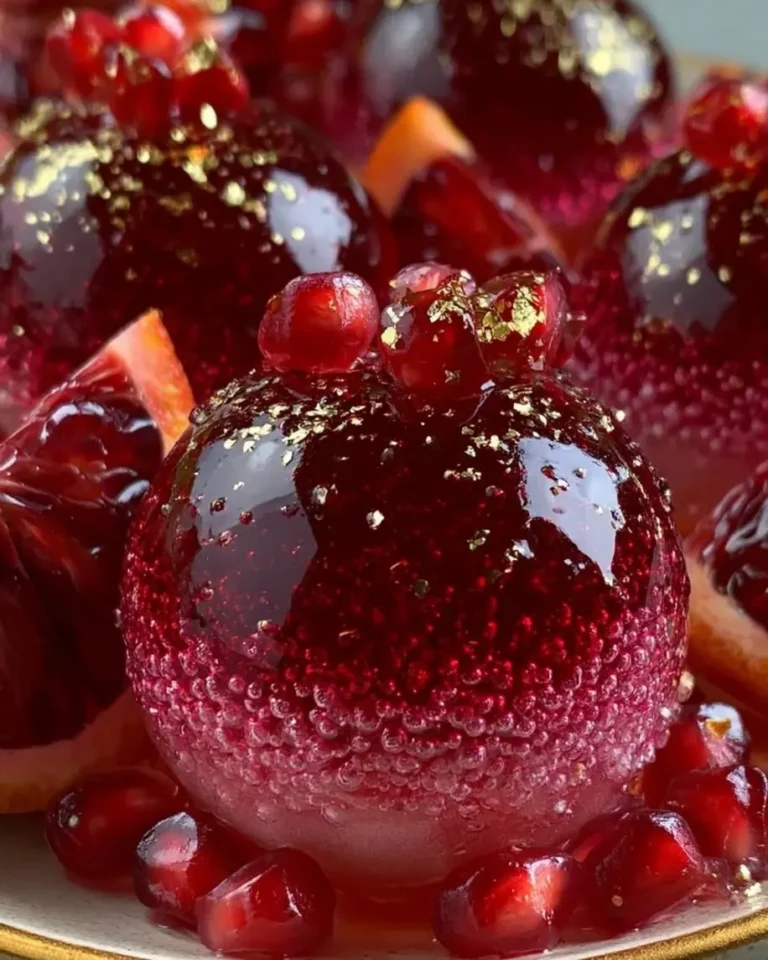
Growing up in Morocco, I watched my mother transform the simplest fruits into jewel-like desserts that looked almost too beautiful to eat. She’d use pomegranates and oranges from the market, and her hands moved with the rhythm of tradition. Now, in my tiny New York City kitchen, I channel that same magic into these blood orange cream bombs recipe — delicate, creamy spheres encased in a ruby-red jelly shell that glistens like a gem. The secret? A shiny jewel shell dessert made with agar-agar, pomegranate juice, and fresh blood oranges. It’s a dessert that stops conversation. I still remember the first time I unmolded one and watched the light catch that translucent shell — my Paris pastry instructor would have been proud.
The moment you bite into one of these ruby spheres, you get a burst of tangy-sweet juice from the shell, followed by a luscious, airy blood orange mascarpone cream that melts on your tongue. The jewel shell is firm enough to hold its shape but soft enough to break with a spoon. It’s a texture contrast that feels like a celebration. I love serving these at dinner parties — they’re dramatic, elegant, and surprisingly simple to make once you understand the agar-agar technique. The aroma of blood orange zest and vanilla bean paste fills my kitchen, and for a moment, I’m back in that Parisian pâtisserie classroom, except now I’m writing my own recipes for you.
What sets this ruby blood orange dessert apart is the precision we bring to the jelly shell and the silkiness of the cream center. I’ve tested this recipe dozens of times — first with gelatin, then with agar-agar — and the agar-agar version wins every time for stability at room temperature and that gorgeous translucent finish. You’ll learn exactly how to temper the agar-agar mixture so it sets without clumping, and how to pipe the cream so it stays centered inside the sphere. One common mistake is undercooking the agar-agar — the bubbles must be fully simmered out. But don’t worry, I’ll walk you through every step. Let’s make these bombs shine.
Why This Blood Orange Cream Bombs Recipe Is the Best
The Flavor Secret: My Moroccan roots taught me to balance sweet and tart with intention. Here, blood orange juice and pomegranate juice create a shell that’s tart enough to cut through the rich mascarpone cream, while honey in the glaze adds a floral note. I bring a touch of Parisian elegance by using vanilla bean paste instead of extract — those tiny specks make each bite feel luxurious. This isn’t just a dessert; it’s a flavor memory.
Perfected Texture: The agar-agar technique is something I refined during my pastry stage in Paris. Unlike gelatin, agar-agar sets at a higher temperature and gives a clean, snappy bite that holds up beautifully even after hours on the table. The cream center uses mascarpone and heavy cream whipped just until firm peaks — it’s stable enough to pipe but stays light as air. The result: a shell that shatters gently and a core that melts in your mouth.
Foolproof & Fast: I know some home cooks are intimidated by molded desserts, but this recipe breaks down into manageable steps. You can prep the shell mixture a day ahead, and the entire assembly takes just 45 minutes of active work. The chilling does the rest. With my pro tips on avoiding air bubbles and unmolding cleanly, even a beginner can nail this shiny jewel shell dessert on the first try.
Blood Orange Cream Bombs Recipe Ingredients
I source my blood oranges from the Union Square Greenmarket in late winter — they’re at their peak from December through March. When I squeeze them, the juice is almost crimson, with a tartness that screams freshness. For the pomegranate juice, I prefer POM Wonderful because it’s consistent, but juice from fresh pomegranates works too. And the mascarpone? I always buy Galbani or BelGioioso — they’re widely available in US grocery stores and have the right creaminess for piping. Let’s gather everything.
Ingredients List
For the Ruby Blood Orange Jewel Shell:
- 2 cups blood orange juice (about 5–6 oranges)
- 1/2 cup pomegranate juice
- 1 1/2 cups water
- 3/4 cup granulated sugar
- 2 1/2 tsp agar-agar powder
- 1 tbsp fresh lemon juice
- 1/4 tsp salt
For the Blood Orange Cream Center:
- 8 oz mascarpone cheese (softened)
- 1/2 cup heavy whipping cream
- 1/4 cup powdered sugar
- 1 tsp vanilla bean paste
- 1 tbsp blood orange zest (from 1–2 oranges)
For the Shiny Jewel Glaze:
- 1/4 cup blood orange marmalade
- 2 tbsp honey
- 1 tbsp water
- 1 tsp fresh lemon juice
For Garnish (optional):
- Blood orange segments
- Pomegranate arils
- Edible gold dust
Ingredient Spotlight
Agar-Agar Powder: This plant-based gelatin substitute is the star of the jewel shell. It sets firmly without refrigeration, so these bombs can sit out during a party. Look for it in the baking aisle or Asian grocery stores — I use the brand Now Foods. 💡 Sara’s Pro Tip: Whisk the agar-agar into the cold juice mixture before heating to prevent clumps.
Mascarpone Cheese: This Italian cream cheese gives the filling a luscious body without being heavy. Make sure it’s at room temperature before whipping — cold mascarpone can turn grainy. If you can’t find mascarpone, use cream cheese blended with a tablespoon of heavy cream, but the flavor will be tangier.
Blood Orange Juice: Freshly squeezed is non-negotiable for the most vibrant color and flavor. Bottled juice often has added sugars and a dull taste. When blood oranges aren’t in season, you can substitute equal parts orange juice and cranberry juice for a similar ruby hue.
| Original Ingredient | Best Substitution | Flavor / Texture Impact |
|---|---|---|
| Agar-agar powder | Gelatin (unflavored, 2 packets) | Softer set, not vegan; needs refrigeration |
| Mascarpone cheese | Cream cheese + 2 tbsp heavy cream | Tangier flavor, slightly denser |
| Blood orange juice | Orange juice + cranberry juice (1:1) | Less floral, still vibrant red |
How to Make Ruby Blood Orange Cream Bombs — Step-by-Step
I promise these aren’t as fussy as they look. Once you get the rhythm of the agar-agar shell, the rest is just piping and glazing. Let’s break it down into manageable parts.
Step 1: Simmer the Jelly Mixture
Combine blood orange juice, pomegranate juice, water, sugar, agar-agar powder, lemon juice, and salt in a saucepan. Whisk well to dissolve the agar-agar completely. Place over medium heat and bring to a gentle simmer, stirring constantly. Let it bubble for 2–3 minutes — you’ll see small bubbles rising. The mixture should be clear and slightly thickened.
💡 Sara’s Pro Tip: Don’t let the mixture boil vigorously — that can make the agar-agar clump. Keep it at a low simmer and stir until no granules remain.
Step 2: Pour and Partially Set
Carefully pour the hot liquid into sphere-shaped silicone molds, filling each cavity halfway. Work quickly because the mixture sets fast at room temperature. Place the filled molds in the refrigerator for 15–20 minutes, until the edges look firm but the center is still slightly tacky. You want a “skin” to form, not a full set.
⚠️ Common Mistake to Avoid: Overfilling the molds — you need space for the cream filling. Halfway is perfect!
Step 3: Whip the Cream Center
In a medium bowl, combine mascarpone cheese, heavy cream, powdered sugar, vanilla bean paste, and blood orange zest. Using a hand mixer or stand mixer with the whisk attachment, whip on medium-low speed until smooth, then increase to medium-high until light, fluffy, and stiff peaks form. Be careful not to over-whip — stop when the cream holds its shape. Transfer to a piping bag fitted with a round tip.
💡 Sara’s Pro Tip: Chill the mascarpone cream for 5 minutes before piping — it will hold its shape better inside the shell.
Step 4: Fill and Top the Spheres
Remove the partially set molds from the refrigerator. Pipe a small amount of the cream filling (about 1 tablespoon) into the center of each half-shell. Don’t let the cream touch the edges of the mold — leave about 1/4 inch of space. Now pour the remaining warm blood orange mixture over the cream, covering it completely. Use the back of a spoon to smooth the tops. Return the molds to the refrigerator and chill for at least 2 hours, or until the shells are fully set and translucent.
⚠️ Common Mistake to Avoid: Pouring the jelly mixture when it’s too cool — it should still be warm but not hot, or you’ll melt the partially set bottom layer. Test the temperature on your wrist (like a baby bottle).
Step 5: Unmold and Glaze
Carefully peel the silicone molds away from the set bombs. They should pop out easily — if they stick, run the bottom of the mold under warm water for 10 seconds. Place the bombs on a chilled serving platter. In a small saucepan, warm blood orange marmalade, honey, water, and lemon juice over low heat, stirring until smooth and glossy. Let the glaze cool for 2 minutes — it should be warm but not thick. Using a pastry brush, apply a thin, even layer of glaze to each bomb. The glaze will harden slightly as it cools, giving a mirror-like shine.
💡 Sara’s Pro Tip: For an extra-thick jewel effect, apply two layers of glaze. Let the first layer set for 5 minutes before brushing on the second.
Step 6: Garnish and Chill
If desired, top each bomb with a small blood orange segment, a few pomegranate arils, and a light dusting of edible gold dust. Return to the refrigerator for at least 30 minutes before serving, so the glaze firms up completely. Serve well chilled — the bombs are meant to be cold, with the shell offering a slight snap against the creamy center.
| Step | Action | Duration | Key Visual Cue |
|---|---|---|---|
| 1 | Simmer jelly mixture | 5 min | Small bubbles, clear liquid |
| 2 | Pour & partially set | 15 min | Edges firm, center tacky |
| 3 | Whip cream center | 3 min | Stiff peaks hold firmly |
| 4 | Fill & top spheres | 5 min | Cream centered, covered |
| 5 | Unmold & glaze | 10 min | Shells release, glaze shines |
| 6 | Garnish & final chill | 30 min | Glaze set, bombs cold |
Serving & Presentation
These cream bombs are meant to be the star of your dessert table. I love serving them on a white porcelain platter — the ruby shell stands out dramatically against the white. For a Moroccan-inspired touch, arrange the bombs on a bed of fresh fig leaves or mint sprigs. The contrast of deep red and green is stunning.
When it comes to portioning, one bomb per person is plenty — they’re rich and satisfying. But if you’re hosting a party, consider making smaller bombs (use a mini sphere mold) to serve as bite-sized amuse-bouches. I’ve done this for dinner parties in my NYC apartment, and guests always go back for seconds.
For a complete dessert experience, pair these bombs with a light wine or tea. My French training says a glass of crémant d’Alsace or a dry rosé complements the tartness of the blood orange. And for a non-alcoholic option, a Moroccan mint tea with a bit of honey is absolutely perfect. Garnish each plate with a few extra pomegranate arils and a tiny pinch of edible gold dust for that sparkle.
| Pairing Type | Suggestions | Why It Works |
|---|---|---|
| Side Dish | Fresh berries, coconut sorbet | Brightens and lightens the richness |
| Sauce / Dip | Whipped cream, vanilla custard | Adds creaminess without competing |
| Beverage | Dry rosé, crémant d’Alsace, mint tea | Acidity cuts fat; tea adds floral note |
| Garnish | Pomegranate arils, mint, gold dust | Adds color, crunch, elegance |
Make-Ahead, Storage & Reheating
These ruby bombs are perfect for entertaining because almost everything can be done in advance. I often prepare the shell mixture and the cream filling the day before my dinner party, then assemble and glaze a few hours before guests arrive. Here’s my storage cheat sheet.
| Method | Container | Duration | Reheating Tip |
|---|---|---|---|
| Refrigerator | Airtight container, single layer | 3–4 days | Serve cold; no reheating needed |
| Freezer | Freezer-safe bag, separated | 2 months | Thaw in fridge overnight; glaze may lose shine — refresh with a thin new glaze layer |
| Make-Ahead | Molds in fridge, covered | Up to 1 day before glazing | Unmold and glaze on serving day for best shine |
If you’re freezing the finished bombs, protect the glaze by placing a piece of parchment directly on the surface before sealing. When thawing, condensation may dull the shine — a quick re-glaze with the warm marmalade mixture restores that jewel effect. And whatever you do, don’t microwave these little gems — the shell will melt unevenly. Cold is their happy place.
Variations & Easy Swaps
| Variation | Key Change | Best For | Difficulty Impact |
|---|---|---|---|
| Moroccan Rose & Orange | Add 1 tbsp rose water to the shell, replace pomegranate juice with orange blossom water | Floral lovers; special occasions | Same difficulty |
| Vegan Cream Center | Use coconut cream (chilled) instead of mascarpone, maple syrup instead of sugar | Dairy-free / vegan diets | Slightly trickier (coconut cream stability) |
| Winter Spice Twist | Add 1/2 tsp cinnamon and 1/4 tsp cardamom to the cream center | Holiday gatherings; cozy flavor | Easy (no extra steps) |
Moroccan Rose & Orange Variation
Growing up in Morocco, I grew up with the scent of rose water in my mother’s kitchen. For this variation, reduce the water in the shell to 1 cup and add 1/2 cup rose water (culinary grade). Replace the pomegranate juice with orange blossom water for a heady floral note. The shell will be translucent with a subtle pink hue, and the cream stays the same. Serve with a dusting of crushed pistachios for extra texture. This version is incredibly elegant — perfect for bridal showers or Valentine’s Day.
Vegan Cream Center Variation
To make these bombs dairy-free, use full-fat coconut cream that has been refrigerated overnight. Scoop the solid part (about 3/4 cup) and whip with 1/4 cup powdered sugar, 1 teaspoon vanilla extract, and the blood orange zest. Coconut cream is less stable than mascarpone, so whip it cold and pipe immediately. The shell remains vegan-friendly because agar-agar is plant-based. The flavor is slightly coconutty, which pairs beautifully with the citrus. Just know that coconut cream may soften faster at room temperature, so serve these straight from the fridge.
Winter Spice Twist Variation
When the holidays roll around, I like to add a pinch of cardamom and cinnamon to the cream center. Stir the spices into the mascarpone before whipping. The warm spices complement the blood orange’s natural sweetness, and you get a subtle chai-like aroma. I’ve also been known to add a tiny splash of bourbon to the cream for grown-up gatherings — but that’s optional. This variation is a hit at my annual NYC cookie swap.
Frequently Asked Questions
What is the best way to get a shiny jewel shell on chocolate candy without blooming?
For a shiny jewel shell that resists blooming (the white discoloration on chocolate), the key is precise tempering of the chocolate, but in this recipe we use an agar-agar jelly approach instead of chocolate. However, if you want a chocolate shell with a jewel-like finish, I recommend using a couverture chocolate with high cocoa butter content and seeding method tempering to 88–90°F (31–32°C). Then add a clear glaze made from gelatin and corn syrup brushed on after setting. For our blood orange bombs, the natural pectin from the fruit and the agar-agar already create that mirror shine without any blooming risk — it’s one of the advantages of fruit-based jewel shells!
Can I use regular oranges instead of ruby blood oranges for the cream filling?
Yes, you can use regular navel oranges if blood oranges are out of season, but you’ll lose that stunning ruby color. The flavor will still be lovely — orange and pomegranate is a classic combination. To mimic the color, you could add a drop of natural red food coloring (beet powder works) to the juice. For the cream center, regular orange zest and juice will give a bright, sweet citrus note. Just know that regular oranges are sweeter and less tart than blood oranges, so you might want to reduce the sugar in the shell by 1 tablespoon to keep the balance.
How long do ruby blood orange cream bombs need to set in the refrigerator before serving?
For best results, I recommend a total chilling time of at least 3 hours: 15–20 minutes for the initial partial set, then 2 hours after adding the top layer, and another 30–40 minutes after glazing. However, if you’re short on time, you can assemble them the night before and let them chill overnight — they’ll be perfectly set and even more stable. The agar-agar shell continues to firm up over time, so an overnight chill (8–10 hours) yields the most resilient bombs that unmold beautifully.
What ingredients work best for a firm cream center that holds shape inside the chocolate shell?
For a cream center that holds its shape without collapsing, the combination of mascarpone cheese, heavy whipping cream, and a small amount of powdered sugar is ideal. The mascarpone adds body and stability because it’s thick and not overly aerated, while the heavy cream provides lightness. If you want an even firmer center (for piping into a chocolate shell, for example), you can add 1 teaspoon of unflavored gelatin dissolved in 2 tablespoons of water and folded into the cream after whipping. For our blood orange bombs, the cream center is encased in a firm jelly shell, so the standard mascarpone cream works perfectly — no extra gelatin needed.
Can I make these cream bombs without agar-agar? What can I use instead?
Yes, you can substitute agar-agar with unflavored gelatin. Use 2 packets (about 5 teaspoons) of gelatin powder. Sprinkle it over 1/2 cup of the water from the recipe and let it bloom for 5 minutes, then add it to the warm juice mixture after heating — do not boil it. The gelatin will give a softer, more melt-in-your-mouth texture, but the bombs will need to stay refrigerated at all times or they’ll soften. Agar-agar is my preference because it sets at room temperature and gives that clean, snappy bite, but gelatin works as a classic alternative.
Why did my agar-agar jewel shell turn out cloudy instead of clear?
A cloudy shell is usually caused by undercooking the agar-agar or introducing too many bubbles. Make sure you bring the mixture to a full simmer (small bubbles rising steadily) for at least 2 minutes — this allows the agar-agar to fully dissolve and the bubbles to escape. Also, avoid vigorous stirring after it begins to simmer. Another culprit is using unfiltered juice; if your blood orange or pomegranate juice has pulp, strain it through a fine-mesh sieve before adding to the pot. Lastly, if you cover the saucepan while simmering, condensation can drip and cloud the mixture — keep it uncovered. Follow these steps, and you’ll get that brilliant translucent jewel shell every time.
Can I freeze the assembled cream bombs for later use? How do they hold up?
Yes, you can freeze these cream bombs for up to 2 months. The key is to freeze them before glazing or to protect the glaze well. If freezing finished bombs, place them in a single layer in an airtight freezer container with parchment between layers. Thaw overnight in the refrigerator — the shell will remain intact. However, the glaze can lose its shine due to condensation. I recommend glazing fresh after thawing for that just-made sparkle. The cream center and shell hold up beautifully to freezing because agar-agar is very stable.
How do I unmold the bombs cleanly without breaking them?
Unmolding is easy with silicone molds — the bombs should pop right out. If they’re stubborn, press the bottom of the mold outward to create an air gap, then gently peel the silicone away. You can also run the bottom of the mold under warm water for 10 seconds to loosen the jelly. Never twist or pull hard — you’ll tear the shell. Let the bombs chill fully (3+ hours), and if you used enough agar-agar, they’ll be firm enough to handle. I always hold my breath the first time, but I promise, they release beautifully.
What’s the best way to create an even glaze that doesn’t drip off the bombs?
To get an even, non-drippy glaze, make sure your bombs are very cold from the refrigerator before glazing. The warm glaze will set almost instantly on contact, so you need to work quickly. Use a soft pastry brush and apply the glaze in thin, even strokes — start from the top and work downward. If the glaze is too thick, warm it with an extra teaspoon of water; if too thin, let it cool slightly. For a flawless finish, place the bombs on a wire rack over a baking sheet and drizzle the glaze over them, letting the excess drip off. Then transfer to the platter with a spatula.
What should I serve with these cream bombs for a complete dessert spread?
I love to serve these bombs as part of a larger dessert platter. Pair them with fresh berries (raspberries and blackberries), a small bowl of whipped mascarpone or clotted cream, and a pot of Moroccan mint tea. For texture contrast, add some almond tuiles or shortbread cookies. If you want a boozy pairing, a glass of Muscat or a late-harvest Riesling complements the citrus notes. For a non-alcoholic option, a sparkling blood orange soda or pomegranate iced tea works beautifully.
Share Your Version!
I’d love to see how your ruby blood orange cream bombs turn out! Snap a photo and share it on Instagram — tag me @cheerychop so I can see your beautiful creations. Drop a comment below with any questions or variations you tried. Did you add that Moroccan rose twist? Or maybe you went all-in with the gold dust? Let me know!
If you enjoyed this blood orange cream bombs recipe, please give it a 5-star rating — it helps other home bakers find it too. And don’t forget to pin it for later so you have it ready for your next dinner party or holiday celebration. From my NYC kitchen to yours — I hope this recipe brings as much warmth to your table as it does to mine. — Sara 🧡
Love This Recipe? Save It to Pinterest!
If you enjoyed this Ruby Blood Orange Cream Bombs recipe, don’t let it get lost in your browser tabs! 😄 Pin it now so you can find it again anytime — and explore hundreds more tried-and-tested recipes waiting for you on my Pinterest boards.
👉 Follow Sara on Pinterest @chefrecipes2
📌 Pin this recipe · 🔁 Re-pin your favorites · 💬 Tag me when you make it — I love seeing your creations!
Ready to dazzle your guests? ⭐
Rate this recipe ⭐⭐⭐⭐⭐ and tell me what you think in the comments!
Have a question? Ask below — I personally answer every comment 🧡
Ruby Blood Orange Cream Bombs with Shiny Jewel Shell
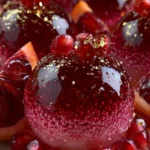
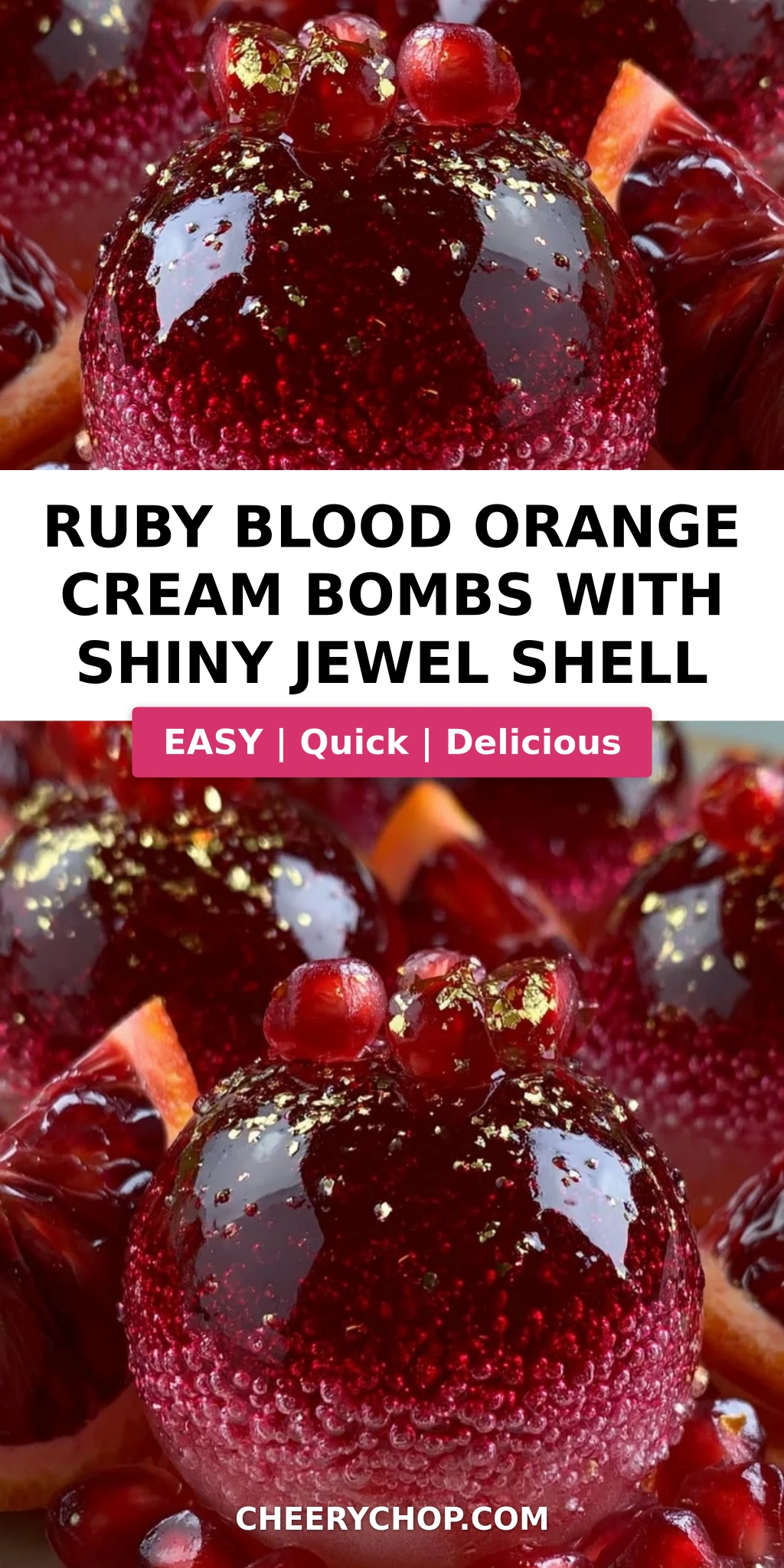
Delicate creamy bombs encased in a ruby-red jewel shell made from blood orange and pomegranate juice, glazed with a shiny jewel finish.
- Prep Time: 30 min
- Cook Time: 15 min
- Total Time: 4 hours (including chilling)
- Yield: 6 1x
- Method: Dessert
- Cuisine: American
Ingredients
- For the Ruby Blood Orange Jewel Shell:
- 2 cups blood orange juice
- 1/2 cup pomegranate juice
- 1 1/2 cups water
- 3/4 cup granulated sugar
- 2 1/2 tsp agar-agar powder
- 1 tbsp fresh lemon juice
- 1/4 tsp salt
- For the Blood Orange Cream Center:
- 8 oz mascarpone cheese
- 1/2 cup heavy whipping cream
- 1/4 cup powdered sugar
- 1 tsp vanilla bean paste
- 1 tbsp blood orange zest
- For the Shiny Jewel Glaze:
- 1/4 cup blood orange marmalade
- 2 tbsp honey
- 1 tbsp water
- 1 tsp fresh lemon juice
- For Garnish (optional):
- Blood orange segments
- Pomegranate arils
- Edible gold dust
Instructions
- Combine blood orange juice, pomegranate juice, water, sugar, agar-agar powder, lemon juice, and salt in a saucepan. Heat while stirring until the sugar dissolves completely and the mixture reaches a gentle simmer.
- Pour the mixture into sphere-shaped silicone molds, filling each cavity halfway. Refrigerate until lightly set.
- Whip mascarpone cheese, heavy cream, powdered sugar, vanilla bean paste, and blood orange zest until smooth, airy, and fluffy. Transfer to a piping bag.
- Pipe a small amount of the cream filling into the center of each partially set sphere. Cover with the remaining blood orange mixture and refrigerate until fully set and translucent.
- Carefully unmold the cream bombs onto a chilled serving platter.
- Warm blood orange marmalade, honey, water, and lemon juice in a small saucepan until smooth and glossy. Cool slightly while keeping the glaze pourable.
- Brush or drizzle the shiny glaze evenly over each bomb to create a sparkling jewel-like finish.
- Garnish with blood orange segments, pomegranate arils, and a light dusting of edible gold dust. Serve well chilled.
Notes
Garnish options are optional; bombs can be served plain if desired. For best texture, serve well chilled.
Nutrition
- Calories: 290
- Sugar: 32g
- Fat: 15g
- Carbohydrates: 37g
- Protein: 3g
Tried This Recipe? Leave a Comment!
Did you make this recipe? I’d love to hear how it turned out! Please leave a comment and a rating below. Your feedback helps other home cooks and supports cheerychop.com!
For more delicious inspiration, follow me on Pinterest!