“`html
Table of Contents
Midnight Blueberry Mirror Glaze Dream Domes – A Stunning Dessert with a Mirror-Shine Finish
I still remember the first time I poured a mirror glaze over a frozen dome in my tiny Parisian kitchen—the way the glossy surface settled into a perfect, unbroken reflection felt almost magical. These Midnight Blueberry Mirror Glaze Dream Domes are my love letter to that moment, combining a silky blueberry mousse with a tender vanilla cake base and a midnight blue glaze that shimmers like a moonlit sky. Growing up in Morocco, my mother would make simple berry compotes with just a touch of sugar and lemon, letting the fruit speak for itself. That same philosophy guides this recipe: the blueberries shine bright, while the mirror glaze adds a dramatic, polished finish that feels straight out of a French patisserie.
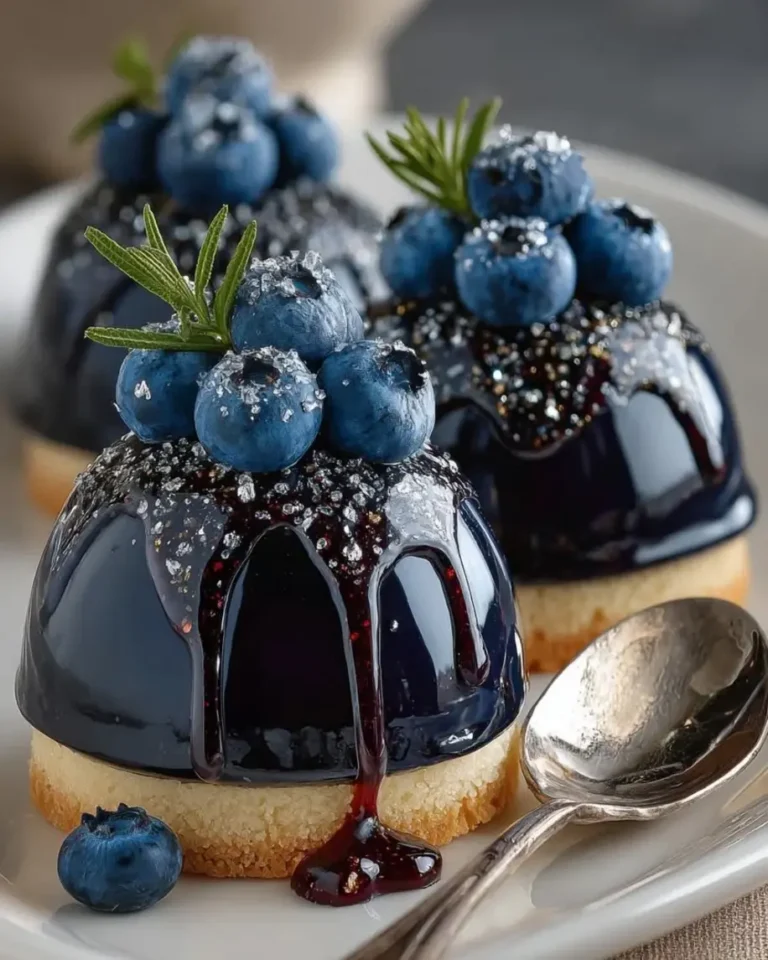
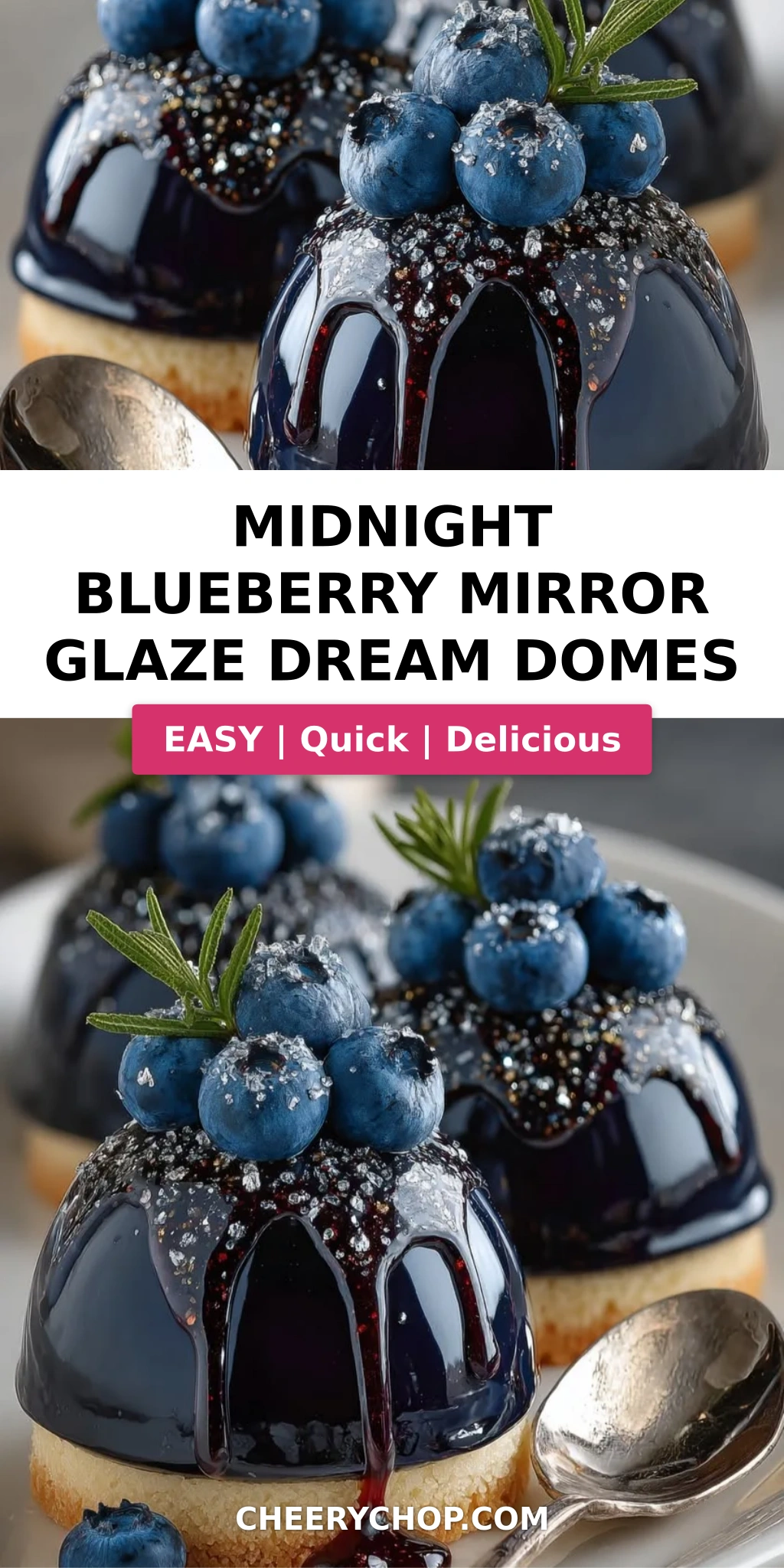
Every spoonful delivers a symphony of textures: the ethereally light mousse, the delicate crumb of the cake, and the glossy, almost jelly-like coating that cracks ever so slightly as you dig in. The blueberries lend a deep, jammy sweetness balanced by a whisper of lemon, while the vanilla in the cake rounds out the acidity. The midnight blue mirror glaze—colored with navy, black, and violet gel—creates a jewel-toned surface that catches the light, making each dome look like a precious gem. It’s the kind of dessert that stops conversation when you bring it to the table, yet it’s entirely doable with a little patience and the right technique.
I’ve tested this recipe dozens of times in my NYC kitchen, tweaking the gelatin ratios and glaze temperature to ensure a flawless mirror finish every time. The secret lies in cooling the glaze to exactly 90–95°F and working quickly when pouring. A common mistake I see home bakers make is pouring the glaze when it’s too warm, which causes it to run off and lose that mirror-like shine. In this post, I’ll walk you through each step, share my best pro tips, and help you avoid the pitfalls so you can create blueberry mirror glaze domes that look like they came from a high-end pastry shop—right in your own home.
Why This Blueberry Mirror Glaze Domes Recipe Is the Best
The flavor secret here is twofold: I use a combination of fresh or frozen blueberries that are simmered just until they release their juices, then blended into a silky purée that forms the backbone of the mousse. A touch of lemon juice brightens the fruit without overwhelming it, and the vanilla in the cake echoes the warmth I learned to appreciate from Moroccan desserts. This isn’t just a blueberry dessert dome—it’s a balance of acid, sweetness, and creaminess that feels both indulgent and refreshing.
The texture is where my French training really comes through. The mousse is stabilized with just the right amount of gelatin, whipped to soft peaks, and folded gently to keep it airy. The cake base is baked thin—just 12 to 15 minutes—so it stays tender and doesn’t overwhelm the mousse. And the glaze? It’s a white chocolate-based mirror glaze that sets to a smooth, reflective finish. Getting the glaze temperature right is the technique I emphasize most in my cooking classes: too warm and it slides off, too cool and it clumps. At 90–95°F, it flows like silk and sets to a perfect gloss.
What makes this recipe foolproof for beginners, despite the advanced-looking result, is the clear, structured method. I’ve broken down every step with visual cues and timing so you know exactly what to look for. The domes can be made over two days—make the mousse and cake on day one, freeze overnight, then glaze and serve the next day. This approach mimics how I work in my own kitchen: I prep components in batches, which makes the process feel manageable and even relaxing. Whether you’re making these for a birthday, a dinner party, or just because you want to try something spectacular, this mirror glaze cake recipe will guide you to a stunning finish.
Blueberry Mirror Glaze Domes Ingredients
Every ingredient in this recipe has been chosen with care. I source my blueberries from the Union Square Greenmarket in the summer, and in winter I reach for wild frozen blueberries from the freezer aisle—they’re smaller and more intensely flavored than fresh ones out of season. The white chocolate for the glaze needs to be a good quality brand like Ghirardelli or Callebaut, because the flavor really comes through. And the gel food coloring is non-negotiable: liquid drops will throw off the consistency of the glaze. Here’s everything you’ll need.
Ingredients List
- For the Blueberry Mousse:
- 2 cups fresh or frozen blueberries
- 1/4 cup granulated sugar
- 1 tbsp lemon juice
- 2 tsp powdered gelatin
- 2 tbsp cold water (for blooming gelatin)
- 1 1/4 cups heavy cream, chilled
- 1 tsp vanilla extract
- For the Vanilla Cake Base:
- 1/2 cup all-purpose flour
- 1/2 tsp baking powder
- 1/8 tsp salt
- 1/4 cup granulated sugar
- 1 large egg
- 2 tbsp unsalted butter, melted
- 2 tbsp whole milk
- 1/2 tsp vanilla extract
- For the Midnight Blueberry Mirror Glaze:
- 1/2 cup water
- 3/4 cup granulated sugar
- 1/2 cup sweetened condensed milk
- 2 tbsp light corn syrup
- 2 1/2 tsp powdered gelatin
- 3 tbsp cold water (for blooming gelatin)
- 6 oz white chocolate, finely chopped
- 1/2 tsp blueberry extract
- 1/2 tsp navy blue gel food coloring
- 1 drop black gel food coloring
- 1 drop violet gel food coloring
- For Garnish (optional):
- Fresh blueberries
- Edible silver leaf flakes
- Small mint leaves
Ingredient Spotlight
Blueberries: Fresh or frozen both work beautifully. Frozen blueberries are actually more consistent in flavor year-round and they break down faster when simmered. I prefer wild frozen blueberries for their intense, tart-sweet taste. If using fresh, look for berries that are firm, dry, and deeply colored—avoid any with soft spots or mold. One substitution you can try is raspberries or blackberries, which will give a different color and a slightly seedier texture, but the flavor will be just as vibrant.
White Chocolate: This is the backbone of the mirror glaze, so don’t skimp on quality. White chocolate with at least 30% cocoa butter content melts smoothly and creates that glossy finish. I use Callebaut or Ghirardelli. Avoid white baking chips or candy melts—they contain stabilizers that can cause the glaze to seize or turn grainy. If you need a dairy-free version, look for a high-quality dairy-free white chocolate alternative, though the texture may be slightly less glossy.
Gel Food Coloring: Gel or paste food coloring is essential for achieving the midnight blue color without thinning the glaze. Liquid food coloring will water down the glaze and can cause streaks. In the US, brands like Wilton, AmeriColor, and Chefmaster offer deep navy, black, and violet gels. Just three drops total—one black, one violet, and a half teaspoon of navy—create that mesmerizing midnight blue that looks almost black in dim light but glows blue under bright light.
| Original Ingredient | Best Substitution | Flavor / Texture Impact |
|---|---|---|
| Blueberries | Raspberries or blackberries | More seeds, tarter flavor, deep red-purple color |
| White chocolate | Dairy-free white chocolate | Less glossy, slightly different flavor, dairy-free |
| Heavy cream | Coconut cream (chilled) | Coconut flavor, slightly less stable mousse, dairy-free |
| Powdered gelatin | Agar-agar (vegan) | Firmer set, different melting behavior, use 2 tsp agar |
How to Make Midnight Blueberry Mirror Glaze Dream Domes — Step-by-Step
I’ve designed these steps so that even if you’ve never made a mirror glaze before, you’ll feel confident and in control. Take your time with each stage—the reward is a dessert that looks like it belongs in a pastry case in SoHo.
Step 1: Bloom the Gelatin for the Mousse
Sprinkle the 2 teaspoons of powdered gelatin over 2 tablespoons of cold water in a small bowl. Let it sit for 5 minutes without stirring. The gelatin will absorb the water and turn into a firm, jiggly mass—that’s exactly what you want. This process, called blooming, ensures the gelatin dissolves evenly into the warm blueberry purée later without forming lumps.
💡 Sara’s Pro Tip: Use cold water, not warm, for blooming. Warm water can activate the gelatin too quickly and cause clumping. Also, always sprinkle the gelatin over the water, not the other way around, for even absorption.
Step 2: Simmer the Blueberries
In a medium saucepan over medium heat, combine the blueberries, sugar, and lemon juice. Cook for 6 to 8 minutes, stirring occasionally, until the blueberries have softened and released their juices. The mixture should look like a thick, bubbling compote. Remove from heat and let it cool for 2 minutes, then blend it until smooth using an immersion blender or a countertop blender. If you prefer a seedless mousse, strain the purée through a fine-mesh sieve.
⚠️ Common Mistake to Avoid: Overcooking the blueberries can make them bitter and darken the purée. Stop as soon as they’re soft and the mixture is bubbling gently. You want a bright, vibrant purée.
Step 3: Dissolve the Gelatin
While the blueberry purée is still warm (but not boiling), add the bloomed gelatin and stir until it’s fully dissolved. This should take about 1 minute. The warmth of the purée will melt the gelatin effortlessly. Let the mixture cool to room temperature—this is important because adding warm purée to the cream will deflate it.
💡 Sara’s Pro Tip: If the purée has cooled too much and the gelatin isn’t dissolving, gently reheat it over low heat for just 30 seconds while stirring. Never microwave gelatin mixtures directly, as hot spots can destroy its setting power.
Step 4: Whip and Fold the Mousse
In a large mixing bowl, whip the heavy cream and vanilla extract to soft peaks—meaning the cream holds a gentle shape but still droops slightly when you lift the whisk. Gently fold the cooled blueberry mixture into the whipped cream using a rubber spatula. Use a cut-and-fold motion, rotating the bowl as you go, until no streaks remain. The mousse will be a beautiful pale lavender color.
⚠️ Common Mistake to Avoid: Over-whipping the cream will make the mousse grainy and stiff. Stop at soft peaks—the cream should look smooth and pillowy, not clumpy. If you go too far, add a tablespoon of cold cream and fold gently to bring it back.
Step 5: Make the Cake Base
Preheat your oven to 350°F (175°C). In a small bowl, whisk together the flour, baking powder, and salt. In another bowl, whisk the sugar, egg, melted butter, milk, and vanilla until smooth. Combine the wet and dry ingredients, mixing just until no flour lumps remain. Pour the batter into a lined 8×8-inch baking pan and bake for 12 to 15 minutes, until a toothpick inserted in the center comes out clean. Cool completely before cutting circles slightly smaller than your dome molds.
💡 Sara’s Pro Tip: For perfectly sized cake rounds, use a round cookie cutter that’s about 1/4 inch smaller in diameter than your silicone dome mold. This ensures the cake fits snugly without pushing up the mousse.
Step 6: Assemble and Freeze the Domes
Fill each silicone dome mold halfway with the blueberry mousse. Press a cake round gently onto the mousse, then smooth the bottom of the mold to level it. The mousse will rise slightly as it freezes, so don’t overfill. Place the molds on a baking sheet and freeze for at least 6 hours, preferably overnight. The domes must be completely frozen before glazing—this is non-negotiable for a smooth mirror finish.
⚠️ Common Mistake to Avoid: Removing the domes from the molds too early will cause them to crack or break. Freeze for the full 6 hours minimum. If you’re in a rush, pop them in the freezer for 8 hours to be safe.
Step 7: Make the Mirror Glaze
Bloom the 2 1/2 teaspoons of gelatin in 3 tablespoons of cold water for 5 minutes. In a small saucepan, heat the water, sugar, condensed milk, and corn syrup over medium heat until steaming—do not let it boil. Remove from heat and stir in the bloomed gelatin until dissolved. Pour this hot mixture over the finely chopped white chocolate in a heatproof bowl. Let it stand for 2 minutes, then blend with an immersion blender until completely smooth. Add the blueberry extract and the gel food coloring: 1/2 tsp navy, 1 drop black, 1 drop violet. Blend again until the color is uniform. Cool the glaze to 90–95°F (32–35°C).
💡 Sara’s Pro Tip: Use an immersion blender to mix the glaze—it incorporates the chocolate and color more smoothly than a whisk. Tilt the blender at a slight angle to avoid incorporating too many air bubbles, which can ruin the mirror finish. If you see bubbles, gently tap the bowl on the counter to release them.
Step 8: Unmold and Glaze
Remove the frozen domes from the silicone molds and place them on a wire rack set over a tray to catch excess glaze. Pour the cooled mirror glaze evenly over each dome in one continuous motion, starting from the top and letting it cascade down the sides. Work quickly—the glaze sets fast. Once coated, transfer the domes to serving plates using a thin spatula. Refrigerate for 1 to 2 hours before serving to allow the glaze to fully set while the mousse softens slightly.
⚠️ Common Mistake to Avoid: Pouring the glaze in stops and starts will create lines and uneven coverage. Commit to one smooth, steady pour per dome. If the glaze in the bowl starts to thicken, rewarm it gently over a water bath to 90°F and try again.
| Step | Action | Duration | Key Visual Cue |
|---|---|---|---|
| 1 | Bloom gelatin for mousse | 5 min | Firm, jiggly mass |
| 2 | Simmer blueberries | 6–8 min | Fruit softened, bubbling compote |
| 3 | Dissolve gelatin in purée | 1 min | No visible gelatin bits |
| 4 | Whip cream to soft peaks | 3–4 min | Cream holds gentle shape, droops slightly |
| 5 | Bake cake base | 12–15 min | Toothpick comes out clean |
| 6 | Freeze domes | 6+ hrs | Completely solid to the touch |
| 7 | Prepare mirror glaze | 15 min | Smooth, glossy, 90–95°F |
| 8 | Unmold and glaze | 2–3 min | Even coverage, mirror shine |
Serving & Presentation
These blueberry dessert domes are designed to be the centerpiece of your table. After the glaze has set in the refrigerator for 1 to 2 hours, the mousse will be softly mousse-like while the glaze remains glossy and firm. Place each dome on a chilled white plate to contrast with the deep midnight blue. Garnish with a small cluster of fresh blueberries on the side, a few delicate mint leaves, and a pinch of edible silver leaf flakes that will catch the light like tiny stars. In my NYC dinner parties, I sometimes add a tiny drizzle of warm blueberry compote around the plate for an extra pop of color and flavor.
When it comes to pairings, I love serving these domes alongside a light, floral beverage. My Parisian training taught me that a dessert this rich needs a counterpoint—something to cleanse the palate between bites. A cup of Moroccan mint tea is my personal favorite, but a chilled glass of Prosecco or a berry-infused seltzer works beautifully too. For a more decadent pairing, a scoop of coconut sorbet or a dollop of lightly sweetened crème fraîche adds a tangy contrast that cuts through the sweetness.
| Pairing Type | Suggestions | Why It Works |
|---|---|---|
| Side Dish | Light lemon shortbread, coconut macaroons | Adds a buttery crunch that contrasts the mousse |
| Sauce / Dip | Warm blueberry compote, crème anglaise, raspberry coulis | Enhances the berry flavor and adds visual drama |
| Beverage | Moroccan mint tea, Prosecco, berry seltzer, Earl Grey | Cleanses palate, floral/citrus notes complement blueberry |
| Garnish | Fresh blueberries, edible silver leaf, mint, lemon verbena | Adds texture, color contrast, and a touch of elegance |
Make-Ahead, Storage & Reheating
With my busy schedule in New York, I rely on make-ahead strategies all the time. These blueberry mirror glaze domes are perfect for prepping over two days: make the mousse and cake on day one, freeze them overnight, then glaze and garnish on day two. The glazed domes can be stored in the refrigerator for up to 2 days, but they’re truly at their best within the first 24 hours after glazing. If you need to store them longer, freeze the unglazed domes for up to 2 months and glaze them fresh when you’re ready to serve.
| Method | Container | Duration | Reheating Tip |
|---|---|---|---|
| Refrigerator | Airtight container on a tray | Up to 2 days | Serve directly from fridge—no reheating needed |
| Freezer (unglazed) | Wrap each dome in plastic, then foil | Up to 2 months | Thaw in fridge 2 hrs, then glaze |
| Make-Ahead | Freeze domes in silicone molds | Up to 3 days in advance | Glaze the morning of serving |
A quick note from my own experience: if you’ve already glazed the domes, avoid stacking them or pressing plastic wrap directly onto the glaze, as it will stick and ruin the mirror finish. Instead, place them in a single layer in a covered container or on a tray covered with a dome lid. For the best texture, let the glazed domes sit at room temperature for about 10 minutes before serving—the mousse will soften slightly to a perfect, creamy consistency.
Variations & Easy Swaps
Over the years, I’ve experimented with dozens of variations on this blueberry mousse cake recipe, and a few have become staples in my rotation. Here are three of my favorites, each with a different twist that keeps things exciting.
| Variation | Key Change | Best For | Difficulty Impact |
|---|---|---|---|
| Lavender Honey Blueberry | Add 1 tsp dried lavender and 2 tbsp honey to the blueberry compote | Spring gatherings, bridal showers | Same difficulty |
| Gluten-Free Almond Cake Base | Replace flour with almond flour, add 1 extra egg | Gluten-free guests, nutty flavor lovers | Slightly easier (more forgiving) |
| Midnight Blackberry Variation | Replace blueberries with blackberries in both mousse and glaze | Summer parties, deep purple color lovers | Same difficulty |
Lavender Honey Blueberry Variation
This variation is inspired by the floral flavors I grew up with in Morocco, where lavender is often used in tea and pastries. When you simmer the blueberries, add 1 teaspoon of dried culinary lavender and 2 tablespoons of honey along with the sugar. The lavender infuses a delicate floral note that pairs beautifully with the blueberry, and the honey adds a complex sweetness. Strain the compote before blending to remove the lavender buds. The mousse will have a subtle, elegant fragrance that feels especially fitting for spring celebrations.
Gluten-Free Almond Cake Base
For my gluten-free friends and readers, this swap is a game-changer. Replace the all-purpose flour with 1/2 cup of finely ground almond flour and add one extra egg to the cake batter (2 eggs total). The almond flour creates a denser, more tender crumb that actually holds up better under the weight of the mousse. The flavor is subtly nutty, which complements the blueberries in a way that regular flour doesn’t. I tested this version at a dinner party last spring and no one even noticed it was gluten-free—they just asked for seconds.
Midnight Blackberry Variation
When blackberries are at their peak in late summer at the NYC farmers markets, I switch out the blueberries entirely. Use 2 cups of blackberries instead of blueberries in both the mousse and the glaze. Blackberries have a more tart, earthy flavor and a deeper purple color that, when combined with the navy and violet gel, creates an even darker, almost black midnight finish. The seeds add a bit of texture to the mousse, so I recommend straining the purée for a smoother result. This variation is always a hit at my Labor Day gatherings.
What is the best way to achieve a smooth, mirror-like shine on blueberry glaze for these dream domes?
The key to a flawless mirror shine lies in three things: temperature, air bubbles, and straining. First, cool the glaze to exactly 90–95°F (32–35°C)—any hotter and it will run off the frozen dome; any cooler and it will set too quickly or clump. Use an immersion blender to mix the glaze, keeping the blade submerged to avoid whipping in air. After blending, pour the glaze through a fine-mesh sieve to catch any lumps or bubbles. When you pour, do it in one steady, continuous motion over the center of the frozen dome, letting the glaze cascade evenly. If a few tiny bubbles appear, gently tap the tray on the counter to release them before the glaze sets.
Can I use frozen blueberries instead of fresh for the mirror glaze in this recipe?
Absolutely—I actually prefer frozen blueberries for this recipe, especially when fresh berries aren’t in season. Frozen blueberries are picked at peak ripeness and flash-frozen, so they often have more consistent flavor and color than fresh ones that have traveled long distances. They also break down faster when simmered, which means a smoother purée. Just use them directly from the freezer without thawing, and increase the simmering time by 2 to 3 minutes to allow the excess moisture to cook off. Wild frozen blueberries are my go-to because they’re smaller and more intensely flavored, but any frozen blueberries will work beautifully.
How far in advance can I make and store Midnight Blueberry Mirror Glaze Dream Domes?
You can make the components up to 3 days ahead and the fully assembled domes up to 2 days ahead. For the best make-ahead strategy: prepare the blueberry mousse and vanilla cake base on day one, assemble the domes in the silicone molds, and freeze them for at least 6 hours or overnight. On day two, unmold the frozen domes, prepare the mirror glaze, pour it over each dome, and refrigerate for 1 to 2 hours. The glazed domes can be stored in the refrigerator in a single layer for up to 2 days. If you need longer storage, keep the unglazed frozen domes in an airtight container for up to 2 months, then glaze them fresh when you’re ready to serve.
What is the ideal temperature to pour the blueberry mirror glaze over the frozen domes?
The ideal pouring temperature for the mirror glaze is between 90°F and 95°F (32°C to 35°C). At this temperature, the glaze is fluid enough to flow over the frozen dome in a smooth, even layer, but cool enough to set quickly on contact with the frozen surface, creating that signature mirror finish. If the glaze is above 100°F, it will be too thin and will slide off the dome entirely, pooling at the base instead of coating it. If it drops below 85°F, it will thicken and may clump or leave streaks. I recommend checking the temperature with an instant-read thermometer and, if it cools too much, gently rewarming it over a double boiler or in short 5-second bursts in the microwave, stirring in between.
Can I use a different fruit for the mirror glaze instead of blueberry?
Yes, you can substitute the blueberry purée with other berry purées like raspberry, blackberry, or strawberry. Keep in mind that the color of the glaze will change based on the fruit you use. For a deep midnight blue color, blackberries will give a similar dark hue, while raspberries will yield a rich red tone. If you use strawberries, you’ll get a pinkish-red glaze, so adjust the food coloring accordingly. The technique remains the same: simmer the fruit, blend it, strain it, and use it in place of the blueberry purée. You may need to adjust the sugar depending on the sweetness of the fruit.
Why did my mirror glaze crack or peel off the dome?
There are two common reasons for cracking or peeling. First, the glaze may have been poured at too high a temperature—above 100°F—which causes it to contract too quickly as it cools on the frozen dome, leading to cracks. Second, the frozen domes may not have been cold enough. Make sure the domes are fully frozen (at least 6 hours in the freezer) before glazing. If they’re only partially frozen, the mousse will soften as the warm glaze hits it, causing the glaze to slide off or create an uneven layer. Also, check that the glaze is smoothly blended and free of lumps, as lumps can cause weak spots that crack when the glaze sets.
How do I get the midnight blue color so dark and glossy?
The midnight blue color is achieved by combining three gel food colorings: navy blue, black, and violet. Start with 1/2 teaspoon of navy blue gel, then add 1 drop of black and 1 drop of violet. The black deepens the shade without making it muddy, and the violet adds a subtle jewel undertone that makes the color feel multidimensional. Always use gel or paste food coloring—liquid drops will thin the glaze and produce a washed-out color. Mix the colors into the glaze with an immersion blender until fully incorporated. If the color is too light, add more navy blue in small increments. The glossiness comes from the white chocolate, so use a high-quality brand with at least 30% cocoa butter.
Can I make these blueberry mirror glaze domes without gelatin?
Gelatin is essential for the mousse and the glaze to achieve the right texture and stability. For a vegetarian or vegan alternative, you can use agar-agar powder. For the mousse, substitute 2 teaspoons of agar-agar for the powdered gelatin, but note that the texture will be firmer, almost like a panna cotta. For the glaze, use 2 1/2 teaspoons of agar-agar instead of the gelatin. Agar-agar sets at room temperature and has a different melting point than gelatin, so the glaze may not have the same glossy, mirror-like finish. If you need a vegan option, I recommend looking for a specialized vegan mirror glaze recipe that uses white chocolate and plant-based thickeners.
What kind of molds do I need for the domes?
You’ll need silicone dome molds to create the perfect sphere shape. I recommend using 2.5-inch to 3-inch diameter half-sphere silicone molds, which will yield 8 individual domes. Silicone is essential because it flexes easily, allowing you to unmold the frozen domes without damaging them. Metal or plastic molds won’t work because the frozen mousse won’t release cleanly. Look for molds with a smooth interior surface to help the domes come out with a flawless shape. You can find them online or at baking supply stores in the US. If you don’t have dome molds, you can use silicone muffin cups as a substitute, though the shape will be more rounded on top rather than perfectly spherical.
Can I skip the garnish or use something other than silver leaf?
Absolutely, the garnish is entirely optional. The silver leaf adds a dramatic, celebratory touch, but it’s not necessary for flavor. You can skip it entirely and the domes will still look stunning with just the fresh blueberries and mint leaves. If you want a different decorative element, try gold leaf flakes for a warmer contrast, or dust the domes with a tiny bit of edible luster powder in a shimmering pearl or blue hue. Edible flowers like violas or borage blossoms also pair beautifully with the blueberry flavor and add a charming, garden-fresh look. Whatever you choose, keep it minimal—you want the mirror glaze to remain the star of the show.
Share Your Version!
I absolutely love hearing from you when you try my recipes. If you make these Midnight Blueberry Mirror Glaze Dream Domes, please leave a star rating and a comment below—tell me how they turned out, what you paired them with, and whether you tried any of the variations. Your feedback helps me create more recipes that truly work in real home kitchens.
I’d also love to see your creations! Snap a photo of your domes and share it on Instagram or Pinterest with the hashtag #cheerychop or tag me @cheerychop. I always reshare my favorites on my stories. One question I get asked often: what’s your favorite part—the mousse, the cake, or the glaze? I’d love to know. Thanks for bringing a little bit of French pastry magic into your kitchen today.
From my NYC kitchen to yours — I hope this recipe brings as much warmth to your table as it does to mine. — Sara 🧡
Love This Recipe? Save It to Pinterest!
If you enjoyed this Midnight Blueberry Mirror Glaze Dream Domes recipe, don’t let it get lost in your browser tabs! 😄 Pin it now so you can find it again anytime — and explore hundreds more tried-and-tested recipes waiting for you on my Pinterest boards.
👉 Follow Sara on Pinterest @chefrecipes2
📌 Pin this recipe · 🔁 Re-pin your favorites · 💬 Tag me when you make it — I love seeing your creations!
💬 What’s the most spectacular dessert you’ve ever made for a celebration? Tell me in the comments — I’m always looking for inspiration! And if you try these domes, let me know which variation caught your eye.
“`
Print
Midnight Blueberry Mirror Glaze Dream Domes
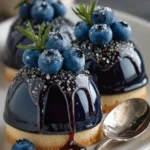
Decadent blueberry mousse domes with a vanilla cake base and a glossy midnight blue mirror glaze, garnished with fresh blueberries and edible silver leaf.
- Yield: 8 1x
Ingredients
- For the Blueberry Mousse:
- 2 cups fresh or frozen blueberries
- 1/4 cup granulated sugar
- 1 tbsp lemon juice
- 2 tsp powdered gelatin
- 2 tbsp cold water
- 1 1/4 cups heavy cream, chilled
- 1 tsp vanilla extract
- For the Vanilla Cake Base:
- 1/2 cup all-purpose flour
- 1/2 tsp baking powder
- 1/8 tsp salt
- 1/4 cup granulated sugar
- 1 large egg
- 2 tbsp unsalted butter, melted
- 2 tbsp whole milk
- 1/2 tsp vanilla extract
- For the Midnight Blueberry Mirror Glaze:
- 1/2 cup water
- 3/4 cup granulated sugar
- 1/2 cup sweetened condensed milk
- 2 tbsp light corn syrup
- 2 1/2 tsp powdered gelatin
- 3 tbsp cold water
- 6 oz white chocolate, finely chopped
- 1/2 tsp blueberry extract
- 1/2 tsp navy blue gel food coloring
- 1 drop black gel food coloring
- 1 drop violet gel food coloring
- For Garnish (optional):
- Fresh blueberries
- Edible silver leaf flakes
- Small mint leaves
Instructions
- 1. Bloom the gelatin for the mousse in cold water for 5 minutes.
- 2. Simmer the blueberries, sugar, and lemon juice for 6–8 minutes until softened. Blend until smooth and strain if desired.
- 3. Stir the bloomed gelatin into the warm blueberry purée until dissolved. Let cool to room temperature.
- 4. Whip the heavy cream to soft peaks. Fold the vanilla and cooled blueberry mixture into the whipped cream.
- 5. Prepare the cake by mixing the flour, baking powder, salt, sugar, egg, melted butter, milk, and vanilla until smooth.
- 6. Bake in a lined pan at 350°F (175°C) for 12–15 minutes. Cool completely and cut circles slightly smaller than the dome molds.
- 7. Fill silicone dome molds halfway with blueberry mousse. Press a cake round onto each dome and smooth the bottoms. Freeze for at least 6 hours or overnight.
- 8. Bloom the glaze gelatin in cold water.
- 9. Heat the water, sugar, condensed milk, and corn syrup until steaming. Remove from the heat and stir in the gelatin.
- 10. Pour the hot mixture over the white chocolate. Let stand for 2 minutes, then blend until smooth.
- 11. Add the blueberry extract and gel food coloring until a deep midnight blue color is achieved. Cool the glaze to about 90–95°F (32–35°C).
- 12. Unmold the frozen domes and place them on a wire rack over a tray.
- 13. Pour the mirror glaze evenly over each dome in one continuous motion until fully coated.
- 14. Transfer the glazed domes to serving plates and refrigerate for 1–2 hours before serving.
- 15. Garnish with fresh blueberries, edible silver leaf flakes, and mint leaves.
Nutrition
- Calories: 395
- Sugar: 34 g
- Fat: 24 g
- Carbohydrates: 42 g
- Protein: 5 g
Tried This Recipe? Leave a Comment!
Did you make this recipe? I’d love to hear how it turned out! Please leave a comment and a rating below. Your feedback helps other home cooks and supports cheerychop.com!
For more delicious inspiration, follow me on Pinterest!