Table of Contents
Caramelized Butternut Squash, Carrots, Broccoli & Yukon Potatoes with Feta, Pecans & Cranberry-Honey Glaze – A Sweet-Tart Roasted Vegetable Medley
Every fall, I find myself wandering through the Union Square Greenmarket in NYC, clutching a waxed-paper bag of just-picked apples and breathing in that crisp, earthy air. That’s where this caramelized butternut squash recipe was born — not in a fancy test kitchen, but in the middle of a bustling Saturday market with a bushel of squash, a bunch of carrots, and a craving for something warm, sweet, and deeply savory. The unique angle here is the cranberry-honey glaze: a glossy, sweet-tart ribbon that ties every roasted bite together, finished with salty feta and toasty pecans. It’s the kind of healthy fall side dish that steals the show at Thanksgiving, but comes together easily on a busy weeknight.
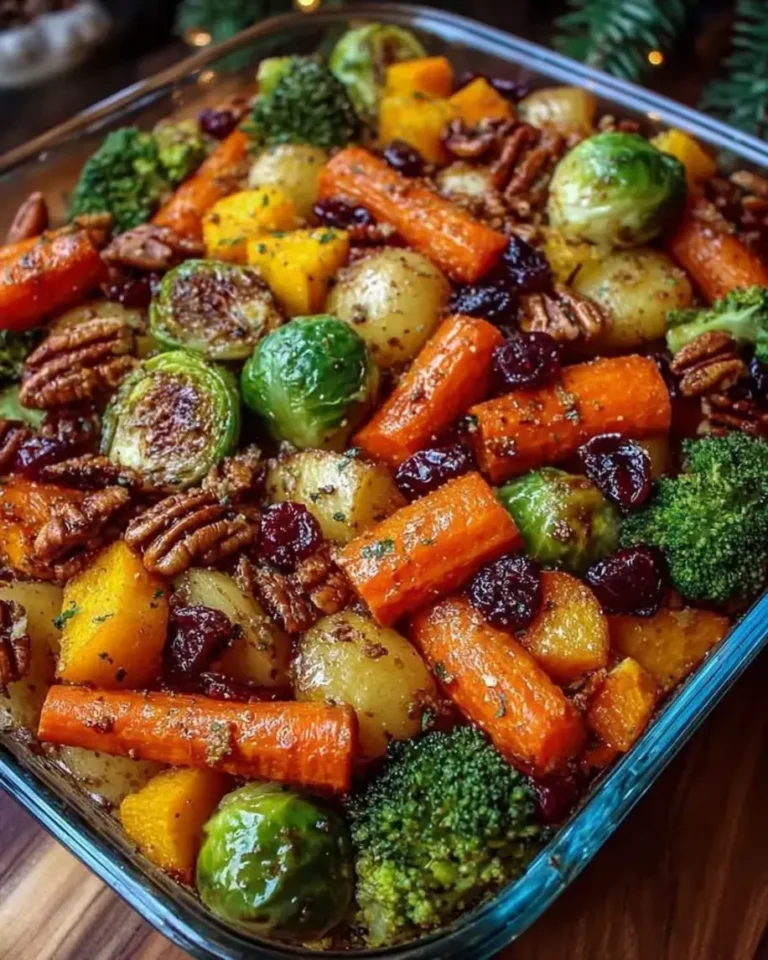
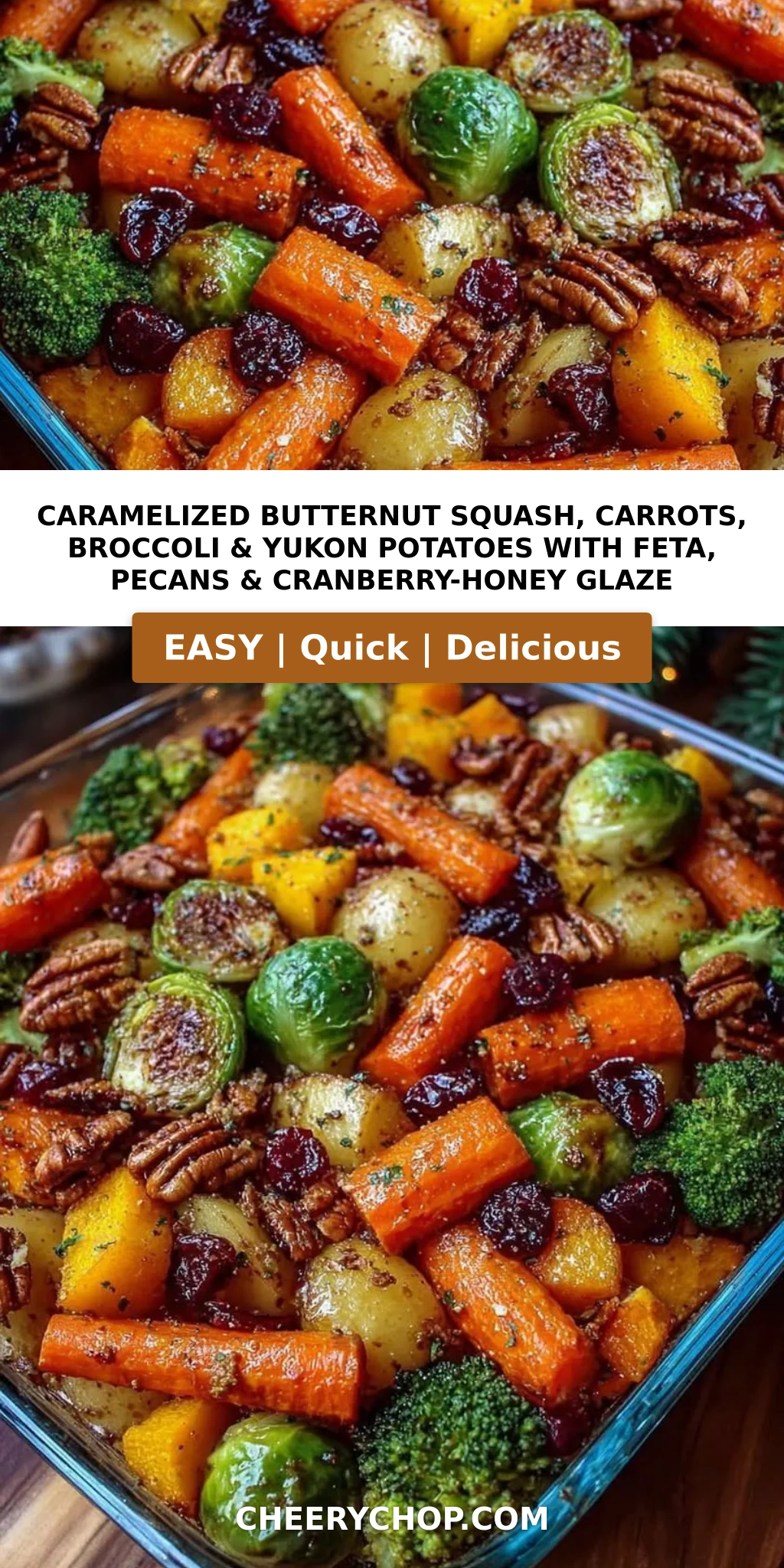
When these vegetables hit the oven, something magical happens. The butternut squash softens and caramelizes at its edges, the Yukon potatoes turn golden and crisp, the carrots concentrate into little pockets of sweetness, and the broccoli florets char ever so slightly, adding a hint of bitterness that balances the honey glaze. Then comes the drizzle — warmed dried cranberries steeped in honey, spooned over the hot vegetables so every nook gets coated. A shower of crumbled feta and chopped pecans adds creamy tang and nutty crunch. The aromas alone — roasted squash, toasted nuts, and honey — will fill your kitchen with pure autumn warmth.
As a trained chef who started in my mother’s kitchen in Morocco and later mastered French technique in Paris, I’ve learned that the best recipes are the ones that honor simple ingredients with smart methods. My version of this roasted vegetable medley is designed to give you perfect caramelization without soggy vegetables, a glaze that doesn’t make the veggies weep, and toppings that stay crisp, not soggy. I’ll share my chef-tested trick for spacing vegetables on the pan and the one common mistake that can turn your glaze into a sticky mess. Let’s make this feta pecan squash the star of your table.
Why This Caramelized Butternut Squash Recipe Is the Best
The flavor secret here is the cranberry honey glazed vegetables approach — I warm dried cranberries directly in honey, which both rehydrates them and infuses the honey with tart, fruity notes. This isn’t just a drizzle; it’s a concentrated burst of flavor that contrasts beautifully with the earthy roasted squash and potatoes. Growing up in Morocco, my mother would often finish roasted vegetables with a touch of honey and preserved lemons — that sweet-sour balance is something I’ve carried into my French training and now into my NYC cooking. The feta adds the necessary salty edge, while pecans bring buttery warmth and crunch.
What sets this apart in texture is the way I prep the vegetables for roasting. I cut the squash and potatoes into uniform ¾-inch cubes so they cook evenly with the carrots and broccoli, and I toss everything generously in olive oil — not so much that they steam, but enough to encourage deep, golden browning. I also make sure the baking sheet isn’t overcrowded. A crowded pan traps steam, and steam is the enemy of caramelization. By giving each piece a little breathing room, you get those gorgeous browned edges that make this dish so addictive.
This recipe is foolproof and fast, making it perfect for both novice cooks and experienced home chefs. The prep takes just 15 minutes, the oven does most of the work, and the glaze comes together in one small saucepan while the vegetables roast. Even if you’re juggling a turkey, a ham, or just a busy Tuesday dinner, this side dish fits right in. I’ve tested it a dozen times in my tiny NYC apartment kitchen, and it works every single time — no special equipment, no hard-to-find ingredients, just pure, caramelized goodness.
Caramelized Butternut Squash Recipe Ingredients
I pick up most of these ingredients at my local farmers market in Brooklyn, but everything here is available at any US grocery store. The butternut squash should feel heavy for its size with a firm, tan skin. Yukon gold potatoes are my go-to for roasting because they hold their shape and get creamy on the inside. And the dried cranberries? I always look for ones with no added sugar — the honey will provide plenty of sweetness.
Ingredients List
- 1 small butternut squash, peeled and cubed
- 3 carrots, chopped
- 2 cups broccoli florets
- 2 Yukon gold potatoes, cubed
- 1/4 cup olive oil
- 1/2 cup dried cranberries
- 1/4 cup honey
- 1/4 cup pecans, chopped
- 1/2 cup crumbled feta cheese
- Salt and pepper to taste
Ingredient Spotlight
Butternut Squash: The star of this caramelized butternut squash recipe. Look for a squash with a long neck — it’s easier to peel and has fewer seeds. When roasting, the natural sugars concentrate and create those golden, caramelized edges that make this dish so irresistible. If you can’t find butternut, you can substitute with honeynut squash (sweeter, thinner skin) or peeled and cubed sugar pumpkin. Both will roast in the same time frame.
Yukon Gold Potatoes: These are the unsung heroes of the roasted vegetable medley. Their medium-starch content means they get crispy on the outside while staying creamy and tender inside — unlike russets, which can become too fluffy, or red potatoes, which can turn waxy. I always leave the skin on for extra texture, but you can peel them if you prefer a more uniform look. For a lower-carb option, substitute with cauliflower florets; just add them halfway through roasting so they don’t overcook.
Dried Cranberries and Honey: This duo creates the signature cranberry honey glazed vegetables effect. The dried cranberries rehydrate gently in the warm honey, releasing their tart juices and creating a glaze that’s both glossy and deeply flavored. For a variation, try using dried tart cherries or chopped dried apricots — both work beautifully with the honey. If you’re using a very thick honey (like a dark buckwheat honey), warm it with a teaspoon of water to thin it slightly.
Feta Cheese: The salty, tangy foil to all that sweetness. I prefer a block of feta packed in brine — it’s creamier and more flavorful than pre-crumbled. For a dairy-free version, omit the feta and add an extra sprinkle of flaky sea salt and a handful of fresh parsley. Vegan feta alternatives also work well here, especially ones made from almonds or cashews.
| Original Ingredient | Best Substitution | Flavor / Texture Impact |
|---|---|---|
| Butternut squash | Honeynut squash or sugar pumpkin | Sweeter, thinner skin, similar roast time |
| Yukon gold potatoes | Cauliflower florets (add halfway) | Lower carb, lighter texture, less creamy |
| Feta cheese | Goat cheese or dairy-free feta | Goat cheese is tangier; dairy-free is less creamy |
| Pecans | Walnuts or almonds | Walnuts are slightly bitter; almonds are crunchier |
| Dried cranberries | Dried tart cherries or chopped dried apricots | Cherries are more tart; apricots are more floral |
How to Make Caramelized Butternut Squash, Carrots, Broccoli & Yukon Potatoes — Step-by-Step
Trust me — if you can chop a few vegetables and stir a saucepan, you can absolutely nail this dish. I’ve broken it down into four easy steps, complete with visual cues and pro tips so you feel confident every step of the way.
Step 1: Prep and Season the Vegetables
Preheat your oven to 425°F (220°C). Peel the butternut squash carefully — I like to use a sharp Y-shaped peeler for the skin, then slice off the top and bottom, cut the squash in half, scoop out the seeds, and cube the flesh into ¾-inch pieces. Chop the carrots into similar-sized rounds, cut the broccoli into bite-sized florets, and cube the Yukon gold potatoes (skin on or off) into ¾-inch cubes. In a large bowl, toss all the vegetables with ¼ cup olive oil, a generous pinch of salt, and a few grinds of black pepper until every piece is evenly coated. Spread them in a single layer on a large baking sheet — use two sheets if needed to avoid overcrowding.
💡 Sara’s Pro Tip: For even browning, make sure the cut sides of the squash and potatoes are touching the pan. The flat surfaces caramelize better than rounded ones. And don’t skimp on the salt — it helps draw out moisture, which concentrates flavor and aids browning.
Step 2: Roast to Caramelized Perfection
Roast the vegetables for 25–30 minutes, stirring carefully with a spatula at the halfway mark (around 15 minutes). You’re looking for deep golden-brown edges on the squash and potatoes, tender-but-not-mushy carrots, and broccoli that’s charred in spots but still bright green. The Yukon potatoes should be crispy on the outside and creamy when pierced with a fork. Every oven runs a little differently, so start checking at 22 minutes — especially if your broccoli florets are on the smaller side.
⚠️ Common Mistake to Avoid: Overcrowding the pan. If the vegetables are piled on top of each other, they’ll steam instead of roast. Use two baking sheets if needed, and rotate them in the oven halfway through for even cooking.
Step 3: Make the Cranberry-Honey Glaze
While the vegetables roast, combine ½ cup dried cranberries and ¼ cup honey in a small saucepan. Warm over low heat, stirring occasionally, for 3–5 minutes, until the cranberries soften and plump up slightly and the honey becomes thin and fragrant. Don’t let it boil — you just want a gentle warm. If the glaze seems too thick, add a teaspoon of warm water to loosen it. Set aside off the heat while the vegetables finish roasting.
💡 Sara’s Pro Tip: Use a silicone spatula to scrape every last drop of glaze out of the pan. That sweet-tart honey is liquid gold, and you don’t want to waste a single drizzle.
Step 4: Glaze and Garnish
When the vegetables are done, transfer them to a serving platter or leave them on the baking sheet for a more rustic presentation. Drizzle the warm cranberry-honey glaze evenly over the top — the residual heat will help it soak into the vegetables. Sprinkle with ¼ cup chopped pecans and ½ cup crumbled feta cheese. Serve warm, while the feta is still soft and the pecans are crunchy.
⚠️ Common Mistake to Avoid: Adding the pecans too early. If you toss them with the hot vegetables and glaze right away, they’ll absorb moisture and lose their crunch. Sprinkle them on just before serving for the best texture.
| Step | Action | Duration | Key Visual Cue |
|---|---|---|---|
| 1 | Prep and season vegetables | 15 minutes | Uniform ¾-inch cubes, evenly coated in oil |
| 2 | Roast vegetables | 25–30 minutes | Golden edges, tender interior, charred broccoli |
| 3 | Make cranberry-honey glaze | 3–5 minutes | Cranberries plump, honey thin and fragrant |
| 4 | Glaze and garnish | 2 minutes | Glaze evenly distributed, feta and pecans on top |
Serving & Presentation
I love serving this roasted vegetable medley family-style on a large wooden platter, which lets the vibrant orange, green, and gold colors really pop. A final sprinkle of flaky sea salt (like Maldon) right before serving adds a delicate crunch and enhances every flavor. In my Paris training, we’d call this a mise en place triumph — everything prepped, roasted, and glazed to perfection. For a touch of freshness, scatter a few fresh parsley leaves or a drizzle of extra-virgin olive oil on top.
This dish is incredibly versatile. It’s a standout healthy fall side dish alongside roast chicken, turkey, pork chops, or even a simple seared fish. I’ve also served it as a vegetarian main course with a side of warm couscous or quinoa — the feta pecan squash combination is hearty enough to satisfy. If you’re hosting a Thanksgiving or Friendsgiving, this recipe scales beautifully: just double the ingredients and use two baking sheets.
| Pairing Type | Suggestions | Why It Works |
|---|---|---|
| Side Dish | Roast turkey, herb-crusted pork loin, lemon-herb chicken | The sweetness and tang brighten rich, savory meats |
| Sauce / Dip | Tahini yogurt, balsamic reduction, lemon vinaigrette | Adds creaminess or acidity to balance the glaze |
| Beverage | Dry Riesling, hard cider, pomegranate spritzer | Acidity and fruit notes echo the cranberry-honey |
| Garnish | Fresh parsley, flaky sea salt, extra honey drizzle | Adds color, texture, and a final flavor pop |
Make-Ahead, Storage & Reheating
In my busy NYC life, I know the value of a recipe that works with my schedule. You can prep the vegetables and make the glaze up to a day ahead — just store them separately and assemble right before serving. The roasted vegetables also reheat beautifully, so don’t hesitate to make a double batch for leftovers.
| Method | Container | Duration | Reheating Tip |
|---|---|---|---|
| Refrigerator | Airtight container | Up to 4 days | Reheat in a 400°F oven for 8–10 minutes, or in a skillet with a splash of water |
| Freezer | Freezer-safe container or bag | Up to 2 months | Thaw in fridge overnight, then reheat in oven at 375°F for 12–15 minutes |
| Make-Ahead | Store prepped veggies and glaze separately | Up to 24 hours in advance | Roast veggies just before serving; warm glaze gently on the stove |
For the crispiest reheated vegetables, skip the microwave — it makes them soggy. Instead, spread leftovers on a baking sheet and warm them in a 400°F oven until hot and slightly re-crisped, about 8–10 minutes. If you’re reheating the glaze separately, do it gently on the stove with a teaspoon of water to bring back its glossy consistency.
Variations & Easy Swaps
| Variation | Key Change | Best For | Difficulty Impact |
|---|---|---|---|
| Moroccan Spice | Add 1 tsp cumin, 1/2 tsp cinnamon, and 1/4 tsp cayenne to the oil | Warm, aromatic depth — amazing with lamb or couscous | No change (Easy) |
| Dairy-Free / Vegan | Omit feta; use 2 tbsp nutritional yeast + 1/4 cup toasted pumpkin seeds | Plant-based, creamy-umami flavor without dairy | No change (Easy) |
| Maple-Dijon | Replace honey with maple syrup; add 1 tbsp Dijon mustard to glaze | Tangy-sweet twist, perfect with roasted poultry | No change (Easy) |
Moroccan Spice Variation
This variation is a nod to my childhood in Morocco, where warm spices like cumin and cinnamon are the backbone of so many vegetable dishes. Simply stir 1 teaspoon of ground cumin, ½ teaspoon of cinnamon, and a pinch of cayenne into the olive oil before tossing with the vegetables. The spices toast as the vegetables roast, releasing an incredible aroma that fills your kitchen. The cranberry-honey glaze still works beautifully — the sweetness plays off the earthy, smoky spices. Serve this version alongside roasted lamb or over a bed of fluffy couscous with preserved lemon and olives.
Dairy-Free / Vegan Variation
To make this dish dairy-free and vegan, simply omit the feta cheese. I’ve tested this with a few different substitutes, and my favorite is a combination of 2 tablespoons of nutritional yeast (for a cheesy, umami flavor) and ¼ cup of toasted pumpkin seeds (for crunch). The nutritional yeast has a savory, almost Parmesan-like quality that complements the sweet glaze surprisingly well. You can also use a store-bought vegan feta — just crumble it on right before serving. The rest of the recipe remains unchanged, and the dish is just as vibrant and satisfying.
Maple-Dijon Variation
For a tangy-sweet twist that’s perfect for fall, replace the honey with pure maple syrup and stir 1 tablespoon of Dijon mustard into the glaze along with the dried cranberries. The mustard adds a subtle sharpness that cuts through the richness of the roasted vegetables and feta. I picked up this trick at a farm-to-table spot in Brooklyn — they served a similar glaze on roasted Brussels sprouts, and I knew it would work perfectly here. This version pairs especially well with roast chicken or pork tenderloin.
How do you prevent the vegetables from getting too soggy when caramelizing butternut squash and potatoes together?
The number one trick is to not overcrowd your baking sheet. When vegetables are piled on top of each other, they steam rather than roast, which prevents caramelization and leads to a soggy texture. Use two baking sheets if you need to — each piece should have a little breathing room. Another key factor is cutting the vegetables into uniform ¾-inch cubes so they cook at the same rate. Toss them generously in olive oil (about 1 tablespoon per cup of vegetables), and make sure your oven is fully preheated to 425°F before the pan goes in. Stirring halfway through also helps ensure even browning on all sides. Finally, resist the urge to cover the pan — you want the steam to escape, not get trapped.
What can I substitute for feta cheese in this roasted vegetable dish?
If you don’t have feta or want a dairy-free option, there are several great substitutes. Goat cheese is the closest in texture and tanginess — it crumbles similarly and melts slightly into the warm vegetables, adding a creamy, earthy flavor. For a dairy-free alternative, I recommend using a combination of 2 tablespoons of nutritional yeast (for that savory, cheesy note) and ¼ cup of toasted pumpkin seeds (for crunch). You can also find excellent vegan feta alternatives made from almonds or cashews at most grocery stores — just crumble them on right before serving. If you’re simply out of feta and want to stay with dairy, ricotta salata or cotija cheese both work well, though cotija is saltier, so use a lighter hand.
How long should I roast the carrots and broccoli to keep them from burning with the squash and potatoes?
In this recipe, all the vegetables roast together at 425°F for 25–30 minutes, and they finish at the same time if you cut them to the right size. The key is to cut the carrots into ¾-inch rounds (similar to the squash and potato cubes) and keep the broccoli florets slightly larger — about 1½ inches across — so they don’t cook too quickly and burn. Stir the vegetables at the 15-minute mark, which redistributes the heat and prevents any single piece from scorching. If you notice your broccoli is browning faster than the rest, you can add it to the pan 10 minutes after the other vegetables start roasting. But honestly, with the uniform cut and a good stir, they all finish beautifully together — the broccoli gets charred edges without burning.
Can I make the cranberry-honey glaze ahead of time and reheat it before serving?
Absolutely! The cranberry-honey glaze is actually perfect for making ahead. Simply combine the dried cranberries and honey in a small saucepan, warm them gently over low heat for 3–5 minutes until the cranberries soften, then let the glaze cool completely. Transfer it to an airtight container and store it in the refrigerator for up to 5 days. When you’re ready to serve, reheat the glaze gently on the stove over low heat — add a teaspoon of warm water if it has thickened too much. Stir until it’s glossy and pourable again. You can also warm it in the microwave in 10-second bursts, stirring between each. The key is to use low, gentle heat so the honey doesn’t scorch or crystallize.
Can I use a different type of squash in this recipe?
Yes, you can easily swap the butternut squash for another winter squash. Honeynut squash is my top recommendation — it’s smaller, sweeter, and has thinner skin, so you can even leave the skin on if you like. Sugar pumpkin also works beautifully; just peel it and cube it the same way. Acorn squash is another option, though it’s a little less sweet and has a slightly firmer texture. The roasting time will stay roughly the same for all of these — about 25–30 minutes at 425°F — since you’ll cut them into the same ¾-inch cubes. For a summer twist, you could use peeled and cubed sweet potatoes or even regular orange-fleshed sweet potatoes, which caramelize even more intensely than butternut squash.
Is this recipe gluten-free?
Yes, this recipe is naturally gluten-free! All the ingredients — butternut squash, carrots, broccoli, Yukon gold potatoes, olive oil, dried cranberries, honey, pecans, and feta cheese — are gluten-free. Just be sure to check the label on your dried cranberries and feta, as some brands may include additives or cross-contamination warnings. As always, if you’re serving someone with celiac disease or a severe gluten sensitivity, verify the labels of every packaged ingredient. The good news is that this dish is so naturally wholesome that you likely won’t need to make any substitutions. It’s a wonderful gluten-free healthy fall side dish that everyone can enjoy.
What other nuts can I use instead of pecans?
Pecans are my favorite for their buttery sweetness, but there are plenty of other nuts that work beautifully in this recipe. Walnuts are the most obvious swap — they have a slightly earthy, bitter edge that contrasts well with the sweet glaze. Coarsely chopped almonds add more crunch and a milder flavor. For a more festive twist, try candied walnuts or spiced pecans. If you have a nut allergy, you can substitute toasted pumpkin seeds (pepitas) or sunflower seeds — both add crunch without any nut concerns. To toast any nut or seed, simply spread them on a baking sheet and toast at 350°F for 5–7 minutes, shaking halfway through, until golden and fragrant. Let them cool before sprinkling on the dish.
Can I add protein to make this a main dish?
Definitely! This roasted vegetable medley is hearty enough to serve as a vegetarian main, but you can easily add protein to make it more substantial. Grilled or roasted chicken thighs (sliced and arranged on top) are a natural pairing. For a plant-based protein, add a can of drained and rinsed chickpeas to the baking sheet during the last 15 minutes of roasting — they’ll get crispy and golden. You can also serve the vegetables over a bed of cooked quinoa, farro, or couscous, which adds both protein and fiber. For a more decadent option, top with a fried or poached egg — the runny yolk mingles with the glaze and feta for an incredible sauce.
Share Your Version!
I absolutely love hearing how this caramelized butternut squash recipe turns out in your kitchen. Did you try the Moroccan spice variation? Or maybe you added chickpeas to make it a main dish? Drop a star rating and a comment below — your feedback helps me create more recipes you’ll love, and it helps other readers know what to expect. If you share a photo on Instagram or Pinterest, tag me at @cheerychop so I can see your beautiful creation. I personally read every comment and love answering your questions.
One question I love to ask: what’s your favorite fall side dish memory? For me, it’s the smell of my mother’s roasted vegetables with honey and cumin, filling our kitchen in Casablanca. I hope this feta pecan squash and cranberry-honey glaze brings a little of that warmth to your home. From my NYC kitchen to yours — I hope this recipe brings as much warmth to your table as it does to mine. — Sara 🧡
💬 What’s your favorite fall vegetable combination? Leave a comment below and let me know!
⭐ If you loved this cranberry honey glazed vegetables recipe, please give it a 5-star rating — your support means the world to me!
Love This Recipe? Save It to Pinterest!
If you enjoyed this Caramelized Butternut Squash, Carrots, Broccoli & Yukon Potatoes with Feta, Pecans & Cranberry-Honey Glaze recipe, don’t let it get lost in your browser tabs! 😄 Pin it now so you can find it again anytime — and explore hundreds more tried-and-tested recipes waiting for you on my Pinterest boards.
👉 Follow Sara on Pinterest @chefrecipes2
📌 Pin this recipe · 🔁 Re-pin your favorites · 💬 Tag me when you make it — I love seeing your creations!
Caramelized Butternut Squash, Carrots, Broccoli & Yukon Potatoes with Feta, Pecans & Cranberry-Honey Glaze
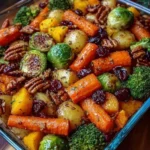
A roasted vegetable medley with a sweet-tart cranberry honey glaze, topped with feta and pecans.
- Prep Time: 15 minutes
- Cook Time: 30 minutes
- Total Time: 45 minutes
- Yield: 4 1x
- Method: Side Dish
- Cuisine: American
Ingredients
- 1 small butternut squash, peeled and cubed
- 3 carrots, chopped
- 2 cups broccoli florets
- 2 Yukon gold potatoes, cubed
- 1/4 cup olive oil
- 1/2 cup dried cranberries
- 1/4 cup honey
- 1/4 cup pecans, chopped
- 1/2 cup crumbled feta cheese
- Salt and pepper to taste
Instructions
- Preheat oven to 425°F (220°C).
- Toss squash, carrots, broccoli, and potatoes with olive oil, salt, and pepper. Spread in a single layer on a baking sheet.
- Roast for 25-30 minutes until tender and caramelized, stirring halfway.
- In a small saucepan, combine cranberries and honey. Warm over low heat until cranberries soften.
- Drizzle glaze over roasted vegetables, then top with pecans and feta. Serve warm.
Notes
For extra crunch, add pecans after roasting.
Nutrition
- Calories: 380
- Sugar: 20g
- Fat: 18g
- Carbohydrates: 45g
- Protein: 8g
Tried This Recipe? Leave a Comment!
Did you make this recipe? I’d love to hear how it turned out! Please leave a comment and a rating below. Your feedback helps other home cooks and supports cheerychop.com!
For more delicious inspiration, follow me on Pinterest!