Table of Contents
Layered Sweet Potato, Butternut Squash, Carrot Lasagna with Feta, Walnuts, and Cranberry-Honey Glaze – A Healthy Fall Lasagna That Will Wow Your Table
Growing up in Morocco, my mother would layer vegetables with preserved lemons and olives in slow-cooked tagines that filled our kitchen with warmth. Years later, after training at Le Cordon Bleu in Paris and settling in New York City, I found myself craving that same depth of flavor in a form that feels both comforting and elegant. This layered sweet potato, butternut squash, carrot lasagna with feta, walnuts, and cranberry-honey glaze is my ode to autumn — a healthy fall lasagna that swaps heavy meat sauce for roasted root vegetables and a sweet-tart glaze that ties everything together. The first time I served it at a dinner party in my Brooklyn apartment, guests couldn’t believe it was meatless. That’s when I knew this vegetable lasagna recipe was a keeper.
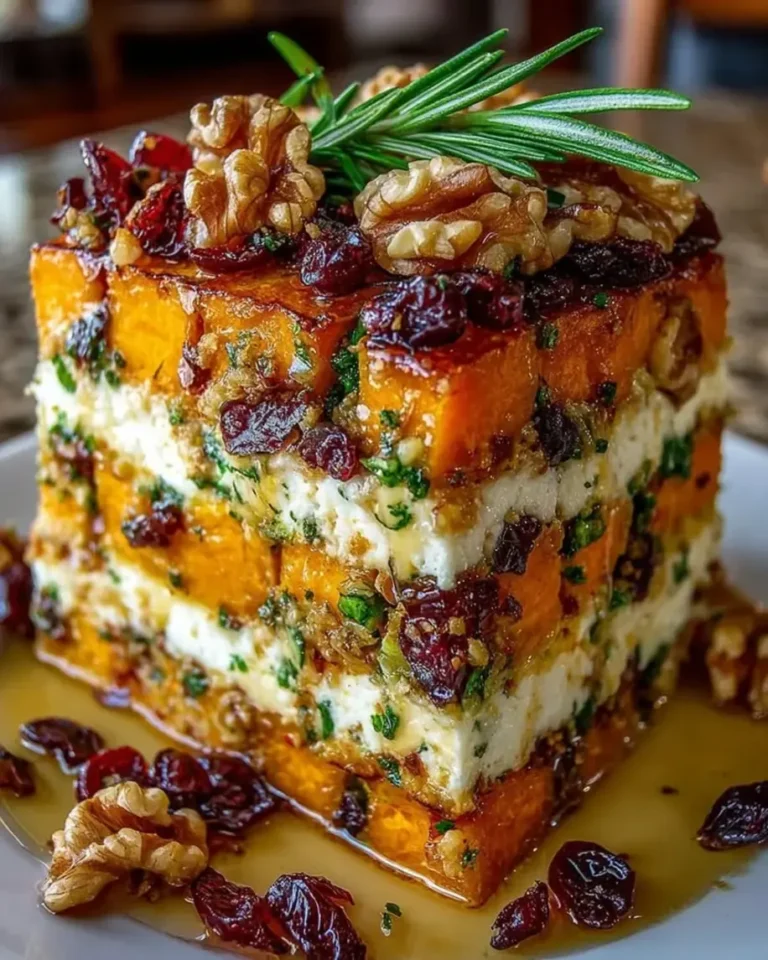
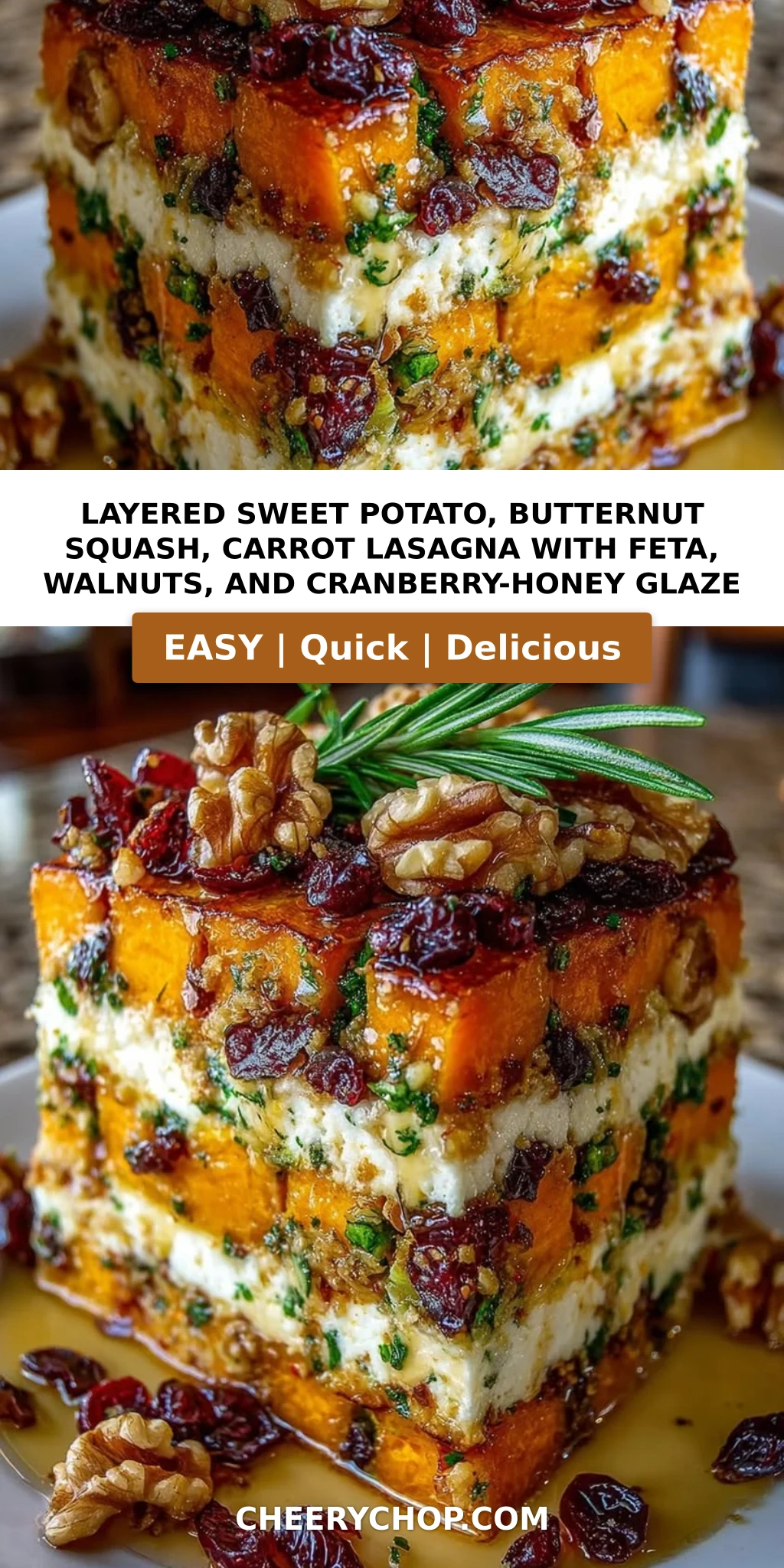
Imagine soft, caramelized layers of sweet potato and butternut squash nestled between no-boil lasagna noodles, punctuated by creamy ricotta, salty feta, and crunchy walnuts. The cranberry-honey glaze weaves through every layer, its tartness cutting through the richness like a stream of light. When you slice into the finished lasagna, you see ribbons of orange and gold, with bubbles of melted mozzarella on top. The aroma alone — roasted squash, honey, and a hint of toasted nuts — will draw everyone to the kitchen. It’s a dish that satisfies the soul while celebrating the season’s best produce.
What sets this feta walnut lasagna apart is the technique I learned in Paris: roasting the vegetables before layering them. This step intensifies their sweetness and prevents a watery lasagna. Plus, I use a cranberry honey glaze lasagna approach that adds a festive touch without overwhelming the dish. 💡 Sara’s Pro Tip: Don’t skip roasting — it’s the secret to concentrated flavor and perfect texture. And a common mistake: overloading the glaze can make it too sweet, so go easy and taste as you go. Whether you’re a seasoned cook or a beginner, this recipe is designed to impress with minimal fuss.
Why This Sweet Potato Butternut Squash Lasagna Recipe Is the Best
The Flavor Secret — My Moroccan roots taught me to balance sweet and savory. Here, the natural sugars of roasted sweet potatoes and butternut squash meet the tang of feta and the earthiness of walnuts. The cranberry-honey glaze, inspired by North African jams, adds a bright, fruity note that makes every bite sing. I’ve tested this with countless friends — even my Parisian chef mentors approved!
Perfected Texture — Pre-roasting the vegetables (a classic French technique) ensures they hold their shape and release excess moisture. The no-boil noodles absorb just enough sauce to soften without turning mushy. The result? A lasagna that slices cleanly and offers a satisfying interplay of creamy, crunchy, and tender.
Foolproof & Fast — No need to pre-boil noodles. The assembly is straightforward, and the recipe works beautifully for meal prep. I’ve streamlined every step so that even a busy weeknight cook can pull it off. Plus, it’s packed with fiber and protein — a true healthy fall lasagna that feels indulgent but is secretly good for you.
Vegetable Lasagna Recipe Ingredients
I find the best sweet potatoes at the Union Square Greenmarket in October, when they’re just harvested. In Morocco, my mother would use dates instead of cranberries, but here in NYC, dried cranberries are my go-to for that festive zip. Let’s gather what you need.
Ingredients List
- For the Vegetables: 2 large sweet potatoes, peeled and thinly sliced (about 1/8-inch thick)
- 1 large butternut squash, peeled, seeded, and thinly sliced
- 3 large carrots, peeled and thinly sliced
- 3 tablespoons olive oil
- Salt and black pepper to taste
- For the Cheese Layer: 1 (15-ounce) container ricotta cheese
- 1 large egg, lightly beaten
- 1/3 cup chopped fresh parsley
- 1/2 cup crumbled feta cheese
- 1/4 cup chopped walnuts
- For the Cranberry-Honey Glaze: 1 cup dried cranberries
- 1/2 cup honey
- 1/4 cup water
- For the Lasagna: 12 no-boil lasagna noodles
- 2 cups shredded mozzarella cheese
- 1/2 cup crumbled feta cheese for topping
- 1/4 cup chopped walnuts for topping
Ingredient Spotlight
Sweet Potato — Look for firm, unblemished roots. Their natural creaminess forms the backbone of this dish. If you can’t find sweet potatoes, use a firm pumpkin or kabocha squash instead; the texture will be slightly drier but still delicious.
Butternut Squash — A heavy squash with a thick neck yields the most flesh. To save time, buy pre-cut cubes and slice them thinly. Yes, it’s more expensive, but this is a holiday-worthy dish. Substitution: any orange-fleshed winter squash works.
Feta Cheese — Greek feta in brine is best; it crumbles easily and adds a salty tang. For a dairy-free version, use a firm tofu-based feta or omit and increase walnuts for texture.
Cranberries & Honey — Dried cranberries are less tart than fresh; I use them for consistency. Honey from your local farmers market will have more floral notes. Together, they create a glaze that’s not overly sweet — just enough to complement the squash.
| Original Ingredient | Best Substitution | Flavor / Texture Impact |
|---|---|---|
| Sweet potato | Kabocha squash or pumpkin | Slightly drier but equally sweet; slice thinner. |
| Butternut squash | Acorn squash or pre-cut cubes | More delicate flavor; reduce roasting time by 5 mins. |
| Feta cheese | Goat cheese or dairy-free feta | Goat cheese is tangier; vegan feta is milder. |
| Dried cranberries | Dried cherries or currants | Sweeter or tarter; adjust honey accordingly. |
| Walnuts | Pecans or almonds | Pecans are softer; almonds give extra crunch. |
How to Make Layered Sweet Potato, Butternut Squash, Carrot Lasagna — Step-by-Step
Let’s walk through it together. I promise you’ll feel like a pro by the end.
Step 1: Roast the Vegetables
Preheat your oven to 375°F. Lightly grease a 9×13-inch baking dish. In a large bowl, toss the sliced sweet potatoes, butternut squash, and carrots with olive oil, salt, and pepper. Spread in a single layer on two baking sheets. Roast for 15–20 minutes, until just tender — they should still hold their shape. Remove and set aside.
💡 Sara’s Pro Tip: Don’t over-roast — the vegetables will cook further in the lasagna. Aim for a slight resistance when pierced with a fork.
Step 2: Make the Cheese Filling
In a medium bowl, combine the ricotta, beaten egg, parsley, 1/2 cup feta, and 1/4 cup chopped walnuts. Mix well. This creamy layer balances the sweetness of the glaze.
⚠️ Common Mistake to Avoid: Don’t overmix the ricotta — it can become gluey. Stir just until combined.
Step 3: Prepare the Cranberry-Honey Glaze
In a small saucepan, combine the dried cranberries, honey, and water. Bring to a simmer over medium heat, stirring occasionally. Cook for 5–7 minutes until cranberries plump and the mixture thickens slightly. Let cool — it will thicken more as it cools.
💡 Sara’s Pro Tip: If you want a smoother glaze, purée it with an immersion blender after cooling. I prefer it chunky for texture.
Step 4: Assemble the Lasagna
Spread a thin layer of the glaze on the bottom of the greased dish. Top with a layer of roasted vegetables (about one-third), then 4 lasagna noodles (break to fit if needed). Spread half the ricotta mixture, then drizzle with about one-third of the remaining glaze. Repeat layers: vegetables, noodles, ricotta, glaze. For the final layer, top with the last noodles, the rest of the vegetables, any leftover glaze, and the mozzarella, feta, and walnuts.
⚠️ Common Mistake to Avoid: Don’t drown the noodles in glaze — a thin layer is enough. Too much liquid will make the lasagna soggy.
Step 5: Bake and Rest
Cover tightly with foil and bake for 40 minutes. Remove foil and bake for another 15–20 minutes, until the cheese is bubbly and golden. Let rest for 10 minutes before slicing — this sets the layers.
💡 Sara’s Pro Tip: Resting is non-negotiable! Cutting too early leads to a runny mess. I use that time to set the table and pour a glass of wine.
| Step | Action | Duration | Key Visual Cue |
|---|---|---|---|
| 1 | Roast vegetables | 15–20 mins | Edges lightly browned, tender but firm |
| 2 | Mix cheese filling | 5 mins | Uniformly blended, not overmixed |
| 3 | Simmer glaze | 5–7 mins | Cranberries plump, syrup thickens |
| 4 | Assemble lasagna | 10 mins | Even layers, no gaps |
| 5 | Bake (covered) | 40 mins | Bubbling around edges |
| 6 | Bake (uncovered) | 15–20 mins | Golden, bubbly cheese |
| 7 | Rest | 10 mins | Set, slice holds shape |
Serving & Presentation
This lasagna is a showstopper on any table. I love serving it straight from the baking dish, family-style, with a sprinkle of fresh parsley or a few extra walnuts on top. For a holiday spread, pair it with a crisp green salad dressed in lemon vinaigrette — the acidity cuts through the richness beautifully. In Morocco, we’d serve a similar dish with harissa on the side for heat; here, a dollop of labneh or Greek yogurt works wonders.
When plating, use a wide spatula to lift each slice carefully — the layers are tender. Garnish with a drizzle of extra honey and a few fresh cranberries if you’re feeling fancy. I like to let the lasagna rest for exactly 10 minutes; it makes the slices picture-perfect.
| Pairing Type | Suggestions | Why It Works |
|---|---|---|
| Side Dish | Simple arugula salad with lemon, roasted Brussels sprouts, sautéed kale | Fresh, bitter greens balance sweetness |
| Sauce / Dip | Labneh, Greek yogurt, or a drizzle of pomegranate molasses | Creaminess and tang contrast the glaze |
| Beverage | Dry Riesling, unoaked Chardonnay, or sparkling apple cider | Acid and bubbles cut richness |
| Garnish | Fresh parsley, chopped chives, toasted pumpkin seeds, extra walnut pieces | Adds color, crunch, and freshness |
Make-Ahead, Storage & Reheating
As a busy NYC food blogger, I rely on make-ahead meals. This lasagna is a dream for that — you can assemble it a day early and bake when ready. The flavors meld beautifully overnight. Here’s how I handle storage.
| Method | Container | Duration | Reheating Tip |
|---|---|---|---|
| Refrigerator | Covered dish or airtight container | Up to 4 days | Reheat covered at 350°F for 15–20 mins, then uncover for 5 mins to crisp top |
| Freezer | Assembled unbaked or baked, tightly wrapped in foil + plastic wrap | Up to 3 months | Thaw overnight in fridge, then bake as directed (add 10 mins extra if frozen) |
| Make-Ahead | Assemble in dish, cover with foil, refrigerate | Up to 24 hours in advance | Bake directly from fridge; add 10–15 mins to covered time |
💡 Sara’s Pro Tip for reheating: If the walnuts on top have softened after storage, sprinkle a few fresh walnuts before the final uncovered bake — they’ll toast up nice and crunchy. Also, add a splash of water or broth around the edges if the lasagna looks dry before reheating.
Variations & Easy Swaps
| Variation | Key Change | Best For | Difficulty Impact |
|---|---|---|---|
| Moroccan Spice Twist | Add 1 tsp ras el hanout or cinnamon + cumin to the vegetable oil | Warming, exotic flavor profile | Easy |
| Gluten-Free / Dairy-Free | Use gluten-free lasagna noodles; replace ricotta with cashew cream, omit feta or use vegan feta | Dietary restrictions | Medium — cashew cream needs soaking |
| Seasonal Spring Version | Swap sweet potato and squash for zucchini and yellow squash; use fresh berries instead of cranberries | Summer / spring meals | Easy — adjust roasting times to 10 mins |
Moroccan Spice Twist
My mother would approve! Tossing the vegetables with a pinch of ras el hanout (a North African spice blend) or just cinnamon and cumin adds a warm, earthy note that pairs beautifully with the honey glaze. The spices deepen as they roast — it’s like bringing a little bit of Marrakech to your kitchen. Start with 1 teaspoon and adjust to taste.
Gluten-Free / Dairy-Free Version
For my gluten-free friends, use your favorite GF lasagna noodles (I like the lentil-based ones). For dairy-free, blend 1 cup raw cashews (soaked 4 hours) with 1/4 cup water, 2 tbsp lemon juice, and salt until creamy — that replaces the ricotta. Omit feta or use a plant-based alternative. The walnuts still provide crunch, and the result is surprisingly rich.
Seasonal Spring Zucchini Version
When I see summer squash at the NYC farmers market, I make this lighter version. Replace sweet potato and butternut squash with thinly sliced zucchini and yellow squash. Roast for just 10 minutes (they release more water). Use fresh raspberries or blueberries instead of dried cranberries in the glaze — it’s brighter and perfect for a warm-weather dinner.
Can I make this layered vegetable lasagna ahead of time and reheat it without the walnuts getting soggy?
Yes, absolutely! The key is to add a portion of the walnuts fresh when reheating. Assemble the lasagna completely (including all toppings) but when you’re ready to reheat, check the walnuts. If they’ve softened during storage, remove the original walnuts and add a fresh sprinkle of 1/4 cup chopped walnuts before the final uncovered bake. Reheat covered at 350°F for 20 minutes, then uncover, add fresh walnuts, and bake another 5 minutes until they toast. This way you get that signature crunch every time. You can also store the walnut topping separately and add it right before the final bake.
What can I substitute for feta cheese in this sweet potato and butternut squash lasagna?
Several options work beautifully. Goat cheese is my top pick — it has a similar tangy creaminess and crumbles nicely. Use the same amount (1/2 cup in the ricotta mix plus 1/2 cup for topping). For a milder flavor, try cottage cheese (drained) or a dairy-free feta made from tofu. If you want to keep it nutty, increase the walnuts in the filling to 1/3 cup and add a tablespoon of nutritional yeast for a cheesy note. The ricotta layer already provides creaminess, so omitting feta entirely and adding extra fresh herbs like dill or mint works too.
How do I prevent the cranberry-honey glaze from making the lasagna too sweet?
Great question! The glaze is meant to accent, not overpower. First, use half the honey and replace it with an equal amount of water or apple cider vinegar for a more tart balance. Second, add a pinch of salt and a squeeze of lemon juice to the cooked glaze — salt and acid tame sweetness. Third, don’t drown the lasagna; spread only a thin layer on the bottom and drizzle sparingly between layers. You can also reduce the cranberries to 3/4 cup and add a tablespoon of orange zest for brightness. Taste the glaze before using; it should be pleasantly tart, not cloying.
Do I need to pre-cook the sweet potato and butternut squash slices before layering them in the lasagna?
Yes, pre-roasting is essential for the best texture and flavor. Raw slices would release too much water during baking, making the lasagna watery and the noodles mushy. Roasting at 375°F for 15–20 minutes concentrates their natural sugars and firms them up so they hold their shape. You want them just tender — still with a slight resistance to a fork. This step also develops those caramelized edges that add depth. If you’re short on time, you can microwave the slices on a plate for 3–4 minutes, but you’ll miss the roasted flavor. Trust me, the oven method is worth it.
Can I use fresh cranberries instead of dried for the glaze?
Yes, fresh cranberries work wonderfully — they’re tarter and brighter. Use 1 heaping cup fresh or frozen (no need to thaw). Increase the honey to 2/3 cup (or to taste) because fresh cranberries are more acidic. Simmer them with the honey and water for about 8–10 minutes until they burst and the mixture thickens. You may need to mash them slightly with a spoon. The glaze will have a more vibrant color and a puckery kick that balances the sweet squash beautifully. It’s my favorite winter variation when fresh cranberries are in season at the NYC markets.
Is this lasagna suitable for freezing? How do I freeze and reheat it properly?
Absolutely, it freezes like a dream! For best results, freeze the lasagna unbaked after assembly but before the final baking step. Wrap the dish tightly in two layers of plastic wrap, then a layer of foil. Freeze for up to 3 months. To bake from frozen, thaw overnight in the refrigerator, then bake covered at 375°F for 50 minutes, remove foil, and bake another 20 minutes until bubbly. You can also freeze a fully baked lasagna — let it cool completely, wrap the same way, and reheat directly from frozen at 350°F for about 1 hour (cover for first 45 minutes). The walnuts may soften; just add fresh walnuts for the last 10 minutes.
What can I use instead of no-boil lasagna noodles?
You can use regular lasagna noodles, but you’ll need to boil them first according to package directions until al dente (about 8 minutes). Drain and lay them flat on a towel to prevent sticking. Do not overcook — they’ll continue cooking in the oven. Alternatively, use gluten-free noodles (no-boil or boiled), or swap the noodles entirely for thin slices of zucchini or eggplant for a low-carb version. Slice them lengthwise about 1/4-inch thick and roast briefly before layering. The dish will be less sturdy but still delicious. I often make a noodle-free version when I want extra vegetables.
Can I add a protein like chicken or sausage to make this a main dish?
Certainly! Though this lasagna is already substantial with vegetables, cheese, and nuts, you can add cooked shredded chicken (about 2 cups) or crumbled Italian sausage (cooked and drained) between the layers. If using chicken, season it with salt and pepper; for sausage, I recommend a mild or sweet variety so it doesn’t overpower the delicate squash and cranberry flavors. Add the protein in the same layer as the ricotta mixture — spread it evenly. The baking time remains the same. This is a great way to turn the dish into a hearty winter meal that even meat-lovers will adore.
Why did my lasagna turn out watery? How can I fix it next time?
The most common cause is not roasting the vegetables long enough or skipping the roasting step entirely. Raw squash and sweet potatoes release a lot of moisture. Ensure you roast until just tender and let them cool slightly on the baking sheets — excess steam evaporates. Another culprit: overloading the glaze. Use only a thin layer between each component. Also, make sure your ricotta is fresh and not watery; drain it in a cheesecloth-lined strainer for 30 minutes if it seems loose. Finally, let the lasagna rest for at least 10 minutes after baking — this allows the liquids to redistribute and thicken. If it still appears wet, next time add a layer of breadcrumbs between the noodles and vegetables to absorb excess moisture.
What other cheeses can I use instead of ricotta in the filling?
Cottage cheese is the closest substitute — blend it in a food processor for a smoother texture similar to ricotta. Use the same amount (15 ounces). For a richer filling, try mascarpone or a mixture of cream cheese and sour cream (half and half). Both add a luxurious creaminess, though they are higher in fat. If you want a dairy-free option, silken tofu blended with a splash of lemon juice and salt works surprisingly well — it’s mild and takes on the flavors of the herbs and feta. In my Parisian training days, we sometimes used a combination of béchamel and ricotta; you can replace half the ricotta with a simple white sauce for extra indulgence.
Share Your Version!
I absolutely love hearing how you make this recipe your own. Did you add a pinch of ras el hanout like my mom would? Or did you go the spring route with zucchini and fresh berries? Drop a star rating and a comment below — your questions and tweaks inspire me and help the whole community. Snap a photo of your beautiful lasagna and tag @cheerychop on Instagram or Pinterest — I’m always scrolling and resharing my favorites. And here’s a question for you: What’s your favorite fall vegetable combination for a lasagna? Let me know in the comments!
From my NYC kitchen to yours — I hope this recipe brings as much warmth to your table as it does to mine. — Sara 🧡
Love This Recipe? Save It to Pinterest!
If you enjoyed this Layered Sweet Potato, Butternut Squash, Carrot Lasagna with Feta, Walnuts, and Cranberry-Honey Glaze recipe, don’t let it get lost in your browser tabs! 😄 Pin it now so you can find it again anytime — and explore hundreds more tried-and-tested recipes waiting for you on my Pinterest boards.
👉 Follow Sara on Pinterest @chefrecipes2
📌 Pin this recipe · 🔁 Re-pin your favorites · 💬 Tag me when you make it — I love seeing your creations!
Layered Sweet Potato, Butternut Squash, Carrot Lasagna with Feta, Walnuts, and Cranberry-Honey Glaze
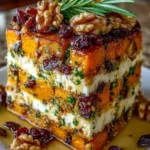
This is a riff on an autumnal classic, a layered dish of sweet potato, butternut squash, and carrot lasagna with feta, walnuts, and a cranberry-honey glaze.
- Prep Time: 40 minutes
- Cook Time: 1 hour 10 minutes
- Total Time: 1 hour 50 minutes
- Yield: 8 servings 1x
- Method: Main Course
- Cuisine: American
Ingredients
- For the Vegetables:
- 2 large sweet potatoes, peeled and thinly sliced (about 1/8-inch thick)
- 1 large butternut squash, peeled, seeded, and thinly sliced
- 3 large carrots, peeled and thinly sliced
- 3 tablespoons olive oil
- Salt and black pepper to taste
- For the Cheese Layer:
- 1 (15-ounce) container ricotta cheese
- 1 large egg, lightly beaten
- 1/3 cup chopped fresh parsley
- 1/2 cup crumbled feta cheese
- 1/4 cup chopped walnuts
- For the Cranberry-Honey Glaze:
- 1 cup dried cranberries
- 1/2 cup honey
- 1/4 cup water
- For the Lasagna:
- 12 no-boil lasagna noodles
- 2 cups shredded mozzarella cheese
- 1/2 cup crumbled feta cheese for topping
- 1/4 cup chopped walnuts for topping
Instructions
- 1. Preheat oven to 375°F (190°C). Lightly grease a 9×13-inch baking dish.
- 2. In a large bowl, toss the sliced sweet potatoes, butternut squash, and carrots with olive oil, salt, and pepper. Spread in a single layer on two baking sheets. Roast for 15-20 minutes, until just tender. Remove and set aside.
- 3. Meanwhile, in a medium bowl, combine the ricotta, egg, parsley, 1/2 cup feta, and 1/4 cup chopped walnuts. Set aside.
- 4. In a small saucepan, combine the cranberries, honey, and water. Bring to a simmer over medium heat, stirring occasionally. Cook for 5-7 minutes until the cranberries are plump and the mixture has thickened slightly. Remove from heat and let cool slightly.
- 5. To assemble the lasagna: Spread a thin layer of the cranberry-honey glaze on the bottom of the prepared dish. Top with a layer of roasted vegetables (about one-third of the mix), then 4 lasagna noodles (breaking to fit if needed). Spread with half of the ricotta mixture, then drizzle with about one-third of the remaining glaze. Repeat layers: vegetables, noodles, ricotta, glaze. For the final layer, top with remaining noodles, the rest of the vegetables, and any remaining glaze. Sprinkle with the 2 cups mozzarella and the remaining 1/2 cup feta and 1/4 cup walnuts.
- 6. Cover tightly with foil and bake for 40 minutes. Remove foil and bake for an additional 15-20 minutes, until the cheese is bubbly and golden. Let rest for 10 minutes before serving.
Nutrition
- Calories: 520 kcal
- Sugar: 28 g
- Fat: 24 g
- Carbohydrates: 62 g
- Protein: 18 g
Tried This Recipe? Leave a Comment!
Did you make this recipe? I’d love to hear how it turned out! Please leave a comment and a rating below. Your feedback helps other home cooks and supports cheerychop.com!
For more delicious inspiration, follow me on Pinterest!