“`html
Table of Contents
Passionfruit Coconut Velvet Pyramids with Mirror Gold – A Showstopping Dessert That Shines
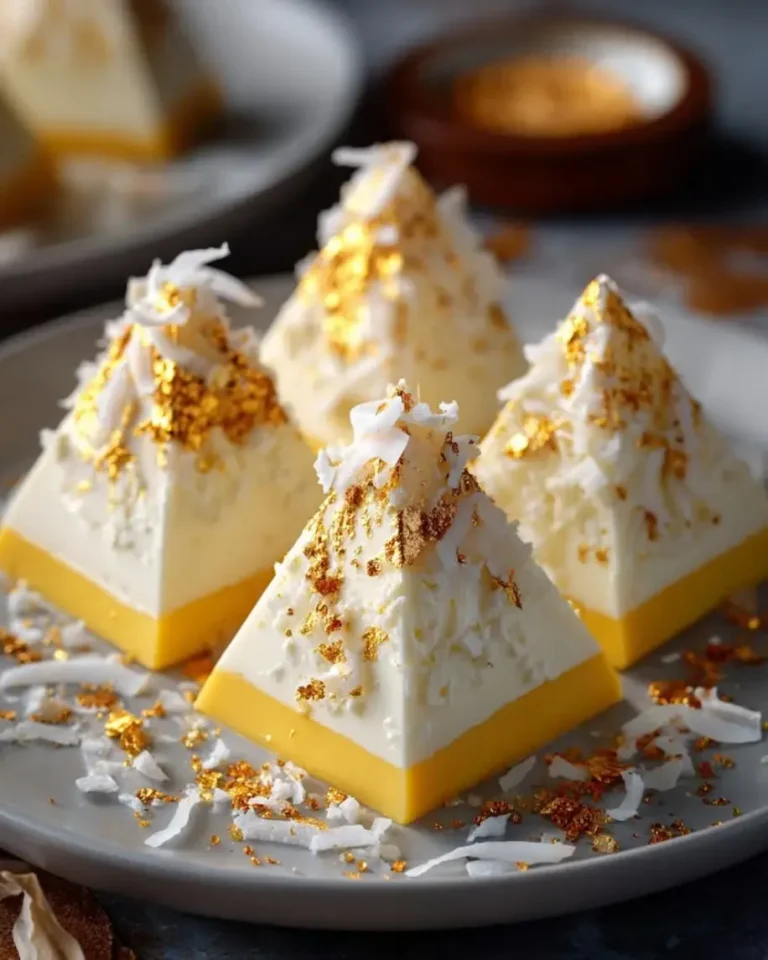
I still remember the first time I made these passionfruit coconut velvet pyramids — it was for a New Year’s Eve dinner party in my tiny Manhattan apartment, and the moment I unmolded those golden pyramids onto the serving tray, everyone gasped. Growing up in Morocco, my mother taught me that dessert should be an experience, not just a sweet ending. When I later trained at Le Cordon Bleu in Paris, I learned how a flawless mirror glaze could transform a simple mousse into edible art. This passionfruit coconut velvet pyramids recipe is where my North African love for vibrant fruit flavors meets French pastry precision, all with a New York City attitude — bold, beautiful, and unforgettable.
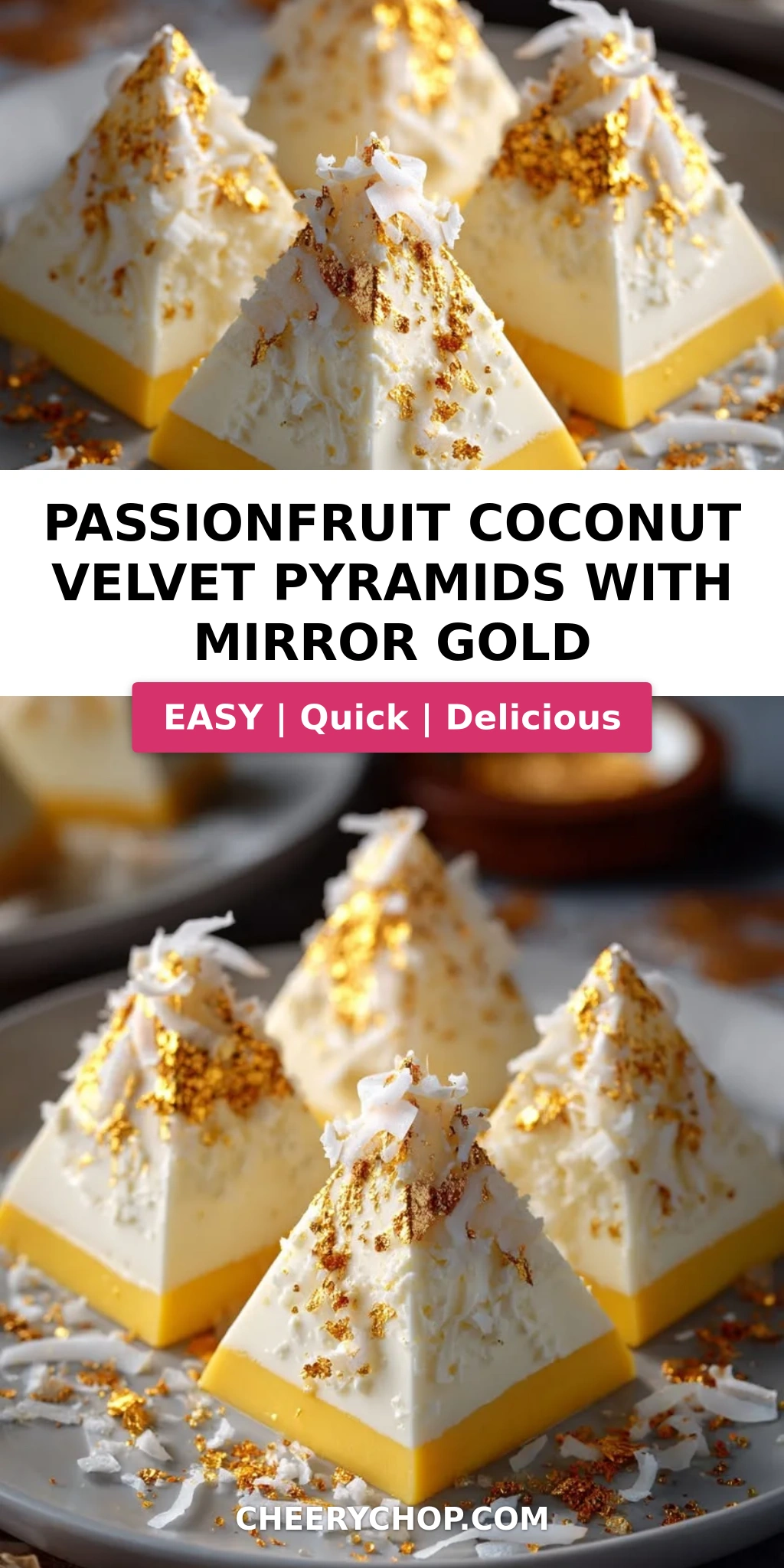
Imagine slicing into a sleek golden pyramid to reveal a silky passionfruit cream cheese mousse with a hidden coconut cream center — the tartness of passionfruit cutting through the rich coconut velvet, all wrapped in a mirror gold glaze dessert that gleams like liquid metal. The aroma alone transports you: tropical passionfruit, creamy coconut, and a whisper of vanilla. Each bite is a play of temperatures and textures — the cool, velvety mousse against the glossy, slightly firmer glaze. It’s the kind of dessert that stops conversation and starts memories.
After dozens of test batches in my NYC kitchen, I’ve perfected a version that balances elegance with approachability. This passionfruit coconut dessert uses a foolproof gelatin-stabilized mousse that freezes beautifully, making it ideal for stress-free entertaining. The mirror gold glaze is my signature — a technique I refined during my pastry years in Paris. In this post, I’ll share my 💡 Sara’s Pro Tip for getting that mirror-smooth finish every time, plus the common mistake that causes the glaze to crack. Whether you’re a confident home baker or a pastry enthusiast ready for a challenge, these pyramids are worth every careful step.
Why This Passionfruit Coconut Velvet Pyramids Recipe Is the Best
The Flavor Secret: Most passionfruit desserts lean heavily on the fruit’s tartness, but I balance it with coconut cream and mascarpone for a lush, rounded richness. The passionfruit pulp I use is from the Caribbean grocery near Union Square — it’s intensely aromatic and less watery than standard bottled versions. This triple-cream base (cream cheese, heavy cream, and mascarpone) is the French technique I learned in Paris for creating mousse that’s stable yet cloud-like on the tongue.
Perfected Texture: The key to the “velvet” in these pyramids is the way I fold the whipped cream into the passionfruit cream cheese mixture. It’s a delicate motion — a gentle figure-eight fold, not a vigorous stir — that preserves every air bubble. I also slightly under-whip the cream to soft peaks so it continues to set in the freezer without becoming grainy. The coconut cream center stays soft and spoonable, creating a surprise burst of tropical flavor inside each pyramid.
Foolproof & Fast: Despite the impressive look, this passionfruit coconut velvet pyramids recipe is built for home bakers. I skip the complicated pâte à bombe and use a simple gelatin-stabilized mousse that sets reliably. The mirror glaze uses just five ingredients and doesn’t require a thermometer if you follow my visual cues. Plus, the entire dessert is made ahead and frozen, so on serving day all you do is glaze and garnish — which means less stress and more time with your guests.
Passionfruit Coconut Velvet Pyramids Recipe Ingredients
I source my passionfruit pulp from the frozen section at Kalustyan’s on Lexington Avenue — their passionfruit comes from Uganda and has a deep floral tang that tastes like sunshine. The coconut cream I get at the Thai grocery on Sixth Street; it’s thicker than canned coconut milk and gives the velvet filling its signature lushness. And the edible gold luster dust? I order online from a specialty baking shop — a little jar lasts for dozens of glazes and adds that wow factor you just can’t get any other way.
Ingredients List
- For the Passionfruit Coconut Velvet Pyramids:
- 1/2 cup passionfruit pulp (fresh or frozen, thawed)
- 8 oz cream cheese, softened to room temperature
- 1 cup heavy cream (cold)
- 1/3 cup powdered sugar
- 1/2 cup coconut cream (the thick layer from a can of full-fat coconut milk)
- 1 tsp vanilla extract
- 2 tsp unflavored gelatin
- 2 tbsp cold water (for blooming gelatin)
- For the Coconut Cream Center:
- 1/2 cup mascarpone cheese
- 2 tbsp coconut cream
- 1 tbsp powdered sugar
- 2 tbsp shredded coconut (unsweetened or sweetened, your preference)
- For the Mirror Gold Glaze:
- 1 cup white chocolate, finely chopped (use a good brand like Valrhona or Ghirardelli)
- 1/2 cup sweetened condensed milk
- 2 tsp unflavored gelatin
- 2 tbsp cold water (for blooming)
- 1/4 cup warm water
- 1 tsp edible gold luster dust
- For Garnish (optional):
- Toasted coconut flakes
- Edible gold flakes
Ingredient Spotlight
Passionfruit Pulp: This is the star — it provides the bright, tart backbone that cuts through the rich coconut and cream cheese. When buying frozen pulp, look for “passionfruit puree” with no added sugar. If using fresh passionfruit, you’ll need about 4-5 ripe fruits to get 1/2 cup of pulp. A great substitute is a mix of 1/3 cup guava juice and 2 tbsp lemon juice — it won’t be identical but gives a similar tropical tang.
Coconut Cream: Not to be confused with cream of coconut (which is sweetened), coconut cream is the thick, fatty layer that rises to the top of a can of full-fat coconut milk. I always buy Thai Kitchen or Chaokoh brands for the highest fat content. A solid substitute is 1/2 cup heavy cream mixed with 1/4 tsp coconut extract, though the texture will be slightly less lush.
White Chocolate for the Glaze: Quality matters enormously here. Cheap white chocolate contains vegetable oils that bloom and streak the glaze. I use Valrhona Ivoire 35% or Ghirardelli white chocolate baking bars. Callebaut is also excellent. If you’re dairy-sensitive, there are good dairy-free white chocolate alternatives from brands like King David — just know the glaze will be slightly less shiny.
Edible Gold Luster Dust: This is what gives the mirror gold glaze dessert its name. It’s a food-grade powder made from a mix of mica and titanium dioxide. You can find it at specialty baking stores or online. A 5g jar costs about $10 and makes dozens of glazes. Do not use non-toxic gold dust meant for crafts — only use products labeled “edible” and “food-grade.” A great alternative is pearlescent white luster dust, which gives a silver shimmer.
| Original Ingredient | Best Substitution | Flavor / Texture Impact |
|---|---|---|
| Passionfruit pulp | Guava juice + lemon juice | Less tangy, still tropical |
| Coconut cream | Heavy cream + coconut extract | Slightly less rich, coconut flavor more subtle |
| White chocolate | Dairy-free white chocolate | Glaze less shiny, slightly grainier |
| Mascarpone | Cream cheese + 1 tbsp milk | Tangier center, slightly firmer |
| Edible gold luster dust | Pearlescent white dust | Silver shimmer instead of gold |
How to Make Passionfruit Coconut Velvet Pyramids — Step-by-Step
These pyramids look lavish, but the process is surprisingly logical — make the mousse, fill the molds, freeze, then glaze. Work in stages and you’ll find each step manageable. I promise, the first time you unmold a perfect golden pyramid, you’ll feel like a pastry chef.
Step 1: Bloom the Gelatin for the Mousse
In a small bowl, sprinkle 2 teaspoons of unflavored gelatin over 2 tablespoons of cold water. Let it stand for 5 minutes — the gelatin will absorb the water and become a firm, wobbling mass. This is called “blooming” and it’s essential for even dissolution. Do not skip this step or your mousse may have streaks of unmelted gelatin.
💡 Sara’s Pro Tip: Use cold water — not warm or hot — to bloom gelatin. Warm water will partially dissolve the gelatin and weaken its setting power. The texture should be like firm Jell-O before you melt it.
Step 2: Make the Passionfruit Cream Cheese Base
In a large mixing bowl, beat 8 oz of softened cream cheese with 1/3 cup powdered sugar until smooth and fluffy — about 2 minutes with a hand mixer on medium speed. Add 1/2 cup passionfruit pulp, 1/2 cup coconut cream, and 1 teaspoon vanilla extract. Beat until everything is combined and looks like a thick, pale orange cream. Scrape the bowl well.
⚠️ Common Mistake to Avoid: Using cold cream cheese will leave lumps in your mousse that never fully smooth out. Let the cream cheese sit on your counter for at least 1 hour before starting. Press it with your finger — if it gives easily without resistance, it’s ready.
Step 3: Melt and Add the Gelatin
Gently heat the bloomed gelatin in a small saucepan over low heat (or in a microwave in 10-second bursts) until it becomes a clear liquid. Do not boil — boiling destroys gelatin’s setting power. Stir a spoonful of the passionfruit mixture into the warm gelatin to temper it, then pour the gelatin mixture into the passionfruit base while beating on low speed. This ensures the gelatin disperses evenly without seizing.
💡 Sara’s Pro Tip: If the gelatin seizes into strings when you add it, your passionfruit mixture was too cold. Next time, let the base come to room temperature first. If it happens anyway, pass the mixture through a fine-mesh strainer to catch the strings.
Step 4: Fold in the Whipped Cream
In a separate chilled bowl, whip 1 cup of heavy cream to soft peaks — when you lift the whisk, the cream should droop slightly but hold a shape. Using a large rubber spatula, gently fold the whipped cream into the passionfruit base in three additions. Use a figure-eight motion, rotating the bowl, until no white streaks remain. The mixture should be airy and mousse-like.
⚠️ Common Mistake to Avoid: Over-folding will deflate the mousse and make it dense and heavy. Stop folding as soon as the mixture is uniform — even if you see one or two tiny white streaks, that’s better than a deflated mousse.
Step 5: Make the Coconut Cream Center
In a small bowl, combine 1/2 cup mascarpone cheese, 2 tablespoons coconut cream, 1 tablespoon powdered sugar, and 2 tablespoons shredded coconut. Stir until smooth and creamy. The mixture should be thick but spreadable. Set aside at room temperature while you prepare the molds.
💡 Sara’s Pro Tip: Toast the shredded coconut in a dry skillet for 2-3 minutes until golden before adding it to the center mixture — it adds a nutty depth that contrasts beautifully with the smooth mousse.
Step 6: Fill the Pyramid Molds
Spoon the passionfruit coconut mousse into a piping bag or a zip-top bag with the corner snipped off. Fill each pyramid cavity halfway. Tap the molds gently on the counter to release any air bubbles. Place a small spoonful (about 1 teaspoon) of the coconut cream center into each mold, pressing it lightly into the mousse. Then pipe the remaining mousse over the top, filling the molds completely. Use an offset spatula to scrape the tops level and smooth.
⚠️ Common Mistake to Avoid: Air bubbles trapped in the mousse will create holes in the smooth surface of the finished pyramids. After filling each mold, tap it firmly on the counter 5-6 times — you’ll see tiny bubbles rise to the surface. Pop them with a toothpick before freezing.
Step 7: Freeze Until Solid
Place the filled molds on a small baking sheet and freeze for at least 5 hours, or overnight. The pyramids must be fully frozen — when you press the top, it should feel rock hard. This is critical for the glaze step; a partially frozen pyramid will crack and leak when you pour the warm glaze over it.
💡 Sara’s Pro Tip: Place the baking sheet in the coldest part of your freezer — the back, not the door. If your freezer has an auto-defrost cycle, wrap the mold tightly in plastic wrap to prevent ice crystals from forming on the surface.
Step 8: Bloom Gelatin for the Glaze
While the pyramids freeze, prepare the mirror gold glaze. In a small bowl, sprinkle 2 teaspoons of gelatin over 2 tablespoons of cold water. Let bloom for 5 minutes until firm.
⚠️ Common Mistake to Avoid: Forgetting to bloom the glaze gelatin ahead of time. The glaze comes together quickly once you start heating the condensed milk, so have the gelatin ready before you turn on the heat.
Step 9: Heat Condensed Milk and Water
In a small saucepan, combine 1/2 cup sweetened condensed milk and 1/4 cup warm water. Heat over medium-low heat, stirring frequently, until the mixture is hot but not simmering — about 3-4 minutes. Remove from heat and add the bloomed gelatin. Stir until the gelatin is completely dissolved and the liquid is clear.
💡 Sara’s Pro Tip: If you see any steam rising from the condensed milk mixture, it’s too hot. Let it cool for 1-2 minutes before adding the gelatin. High heat can denature the gelatin and ruin the glaze’s shiny finish.
Step 10: Combine with White Chocolate and Gold
Place 1 cup of finely chopped white chocolate in a heatproof bowl. Pour the hot condensed milk mixture over the chocolate and let it sit for 1 minute without stirring. Then stir gently in one direction until the chocolate melts and the mixture is smooth and glossy. Stir in 1 teaspoon of edible gold luster dust until fully incorporated. The glaze should look like liquid gold — thick but pourable.
⚠️ Common Mistake to Avoid: Stirring too vigorously will incorporate air bubbles into the glaze, which will show as tiny white dots on the finished pyramids. Stir slowly and deliberately — if you see bubbles, let the glaze rest for 3-5 minutes before using.
Step 11: Cool the Glaze to the Right Temperature
Let the glaze cool at room temperature, stirring occasionally, until it reaches a consistency similar to warm honey — about 20-25 minutes. It should flow off a spoon in a smooth ribbon. If it thickens too much, reheat gently over a pan of warm water (not direct heat). The ideal temperature is around 90-95°F — test a small drip on your wrist; it should feel warm, not hot.
💡 Sara’s Pro Tip: The glaze is ready when it coats the back of a spoon and you can draw a line through it with your finger that stays visible for a second. If the line disappears immediately, the glaze is too thin — let it cool a few more minutes.
Step 12: Unmold the Frozen Pyramids
Remove the frozen pyramids from the freezer. If the mold is silicone, gently flex the mold from the bottom to release each pyramid. If the mold is metal, dip the bottom in warm water for 5 seconds, then gently coax the pyramids out. Place each pyramid on a wire rack set over a baking sheet to catch the glaze drips.
⚠️ Common Mistake to Avoid: Handling the pyramids too much with your warm hands — the heat will start melting the surface and leave fingerprints that show in the glaze. Use gloves or hold the pyramids by the edges only.
Step 13: Pour the Mirror Gold Glaze
Working quickly, pour the cooled glaze evenly over each frozen pyramid, starting from the top and letting it flow down the sides. Use an offset spatula to guide the glaze if needed, scraping off any excess from the bottom of the rack. The cold surface of the frozen pyramid will set the glaze almost instantly, creating that perfect mirror finish.
💡 Sara’s Pro Tip: For the smoothest finish, pour the glaze in one continuous motion from a height of about 6 inches — this helps the glaze flow evenly and pushes air bubbles to the edge. If you get a bubble, pop it with a toothpick immediately before the glaze sets.
Step 14: Garnish and Serve
While the glaze is still tacky (about 30 seconds after pouring), sprinkle toasted coconut flakes and edible gold flakes over the top. Transfer the glazed pyramids to a serving platter and refrigerate for at least 1 hour to thaw the mousse to a creamy, sliceable consistency. Serve chilled.
⚠️ Common Mistake to Avoid: Adding garnishes after the glaze has fully set — they’ll just slide off. The glaze stays sticky for about 45-60 seconds after pouring. Sprinkle garnishes immediately and they’ll adhere beautifully.
| Step | Action | Duration | Key Visual Cue |
|---|---|---|---|
| 1 | Bloom gelatin | 5 min | Firm, wobbling mass |
| 2 | Make passionfruit base | 3 min | Smooth, pale orange cream |
| 3 | Add melted gelatin | 1 min | No strings visible |
| 4 | Fold whipped cream | 2 min | Uniform, airy mousse |
| 5 | Make coconut center | 2 min | Smooth, thick paste |
| 6 | Fill molds | 10 min | Tops level and smooth |
| 7 | Freeze | 5+ hours | Rock hard when pressed |
| 8 | Bloom glaze gelatin | 5 min | Firm mass |
| 9 | Heat condensed milk | 4 min | Hot but not simmering |
| 10 | Make glaze | 3 min | Smooth, glossy, gold |
| 11 | Cool glaze | 25 min | Ribbons off spoon |
| 12 | Unmold | 2 min | Clean release |
| 13 | Pour glaze | 1 min | Mirror finish, no bubbles |
| 14 | Garnish + chill | 1+ hours | Glaze tacky for garnish |
Serving & Presentation
The moment of truth — bringing these golden pyramids to the table. I like to serve them on a simple white platter or a mirrored tray (the reflective surface doubles the shine). Place each pyramid about 2 inches apart, with the pointed tip facing up. If you want to get extra elegant, drizzle a thin pool of passionfruit coulis or coconut cream on the plate before setting the pyramid in the center — the contrast of gold on white is stunning.
For garnish, I use toasted coconut flakes that I’ve gently pressed into the still-tacky glaze, plus a few edible gold flakes scattered asymmetrically for a modern look. A tiny mint sprig or edible orchid adds a pop of green that makes the gold glow even brighter. These pyramids are tall and dramatic, so keep the plate clean and minimalist — let the dessert be the star.
I once served these at a Moroccan-French fusion dinner party in Brooklyn, paired with a glass of Muscat de Beaumes-de-Venise — the honeyed wine echoed the passionfruit’s floral notes while the coconut cream softened the alcohol warmth. For a non-alcoholic pairing, a cold glass of Thai iced tea or a passionfruit spritzer works beautifully. And if you’re serving after a heavy meal, these pyramids are light enough to not weigh anyone down — the mousse is airy, the glaze is thin, and the coconut center is just a whisper of richness.
| Pairing Type | Suggestions | Why It Works |
|---|---|---|
| Side Dish | Fresh berries, passionfruit coulis, mango slices | Adds acidity + color contrast |
| Sauce / Dip | Passionfruit coulis, salted caramel, warm chocolate | Enhances tropical notes or adds richness |
| Beverage | Muscat wine, Thai iced tea, passionfruit spritzer | Echoes floral/tropical flavors |
| Garnish | Toasted coconut, edible gold flakes, mint, orchid | Adds texture, color, and elegance |
Make-Ahead, Storage & Reheating
This passionfruit coconut velvet pyramids recipe is designed for busy hosts — almost the entire dessert is made ahead. In my NYC life, I often prepare the mousse and fill the molds the day before a dinner party, then glaze and garnish just before serving. The frozen pyramids hold beautifully for up to a week, giving you total flexibility.
| Method | Container | Duration | Reheating Tip |
|---|---|---|---|
| Refrigerator | Airtight container | Up to 3 days | Serve directly, no reheating needed |
| Freezer | Sealed freezer bag | Up to 2 months | Thaw in fridge 2 hours, then glaze |
| Make-Ahead | In the mold, wrapped | Up to 1 week frozen | Glaze directly from frozen |
If you’re storing glazed pyramids in the fridge, place them in a single layer in an airtight container with a piece of parchment between layers. The glaze may lose some shine after 24 hours — a quick pass with a kitchen torch (held 6 inches away) can revive the gloss, but I recommend glazing no more than 4-6 hours before serving for the absolute best mirror finish. And never — I repeat, never — microwave these to warm them up. The mousse will weep and the glaze will crack. Always serve chilled.
Variations & Easy Swaps
I’m always experimenting with this passionfruit coconut velvet pyramids recipe, and these three variations have become reader favorites. Each one keeps the essential pyramid structure but changes the flavor profile for different seasons or dietary needs.
| Variation | Key Change | Best For | Difficulty Impact |
|---|---|---|---|
| Raspberry Rose | Replace passionfruit with raspberry puree + rose water | Valentine’s Day, romantic dinners | Same |
| Vegan Tropical | Use aquafaba mousse, coconut cream base, dairy-free chocolate | Plant-based guests, vegan diets | More challenging |
| Mango Cardamom | Replace passionfruit with mango puree + 1/2 tsp cardamom | Summer parties, Indian-inspired menus | Same |
Raspberry Rose Variation
This is the variation I make for Galentine’s Day every year. Swap the passionfruit pulp for 1/2 cup of strained raspberry puree (seeds removed) and add 1 teaspoon of rose water to the cream cheese mixture. The coconut cream center stays the same — the coconut and rose are a classic Persian pairing that feels romantic and sophisticated. Use pink luster dust in the glaze instead of gold for a soft rose-gold finish. In Morocco, my mother would add a pinch of saffron to the rose water version — it sounds unusual, but the saffron’s honeyed warmth is incredible with raspberry.
Vegan Tropical Variation
For a plant-based version, I use aquafaba (the liquid from a can of chickpeas) whipped to stiff peaks in place of heavy cream — it makes a surprisingly stable mousse. Replace the cream cheese with a thick cashew cream (soak 1 cup cashews, blend with 2 tbsp lemon juice and 1/4 cup coconut cream) and use dairy-free white chocolate for the glaze. The setting time is the same, but the texture is slightly less dense. I tested this for a client in Williamsburg who runs a fully vegan bakery, and the result was so good I now offer it as an option for catering events.
Mango Cardamom Variation
When I find Alphonso mangoes at the Jackson Heights farmers market in June, I make this version. Replace the passionfruit pulp with 1/2 cup of mango puree and add 1/2 teaspoon of ground cardamom seeds to the cream cheese mixture. The cardamom-coconut combination is a nod to South Indian desserts, and the mango adds a honeyed sweetness that needs less powdered sugar. For the glaze, use golden luster dust with a pinch of turmeric for extra warmth. This version is less tart than the original, so I recommend adding 1 tablespoon of lime juice to the mousse to keep the balance.
What is the best way to achieve a smooth mirror glaze for the Passionfruit Coconut Velvet Pyramids?
The key to a flawless mirror gold glaze dessert is temperature control and avoiding air bubbles. First, make sure your gelatin is fully bloomed and dissolved — any undissolved granules will create cloudy spots. Second, stir the glaze slowly and gently — vigorous stirring incorporates air bubbles that will show as tiny white dots on the surface. Third, cool the glaze to exactly 90-95°F before pouring; if it’s too hot, it will melt the frozen pyramid and run off; too cold, it will thicken unevenly. Finally, pour the glaze from a height of about 6 inches in one continuous motion — this helps the glaze flow evenly and pushes any small bubbles to the edge where they can be popped with a toothpick. The frozen surface of the pyramid sets the glaze instantly, so work quickly and confidently.
Can I substitute fresh passionfruit with bottled pulp for the pyramid filling?
Yes, you can absolutely use bottled or frozen passionfruit pulp for this passionfruit coconut dessert, and in many cases it’s actually more consistent than fresh. The key is to look for 100% passionfruit puree with no added sugar or preservatives — brands like Goya and Perfect Puree are excellent. If using fresh passionfruit, you’ll need about 4-5 ripe fruits to get the 1/2 cup needed. The flavor of fresh passionfruit is brighter and more floral, while bottled pulp tends to be slightly more tart and less aromatic. If your bottled pulp tastes flat, add a splash of fresh lime juice to brighten it up. One tip: if the bottled pulp has seeds, you can strain them out for a smoother mousse, but I actually love the texture the seeds add to the velvet pyramid filling.
How long do Passionfruit Coconut Velvet Pyramids need to set before serving?
The pyramids need at least 5 hours of freezing time in the mold — this is non-negotiable because the mousse must be completely solid before you pour the warm glaze. If you try to glaze a partially frozen pyramid, the heat of the glaze will cause the mousse to soften and crack. For best results, freeze overnight (8-12 hours). After glazing, the pyramids need 1-2 hours in the refrigerator to thaw the mousse to a creamy, sliceable consistency. So the total timeline from start to serving is: 30 minutes active prep, 5+ hours freezing, 30 minutes to make and cool the glaze, 5 minutes to glaze, and 1-2 hours thawing. I usually prepare the pyramids two days ahead, freeze them, and glaze them about 4 hours before serving — that gives plenty of time for the mousse to thaw to the perfect velvety texture.
What can I use instead of gold leaf for the mirror finish decoration?
If you don’t want to use edible gold leaf, there are several beautiful alternatives. Edible gold luster dust (which I use in the glaze itself) can also be dusted lightly over the finished pyramids using a small brush — it gives a subtle shimmer without the intense shine of leaf. Pearlescent white luster dust creates a silvery, opalescent effect that’s especially beautiful for winter celebrations. Another option is edible glitter or disco dust — look for products labeled “food-grade” and made from gum arabic and mica. For a natural garnish, toasted coconut flakes, crushed pistachios, or crystallized edible flowers (like violets or rose petals) add texture and color without gold. I’ve also used thin shards of spun sugar for a dramatic, jewel-like effect. Remember, the mirror glaze itself is already stunning — the garnish is just the punctuation.
Why did my mirror glaze crack when I poured it over the frozen pyramids?
Cracked mirror glaze is almost always a temperature shock issue. If the glaze is too hot (above 100°F) and the pyramid is too cold (straight from the freezer), the thermal shock causes the mousse to contract rapidly and crack the glaze as it sets. The solution: let the glaze cool to 90-95°F — it should feel warm to the touch but not hot. Also, let the frozen pyramids sit at room temperature for exactly 2 minutes before glazing to take off the extreme freeze. Another common cause is pouring the glaze too thickly — a thin, even layer sets more flexibly than a thick one. If your pyramids do crack, you can sometimes save them by warming a small amount of glaze, gently brushing it over the cracks, and letting it set again. But prevention is easier — temperature control is everything.
Can I make these pyramids without a pyramid mold?
Absolutely! While a pyramid mold gives the dramatic shape that makes this passionfruit coconut velvet pyramids recipe so striking, you can use any small mold you have. Dome molds (like hemisphere shapes), half-sphere silicone molds, or even muffin tins lined with plastic wrap work beautifully. The key is to choose a mold that holds about 1/3 to 1/2 cup of mousse per cavity — that’s the perfect single-serving size. If using a muffin tin, line each cup with a strip of parchment paper to help with unmolding. The freezing and glazing steps are exactly the same regardless of shape. I’ve even made these as rectangular bars using a mini loaf pan —just cut them into squares after glazing. The mirror gold glaze dessert effect works on any shape, and the flavor is just as spectacular.
How do I store leftover glazed pyramids and keep the mirror finish intact?
Leftover glazed pyramids should be stored in the refrigerator in a single layer inside an airtight container. Place a sheet of parchment paper between layers if you need to stack them. The mirror finish will hold its shine for about 24 hours in the fridge — after that, the glaze may start to dull slightly as moisture condenses on the surface. To revive the shine, let the pyramids sit at room temperature for 5-8 minutes before serving — the condensation will reabsorb and the gloss will return. Do not cover them with plastic wrap directly against the glaze, as it will stick and ruin the mirror finish. If you need to store them longer, freeze the unglazed pyramids (they keep for up to 2 months) and glaze them fresh the day you plan to serve. The glaze itself can be made 3 days ahead and stored in the fridge — just reheat gently to 90°F before using.
Can I use gelatin sheets instead of powdered gelatin for the mousse and glaze?
Yes, you can substitute gelatin sheets (also called leaf gelatin) for powdered gelatin in both the mousse and the mirror gold glaze. Use the same blooming time — 5 minutes in cold water — but the proportion is different. For this recipe, 2 teaspoons of powdered gelatin equals about 4 sheets of silver-grade gelatin (each sheet is roughly 2 grams). For the mousse, bloom 4 sheets in cold water for 5 minutes, then squeeze out the excess water and dissolve the sheets into the warm cream cheese mixture. For the glaze, use 4 sheets bloomed in cold water, then add them to the hot condensed milk mixture. Sheet gelatin gives a clearer, more neutral set than powdered, which can sometimes add a slight graininess if not fully dissolved. I actually prefer sheet gelatin for mirror glazes because it creates an even more transparent, glass-like finish.
Share Your Version!
I’d love to see how these passionfruit coconut velvet pyramids turn out in your kitchen — every home cook brings their own touch, and that’s the beautiful thing about baking. Did you try the raspberry rose variation? Or maybe you added a pinch of spice from your own heritage? Drop a comment below with your experience, any tweaks you made, and how the mirror glaze behaved for you. Your insight might be exactly what another reader needs to hear.
If you snap a photo of your golden pyramids, please tag me on Instagram @cheerychop or share it on Pinterest with the hashtag #SarasPassionfruitPyramids. I personally read every comment and love seeing your creations — there’s nothing that makes my NYC kitchen feel more connected than knowing this recipe is being made in homes around the world. And if you have a question I didn’t answer in the FAQ above, ask away — I’m always happy to troubleshoot with you.
From my NYC kitchen to yours — I hope this recipe brings as much warmth to your table as it does to mine. — Sara 🧡
Love This Recipe? Save It to Pinterest!
If you enjoyed this Passionfruit Coconut Velvet Pyramids with Mirror Gold recipe, don’t let it get lost in your browser tabs! 😄 Pin it now so you can find it again anytime — and explore hundreds more tried-and-tested recipes waiting for you on my Pinterest boards.
👉 Follow Sara on Pinterest @chefrecipes2
📌 Pin this recipe · 🔁 Re-pin your favorites · 💬 Tag me when you make it — I love seeing your creations!
⭐️ ⭐️ ⭐️ ⭐️ ⭐️
Did you make these Passionfruit Coconut Velvet Pyramids?
I’d love to hear how they turned out! Leave a star rating and comment below — your feedback helps other readers and means the world to me.
📸 Tag @cheerychop on Instagram or Pinterest for a chance to be featured in my stories!
“`
Print
Passionfruit Coconut Velvet Pyramids with Mirror Gold
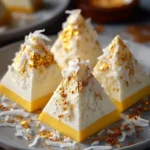
Elegant passionfruit and coconut pyramids coated in a shimmering mirror gold glaze, perfect for a special occasion.
- Prep Time: 30 minutes
- Cook Time: 5 hours (freezing)
- Total Time: 5 hours 30 minutes
- Yield: 8 1x
- Method: Dessert
Ingredients
- For the Passionfruit Coconut Velvet Pyramids:
- 1/2 cup passionfruit pulp
- 8 oz cream cheese, softened
- 1 cup heavy cream
- 1/3 cup powdered sugar
- 1/2 cup coconut cream
- 1 tsp vanilla extract
- 2 tsp unflavored gelatin
- 2 tbsp cold water
- For the Coconut Cream Center:
- 1/2 cup mascarpone cheese
- 2 tbsp coconut cream
- 1 tbsp powdered sugar
- 2 tbsp shredded coconut
- For the Mirror Gold Glaze:
- 1 cup white chocolate, finely chopped
- 1/2 cup sweetened condensed milk
- 2 tsp unflavored gelatin
- 2 tbsp cold water
- 1/4 cup warm water
- 1 tsp edible gold luster dust
- For Garnish (optional):
- Toasted coconut flakes
- Edible gold flakes
Instructions
- 1. Mix gelatin and cold water in a small bowl and let bloom for 5 minutes.
- 2. Beat cream cheese, powdered sugar, passionfruit pulp, coconut cream, and vanilla extract until smooth.
- 3. Melt the bloomed gelatin and stir into the passionfruit mixture.
- 4. Whip heavy cream to soft peaks and gently fold into the mixture.
- 5. Combine mascarpone cheese, coconut cream, powdered sugar, and shredded coconut until smooth.
- 6. Fill pyramid molds halfway with the passionfruit coconut mixture.
- 7. Add a spoonful of coconut cream center into each mold.
- 8. Cover with the remaining mixture and smooth the tops.
- 9. Freeze for at least 5 hours or until completely firm.
- 10. Bloom gelatin for the glaze.
- 11. Heat condensed milk and warm water, then stir in gelatin until dissolved.
- 12. Pour over white chocolate and mix until smooth and glossy.
- 13. Stir in edible gold luster dust until evenly combined.
- 14. Allow glaze to cool to a pourable consistency.
- 15. Unmold frozen pyramids and place on a wire rack.
- 16. Pour the mirror gold glaze evenly over each pyramid.
- 17. Garnish with toasted coconut flakes and edible gold flakes.
- 18. Serve chilled.
Notes
Nutritional Info (per serving, serves 8) – Calories: 370, Protein: 5 g, Carbohydrates: 30 g, Fat: 27 g, Fiber: 1 g, Sugar: 25 g, Sodium: 125 mg
Nutrition
- Calories: 370
- Sugar: 25 g
- Fat: 27 g
- Carbohydrates: 30 g
- Protein: 5 g
Tried This Recipe? Leave a Comment!
Did you make this recipe? I’d love to hear how it turned out! Please leave a comment and a rating below. Your feedback helps other home cooks and supports cheerychop.com!
For more delicious inspiration, follow me on Pinterest!