Table of Contents
Golden Mango Sugar Geodes – A Geode Dessert with a Sparkling Golden Sugar Crystal Coating
I still remember the first time I saw a geode dessert — it was at a pastry shop in the Marais district of Paris, and I was absolutely mesmerized. The way the sugar crystals caught the light, the jewel-toned center peeking through a crackled shell — it looked like something pulled from the earth, not from an oven. But I knew right then that I wanted to create my own version, one that would sing with the flavors of my childhood in Morocco. That’s how this mango sugar geodes recipe was born: a golden, glowing geode dessert that combines the sunny sweetness of ripe mangoes with a creamy coconut layer and a dazzling crystal coating. It’s a dessert that stops conversation and starts smiles — and it’s easier to make than you’d think.
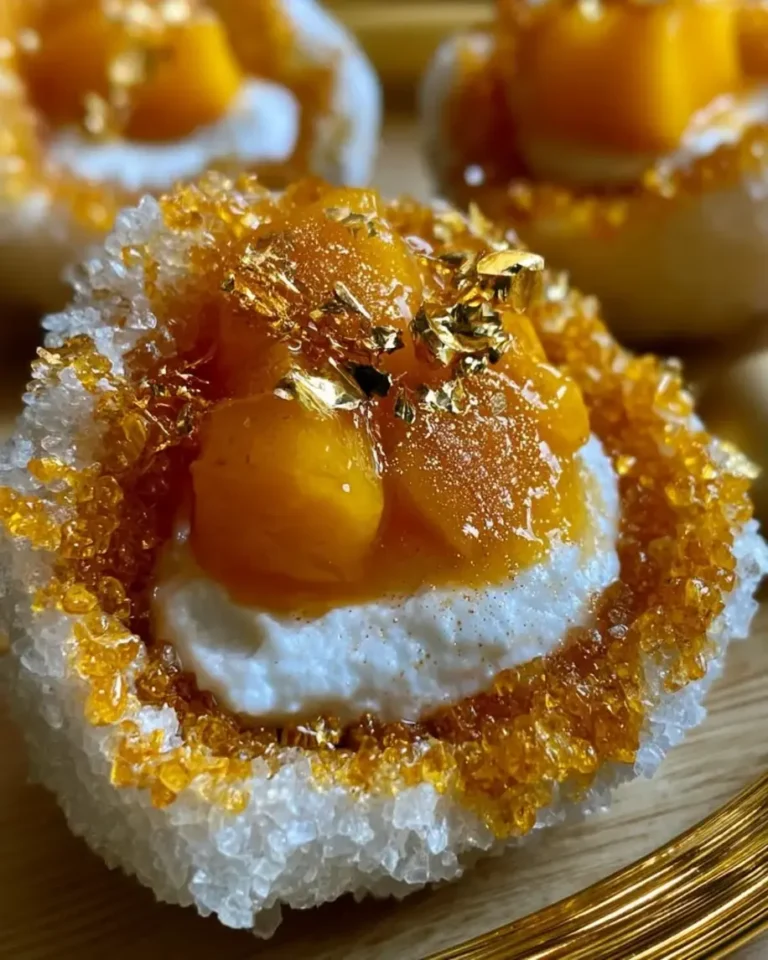
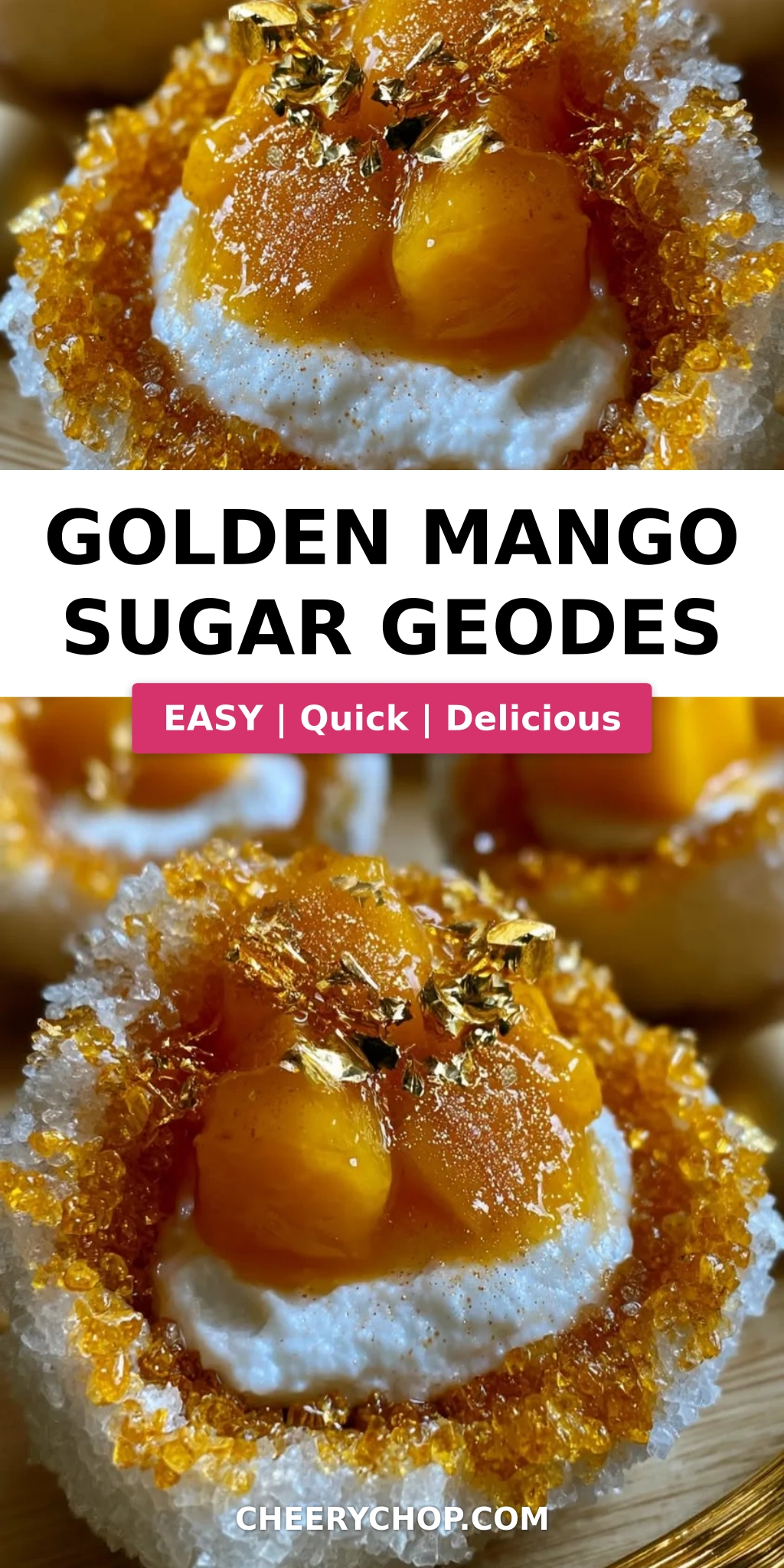
Imagine cutting into what looks like a rough, sparkling golden stone and finding a soft, silky mango jelly interior with a luscious coconut cream heart. The first bite gives you that satisfying crunch of sanding sugar mixed with gold luster dust, followed by the bright, fruity tang of mango and the cooling richness of coconut. It’s a texture lover’s dream — crunchy, creamy, and silky all at once. The aroma alone, with notes of vanilla and tropical mango, will transport you straight to a sun-drenched market in Marrakech or a patisserie in the 6th arrondissement. Every element is designed to delight the senses, from the shimmering gold exterior to the vibrant orange center.
What makes my mango sugar geodes recipe special is the way I approach the coconut cream layer. After years of testing in my NYC kitchen, I found that blending cream cheese with coconut cream and a touch of vanilla creates a filling that’s both stable enough to hold its shape and lusciously smooth on the tongue. The golden mango dessert is finished with a technique I picked up during my pastry training in Paris — a light syrup brush that helps the sugar crystals adhere without making them soggy. One common mistake I see home cooks make is over-brushing the syrup, which causes the coating to clump instead of sparkle. I’ll show you exactly how to get that jewel-like finish every time.
Why This Golden Mango Sugar Geodes Recipe Is the Best
The Flavor Secret: The key to this mango geode cake is using ripe, fragrant mangoes — the kind that fill your kitchen with a sweet, tropical aroma the moment you peel them. In Morocco, we’d use the small, intensely sweet ones that arrive in the medina in summer. Here in NYC, I look for Ataulfo or Champagne mangoes at the Union Square Greenmarket. They have a creamy texture and low fiber content, which makes for a perfectly smooth jelly. The coconut cream layer balances the mango’s acidity with a gentle richness, while the gold luster dust adds a subtle vanilla-tinged sweetness that ties everything together.
Perfected Texture: The magic of this sugar crystal candy recipe lies in the contrast between the crunchy, sparkling exterior and the soft, melt-in-your-mouth interior. I spent weeks perfecting the gelatin ratio in the mango layer — too much and it becomes rubbery, too little and it won’t hold the geode shape. The answer was 2 tablespoons of gelatin bloomed in cold water, which gives a firm yet delicate set. The coconut cream layer is whipped to a cloud-like consistency, so it feels light against the dense mango jelly. Every bite is a study in contrasts, and that’s what makes this dessert so memorable.
Foolproof & Fast: Despite its show-stopping appearance, this mango coconut cream dessert is surprisingly beginner-friendly. The active prep time is only about 40 minutes — the rest is hands-off chilling time. I’ve designed the steps to be forgiving: if your geode shapes aren’t perfectly uniform, that’s actually part of the charm. Real geodes are irregular too! Plus, you can make the entire dessert a day ahead, which makes it perfect for dinner parties or holiday gatherings. My NYC test kitchen volunteers — including my neighbor who claims she can barely boil water — have all nailed it on the first try.
Mango Sugar Geodes Recipe Ingredients
I source my mangoes from the corner fruit stand on Bleecker Street, where the owner remembers my name and always sets aside the ripest ones for me. The coconut cream I buy from a little Caribbean market in Harlem that reminds me of the spice souks in Fez. Every ingredient in this mango sugar geodes recipe has a story, and together they create something truly beautiful.
Ingredients List
- For the Mango Jelly Centers:
- 3 cups ripe mango puree (about 4–5 large mangoes)
- 1/3 cup granulated sugar
- 1 tbsp lemon juice
- 2 tbsp gelatin powder (unflavored)
- 1/2 cup cold water
- 1 tsp vanilla extract
- For the Coconut Cream Layer:
- 8 oz cream cheese, softened
- 1/3 cup powdered sugar
- 1/4 cup coconut cream (from a can, not coconut milk)
- 1 tsp vanilla extract
- For the Golden Sugar Crystal Coating:
- 2 cups coarse sanding sugar (white or golden)
- 1/4 cup water
- 2 tbsp light corn syrup
- Gold luster dust, as needed (about 1–2 tsp)
- 1 tsp edible pearl shimmer dust
- For Garnish (optional):
- Fresh mango cubes
- Edible gold flakes
Ingredient Spotlight
Mango Puree: The soul of this golden mango dessert. Use ripe Ataulfo or Champagne mangoes for the deepest sweetness and smoothest texture. If fresh mangoes aren’t in season, high-quality frozen mango puree (like Goya or Boiron) works beautifully — just thaw and use. Avoid canned mango pulp, which often contains added sugar and preservatives that can affect the set of the jelly.
Coconut Cream: This is the rich, thick layer that rises to the top of a can of full-fat coconut milk. Don’t confuse it with sweetened cream of coconut (like Coco López) — that’s too sweet and will throw off the balance of this mango coconut cream dessert. I buy Chaokoh or Native Forest brands for their clean coconut flavor.
Gelatin Powder: The structural backbone of the geode. I use Knox gelatin powder because it’s reliable and widely available. If you prefer a vegetarian option, agar-agar can be substituted, but the texture will be firmer and less silky. Expect a slightly different mouthfeel with agar — more like a firm jelly than a tender gel.
Gold Luster Dust & Pearl Shimmer Dust: These edible dusts are what give the geodes their magical, gem-like sparkle. Look for brands labeled “edible” and “food-grade” — not all craft glitters are safe to eat. I find mine at NYC’s Kitchen Arts & Letters or online at Chef Rubber. A little goes a long way, so start with 1 teaspoon and add more for extra brilliance.
| Original Ingredient | Best Substitution | Flavor / Texture Impact |
|---|---|---|
| Mango puree (fresh) | Frozen mango puree, thawed | Nearly identical flavor; slightly thinner consistency, may need extra 1 tsp gelatin |
| Coconut cream | Heavy cream + 1/4 tsp coconut extract | Lighter texture, less coconut flavor; still delicious |
| Gelatin powder | Agar-agar powder (use 2 tsp) | Firmer, less silky set; vegetarian-friendly |
| Gold luster dust | Edible gold spray or turmeric + shimmer mix | Different finish; turmeric adds earthy note, gold spray is more uniform |
How to Make Golden Mango Sugar Geodes — Step-by-Step
Making these geodes is like sculpting with flavor — each layer builds on the last, and the result is a dessert that feels both luxurious and playful. Follow these steps carefully, and you’ll have a platter of golden gems that will wow everyone at the table.
Step 1: Prepare the Mango Jelly Base
In a saucepan over medium heat, combine 3 cups mango puree, 1/3 cup granulated sugar, and 1 tbsp lemon juice. Warm the mixture, stirring occasionally, until it’s steaming but not boiling — about 5 to 7 minutes. You want the sugar to dissolve completely and the puree to become fragrant. Remove from heat.
💡 Sara’s Pro Tip: Taste the puree before adding gelatin. If your mangoes aren’t very sweet, increase the sugar by 1 to 2 tablespoons. The final jelly should taste slightly sweeter than you want the finished dessert to be — chilling dulls sweetness.
Step 2: Bloom and Dissolve the Gelatin
In a small bowl, sprinkle 2 tbsp gelatin powder over 1/2 cup cold water. Let it sit undisturbed for 5 minutes — this is called blooming, and it ensures the gelatin dissolves evenly without lumps. After 5 minutes, the gelatin will look like a firm, wobbly mass. Stir it directly into the warm mango mixture until fully dissolved. Add 1 tsp vanilla extract and stir. Allow the mixture to cool for about 10 minutes at room temperature.
⚠️ Common Mistake to Avoid: Never add gelatin to a boiling or very hot liquid — it will lose its gelling power. The mango mixture should be warm, not bubbling. I always test a drop on my wrist, like testing baby formula.
Step 3: Make the Coconut Cream Layer
In a large mixing bowl, beat 8 oz softened cream cheese with 1/3 cup powdered sugar until smooth and fluffy — about 2 minutes with a hand mixer. Add 1/4 cup coconut cream and 1 tsp vanilla extract, then beat for another minute until the mixture is light, airy, and completely free of lumps. The texture should resemble a thick buttercream.
💡 Sara’s Pro Tip: Make sure your cream cheese is truly at room temperature — cold cream cheese will leave lumps that won’t smooth out. Take it out of the fridge at least 1 hour before you start. If you’re in a hurry, cut it into small cubes and microwave for 10 seconds.
Step 4: Layer and Set the Geode Base
Line an 8-inch square baking pan with parchment paper, leaving overhang on two sides for easy lifting. Pour half of the mango mixture (about 1.5 cups) into the pan and spread evenly. Refrigerate for 20 to 30 minutes, until the layer is partially set — it should be firm to the touch but still slightly tacky. Gently spread the coconut cream layer over the mango layer. Then pour the remaining mango mixture on top, covering the cream completely. Refrigerate for at least 4 hours, or overnight, until fully firm.
⚠️ Common Mistake to Avoid: Don’t pour the top mango layer while it’s still warm — it will melt the coconut cream layer and create a murky, layered mess. Let it cool to room temperature (about 15 minutes) before pouring.
Step 5: Cut into Geode Shapes
Once the layered block is fully set, lift it out of the pan using the parchment overhang. Place it on a cutting board. Using a sharp knife, cut the block into irregular, nugget-like shapes — think rough gemstones, not perfect squares. Aim for pieces about 1.5 to 2 inches across. The irregular edges will catch the sugar coating beautifully and make each geode look unique.
💡 Sara’s Pro Tip: Wipe your knife clean between cuts for the sharpest edges. If the jelly sticks to the knife, dip it in warm water and dry it off. This gives you clean, faceted sides that resemble real geodes.
Step 6: Apply the Sugar Crystal Coating
In a small saucepan, combine 1/4 cup water and 2 tbsp light corn syrup. Heat gently, stirring, just until blended — do not boil. Remove from heat. Working with one geode at a time, lightly brush the surface with the syrup mixture using a pastry brush. You want a thin, even coating — not dripping wet. In a shallow bowl, mix 2 cups coarse sanding sugar with 1 to 2 tsp gold luster dust and 1 tsp edible pearl shimmer dust. Press the syrup-coated geode into the sugar mixture, turning to coat all sides. Shake off excess and place on a parchment-lined tray.
⚠️ Common Mistake to Avoid: Less syrup is more. If you apply too much, the sugar will dissolve and clump instead of staying crystalline. You want the syrup to be just tacky enough to hold the sugar — like a light glue, not a bath.
Step 7: Set and Garnish
Allow the sugar-coated geodes to set at room temperature for 15 minutes — this lets the coating adhere firmly. Arrange them on a serving platter in a cluster to mimic a real geode formation. Garnish with fresh mango cubes and a sprinkle of edible gold flakes for extra drama.
💡 Sara’s Pro Tip: For the most dramatic presentation, arrange the geodes on a dark-colored platter — black slate or dark wood makes the gold sparkle pop. I found mine at a little home goods shop in SoHo, and it’s become my signature serving piece for this dessert.
| Step | Action | Duration | Key Visual Cue |
|---|---|---|---|
| 1 | Warm mango puree, sugar, and lemon juice | 5–7 mins | Steam rises, sugar dissolved, puree fragrant |
| 2 | Bloom and dissolve gelatin | 5 mins + dissolve | Gelatin firms up, then dissolves fully into clear mixture |
| 3 | Beat coconut cream layer | 3 mins | Smooth, fluffy, no lumps |
| 4 | Layer and chill | 4+ hrs | Firm, doesn’t jiggle when shaken |
| 5 | Cut into geode shapes | 5 mins | Irregular nuggets with clean, faceted edges |
| 6 | Brush and coat with sugar mixture | 10 mins | Even golden coating, no bare spots |
| 7 | Set and garnish | 15 mins | Coating is firm, geodes sparkle |
Serving & Presentation
When I serve these geodes, I like to create a whole scene around them. I arrange them on a dark slate board — the black background makes the gold shimmer almost glow. Sometimes I scatter a few fresh mango cubes and edible gold flakes around the platter, like treasure spilling out of a chest. The effect is pure magic, and it never fails to draw gasps from guests. In Morocco, we have a tradition of serving sweets with mint tea, and the cool, fruity brightness of these geodes pairs beautifully with a glass of hot, fragrant mint tea.
For a dinner party presentation, I like to place each geode in a small gold foil candy cup — it makes them look like individual jewels and makes serving easy. If I’m bringing them to a friend’s place in Brooklyn, I layer them in a clear glass jar with a ribbon tied around the lid. They travel surprisingly well, as long as you keep them chilled until just before serving. The geodes are best enjoyed within 24 hours of making, when the coating is still crisp and the interior is perfectly chilled.
| Pairing Type | Suggestions | Why It Works |
|---|---|---|
| Side Dessert | Mini coconut panna cottas, fresh fruit salad | Complementary creamy textures, bright fruity notes |
| Sauce / Dip | Passion fruit coulis, caramel drizzle | Adds tangy contrast or warm sweetness |
| Beverage | Moroccan mint tea, sparkling rosé, cold brew coffee | Tea cuts sweetness, rosé complements fruit, coffee contrasts |
| Garnish | Fresh mint leaves, toasted coconut flakes, lime zest | Adds color, texture, and aromatic lift |
Make-Ahead, Storage & Reheating
One of the things I love most about this mango sugar geodes recipe is how well it fits into a busy schedule. In my NYC kitchen, I’m often juggling deadlines, recipe testing, and the chaos of city life — so a dessert that can be made ahead is a lifesaver. The assembled, uncut block can be refrigerated for up to 3 days before you cut and coat it. I often make the layered block on a Thursday evening, then cut and coat the geodes on Friday afternoon before a dinner party. The coating is best applied the day you serve, but even coated geodes hold up beautifully for 24 hours in the fridge.
| Method | Container | Duration | Reheating Tip |
|---|---|---|---|
| Refrigerator | Airtight container, layered with parchment | Up to 5 days | Serve cold, no reheating needed |
| Freezer | Freezer-safe container, parchment between layers | Up to 2 months | Thaw overnight in the fridge; coating may soften slightly |
| Make-Ahead | Keep layered block uncut in pan, covered | Up to 3 days before cutting | Cut, coat, and garnish on serving day |
If you’re freezing the coated geodes, I recommend freezing them on a tray in a single layer first, then transferring to a container. This prevents the sugar coating from sticking together. When you’re ready to serve, let them thaw in the refrigerator for about 2 hours — the coating will retain most of its sparkle, though it may be slightly less crunchy than fresh. I don’t recommend microwaving these geodes, as the heat will melt the gelatin and ruin the texture. They’re designed to be enjoyed cold, right out of the fridge.
Variations & Easy Swaps
Over the years, I’ve played with countless variations on this mango geode cake concept, and I’m always delighted by how versatile it is. Whether you’re catering to dietary needs or just craving a flavor twist, here are my favorite ways to adapt the recipe.
| Variation | Key Change | Best For | Difficulty Impact |
|---|---|---|---|
| Passion Fruit Geodes | Replace 1/2 cup mango puree with passion fruit pulp | Tangier flavor, tropical twist | Same |
| Dairy-Free Version | Use plant-based cream cheese + full-fat coconut cream | Dairy-sensitive guests | Same |
| Rose & Mango Geodes | Add 1/2 tsp rose water to the mango jelly | Floral, elegant, Middle Eastern flair | Same |
Passion Fruit Geodes
If you love the combination of sweet and tart, try swapping 1/2 cup of the mango puree for fresh passion fruit pulp (about 4 to 5 passion fruits). The seeds add a lovely crunch that contrasts with the smooth jelly. This variation reminds me of the passion fruit tarts I used to make during my Paris pastry training — the acidity cuts through the richness of the coconut cream beautifully. Expect a brighter, more complex flavor profile that’s still undeniably tropical.
Dairy-Free Version
For a completely dairy-free mango coconut cream dessert, substitute the cream cheese with a high-quality plant-based cream cheese (I like Kite Hill or Miyoko’s) and use full-fat coconut cream in the same quantity. The texture will be slightly less firm, so I recommend adding an extra 1/2 tsp of gelatin to the mango layer for stability. The coconut cream layer will still be rich and luscious, and the flavor is almost indistinguishable from the original. My dairy-free friends in NYC — and there are many — absolutely love this version.
Rose & Mango Geodes
This is my nod to the flavors of my Moroccan childhood, where rose water is used in everything from pastries to tagines. Add 1/2 tsp of culinary rose water to the mango jelly mixture along with the vanilla extract. The floral notes pair beautifully with the mango and coconut, creating a dessert that feels both exotic and comforting. I sometimes serve these with a sprinkle of crushed pistachios on top for color and crunch. It’s a variation that always gets rave reviews at my dinner parties.
Share Your Version!
I absolutely love hearing how this mango sugar geodes recipe turns out in your kitchen — every photo, every comment, every story makes my day. Did you try the rose variation? Did your kids help with the sugar coating? Did you serve it at a special celebration? Drop a star rating and a comment below — I read every single one and I answer questions personally. Your feedback helps me create better recipes for all of us.
And if you share a photo on Instagram or Pinterest, be sure to tag @cheerychop — I love seeing your gorgeous creations and I often share my favorites in my stories. I’d especially love to know: what was the occasion when you made this geode dessert? Was it a birthday, a holiday, or just a Tuesday night craving for something beautiful? Tell me about it in the comments!
From my NYC kitchen to yours — I hope this recipe brings as much warmth to your table as it does to mine. — Sara 🧡
Love This Recipe? Save It to Pinterest!
If you enjoyed this Golden Mango Sugar Geodes recipe, don’t let it get lost in your browser tabs! 😄 Pin it now so you can find it again anytime — and explore hundreds more tried-and-tested recipes waiting for you on my Pinterest boards.
👉 Follow Sara on Pinterest @chefrecipes2
📌 Pin this recipe · 🔁 Re-pin your favorites · 💬 Tag me when you make it — I love seeing your creations!
How do you make the golden shimmer effect on mango sugar geodes?
The golden shimmer effect comes from a combination of gold luster dust and edible pearl shimmer dust mixed into coarse sanding sugar. After brushing each geode nugget with a light syrup coating (water and corn syrup), you press it into the glittering sugar mixture. The key is using a very light hand with the syrup — too much and the sugar will dissolve into a paste instead of staying crystalline. I mix about 1 to 2 teaspoons of gold luster dust and 1 teaspoon of pearl shimmer dust into 2 cups of sanding sugar, stirring thoroughly until the color is even. The result is a sparkling, gem-like finish that catches the light beautifully.
What type of mango is best for making sugar geodes?
The best mangoes for this recipe are Ataulfo or Champagne mangoes — they have a creamy, smooth texture with very little fiber, which makes for a perfectly silky jelly. They’re also intensely sweet, which means you can use less added sugar and let the fruit’s natural flavor shine. When selecting mangoes, look for ones that yield slightly to gentle pressure (like a ripe avocado) and have a fragrant, fruity aroma at the stem end. If Ataulfo mangoes aren’t available, Kent or Tommy Atkins varieties work too, but you may need to blend the puree longer and strain it to remove any fibrous bits. Avoid green or under-ripe mangoes — they’re too tart and won’t set into a pleasant jelly.
Can you substitute fresh mango for dried mango in this recipe?
No, I don’t recommend using dried mango as a substitute in this recipe because the texture and moisture content are completely different. The gelatin needs liquid to bloom and dissolve properly, and dried mango doesn’t provide the necessary hydration. If you’re in a pinch and don’t have fresh mangoes, you can use high-quality frozen mango puree (thawed) or even frozen mango chunks that you thaw and blend until smooth. Both will give you a consistent, pourable puree that works perfectly with the gelatin. Dried mango is better reserved for snacking or for recipes where it’s rehydrated in liquid, like chutneys or baked goods.
How long do golden mango sugar geodes need to set before serving?
The layered block needs to refrigerate for at least 4 hours — and preferably overnight — to become fully firm. This allows both the mango jelly layers and the coconut cream layer to set completely so you can cut clean geode shapes. Once the geodes are cut and coated with the sugar crystal mixture, they need just 15 minutes at room temperature for the coating to adhere properly. After that, they’re ready to serve. I usually make the layered block the day before, then cut and coat the geodes about an hour before serving. This timeline works perfectly for dinner parties and gives you plenty of time to arrange the platter beautifully.
Can I make mango sugar geodes without gelatin?
Yes, you can substitute agar-agar powder for gelatin to make this recipe vegetarian-friendly. Use 2 teaspoons of agar-agar powder in place of the 2 tablespoons of gelatin. The method is slightly different: you need to bring the mango mixture to a full boil for 1 minute to activate the agar, then let it cool slightly before layering. The resulting texture will be firmer and less silky than the gelatin version — more like a firm jelly or panna cotta — but it will still hold its shape beautifully for the geode cuts. I’ve tested this substitution several times, and while the texture is different, it’s equally delicious and works perfectly for vegetarian guests.
What can I use instead of sanding sugar for the coating?
If you don’t have coarse sanding sugar, you can use regular granulated sugar, but the crystal effect won’t be as pronounced and sparkling. For a more dramatic look, crushed sugar cubes or even sparkling sugar (often sold as “sanding sugar” in craft stores) work beautifully. I’ve also experimented with edible glitter mixtures and disco dust for an extra-glamorous finish — just make sure any product you use is clearly labeled as edible and food-grade. Avoid using confectioners’ or powdered sugar, as it will dissolve too quickly and won’t create the geode-like crystalline texture you’re looking for.
How should I store leftover golden mango sugar geodes?
Store leftover geodes in an airtight container in the refrigerator for up to 5 days, with layers of parchment paper between each geode to prevent the sugar coating from sticking or rubbing off. The coating will soften slightly over time, but the flavor remains delicious. If you need to store them longer, you can freeze the uncut layered block for up to 2 months — just wrap it tightly in plastic wrap and then foil. When you’re ready to serve, thaw the block in the refrigerator overnight, then cut and coat as directed. I don’t recommend freezing already-coated geodes, as the sugar crystal coating can become sticky and lose its sparkle during thawing.
Can I use canned mango puree for this recipe?
I generally recommend using fresh or frozen mango puree rather than canned, because canned mango puree often contains added sugar, preservatives, and sometimes citric acid that can interfere with how the gelatin sets. The texture can also be thinner and more watery, which may result in a weaker jelly structure. If canned is your only option, look for 100% pure mango puree with no additives, and consider adding an extra teaspoon of gelatin to compensate for the thinner consistency. That said, I’ve had excellent results with high-quality frozen mango puree from brands like Boiron and Goya — they’re consistently thick, flavorful, and reliable.
What does the coconut cream layer taste like in these geodes?
The coconut cream layer is light, fluffy, and subtly sweet with a gentle coconut flavor that complements the mango without overpowering it. Made with cream cheese, powdered sugar, and coconut cream, it has a texture similar to a whipped cheesecake filling — luscious and creamy but not heavy. The vanilla extract adds warmth and rounds out the flavor profile. This layer acts as the “heart” of the geode, providing a pale, creamy contrast to the vibrant orange mango jelly on both sides. It’s not overwhelmingly coconutty — rather, it’s a delicate background note that enhances the tropical character of the dessert.
Are these mango sugar geodes gluten-free?
Yes, this recipe is naturally gluten-free! None of the ingredients — mango puree, gelatin, cream cheese, coconut cream, sugar, or luster dust — contain gluten. Just be sure to check the labels on your gelatin powder and any optional garnishes like edible gold flakes, as some brands may process gluten-containing ingredients in shared facilities. I use Knox gelatin and it’s certified gluten-free. This makes the golden mango sugar geodes a fantastic dessert option for guests with celiac disease or gluten sensitivity. The gluten-free nature of the recipe is one of the reasons it’s so popular at my dinner parties — everyone can enjoy it without worry.
🌟 Did you make this recipe? I’d love to hear from you!
⭐ Rate it, leave a comment below, or tag @cheerychop on social media.
📸 Share a photo of your golden geodes — your creation might be featured!
Golden Mango Sugar Geodes
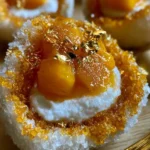
A stunning dessert featuring mango jelly centers, a creamy coconut layer, and a sparkling golden sugar crystal coating.
- Yield: 12 1x
Ingredients
- For the Mango Jelly Centers:
- 3 cups ripe mango puree
- 1/3 cup granulated sugar
- 1 tbsp lemon juice
- 2 tbsp gelatin powder
- 1/2 cup cold water
- 1 tsp vanilla extract
- For the Coconut Cream Layer:
- 8 oz cream cheese, softened
- 1/3 cup powdered sugar
- 1/4 cup coconut cream
- 1 tsp vanilla extract
- For the Golden Sugar Crystal Coating:
- 2 cups coarse sanding sugar
- 1/4 cup water
- 2 tbsp light corn syrup
- Gold luster dust, as needed
- 1 tsp edible pearl shimmer dust
- For Garnish (optional):
- Fresh mango cubes
- Edible gold flakes
Instructions
- Cook mango puree, granulated sugar, and lemon juice in a saucepan over medium heat until warmed through.
- Bloom gelatin in cold water for 5 minutes, then stir into the mango mixture until completely dissolved. Add vanilla extract and allow to cool slightly.
- Beat cream cheese, powdered sugar, coconut cream, and vanilla until smooth and fluffy.
- Pour half of the mango mixture into a parchment-lined square pan and chill until partially set.
- Spread the coconut cream layer evenly over the mango layer, then cover with the remaining mango mixture.
- Refrigerate for at least 4 hours until firm, then cut into irregular geode-like nugget shapes.
- In a saucepan, combine water and corn syrup and heat just until blended. Lightly brush the surface of each mango nugget with the syrup mixture.
- Mix sanding sugar with gold luster dust and pearl shimmer dust, then press onto the coated nuggets to create a sparkling crystal effect.
- Allow the sugar coating to set for 15 minutes before arranging on a serving platter.
- Garnish with fresh mango cubes and edible gold flakes before serving.
Notes
Serves 12. Nutritional info per serving: Calories: 225, Protein: 2g, Carbohydrates: 38g, Fat: 8g, Fiber: 1g, Sugar: 34g, Sodium: 55mg.
Nutrition
- Calories: 225
- Sugar: 34g
- Fat: 8g
- Carbohydrates: 38g
- Protein: 2g
Tried This Recipe? Leave a Comment!
Did you make this recipe? I’d love to hear how it turned out! Please leave a comment and a rating below. Your feedback helps other home cooks and supports cheerychop.com!
For more delicious inspiration, follow me on Pinterest!