Table of Contents
Sheet Pan Blackened Mahi-Mahi Sliders with High-Protein Coconut-Lime Crema and Mango Slaw – A Tropical 25-Minute Meal
I still remember the first time I made blackened mahi-mahi sliders for a backyard get-together in Brooklyn. It was one of those sticky July evenings when even the thought of turning on the stove feels oppressive. My mother back in Morocco would have reached for a tagine, but here in New York I wanted something that captured the same bold, aromatic spirit without the hours of simmering. That’s when the idea for these sheet pan fish sliders was born — the perfect marriage of my French training in quick pan sauces and the vibrant North African spice blends I grew up stirring into everything from couscous to grilled fish. The high-protein fish sliders deliver a punch of flavor that transforms humble mahi-mahi into something truly special, all while keeping the kitchen cool and the cooking time under half an hour.
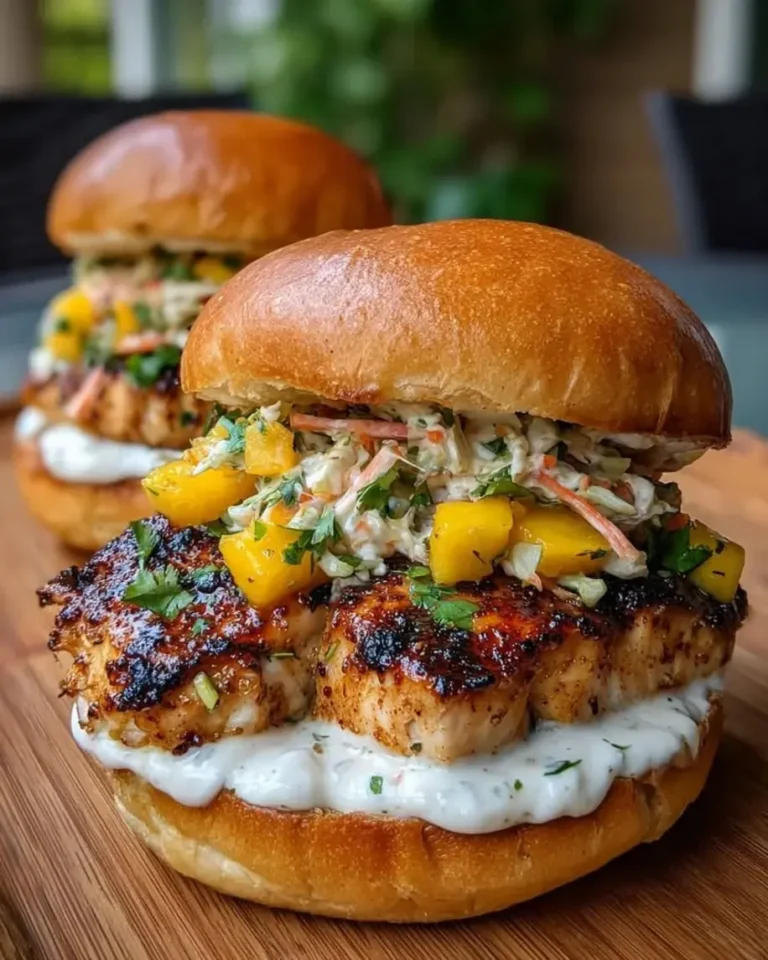
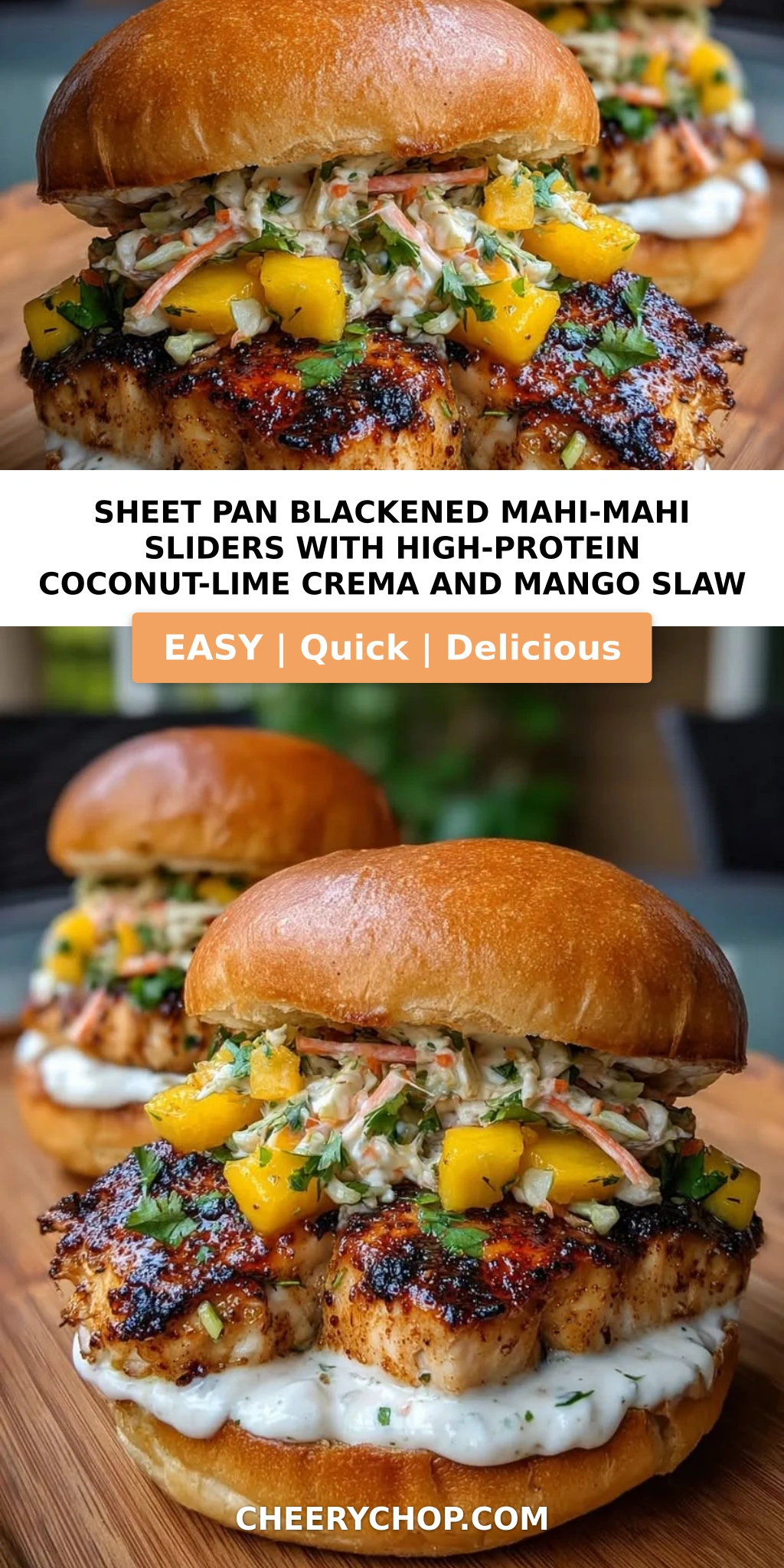
Imagine this: a perfectly blackened fillet with a smoky, slightly charred crust that crackles when you bite into it. The flesh inside is tender and flaky, soaking into a pillowy brioche bun that’s been toasted in butter. On top, a mango slaw fish sandwich component is sweet, tangy, and crunchy — fresh julienned mango and shredded red cabbage tossed with cilantro and lime. And then there’s the coconut lime crema recipe that ties everything together: thick Greek yogurt blended with velvety coconut cream, lime zest and juice, and just a whisper of honey. It’s the kind of sauce you’ll want to put on everything from tacos to roasted vegetables. The contrast of cool crema against the warm, spiced fish, the crunch of slaw against the soft bun — every bite is a mini vacation.
What sets this recipe apart from other fish sliders you’ll find online is the technique. I’ve spent years perfecting the art of blackening without burning the seasoning — it’s all about the right oven temperature and a properly lined sheet pan. I also pack every component with protein: the fish itself, the Greek yogurt-based crema, and even the slaw gets a boost from the mango’s natural fiber. As a trained chef who now balances a busy NYC food-blogging schedule, I designed these sliders to be both impressive and unfussy. No deep fryer, no complicated sauces — just one sheet pan and a few bowls. And trust me, once you try this version, you’ll never look at frozen fish sticks the same way again.
Why This Sheet Pan Blackened Mahi-Mahi Sliders Recipe Is the Best
The Flavor Secret: The blackening seasoning is my own blend — smoked paprika for warmth, cayenne for heat, garlic and onion powders for depth, and dried oregano and thyme for that earthy backbone. I learned this balance during my pastry days in Paris, where precision with spices taught me that even the smallest adjustment can make or break a dish. Here, the spice mix clings to the fish thanks to a light coat of olive oil, and the high oven heat caramelizes the sugars without letting the seasoning burn. It’s a trick I adapted from the Moroccan charmoula tradition, where herbs and spices are layered onto fish before grilling.
Perfected Texture: The sheet pan method means the fish cooks evenly on all sides without being flipped. That steady, dry heat creates a crust that’s crackly but not dried out — exactly what you want from blackened fish. I’ve experimented with broiling and pan-searing, and neither delivers the same foolproof results. The key is to line the pan with parchment and space the fillets so they’re not overcrowded. That way, the steam escapes and the char develops beautifully. My test kitchen runs (yes, I actually time everything) show that 10 minutes at 425°F is the sweet spot for 4-ounce fillets.
Foolproof & Fast: This is a complete meal on a bun in 25 minutes. The slaw comes together while the fish roasts, the creama takes two minutes of whisking, and the buns toast in the same time the fish rests. I’ve taught this recipe to beginner cooks in my Queens workshops, and they’ve all nailed it on the first try. Even if you’ve never blackened anything before, the visual cues are clear: the edges of the fish will turn a deep rusty red, and when you poke it with a fork, the flesh will separate into clean, juicy flakes. No guesswork, no stress — just incredible sliders that taste like summer.
Blackened Mahi-Mahi Sliders Ingredients
I source my mahi-mahi from the Union Square Greenmarket on Saturday mornings, where the fishmongers bring it in fresh from the Carolina coast. In Morocco, we would have used a similar firm white fish like sea bass or grouper, simply grilled over coals. But here in NYC, mahi-mahi is accessible, sustainable, and holds up beautifully to bold seasoning. For the mango, I look for Ataulfo variety — the smaller golden ones that are extra sweet and creamy — because they have less fiber and a silkier texture for slaw. The rest is likely already in your pantry: Greek yogurt, a can of coconut cream (not milk — cream is thicker), limes, cilantro, and the best brioche buns you can find.
Ingredients List
- 4 mahi-mahi fillets (4 oz each)
- 1 tbsp olive oil
- 1 tbsp blackening seasoning (smoked paprika, cayenne, garlic powder, onion powder, oregano, thyme)
- salt
- 1 ripe mango (julienned)
- 1 cup shredded red cabbage
- 1/4 cup fresh cilantro
- juice of 1 lime
- pinch of salt
- 1/2 cup Greek yogurt (0% fat)
- 2 tbsp coconut cream
- zest and juice of 1 lime
- 1 tsp honey
- pinch of salt
- 4 brioche slider buns (toasted)
- butter for toasting
Ingredient Spotlight
Mahi-Mahi: This firm, lean fish is perfect for blackening because it doesn’t fall apart easily. Look for fillets that are uniformly thick (about 1 inch) and smell like clean ocean water, not fishy. If you can’t find mahi-mahi, swordfish or halibut work wonderfully — just adjust the cooking time if the fillets are thicker. Frozen mahi-mahi is fine; thaw overnight in the fridge and pat dry thoroughly before seasoning.
Blackening Seasoning: You can buy a pre-made blend, but I highly recommend making your own. The recipe I give above yields about 2 tablespoons, and it keeps in a sealed jar for months. Smoked paprika is non-negotiable — it’s what gives that deep, almost campfire-like flavor. If you want less heat, reduce the cayenne to 1/4 teaspoon.
Greek Yogurt (0% fat): This is the high-protein powerhouse of the crema. Full-fat works too, but the crema will be slightly richer (and honestly, still delicious). Use a thick, strained yogurt like Fage or Chobani — watery yogurt will make the crema runny. If you’re dairy-free, substitute with a thick plant-based yogurt and increase the coconut cream to 3 tablespoons to compensate for the lack of fat.
Coconut Cream: This is the thick, solid part that rises to the top of a can of full-fat coconut milk. I always keep a can in my pantry for quick curries and sauces. Don’t confuse it with cream of coconut (which is sweetened) — we want the unsweetened kind. A tip: refrigerate the can overnight so the cream solidifies, then scoop it off.
| Original Ingredient | Best Substitution | Flavor / Texture Impact |
|---|---|---|
| Mahi-mahi | Swordfish or halibut | Slightly firmer, still great with blackening |
| Greek yogurt (0% fat) | Full-fat Greek yogurt or thick plant-based yogurt | Richer if full-fat; plant-based may need extra coconut cream |
| Mango (fresh) | Frozen mango, thawed and diced, or 1 cup papaya | Frozen mango softer; papaya less sweet, more tropical |
| Brioche buns | Potato rolls or whole-wheat slider buns | Potato rolls softer; whole-wheat less tender |
How to Make Sheet Pan Blackened Mahi-Mahi Sliders — Step-by-Step
Follow these steps and you’ll have restaurant-quality sliders in under half an hour. I’ve broken down each stage with pro tips so you can skip the trial-and-error — because life’s too short for dry fish or soggy slaw.
Step 1: Season the Fish
Preheat your oven to 425°F (220°C). Pat the mahi-mahi fillets dry with paper towels — this is crucial for the seasoning to stick and the crust to form. Place them on a lined sheet pan (I use parchment paper, not foil, because foil can reflect heat and hinder browning). Drizzle with olive oil and rub it all over, then sprinkle the blackening seasoning and salt evenly on both sides. Use your hands to press it gently into the flesh so it adheres.
💡 Sara’s Pro Tip: For the best crust, season the fish 10 minutes before cooking and leave it uncovered on the counter. This allows the salt to draw out a little moisture, which then reabsorbs, making the seasoning stick better. French salting technique that works every time!
Step 2: Roast the Fish
Roast the mahi-mahi for 10 minutes, without flipping. The edges will turn a deep reddish-brown and begin to char slightly. To check doneness, insert a fork into the thickest part and twist gently — the fish should flake easily and look opaque throughout. If you prefer a darker crust, you can finish under the broiler for 1 minute, but watch it carefully; the sugar in the seasoning can burn quickly.
⚠️ Common Mistake to Avoid: Overcrowding the pan. Leave at least an inch between fillets. If they’re crowded, they’ll steam instead of blacken, and you’ll lose that gorgeous char. Use a second sheet pan if needed.
Step 3: Make the Mango Slaw
While the fish is roasting, prepare the slaw. Using a sharp knife or a julienne peeler, cut the mango into thin matchsticks. In a medium bowl, combine the mango, shredded red cabbage, chopped cilantro, lime juice, and a pinch of salt. Toss well and let it sit for at least 5 minutes. This resting time allows the cabbage to soften slightly and the flavors to meld. The slaw should be bright and crunchy, not soggy.
💡 Sara’s Pro Tip: If your mango is very ripe (soft to the touch), handle it gently so it doesn’t turn into mush. I like using a mandoline with a julienne blade for perfect, even strips — a trick I learned in Paris for vegetable jardinière cuts.
Step 4: Whip the Coconut-Lime Crema
In a small bowl, whisk together the Greek yogurt, coconut cream, lime zest, lime juice, honey, and a pinch of salt. Start with a fork and then switch to a whisk to get it smooth and creamy. The mixture should be thick but spoonable — if it’s too thick, add a teaspoon of water or extra lime juice. Taste and adjust the salt or acidity as needed. This crema is also fantastic as a dip for raw veggies or a drizzle over tacos.
⚠️ Common Mistake to Avoid: Using lime juice that isn’t fresh. Bottled juice is flat and can make the creama taste metallic. Always roll the lime on the counter before juicing to release the oils, and zest before you cut — it’s much easier.
Step 5: Toast Buns and Assemble
Slice the brioche slider buns in half. Heat a skillet or griddle over medium heat and add a pat of butter. Place the buns cut-side down and toast until golden brown and fragrant, about 1–2 minutes. If you’re feeding a crowd, you can toast them on the sheet pan in the oven for the last 2 minutes of the fish roasting time — just spread a little butter on the cut sides first. To assemble, spread the coconut-lime crema generously on both halves of each bun. Place a blackened mahi-mahi fillet (I cut each fillet in half crosswise to fit the sliders) on the bottom half, then pile the mango slaw on top. Close the bun and serve immediately, while the fish is still warm and the bun is crispy.
💡 Sara’s Pro Tip: For extra flavor, sprinkle a pinch of flaky sea salt and a few extra cilantro leaves on top of the slaw before closing the bun. It’s a tiny step that makes a big difference — a final touch I picked up from the street food vendors at Smorgasburg.
| Step | Action | Duration | Key Visual Cue |
|---|---|---|---|
| 1 | Season fish | 5 mins | Seasoning evenly coats fillets |
| 2 | Roast fish | 10 mins | Edges charred, fish flakes with fork |
| 3 | Make slaw | 5 mins + rest | Cabbage slightly softened, mango bright |
| 4 | Make crema | 3 mins | Smooth, thick, pale green tint |
| 5 | Toast buns & assemble | 3 mins | Buns golden, crema spread, slaw piled high |
Serving & Presentation
I love serving these sliders on a large wooden board with extra lime wedges and a bowl of the remaining crema for dipping. The contrast of the dark blackened fish against the bright mango and white crema is stunning — a real crowd-pleaser for backyard dinners or game-day parties. For a more elevated presentation, you can stack the sliders on individual little plates and tuck a sprig of cilantro underneath each bun.
In Morocco, we would serve this alongside a simple cucumber and tomato salad with a tangy lemon dressing. Here in New York, I often pair these sliders with crispy sweet potato fries or a refreshing cucumber-jalapeño agua fresca. The slaw also doubles as a side salad if you want to keep the carbs low — just skip the bun and serve the fish and slaw over a bed of greens with extra crema drizzled on top.
If you’re hosting, consider setting up a slider bar: let guests build their own by placing the fish, slaw, crema, and extra toppings (sliced avocado, pickled red onions, hot sauce) in separate bowls. I did this for a friend’s birthday party and everyone raved about how fun and interactive it was. Just make sure the fish stays warm in the oven on a low heat setting while people assemble.
| Pairing Type | Suggestions | Why It Works |
|---|---|---|
| Side Dish | Sweet potato fries, cucumber salad, coconut rice | Complements tropical flavors; sweet potato fries add crunch |
| Sauce / Dip | Extra coconut-lime crema, spicy mayo, mango-hot sauce | Adds moisture and heat; crema is already a star |
| Beverage | Agua fresca, margarita, iced tea with mint | Refreshing and citrusy; cuts through the richness |
| Garnish | Lime wedges, cilantro sprigs, sliced avocado | Brightens presentation; avocado adds creaminess |
Make-Ahead, Storage & Reheating
As a busy New York food blogger, I’m all about prepping components in advance. The crema and slaw can both be made a day ahead — just keep them in separate airtight containers in the fridge. The slaw will release some liquid overnight, so give it a quick stir and drain off any excess before using. The crema actually gets better as the flavors meld. The fish is best cooked fresh, but you can season it up to 4 hours ahead and store it in the fridge, covered. When you’re ready, just roast it straight from the fridge — add an extra minute to the cooking time.
| Method | Container | Duration | Reheating Tip |
|---|---|---|---|
| Refrigerator | Airtight container | Up to 2 days | Reheat fish in a 300°F oven for 5-7 mins to avoid drying |
| Freezer | Wrap fish individually in plastic wrap inside a freezer bag | Up to 1 month | Thaw in fridge overnight; reheat at 350°F for 8-10 mins |
| Make-Ahead | Slaw & crema in separate containers | 1 day ahead | Assemble buns just before serving; fish fresh is best |
For reheating leftover sliders, I strongly recommend disassembling them first. The bun will get soggy if microwaved, so separate the components. Toast the bun in a dry skillet, warm the fish in a low oven (300°F for 5 minutes), and refresh the slaw with a spritz of lime juice. The crema can be spooned cold straight from the fridge. It’s a bit of extra work, but each component tastes just as good as the first day.
Variations & Easy Swaps
| Variation | Key Change | Best For | Difficulty Impact |
|---|---|---|---|
| Spicy Mango-Jalapeño Slaw | Add 1 minced jalapeño to slaw | Extra heat lovers | No change |
| Gluten-Free Sliders | Use gluten-free slider buns or lettuce wraps | Gluten-free diet | Easy: lettuce wraps skip toasting |
| Dairy-Free Crema | Replace yogurt with canned coconut cream + 1 tbsp lime juice | Dairy-free/vegan | Easy: just adjust consistency |
Spicy Mango-Jalapeño Slaw
For those who, like my Moroccan grandmother, believe more heat is always better, add one small minced jalapeño (seeds and ribs removed if you prefer mild heat) to the slaw. The jalapeño’s green garden flavor pairs beautifully with the sweet mango and the smoky fish. I sometimes add a pinch of cumin too for extra warmth — a spice often used in North African salads.
Gluten-Free Sliders
Swap the brioche buns for your favorite gluten-free slider buns (look for ones that are sturdy enough to hold the filling) or use large butter lettuce leaves as wraps. Lettuce wraps are actually my go-to when I’m keeping things low-carb — just spoon the fish and slaw into a cup of butter lettuce, then drizzle with crema. The crunch of the lettuce adds another layer of texture.
Dairy-Free Coconut Crema
For a fully dairy-free version, omit the Greek yogurt and use only coconut cream from a full-fat can. Whisk in the lime zest, juice, and honey as directed, and add a pinch of salt. The consistency will be slightly thinner, so I like to add 1 teaspoon of cornstarch and a splash of water if I’m serving it immediately. Let it sit for 5 minutes to thicken. This version is also vegan-friendly and absolutely delicious.
What is the best way to blacken mahi-mahi on a sheet pan without burning the seasoning?
The key to blackening mahi-mahi on a sheet pan without burning the seasoning is to control the oven temperature and use a lined pan. Preheat your oven to 425°F and line the sheet pan with parchment paper (not foil, which can reflect heat and cause uneven browning). Rub the fillets with just enough olive oil to coat them lightly before applying the seasoning — too much oil can cause the spices to over-darken. Also, make sure your blackening seasoning doesn’t contain added sugar, which can burn quickly. If you see the edges getting too dark before the fish is cooked through, you can tent the pan with foil for the last 2-3 minutes. Always check doneness by flaking the fish with a fork; the flesh should be opaque and separate easily.
Can I substitute the mahi-mahi with another firm white fish for these sliders?
Absolutely. Mahi-mahi is fantastic, but other firm white fish work beautifully. I often use swordfish, halibut, or cod (Pacific cod is best). Swordfish holds up especially well because it has a meaty texture that doesn’t fall apart. If you use a thinner fillet like flounder, reduce the cooking time by 2-3 minutes. For a more affordable option, try tilapia — just be aware it’s a bit softer, so handle it gently. The key is to ensure the fillets are at least 1/2 inch thick; thinner pieces will overcook before the crust forms. Adjust the seasoning amount if your fish is larger or smaller.
How do you make a high-protein coconut-lime crema from scratch for sliders?
Making a high-protein crema from scratch is surprisingly simple. Start with 1/2 cup of plain Greek yogurt (0% fat for the highest protein content) and add 2 tablespoons of coconut cream (the solid part from a can of full-fat coconut milk). Whisk in the zest and juice of one lime, 1 teaspoon honey, and a pinch of salt. For a thicker consistency, you can also blend in a tablespoon of cottage cheese (I’ve done this when I want an extra protein boost). The result is a creamy, tangy sauce with about 10 grams of protein per serving (depending on your yogurt). Keep it refrigerated; it will thicken slightly as it chills.
What is the simplest way to prepare mango slaw to serve with blackened fish sliders?
The simplest mango slaw requires just a few ingredients and takes five minutes. Peel and julienne one ripe mango (I use an Ataulfo mango because it’s less fibrous). Combine it with 1 cup of pre-shredded red cabbage from the store (it saves time). Add a handful of fresh cilantro, the juice of one lime, and a pinch of salt. Toss everything together and let it sit for 5 minutes. That’s it — no vinegar, no complicated dressing. The mango’s natural sweetness and the lime’s acidity do all the work. If you want to add crunch, toss in a few crushed peanuts or sesame seeds right before serving.
Can I make the blackened mahi-mahi sliders ahead of time for a party?
You can certainly prep the components ahead, but I recommend assembling the sliders just before serving. The crema and slaw can be made a day in advance and stored separately in the fridge. The fish is best roasted the day of, but you can season it up to 4 hours ahead and keep it chilled. To serve, simply roast the fish while you toast the buns, then assemble. If you need to cook the fish fully ahead, cool it quickly, refrigerate, and reheat gently in a 300°F oven for 5–7 minutes. Be aware that the texture won’t be quite as flaky as freshly roasted, but it’s still delicious.
What can I use instead of brioche buns for a lower-carb option?
For a lower-carb version, you have several excellent options. Large butter lettuce leaves (like Bibb or Boston) make wonderful wraps — just spoon the fish, slaw, and crema directly into the leaf. You can also use portobello mushroom caps, grilled and sliced in half, as a hearty bun alternative. Another favorite of mine is using two halves of a roasted sweet potato as the bun; just slice a sweet potato lengthwise into 1/2-inch slices, roast at 400°F for 15 minutes, and use them in place of bread. Each of these alternatives lowers the carb count significantly while adding unique flavors and textures.
How do I prevent the mango slaw from getting watery?
Mango slaw can release liquid as it sits because the mango and cabbage both contain water. To prevent a soggy slaw, start by using a very ripe but not overly soft mango — overripe mango can be mushy and release more juice. After tossing the slaw with lime juice and salt, let it sit for 5 minutes, then drain any excess liquid before piling it onto the sliders. If you’re making the slaw more than a few hours ahead, store it in a colander over a bowl in the fridge so the liquid can drain. Also, don’t add the salt until just before serving if you’re prepping ahead, because salt draws out moisture.
What is blackening seasoning and can I buy it pre-made?
Blackening seasoning is a spice blend traditionally used in Cajun and Creole cooking. It’s made from smoked paprika, cayenne pepper, garlic powder, onion powder, dried oregano, thyme, and often a little black pepper and salt. The combination is designed to create a dark, flavorful crust on fish or meat when cooked over high heat. Yes, you can absolutely buy pre-made blackening seasoning at most grocery stores — brands like Tony Chachere’s or McCormick are reliable. However, I find homemade allows you to control the heat (reduce cayenne if you prefer mild) and skip any additives. Store it in a jar for up to 6 months.
Can I use frozen mahi-mahi for this recipe?
Frozen mahi-mahi works perfectly for this recipe, but you must thaw it properly. Place the frozen fillets in the refrigerator overnight, or submerge them in a bowl of cold water (in a sealed bag) for 30 minutes. After thawing, pat the fish very dry with paper towels — excess moisture will prevent the seasoning from sticking and the crust from forming. If your fillets are thin or uneven in thickness, adjust the cooking time: check for doneness at the 8-minute mark. I’ve used frozen mahi-mahi many times when fresh wasn’t available, and the sliders are still fantastic.
What sides go well with blackened mahi-mahi sliders?
These sliders are versatile enough to pair with a wide range of sides. For a classic tropical meal, serve with coconut rice and a simple cucumber-tomato salad. If you want something more American-comfort, sweet potato fries with a chipotle aioli are a match made in heaven. I also love a crunchy broccoli slaw or a cool avocado-corn salad. For a lighter option, a simple green salad with cilantro-lime vinaigrette is perfect. And don’t forget the extra dipping sauces — the coconut-lime crema is great, but a sriracha-mayo or mango-chili sauce adds a fun kick.
Share Your Version!
I hope you fall in love with these blackened mahi-mahi sliders as much as I did creating them. They’ve become a summer staple in my NYC kitchen — the kind of recipe that makes you feel like you’re on vacation even if you’re eating on a fire escape. I’d love to know how they turn out for you. Did you try a variation? Use a different fish? Find an even quicker shortcut? Drop a comment below and leave a star rating — your feedback helps me and everyone else who cooks from this blog.
And if you snap a photo, don’t be shy — tag me on Instagram @cheerychop or use #cheerychoprecipes. I love seeing your tablescapes and kitchen creations. It’s the best part of being a food blogger, connecting with you all. One last question: what’s one flavor you’d add to these sliders to make them totally yours? Let me know in the comments!
From my NYC kitchen to yours — I hope this recipe brings as much warmth to your table as it does to mine. — Sara 🧡
Love This Recipe? Save It to Pinterest!
If you enjoyed this Sheet Pan Blackened Mahi-Mahi Sliders with High-Protein Coconut-Lime Crema and Mango Slaw recipe, don’t let it get lost in your browser tabs! 😄 Pin it now so you can find it again anytime — and explore hundreds more tried-and-tested recipes waiting for you on my Pinterest boards.
👉 Follow Sara on Pinterest @chefrecipes2
📌 Pin this recipe · 🔁 Re-pin your favorites · 💬 Tag me when you make it — I love seeing your creations!
Did you try this recipe? I’d love to hear from you!
Rate it, leave a comment, or share your photo on Instagram tagging @cheerychop. Your feedback helps me create better recipes for our community. Thank you! 🧡
Sheet Pan Blackened Mahi-Mahi Sliders with High-Protein Coconut-Lime Crema and Mango Slaw
Sweet, spicy, and completely tropical! Crispy blackened mahi-mahi roasted on one sheet pan, stacked in soft brioche buns with a sweet mango slaw and the creamiest coconut-lime high-protein crema you have ever drizzled. Summer on a plate in 25 minutes.
- Prep Time: 15 minutes
- Cook Time: 10 minutes
- Total Time: 25 minutes
- Yield: 4 1x
Ingredients
- 4 mahi-mahi fillets (4 oz each)
- 1 tbsp olive oil
- 1 tbsp blackening seasoning (smoked paprika, cayenne, garlic powder, onion powder, oregano, thyme)
- salt
- 1 ripe mango (julienned)
- 1 cup shredded red cabbage
- 1/4 cup fresh cilantro
- juice of 1 lime
- pinch of salt
- 1/2 cup Greek yogurt (0% fat)
- 2 tbsp coconut cream
- zest and juice of 1 lime
- 1 tsp honey
- pinch of salt
- 4 brioche slider buns (toasted)
- butter for toasting
Instructions
- Preheat oven to 425F (220C). Coat mahi-mahi fillets in olive oil, rub generously with blackening seasoning and salt. Place on a lined sheet pan.
- Roast for 10 minutes until the edges are slightly charred and the fish flakes cleanly.
- Toss julienned mango and red cabbage with cilantro, lime juice, and salt. Let sit 5 minutes so the slaw softens and the flavors come together.
- Whisk Greek yogurt, coconut cream, lime zest, lime juice, honey, and salt until thick and smooth.
- Toast brioche buns cut-side down in a buttered pan until golden. Spread coconut-lime crema on both halves, lay the blackened mahi fillet, pile the mango slaw generously on top, and serve immediately.
Tried This Recipe? Leave a Comment!
Did you make this recipe? I’d love to hear how it turned out! Please leave a comment and a rating below. Your feedback helps other home cooks and supports cheerychop.com!
For more delicious inspiration, follow me on Pinterest!