Table of Contents
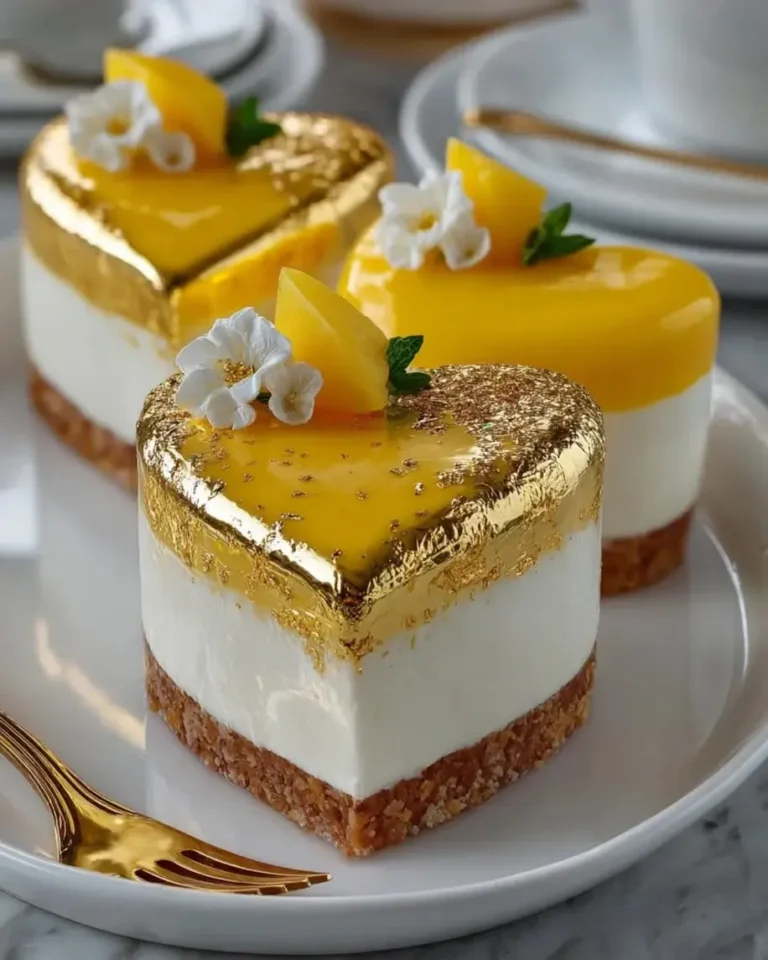
Mango Vanilla Silk Hearts with Golden Mirror Coating – A Stunning Dessert with Edible Gold
I still remember the first time I made a golden mirror glaze—it was in a pastry kitchen in Paris, standing next to a chef who told me that a mirror coating should be so smooth you can see your own reflection. That moment stayed with me. Years later, here in my New York City apartment, I wanted to create something that felt equally luxurious but also personal—something that reminded me of the mangoes my mother would bring home from the market in Morocco, their fragrance filling the whole kitchen. That is how this mango vanilla silk hearts recipe was born. These little heart-shaped mousse cakes combine the floral sweetness of Alphonso mangoes with the comforting warmth of vanilla, all wrapped in a golden mirror coating that shimmers like liquid sunlight. This is a golden mirror coating dessert that feels fancy but is absolutely doable at home with the right technique.
The first bite is pure silk: the mango mousse is impossibly light and creamy, with bright tropical notes from the puree and a gentle tang from lemon juice that keeps it from being cloying. The vanilla sponge base adds a soft, buttery foundation—like a whisper of pastry cream and cake in one. And then comes the golden mirror coating: it cracks slightly as you tap it with a spoon, then melts on your tongue into a sweet, glossy ribbon of white chocolate and condensed milk. The edible gold luster dust catches the light and makes each heart look like a jewel. I love serving these at dinner parties when I want to hear that collective gasp from guests as the plate hits the table. It is a mirror glaze mango hearts moment that delivers both on looks and on flavor.
What makes my version of this edible gold dessert recipe different is that I balance the richness of the mirror coating with a lighter-than-air mousse that lets the mango flavor shine—not just the sugar. I also use a simple vanilla sponge that can be made in one bowl, so you do not need a full pastry setup. Most recipes skip this base, but I find it essential for structure and texture. Over the years I have tested this process dozens of times, and I have a pro tip that will save you from the most common mirror glaze mishap: temperature control is everything. Get that right, and your coating will be flawless every time. Below I will walk you through each step so you can make these stunning hearts without any guesswork.
Why This Mango Vanilla Silk Hearts Recipe Is the Best
The secret to this recipe lies in the interplay between acidity and creaminess. I grew up eating mangoes in Morocco where we often paired them with a pinch of salt or a squeeze of lime—a trick I have carried into this mousse. The lemon juice in the mango puree does more than just balance the sugar; it brightens the entire dessert and makes the vanilla taste warmer and more aromatic. My French training taught me that mousse should be airy but stable, so I use gelatin in just the right proportion to hold the shape without making it rubbery. Every ingredient has a purpose, and the result is a mango mousse heart cake that is both elegant and deeply satisfying.
Texture is where this recipe truly stands apart. The vanilla sponge is intentionally thin—just a quarter-inch layer—so it does not overwhelm the mousse. I bake it until the edges are just golden and the center springs back, then cut it into heart shapes that fit perfectly inside the mold. The mousse itself is folded with whipped cream at soft peaks, which gives it that characteristic silkiness. And the golden mirror coating is poured at exactly 95°F—too warm and it will slide right off; too cool and it will clump. This is a technique I learned in Paris and have refined over a decade of home cooking. When done right, the coating sets into a flawless, shiny shell that makes a satisfying sound when you break through it with a spoon.
I have designed this recipe to be foolproof for home cooks. You do not need a stand mixer, a blow torch, or any specialty equipment beyond a heart-shaped silicone mold and an instant-read thermometer. The components can be made in stages, which is perfect if you are balancing a busy schedule like mine. I often prep the sponge and the mousse base on a Saturday afternoon, then assemble and freeze overnight. The next day, I make the glaze and finish the hearts in under 30 minutes. This recipe works the first time if you follow the temperatures and timing I have laid out. I have tested it with friends who are novice bakers, and every single one of them pulled off a beautiful mirror glaze mango hearts dessert.
Mango Vanilla Silk Hearts Ingredients
I source my mangoes from the Union Square Greenmarket in the summer and from a small specialty grocery in Jackson Heights when the weather turns cold. For this recipe you want a mango that is intensely sweet and aromatic—Alphonso or Kent are my top choices. The rest of the ingredients are simple pantry staples, but quality matters. I use a good vanilla extract, not imitation, because it is one of the two main flavors. And for the golden mirror coating, choose a white chocolate that you would actually enjoy eating on its own. That is the ingredient that carries the glaze, so it needs to taste clean and creamy.
Ingredients List
- For the Mango Vanilla Mousse: 2 cups mango puree, 1/3 cup granulated sugar, 1 tbsp lemon juice, 1 tsp vanilla extract, 1 cup heavy cream, 2 tsp powdered gelatin, 2 tbsp cold water
- For the Vanilla Sponge Base: 1 cup all-purpose flour, 1/2 tsp baking powder, 1/4 tsp salt, 1/4 cup unsalted butter (softened), 1/3 cup granulated sugar, 1 large egg, 1/2 tsp vanilla extract, 1/4 cup milk
- For the Golden Mirror Coating: 1 cup white chocolate (finely chopped), 1/3 cup sweetened condensed milk, 1/4 cup water, 1/2 cup granulated sugar, 2 tsp powdered gelatin, 2 tbsp cold water, yellow food coloring (as needed), edible gold luster dust (as needed)
- For Garnish (optional): Thin mango slices, gold flakes
Ingredient Spotlight
Mango Puree: This is the backbone of your mousse. Use fresh or high-quality frozen puree—if using fresh, peel and blend ripe mangoes until completely smooth. Do not add extra water. The natural pectin in the mango helps stabilize the mousse alongside the gelatin.
White Chocolate: For the mirror coating, the white chocolate must be finely chopped so it melts evenly. Avoid white chocolate chips, which often contain stabilizers that prevent smooth melting. Use a bar-style couverture or a high-quality baking bar.
Powdered Gelatin: This is what gives both the mousse and the glaze their structure. Bloom it in cold water for at least 5 minutes before warming it. Do not skip the blooming step—adding dry gelatin directly will result in lumps and an uneven set.
Heavy Cream: Whip it to soft peaks only. Over-whipping will make the mousse grainy. If you accidentally over-whip, fold in a spoonful of unwhipped cream to loosen it back up.
| Original Ingredient | Best Substitution | Flavor / Texture Impact |
|---|---|---|
| Mango puree (fresh) | Frozen mango puree, thawed | Nearly identical; drain excess liquid if watery |
| Heavy cream | Coconut cream (chilled, solid part only) | Adds a subtle coconut note; lighter mousse |
| White chocolate | High-quality white chocolate couverture | Smoother glaze, more stable set |
| All-purpose flour | Gluten-free 1-to-1 baking flour | Slightly more delicate sponge; add 1 tbsp milk |
How to Make Mango Vanilla Silk Hearts — Step-by-Step
Let me walk you through each stage of this recipe. I have broken it into manageable parts so you can work at your own pace. The key is to read through the entire method before starting so you know what to expect. This is a mango vanilla silk hearts recipe that rewards patience, but the actual hands-on time is shorter than you might think.
Step 1: Prepare the Vanilla Sponge
Preheat your oven to 350°F (175°C). Grease and line a small baking pan—I use an 8×8-inch square pan. In a small bowl, whisk together 1 cup all-purpose flour, 1/2 tsp baking powder, and 1/4 tsp salt. In a separate bowl, beat 1/4 cup softened unsalted butter with 1/3 cup granulated sugar until light and fluffy, about 2 minutes. Add 1 large egg and 1/2 tsp vanilla extract, mixing until combined. Gradually alternate adding the dry ingredients and 1/4 cup milk, starting and ending with the flour mixture. Mix until just smooth—do not over-beat. Spread the batter evenly into the pan and bake for 18–20 minutes, until a toothpick inserted into the center comes out clean and the edges are lightly golden. Cool the sponge completely in the pan, then turn it out onto a cutting board. Use a heart-shaped cookie cutter that fits inside your mousse molds to cut out 8 heart-shaped pieces. Set aside.
💡 Sara’s Pro Tip: For the fluffiest sponge, make sure your butter is truly at room temperature—soft enough that your finger leaves an indent without sinking in. Cold butter will not cream properly and will give you a dense cake that sinks in the mousse.
Step 2: Make the Mango Vanilla Mousse
In a small bowl, sprinkle 2 tsp powdered gelatin over 2 tbsp cold water. Let it sit for 5–7 minutes to bloom. In a medium saucepan, combine 2 cups mango puree, 1/3 cup granulated sugar, and 1 tbsp lemon juice. Warm over medium heat, stirring occasionally, until the sugar dissolves and the mixture is just warm to the touch—do not let it boil. Remove from heat and stir in 1 tsp vanilla extract, then add the bloomed gelatin and stir until fully dissolved. Set aside to cool to room temperature, about 20 minutes. While it cools, pour 1 cup heavy cream into a chilled bowl and whip with a hand mixer or whisk until soft peaks form—the cream should hold its shape but still be soft and billowy. Once the mango mixture is cool, fold the whipped cream into it in three additions, using a gentle figure-eight motion to keep the mousse light. Work quickly but gently so you do not deflate the cream.
⚠️ Common Mistake to Avoid: Adding the mango mixture to the cream while it is still even slightly warm will melt the cream and give you a liquid mousse that will not set. Wait until it feels cool to the touch—you can speed this up by placing the saucepan in an ice bath and stirring for a few minutes.
Step 3: Assemble and Freeze the Hearts
Arrange your heart-shaped silicone molds on a small baking sheet. Fill each mold about halfway with the mango mousse. Gently press one vanilla sponge heart into the center of each mold, making sure it is fully surrounded by mousse. Spoon the remaining mousse over the sponge to fill the molds completely. Use a small offset spatula or the back of a spoon to level the tops. Tap the baking sheet gently on the counter to release any air bubbles. Freeze the hearts for at least 4 hours, or overnight. They need to be completely solid before you unmold them for glazing.
💡 Sara’s Pro Tip: If you are short on time, freeze the hearts for a minimum of 4 hours. But if you can leave them overnight, the texture will be even creamier and the unmolding will be effortless. Run the back of the mold under warm water for 3–4 seconds if the hearts stick.
Step 4: Prepare the Golden Mirror Coating
In a small bowl, bloom 2 tsp powdered gelatin in 2 tbsp cold water for 5 minutes. In a small saucepan, combine 1/4 cup water, 1/2 cup granulated sugar, and 1/3 cup sweetened condensed milk. Heat over medium-low, stirring constantly, until the sugar dissolves and the mixture is smooth—about 3 minutes. Do not let it boil. Remove from heat and stir in the bloomed gelatin until fully melted. Place 1 cup finely chopped white chocolate in a heatproof bowl. Pour the hot cream mixture over the chocolate and let it sit for 1 minute, then stir slowly from the center outward until the chocolate is fully melted and the glaze is smooth and glossy. Add a few drops of yellow food coloring and a generous pinch of edible gold luster dust. Stir until the color is even. Let the glaze cool to 95°F—about 85–90°F is ideal for pouring. Use an instant-read thermometer to check. If it gets too thick, gently warm it over a double boiler for a few seconds.
⚠️ Common Mistake to Avoid: If the glaze is too hot (above 100°F), it will slide off the frozen hearts and pool at the bottom rather than forming a smooth, even coat. If it is too cool, it will clump and leave lumps on the surface. Keep a thermometer handy and aim for 95°F for the perfect pour.
Step 5: Glaze and Garnish the Hearts
Remove the frozen hearts from the molds and place them on a wire rack set over a baking sheet lined with parchment paper to catch excess glaze. Working one at a time, pour the golden mirror coating evenly over each heart, starting from the center and letting it flow over the edges. Do not touch the surface—let gravity do the work. Allow the glaze to set for 10–15 minutes at room temperature. The coating should be firm to the touch but still glossy. Before the glaze fully sets, garnish with thin mango slices and a sprinkle of gold flakes. Use a small offset spatula to transfer each heart to a serving plate. Serve immediately or refrigerate for up to 6 hours.
💡 Sara’s Pro Tip: To get the cleanest edges on your glazed hearts, use a small paring knife to trim off any drips at the base before the glaze sets completely. This gives each heart a neat, professional look that makes the golden coating really pop.
| Step | Action | Duration | Key Visual Cue |
|---|---|---|---|
| 1 | Bake vanilla sponge | 18–20 min | Toothpick clean, edges golden |
| 2 | Bloom gelatin for mousse | 5–7 min | Gelatin absorbs water, looks spongy |
| 3 | Warm mango puree mixture | 3–4 min | Sugar dissolved, mixture warm to touch |
| 4 | Cool mango mixture | 20 min | Room temperature, not warm |
| 5 | Whip cream to soft peaks | 3–4 min | Cream holds shape softly, not stiff |
| 6 | Fold cream into mango | 2 min | Uniform color, no streaks |
| 7 | Assemble and freeze hearts | 4 hrs (min) | Fully solid, unmolds cleanly |
| 8 | Prepare mirror glaze | 10–12 min | Glossy, smooth, no lumps |
| 9 | Cool glaze to 95°F | 5–8 min | Thermometer reads 95°F |
| 10 | Pour glaze over hearts | 30 sec per heart | Even coat, no bare spots |
Serving & Presentation
These Mango Vanilla Silk Hearts are best served chilled, straight from the refrigerator, on a plate that lets their golden coating take center stage. I love using a simple white or blush-colored plate—the contrast makes the mirror glaze look even more luminous. Place one heart in the center of each plate and add a few thin slices of fresh mango on the side. If you have extra gold flakes, sprinkle a few over the plate for a touch of glamour. For a more dramatic presentation, you can also serve the hearts on a bed of crushed pistachios or alongside a dollop of coconut cream. The nutty green pistachios against the golden coating is a color combination that stops dinner guests mid-conversation.
In my family, we often serve these hearts after a tagine or a North African-inspired meal, and the tropical lightness of the mango is the perfect palate cleanser. But they also work beautifully after a rich Italian dinner or alongside a cup of mint tea. In my NYC apartment, I have served them at everything from birthday dinners to Valentine’s Day gatherings, and they always get the same reaction: complete silence for the first bite, followed by a chorus of compliments. The golden mirror coating catches the light and makes everyone feel like they are eating something truly special. If you are serving these at a party, I recommend glazing them no more than 6 hours ahead so the coating stays perfectly shiny.
Pairing these hearts with the right accompaniment can elevate the whole experience. A light, floral tea like jasmine or chamomile complements the vanilla and mango without overpowering them. For a beverage pairing, a chilled glass of Moscato d’Asti or a sparkling lemonade works beautifully. If you want to go all out, serve the hearts with a small side of passion fruit coulis—the tartness of the passion fruit cuts through the sweetness of the glaze and creates a beautiful flavor contrast. I always tell my readers: presentation is not about perfection—it is about care. Arrange the mango slices in a fan, place the gold flakes where the light will catch them, and serve with confidence.
| Pairing Type | Suggestions | Why It Works |
|---|---|---|
| Side Dish | Crushed pistachios, fresh berries, mango slices | Adds crunch, color, and acidity to balance sweetness |
| Sauce / Dip | Passion fruit coulis, coconut cream, raspberry sauce | Tart or creamy elements offset the rich glaze |
| Beverage | Moscato d’Asti, sparkling lemonade, jasmine tea | Light, floral, and not too sweet—complements the mango |
| Garnish | Gold flakes, edible flowers, mint sprigs | Adds visual height and a touch of elegance |
Make-Ahead, Storage & Reheating
This is one of those desserts that practically begs to be made ahead, which is why I love it for dinner parties. In my busy New York City schedule, I rarely have time to assemble a multi-component dessert on the day of an event. With this mango vanilla silk hearts recipe, you can do almost all of the work in advance and finish the glaze the day you serve. The sponge can be baked up to 3 days ahead and stored in an airtight container at room temperature. The mousse can be made and assembled into the molds up to 2 days ahead and kept in the freezer. Once the hearts are glazed, they should be served within 6 hours for the best shine, but they will still taste amazing the next day if refrigerated.
| Method | Container | Duration | Reheating Tip |
|---|---|---|---|
| Refrigerator | Airtight container, single layer | Up to 3 days | Serve chilled; do not reheat |
| Freezer | Wrap individually in plastic wrap, then foil | Up to 1 month | Thaw in fridge 4 hours; glaze may lose some shine |
| Make-Ahead | Assemble in molds, freeze uncovered until solid, then cover | Up to 2 weeks | Glaze directly from frozen—no thawing needed |
If you have leftover glazed hearts, store them in the refrigerator in a single layer inside an airtight container. The mirror coating may soften slightly after 24 hours, but the flavor will still be wonderful. I would not recommend freezing glazed hearts, as the coating can crack and weep when thawed. Instead, keep the unglazed frozen hearts in the freezer for up to a month, then glaze them fresh when you are ready to serve. This is actually my preferred method: I keep a stash of frozen mousse hearts in my freezer at all times during mango season, and I can whip up a batch of mirror glaze in 15 minutes when unexpected guests arrive. It feels like magic, but it is really just smart prep.
Variations & Easy Swaps
One of the reasons I love this mango vanilla silk hearts recipe is how easily it bends to the seasons, the pantry, or a whim. Over the years, I have tested a handful of variations that keep the heart-shaped presentation and the mirror coating intact while changing up the flavor profile in exciting ways. Below are three of my favorites, each tested in my own kitchen so you can try them with confidence.
| Variation | Key Change | Best For | Difficulty Impact |
|---|---|---|---|
| Tropical Passion Fruit | Replace 1/4 cup mango puree with passion fruit pulp | Those who love tart-sweet contrast | No change (same technique) |
| Gluten-Free Sponge | Use 1-to-1 gluten-free flour blend + 1 tbsp extra milk | Gluten-free guests | Slightly more delicate sponge |
| Rose & Cardamom | Add 1/4 tsp cardamom to sponge + 1 tsp rose water to mousse | Middle Eastern flavor lovers | No change (same technique) |
Tropical Passion Fruit Variation
If you love a tangy twist, replace 1/4 cup of the mango puree with fresh or frozen passion fruit pulp. The passion fruit seeds add a pleasant crunch and the tartness cuts through the sweetness of the golden mirror coating beautifully. I like to swirl the passion fruit into the mousse just before filling the molds so it creates a marbled effect that looks stunning against the gold glaze. This variation reminds me of the passion fruit tarts I used to make in Paris—they were always the first dessert to sell out at the patisserie. The technique stays exactly the same, so you can follow the same timing and temperatures.
Gluten-Free Vanilla Sponge
For a gluten-free version that does not compromise on texture, swap the all-purpose flour with a high-quality 1-to-1 gluten-free baking flour that contains xanthan gum. I have tested this with King Arthur Measure for Measure and Cup4Cup, and both work well. Add an extra tablespoon of milk to the batter since gluten-free flours tend to absorb more liquid. The sponge will be slightly more delicate—handle it gently when cutting the heart shapes—but the flavor and structure hold up perfectly. The mousse and glaze remain naturally gluten-free, so this variation makes the entire dessert safe for gluten-sensitive guests. I have served this version at several dinner parties and no one guessed it was gluten-free.
Rose & Cardamom Mango Hearts
This variation is inspired by the flavors of my childhood in Morocco. Add 1/4 teaspoon of ground cardamom to the dry ingredients for the vanilla sponge, and stir 1 teaspoon of rose water into the mango mousse after you fold in the whipped cream. The cardamom gives the sponge a warm, aromatic note that pairs beautifully with the mango, and the rose water adds a floral layer that feels both exotic and elegant. If you want to carry the rose theme into the garnish, top each glazed heart with a single dried rose petal alongside the gold flakes. This version is always a hit when I serve it during the holidays—it feels festive and special without requiring any extra work.
FAQ
How do you make a golden mirror coating for desserts like Mango Vanilla Silk Hearts?
To make a golden mirror coating, start by blooming 2 teaspoons of powdered gelatin in 2 tablespoons of cold water for about 5 minutes. In a small saucepan, heat 1/4 cup water, 1/2 cup granulated sugar, and 1/3 cup sweetened condensed milk until smooth and the sugar dissolves—do not let it boil. Remove from heat and stir in the bloomed gelatin. Pour this hot mixture over 1 cup of finely chopped white chocolate and stir gently until completely smooth and glossy. Add a few drops of yellow food coloring and a pinch of edible gold luster dust, then stir until evenly colored. Let the glaze cool to about 95°F before pouring over your frozen hearts. The key to a flawless mirror finish is temperature control—too hot and it slides off, too cool and it clumps
What is the best way to shape mango vanilla hearts without a special mold?
If you do not have heart-shaped silicone molds, there are two reliable alternatives. First, you can use a standard loaf pan or small baking dish lined with plastic wrap. Pour in the mousse and sponge layers, freeze until solid, then unmold and cut into heart shapes using a heart-shaped cookie cutter. The second method is to use small heart-shaped silicone ice cube trays, which work beautifully for single-serving sizes. If you go this route, you will need to cut the vanilla sponge into very small heart shapes to fit inside the cavities. Either method works well—just make sure whatever container you use is freezer-safe and that you line it with plastic wrap for easy unmolding
Can I use frozen mango puree for the mango layer in Mango Vanilla Silk Hearts?
Yes, frozen mango puree works perfectly for this recipe. In fact, many high-quality frozen mango purees are made from perfectly ripe mangoes and can be even more consistent than fresh ones. Simply thaw the puree in the refrigerator overnight or at room temperature for a few hours. If the thawed puree is watery, pour off any excess liquid before using. The flavor and texture will be nearly identical to fresh puree. I often use frozen puree during the winter months when fresh mangoes are not at their peak. Just make sure your puree is 100 percent mango with no added sugar or preservatives, as those can affect the set of the mousse
How long does it take to set the golden mirror coating on these hearts?
Once you pour the golden mirror coating over the frozen hearts, it will begin to set almost immediately because the hearts are frozen. At room temperature, the coating will be firm enough to touch gently after about 10 to 15 minutes. The glaze will continue to set and become slightly more stable over the next 30 minutes, but it will never become hard like a candy shell—it should remain soft and glossy. If you refrigerate the glazed hearts, the coating will set faster and hold its shine for up to 6 hours. For the best results, serve the hearts within 6 hours of glazing, while the coating is still mirror-bright
Can I make Mango Vanilla Silk Hearts without gelatin?
Gelatin is essential for both the mousse and the mirror coating in this recipe, but if you need a vegetarian alternative, you can use agar-agar powder. For the mousse, substitute 1 teaspoon of agar-agar powder for the 2 teaspoons of gelatin. Dissolve it in the warm mango puree and let it simmer for 2 minutes to activate. For the mirror coating, use 1 teaspoon of agar-agar in place of the gelatin, and make sure to boil the mixture for 1 minute before adding it to the white chocolate. Note that agar-agar sets at room temperature much faster than gelatin, so you will need to work quickly when pouring the glaze. The texture will be slightly firmer than the gelatin version, but the result is still beautiful and delicious
Why did my golden mirror coating crack or look dull?
A cracked or dull mirror coating is almost always caused by temperature issues. If the glaze is too cold when you pour it, it will thicken unevenly and form lumps. If it is too hot, it will slide right off the frozen hearts and pool at the bottom, leaving a thin, uneven coat. Always use an instant-read thermometer and aim for 95°F. Another common cause is pouring the glaze over hearts that are not frozen solid—if the mousse is even slightly soft, the temperature shock can cause the glaze to crack as the mousse expands. Make sure your hearts are frozen for at least 4 hours. Finally, if your white chocolate seizes or the mixture looks grainy, you may have overheated it. Always remove the cream mixture from the heat before adding the chocolate
Can I use a different fruit instead of mango for this mirror glaze dessert?
Absolutely. This recipe is a great base for other fruit mousses. For a strawberry version, replace the mango puree with an equal amount of strawberry puree made from fresh or frozen strawberries, and add an extra tablespoon of sugar since strawberries are less sweet than mango. For a raspberry version, strain the seeds out of the puree for a smoother mousse. Peach or apricot puree also work beautifully and pair well with the vanilla sponge. Note that if you use a very watery fruit like watermelon, you may need to reduce it slightly on the stove to concentrate the flavor and remove excess liquid. The golden mirror coating stays the same no matter which fruit you choose
How do I store leftover golden mirror coating?
If you have leftover golden mirror coating, you can store it in an airtight container in the refrigerator for up to 5 days. When you are ready to use it again, reheat it gently in a double boiler or in short bursts in the microwave at 50 percent power, stirring every 10 seconds until it reaches a smooth, pourable consistency. You may need to add a teaspoon of water if it has thickened too much. Reheat it to about 95°F before pouring. The coating will work for a second round of glazing, though the shine may be slightly less brilliant than the first use. This is great for making a few extra hearts or for practicing your pouring technique
Can I use white chocolate chips for the mirror coating?
I recommend using a high-quality white chocolate bar rather than white chocolate chips. Many white chocolate chips contain stabilizers and less cocoa butter, which can make the glaze less smooth and more prone to seizing. If you only have chips on hand, look for a brand that lists cocoa butter as an ingredient and avoid those with palm oil or other vegetable fats. You can also add a teaspoon of coconut oil or neutral vegetable oil to the chips when melting to help them flow more smoothly. But for the best results—a flawless, glossy mirror coating that sets beautifully—choose a white chocolate couverture or a premium baking bar that you would be happy to eat on its own
What kind of yellow food coloring works best for the golden mirror coating?
For the most vibrant golden color, I recommend using a gel or paste food coloring rather than liquid drops, which can dilute the glaze and affect its consistency. Start with a very small amount—a toothpick tip dipped into yellow gel coloring—and stir it in. You can always add more, but you cannot take it away. If you want a true gold tone rather than just yellow, add a pinch of edible gold luster dust along with the coloring. The luster dust gives the glaze a subtle shimmer that catches the light beautifully. You can find both gel food coloring and edible gold luster dust at most baking supply stores or online. Wilton and AmeriColor both make excellent yellow gels that work well in mirror glazes
Share Your Version!
I would love to see how your Mango Vanilla Silk Hearts with Golden Mirror Coating turn out. Drop a comment below to let me know if you tried any of the variations—or if you came up with one of your own. Did you add cardamom like my Moroccan roots taught me? Did you go for the passion fruit twist? I read every comment and I love hearing about your kitchen adventures. If you post a photo on Instagram or Pinterest, tag me @cheerychop so I can see your beautiful golden hearts. And if you found this helpful, please give it a star rating—it helps other home cooks discover this recipe too.
One quick question for you: what is the one dessert you have always wanted to master but have not tried yet? Tell me in the comments and I might just create a recipe for it next. I believe that every cook has the ability to make something stunning—you just need the right guidance and a little bit of courage. These hearts are proof of that. From my NYC kitchen to yours — I hope this recipe brings as much warmth to your table as it does to mine. — Sara 🧡
Love This Recipe? Save It to Pinterest!
If you enjoyed this Mango Vanilla Silk Hearts with Golden Mirror Coating recipe, don’t let it get lost in your browser tabs! 😄 Pin it now so you can find it again anytime — and explore hundreds more tried-and-tested recipes waiting for you on my Pinterest boards.
👉 Follow Sara on Pinterest @chefrecipes2
📌 Pin this recipe · 🔁 Re-pin your favorites · 💬 Tag me when you make it — I love seeing your creations!
Mango Vanilla Silk Hearts with Golden Mirror Coating
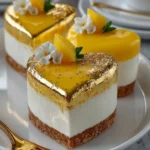
A delightful dessert featuring a mango vanilla mousse with a vanilla sponge base, coated in a stunning golden mirror glaze.
- Yield: 8 1x
Ingredients
- For the Mango Vanilla Mousse:
- 2 cups mango puree
- 1/3 cup granulated sugar
- 1 tbsp lemon juice
- 1 tsp vanilla extract
- 1 cup heavy cream
- 2 tsp powdered gelatin
- 2 tbsp cold water
- For the Vanilla Sponge Base:
- 1 cup all-purpose flour
- 1/2 tsp baking powder
- 1/4 tsp salt
- 1/4 cup unsalted butter, softened
- 1/3 cup granulated sugar
- 1 large egg
- 1/2 tsp vanilla extract
- 1/4 cup milk
- For the Golden Mirror Coating:
- 1 cup white chocolate, finely chopped
- 1/3 cup sweetened condensed milk
- 1/4 cup water
- 1/2 cup granulated sugar
- 2 tsp powdered gelatin
- 2 tbsp cold water
- Yellow food coloring, as needed
- Edible gold luster dust, as needed
- For Garnish (optional):
- Thin mango slices
- Gold flakes
Instructions
- 1. Preheat oven to 350°F (175°C). Grease and line a small baking pan.
- 2. Whisk flour, baking powder, and salt together.
- 3. Beat butter and sugar until fluffy. Add egg and vanilla extract.
- 4. Alternate adding dry ingredients and milk until smooth.
- 5. Bake for 18–20 minutes. Cool completely and cut into heart-shaped pieces.
- 6. Bloom gelatin in cold water for the mousse.
- 7. Heat mango puree, sugar, and lemon juice until warm.
- 8. Stir in vanilla extract and gelatin until fully dissolved. Cool to room temperature.
- 9. Whip heavy cream to soft peaks and fold into mango mixture.
- 10. Fill heart molds halfway with mousse, place sponge hearts inside, and cover with more mousse.
- 11. Freeze until fully set, about 4 hours.
- 12. Bloom gelatin in cold water for the glaze.
- 13. Heat water, sugar, and condensed milk until smooth. Remove from heat.
- 14. Stir in gelatin, then pour over white chocolate and mix until glossy.
- 15. Add yellow food coloring and edible gold luster dust.
- 16. Cool glaze to a pourable consistency.
- 17. Unmold frozen hearts and place on a wire rack.
- 18. Pour golden mirror coating evenly over each heart.
- 19. Let set for 10–15 minutes.
- 20. Garnish with mango slices and gold flakes before serving.
Nutrition
- Calories: 315
- Sugar: 32 g
- Fat: 15 g
- Carbohydrates: 40 g
- Protein: 4 g
Tried This Recipe? Leave a Comment!
Did you make this recipe? I’d love to hear how it turned out! Please leave a comment and a rating below. Your feedback helps other home cooks and supports cheerychop.com!
For more delicious inspiration, follow me on Pinterest!