Table of Contents
Golden Passionfruit Cardamom Pyramids – A Tropical Dessert with a Golden Crystal Glaze
I still remember the first time I tasted passionfruit — I was about eight years old, standing on a sun-baked terrace in Marrakech, my mother’s hand resting on my shoulder. She had just sliced open a wrinkled purple fruit I’d never seen before, and the aroma that hit me was like nothing I’d ever known: floral, tart, almost aggressively tropical. That moment has stayed with me through every kitchen I’ve worked in, from a Parisian patisserie to my own tiny NYC apartment, and it’s the exact spark that inspired these Golden Passionfruit Cardamom Pyramids. This passionfruit cardamom pyramids recipe is my love letter to that childhood taste, elevated with French pastry precision and the luminous, jewel-like finish of a golden crystal glaze — a truly unforgettable tropical dessert passionfruit lovers will crave.
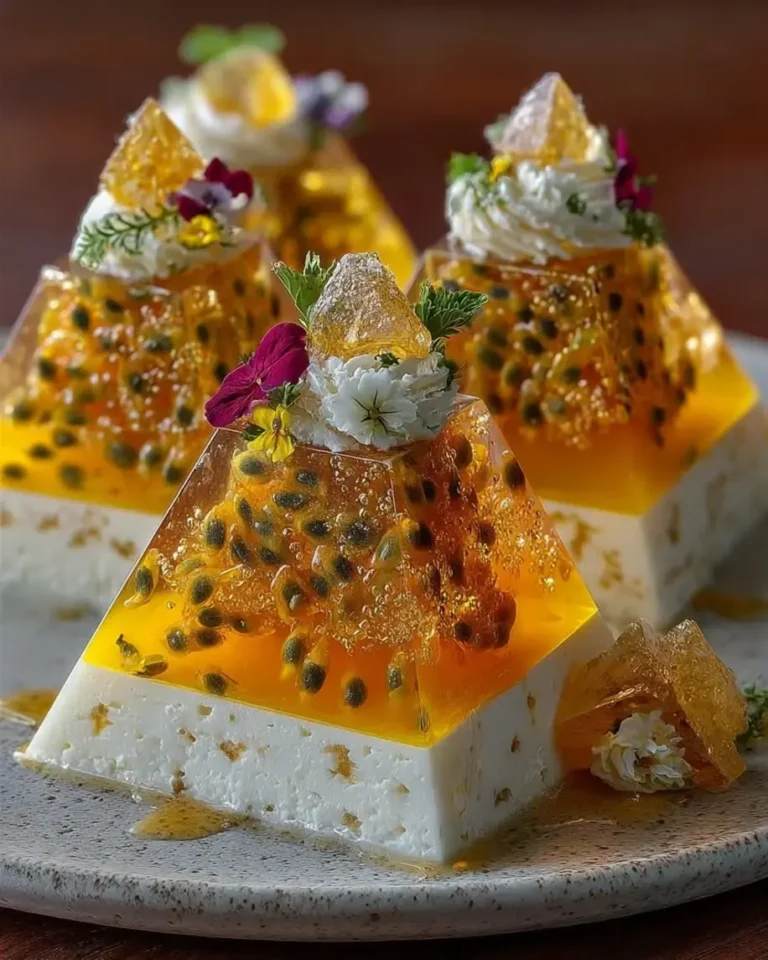
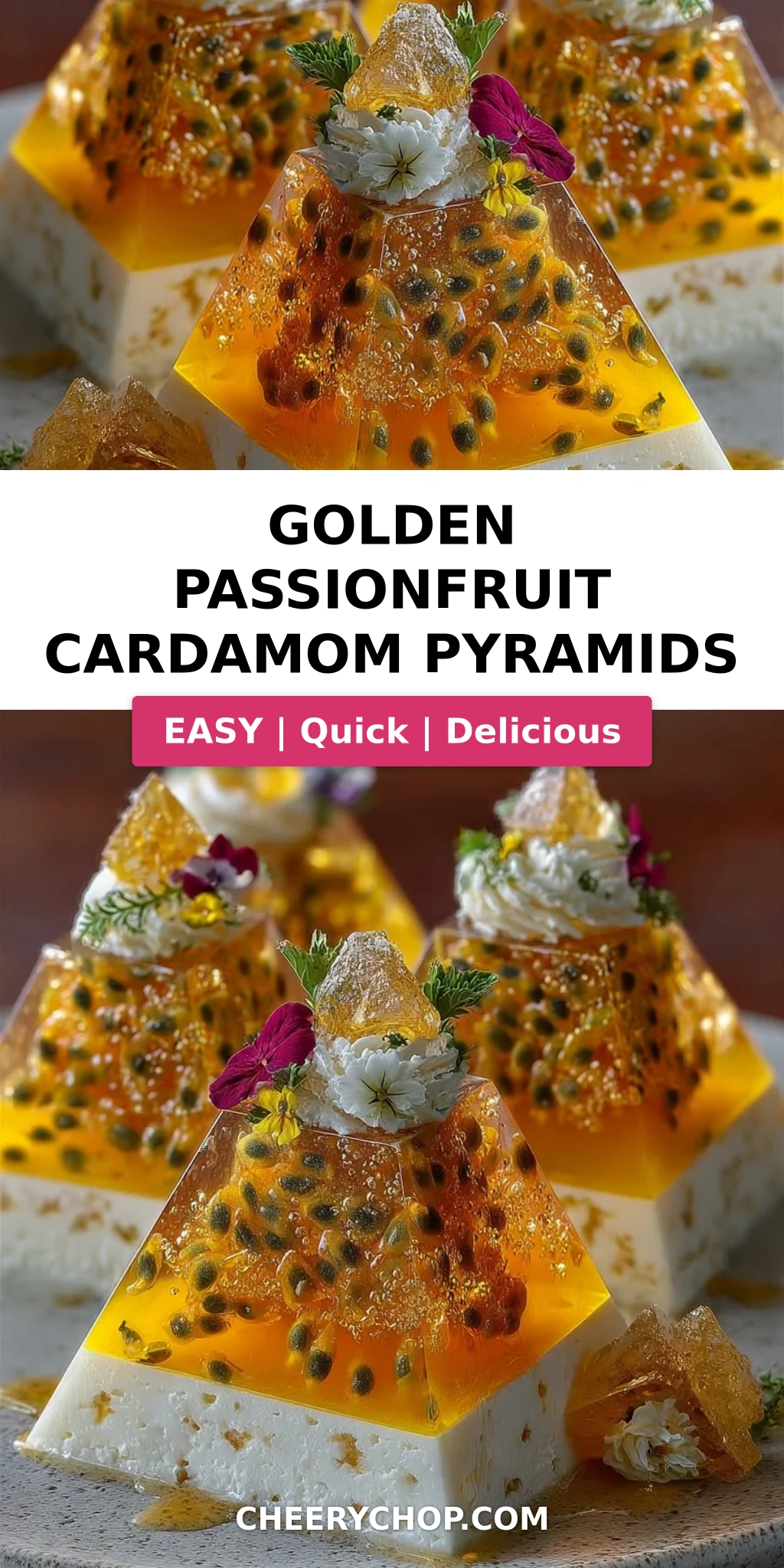
Picture this: a translucent, amber-gold shell that cracks ever so slightly under your spoon, revealing a cloud-soft cardamom vanilla cream filling that melts on your tongue. The passionfruit’s tangy brightness hits first, followed by the warm, almost floral hum of cardamom, and then — just as you think it couldn’t get more luxurious — a glossy, honey-kissed glaze that shimmers like liquid gold. The texture is a study in contrasts: the agar agar pyramid dessert technique gives the shell a delicate, jelly-like firmness that holds its shape beautifully, while the filling stays lusciously creamy. Every bite is a mini escape to somewhere warm and citrus-scented.
I’ve tested this recipe more times than I can count — through failed unmoldings, over-set gels, and one particularly tragic glaze that looked more like glue than gold. What I’m sharing today is the version that works every time: a foolproof method that balances the passionfruit’s assertiveness with cardamom’s subtle warmth, all anchored by a silky mascarpone cream. The edible gold dessert finish is optional, but trust me — once you see how gorgeous these pyramids look on a platter, you’ll never skip it. 💡 Sara’s Pro Tip: The secret to a crystal-clear shell is simmering the agar mixture just until the sugar dissolves — never let it boil vigorously or you’ll trap air bubbles that cloud the final look.
Why This Golden Passionfruit Cardamom Pyramids Recipe Is the Best
The Flavor Secret — Most passionfruit desserts let the fruit do all the heavy lifting, which can taste one-dimensional. I borrowed a technique from my French pastry training: layering flavors in the same dish but at different intensities. The shell carries the full, unabashed tang of passionfruit, while the filling uses cardamom and vanilla to create a warm, aromatic contrast. This isn’t just a tropical dessert passionfruit — it’s a conversation between sweet, tart, and spice. The cardamom doesn’t overpower; it lingers, making each bite more interesting than the last.
Perfected Texture — Getting the agar agar pyramid dessert structure right takes finesse. Too much agar and you’re chewing rubber; too little and your pyramids collapse. I spent weeks testing ratios until I landed on 2½ teaspoons of agar-agar powder for the exact balance: firm enough to unmold cleanly, tender enough to yield to a spoon. The key is letting the mixture set in stages — half-fill the molds, chill until tacky, add the cream filling, then top off. This creates a seamless seal that keeps the cream center intact and the shell crystal clear.
Foolproof & Fast — Despite its impressive look, this recipe is surprisingly forgiving for home cooks. The active cooking time is under 20 minutes; the rest is hands-off chilling. I’ve designed the steps so that even if you’ve never worked with agar-agar before, you’ll get beautiful results. The glaze is a no-fail warm drizzle, and the garnishes — fresh pulp, gold flakes, white chocolate shards — turn a simple dessert into a showstopper with zero fuss. This is the kind of recipe that makes people think you spent all day in the kitchen when you really just followed a few smart steps.
Passionfruit Cardamom Pyramids Recipe Ingredients
I source my passionfruit juice from a little bodega in my Brooklyn neighborhood that carries Caribbean imports — the tartness is unmatched. For the cardamom, I always buy whole green pods from Kalustyan’s in Manhattan and grind them myself; the flavor is infinitely more fragrant than pre-ground. Below is everything you’ll need to make this passionfruit cardamom pyramids recipe shine.
Ingredients List
- For the Golden Passionfruit Shell: 2 cups passionfruit juice, ½ cup mango nectar, 1 cup water, ¾ cup granulated sugar, 2½ tsp agar-agar powder, 1 tsp ground cardamom, 1 tbsp fresh lime juice, ¼ tsp salt, a few drops golden-yellow food coloring (optional)
- For the Cardamom Vanilla Cream Filling: 8 oz mascarpone cheese, ½ cup heavy whipping cream, ¼ cup powdered sugar, 1 tsp vanilla bean paste, ½ tsp ground cardamom
- For the Golden Crystal Glaze: ¼ cup passionfruit preserves, 2 tbsp honey, 1 tbsp water, 1 tsp lime juice
- For Garnish (optional): Fresh passionfruit pulp, white chocolate shards, edible gold flakes, edible pearl dust, tiny edible flowers
Ingredient Spotlight
Passionfruit Juice — The heart of this dessert. Look for 100% pure passionfruit juice (not from concentrate) in the frozen aisle or international section of your grocery store. If you can’t find it, bottled passionfruit pulp works beautifully. The tartness provides the backbone that balances the sweet glaze and creamy filling. A good substitution is guava juice blended with a squeeze of lime, though the flavor will be less tangy.
Agar-Agar Powder — This plant-based setting agent is what gives the pyramids their clean, firm structure without any gelatinous wobble. It’s derived from seaweed and sets at room temperature, making it ideal for molds. I use Eden Foods or Now brand agar-agar powder — they’re reliable and widely available online. Never substitute with agar-agar flakes without adjusting the quantity (use 3 times more flakes by volume).
Mascarpone Cheese — For the silkiest, richest filling, use full-fat mascarpone. It’s thicker than cream cheese and has a higher fat content, which means it whips into a cloud-like cream that holds its shape perfectly. If mascarpone is unavailable, you can substitute equal parts cream cheese and heavy cream blended together, though the flavor will be slightly tangier.
Cardamom — This warm, slightly citrusy spice is what elevates the dessert from simple to sublime. I strongly recommend grinding whole green cardamom pods yourself — the pre-ground stuff loses its essential oils quickly. One pod yields about ⅛ teaspoon ground, so you’ll need about 12 pods for this recipe. Store any extra in an airtight jar in a cool, dark cabinet.
Edible Gold Flakes — These are purely for visual drama, but they do make the dessert feel extra special. You can find them at baking supply stores or online. Pearl dust and gold flakes are both optional — the dessert is stunning even without them. If you can’t find gold flakes, a light dusting of edible glitter or even a tiny pinch of turmeric mixed with sugar can mimic the golden shimmer.
| Original Ingredient | Best Substitution | Flavor / Texture Impact |
|---|---|---|
| Passionfruit juice | Guava juice + 1 tbsp lime juice | Less tangy, more floral; still tropical |
| Mascarpone cheese | 4 oz cream cheese + 4 oz heavy cream | Slightly tangier, less rich but still creamy |
| Agar-agar powder | 7½ tsp agar-agar flakes | Slightly softer set; dissolve flakes fully |
| Cardamom (ground) | ½ tsp cinnamon + ¼ tsp nutmeg | Warmer, less floral; still aromatic |
| Vanilla bean paste | 1 tbsp pure vanilla extract | Slightly less intense vanilla flavor |
How to Make Golden Passionfruit Cardamom Pyramids — Step-by-Step
I promise this is simpler than it looks. Follow these steps closely, and you’ll have a platter of golden pyramids that look like they came from a high-end pastry shop. Let’s get started.
Step 1: Prepare the Passionfruit Shell Mixture
In a medium saucepan, combine 2 cups passionfruit juice, ½ cup mango nectar, 1 cup water, ¾ cup granulated sugar, 2½ tsp agar-agar powder, 1 tsp ground cardamom, 1 tbsp fresh lime juice, ¼ tsp salt, and a few drops of golden-yellow food coloring if using. Whisk everything together until the agar-agar powder is fully dissolved — this is crucial for a smooth set. Place the saucepan over medium heat, stirring constantly with a heatproof spatula, and bring the mixture to a gentle simmer. You’ll see small bubbles around the edges, but don’t let it come to a rolling boil. Once the sugar is fully dissolved (about 4–5 minutes), remove from heat.
💡 Sara’s Pro Tip: Whisk the agar-agar with the cold liquid for at least 30 seconds before heating. If you add it to hot liquid, it can clump and leave gritty spots in your shells. I learned this the hard way in Paris — my chef made me start over three times!
Step 2: Partially Fill the Molds
Pour the warm passionfruit mixture into pyramid-shaped silicone molds, filling each cavity about halfway. Work quickly but carefully so the mixture doesn’t start setting in the saucepan. Place the filled molds on a baking sheet and transfer to the refrigerator. Chill for 20–25 minutes, or until the mixture is partially set — it should feel firm to the touch but still slightly tacky, like a soft jelly. This is the perfect stage to add the cream filling.
⚠️ Common Mistake to Avoid: Don’t let the shells set completely before adding the cream. If they’re fully firm, the cream layer won’t bond with the shell and will separate when unmolded. You want a tacky surface that the next layer can cling to.
Step 3: Make the Cardamom Vanilla Cream Filling
In a large mixing bowl, combine 8 oz mascarpone cheese, ½ cup heavy whipping cream, ¼ cup powdered sugar, 1 tsp vanilla bean paste, and ½ tsp ground cardamom. Using a hand mixer or a stand mixer with the whisk attachment, whip on medium speed until the mixture is smooth, airy, and fluffy — about 2–3 minutes. Be careful not to over-whip; you want it light and pillowy, not stiff and buttery. Transfer the cream to a piping bag fitted with a round tip (or simply snip the corner of a zip-top bag). Set aside in the refrigerator while you prepare the next step.
💡 Sara’s Pro Tip: For the fluffiest filling, make sure your mascarpone and heavy cream are both very cold — straight from the fridge. If the mascarpone is at room temperature, it can break when whipped and turn grainy. Trust me, I’ve ruined a batch or two on hot NYC summer afternoons!
Step 4: Fill and Seal the Pyramids
Remove the partially set molds from the fridge. Pipe a generous amount of the cardamom vanilla cream into the center of each pyramid cavity, filling it about two-thirds of the way up. Don’t overfill — you need room for the top layer. Gently tap the molds on the counter to settle the cream, then carefully pour the remaining passionfruit mixture over the cream, filling each cavity to the brim. The cream should be completely encased. Return the molds to the refrigerator and chill for at least 4 hours, or overnight, until the shells are fully set and crystal clear.
⚠️ Common Mistake to Avoid: Piping the cream too close to the edges of the mold can cause it to peek through the shell after it sets. Keep the cream centered, and leave a clear margin around the sides so the passionfruit layer seals it completely.
Step 5: Unmold the Pyramids
Once the pyramids are fully set (they should feel firm and bounce back slightly when touched), carefully unmold them onto a chilled serving platter. To unmold, gently flex the silicone mold from the base upward, pushing the pyramid out from the bottom. If any stick, dip the mold in warm water for 2–3 seconds — but don’t soak it, or you’ll melt the shell. Arrange the pyramids with about an inch of space between them so the glaze can cascade down the sides beautifully.
💡 Sara’s Pro Tip: Place the platter in the refrigerator for 10 minutes before unmolding. A cold surface helps the pyramids release cleanly and keeps their shape intact. I keep a dedicated chilled platter in my fridge just for desserts like this!
Step 6: Make the Golden Crystal Glaze
In a small saucepan, combine ¼ cup passionfruit preserves, 2 tbsp honey, 1 tbsp water, and 1 tsp lime juice. Warm over low heat, stirring gently, until the preserves melt and the mixture becomes smooth and glossy — about 3–4 minutes. Do not let it boil; you just want it warm enough to drizzle. Remove from heat and let it cool for 2–3 minutes so it thickens slightly but remains pourable. The glaze should be the consistency of warm maple syrup.
⚠️ Common Mistake to Avoid: Applying the glaze while it’s too hot will melt the surface of the passionfruit shell and ruin the crystal-clear finish. Let it cool until it’s just warm to the touch — about 100°F — before brushing or drizzling.
Step 7: Glaze and Garnish
Using a pastry brush, gently brush the warm glaze over each pyramid, starting from the top and letting it drip down the sides. Or, for a more dramatic look, drizzle the glaze from a spoon in a thin stream over the top of each pyramid. The glaze should create a luminous, golden crystal finish that catches the light. While the glaze is still tacky, sprinkle edible gold flakes, pearl dust, and a few tiny edible flowers on top. Add a small spoonful of fresh passionfruit pulp and a white chocolate shard for contrast. Serve immediately, or return to the refrigerator for up to 2 hours before serving.
💡 Sara’s Pro Tip: For picture-perfect garnishes, use tweezers to place the gold flakes and flowers. It sounds fussy, but it makes a huge difference in presentation. I keep a pair of kitchen tweezers in my drawer just for this — it’s a trick I picked up in pastry school in Paris.
| Step | Action | Duration | Key Visual Cue |
|---|---|---|---|
| 1 | Dissolve agar in cold liquids, then simmer | 4–5 min | Small bubbles at edges, sugar fully dissolved |
| 2 | Half-fill molds, chill until tacky | 20–25 min | Firm to touch, slightly tacky surface |
| 3 | Whip mascarpone cream filling | 2–3 min | Smooth, airy, fluffy peaks |
| 4 | Pipe cream into center, top with mixture | 5 min | Cream centered, shell fully covers |
| 5 | Chill until fully set | 4+ hrs | Crystal clear, firm to touch |
| 6 | Unmold onto chilled platter | 2–3 min | Clean release, shape intact |
| 7 | Warm glaze ingredients | 3–4 min | Smooth, glossy, pourable |
| 8 | Brush or drizzle glaze, garnish | 5 min | Luminous golden finish |
Serving & Presentation
These pyramids are at their absolute best served thoroughly chilled, straight from the refrigerator. The contrast between the cool, firm shell and the luscious cream center is what makes every bite magical. I like to arrange them on a long, white ceramic platter with a few fresh passionfruit halves scattered around for color. The edible flowers and gold flakes catch the light beautifully, especially if you’re serving them at a dinner party or holiday gathering. In my NYC apartment, I often set them out just as guests are finishing the main course — they never fail to draw gasps and camera phones.
For a truly stunning presentation, drizzle a little extra passionfruit glaze on the plate before placing each pyramid, then add a tiny dollop of the cardamom vanilla cream on the side. The white chocolate shards can be stood upright in the cream for height and drama. If you’re feeling especially festive — like for a New Year’s Eve or birthday — a final dusting of edible pearl dust makes the pyramids look like they’ve been touched by moonlight. In Morocco, we would serve something like this with mint tea; in my NYC kitchen, it pairs just as beautifully with a crisp sparkling wine or an espresso.
| Pairing Type | Suggestions | Why It Works |
|---|---|---|
| Side Dish | Coconut sorbet, fresh mango slices, lime granita | Cool, tropical flavors that echo the passionfruit without competing |
| Sauce / Dip | Warm honey-lime drizzle, coconut cream drizzle, raspberry coulis | Adds moisture and a contrasting temperature or flavor layer |
| Beverage | Sparkling wine, Moroccan mint tea, cold brew coffee | Acidity in wine cuts sweetness; mint tea echoes North African roots |
| Garnish | Fresh mint sprigs, candied ginger, toasted coconut flakes | Adds texture, fragrance, and visual contrast against the gold |
Make-Ahead, Storage & Reheating
One of the best things about this recipe is how well it works for make-ahead entertaining. In my busy NYC life, I often prep these a day before a dinner party — it’s one less thing to worry about when guests arrive. The pyramids hold beautifully in the refrigerator, and the glaze stays glossy for a full day after application. Here’s everything you need to know about storing and reheating (though honestly, you’ll probably eat them all before you need to worry about leftovers!).
| Method | Container | Duration | Reheating Tip |
|---|---|---|---|
| Refrigerator | Airtight container, layered with parchment | Up to 3 days | Serve straight from fridge — no reheating needed |
| Freezer | Freezer-safe container, wrap each pyramid in plastic wrap | Up to 1 month | Thaw in fridge overnight; glaze may lose some shine — refresh with a thin warm glaze layer |
| Make-Ahead | In the silicone mold, covered with plastic wrap | Up to 2 days in advance | Unmold, glaze, and garnish just before serving for freshest look |
I don’t recommend microwaving or warming these pyramids in any way — the shell is designed to be served cold, and heating will cause the agar structure to soften and lose its clean shape. If you’ve stored them in the fridge for more than a day and notice the glaze has dulled slightly, just whip up a quick fresh batch of glaze (it takes 4 minutes) and re-brush it before serving. The cream filling stays perfectly silky even after a few days, so don’t hesitate to make them ahead for a stress-free dessert course.
💡 Sara’s Pro Tip: If you’re making these for a party, I recommend glazing and garnishing no more than 4 hours before serving. The gold flakes and flowers stay vibrant, and the glaze maintains that just-brushed gleam. Unmold the pyramids and store them unglazed on a tray wrapped in plastic, then do the final steps when you’re ready to impress.
Variations & Easy Swaps
One of the things I love about this recipe is how versatile it is. Once you master the basic agar agar pyramid dessert technique, you can swap flavors to match the season, your pantry, or your mood. I’ve tested each of these variations in my own kitchen, so you can trust they’ll work beautifully. Here’s a quick overview, followed by deeper dives into my three favorite twists.
| Variation | Key Change | Best For | Difficulty Impact |
|---|---|---|---|
| Mango Lassi Pyramids | Replace passionfruit juice with mango puree; add yogurt to filling | Summer entertaining, Indian-inspired menus | Same |
| Coconut Cream Pyramids | Use coconut milk in shell; replace mascarpone with coconut cream | Dairy-free guests, tropical theme | Same |
| Rose & Raspberry Pyramids | Replace passionfruit with raspberry juice; add rose water to shell | Valentine’s Day, romantic dinners | Same |
Mango Lassi Pyramids
This variation is pure sunshine. Swap the passionfruit juice for 2 cups of high-quality mango pulp (I like Kesar or Alphonso varieties from an Indian grocery store). Replace the lime juice in the shell with a tablespoon of lemon juice to keep the acidity balanced. For the filling, reduce mascarpone to 6 oz and add ¼ cup plain Greek yogurt — this gives the cream a lassi-like tang that pairs beautifully with the sweet mango. The cardamom stays the same; it’s a natural partner for mango. The resulting pyramids are creamier, less tart, and utterly dreamy on a hot summer evening.
Coconut Cream Pyramids (Dairy-Free)
For a completely dairy-free version that doesn’t sacrifice richness, replace the passionfruit juice with a blend of 1½ cups coconut milk and ½ cup pineapple juice (for acidity). Use canned full-fat coconut cream (chilled overnight) in place of mascarpone — whip it with ¼ cup powdered sugar, 1 tsp vanilla, and ½ tsp cardamom just as you would the original filling. The shell sets beautifully with coconut milk, though it will be slightly less translucent than the passionfruit version. Top with toasted coconut flakes instead of white chocolate shards for a gorgeous, tropical finish that everyone can enjoy.
Rose & Raspberry Pyramids
This is my romantic twist for special occasions. Substitute the passionfruit juice with 2 cups of raspberry puree (strained to remove seeds) and add 1½ tsp rose water to the shell mixture. The filling stays the same, but I like to add a tiny pinch of dried rose petals to the cream for visual flecks. The glaze can be made with raspberry preserves instead of passionfruit. The result is a floral, berry-forward pyramid that tastes like a garden in bloom. I first made this version for a friend’s engagement party in NYC, and it was the star of the dessert table — even the chocolate cake got jealous.
What can I use as a substitute for passionfruit if it’s not in season for these pyramids?
If fresh passionfruit is out of season, don’t worry — you have several excellent options. Frozen passionfruit pulp is widely available year-round in the frozen aisle of most grocery stores and works perfectly. Just thaw it before using. You can also substitute with bottled passionfruit juice (look for 100% juice without added sugar). Beyond passionfruit, guava juice blended with a tablespoon of lime juice makes a fantastic alternative — it has a similar tropical tang. Mango nectar mixed with a squeeze of lemon is another great choice, though the result will be sweeter and less acidic. Each substitution will shift the flavor profile slightly, but the agar agar pyramid dessert technique remains exactly the same, so your pyramids will still look stunning.
How do I get the pyramid shape to hold its form without falling apart?
The key to perfect pyramid shape is proper agar-agar setting technique. First, make sure you dissolve the agar-agar powder completely in cold liquid before heating — undissolved powder creates weak spots in the gel. Second, bring the mixture to a gentle simmer (not a rolling boil) so the agar activates fully without creating air bubbles. Third, use high-quality silicone pyramid molds that are flexible but firm — cheap molds can cause uneven setting. Fourth, chill the molds on a flat baking sheet in the refrigerator for a full 4 hours or overnight; rushing this step is the #1 reason pyramids collapse. Finally, when unmolding, gently flex the silicone from the base upward rather than pulling from the tip. If the pyramid resists, dip the mold in warm water for 2-3 seconds — no more, or you’ll melt the shell.
Can I prepare these Golden Passionfruit Cardamom Pyramids a day ahead of serving?
Absolutely — in fact, I recommend it! These pyramids are an ideal make-ahead dessert for entertaining. You can prepare the pyramids completely through Step 5 (fully set in the molds) up to 2 days in advance. Store them in the silicone molds covered with plastic wrap in the refrigerator. When you’re ready to serve, unmold, glaze, and garnish. The glaze is best applied within 4 hours of serving to maintain its glossy shine, but the unglazed pyramids are perfectly stable for days. If you need to glaze a full day ahead, expect the glaze to dull slightly — you can revive it with a thin fresh layer just before serving. The cardamom vanilla cream filling stays silky and delicious even after 48 hours in the fridge, so this is a wonderfully practical recipe for busy hosts.
What is the best way to balance the cardamom flavor so it doesn’t overpower the passionfruit?
Balancing cardamom with passionfruit is all about layering and restraint. I use 1 teaspoon of ground cardamom in the shell and ½ teaspoon in the cream filling — this distributes the spice across both components without letting it dominate either one. For the most balanced flavor, I recommend grinding whole green cardamom pods yourself; pre-ground cardamom is often weaker or more one-dimensional. Start with the amounts listed in the recipe, then taste the shell mixture before pouring — if you want more warmth, add an extra ¼ teaspoon, but remember that flavors intensify as the mixture sets. The passionfruit should always lead the dance, with cardamom as a supporting partner that lingers in the finish. If you’re worried about overdoing it, you can reduce the cardamom in the shell and add a pinch more to the cream, where it blends with the vanilla and mascarpone for a softer impression.
Why did my passionfruit shell turn out cloudy instead of crystal clear?
Cloudy shells are usually caused by one of three issues. First, air bubbles — if you whisk too vigorously or let the mixture boil, tiny air bubbles get trapped in the gel and create a foggy appearance. Always stir gently and only bring to a gentle simmer. Second, undissolved agar-agar powder — if the powder isn’t fully dissolved in the cold liquid before heating, it can form microscopic clumps that scatter light. Whisk thoroughly for at least 30 seconds before turning on the heat. Third, impurities in the juice — some brands of passionfruit juice contain pulp solids that can cloud the gel. If you want absolute clarity, strain the juice through a fine-mesh sieve before using. I also recommend using a pinch of golden-yellow food coloring — it enhances the natural color and helps mask any slight cloudiness. This tropical dessert passionfruit deserves to shine, so take these extra steps for a truly luminous finish.
Can I use gelatin instead of agar-agar for this recipe?
Technically yes, but I don’t recommend it for this particular recipe. Agar-agar gives a firm, clean set that holds the pyramid shape beautifully at room temperature and doesn’t melt in warm weather. Gelatin creates a softer, wobblier gel that can lose its shape when unmolded, especially in the pyramid form. If you must use gelatin, substitute 4 teaspoons of powdered gelatin (bloomed in ¼ cup cold water for 5 minutes) for the 2½ teaspoons of agar-agar. However, note that gelatin sets at a lower temperature and requires refrigeration to firm up — your pyramids will be more delicate and should be handled very carefully. Also, gelatin is not vegan or vegetarian, while agar-agar is plant-based. For the best results with this passionfruit cardamom pyramids recipe, stick with agar-agar — it’s a small investment in a specialty ingredient that makes a big difference in the final dessert.
How do I store leftover glaze and can I reuse it?
Yes, you can definitely store and reuse the golden crystal glaze! Any leftover glaze can be kept in an airtight jar in the refrigerator for up to 2 weeks. When you’re ready to reuse it, warm it gently in a small saucepan over low heat or in the microwave in 10-second bursts, stirring between each, until it’s smooth and pourable again. If the glaze has thickened too much during storage, add a teaspoon of warm water to thin it back to the right consistency. I often make a double batch of glaze and keep the extra on hand for impromptu desserts — it’s also delicious drizzled over ice cream, pound cake, or fresh fruit. Just make sure to let it cool slightly before using it on the pyramids so it doesn’t melt the shell. This edible gold dessert component is too good to waste!
What type of silicone mold works best for these pyramids?
I recommend using food-grade silicone pyramid molds that are about 2 inches tall at the peak and hold roughly 2-3 ounces of liquid each. The silicone should be sturdy enough to hold its shape when filled but flexible enough to flex for easy unmolding. Avoid very cheap molds that are flimsy or have rough interiors — they can cause uneven setting and make unmolding difficult. I’ve tested several brands and prefer the ones from Silikomart or Nordic Ware, which are widely available online and at baking supply stores. If you’re using a mold with a very narrow tip, make sure to press the silicone firmly against the work surface when filling to prevent air pockets at the bottom. A good mold is a worthwhile investment for any agar agar pyramid dessert — it makes the difference between a professional-looking finish and a frustrating mess.
Can I make this recipe without mango nectar?
Absolutely! Mango nectar adds a subtle sweetness and a hint of tropical depth, but it’s not essential to the structure. You can substitute it with an equal amount of additional passionfruit juice for a more intense, tangier shell. Alternatively, use apricot nectar, peach nectar, or even white grape juice — each will bring its own subtle sweetness without overpowering the passionfruit. If you’re omitting the nectar entirely and using straight passionfruit juice, you may want to increase the sugar by one tablespoon to balance the extra tartness. I’ve tested the recipe with all-passionfruit juice and it works beautifully; the shell is just a bit more assertively sour, which many people actually prefer. This flexibility makes this tropical dessert passionfruit recipe incredibly adaptable to what you have in your pantry.
How do I prevent the cream filling from floating to the top of the pyramid?
The cream filling can float if it’s too light or if the shell mixture is poured over it too aggressively. To prevent this, first make sure your partially set shell is firm enough to hold the cream — it should be tacky but not liquid. Second, pipe the cream in a compact mound in the center of each cavity rather than spreading it thin. Third, when pouring the remaining shell mixture over the cream, pour it slowly over the back of a spoon to break the fall — this prevents the liquid from dislodging the cream. Finally, after pouring, gently tap the mold on the counter to settle everything, but don’t shake it vigorously. If the cream still floats slightly, don’t worry — it creates a beautiful layered effect when unmolded. The key is keeping the cream centered so it’s fully encased by the shell on all sides, which gives you that perfect cardamom vanilla cream filling surprise in every bite.
Share Your Version!
I absolutely love hearing how my recipes come to life in your kitchen! If you make these Golden Passionfruit Cardamom Pyramids, I’d be so grateful if you’d leave a star rating and a comment below telling me how they turned out. Did you try one of the variations? Did your guests gasp when you brought them to the table? Did you discover a brilliant substitution I haven’t thought of? Share your photos on Instagram or Pinterest and tag @cheerychop — I personally read every comment and love seeing your creations, especially the ones with edible gold flying everywhere (we’ve all been there!).
One question I always love hearing back about: What flavor combination would you try if you were to create your own pyramid variation? Mango and chili? Rose and lychee? I’m always looking for new ideas to test in my NYC kitchen, and your creativity might just inspire my next recipe. Thank you for being part of this community — it’s what makes cooking so joyful.
From my NYC kitchen to yours — I hope this recipe brings as much warmth to your table as it does to mine. — Sara 🧡
Love This Recipe? Save It to Pinterest!
If you enjoyed this Golden Passionfruit Cardamom Pyramids recipe, don’t let it get lost in your browser tabs! 😄 Pin it now so you can find it again anytime — and explore hundreds more tried-and-tested recipes waiting for you on my Pinterest boards.
👉 Follow Sara on Pinterest @chefrecipes2
📌 Pin this recipe · 🔁 Re-pin your favorites · 💬 Tag me when you make it — I love seeing your creations!
⭐ Did you make this recipe? I’d love to hear! Leave a star rating and comment below — your feedback helps me create better recipes for you. 🧡
Golden Passionfruit Cardamom Pyramids
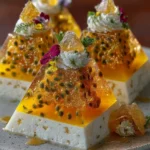
A vibrant tropical dessert featuring tangy passionfruit, warm cardamom spice, and a silky vanilla cream center, finished with a luminous golden crystal glaze.
- Yield: 6 1x
Ingredients
- For the Golden Passionfruit Shell:
- 2 cups passionfruit juice
- 1/2 cup mango nectar
- 1 cup water
- 3/4 cup granulated sugar
- 2 1/2 tsp agar-agar powder
- 1 tsp ground cardamom
- 1 tbsp fresh lime juice
- 1/4 tsp salt
- A few drops golden-yellow food coloring (optional)
- For the Cardamom Vanilla Cream Filling:
- 8 oz mascarpone cheese
- 1/2 cup heavy whipping cream
- 1/4 cup powdered sugar
- 1 tsp vanilla bean paste
- 1/2 tsp ground cardamom
- For the Golden Crystal Glaze:
- 1/4 cup passionfruit preserves
- 2 tbsp honey
- 1 tbsp water
- 1 tsp lime juice
- For Garnish (optional):
- Fresh passionfruit pulp
- White chocolate shards
- Edible gold flakes
- Edible pearl dust
- Tiny edible flowers
Instructions
- Combine passionfruit juice, mango nectar, water, sugar, agar-agar powder, cardamom, lime juice, salt, and optional food coloring in a saucepan. Heat while stirring until fully dissolved and bring to a gentle simmer.
- Pour the mixture into pyramid-shaped silicone molds, filling each cavity halfway. Refrigerate until partially set.
- Whip mascarpone cheese, heavy whipping cream, powdered sugar, vanilla bean paste, and cardamom until smooth, airy, and fluffy. Transfer to a piping bag.
- Pipe a generous amount of cardamom vanilla cream into the center of each partially set pyramid. Cover with the remaining passionfruit mixture and refrigerate until fully set and crystal clear.
- Carefully unmold the pyramids onto a chilled serving platter.
- Warm passionfruit preserves, honey, water, and lime juice until smooth and glossy. Allow to cool slightly while remaining pourable.
- Brush or drizzle the glaze over each pyramid to create a luminous golden crystal finish.
- Garnish with fresh passionfruit pulp, white chocolate shards, edible gold flakes, pearl dust, and delicate edible flowers.
- Serve thoroughly chilled for a vibrant tropical dessert featuring tangy passionfruit, warm cardamom spice, and a silky vanilla cream center.
Nutrition
- Calories: 315
- Sugar: 35g
- Fat: 16g
- Carbohydrates: 40g
- Protein: 4g
Tried This Recipe? Leave a Comment!
Did you make this recipe? I’d love to hear how it turned out! Please leave a comment and a rating below. Your feedback helps other home cooks and supports cheerychop.com!
For more delicious inspiration, follow me on Pinterest!