Table of Contents
Lavender Lemon Pavlova with Mascarpone Cream & Ruby Berries – A Delicate Dessert with North African Soul
I still remember the first time I tasted a pavlova — it was at a tiny patisserie in the 6th arrondissement of Paris, during my culinary school days. The moment that perfectly crisp shell shattered under my fork and gave way to that cloud-like, marshmallowy center, I knew I had found something magical. This lavender lemon pavlova recipe is my own tribute to that memory, infused with the floral notes of my Moroccan childhood — where lavender grew wild along the edges of my mother’s herb garden — and finished with a bright lemon twist that feels pure New York. What makes this lavender pavlova with mascarpone so special is the way the creamy, tangy mascarpone filling balances the ethereal meringue, while the ruby berries add a jewel-like pop of color and acidity. This truly is the berry pavlova dessert of your springtime dreams.
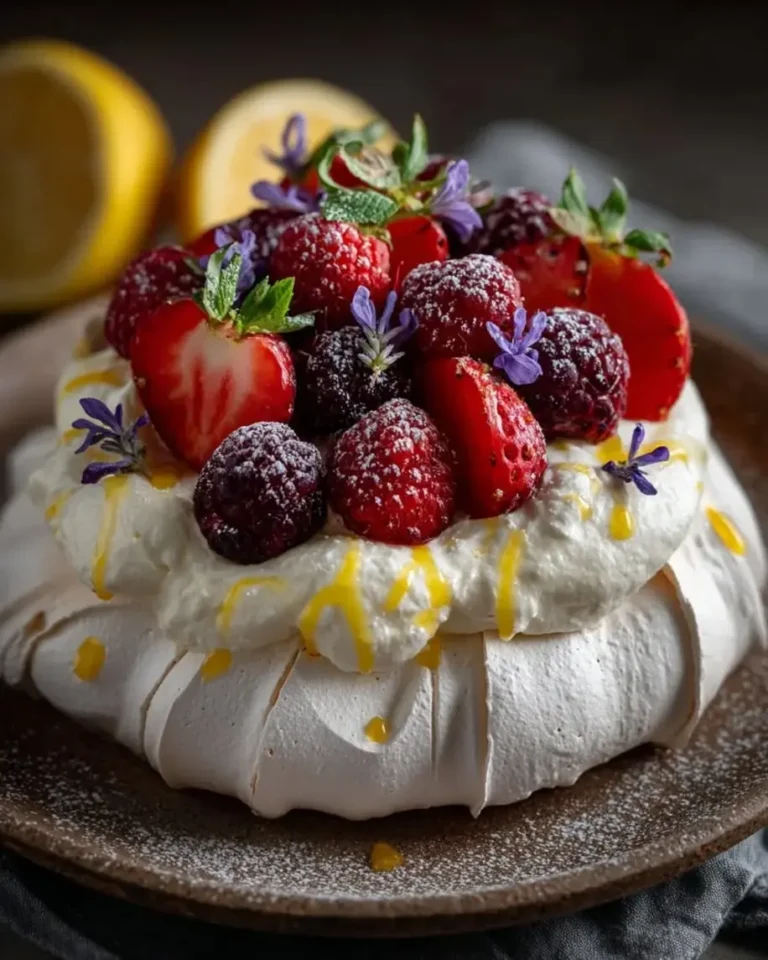
Imagine this: a delicate, crackled shell the color of toasted ivory, cradling a billowy cloud of mascarpone cream that’s been whipped with a whisper of lemon and vanilla. On top, a tangle of glistening ruby berries — strawberries, raspberries, and cherries — all macerated in honey and lemon until they release their glorious juices. The dried culinary lavender I fold into the meringue is ground fine, so it perfumes every bite without ever feeling perfumy or like soap. It’s subtle, sophisticated, and utterly addictive. My Parisian chef always said that pastry should seduce all five senses, and this lemon lavender pavlova does exactly that — the crackle, the cream, the tart berries, the floral aroma, the stunning presentation. It’s a showstopper that’s deceptively simple to pull off.
Now, let me be real with you: pavlova has a reputation for being finicky, but I’ve spent years perfecting my technique so you can skip the trial and error. My version uses a few foolproof tricks — a bit of cornstarch and vinegar in the meringue for that signature chewy center, and a low-and-slow oven that guarantees no cracking. The mascarpone cream is a game-changer: it’s richer and more stable than regular whipped cream, so your pavlova holds its shape beautifully. And the ruby berries pavlova topping? I source my berries from the Union Square Greenmarket when they’re in season, but frozen berries work beautifully too. One common mistake I see home cooks make is rushing the cooling process — I’ll show you exactly how to avoid a collapsed pavlova. From my NYC kitchen to yours, let’s make this stunning dessert together.
Why This Lavender Lemon Pavlova Recipe Is the Best
The Flavor Secret: This isn’t just any pavlova — it’s a bridge between my three culinary worlds. The meringue gets its floral soul from the ground dried lavender I grew up seeing in Moroccan tea ceremonies, while the lemon zest adds a bright, French-style precision. The mascarpone cream, inspired by Italian pastry techniques I learned in Paris, is tangy, rich, and utterly luxurious. And the ruby berries? That’s pure New York abundance — seasonal, vibrant, and unapologetically bold. This lavender lemon pavlova recipe is the dessert I serve at my dinner parties when I want to impress without spending all day in the kitchen. The floral-berry combination is unexpected yet perfectly balanced, and every guest always asks for the recipe.
Perfected Texture: The magic of a great pavlova lies in its contrast — a shatteringly crisp exterior that gives way to a soft, pillowy marshmallow center. Achieving that texture is all about technique, and I’ve dialed it in over dozens of batches. The key is whipping your egg whites to stiff, glossy peaks with gradually added sugar, then folding in a touch of cornstarch and white vinegar. The cornstarch helps create that chewy interior, while the vinegar stabilizes the meringue and keeps it snowy white. Baking at 250°F for 75 minutes ensures the outside dries out perfectly while the inside stays tender. This pavlova with mascarpone has the ideal structure to support a generous layer of cream and berries without getting soggy.
Foolproof & Fast: I know pavlova can feel intimidating — I’ve had my share of cracked, weeping, or collapsed meringues over the years. But this recipe is designed for success, even if you’re a beginner. The instructions are broken down into clear, manageable steps with visual cues so you know exactly what to look for at every stage. I’ve also included my best pro tips for stabilizing the meringue, avoiding common pitfalls, and making components ahead of time. This berry pavlova dessert comes together with just 20 minutes of active prep — the oven does the rest of the work. Whether you’re making it for a birthday, a holiday, or just because it’s Tuesday, this recipe will make you look like a pastry chef.
Lavender Lemon Pavlova Recipe Ingredients
I love sourcing ingredients for this lemon lavender pavlova from different corners of my life. The dried culinary lavender I get from a little spice shop in the East Village that reminds me of the souks in Marrakech. The mascarpone? I grab that from Eataly in the Flatiron district — it’s the best quality for the creamiest texture. And the berries I pick up at the Union Square Greenmarket, where the farmers know me by name. Every ingredient in this recipe has a purpose and a story, and each one contributes to the final masterpiece. Here’s exactly what you’ll need for this ruby berries pavlova.
Ingredients List
- For the Pavlova:
- 4 large egg whites, at room temperature
- 1 cup granulated sugar
- 1 tsp white vinegar
- 1 tsp cornstarch
- 1 tsp vanilla extract
- 1/2 tsp dried culinary lavender, finely ground
- 1 tsp lemon zest (from about 1 lemon)
- For the Mascarpone Cream:
- 8 oz mascarpone cheese, softened
- 1 cup heavy cream
- 1/3 cup powdered sugar
- 1 tsp vanilla extract
- 1 tsp lemon juice
- For the Ruby Berries:
- 1 cup strawberries, halved (or quartered if large)
- 1/2 cup raspberries
- 1/2 cup cherries, pitted and halved
- 1 tbsp honey
- 1 tsp lemon juice
- For Garnish (optional but recommended):
- Fresh lavender sprigs
- Extra lemon zest
- Powdered sugar for dusting
Ingredient Spotlight
Dried Culinary Lavender: This is the star of the show, so please don’t use the lavender from your sachets or bath products! Culinary-grade lavender is specifically grown for cooking and has a milder, sweeter flavor. I grind mine in a mortar and pestle or spice grinder until it’s nearly a powder — this ensures the flavor distributes evenly throughout the meringue without any bitter, woody bits. You can find dried culinary lavender at most well-stocked grocery stores, spice shops, or online. If you’re nervous about the floral flavor, start with 1/4 teaspoon and taste the meringue mixture — you can always add more.
Mascarpone Cheese: This Italian cream cheese is what makes the topping so luscious and stable. Unlike regular whipped cream that can deflate or weep, mascarpone holds its structure beautifully while adding a rich, tangy depth that pairs perfectly with the sweet meringue and tart berries. Look for mascarpone that’s thick and spreadable, not watery. I prefer the BelGioioso brand, which I find at most supermarkets. If you can’t find mascarpone, full-fat cream cheese with a splash of heavy cream works as a substitute (see the substitution table below).
Ruby Berries: The combination of strawberries, raspberries, and cherries creates a stunning visual and flavor contrast against the white pavlova and cream. I call them “ruby berries” because when you macerate them in honey and lemon, they turn into glistening jewels. Use ripe but firm berries — they should hold their shape when tossed. In winter, you can use frozen berries (thawed and drained) or swap in pomegranate arils and blood orange segments for a different jewel-toned medley.
| Original Ingredient | Best Substitution | Flavor / Texture Impact |
|---|---|---|
| Dried culinary lavender | 1/2 tsp dried culinary lavender buds (lightly crushed) + 1 tsp dried edible rose petals (ground) | More floral complexity; rose adds a softer, sweeter note that still pairs beautifully with lemon and berries |
| Mascarpone cheese | 8 oz full-fat cream cheese, softened + 2 tbsp heavy cream | Slightly tangier and denser; still creamy but less luxurious; whip well to avoid lumps |
| Strawberries | 1 cup diced mango or peach (in season) | Sweeter, juicier, and more tropical; pairs well with lavender but changes the “ruby” theme |
| Cherries | 1/2 cup pomegranate arils | Tart, juicy bursts of flavor; maintains the jewel-like appearance and adds crunch |
| Granulated sugar | 3/4 cup superfine sugar (baker’s sugar) | Dissolves more easily into egg whites for a smoother, more stable meringue |
How to Make Lavender Lemon Pavlova — Step-by-Step
Making a pavlova at home is one of the most rewarding baking projects you can tackle, and I promise it’s easier than you think. The key is patience — especially with the cooling process — and paying attention to a few visual cues. I’ve broken down every step with the exact details you need to succeed. Follow along, and you’ll be slicing into a perfect lavender pavlova with mascarpone in no time.
Step 1: Prepare the Oven and Baking Sheet
Preheat your oven to 250°F (120°C). Line a large baking tray with parchment paper. For extra insurance against sticking, you can lightly butter the parchment paper — but it’s not necessary if you use good-quality parchment. I like to draw a 9-inch circle on the parchment as a guide for shaping my pavlova base, then flip the paper over so the pencil doesn’t touch the food.
💡 Sara’s Pro Tip: Use a baking tray with low sides or an inverted sheet pan to allow better air circulation around the meringue as it bakes. This helps the pavlova dry out evenly and prevents cracks.
Step 2: Whip the Egg Whites
Place the 4 room-temperature egg whites in the bowl of a stand mixer fitted with the whisk attachment. Beat on medium speed until soft peaks form — the whites should be foamy and hold a gentle peak that flops over when you lift the whisk. Room-temperature egg whites whip up to a greater volume than cold ones, so don’t skip this step. If you’re in a hurry, place your eggs in a bowl of warm water for 5 minutes before separating them.
Step 3: Gradually Add Sugar
With the mixer running on medium-high speed, add the 1 cup of granulated sugar one tablespoon at a time, waiting about 15 seconds between each addition. This slow incorporation is crucial — adding sugar too quickly can deflate the egg whites. Continue whipping for 5 to 7 minutes after all the sugar is added, until the meringue is thick, glossy, and holds stiff, upright peaks. To test if the sugar is fully dissolved, rub a small amount of the meringue between your fingers — it should feel smooth, not gritty.
⚠️ Common Mistake to Avoid: If your meringue feels gritty or looks dull and weepy, the sugar hasn’t fully dissolved. Keep whipping! Undissolved sugar will cause the pavlova to weep (leak syrupy droplets) during baking and can lead to collapse. Patience here pays off.
Step 4: Fold in Vinegar, Cornstarch, Vanilla, Lavender, and Lemon Zest
In a small bowl, stir together the 1 tsp white vinegar, 1 tsp cornstarch, 1 tsp vanilla extract, 1/2 tsp finely ground dried lavender, and 1 tsp lemon zest. Sprinkle this mixture over the surface of the meringue, then use a large rubber spatula to fold it in gently. Use a figure-8 motion, cutting through the center and bringing the mixture from the bottom up. Be careful not to overmix — you want to incorporate the ingredients without deflating all that air you worked so hard to create. About 8 to 10 folds should do it.
💡 Sara’s Pro Tip: When you grind the dried lavender, make sure it’s a fine powder — no large buds. Whole lavender buds can create bitter pockets in the meringue. I use a clean coffee grinder or mortar and pestle for this. You only need about 15 seconds of grinding to get it powdery.
Step 5: Shape into a Round Pavlova Base
Spoon the meringue onto the prepared parchment paper, using your drawn circle as a guide. Shape it into a round disc about 9 inches in diameter, building up the edges slightly higher than the center to create a shallow well. This well will hold the mascarpone cream and berries later. Use the back of a spoon or an offset spatula to create gentle swoops and swirls on the sides — these will make the finished pavlova look even more beautiful. Don’t worry about perfection; rustic, organic shapes are part of the charm.
Step 6: Bake and Cool Completely
Place the pavlova in the preheated oven and bake for 1 hour and 15 minutes. Do NOT open the oven door during baking — the sudden temperature change can cause the meringue to crack. After 75 minutes, turn off the oven but leave the pavlova inside with the door closed. Let it cool completely in the oven, which takes about 1 to 2 hours. This gradual cooling is essential to prevent the meringue from collapsing or cracking from thermal shock. The pavlova is ready when the exterior is dry, firm, and pale ivory in color, and it releases easily from the parchment paper.
⚠️ Common Mistake to Avoid: Never rush the cooling process! If you take the pavlova out of the oven while it’s still warm, the drastic temperature change will cause it to crack and sink. I’ve learned this the hard way — let it sit in the turned-off oven for the full cooling time. Your patience will be rewarded with a perfectly crisp shell and marshmallowy center.
Step 7: Make the Mascarpone Cream
While the pavlova cools, make the mascarpone cream. In a large bowl (or the bowl of your stand mixer), combine 8 oz softened mascarpone cheese, 1 cup heavy cream, 1/3 cup powdered sugar, 1 tsp vanilla extract, and 1 tsp lemon juice. Beat on medium-low speed until the mixture starts to come together, then increase to medium-high and whip until thick, fluffy, and billowy — about 2 to 3 minutes. Be careful not to overwhip, or the cream can become grainy. The finished cream should hold soft peaks and be spreadable but not runny.
💡 Sara’s Pro Tip: Make sure your mascarpone is at room temperature before whipping. Cold mascarpone can create lumps that are difficult to smooth out. Take it out of the fridge about 20 minutes before you start. Also, use cold heavy cream straight from the refrigerator — it whips up fluffier that way.
Step 8: Prepare the Ruby Berries
In a medium bowl, gently toss together 1 cup halved strawberries, 1/2 cup raspberries, and 1/2 cup pitted and halved cherries. Drizzle with 1 tbsp honey and 1 tsp lemon juice, then toss again to coat. Let the berries sit at room temperature for about 10 minutes — this allows them to macerate and release their natural juices, creating a syrupy ruby sauce that will cascade beautifully over the cream. If you’re using frozen berries, thaw them first and drain any excess liquid before tossing with honey and lemon.
Step 9: Assemble the Pavlova
Just before serving, carefully transfer the cooled pavlova to a serving platter or cake stand. Spoon the mascarpone cream into the center well and spread it gently to the edges, leaving a border of the meringue exposed. Top the cream with the macerated ruby berries and a drizzle of the syrupy juices from the bowl. Work quickly — assembled pavlova is best enjoyed within 30 minutes to maintain the crispness of the meringue.
Step 10: Garnish and Serve Immediately
Finish the pavlova with a few fresh lavender sprigs, an extra sprinkle of lemon zest, and a light dusting of powdered sugar. Slice with a sharp chef’s knife or a serrated knife — a clean, decisive cut will give you the best presentation. Serve immediately, while the shell is still crisp and the cream is cold and luscious. Watch your guests’ eyes light up at the first bite.
| Step | Action | Duration | Key Visual Cue |
|---|---|---|---|
| 1 | Preheat oven & prep tray | 5 mins | Oven at 250°F, parchment-lined tray ready |
| 2 | Whip egg whites to soft peaks | 3–4 mins | Foamy, white, peaks flop over |
| 3 | Gradually add sugar | 7–9 mins total | Stiff, glossy peaks; no grittiness when rubbed |
| 4 | Fold in flavorings | 8–10 folds | Mixture evenly combined, still fluffy |
| 5 | Shape pavlova base | 2 mins | 9-inch round with raised edges |
| 6 | Bake & cool in oven | 75 mins bake + 1–2 hrs cool | Dry, firm, pale ivory; releases from paper |
| 7 | Make mascarpone cream | 3 mins | Thick, fluffy, holds soft peaks |
| 8 | Maceration of berries | 10 mins rest | Berries glisten; syrup forms |
| 9 | Assemble pavlova | 5 mins | Cream spread even; berries piled on top |
| 10 | Garnish & serve | Immediately | Crisp shell, creamy center, berry-studded top |
Serving & Presentation
This lavender lemon pavlova recipe is a showstopper on any table, and the way you present it can elevate it from beautiful to unforgettable. I like to serve it on a vintage cake stand that I found at a flea market in Brooklyn — the slight elevation makes the pavlova feel even more grand. For plating, use a sharp chef’s knife to cut clean wedges, wiping the blade between slices for the neatest presentation. I always serve each slice with a generous swoop of the ruby berry syrup from the bottom of the bowl — it pools beautifully on the plate and adds an extra burst of flavor. A light dusting of powdered sugar right before serving gives it that snow-capped, ethereal look that makes everyone reach for their phones first.
This dessert shines at spring and summer gatherings — think Mother’s Day brunch, garden parties, Easter dinners, or Fourth of July celebrations. The combination of lavender and lemon makes it feel sophisticated and seasonal, while the ruby berries add a patriotic pop of red if you’re hosting a summer cookout. In my home, I often serve it after a North African-inspired meal of lamb tagine or grilled merguez sausages — the light, floral pavlova is the perfect counterpoint to the warm spices. A cup of mint tea on the side, the way my mother serves sweets in Morocco, completes the experience beautifully. For a more casual vibe, set out bowls of extra macerated berries and extra cream so guests can help themselves.
For beverage pairings, I love serving this pavlova with mascarpone alongside a chilled glass of Moscato d’Asti or a dry sparkling rosé — the bubbles cut through the richness of the cream and complement the floral notes. If you’re serving it after a big meal, a small glass of limoncello or a lavender-infused lemonade (for the non-drinkers) is equally delightful. The key is to keep the pairing light and refreshing so it doesn’t compete with the pavlova’s delicate flavors.
| Pairing Type | Suggestions | Why It Works |
|---|---|---|
| Side Dish | Fresh fruit salad, lemon sorbet, butter cookies | Adds freshness and lightness; clean flavors don’t compete |
| Sauce / Dip | Extra ruby berry syrup, dollop of crème fraîche, honey drizzle | Enhances the berry flavor; adds tang or sweetness as desired |
| Beverage | Moscato d’Asti, dry sparkling rosé, lavender lemonade, mint tea | Bubbles and floral notes complement the pavlova without overwhelming |
| Garnish | Fresh lavender sprigs, lemon zest curls, edible flowers (nasturtiums or violets) | Elevates visual appeal; edible flowers reinforce the floral theme |
Make-Ahead, Storage & Reheating
One of the most common questions I get about this lemon lavender pavlova is how far in advance you can make it. The honest answer: you can prep almost everything ahead, but the final assembly should wait until just before serving. I’ve perfected a system that lets me enjoy dinner parties without stress — I make the meringue base a day or two in advance, prep the berries and cream separately, and assemble in about 10 minutes before guests arrive. Here’s my tried-and-tested guide for making this ruby berries pavlova ahead of time without losing any of its magic.
| Method | Container | Duration | Reheating Tip |
|---|---|---|---|
| Refrigerator | Airtight container (meringue only, unfilled) | Up to 3 days | Not recommended — moisture softens the meringue. Store in a cool, dry place instead. |
| Freezer | Freezer-safe bag or container (meringue only) | Up to 1 month | Thaw at room temperature for 30 minutes, then re-crisp in a 200°F oven for 10 minutes. |
| Make-Ahead | Meringue: room temp in dry container. Cream & berries: covered in fridge separately. | Meringue: 2 days. Cream & berries: 1 day. | Assemble just before serving. Cold cream on room-temp meringue is ideal. |
💡 Sara’s Pro Tip: I never refrigerate an unfilled pavlova — it absorbs moisture from the fridge and loses its crunch. Instead, I store the baked meringue base in a large paper bag or a cardboard cake box at room temperature, away from heat and humidity. It stays perfectly crisp for 2 to 3 days. The mascarpone cream and macerated berries can be refrigerated separately in airtight containers for up to 24 hours — just give the cream a quick whisk before spreading and let the berries come back to room temperature for 15 minutes before assembling.
If you find your pavlova has softened slightly after storage (which can happen in humid weather), you can re-crisp it in a 200°F oven for 10 to 15 minutes. Let it cool completely before adding the cream and berries. This trick has saved me many times during New York’s muggy summer months. However, once the pavlova is fully assembled with cream and berries, it should be eaten within 30 minutes — the moisture from the toppings will gradually soften the meringue shell. That’s why I always recommend a “make components ahead, assemble at the last minute” approach for this lavender pavlova with mascarpone.
Variations & Easy Swaps
Over the years, I’ve played with countless variations of this lavender lemon pavlova recipe to suit different seasons, dietary needs, and flavor cravings. Some of my favorites are inspired by my Moroccan roots — like swapping in rose water for the lavender — while others are born from my New York reality of using whatever looks best at the farmers market. Here are three of my go-to variations that will make you fall in love with this pavlova with mascarpone all over again.
| Variation | Key Change | Best For | Difficulty Impact |
|---|---|---|---|
| Rose & Raspberry Pavlova | Replace lavender with 1 tsp rose water; use raspberries only | Middle Eastern or Valentine’s Day dessert | No change — same technique |
| Dairy-Free Coconut Pavlova | Replace mascarpone with 1 can full-fat coconut cream (chilled, whipped); omit cream | Dairy-free or vegan-friendly dessert | Slightly harder — coconut cream must be properly chilled |
| Summer Citrus Pavlova | Add 1 tbsp limoncello to mascarpone cream; use orange segments & blueberries | Hot summer days, citrus lovers | No change — same technique |
Rose & Raspberry Pavlova
This variation is a love letter to my Moroccan roots. Instead of ground lavender, I fold 1 teaspoon of rose water into the meringue along with the vanilla and lemon zest. The topping becomes strictly raspberries — their deep red color and tartness are a perfect match for the floral rose note. I also add a few crushed pistachios on top for crunch, which reminds me of the baklava my mother used to make. The rose water should be culinary grade — start with 1/2 teaspoon and taste the meringue mixture, adding more if you like a stronger floral flavor. This version is incredibly romantic and perfect for Valentine’s Day or an anniversary dinner.
Dairy-Free Coconut Pavlova
For my friends who avoid dairy, this variation is a game-changer. Instead of the mascarpone cream, I whip the thick, solid part of a can of full-fat coconut cream (chilled overnight) with 2 tablespoons of powdered sugar and 1/2 teaspoon of vanilla extract. The coconut flavor pairs beautifully with the lemon and lavender — it feels like a tropical getaway on a plate. One tip: make sure your coconut cream is very cold, and don’t overwhip it, or it can separate. The texture is lighter than mascarpone but still luxuriously creamy. Use the same ruby berry topping, or swap in mango and passion fruit for a truly tropical berry pavlova dessert experience.
Summer Citrus Pavlova
When summer hits New York and the farmers market is overflowing with citrus and berries, I make this bright, boozy version. I add 1 tablespoon of limoncello to the mascarpone cream along with the lemon juice — it gives the cream a subtle boozy kick and enhances the lemon flavor. For the topping, I use a mix of orange segments (cut into supremes), blueberries, and halved strawberries. The combination of citrus and berries is incredibly refreshing on a hot day. If you’re serving this at a summer barbecue, you can also grill the orange segments for a smoky-sweet char that’s absolutely divine. This variation is always a hit at my Fourth of July parties.
Can I use dried lavender instead of fresh for a lavender lemon pavlova?
Absolutely — in fact, I actually recommend dried culinary lavender over fresh for this lavender lemon pavlova recipe. Dried lavender is more concentrated in flavor and much easier to grind into a fine powder, which distributes evenly through the meringue without leaving any bitter, woody bits. Fresh lavender buds contain more moisture, which can affect the texture of your meringue and potentially cause it to weep or collapse during baking. If you only have fresh lavender on hand, you’ll need to dry it first: spread the buds on a paper towel and let them sit at room temperature for 2–3 days, or pop them in a 200°F oven for about 20 minutes. Then grind the dried buds as you would the store-bought variety. Always make sure you’re using culinary-grade lavender — the kind sold for cooking — not lavender from a craft store or garden center, which may be treated with chemicals.
How do I prevent my pavlova from cracking or collapsing when making it with mascarpone cream?
Great question — this is the number one concern I hear from home bakers! The three most important rules for a crack-free pavlova are: first, make sure your sugar is fully dissolved into the egg whites before baking. Rub a tiny bit of the meringue between your fingers — if it feels gritty, keep whipping. Undissolved sugar causes weeping and structural weakness. Second, bake low and slow at 250°F, and never open the oven door during baking. A sudden temperature drop is what causes most cracks. Third — and this is the step most people rush — let the pavlova cool completely inside the turned-off oven with the door closed. This gradual cooling prevents thermal shock. As for the mascarpone cream, it actually helps stabilize the assembled pavlova because it’s thicker and less watery than regular whipped cream. Just be sure to spread it on right before serving, and don’t let it sit on the meringue for more than 30 minutes before eating.
What is the best substitute for mascarpone cheese in a lavender lemon pavlova?
The best substitute for mascarpone in this lavender pavlova with mascarpone is a combination of full-fat cream cheese and heavy cream. Simply soften 8 ounces of cream cheese to room temperature, then beat it with 2 tablespoons of heavy cream, 1/3 cup powdered sugar, 1 teaspoon vanilla, and 1 teaspoon lemon juice until smooth and fluffy. The texture will be slightly denser and tangier than mascarpone, but it holds up beautifully and still gives you that rich, creamy contrast to the light meringue. Another option is to use a high-quality Greek yogurt cheese — strain full-fat Greek yogurt through cheesecloth overnight to remove the whey, then whip it with a little powdered sugar and vanilla. This version is lighter and tangier, with a lovely tartness that pairs well with the sweet meringue. For a dairy-free option, chilled whipped coconut cream (from the solid part of a can of full-fat coconut milk) works wonderfully.
How far in advance can I assemble the lavender lemon pavlova with berries and cream?
I recommend assembling your lavender lemon pavlova no more than 30 minutes before serving for the best texture. The meringue shell is wonderfully crisp when it comes out of the oven, but once you add the mascarpone cream and macerated berries, the moisture from the toppings will begin to soften it. That said, you can absolutely prepare all the components in advance: bake the meringue base up to 2 days ahead and store it in a dry, airtight container at room temperature; make the mascarpone cream and keep it refrigerated in a covered bowl for up to 24 hours; and macerate the ruby berries up to 4 hours ahead and keep them at room temperature. When you’re ready to serve, simply spread the cream on the meringue, pile on the berries, garnish, and bring it straight to the table. This make-ahead strategy is how I manage dinner parties in my NYC apartment without any last-minute stress!
Can I use frozen berries for the ruby berries pavlova topping?
Yes, you can absolutely use frozen berries for this ruby berries pavlova — I do it all the time during New York winters when fresh berries are lackluster and expensive. The key is to thaw them first and drain off any excess liquid before tossing with honey and lemon juice. Frozen berries release more water than fresh, so if you skip the draining step, the extra moisture can make your mascarpone cream watery and soften the pavlova shell too quickly. I recommend placing the frozen berries in a colander set over a bowl and letting them thaw at room temperature for about 20 to 30 minutes. Gently pat them dry with paper towels after draining, then proceed with the honey and lemon maceration. The flavor of frozen berries can actually be quite good since they’re typically frozen at peak ripeness. Just be aware that frozen raspberries are more delicate — fold them in gently to avoid turning the topping into a mush.
Why does my pavlova sometimes weep or leak syrup during baking?
Weeping — those sticky, syrupy droplets that form on the surface of your pavlova during or after baking — is almost always caused by undissolved sugar or excess moisture in the meringue. When sugar isn’t fully incorporated into the egg whites, it can melt and leak out during baking, creating those amber-colored beads. The fix is simple: make sure you’re adding the sugar very gradually (one tablespoon at a time) and whipping for the full 5 to 7 minutes after the last addition. Test the meringue by rubbing a bit between your fingers — it should feel completely smooth, with no grittiness. Another cause of weeping is high humidity. If you’re making this lavender lemon pavlova recipe on a rainy or muggy day, the moisture in the air can get into the meringue. I recommend using a dehumidifier in your kitchen or waiting for a drier day. Adding the cornstarch (as this recipe does) also helps absorb excess moisture and prevents weeping. Finally, make sure your bowl and whisk are completely clean and free of any grease or egg yolk residue — fat is the enemy of stable meringue.
Can I make this lavender lemon pavlova recipe gluten-free?
Yes, this lavender lemon pavlova recipe is naturally gluten-free! Pavlova is made primarily from egg whites and sugar, which contain no gluten whatsoever. The cornstarch we use to help create that chewy interior is also gluten-free — just be sure to check the label on your cornstarch to confirm it’s processed in a gluten-free facility if you’re serving someone with celiac disease. All the other ingredients — vanilla extract, vinegar, dried lavender, lemon zest, mascarpone, heavy cream, and fresh berries — are naturally free of gluten as well. So you can serve this dessert confidently to your gluten-free guests without making any substitutions. The only thing to watch out for is cross-contamination if you’re using shared kitchen equipment. Give your mixing bowl, whisk, and baking tray a thorough wash before starting, and use a fresh container of cornstarch if your current one may have been contaminated by a shared spoon in a gluten-containing pantry. This pavlova with mascarpone is truly one of the most allergy-friendly desserts you can make!
How do I get stiff, glossy peaks when whipping egg whites for pavlova?
Achieving stiff, glossy peaks is the foundation of any great pavlova, and a few small tricks make all the difference. First, start with room-temperature egg whites — they whip up to a higher volume than cold ones. Separate your eggs while they’re cold (it’s easier to keep yolks intact), then let the whites sit in your mixing bowl for about 20 minutes to come to room temperature. Make sure your bowl and whisk are spotlessly clean — any trace of grease, egg yolk, or soap residue can prevent the whites from reaching stiff peaks. I always wipe my bowl and whisk with a little lemon juice or white vinegar on a paper towel before starting, just to be safe. Start whipping on medium speed until the whites are foamy and have doubled in volume, then gradually increase to medium-high. Add your sugar one tablespoon at a time, waiting 15 seconds between each addition. The peaks are stiff enough when you lift the whisk and the meringue stands straight up without flopping over. The mixture should also look glossy and smooth, not dull or grainy. For this lavender lemon pavlova recipe, the final test is rubbing a bit between your fingers — no grittiness means you’re ready to fold in the flavorings.
What can I do with leftover egg yolks from making pavlova?
I love this question because leftover egg yolks are such a gift in the kitchen! Since this pavlova with mascarpone uses 4 egg whites, you’ll have 4 yolks left over. My favorite way to use them is to make a classic lemon curd — which happens to pair beautifully with this lavender lemon pavlova recipe if you want to serve a dollop on the side. Simply whisk the yolks with 1/2 cup sugar, 1/3 cup lemon juice, and a pinch of salt in a saucepan, then cook over low heat, stirring constantly, until thickened (about 5 to 7 minutes). Remove from heat and stir in 2 tablespoons of butter. It’s absolutely divine. You can also use the yolks to make crème brûlée, homemade ice cream, a rich hollandaise sauce for weekend brunch, or custard tarts. If you’re not ready to use them right away, egg yolks can be stored in the refrigerator for up to 2 days — cover them with a little water to prevent a skin from forming, then drain before using. You can also freeze egg yolks: whisk them with a pinch of salt or sugar (to prevent them from turning gelatinous) and freeze in an airtight container for up to 3 months.
Why does my pavlova sometimes have a marshmallowy center instead of being crisp all the way through?
That marshmallowy center is actually a hallmark of a perfect pavlova — it’s exactly what you want! Unlike a standard meringue cookie that’s crisp all the way through, a pavlova is designed to have a contrast of textures: a crisp, delicate shell on the outside and a soft, pillowy, marshmallow-like interior. This is achieved by baking the meringue at a low temperature (250°F) for a relatively short time (75 minutes for a 9-inch pavlova), which dries the exterior while leaving the inside tender. If your pavlova is completely crisp all the way through, it’s likely been baked too long or at too high a temperature. If the center is too wet or goopy rather than marshmallowy, it may need more time — try adding 10 to 15 minutes to your bake time. For this lavender lemon pavlova recipe, the perfect interior should feel like a soft marshmallow when you press it gently, while the exterior should feel dry and firm. The cornstarch in this recipe helps achieve that signature chewy-tender texture. If you prefer a crisper pavlova, you can bake it for an additional 10 to 15 minutes, but I genuinely recommend embracing the marshmallow center — it’s what makes pavlova so unique!
Share Your Version!
There’s something incredibly special about making a pavlova from scratch — that moment when you crack through the crisp shell and see the soft, marshmallowy center, the way the mascarpone cream mingles with the ruby berry syrup, the subtle floral perfume of lavender and lemon. I hope this lavender lemon pavlova recipe becomes a favorite in your kitchen the way it has in mine. If you make it, I’d love to hear how it turns out! Did you try one of the variations? Did you add your own twist? Drop a star rating and a comment below — your feedback helps other readers know what works, and I personally read every single one. And if you share a photo on Pinterest or Instagram, tag @cheerychop so I can see your beautiful creation and maybe even feature it in my stories. The most rewarding part of being a food blogger is seeing these recipes come to life in your homes.
I’d especially love to know: which berry combination did you use? Or did you try a different floral note like rose or orange blossom? Let me know in the comments — your ideas might just inspire my next variation! From my NYC kitchen to yours — I hope this recipe brings as much warmth to your table as it does to mine. — Sara 🧡
Love This Recipe? Save It to Pinterest!
If you enjoyed this Lavender Lemon Pavlova with Mascarpone Cream & Ruby Berries recipe, don’t let it get lost in your browser tabs! 😄 Pin it now so you can find it again anytime — and explore hundreds more tried-and-tested recipes waiting for you on my Pinterest boards.
👉 Follow Sara on Pinterest @chefrecipes2
📌 Pin this recipe · 🔁 Re-pin your favorites · 💬 Tag me when you make it — I love seeing your creations!
Lavender Lemon Pavlova with Mascarpone Cream & Ruby Berries
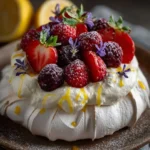
A delicate lavender-infused pavlova topped with creamy mascarpone and a medley of ruby berries.
- Yield: 8 1x
Ingredients
- For the Pavlova:
- 4 large egg whites
- 1 cup granulated sugar
- 1 tsp white vinegar
- 1 tsp cornstarch
- 1 tsp vanilla extract
- 1/2 tsp dried culinary lavender, finely ground
- 1 tsp lemon zest
- For the Mascarpone Cream:
- 8 oz mascarpone cheese
- 1 cup heavy cream
- 1/3 cup powdered sugar
- 1 tsp vanilla extract
- 1 tsp lemon juice
- For the Ruby Berries:
- 1 cup strawberries, halved
- 1/2 cup raspberries
- 1/2 cup cherries, pitted and halved
- 1 tbsp honey
- 1 tsp lemon juice
- For Garnish (optional):
- Fresh lavender sprigs
- Lemon zest
- Powdered sugar dusting
Instructions
- 1. Preheat the oven to 250°F (120°C) and line a baking tray with parchment paper.
- 2. Whip egg whites until soft peaks form.
- 3. Gradually add sugar, continuing to whip until stiff, glossy peaks form.
- 4. Fold in vinegar, cornstarch, vanilla, lavender, and lemon zest.
- 5. Shape into a round pavlova base on the baking tray.
- 6. Bake for 1 hour 15 minutes, then turn off oven and let cool completely inside.
- 7. In a bowl, whip mascarpone, cream, powdered sugar, vanilla, and lemon juice until thick and fluffy.
- 8. Toss berries with honey and lemon juice and let sit for 10 minutes.
- 9. Spread mascarpone cream over cooled pavlova.
- 10. Spoon ruby berries over the top.
- 11. Garnish with lavender, lemon zest, and a light dusting of powdered sugar.
- 12. Serve immediately.
Notes
Pavlova is best served immediately after assembling to maintain crispness. Dried lavender should be culinary grade; adjust amount to taste.
Nutrition
- Calories: 290
- Sugar: 29 g
- Fat: 15 g
- Carbohydrates: 34 g
- Protein: 5 g
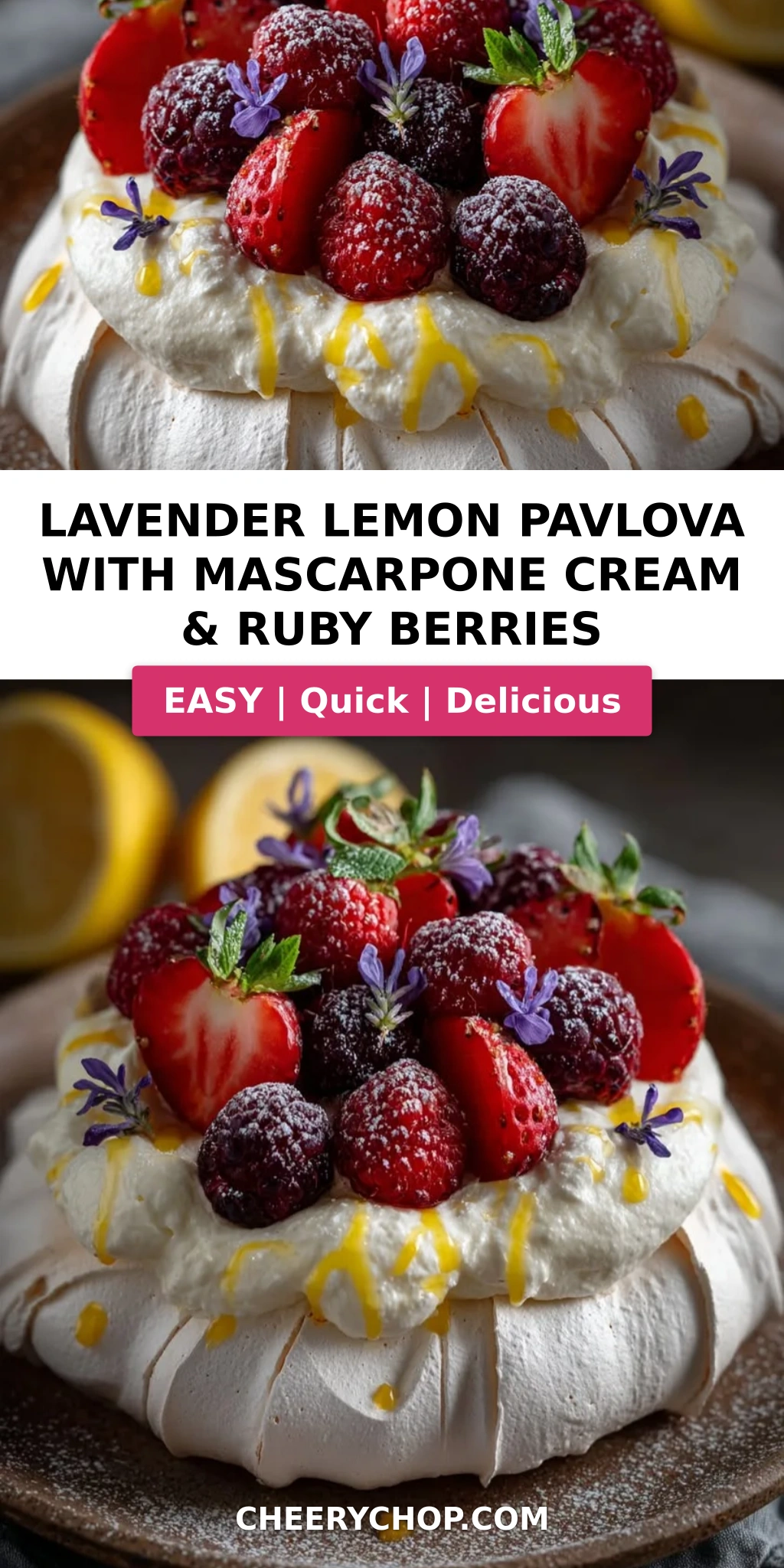
Tried This Recipe? Leave a Comment!
Did you make this recipe? I’d love to hear how it turned out! Please leave a comment and a rating below. Your feedback helps other home cooks and supports cheerychop.com!
For more delicious inspiration, follow me on Pinterest!