Table of Contents
Diamond Lemon Cheesecake Domes with Crystal Mirror — A Show-Stopping Lemon Mirror Glaze Cheesecake
I still remember the first time I saw a mirrored dome cheesecake in a patisserie window in Paris — it was like staring at a jewel. The flawless, reflective surface seemed almost impossible to create at home. But after years of testing in my NYC kitchen, I’ve perfected this Diamond Lemon Cheesecake Domes with Crystal Mirror recipe that brings that same breathtaking beauty to your table. This lemon mirror glaze cheesecake combines a silky citrus filling with a cracker crust and a crystal-clear glaze that shines like a gem. It’s the kind of dessert that stops conversation — and I’ll show you exactly how to nail it.
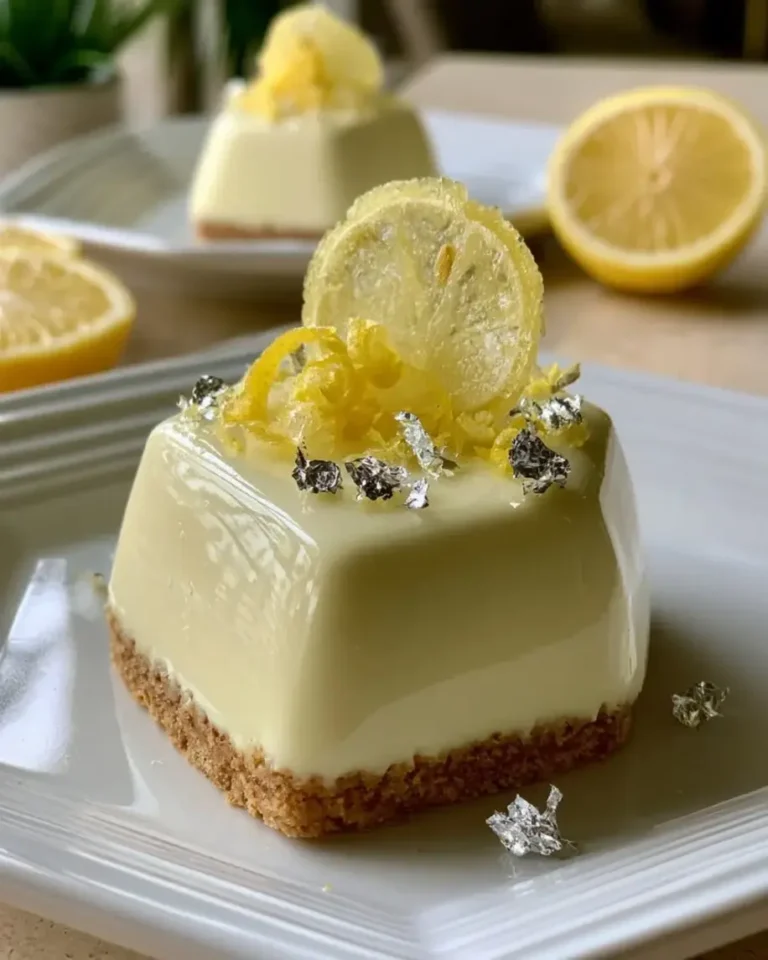
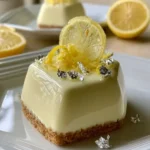
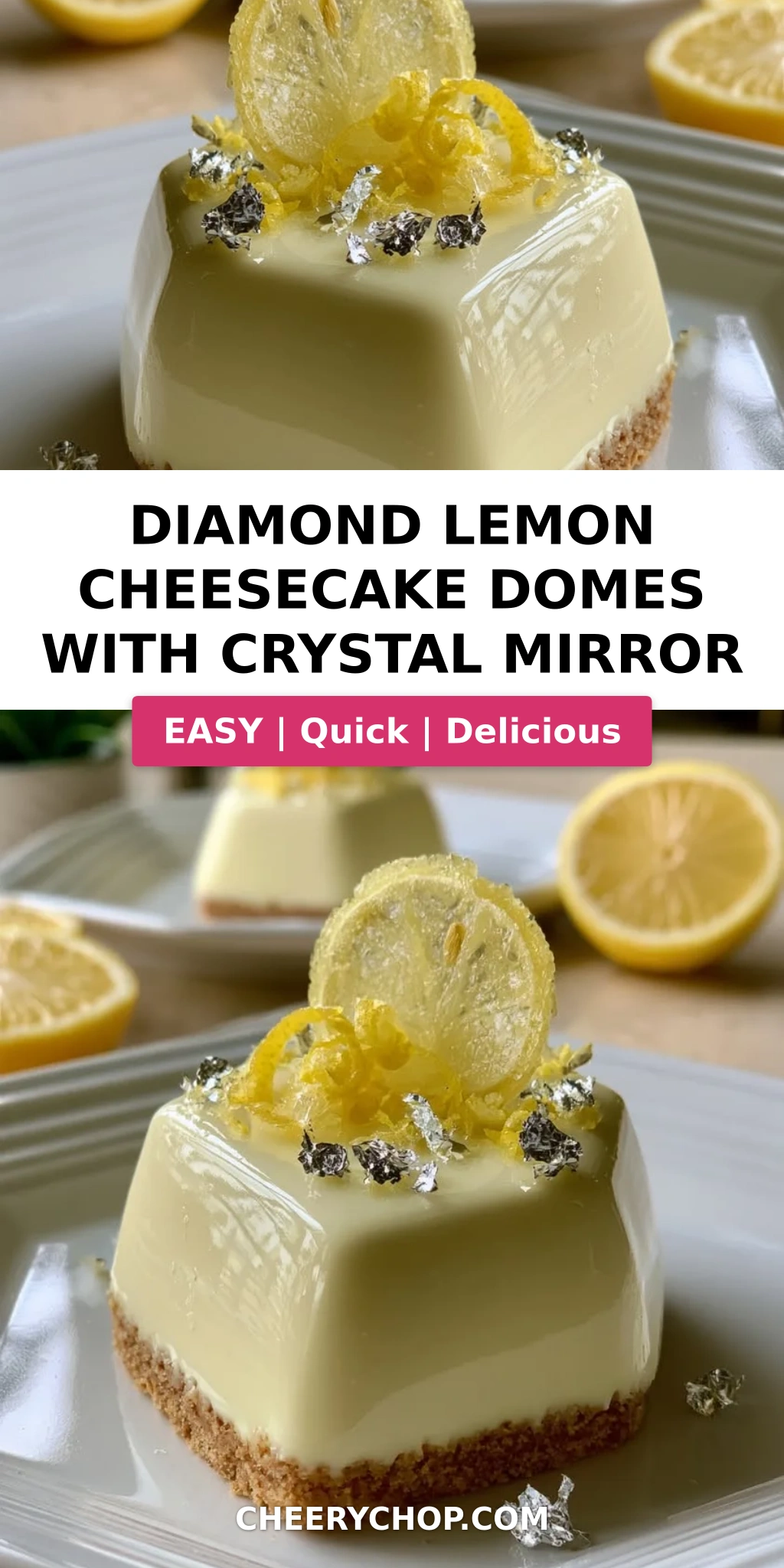
Picture this: a bright, tangy lemon cheesecake with a whisper of mascarpone richness, sitting atop a buttery cinnamon-spiced graham cracker base. Then comes the magic — a glossy, mirror-smooth glaze in pale yellow that drapes over each dome like liquid gold. The first bite is creamy, citrusy, and light, with a gentle crunch from the base. The aroma of fresh lemon zest and vanilla fills your kitchen, while the edible silver flakes catch the light and make every plate look like a masterpiece. It’s elegant, but deeply comforting — the kind of dessert my mother would have loved, even though her kitchen in Morocco was more about tagines than mirror glaze.
What sets my version apart is the balance: I use both cream cheese and mascarpone for a luxuriously creamy texture that isn’t too heavy, and I add a touch of cinnamon to the base that echoes the warm spices of my North African upbringing. The crystal mirror glaze is foolproof if you follow my temperature cues — and I’ll share my biggest pro tip for avoiding bubbles. One common mistake home bakers make is pouring the glaze too hot or too cold; I’ll show you the exact consistency to look for. This lemon cheesecake dessert is perfect for birthdays, holidays, or anytime you want to impress without spending days in the kitchen.
Why This Diamond Lemon Cheesecake Domes Recipe Is the Best
The Flavor Secret: Inspired by the bright citrus desserts I learned in Paris and the creamy, tangy flavors my mother used in Morocco, this recipe layers lemon three ways — juice, zest, and a touch of lemon in the glaze — for a bright, sunshiny taste that feels both sophisticated and familiar. The mascarpone adds a silky richness that cream cheese alone can’t match, giving every bite a velvety finish.
Perfected Texture: The key to a flawless crystal mirror cake is the gelatin. I bloom it properly and dissolve it into a warm portion of the cheesecake mixture before folding it back in — this ensures even distribution and no rubbery spots. The glaze is cooled to exactly the right temperature so it flows like a ribbon and sets to a glass-like sheen without cracking.
Foolproof & Fast: Even if you’ve never made a mirror glaze before, my step-by-step method with visual cues makes it achievable. The recipe uses simple, US-friendly ingredients you can find at any grocery store, and the dome molds do the shaping for you. No complicated piping or layering — just mix, freeze, pour, and glow.
Diamond Lemon Cheesecake Domes Recipe Ingredients
I source my cream cheese from a small dairy at the Union Square Greenmarket in NYC — it’s extra creamy and tangy. The lemons I grab from a bodega near my apartment; they’re always bright and fragrant. And the white chocolate for the glaze? I use a good-quality brand like Ghirardelli or Lindt for the smoothest melt. Here’s everything you’ll need.
Ingredients List
- 12 oz cream cheese, softened
- 1/2 cup mascarpone cheese
- 1/2 cup heavy cream
- 1/3 cup granulated sugar
- 3 tbsp fresh lemon juice
- 1 tbsp lemon zest
- 1 tsp vanilla extract
- 2 tsp gelatin powder
- 2 tbsp cold water
- Pinch of salt
- 1 cup graham cracker crumbs
- 3 tbsp melted butter
- 1 tbsp granulated sugar
- 1/2 tsp cinnamon
- 1 cup white chocolate, finely chopped
- 1/2 cup sweetened condensed milk
- 1/4 cup water
- 1 tbsp gelatin powder
- 3 tbsp cold water
- 1 tbsp lemon juice
- 1/2 tsp edible pearl luster dust
- A few drops yellow food coloring
- 1 tbsp candied lemon peel, finely chopped (optional garnish)
- 1 tsp lemon zest (optional garnish)
- Edible silver flakes (optional garnish)
Ingredient Spotlight
Cream Cheese: Full-fat block cream cheese is non-negotiable for the creamiest texture. Avoid whipped or spreadable versions — they contain too much air and water. Philadelphia is my go-to brand. If you need a dairy-free option, use a high-quality vegan cream cheese from brands like Kite Hill, though the texture will be slightly less firm.
Mascarpone: This Italian cream cheese adds a luscious, buttery richness that makes the filling taste luxurious. It’s worth seeking out in the specialty cheese section. In a pinch, you can substitute with an equal amount of cream cheese blended with a tablespoon of heavy cream, but the flavor won’t be as complex.
White Chocolate: Use a good-quality white chocolate with cocoa butter for the smoothest glaze. Avoid white baking chips — they often contain stabilizers that prevent a silky melt. Ghirardelli or Lindt white chocolate bars work beautifully. For a dairy-free version, use a high-quality vegan white chocolate.
| Original Ingredient | Best Substitution | Flavor / Texture Impact |
|---|---|---|
| Cream Cheese | Vegan cream cheese (Kite Hill) | Slightly less firm set, tangier |
| Mascarpone | Cream cheese + 1 tbsp heavy cream | Less rich, slightly more tangy |
| White Chocolate | Vegan white chocolate | Similar sheen, slightly less creamy |
| Graham Crackers | Gluten-free graham crackers or shortbread | Gluten-free; similar crunch |
| Gelatin | Agar-agar (use 1 tsp, adjust liquid) | Firmer set, plant-based |
How to Make Diamond Lemon Cheesecake Domes — Step-by-Step
Take a deep breath — this is easier than it looks. I’ll walk you through every step with my personal tips and the exact cues to watch for. You’ve got this.
Step 1: Prepare the Gelatin
In a small bowl, sprinkle 2 teaspoons of gelatin powder over 2 tablespoons of cold water. Let it sit for 5 minutes until it becomes a firm, jiggly mass. This is called blooming and it ensures the gelatin dissolves smoothly without clumps.
💡 Sara’s Pro Tip: Always use cold water for blooming — hot water will make the gelatin clump and ruin the texture.
Step 2: Make the Biscuit Base
In a medium bowl, combine 1 cup graham cracker crumbs, 3 tablespoons melted butter, 1 tablespoon granulated sugar, and 1/2 teaspoon cinnamon. Stir with a fork until every crumb is moistened. Press a small spoonful into each cavity of your diamond-shaped silicone molds, using the back of a spoon to compact it firmly into an even layer.
⚠️ Common Mistake to Avoid: Pressing too hard can make the base rock-solid. Use gentle, even pressure so it holds together but still has a pleasant crumbly texture when you bite into it.
Step 3: Make the Cheesecake Filling
In a large bowl, beat 12 oz softened cream cheese, 1/2 cup mascarpone, 1/2 cup heavy cream, 1/3 cup granulated sugar, 3 tablespoons fresh lemon juice, 1 tablespoon lemon zest, 1 teaspoon vanilla extract, and a pinch of salt with an electric mixer on medium speed until smooth and creamy — about 2 minutes. Scrape the bowl well.
Step 4: Incorporate the Gelatin
Scoop out about 1/4 cup of the cheesecake mixture into a small microwave-safe bowl. Heat it for 10 seconds until just warm — not hot. Add the bloomed gelatin and stir until completely dissolved. Fold this warm mixture back into the remaining cheesecake filling until fully incorporated.
💡 Sara’s Pro Tip: If the gelatin isn’t fully dissolved, microwave the small portion for another 5 seconds. Undissolved gelatin will leave lumps in your final cheesecake.
Step 5: Fill and Freeze
Spoon or pipe the cheesecake mixture over the biscuit base in each mold, filling to the top. Use a small offset spatula to smooth the tops flush with the mold edge. Freeze for at least 4 hours, or overnight — the domes must be completely solid before glazing.
⚠️ Common Mistake to Avoid: Rushing the freeze time. If the domes aren’t fully frozen, they’ll crack or slump when you unmold and glaze them.
Step 6: Make the Crystal Mirror Glaze
Bloom 1 tablespoon gelatin powder in 3 tablespoons cold water for 5 minutes. In a small saucepan, heat 1/2 cup sweetened condensed milk and 1/4 cup water until steaming — do not boil. Remove from heat and stir in the bloomed gelatin until fully dissolved. Pour this mixture over 1 cup finely chopped white chocolate in a bowl. Let sit 1 minute, then whisk gently until smooth and glossy. Add 1 tablespoon lemon juice, 1/2 teaspoon edible pearl luster dust, and a few drops yellow food coloring. Whisk until even in color.
💡 Sara’s Pro Tip: For a streak-free glaze, use a whisk and stir in one direction — avoid vigorous whisking that introduces air bubbles. Let the glaze cool to about 90°F (32°C) — it should be slightly thickened but still flow like warm honey.
Step 7: Glaze the Domes
Unmold the frozen cheesecake domes and place them on a wire rack set over a baking sheet. Pour the cooled glaze evenly over each dome, starting from the top and letting it cascade down the sides. Allow the excess to drip away. Transfer to serving plates using a thin spatula. Refrigerate for 20 minutes to set the glaze before serving.
⚠️ Common Mistake to Avoid: Pouring the glaze when it’s too warm will make it run off completely, leaving a thin, uneven layer. Too cold and it will glob and crack. Test on the back of a spoon first — it should coat evenly without dripping too fast.
Step 8: Garnish and Serve
Finish with finely chopped candied lemon peel, a sprinkle of fresh lemon zest, and a few edible silver flakes for that diamond sparkle. Serve immediately or keep chilled until ready.
| Step | Action | Duration | Key Visual Cue |
|---|---|---|---|
| 1 | Bloom gelatin | 5 mins | Firm, jiggly mass |
| 2 | Make base layer | 10 mins | Moist crumbs hold together when pressed |
| 3 | Mix cheesecake filling | 5 mins | Smooth, creamy, no lumps |
| 4 | Incorporate gelatin | 2 mins | Gelatin fully dissolved, mixture even |
| 5 | Fill molds & freeze | 4+ hrs | Fully solid, no give when pressed |
| 6 | Make mirror glaze | 15 mins | Glossy, smooth, coats spoon evenly |
| 7 | Glaze domes | 5 mins | Even coverage, drips slow to a stop |
| 8 | Garnish & chill | 20 mins | Glaze is firm to the touch, shiny |
Serving & Presentation
I love serving these domes on simple white plates to let the jewel-like glaze take center stage. Place each dome slightly off-center and add a small spoonful of lemon curd or a few fresh berries on the side for a pop of color. The candied lemon peel and silver flakes catch the light beautifully — I often arrange a few extra flakes around the plate like tiny diamonds.
For a Moroccan touch, I sometimes dust the plate with a pinch of ground cardamom or arrange a few mint leaves next to the dome — a nod to the mint tea my mother would serve after every meal. In my NYC dinner parties, I pair these with a dry sparkling wine or a tall glass of iced mint tea. The bright lemon flavor cuts through richness, making this a perfect end to any meal.
| Pairing Type | Suggestions | Why It Works |
|---|---|---|
| Side Dish | Fresh berries, lemon curd, mint leaves | Adds freshness and color contrast |
| Sauce / Dip | Raspberry coulis, caramel sauce, whipped cream | Enhances sweetness and adds texture |
| Beverage | Sparkling wine, mint tea, limoncello | Bright citrus pairs with acidity and bubbles |
| Garnish | Candied lemon peel, silver flakes, zest | Adds sparkle and reinforces lemon flavor |
Make-Ahead, Storage & Reheating
Between recipe testing for my blog and cooking for friends in NYC, I live by make-ahead desserts. These Diamond Lemon Cheesecake Domes are ideal for preparing in advance — in fact, they taste even better after the flavors meld overnight. Here’s how I store them for my busiest weeks.
| Method | Container | Duration | Reheating Tip |
|---|---|---|---|
| Refrigerator | Airtight container | Up to 3 days | Serve cold; no reheating needed |
| Freezer | Freezer-safe wrap + container | Up to 1 month | Thaw overnight in fridge, glaze after |
| Make-Ahead | Frozen unglazed domes | Up to 2 days before serving | Glaze frozen domes directly, then thaw 20 mins in fridge |
To store glazed domes, place them in a single layer in an airtight container with a sheet of parchment between layers. The glaze stays shiny and smooth for up to three days. If you’re freezing unglazed domes, wrap each one tightly in plastic wrap and store in a freezer bag. Glaze them directly from frozen — the cold surface helps the glaze set immediately for a flawless finish.
💡 Sara’s Pro Tip: I always make the domes a day ahead and glaze them the morning of serving. That way, I’m not rushing, and the glaze has time to set perfectly in the fridge before guests arrive.
Variations & Easy Swaps
| Variation | Key Change | Best For | Difficulty Impact |
|---|---|---|---|
| Lavender Honey Lemon | Add 1 tsp dried lavender to base; use honey in glaze | Spring parties, bridal showers | Easy |
| Raspberry Rose | Add 1/2 cup raspberry puree to filling; pink glaze with rose water | Valentine’s Day, romantic dinners | Medium |
| Vegan / Dairy-Free | Use vegan cream cheese, coconut cream, vegan white chocolate, agar-agar | Dairy-free guests | Advanced |
Lavender Honey Lemon Variation
Inspired by the lavender fields I visited in Provence during my Paris training, this version adds a floral note that pairs beautifully with lemon. Simply stir 1 teaspoon dried culinary lavender into the graham cracker base, and replace the sugar in the glaze with 2 tablespoons of honey. The result is a sophisticated, garden-party-worthy dessert that tastes like spring in every bite.
Raspberry Rose Variation
For a romantic twist, swirl 1/2 cup raspberry puree into the cheesecake filling before freezing. Replace the lemon juice in the glaze with 1 tablespoon rose water and tint the glaze pale pink. This version is always a hit at my NYC Valentine’s Day dinner parties — it looks like a jewel and tastes like berries and cream with a floral whisper.
Vegan / Dairy-Free Variation
I developed this version for a friend’s dairy-free birthday party. Use a high-quality vegan cream cheese, full-fat coconut cream in place of heavy cream, and vegan white chocolate. Replace gelatin with agar-agar (use 1 teaspoon agar-agar powder bloomed in 3 tablespoons water, then boiled for 1 minute). The texture is slightly firmer, but the glossy finish is just as stunning. Test the glaze consistency on a cold plate first — it should set within 30 seconds.
How do I achieve a smooth, crystal-clear mirror glaze for lemon cheesecake domes?
The secret to a flawless mirror glaze lies in three things: straining, temperature, and patience. First, whisk the glaze gently in one direction to avoid incorporating air bubbles — if you do see bubbles, let the glaze sit for 5 minutes and pop them with a toothpick. Second, always strain the finished glaze through a fine-mesh sieve into a clean bowl before pouring. Third, cool the glaze to exactly 90°F (32°C); it should coat the back of a spoon evenly without dripping too quickly. Pour it over fully frozen domes — the cold surface helps the glaze set instantly, creating that glass-like, crystal-clear finish. I also recommend using edible pearl luster dust for extra brilliance.
What is the best substitute for gelatin in the crystal mirror glaze for this dessert?
The best plant-based substitute for gelatin in mirror glaze is agar-agar powder, which is derived from seaweed and creates a firm, glossy set. Use 1 teaspoon of agar-agar powder for every 1 tablespoon of gelatin called for in the recipe. Unlike gelatin, agar-agar needs to be boiled for 1 to 2 minutes to activate fully, so bloom it in cold water for 5 minutes, then bring it to a boil in the liquid and simmer briefly. Note that agar-agar sets at room temperature much faster than gelatin, so you’ll need to work quickly once it’s added. The texture will be slightly firmer and less silky than gelatin, but the gloss remains beautiful.
How far in advance can I prepare Diamond Lemon Cheesecake Domes before serving?
You can prepare these domes up to 3 days in advance and store them in the refrigerator after glazing. For the best texture and shine, I recommend making the cheesecake domes (unglazed) up to 1 month ahead and freezing them. On the day you plan to serve, glaze the domes directly from the freezer — the cold surface helps the glaze set instantly. After glazing, refrigerate for 20 minutes to fully set the glaze, then serve. If you’re making them entirely in advance, glaze the domes no more than 24 hours before serving to keep the mirror finish at its brightest. Store glazed domes in an airtight container in a single layer.
What molds or tools do I need to shape the cheesecake into perfect domes?
You’ll need diamond-shaped silicone molds to create the signature faceted look of these domes. I recommend a silicone mold with 6 cavities, each about 2 to 3 inches wide — they’re widely available on Amazon or at baking supply stores. Silicone is essential because it flexes, making unmolding the frozen domes effortless. You’ll also need a wire rack set over a baking sheet for glazing, a small offset spatula for smoothing, and a fine-mesh sieve for straining the glaze. If you don’t have diamond molds, you can use round dome silicone molds — the recipe works just as well, though the visual effect will be softer. A kitchen scale is helpful for precise gelatin measurement.
Can I use bottled lemon juice instead of fresh lemon juice in this recipe?
I strongly recommend using fresh lemon juice for this recipe. Bottled lemon juice often contains preservatives and a flat, metallic flavor that can dull the bright citrus taste of the cheesecake and glaze. Fresh lemon juice provides the bright, natural acidity that cuts through the richness of the cream cheese and mascarpone, and fresh lemon zest adds essential oils that bottled juice can’t replicate. That said, if you’re in a pinch, use a good-quality bottled juice — just know that the flavor won’t be as vibrant. For the zest, always use fresh lemons; bottled zest is dried and lacks the aromatic punch you need.
Why did my mirror glaze crack or look cloudy after setting?
A cracked or cloudy mirror glaze usually happens for one of three reasons. First, the glaze was too cold when poured — if it thickens too much, it can pull apart as it sets. Reheat it gently and cool again to 90°F. Second, the cheesecake domes weren’t fully frozen; if they’re soft, the glaze absorbs unevenly and looks dull. Freeze domes for at least 4 hours or overnight. Third, air bubbles in the glaze cause cloudiness — always whisk gently and strain through a fine-mesh sieve. If your glaze cracks, you can gently reheat it, re-strain, and re-glaze the domes while they’re fully frozen. A second coat often hides minor imperfections.
Can I make this recipe gluten-free?
Absolutely! This recipe is naturally easy to make gluten-free. Simply substitute the graham cracker crumbs with gluten-free graham crackers (such as Kinnikinnick or Pamela’s brands) or use crushed gluten-free shortbread cookies. The butter and sugar ratios remain the same, so no adjustments are needed. All other ingredients — cream cheese, mascarpone, heavy cream, white chocolate, and gelatin — are naturally gluten-free. Just be sure to check the labels on your white chocolate and food coloring, as some brands may contain wheat-based additives. The flavor and texture of the domes will be virtually identical to the original version.
How do I get the glaze to drip perfectly over the dome without pooling at the base?
Perfect dripping comes down to glaze temperature and pouring technique. Cool the glaze to about 90°F (32°C) — it should flow like warm honey. If it’s too thick, warm it gently; if too thin, let it cool longer. Place the frozen dome on a wire rack over a baking sheet. Pour the glaze in a steady stream starting at the top center, moving in a spiral outward. Let the excess drip off naturally for 10 to 15 seconds. If you see pooling at the base, the glaze is too thin or the dome is too warm. For a clean finish, use a thin offset spatula to trim any drips from the bottom edge before transferring to a serving plate.
Can I use a different citrus fruit instead of lemon in this recipe?
Yes, you can swap the lemon for other citrus fruits like lime, orange, or grapefruit. For lime, use the same amount of juice and zest — it will be slightly more tart and fragrant. For orange, reduce the juice to 2 tablespoons and add 1 extra tablespoon of zest for a sweeter, milder flavor. For grapefruit, blanch the zest in boiling water for 30 seconds to remove bitterness before using. The glaze can also be tinted to match the fruit — use green for lime, orange for orange, or pink for grapefruit. Keep in mind that the acidity level changes the set of the gelatin slightly, so the texture may be a touch softer with grapefruit.
Why did my cheesecake filling have lumps after I added the gelatin?
Lumps in the cheesecake filling usually mean the gelatin wasn’t fully dissolved before being incorporated. Always bloom the gelatin in cold water for exactly 5 minutes, then warm a small portion of the cheesecake mixture (about 1/4 cup) and dissolve the bloomed gelatin in it — microwave for 10 to 15 seconds and stir until completely liquid. If you still see specks or strings, strain the warm gelatin mixture through a fine-mesh sieve before folding it back into the main filling. Also, make sure your cream cheese is fully softened to room temperature before beating — cold cream cheese can create small lumps that trap undissolved gelatin.
Share Your Version!
I absolutely love seeing how you make this recipe your own. If you try these Diamond Lemon Cheesecake Domes with Crystal Mirror, leave a star rating and a comment below — tell me what variation you made or how they turned out for your dinner party. Did you try the lavender honey version or add a different citrus twist? I read every comment and I’m always here to help if something didn’t go as planned.
If you share a photo on Instagram or Pinterest, tag me @cheerychop — I love featuring your creations in my stories. And if you have a question I didn’t answer here, just ask in the comments. From my NYC kitchen to yours — I hope this recipe brings as much warmth to your table as it does to mine. — Sara 🧡
Love This Recipe? Save It to Pinterest!
If you enjoyed this Diamond Lemon Cheesecake Domes with Crystal Mirror recipe, don’t let it get lost in your browser tabs! 😄 Pin it now so you can find it again anytime — and explore hundreds more tried-and-tested recipes waiting for you on my Pinterest boards.
👉 Follow Sara on Pinterest @chefrecipes2
📌 Pin this recipe · 🔁 Re-pin your favorites · 💬 Tag me when you make it — I love seeing your creations!
⭐ Tried this recipe? Tell us about it!
Have a question or a twist on this recipe? Drop it in the comments — I read every single one and I’ll personally help you out. Let’s make something beautiful together! 🧡
Diamond Lemon Cheesecake Domes with Crystal Mirror
- Yield: 6 1x
Ingredients
- For the Lemon Cheesecake Domes:
- 12 oz cream cheese, softened
- 1/2 cup mascarpone cheese
- 1/2 cup heavy cream
- 1/3 cup granulated sugar
- 3 tbsp fresh lemon juice
- 1 tbsp lemon zest
- 1 tsp vanilla extract
- 2 tsp gelatin powder
- 2 tbsp cold water
- Pinch of salt
- For the Biscuit Base:
- 1 cup graham cracker crumbs
- 3 tbsp melted butter
- 1 tbsp granulated sugar
- 1/2 tsp cinnamon
- For the Crystal Mirror Glaze:
- 1 cup white chocolate, finely chopped
- 1/2 cup sweetened condensed milk
- 1/4 cup water
- 1 tbsp gelatin powder
- 3 tbsp cold water
- 1 tbsp lemon juice
- 1/2 tsp edible pearl luster dust
- A few drops yellow food coloring
- For Garnish (optional):
- 1 tbsp candied lemon peel, finely chopped
- 1 tsp lemon zest
- Edible silver flakes
Instructions
- Bloom gelatin in cold water for 5 minutes.
- Mix graham cracker crumbs, melted butter, sugar, and cinnamon until evenly combined. Press into diamond-shaped silicone molds to create the base layer.
- Beat cream cheese, mascarpone, heavy cream, sugar, lemon juice, lemon zest, vanilla extract, and salt until smooth and creamy.
- Warm a small portion of the cheesecake mixture and dissolve the bloomed gelatin. Fold it back into the remaining mixture until fully incorporated.
- Fill the molds over the biscuit base and smooth the tops. Freeze for at least 4 hours until completely firm.
- For the mirror glaze, bloom gelatin in cold water for 5 minutes.
- Heat sweetened condensed milk and water until steaming. Remove from heat and stir in gelatin until dissolved.
- Pour over white chocolate and whisk until smooth and glossy. Add lemon juice, pearl luster dust, and yellow food coloring.
- Allow the glaze to cool until slightly thickened but still pourable.
- Unmold the frozen cheesecake domes and place on a wire rack. Pour the crystal mirror glaze evenly over each dome, allowing excess glaze to drip away.
- Transfer to serving plates and refrigerate for 20 minutes before serving.
- Finish with candied lemon peel, lemon zest, and edible silver flakes.
Nutrition
- Calories: 435
- Sugar: 33g
- Fat: 29g
- Carbohydrates: 39g
- Protein: 6g
Tried This Recipe? Leave a Comment!
Did you make this recipe? I’d love to hear how it turned out! Please leave a comment and a rating below. Your feedback helps other home cooks and supports cheerychop.com!
For more delicious inspiration, follow me on Pinterest!