
Table of Contents
No-Knead Rosemary Cranberry Bread with Olive Oil & Sea Salt: A Rustic, Easy Delight
Growing up in Morocco, the smell of freshly baked bread was a daily symphony, a core memory from my mother’s kitchen. Later, mastering the delicate art of French boulangerie in Paris taught me the science behind that magic. But often, in my busy NYC life, I crave that rustic, artisanal feel without the hours of kneading. That’s where this incredible no-knead rosemary cranberry bread comes in. It’s a revelation, delivering a perfectly crusty exterior and a tender, airy crumb with minimal effort, making it the ideal easy no-knead bread for any home baker, no matter their experience level.
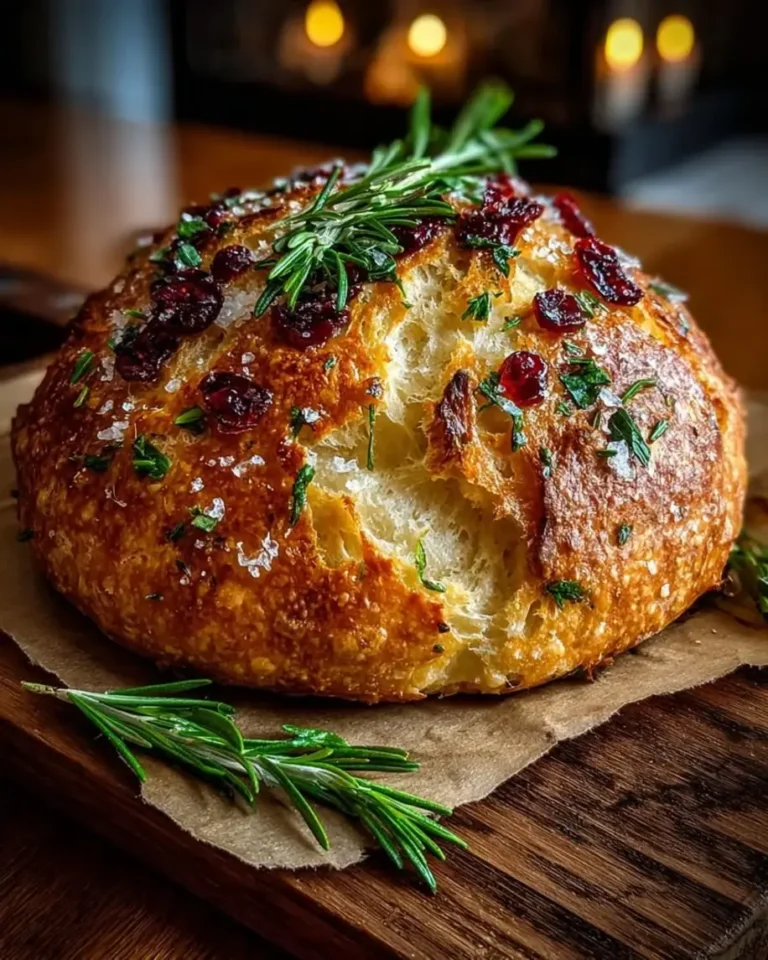
Imagine biting into a slice where the earthy, aromatic fresh rosemary dances with the sweet-tart burst of dried cranberries. Then, the subtle savoriness of a good olive oil and the satisfying crunch of flaky sea salt on top finish the experience. It’s a symphony of textures and flavors that feels both sophisticated and utterly comforting. This bread isn’t just a side dish; it’s a centerpiece, a conversation starter, and a testament to how simple ingredients, given time and a little care, can transform into something truly extraordinary right in your own kitchen.
For years, I’ve refined my no-knead technique, blending Parisian precision with the rustic charm of Moroccan baking, and this version is truly my absolute favorite. I’m going to share all my secrets, including how to ensure your cranberries don’t sink, a common pitfall. We’ll also cover tips on what type of olive oil to use for that ideal finishing touch, and how to get that coveted golden-brown crust. Get ready to impress yourself and everyone at your table with this truly spectacular cranberry bread with olive oil and sea salt.
Why This No-Knead Rosemary Cranberry Bread Recipe Is the Best
The secret to this bread’s incredible flavor lies in its simplicity and the quality of ingredients, a lesson echoed in both my Moroccan heritage and French culinary training. The long, slow fermentation, a hallmark of excellent bread making, develops complex flavors in the dough. The fresh rosemary, far superior to dried, infuses an aromatic depth that perfectly complements the tart cranberries. And that final drizzle of good quality olive oil? It’s my NYC market find inspiration, adding a subtle richness and a beautiful sheen that elevates the whole loaf.
Achieving a perfect texture in no-knead bread can sometimes be tricky, but I’ve refined this recipe to ensure an open, airy crumb and that undeniably crispy crust. The high hydration dough, coupled with a hot Dutch oven bake, mimics a professional steam injection oven. This technique, honed during my time in Parisian bakeries, is what creates those coveted large holes in the crumb and that golden-brown, crackling exterior that sings when you tap it.
This recipe is truly foolproof and fast, especially in terms of active work time. While it requires patience for the rise, your hands-on time is less than 15 minutes! It’s perfect for busy weeknights or lazy weekends. I’ve designed it to be as hands-off as possible without compromising on the quality you’d expect from a trained chef. Even if you’ve never baked bread before, you’ll be pulling a gorgeous, fragrant loaf out of your oven with confidence.
No-Knead Rosemary Cranberry Bread Ingredients
Gathering your ingredients is the first step to any great dish. For this bread, I always choose the best I can find, often from the local NYC farmers markets, knowing that quality ingredients lay the foundation for incredible flavor, much like my mother taught me in Morocco.
Ingredients List
- For the Bread Dough:
- 3 cups all-purpose flour
- 1.5 cups warm water (approx 110°F)
- 1.5 tsp kosher salt
- 1/2 tsp active dry yeast
- For Add-Ins:
- 1/2 cup dried cranberries
- 1 tbsp fresh rosemary, chopped
- For Finishing:
- 1 tbsp olive oil
- 1 tsp flaky sea salt
Ingredient Spotlight
All-Purpose Flour: This is the workhorse of our bread, providing the structure. Look for unbleached all-purpose flour for the best results, which you can find in any US grocery store. Its moderate protein content gives us a nice balance of chewiness and tenderness. While bread flour can be used for a chewier crumb, it might make the dough a bit stiffer to work with for a no-knead method. Whole wheat flour can be substituted for up to 1 cup, adding a nutty flavor and denser texture.
Active Dry Yeast: This little magic worker is responsible for the bread’s rise and distinctive fermented flavor. Ensure your yeast is fresh by checking the expiration date. You can typically find it in small packets or jars in the baking aisle. Instant yeast can be used interchangeably, no need to activate it in warm water first – just mix it directly with the dry ingredients.
Dried Cranberries: These provide bursts of sweet-tart flavor and a beautiful visual appeal. I prefer unsweetened or lightly sweetened cranberries to balance the other flavors. They are available year-round in the dried fruit section of most supermarkets. If you can’t find dried cranberries, other dried fruits like chopped apricots, raisins, or dried cherries would make delicious alternatives, though they will change the flavor profile.
Fresh Rosemary: The fragrant, piney notes of fresh rosemary are essential to this bread’s aroma and taste. Seek out vibrant, green sprigs in the herb section of your grocery store. Avoid any that look dry or discolored. Dried rosemary can be used in a pinch, but reduce the amount to about 1 teaspoon, as its flavor is more concentrated and less nuanced than fresh. I always prefer fresh here, a nod to the garden harvests from my childhood.
Olive Oil: A good quality extra virgin olive oil takes this bread from great to extraordinary, especially when drizzled on top with sea salt. I love scouting for unique regional olive oils at specialty shops or the NYC Italian markets. For the finishing touch, choose one with a pleasant, fruity, or peppery aroma. While any olive oil will work for flavor, avoid using a very low-quality one here, as its flavor will be prominent. A good medium-bodied olive oil is best.
| Original Ingredient | Best Substitution | Flavor / Texture Impact |
|---|---|---|
| All-Purpose Flour | Bread Flour (for chewier) or 1 cup Whole Wheat Flour (for nutty) | Bread flour creates a chewier crumb; whole wheat adds density and an earthy flavor. |
| Active Dry Yeast | Instant Yeast | No need to proof, can be mixed directly with dry ingredients. |
| Dried Cranberries | Chopped Apricots, Raisins, or Dried Cherries | Will alter the fruity notes and sweetness, but maintain texture. |
| Fresh Rosemary | 1 tsp Dried Rosemary | Less vibrant aroma and deeper, more concentrated piney flavor. |
| Olive Oil | Good Quality Vegetable Oil (for dough); Avocado Oil (for finishing) | Vegetable oil is neutral. Avocado oil is a good neutral, healthy alternative for finishing. |
How to Make No-Knead Rosemary Cranberry Bread — Step-by-Step
You’re about to embark on a truly rewarding baking journey. Don’t let the long resting time fool you – the actual work involved is minimal, allowing you to create bakery-quality bread with ease.
Step 1: Mix and Rest
In a large mixing bowl, combine 3 cups all-purpose flour, 1.5 tsp kosher salt, and 1/2 tsp active dry yeast. Add 1.5 cups warm water (approx 110°F) and stir with a wooden spoon or spatula until a shaggy, wet dough forms, ensuring there are no dry pockets of flour. Gently fold in 1/2 cup dried cranberries and 1 tbsp chopped fresh rosemary. Cover the bowl tightly with plastic wrap and let it rest at room temperature (ideally between 68-72°F) for 12-18 hours. This long rest is crucial for flavor development and gluten formation.
💡 Sara’s Pro Tip: The ideal temperature for your dough to rise is crucial. Just like in a French boulangerie, slightly cooler temperatures (near 68°F) result in a slower fermentation and deeper, more complex flavors. If your kitchen is warmer, reduce the resting time to 10-12 hours; if cooler, it might need closer to 20 hours. Trust your dough, not just the clock!
Step 2: Shape and Second Rise
After the long rest, the dough will be bubbly and have nearly doubled in size. Turn the dough out onto a generously floured surface. Using floured hands, gently fold the dough over itself a few times to create some tension on the surface. Avoid overworking it. Shape it into a round or oval loaf, pulling the edges underneath to create a smooth top. Transfer the shaped dough to a parchment-lined baking sheet or a floured Dutch oven if you’re planning to use one for baking. Cover it loosely with a clean kitchen towel and let it rise for another 1-2 hours until it looks noticeably puffed and spongy.
⚠️ Common Mistake to Avoid: When turning out and shaping the dough, resist the urge to add too much additional flour. While some flour on your hands and surface is necessary to prevent sticking, too much will make the dough stiff and dense, detracting from that light, airy crumb we’re aiming for. Use just enough to manage the stickiness!
Step 3: Preheat, Bake, and Finish
About 30 minutes before the second rise is complete, preheat your oven to 450°F (230°C) with a Dutch oven or heavy baking dish inside (if using). If baking on a sheet, ensure your sheet is ready. Once your oven and Dutch oven are hot, carefully transfer the dough into the scorching hot pot (or onto the hot baking sheet). Drizzle the top of the loaf with 1 tbsp olive oil and generously sprinkle with 1 tsp flaky sea salt. Score the top of the loaf with a sharp knife or razor blade, making one or two deep cuts, which helps the bread expand evenly. Bake covered (if using a Dutch oven) for 30 minutes. Then, remove the lid and bake for an additional 15-20 minutes until the crust is deep golden brown and the loaf sounds hollow when tapped on the bottom. Cool completely on a wire rack before slicing. I know it’s hard, but this step is key for the internal structure!
💡 Sara’s Pro Tip: For an extra crispy, crackly crust reminiscent of a Parisian baguette, place a shallow pan of water (like a cast iron skillet) on the bottom rack of your oven during the preheating and covered baking phases. The steam created significantly contributes to that beautiful, blistered surface. My culinary school chefs would insist on it!
| Step | Action | Duration | Key Visual Cue |
|---|---|---|---|
| 1 | Mix ingredients, fold in cranberries/rosemary, first rise | 12-18 hours | Dough is shaggy, then bubbly and nearly doubled. |
| 2 | Shape loaf, second rise | 1-2 hours | Dough is puffed and spongy. |
| 3 | Preheat oven, bake covered, then uncovered and cool | 45-50 minutes (bake) + cooling | Deep golden-brown crust, hollow sound when tapped. |
Serving & Presentation
This no-knead rosemary cranberry bread is a showstopper all on its own, its rustic charm and inviting aroma filling the kitchen just like the smells of my mother’s baking in Morocco. To truly highlight its beauty, I love to serve it simply, perhaps on a wooden cutting board with a sharp, serrated knife ready for slicing. The vibrant crimson of the cranberries against the golden crumb, speckled with green rosemary, is a feast for the eyes.
For a memorable presentation, tear off generous chunks or slice thick pieces. A small bowl of good quality olive oil for dipping alongside, perhaps infused with a little additional rosemary or a pinch of red pepper flakes, elevates the experience. This bread also shines as part of a larger spread. Being based in NYC, I often find inspiration in the city’s diverse culinary scene; it’s fantastic paired with a charcuterie board featuring artisanal cheeses, cured meats, and some tangy cornichons.
Don’t limit this bread to just dinner! It makes an exceptional breakfast or brunch item. Toast a slice lightly and spread with farm-fresh butter, or even a dollop of fresh ricotta and a drizzle of honey. The sweet-tart cranberries and savory rosemary truly make this bread versatile, fitting for any meal, much like the adaptable flavors of Mediterranean cuisine I learned in France.
| Pairing Type | Suggestions | Why It Works |
|---|---|---|
| Side Dish | Roasted chicken or turkey, hearty stews, green salads with vinaigrette | The bread’s robust flavors complement savory mains and add texture to lighter salads. |
| Sauce / Dip | Good quality olive oil, balsamic glaze, goat cheese spread, fig jam | Enhances the bread’s own olive oil notes and balances the tart cranberries. |
| Beverage | Full-bodied red wine (e.g., Merlot), robust coffee, spiced apple cider | Hearty beverages complement the savory and sweet elements of the bread. |
| Garnish | Sprig of fresh rosemary, sprinkle of more flaky sea salt, a drizzle of honey | Adds visual appeal and reinforces the key flavor elements. |
Make-Ahead, Storage & Reheating
As a busy chef in New York City, I know the importance of making components ahead of time to streamline my week. This no-knead bread is fantastic for make-ahead planning, allowing you to enjoy fresh bread with minimal fuss.
| Method | Container | Duration | Reheating Tip |
|---|---|---|---|
| Refrigerator | Airtight bag or container | 3-4 days | Warm slices in toaster or whole loaf in oven (350°F for 10-15 min). |
| Freezer | Plastic wrap then foil, or freezer bag | Up to 3 months | Thaw at room temp, then refresh in oven (350°F for 15-20 min). |
| Make-Ahead | Dough in covered bowl | Up to 24 hours (refrigerated after initial room temp rest) | Allow to come to room temp before shaping and second rise. |
For optimum freshness, this bread is best enjoyed the day it’s baked, especially for that perfect crispy crust. However, it keeps remarkably well. To store, once completely cooled, wrap the loaf tightly in plastic wrap or place it in an airtight container at room temperature for up to 3 days. Any longer, and I usually recommend freezing it to maintain quality.
When reheating from frozen, I always let the bread thaw at room temperature first, then give it a quick refresh. A trick I learned in Paris for re-crisping a day-old loaf is to lightly spritz it with water, then pop it into a 350°F oven for about 10-15 minutes. This brings back that lovely crust and warms the interior beautifully, making it almost as good as fresh out of the oven. No need to let good bread go to waste!
Variations & Easy Swaps
Part of the joy of baking, I find, is being able to adapt a recipe to different moods, seasons, or ingredients I happen to have on hand, much like improvising in my Moroccan mother’s kitchen. This no-knead rosemary cranberry bread is wonderfully versatile!
| Variation | Key Change | Best For | Difficulty Impact |
|---|---|---|---|
| Nutty Whole Wheat | Substitute 1 cup AP flour with whole wheat flour; add walnuts. | Heartier texture, deeper flavor, excellent with cheese. | Minor (texture slightly denser) |
| Gluten-Free Loaf | Use a gluten-free all-purpose flour blend (with xanthan gum). | Dietary needs; slightly different crumb structure. | Moderate (ingredient specific adjustments) |
| Orange Zest & Fennel Seed Twist | Add 1 tsp orange zest and 1/2 tsp crushed fennel seeds. | Fragrant, anise-like flavor, great with seafood or dessert. | Minor (simple add-ins) |
Nutty Whole Wheat Cranberry Bread
For a heartier loaf, you can substitute 1 cup of the all-purpose flour with whole wheat flour. This will add a deeper, nutty flavor and a slightly denser texture, reminiscent of the rustic whole grains we use in North African baking. I also love adding 1/2 cup of toasted chopped walnuts or pecans along with the cranberries for an extra layer of crunch and richness. The whole wheat flour pairs wonderfully with the robust rosemary and the sweetness of the cranberries.
Gluten-Free No-Knead Cranberry Loaf
Yes, this recipe can absolutely be adapted to be gluten-free! Use an equal amount of a good quality gluten-free all-purpose flour blend that contains xanthan gum. You might need to adjust the water slightly, as GF flours absorb liquid differently; start with 1/4 cup less, then add if needed. The texture will be a bit different—less chewy, more tender—but you’ll still get that incredible flavor profile. I’ve tested several blends from my local NYC health food stores, and a cup-for-cup blend usually works best.
Orange Zest & Fennel Seed Twist
To lean into a more Mediterranean flavor profile, inspired by my trips to coastal Italy, try adding 1 teaspoon of fresh orange zest and 1/2 teaspoon of lightly crushed fennel seeds to the dough. The bright citrus notes of the orange zest are a beautiful complement to the cranberries and rosemary, while the subtle anise flavor of the fennel seeds adds an intriguing depth. This variation is particularly delicious served with seafood or even as a unique base for a sweet toast.
What is the best way to incorporate dried cranberries into no-knead bread dough without them sinking to the bottom?
This is a fantastic question and a common challenge in bread baking! The best way to prevent dried cranberries (or any heavier add-ins) from sinking in a wet no-knead dough is to lightly dust them with a tablespoon of flour before folding them into the dough. This creates a barrier, helping them adhere to the gluten strands. Additionally, folding them in during the initial mixing phase, rather than kneading them in, ensures a more even distribution without overworking the delicate dough structure. It’s a trick I learned that works wonders for keeping ingredients suspended evenly.
Can I use instant yeast instead of active dry yeast for no-knead rosemary cranberry bread?
Absolutely, you can! Instant yeast is essentially a more finely granulated version of active dry yeast, designed to dissolve faster and activate more quickly. If you’re using instant yeast, there’s no need to proof it in warm water beforehand. Simply add it directly to your dry ingredients with the flour and salt. The quantity remains the same: 1/2 teaspoon of instant yeast will work perfectly. The total rise time might be slightly shorter, but the overall result will still yield that delicious, aromatic rosemary cranberry bread.
How long should I let no-knead rosemary cranberry bread rise for the best texture and flavor?
For the best texture and flavor, I recommend a long, slow rise for no-knead bread. The initial bulk fermentation should be between 12-18 hours at room temperature (around 68-72°F). This extended period allows the yeast to slowly develop complex flavors and create a beautiful open crumb structure. The second rise, after shaping, will be shorter, typically 1-2 hours, until the dough looks visibly puffed. Don’t rush either stage; patience is truly a virtue when making this easy no-knead bread with its wonderful rosemary, cranberry, and olive oil flavors.
What type of olive oil works best for drizzling on top of no-knead rosemary cranberry bread with sea salt?
For drizzling on top of this beautiful cranberry bread with olive oil and sea salt, I highly recommend using a good quality extra virgin olive oil. Because it’s a raw application, the flavor of the oil will really shine through. Look for one with a fruity, slightly peppery, or even grassy note. A medium-bodied EVOO from Italy, Spain, or California works wonderfully – it adds a layer of richness and depth that perfectly complements the rosemary and sea salt, enhancing the overall sensory experience of this rustic loaf.
Can I substitute fresh cranberries for dried cranberries in this rosemary cranberry bread recipe?
While fresh cranberries would certainly add a vibrant tartness, I wouldn’t recommend a direct substitution in this specific no-knead rosemary cranberry bread recipe without some modifications. Fresh cranberries contain significantly more water and would release moisture into the dough during baking, potentially making the crumb gummy and impacting the overall texture. If you want to use fresh berries, I’d suggest lightly sugar-coating and roasting or drying them slightly first to reduce their moisture content. Alternatively, consider a different recipe specifically designed for fresh berries.
Is a Dutch oven essential for baking this no-knead bread, or can I use a different method?
While a Dutch oven is highly recommended and truly helps achieve that signature crispy crust and tender interior by trapping steam, it’s not strictly essential. The recipe provides an alternative: you can bake the no-knead rosemary cranberry bread on a parchment-lined baking sheet. To compensate for the lack of steam, place a shallow pan of water on the bottom rack of your oven during preheating and the initial baking phase. You can also use a heavy-bottomed oven-safe pot with a tight-fitting lid, though a Dutch oven distributes heat most evenly for a professional-grade loaf.
How can I tell if my no-knead bread is fully cooked?
Knowing when your bread is perfectly baked is key to a delicious outcome. The primary indicators are color and sound. Visually, your no-knead rosemary cranberry bread should have a deep golden-brown, almost mahogany crust across its entire surface. For a more precise test, remove the loaf from the oven and tap its bottom with your knuckles. If it sounds hollow, it’s generally done. If it sounds dull or doughy, return it to the oven for another 5-10 minutes. An internal temperature of 200-210°F (93-99°C) is also a sure sign of doneness.
Share Your Version!
I truly hope you enjoy making and, more importantly, devouring this No-Knead Rosemary Cranberry Bread with Olive Oil & Sea Salt as much as I do. It’s a recipe that brings joy to my kitchen and always impresses my friends and family. I pour a little bit of my Moroccan comfort food heritage and Parisian culinary technique into every recipe I share, and this one is no exception!
Don’t be shy – once you’ve pulled your beautiful loaf from the oven, I’d love for you to leave a star rating and comment below. Tell me how it turned out! Did you try any variations, perhaps with a different kind of fruit or herb? And if you snap a photo, please share it on Instagram or Pinterest and tag @cheerychop. I absolutely adore seeing your creations! Tell me, what’s your favorite way to enjoy this rustic bread?
From my NYC kitchen to yours — I hope this recipe brings as much warmth to your table as it does to mine. — Sara 🧡
Love This Recipe? Save It to Pinterest!
If you enjoyed this No-Knead Rosemary Cranberry Bread with Olive Oil & Sea Salt recipe, don’t let it get lost in your browser tabs! 😄 Pin it now so you can find it again anytime — and explore hundreds more tried-and-tested recipes waiting for you on my Pinterest boards.
👉 Follow Sara on Pinterest @chefrecipes2
📌 Pin this recipe · 🔁 Re-pin your favorites · 💬 Tag me when you make it — I love seeing your creations!
No-Knead Rosemary Cranberry Bread with Olive Oil & Sea Salt

A crusty, rustic no-knead bread with rosemary, dried cranberries, a drizzle of olive oil, and a sprinkle of sea salt. Perfect for holiday tables or everyday enjoyment.
- Prep Time: 10 minutes (plus 12-18 hours resting)
- Cook Time: 45-50 minutes
- Total Time: 13-19 hours (including resting)
- Yield: 8 1x
- Method: Bread
- Cuisine: American
Ingredients
- For the Bread Dough:
- 3 cups all-purpose flour
- 1.5 cups warm water (approx 110°F)
- 1.5 tsp kosher salt
- 1/2 tsp active dry yeast
- For Add-Ins:
- 1/2 cup dried cranberries
- 1 tbsp fresh rosemary, chopped
- For Finishing:
- 1 tbsp olive oil
- 1 tsp flaky sea salt
Instructions
- In a large mixing bowl, combine flour, salt, and yeast. Add warm water and stir until a shaggy dough forms. Fold in dried cranberries and rosemary. Cover bowl with plastic wrap and let rest at room temperature for 12-18 hours.
- Turn dough out onto a well-floured surface. Fold dough over itself a few times. Shape into a round or oval loaf. Transfer to a parchment-lined baking sheet or a floured Dutch oven. Cover with a towel and let rise for 1-2 hours until nearly doubled.
- Preheat oven to 450°F (230°C) with a Dutch oven or heavy baking dish inside. Once hot, carefully place dough into the pot (or onto the baking sheet). Drizzle with olive oil and sprinkle with sea salt. Score the top with a sharp knife.
- Bake covered for 30 minutes, then uncover and bake for an additional 15-20 minutes until deep golden brown and hollow-sounding when tapped. Cool completely on a wire rack before slicing.
Notes
For an extra crispy crust, place a shallow pan of water on the bottom rack of the oven during baking. This bread keeps well at room temperature for up to 3 days.
Nutrition
- Calories: 210
- Sugar: 9g
- Fat: 3g
- Carbohydrates: 38g
- Protein: 5g

Tried This Recipe? Leave a Comment!
Did you make this recipe? I’d love to hear how it turned out! Please leave a comment and a rating below. Your feedback helps other home cooks and supports cheerychop.com!
For more delicious inspiration, follow me on Pinterest!