Table of Contents
Ruby Pomegranate Cheesecake Hearts with Crystal Mirror Shell – A Stunning Valentine’s Dessert
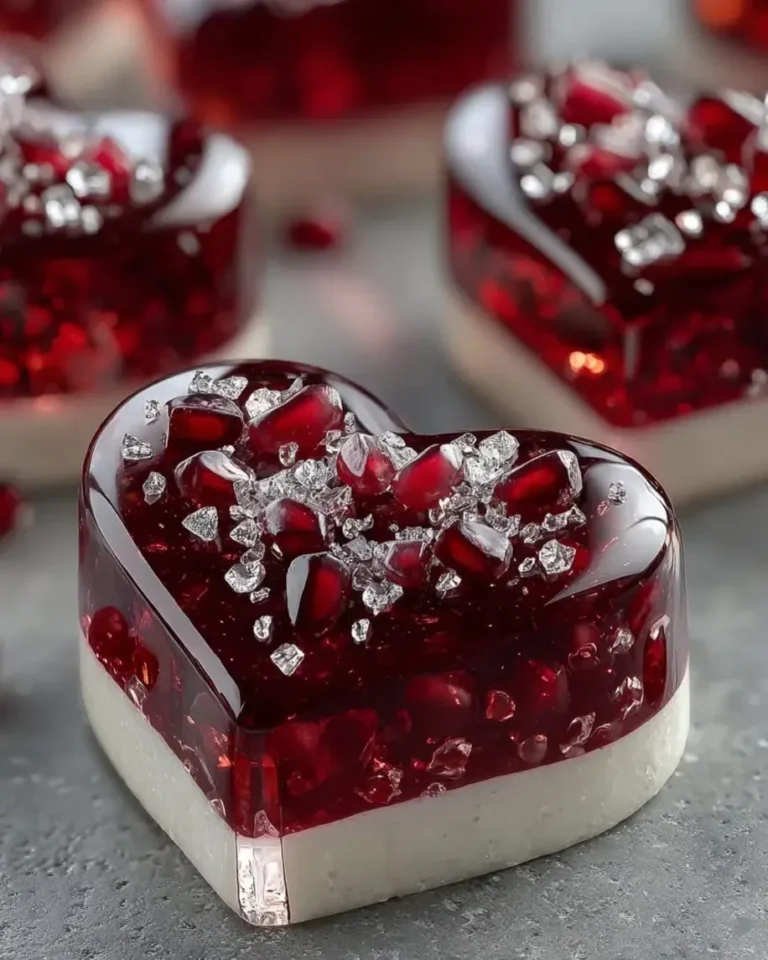
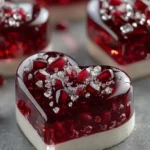
I still remember the first time I tasted a crystal-clear fruit gelée in a pastry shop on the Rue du Bac in Paris. The pastry chef called it “miroir de fruits”—a mirror of fruit—and I was mesmerized by the way it caught the light. Years later, back in my tiny NYC kitchen, I started experimenting with agar-agar and pomegranate juice to recreate that same jewel-like effect. These Ruby Pomegranate Cheesecake Hearts are the result: a creamy, tangy cheesecake filling encased in a shimmering, vegan-friendly crystal shell, all finished with a glossy pomegranate mirror glaze. They’re the perfect red Valentine’s Day cheesecake that’s as stunning as it is delicious.
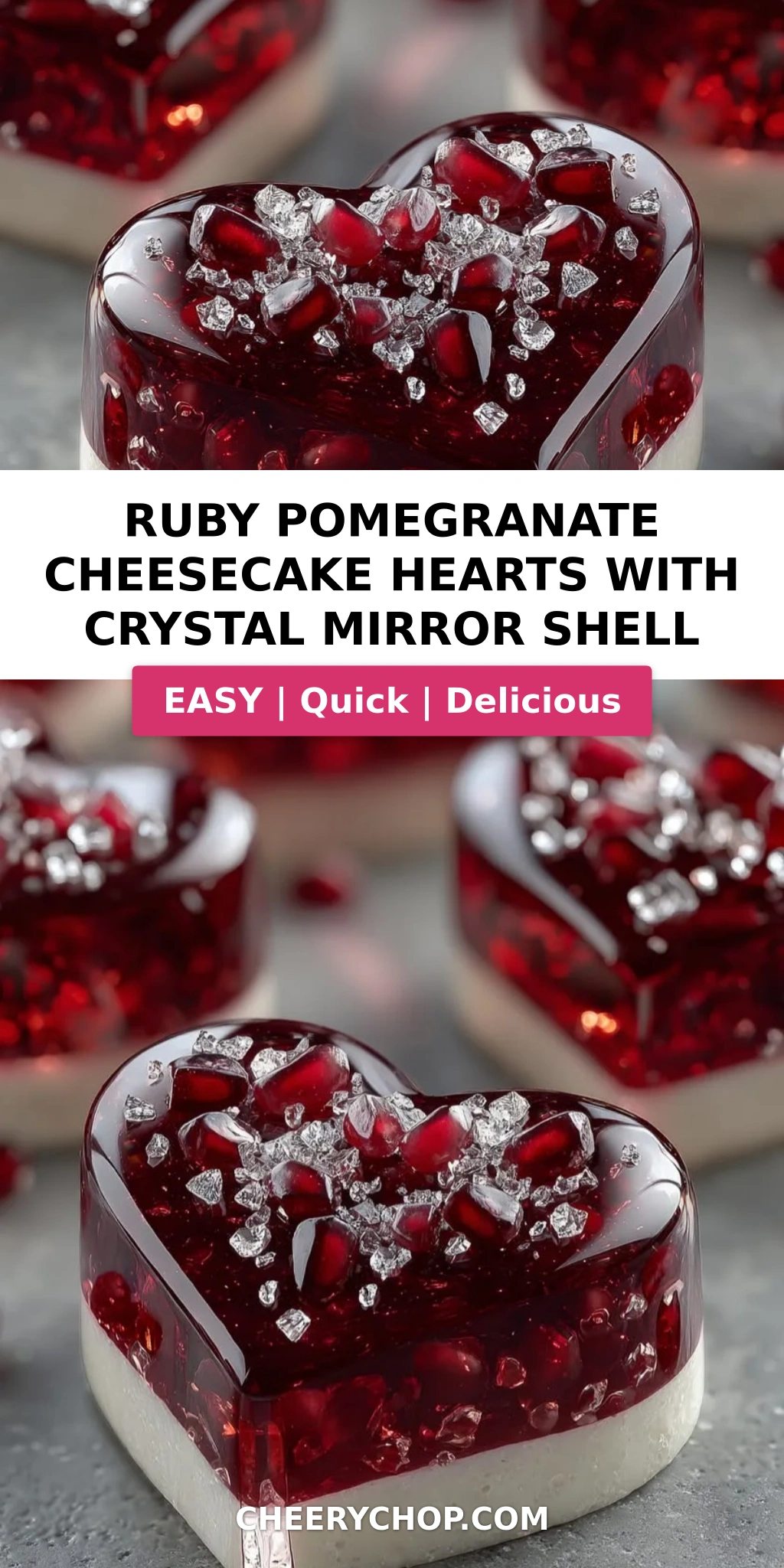
Every bite starts with a gentle crack of the shell—thin, set with agar-agar instead of gelatin—then gives way to a silky, luscious cheesecake heart that melts on your tongue. The pomegranate brings a bright, tart sweetness that cuts through the richness, while the mirror glaze adds an extra layer of glossy ruby shine. It’s the kind of dessert that stops conversation at the table. I love serving these at dinner parties; they look like little edible jewels.
What sets my version apart is the use of agar-agar for the crystal shell—a trick I learned from a Japanese pastry chef in Paris. Agar-agar gives a firmer, more stable set than gelatin, and it’s completely plant-based. Plus, the mirror glaze is made with real pomegranate juice and honey, not corn syrup or artificial colors. I’ll show you exactly how to avoid the dreaded cracking and achieve a flawless, glass-like finish. Trust me—these hearts are easier than they look.
Why This Ruby Pomegranate Cheesecake Hearts Recipe Is the Best
The Flavor Secret: Instead of using just any fruit juice, I use pure pomegranate juice—the kind that stains your fingers and tastes like concentrated autumn. Growing up in Morocco, my mother would make pomegranate molasses for tagines. That sour-sweet depth inspired me to pair pomegranate with cream cheese and sour cream. The tanginess of the cheesecake filling balances the fruit’s natural acidity, creating a flavor harmony that’s both sophisticated and comforting.
Perfected Texture: The crystal shell is where most recipes go wrong—they use too much agar or not enough, resulting in a gummy or brittle texture. After dozens of test batches (my poor family!), I nailed the exact ratio: 2½ teaspoons of agar-agar per 2 cups of liquid. That gives you a shell that snaps cleanly but still has a delicate, melt-in-your-mouth quality. The cheesecake filling is whipped with heavy cream for airiness, so it’s never dense.
Foolproof & Fast: The whole active process takes about 35 minutes—then it’s just waiting for the fridge to work its magic. I’ve designed this recipe so that even first-timers can get that glossy mirror glaze without a thermometer. I’ll share my pro tip for pouring it at the perfect consistency. Whether you’re making these for a Valentine’s Day dinner or a bridal shower, you’ll feel like a professional pastry chef.
Ruby Pomegranate Cheesecake Hearts Ingredients
I buy my pomegranate juice at the Union Square Greenmarket in NYC—there’s a farm from upstate that presses the most incredible ruby-red juice. If you can’t find fresh-pressed, a good-quality bottled juice like POM Wonderful works beautifully. For the cheesecake filling, I use organic full-fat cream cheese; it gives the richest texture. Let’s gather everything you need.
Ingredients List
- 2 cups pomegranate juice
- 1 cup water
- 3/4 cup granulated sugar
- 2 1/2 tsp agar-agar powder (not flakes)
- 1 tbsp fresh lemon juice
- 1/4 tsp salt
- 8 oz cream cheese, softened
- 1/2 cup heavy whipping cream
- 1/4 cup powdered sugar
- 1 tsp vanilla extract
- 2 tbsp sour cream
- For the Crystal Mirror Glaze: 1/4 cup pomegranate juice, 2 tbsp honey, 1 tbsp water, 1 tsp lemon juice
- Optional Garnishes: Fresh pomegranate seeds, edible silver dust, white chocolate shards
Ingredient Spotlight
Agar-Agar Powder: This is the magic behind the crystal shell. Unlike gelatin, agar-agar sets at room temperature and is vegan-friendly. It needs to be fully dissolved by simmering for about 2 minutes—don’t rush this step, or you’ll get a grainy texture. I buy mine at Whole Foods or online. If you only have agar-agar flakes, use 1 tablespoon and dissolve thoroughly.
Pomegranate Juice: The star of the show. I prefer 100% pure pomegranate juice with no added sugar—it gives the brightest color and most authentic tartness. In a pinch, you can use cranberry juice mixed with a splash of cherry juice, but the flavor won’t be the same. Always use a juice that complements the tangy filling.
Cream Cheese: Full-fat cream cheese is non-negotiable here—the low-fat versions contain too much water and gum, which can make the filling weep and ruin the shell’s clarity. Let it come to room temperature before mixing to ensure a silky smooth texture. I like Philadelphia brand best for its consistency.
Heavy Whipping Cream: This adds lightness to the cheesecake heart. Whip it to stiff peaks separately, then fold it into the cream cheese mixture for an aerated, mousse-like texture. If you over-whip, it becomes grainy; stop when it holds soft peaks.
| Original Ingredient | Best Substitution | Flavor / Texture Impact |
|---|---|---|
| Pomegranate juice (shell) | Cranberry + cherry juice (3:1) | Less tart, deeper red; still works |
| Agar-agar powder | Gelatin (1 tbsp) – not vegan | Softer, less stable shell; omit lemon in glaze |
| Heavy whipping cream | Full-fat coconut cream (chilled, whipped) | Lighter, coconut flavor; dairy-free |
How to Make Ruby Pomegranate Cheesecake Hearts — Step by Step
Don’t let the “crystal mirror” part intimidate you—if you can make Jell-O, you can make these hearts. Follow each step, and you’ll be rewarded with glossy, heart-shaped jewels. Let’s get started!
Step 1: Make the Crystal Shell
Combine 2 cups pomegranate juice, 1 cup water, 3/4 cup sugar, 2½ tsp agar-agar powder, 1 tbsp lemon juice, and 1/4 tsp salt in a saucepan. Whisk thoroughly to dissolve the agar. Place over medium heat and bring to a gentle simmer, stirring constantly. Once simmering, cook for 2 minutes—no less! The agar needs to be fully activated. You’ll see the liquid become slightly thicker. Remove from heat.
💡 Sara’s Pro Tip: Taste the mixture before pouring into molds. It should be sweet-tart with a hint of salt. Adjust lemon if needed. If you taste any grittiness, simmer another minute—the agar hasn’t dissolved completely.
Step 2: Pour and Chill
Carefully pour a thin layer (about 1/8 inch) of the hot pomegranate mixture into heart-shaped silicone molds. You want just enough to form the outer shell. Place the molds on a baking sheet and refrigerate for 10-15 minutes, until the layer is slightly set but still tacky—not firm.
⚠️ Common Mistake to Avoid: Pouring the shell too thick. If the layer is too deep, the shell will be rubbery instead of delicate. Use a measuring spoon to gauge roughly 2 tablespoons per standard heart mold.
Step 3: Make the Cheesecake Filling
In a mixing bowl, beat 8 oz softened cream cheese with an electric mixer until smooth and creamy. Add 2 tbsp sour cream, 1 tsp vanilla extract, and 1/4 cup powdered sugar; beat again until well combined. In a separate bowl, whip 1/2 cup heavy whipping cream to stiff peaks. Gently fold the whipped cream into the cream cheese mixture until no white streaks remain. Transfer to a piping bag fitted with a round tip.
💡 Sara’s Pro Tip: For extra stability, chill the filling for 10 minutes before piping. This helps it hold its shape inside the shell.
Step 4: Assemble the Hearts
Remove the molds from the fridge. Pipe a small amount of cheesecake filling (about 1 tablespoon) into the center of each partially set shell. Be careful not to touch the edges—the filling should be surrounded by the shell. Immediately cover the filling with the remaining pomegranate mixture, pouring until it just covers the filling and reaches the top of the mold. Tap the mold gently to release any air bubbles. Return to the fridge and chill for at least 2 hours, until fully set and the shell is crystal clear.
⚠️ Common Mistake to Avoid: Not covering the filling completely. If any cheesecake is exposed, it will not form a sealed shell and the heart may leak when unmolded. Make sure the filling is fully enveloped.
Step 5: Unmold
After at least 2 hours, check that the hearts are firm to the touch. Gently peel the silicone mold away from the edges, then push the bottom of the mold to release each heart. If they resist, dip the mold in warm water for 5 seconds—don’t soak. Place the unmolded hearts on a chilled serving plate or parchment-lined tray and return to the fridge while you make the glaze.
Step 6: Make the Crystal Mirror Glaze
In a small saucepan, combine 1/4 cup pomegranate juice, 2 tbsp honey, 1 tbsp water, and 1 tsp lemon juice. Warm over low heat, stirring until smooth and glossy. Do not boil—you just want the honey to dissolve and the glaze to become fluid. Remove from heat and let it cool for 1-2 minutes until it’s still pourable but not hot.
💡 Sara’s Pro Tip: Test the glaze on the back of a spoon. It should coat the spoon lightly and run off in a steady ribbon. If it’s too thick, add a teaspoon of water; if too thin, simmer another minute.
Step 7: Glaze and Garnish
Place the chilled hearts on a wire rack set over a baking sheet. Using a pastry brush or a small offset spatula, brush or drizzle the crystal mirror glaze over each heart, covering the top and letting it drip down the sides. Work quickly—the glaze sets fast on cold hearts. For a flawless finish, apply two thin coats, letting the first set in the fridge for 5 minutes. Garnish immediately with fresh pomegranate seeds, edible silver dust, or white chocolate shards while the glaze is still tacky. Serve thoroughly chilled.
| Step | Action | Duration | Key Visual Cue |
|---|---|---|---|
| 1 | Simmer shell ingredients | 5 min | Liquid turns clear, slightly thick |
| 2 | Pour thin layer into molds | 2 min | 1/8 inch coating, even |
| 3 | Chill shell layer | 10-15 min | Tacky, not hard |
| 4 | Pipe filling, cover with shell | 5 min | Filling fully submerged |
| 5 | Final chill | 2+ hours | Shell translucent, firm |
| 6 | Make and apply glaze | 5 min | Glaze coats spoon, glossy |
Serving & Presentation
These hearts are meant to be the centerpiece of your dessert spread. I like to serve them on a chilled white platter to make the ruby red glow really pop. Arrange them like a crown, with a few pomegranate seeds scattered between them. For a romantic touch, add a few fresh rose petals—it’s a nod to my Moroccan heritage where roses are used in sweet dishes.
Pair these cheesecake hearts with a crisp Sauternes or a sparkling rosé—the acidity cuts through the richness. Or, if you’re like me, a strong mint tea brings back memories of my mother’s kitchen. For non-alcoholic options, pomegranate limeade (equal parts pomegranate juice, lime juice, and sparkling water) is divine.
💡 Sara’s Pro Tip: For an extra elegant presentation, drizzle a thin stream of the leftover mirror glaze in a zigzag across the plate before placing the heart on top. Then add a tiny pinch of edible silver dust. Your guests will think you spent hours on this!
| Pairing Type | Suggestions | Why It Works |
|---|---|---|
| Side Dish | Light fruit salad, pomegranate sorbet | Refreshing contrast to rich cheesecake |
| Sauce / Dip | Dark chocolate ganache, raspberry coulis | Chocolate enhances pomegranate’s depth |
| Beverage | Sparkling rosé, Sauternes, mint tea | Acidity and sweetness balance |
| Garnish | Edible silver dust, rose petals, white chocolate shards | Elevates appearance, adds texture |
Make-Ahead, Storage & Reheating
Living in NYC means I’m always meal-prepping for busy weeks. These hearts are actually perfect for making ahead—in fact, they’re even better after a day in the fridge because the flavors meld. I often make the shells and filling one day, then assemble and glaze the next.
| Method | Container | Duration | Reheating Tip |
|---|---|---|---|
| Refrigerator | Airtight container in single layer | Up to 5 days | Serve chilled, no reheating |
| Freezer | Freeze on baking sheet, then wrap in plastic | Up to 2 months | Thaw overnight in fridge, glaze after thawing |
| Make-Ahead | Assemble in molds, chill up to 24h before glazing | 1 day | Apply glaze 1 hour before serving for maximum shine |
One thing I’ve learned the hard way: do not reheat these hearts. The crystal shell will melt and the mirror glaze will lose its gloss. They’re designed to be served cold, straight from the fridge. If you want them slightly less chilled, let them sit at room temperature for 5-10 minutes before serving—but no longer.
Variations & Easy Swaps
This recipe is incredibly versatile. I’ve experimented with different juices and flavor twists, especially during the holiday season. Here are some of my favorite variations that still keep that crystal mirror look.
| Variation | Key Change | Best For | Difficulty Impact |
|---|---|---|---|
| Blood Orange & Rose | Replace pomegranate juice with blood orange juice + 1 tsp rose water | Spring gatherings or Valentine’s | Same | floral note |
| Dairy-Free / Vegan | Use vegan cream cheese and coconut cream | Dairy-sensitive guests | Slightly softer texture |
| Spiced Chai Shell | Add 1 cinnamon stick and 2 cardamom pods to shell while simmering | Fall/winter holidays | Same | warm spice flavor |
Blood Orange & Rose Variation
In the shell, replace the pomegranate juice with fresh blood orange juice (you’ll need about 3 large oranges). Add 1 teaspoon rose water to the mixture. The shell takes on a softer pink hue with a delicate floral note. I love serving this at bridal showers—it’s incredibly romantic. The same cooking time applies.
Dairy-Free / Vegan Variation
For a fully plant-based version, use a high-quality vegan cream cheese (Miyoko’s or Violife work best). Replace the heavy whipping cream with chilled full-fat coconut cream—whip it just like you would dairy cream. The texture will be slightly lighter but still luscious. The agar-agar shell is already vegan. Note that coconut flavor will come through, so I recommend adding a little extra lemon zest to brighten the filling.
Spiced Chai Shell Variation
During the winter holidays, I infuse the shell liquid with a cinnamon stick and 2 crushed cardamom pods while simmering. Strain them out before pouring into the molds. The warm spices complement the tart pomegranate beautifully and give the hearts a cozy, festive feel. Garnish with a tiny star anise for presentation.
What can I use instead of pomegranate juice for the crystal mirror shell?
If pomegranate juice isn’t available, you can substitute with a blend of cranberry juice and cherry juice in a 3:1 ratio. This will give a similar deep red color and tartness. Alternatively, blood orange juice works beautifully for a softer pink hue. Keep in mind that the flavor profile will change—cranberry is less sweet, so you may want to increase the sugar by 1-2 tablespoons. Avoid using grape juice as it can be too sweet and lacks the necessary acidity to balance the cheesecake filling.
How do I prevent the cheesecake hearts from cracking during baking?
Since these hearts are not baked—they are set in the fridge—cracking is usually caused by the shell when unmolding or by thermal shock. To avoid cracks in the shell, make sure you don’t use too much agar-agar (stick to the exact 2½ tsp per 2 cups liquid). Also, when unmolding, let the hearts sit at room temperature for 1-2 minutes, then gently peel the silicone mold. If they resist, dip the mold in warm water for 5 seconds. For the filling cracking: don’t overwhip the cream; soft peaks are perfect. And always refrigerate the hearts for at least 2 hours before unmolding.
Can I make the ruby pomegranate cheesecake hearts ahead of time for a party?
Absolutely! This is a fantastic make-ahead dessert. You can prepare the hearts fully assembled (without the mirror glaze) up to 2 days in advance and keep them covered in the fridge. The mirror glaze should be applied on the day of serving for the best glossy finish—ideally 1-2 hours before the party. If you want to go even further in advance, you can freeze the unglazed hearts for up to 2 months. Thaw them overnight in the fridge, then glaze. I often do this for my Passover or Valentine’s dinners.
What is the best way to achieve a smooth, glossy mirror glaze on these cheesecake hearts?
For a flawless mirror glaze, temperature is everything. First, make sure your hearts are very cold—straight from the fridge. The glaze should be warm but not hot (around 90-95°F). If it’s too hot, it will melt the shell; if too cold, it will clump. I always strain the warm glaze through a fine-mesh sieve to remove any bubbles. Then use a pastry brush or offset spatula to apply a thin even coat. Let it set for 5 minutes, then apply a second coat. Work quickly—the glaze firms up fast on cold surfaces. If you see any streaks, a quick touch with a warm (not hot) spatula can smooth them.
Is agar-agar necessary, or can I use regular gelatin?
You can use gelatin, but the texture will be different. Agar-agar gives a firmer, more brittle shell that snaps cleanly—ideal for the “crystal” effect. Gelatin creates a softer, more jiggly shell that is less stable at room temperature. If you choose gelatin, use 1 tablespoon of unflavored powdered gelatin dissolved in 1/4 cup cold water, then add to the warm juice mixture. Also, omit the lemon juice in the shell because gelatin can break down in acidic environments. The mirror glaze should then be applied very carefully as the gelatin shell is more delicate.
Why did my crystal shell turn cloudy instead of clear?
Cloudiness in agar-agar shells usually happens for two reasons: the agar wasn’t fully dissolved, or the mixture was simmered too vigorously and incorporated air. Always whisk the agar into cold liquid first, then bring it to a gentle simmer—not a rolling boil. Simmer for exactly 2 minutes while stirring. If you see foam, skim it off before pouring into molds. Also, avoid using a metal bowl that might react with the juice; glass or silicone is best. Chilling too quickly (e.g., putting hot molds directly into a freezer) can also cause cloudiness—refrigerate only.
Can I use store-bought pomegranate juice with added sugar for this recipe?
You can, but you’ll need to adjust the sugar in the recipe. Many store-bought pomegranate juices are sweetened, so reduce the added sugar to 1/2 cup instead of 3/4 cup. Taste the mixture before adding agar—it should be sweet-tart, not cloying. If the juice is very sweet, the final dessert may be too sugary. I recommend 100% pomegranate juice with no added sugar (like POM Wonderful) for the most vibrant color and balanced flavor. Always check the label for added sugars or apple juice concentrates.
How do I get the heart shapes to release from the silicone molds easily?
The key is patience and temperature. After the hearts are fully set (at least 2 hours), remove them from the fridge and let them sit at room temperature for 1-2 minutes. Gently press the bottom of the silicone mold to push the heart up. If it sticks, dip the mold in warm (not hot) water for 5 seconds—this slightly melts the surface and releases the heart. Never use a knife or metal tool to pry them out, as this will scratch the delicate shell. Silicone molds with smooth, non-stick surfaces work best; avoid cheap molds with rough interiors.
Can I make these hearts without a mirror glaze?
Yes! The hearts are beautiful even without the glaze—the pomegranate shell is naturally glossy and jewel-like. If you skip the glaze, simply garnish with fresh pomegranate seeds, a dusting of powdered sugar, or edible flowers. The glaze adds extra shine and a concentrated pomegranate flavor, but it’s optional. For a simpler version, you can also use a thin honey drizzle instead of the mirror glaze. Just warm honey with a little lemon juice and brush it on. It won’t be as glass-like, but it will still be delicious.
What should I do if my pomegranate shell cracks when I unmold it?
Don’t panic—small cracks can be disguised! If the heart cracks into pieces, you can “glue” them back together using a tiny bit of warm pomegranate mixture (or the mirror glaze). Press the pieces together gently and refrigerate for 10 minutes. Then apply two coats of the mirror glaze, which will fill and hide the cracks. If the heart is completely broken, you can chop it up and serve it as a pomegranate jelly with cheesecake mousse—a delicious “deconstructed” dessert. To prevent cracking in the future, make sure your molds are at room temperature before pouring the hot mixture.
Share Your Version!
I absolutely love seeing how my readers put their own spin on these Ruby Pomegranate Cheesecake Hearts. Did you try the blood orange variation? Or maybe you added a pinch of saffron to the shell like my Moroccan grandmother would have done? Drop a comment below and let me know—your feedback helps other home cooks too. And if you share a photo on Instagram or Pinterest, tag me @cheerychop. I personally reply to every tag!
One question I always ask: what’s the one dessert you’re most proud of making for someone you love? For me, it’s these hearts—they’re tiny packages of love and patience. I hope you feel that same pride when you pull them out of the fridge, all glossy and perfect. Don’t forget to leave a star rating if you enjoyed this recipe!
From my NYC kitchen to yours — I hope this recipe brings as much warmth to your table as it does to mine. — Sara 🧡
Love This Recipe? Save It to Pinterest!
If you enjoyed this Ruby Pomegranate Cheesecake Hearts recipe, don’t let it get lost in your browser tabs! 😄 Pin it now so you can find it again anytime — and explore hundreds more tried-and-tested recipes waiting for you on my Pinterest boards.
👉 Follow Sara on Pinterest @chefrecipes2
📌 Pin this recipe · 🔁 Re-pin your favorites · 💬 Tag me when you make it — I love seeing your creations!
💬 What’s your favorite way to make a dessert extra special?
Share your thoughts in the comments below! I read every single one and I’d love to hear how these hearts turned out for you. Did you use a different fruit? Tell me about it! ⭐
Ruby Pomegranate Cheesecake Hearts with Crystal Mirror Shell
- Yield: 6 1x
Ingredients
- For the Ruby Pomegranate Crystal Shell:
- 2 cups pomegranate juice
- 1 cup water
- 3/4 cup sugar
- 2 1/2 tsp agar-agar powder
- 1 tbsp lemon juice
- 1/4 tsp salt
- For the Cheesecake Heart Filling:
- 8 oz cream cheese, softened
- 1/2 cup heavy whipping cream
- 1/4 cup powdered sugar
- 1 tsp vanilla extract
- 2 tbsp sour cream
- For the Crystal Mirror Glaze:
- 1/4 cup pomegranate juice
- 2 tbsp honey
- 1 tbsp water
- 1 tsp lemon juice
- For Garnish (optional):
- Fresh pomegranate seeds
- Edible silver dust
- White chocolate shards
Instructions
- Combine pomegranate juice, water, sugar, agar-agar powder, lemon juice, and salt in a saucepan. Heat while stirring until fully dissolved and bring to a gentle simmer.
- Pour a thin layer into heart-shaped silicone molds and refrigerate until slightly set.
- Whip cream cheese, heavy whipping cream, powdered sugar, vanilla extract, and sour cream until smooth and fluffy. Transfer to a piping bag.
- Pipe a small amount of cheesecake filling into the center of each partially set shell. Cover with the remaining pomegranate mixture and refrigerate until fully set and crystal clear.
- Carefully unmold the hearts onto a chilled serving plate.
- Warm pomegranate juice, honey, water, and lemon juice until smooth and glossy. Allow to cool slightly while still pourable.
- Brush or drizzle the crystal mirror glaze over each heart for a glossy ruby finish.
- Garnish with fresh pomegranate seeds, edible silver dust, and white chocolate shards. Serve thoroughly chilled.
Nutrition
- Calories: 270
- Sugar: 29g
- Fat: 14g
- Carbohydrates: 33g
- Protein: 4g
Tried This Recipe? Leave a Comment!
Did you make this recipe? I’d love to hear how it turned out! Please leave a comment and a rating below. Your feedback helps other home cooks and supports cheerychop.com!
For more delicious inspiration, follow me on Pinterest!