
Table of Contents
No-Knead Rosemary Cranberry Bread with Olive Oil & Sea Salt – An Easy Artisan Loaf
Growing up in Morocco, my mother’s kitchen was always filled with the scent of warm bread fresh from the clay oven. Years later, after training at Le Cordon Bleu in Paris and now cooking in my small New York City apartment, I’ve found that same comfort in a loaf of no-knead rosemary cranberry bread. This easy artisan bread recipe requires almost no effort but delivers a crusty, chewy crumb that rivals any bakery. The secret? A long, slow fermentation that develops deep flavor – and the final touch of olive oil and sea salt that makes this loaf truly special.
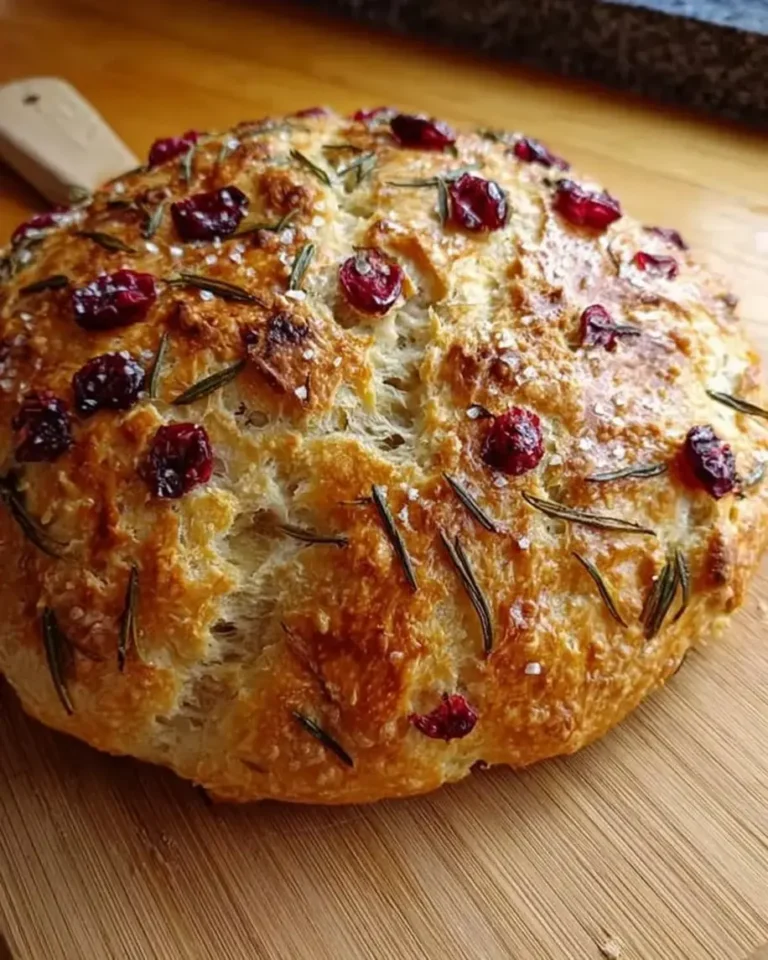
Imagine slicing into a golden-brown loaf: the crust cracks under your knife, revealing a soft, airy interior dotted with sweet-tart cranberries and fragrant rosemary. A drizzle of peppery olive oil and a sprinkle of flaky sea salt on top create a savory-sweet finish that’s absolutely irresistible. This cranberry rosemary bread is perfect for holiday gatherings, Sunday brunch, or simply enjoying with a smear of butter and a cup of tea.
What sets my version apart? I’ve tested this recipe dozens of times to ensure it works perfectly with pantry staples. The trick is using instant yeast for a reliable rise and letting the dough rest for 12–18 hours – no kneading required! I’ll share my favorite pro tip for getting that bakery-style open crumb, plus a common mistake home bakers make when using dried fruit. Trust me, once you try this no-knead bread with olive oil, you’ll never go back to store-bought.
Why This No-Knead Rosemary Cranberry Bread Recipe Is the Best
The Flavor Secret: My Moroccan roots taught me that bread is about balance. Here, the natural sweetness of dried cranberries is offset by earthy rosemary and a final flourish of olive oil and sea salt. I source my olive oil from a small producer in Sicily – its grassy, peppery notes elevate every bite. This isn’t just bread; it’s a canvas for bright, layered flavors.
Perfected Texture: That long, no-knead fermentation is the key to a beautiful open crumb. In my Parisian pastry training, I learned that time, not muscle, builds gluten. By letting the dough rest overnight, the gluten develops naturally, creating bubbles that expand into airy pockets during baking. The result? A crust that shatters and an interior that’s chewy yet tender.
Foolproof & Fast: This is the easiest artisan bread you’ll ever make. No stand mixer, no bread machine, no complicated folds. Just mix, rest, shape, and bake. Even if you’ve never made bread before, you can nail this dutch oven bread on your first try. Plus, the hands-on time is less than 15 minutes – perfect for a busy New York City schedule.
No-Knead Rosemary Cranberry Bread Ingredients
When I shop for these ingredients, I head straight to the Union Square Greenmarket for fresh rosemary and dried cranberries from upstate New York. But any grocery store will work! Here’s what you need for this cranberry rosemary bread.
Ingredients List
- 3 cups (360 g) all-purpose flour
- 1 1/4 teaspoons (7 g) salt
- 1/2 teaspoon (2 g) instant yeast
- 1 1/2 cups (360 ml) warm water
- 1/2 cup dried cranberries
- 1 tablespoon fresh rosemary, chopped
- 1 tablespoon olive oil (for drizzling)
- 1 teaspoon flaky sea salt (for topping)
Ingredient Spotlight
Dried Cranberries: Sweet-tart and chewy, they hold up perfectly during the long fermentation. Look for unsweetened or lightly sweetened varieties – you can always add a tablespoon of sugar to the dough if you prefer a sweeter loaf. No dried cranberries? Try dried cherries, chopped apricots, or golden raisins.
Fresh Rosemary: Fragrant and piney, fresh rosemary infuses the bread with a savory note that balances the fruit. Strip the leaves from the woody stem and give them a rough chop. Dried rosemary works too, but use only half the amount (1 ½ teaspoons) and rehydrate it in the water for 10 minutes before adding.
Olive Oil & Sea Salt (Topping): This is where the magic happens. A generous drizzle of good-quality extra-virgin olive oil pools on the dough’s surface, and flaky sea salt (like Maldon) adds little bursts of salinity. Don’t skip these – they’re what make this no-knead bread with olive oil unforgettable.
| Original Ingredient | Best Substitution | Flavor / Texture Impact |
|---|---|---|
| Dried Cranberries | Dried cherries or chopped apricots | Slightly tarter or sweeter; similar chewy texture |
| Fresh Rosemary | Dried rosemary (1 ½ tsp, rehydrated) | Milder flavor; still fragrant |
| Olive Oil (drizzle) | Avocado oil or melted butter | Less peppery; butter adds richness |
| Flaky Sea Salt | Coarse kosher salt (use slightly less) | Less crunchy; still salty |
How to Make No-Knead Rosemary Cranberry Bread – Step-by-Step
Grab your bowl and a spatula – this is the easiest bread you’ll ever make. Follow these steps and you’ll have a gorgeous loaf smelling up your NYC kitchen in no time.
Step 1: Mix Dry Ingredients
In a large bowl, whisk together the flour, salt, and instant yeast. Make sure the salt and yeast are well distributed so the yeast hydrates evenly.
💡 Sara’s Pro Tip: Use a whisk instead of a spoon – it breaks up any lumps and aerates the flour for a better rise.
Step 2: Add Water and Cranberries
Pour in the warm water and add the dried cranberries. Stir with a wooden spoon or spatula until a shaggy, sticky dough forms. No need to knead – just mix until no dry flour remains.
⚠️ Common Mistake to Avoid: Water that’s too hot will kill the yeast. Aim for body temperature (about 100–110°F). If it feels hot to your wrist, let it cool.
Step 3: Cover and Rest
Cover the bowl tightly with plastic wrap or a clean kitchen towel. Let it rest at room temperature for 12–18 hours. The dough will double in size and the surface will be dotted with tiny bubbles.
💡 Sara’s Pro Tip: I usually start this before bed and bake it the next morning. 14 hours is my sweet spot for maximum flavor.
Step 4: Turn Out and Add Rosemary
Generously flour your work surface. Scrape the dough out onto the floured surface. Sprinkle the chopped fresh rosemary over the top. Using floured hands, fold the dough over itself 4–5 times, gently incorporating the rosemary. Don’t overwork it.
⚠️ Common Mistake to Avoid: Adding too much flour when folding will make the bread dense. Use only enough to prevent sticking.
Step 5: Shape and Second Rest
Shape the dough into a smooth ball by tucking the edges under. Place it seam-side down on a piece of parchment paper. Cover with the towel and let rest for 30 minutes while you preheat the oven.
💡 Sara’s Pro Tip: Use a piece of parchment paper that’s large enough to lift the dough into the pot. It makes transferring a breeze.
Step 6: Preheat Dutch Oven
Place your Dutch oven (with the lid on) inside the oven and preheat to 450°F (230°C). Let it heat for a full 30 minutes – this creates the steamy environment that gives you that crackly crust.
⚠️ Common Mistake to Avoid: Don’t skip the 30-minute preheat. If the pot isn’t screaming hot, the bread won’t get the initial burst of steam it needs.
Step 7: Transfer and Top
Carefully remove the hot Dutch oven from the oven. Lift the dough by the parchment paper and lower it into the pot. Drizzle the top with 1 tablespoon of olive oil and sprinkle with flaky sea salt.
💡 Sara’s Pro Tip: Use a pastry brush to spread the olive oil evenly – it helps the salt stick and creates a beautiful golden finish.
Step 8: Bake Covered
Put the lid on and bake for 30 minutes. The steam trapped inside will help the bread rise and develop a shiny, crisp crust.
⚠️ Common Mistake to Avoid: Peeking! Every time you open the lid, you release steam. Keep it closed for the full 30 minutes.
Step 9: Uncover and Bake
Remove the lid and bake for another 10–15 minutes, until the crust is deep golden brown and the internal temperature reaches 200–210°F (93–99°C). Transfer to a wire rack and cool completely before slicing – at least 1 hour.
💡 Sara’s Pro Tip: Letting the bread cool fully is crucial. Cutting into it while warm will result in a gummy interior. Patience, my friend!
| Step | Action | Duration | Key Visual Cue |
|---|---|---|---|
| 1 | Mix dry ingredients | 2 min | Evenly combined flour |
| 2 | Add water & cranberries | 3 min | Shaggy dough, no dry bits |
| 3 | Cover and rest | 12–18 hrs | Bubbles on surface, doubled |
| 4 | Turn out & add rosemary | 2 min | Rosemary evenly folded |
| 5 | Shape & second rest | 30 min | Rounded ball, not sticky |
| 6 | Preheat Dutch oven | 30 min | Pot extremely hot |
| 7 | Transfer & top | 2 min | Olive oil and salt on top |
| 8 | Bake covered | 30 min | Steam visible when lid removed |
| 9 | Uncover & bake | 10–15 min | Deep golden brown crust |
Serving & Presentation
This beautiful loaf deserves to be shown off! I love serving it as the centerpiece of a weekend brunch spread. Slice it thick and place it on a wooden board alongside a dish of extra-virgin olive oil for dipping and a sprinkle of sea salt. It’s also divine toasted and slathered with salted butter – the cranberries soften and the rosemary becomes even more fragrant.
For a touch of my Moroccan heritage, I sometimes serve this bread with a side of whipped honey butter or fig jam. The sweet-savory combination is irresistible. In the summer, I’ll pair it with a bowl of fresh berries and a dollop of crème fraîche – a nod to my Parisian pastry days.
When I bring this bread to a potluck in Brooklyn, it disappears in minutes. It pairs beautifully with soups, stews, and salads. Try it with roasted butternut squash soup or a crisp arugula salad with pomegranate seeds.
| Pairing Type | Suggestions | Why It Works |
|---|---|---|
| Side Dish | Roasted root vegetables, lentil soup, winter salad | Bread soaks up hearty flavors |
| Sauce / Dip | Honey butter, fig jam, balsamic reduction | Sweet and tangy balance the herbs |
| Beverage | Earl Grey tea, crisp white wine, apple cider | Light drinks don’t overpower the bread |
| Garnish | Fresh rosemary sprigs, flaky sea salt, edible flowers | Enhances visual appeal and aroma |
Make-Ahead, Storage & Reheating
I often make this bread over the weekend and enjoy it throughout the week. The long fermentation actually means the bread stays fresher longer than quick breads. Here’s how to store it to keep that crusty exterior and soft interior.
| Method | Container | Duration | Reheating Tip |
|---|---|---|---|
| Refrigerator | Plastic bag or airtight container | 3–4 days | Toast in a 350°F oven for 5 minutes |
| Freezer | Wrap in foil and place in freezer bag | Up to 3 months | Thaw at room temp, then reheat in a 350°F oven for 8 minutes |
| Make-Ahead | Prepare dough, refrigerate after mixing | Up to 2 days before baking | Let come to room temp 1 hour before shaping |
For the best texture, avoid storing bread in the fridge uncovered – it will dry out. Instead, keep it in a paper bag or a bread box for the first day. If it starts to stale, a quick toast revives the crust perfectly. And don’t even think about microwaving – it will turn into rubber!
I also love making this bread as a hostess gift. Just wrap it in a clean kitchen towel tied with twine – it stays fresh for the drive and looks beautiful.
Variations & Easy Swaps
One of the best things about this easy artisan bread recipe is how adaptable it is. Here are three of my favorite variations to keep things exciting.
| Variation | Key Change | Best For | Difficulty Impact |
|---|---|---|---|
| Citrus & Herb Twist | Add orange zest and thyme | Spring brunch, lighter dishes | No change |
| Gluten-Free Version | Use gluten-free all-purpose blend plus xanthan gum | Gluten-sensitive friends | Slightly trickier – watch hydration |
| Savory Herb & Cheese | Swap cranberries for sun-dried tomatoes, add Parmesan | Heartier meals, bread baskets | No change |
Citrus & Herb Twist
Add the zest of one orange to the dough along with the rosemary, and replace the cranberries with dried figs or golden raisins. The orange brightens the bread beautifully and pairs wonderfully with the olive oil drizzle. In Morocco, we often add orange flower water to sweet breads – this is my more subtle nod to that tradition.
Gluten-Free Version
I’ve tested this with a high-quality gluten-free all-purpose flour blend that contains xanthan gum (like Bob’s Red Mill 1-to-1). The dough will be slightly stickier, so add an extra tablespoon of water if needed. Bake times remain the same, but the crust may be slightly less crisp. It’s still delicious – I serve it to my gluten-free friends at every gathering.
Savory Herb & Cheese Variation
For a savory twist, swap out the cranberries for 1/2 cup of chopped sun-dried tomatoes (oil-packed, drained). Add 1/2 cup of freshly grated Parmesan cheese to the flour mixture. The cheese melts into the dough, creating pockets of umami goodness. I love serving this alongside a hearty minestrone – it’s like a meal in itself.
Can I use dried cranberries instead of fresh in no-knead rosemary cranberry bread?
Absolutely! In fact, dried cranberries are preferred for this no-knead rosemary cranberry bread because they hold their shape and don’t release too much moisture during the long fermentation. Fresh cranberries are overly tart and contain a lot of water, which can make the dough too wet and affect the crumb structure. I always use dried; if you only have fresh, chop them and toss them with a tablespoon of flour before adding to the dough to absorb excess liquid. The final bread will still be delicious, just a bit less sweet and more tangy.
How long should I let the dough rise for no-knead rosemary cranberry bread?
The dough needs to rest at room temperature for 12 to 18 hours. This long, slow rise is what makes the no-knead bread with olive oil so easy and flavorful. Look for visual cues: the dough should have doubled in size, and the surface should be covered with small bubbles. If your kitchen is chilly (below 65°F), it may lean toward 18 hours; if it’s warm (75°F or more), 12 hours might be enough. Never rush it – the longer rise develops the complex flavor and open crumb that make this easy artisan bread recipe so special.
What can I substitute for olive oil in this no-knead bread recipe?
If you don’t have olive oil, you can substitute with another neutral oil like avocado oil, grapeseed oil, or even melted unsalted butter. The olive oil in the dough itself is minimal (only 1 tablespoon for drizzling), so the substitution won’t dramatically affect the crumb. However, the final drizzle of olive oil contributes a distinct peppery, fruity flavor that’s hard to replicate. For the closest match, use a high-quality extra-virgin avocado oil. If you skip the drizzle entirely, the bread will still be delicious – just brush the top with a little milk or water before baking for a softer crust.
How do I store no-knead rosemary cranberry bread to keep it fresh longer?
To keep your cranberry rosemary bread fresh, store it in a paper bag or a bread box at room temperature for up to 3 days. Avoid plastic bags – they trap moisture and make the crust soggy. For longer storage, wrap the loaf tightly in aluminum foil, place it in a freezer-safe bag, and freeze for up to 3 months. To reheat, thaw at room temperature and then warm in a 350°F oven for 5–8 minutes. I don’t recommend refrigerating bread because it accelerates staling. If you’re making the dough ahead, you can refrigerate the mixed dough (before the first rise) for up to 2 days.
Can I make this no-knead bread without a Dutch oven?
Yes, you can still make this dutch oven bread even without a Dutch oven! The key is to create a steamy environment. Place a large oven-safe pot or a heavy roasting pan with a lid in the oven while preheating. Alternatively, you can bake the bread on a preheated baking stone or sheet, and toss 1/2 cup of ice cubes into the bottom of the oven when you add the loaf – the steam mimics the effect of a covered pot. Bake time may need adjustment; start checking for doneness at 35 minutes total. The crust may be slightly less crackly, but the interior will be just as perfect.
Why did my no-knead bread come out dense and flat?
A dense, flat loaf typically means the dough didn’t ferment long enough or the yeast was dead. Make sure you’re using instant yeast (not active dry) and that your water is warm but not hot – around 100–110°F. The 12–18 hour rest is non-negotiable for a light texture. Another common culprit is over-flouring the work surface when shaping. Use a light hand and only enough flour to prevent sticking. Finally, ensure your Dutch oven is screaming hot before baking – a cold pot won’t create the initial burst of steam that gives lift.
Can I add nuts to this rosemary cranberry bread?
Absolutely! Chopped walnuts or pecans would be a wonderful addition. Add 1/2 cup of toasted, roughly chopped nuts along with the cranberries. The nuts add crunch and a toasty flavor that complements the rosemary and olive oil. To toast nuts quickly, spread them on a baking sheet and bake at 350°F for 5–7 minutes until fragrant. Let them cool before adding to the dough. One note: nuts can slightly absorb moisture, so you might need to add an extra tablespoon of water if the dough seems stiff.
Can I use whole wheat flour for this recipe?
Yes, you can substitute up to half of the all-purpose flour with whole wheat flour for a heartier, nuttier loaf. Whole wheat absorbs more water, so increase the warm water by 2–3 tablespoons. The dough may be slightly denser, and the rise time may lean toward the longer end (18 hours). For a lighter texture, I recommend using white whole wheat flour or a mix of all-purpose and whole wheat. The flavor of whole wheat pairs beautifully with the cranberries and rosemary – it’s one of my favorite variations during the fall season.
Share Your Version!
I absolutely love hearing how this no-knead rosemary cranberry bread turns out in your kitchen! Did you add any extra spices? Did your family gobble it up before it cooled? Leave a star rating and a comment below – your feedback helps other home bakers decide to try it too.
Snap a photo of your loaf (before it disappears!) and share it on Instagram or Pinterest. Tag @cheerychop so I can see your beautiful creation. And if you have a question I didn’t cover here, just ask – I’m always happy to help my fellow bread lovers.
❤️ Loved this recipe? Pin it for later and share the bread love!
Drop your thoughts below – what’s your favorite way to enjoy this no-knead loaf?
From my NYC kitchen to yours – I hope this recipe brings as much warmth to your table as it does to mine. — Sara 🧡
Love This Recipe? Save It to Pinterest!
If you enjoyed this No-Knead Rosemary Cranberry Bread recipe, don’t let it get lost in your browser tabs! 😄 Pin it now so you can find it again anytime — and explore hundreds more tried-and-tested recipes waiting for you on my Pinterest boards.
👉 Follow Sara on Pinterest @chefrecipes2
📌 Pin this recipe · 🔁 Re-pin your favorites · 💬 Tag me when you make it — I love seeing your creations!
No-Knead Rosemary Cranberry Bread with Olive Oil & Sea Salt

This no-knead rosemary cranberry bread is studded with dried cranberries, scented with fresh rosemary, and finished with a drizzle of olive oil and a sprinkle of sea salt. It’s crusty, chewy, and incredibly easy to make.
- Prep Time: 15 minutes
- Cook Time: 45 minutes
- Total Time: 12 hours 30 minutes
- Yield: 8 slices 1x
- Method: Bread
- Cuisine: American
Ingredients
- 3 cups (360 g) all-purpose flour
- 1 1/4 teaspoons (7 g) salt
- 1/2 teaspoon (2 g) instant yeast
- 1 1/2 cups (360 ml) warm water
- 1/2 cup dried cranberries
- 1 tablespoon fresh rosemary, chopped
- 1 tablespoon olive oil (for drizzling)
- 1 teaspoon flaky sea salt (for topping)
Instructions
- In a large bowl, whisk together the flour, salt, and instant yeast.
- Add the warm water and dried cranberries. Stir until a shaggy dough forms.
- Cover the bowl with plastic wrap or a clean kitchen towel and let it rest at room temperature for 12–18 hours, until the surface is dotted with bubbles.
- Turn the dough out onto a well-floured surface. Sprinkle with chopped rosemary and fold the dough over itself a few times to incorporate.
- Shape the dough into a ball. Place it on a piece of parchment paper, cover, and let rest for 30 minutes.
- While the dough rests, preheat the oven to 450°F (230°C) with a Dutch oven inside for 30 minutes.
- Carefully transfer the dough (with parchment) into the hot Dutch oven. Drizzle with olive oil and sprinkle with sea salt.
- Cover and bake for 30 minutes. Remove the lid and bake for another 10–15 minutes, until golden brown.
- Cool on a wire rack before slicing.
Notes
The long fermentation time develops flavor and creates a beautiful, open crumb. You can substitute fresh or dried rosemary. For a sweeter bread, use orange juice instead of some water.
Nutrition
- Calories: 210
- Sugar: 8g
- Fat: 3g
- Carbohydrates: 40g
- Protein: 5g

Tried This Recipe? Leave a Comment!
Did you make this recipe? I’d love to hear how it turned out! Please leave a comment and a rating below. Your feedback helps other home cooks and supports cheerychop.com!
For more delicious inspiration, follow me on Pinterest!