Table of Contents
Golden Mango Sunburst Gems with Passionfruit Core – Make Tropical Jewel-Like Dessert
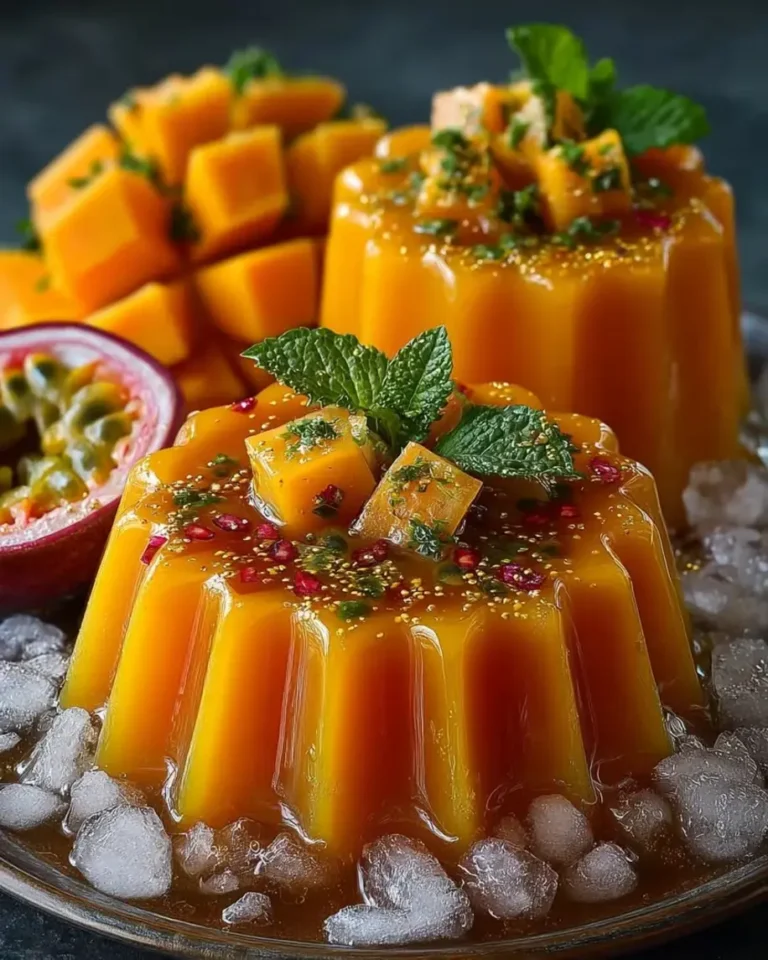
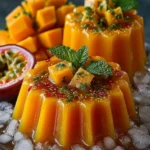
Every summer, my mother would fill our small kitchen in Marrakech with the scent of ripe mangoes and passionfruit from the souk. She’d say, “Sara, the best desserts don’t need fire – just patience and the fruit’s own soul.” Those memories came rushing back when I first made these golden mango sunburst gems with passionfruit core last month. This mango passionfruit dessert recipe uses agar-agar instead of gelatin, so it’s naturally vegan and sets into a crystal-clear jewel that glows like Moroccan stained glass. The unique sunburst shape, the tangy passionfruit heart, and the edible gold dust make each bite a miniature celebration.
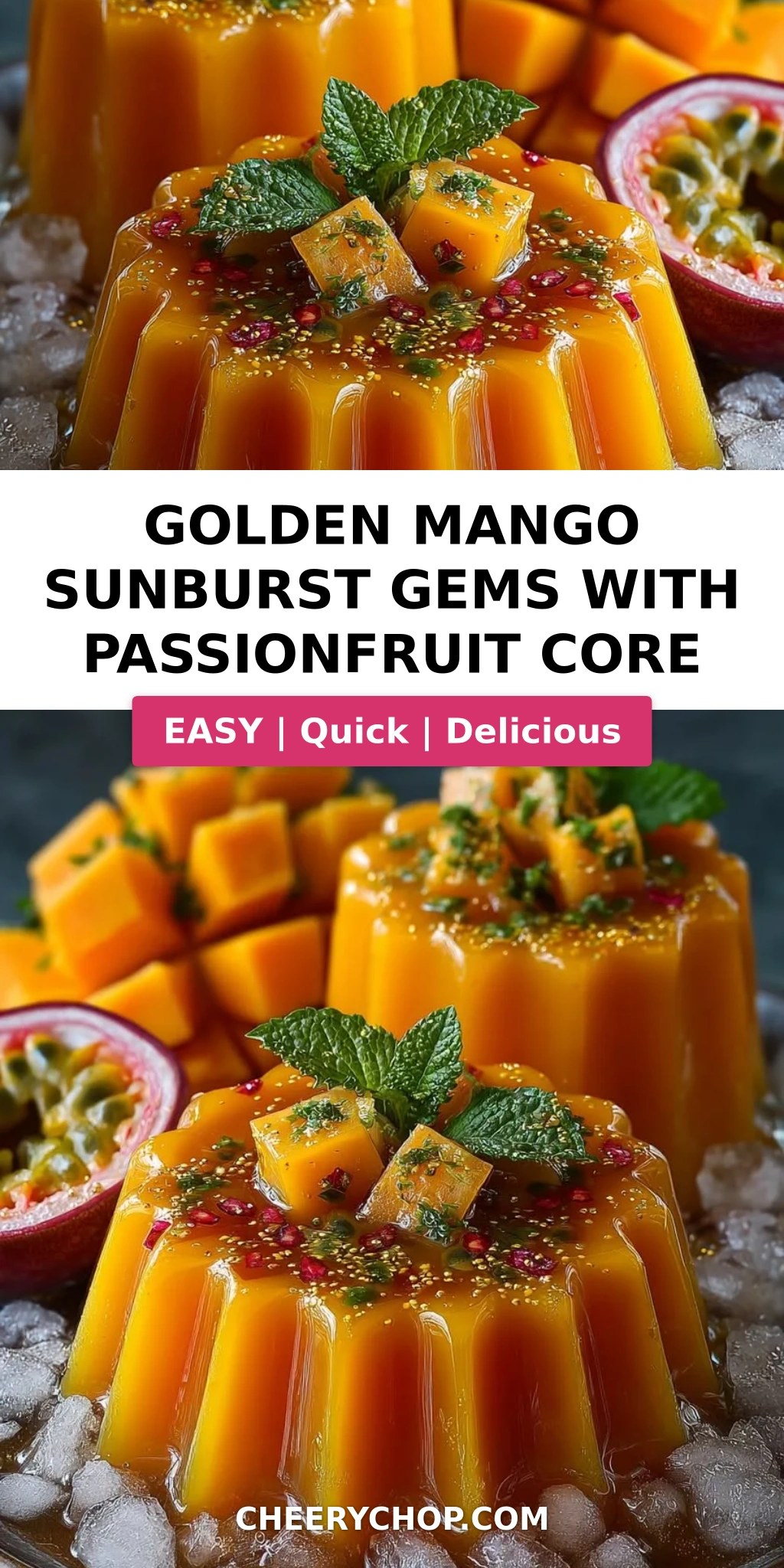
Imagine cracking through a shimmering mango sunburst – the texture is firm yet tender, almost like panna cotta but lighter. The first taste hits you with sweet Alphonso mango, then a burst of sharp passionfruit cuts through, followed by a honeyed finish. A whisper of lime brightens everything. When I brush on the tropical glaze, the gems take on a glossy, gemstone radiance that catches the light. It feels like eating art – and it’s just as beautiful on a fancy dinner table as it is at a backyard party here in New York.
After training in Paris and spending years testing agar-agar ratios, I’ve perfected this recipe so anyone can nail it at home. The key? Cooking the mango mixture until the agar fully dissolves – that’s what gives you the perfect set without a chalky texture. One common mistake is rushing the cooling stage; a warm filling can cloud the jelly. I’ll show you my exact timing and a pro tip for unmolding cleanly. Whether you’re a dessert pro or a curious beginner, these gems will make you feel like a pastry chef.
Why This Golden Mango Sunburst Gems Recipe Is the Best
The Flavor Secret – I’m blending two mango layers: a puree from ripe Ataulfo mangoes and a nectar for sweetness, then contrasting with a tangy passionfruit core. My Moroccan roots taught me to balance sweet and tart, and my French training refined the technique. The honey in the filling adds a floral note that ties everything together – no artificial flavors needed.
Perfected Texture – The agar-agar gives a clean, firm gel that holds its shape beautifully. I’ve tested this with different brands and found that dissolving it at a gentle simmer for exactly 5 minutes is the sweet spot. The layers stay distinct: a translucent mango shell and a creamy, slightly thicker passionfruit core. Unmolding is a breeze when you follow my chilling method.
Foolproof & Fast – The active cooking time is only 20 minutes. The hardest part is waiting for the fridge to work its magic (about 2 hours, but you can make these a day ahead). The ingredients are easy to find – even edible gold dust is available at baking stores or online. I’ve made these for dinner parties and they always get “oh wow” reactions. Seriously, anyone can make this homemade fruit jelly dessert and impress.
Mango Passionfruit Dessert Recipe Ingredients
I buy my mangoes at the Union Square farmers market when they’re in season – the yellow Ataulfo mangoes are sweet and non-fibrous. For passionfruit, I grab fresh ones from the specialty produce section; they should feel heavy and slightly wrinkled. The agar-agar I order online (it’s shelf-stable). And the edible gold dust? That’s my special touch – a little luxury that makes these gems truly “sunburst.”
Ingredients List
- 2 cups mango puree, strained
- 1 cup mango nectar
- 1 1/2 cups water
- 3/4 cup sugar
- 2 1/2 tsp agar-agar powder
- 1 tbsp lime juice
- 1/4 tsp salt
- 1/2 cup passionfruit pulp
- 2 tbsp honey
- 1 tbsp cornstarch
- 1 tbsp water (for slurry)
- 1/4 cup mango preserves
- 1 tbsp passionfruit pulp (for glaze)
- 1 tbsp honey (for glaze)
- 1 tsp lime juice (for glaze)
- Fresh mango cubes, for garnish
- Passionfruit seeds, for garnish
- Edible gold dust, for garnish (optional but stunning)
Ingredient Spotlight
Agar-Agar Powder – This is the vegetarian alternative to gelatin, derived from seaweed. It sets at room temperature but becomes firmer when chilled. For this recipe, make sure you bring the mixture to a full simmer and stir constantly to avoid lumps. I recommend the brand “Now Foods” – it’s widely available online and at health food stores. If using agar flakes, double the amount and soak for 10 minutes before heating.
Mango Puree – Use fresh mangoes when possible. I prefer Ataulfo (champagne) mangoes for their creamy texture and natural sweetness. If you’re using frozen puree, thaw and strain to remove excess liquid. A good substitute is canned mango pulp from an Indian grocery store – just check the label for added sugar.
Passionfruit Pulp – Fresh passionfruit has a floral, intense sourness that’s key to the core. You can find them at well-stocked supermarkets or Latin/Asian markets. To extract pulp, cut the fruit in half and scoop out the seeds and juice. Strain through a sieve if you want a smoother filling (I keep the seeds for texture). Frozen pulp works, too – just thaw and measure after draining any excess liquid.
| Original Ingredient | Best Substitution | Flavor / Texture Impact |
|---|---|---|
| Agar-agar powder (2½ tsp) | Gelatin powder (5 tsp, not vegan) OR agar flakes (5 tbsp) | Gelatin gives a softer, less crisp set; agar flakes need longer simmering |
| Passionfruit pulp (½ cup) | Pomegranate juice + lime juice OR tamarind concentrate (diluted) | Pomegranate is less tart and won’t have seeds; tamarind adds sourness but must be sweetened |
| Mango nectar (1 cup) | Apricot nectar OR white grape juice | Will be sweeter; adjust sugar accordingly – nectar adds body and sweetness |
How to Make Golden Mango Sunburst Gems — Step-by-Step
Don’t worry – these steps are straightforward. Just follow the visual cues and my tips, and you’ll have perfect gems every time.
Step 1: Prepare the Mango Base
In a medium saucepan, combine 2 cups mango puree (strained), 1 cup mango nectar, 1½ cups water, ¾ cup sugar, 2½ tsp agar-agar powder, 1 tbsp lime juice, and ¼ tsp salt. Whisk thoroughly to dissolve the agar. Place over medium heat and bring to a gentle simmer, stirring constantly. Cook for about 5 minutes – you’ll see the mixture become slightly thicker and very clear. Do not boil vigorously.
💡 Sara’s Pro Tip: To check if the agar is fully dissolved, dip a metal spoon into the mixture. The liquid should coat the spoon evenly with no gritty specks. This is the same test I learned at Le Cordon Bleu – it never fails.
Step 2: Make the Passionfruit Core
In a separate small saucepan, combine ½ cup passionfruit pulp and 2 tbsp honey. In a tiny bowl, stir together 1 tbsp cornstarch and 1 tbsp water to form a slurry. Add the slurry to the passionfruit mixture and whisk over medium heat until it comes to a boil and thickens – about 2–3 minutes. It should look like a shiny, thick jam. Remove from heat and let cool completely to room temperature.
⚠️ Common Mistake to Avoid: Adding the cornstarch slurry directly into hot liquid without whisking creates lumps. Always mix the cornstarch with cold water first, then pour slowly while stirring.
Step 3: First Layer
Pour a thin layer (about ¼ inch) of the mango mixture into sunburst-shaped silicone molds. Use a small offset spatula or the back of a spoon to spread it evenly into the sunburst points. Refrigerate for 15–20 minutes until slightly set – it should feel tacky but not runny when touched.
💡 Sara’s Pro Tip: Silicone molds are essential here – they release the gems without sticking. If you don’t have sunburst shapes, any decorative silicone mold (stars, flowers) works beautifully.
Step 4: Fill and Top
Remove the molds from the fridge. Place a small spoonful (about 1 teaspoon) of the cooled passionfruit filling in the center of each mold, being careful not to touch the sides. Gently pour the remaining mango mixture over the filling to fill the mold completely. Tap the mold gently on the counter to release any air bubbles. Return to the fridge and chill for at least 2 hours, or until the gems are completely firm and crystal clear.
⚠️ Common Mistake to Avoid: If the bottom layer isn’t set enough, the filling may sink. Wait until the first layer feels tacky – like the back of a sticker – before adding the filling.
Step 5: Unmold
Carefully unmold the sunburst gems onto a serving platter. To release, gently push from the bottom of the silicone mold. If they stick, dip the mold in warm water for 5 seconds and try again – this loosens the edges without melting the jelly.
💡 Sara’s Pro Tip: I like to spray the molds very lightly with neutral oil before pouring the first layer. It makes unmolding effortless and keeps the gems glossy.
Step 6: Make the Glaze
In a small saucepan, combine ¼ cup mango preserves, 1 tbsp passionfruit pulp, 1 tbsp honey, and 1 tsp lime juice. Warm over low heat, stirring, until smooth and glossy – about 2 minutes. Let cool to lukewarm. Brush a thin layer over each gem using a pastry brush. This gives them that “gemstone” shine and a flavor boost.
⚠️ Common Mistake to Avoid: Brush the glaze on while the gems are still cold from the fridge, but not frozen. If the glaze is too hot, it can melt the surface and cause streaks.
Step 7: Garnish and Serve
Garnish each gem with a small cube of fresh mango, a few passionfruit seeds, and a light dusting of edible gold dust. Serve thoroughly chilled. These gems are best enjoyed cold – they’ll soften slightly at room temperature after about 15 minutes.
| Step | Action | Duration | Key Visual Cue |
|---|---|---|---|
| 1 | Cook mango base | 5 min | Mixture becomes clear and thickens slightly |
| 2 | Cook passionfruit core | 2–3 min | Thickens into a jam-like consistency |
| 3 | First layer | 15–20 min chill | Tacky surface, not runny |
| 4 | Fill and top | 2+ hours chill | Gems are firm, clear, and release from mold |
| 5 | Unmold | 1–2 min | Clean release, no residue |
| 6 | Glaze | 2 min + cool | Smooth, glossy coating |
| 7 | Garnish & serve | 5 min | Gold dust sparkles, fresh fruit on top |
Serving & Presentation
These gems are a showstopper on any dessert table. I love serving them on a white rectangular platter, arranged in a sunburst pattern with a few extra passionfruit seeds scattered around. The contrast of gold dust against the sunny mango is pure magic. For an extra touch, place a small mint leaf under each gem – the green adds freshness.
In Morocco, we’d serve these with a side of mint tea and little honey-dusted pastries. In New York, I pair them with coconut sorbet or a dollop of coconut whipped cream. The tropical vibes are strong. You can also serve them as part of a dessert buffet – they’re sturdy enough to hold their shape at room temperature for about an hour (but best cold).
| Pairing Type | Suggestions | Why It Works |
|---|---|---|
| Side Dessert | Coconut sorbet, coconut whipped cream, or vanilla bean ice cream | Creamy richness balances the bright acidity of passionfruit |
| Sauce/Drizzle | Raspberry coulis, lime-ginger syrup, or passionfruit caramel | Adds another layer of fruit or spice – lime-ginger especially |
| Beverage | Mint tea, sparkling water with lime, or a mango lassi mocktail | Refreshing and non-alcoholic – keeps the tropical theme |
| Garnish | Mint leaves, edible flowers (hibiscus), lime zest curls | Adds color and aroma – edible flowers echo the exotic feel |
Make-Ahead, Storage & Reheating
Life in NYC is busy, so I often make these gems a day or two before a party. They actually improve in texture – the flavors meld and the jelly firms up beautifully. I’ll show you exactly how to store them so they stay perfect.
| Method | Container | Duration | Reheating Tip |
|---|---|---|---|
| Refrigerator | Airtight container, single layer, with parchment between layers | Up to 5 days | Serve cold – no reheating needed |
| Freezer | Freezer-safe container, flash-frozen individually on a tray first | Up to 2 months | Thaw in fridge overnight – do not microwave! |
| Make-Ahead | Assemble in molds, cover tightly with plastic wrap | 1–2 days in fridge before unmolding | Unmold directly before serving, then glaze and garnish |
If you freeze the gems, they soften slightly when thawed, but the flavor remains excellent. I don’t recommend reheating these – they’re meant to be enjoyed cold. The glaze will stay glossy for about 24 hours after brushing, so if you’re serving the next day, wait to glaze until just before serving for maximum shimmer.
Variations & Easy Swaps
| Variation | Key Change | Best For | Difficulty Impact |
|---|---|---|---|
| Spiced Moroccan | Add ½ tsp rose water and ¼ tsp cinnamon to mango base | Elevated flavor, dinner parties | Easy – same steps |
| Berry Core | Replace passionfruit with raspberry or blackberry puree | Kid-friendly, berry lovers | Easy – adjust sugar if berries are tart |
| Coconut Cream Layer | Swirl in ¼ cup coconut cream into the mango mixture before setting | Extra richness, tropical twist | Medium – cream may sink if too heavy |
Spiced Moroccan Variation
Growing up, my mother would add rose water to almost every dessert. For this variation, add ½ teaspoon of rose water and ¼ teaspoon of cinnamon to the mango base along with the lime juice. The floral notes pair beautifully with mango and passionfruit. I first tried this in a Parisian pâtisserie class – they served a mango-rose gelée, and I knew I had to merge it with my Moroccan heritage. The result is still vibrant but with a delicate perfume that feels both exotic and elegant.
Berry Core Variation
If passionfruit isn’t available or you want a more kid-friendly version, swap the passionfruit pulp for an equal amount of raspberry or blackberry puree (strained to remove seeds). The berries are sweeter, so reduce the honey in the filling to 1 tablespoon. I’ve tested this with frozen berries – just thaw and puree them. The texture stays the same, but the tartness level drops. This version is a hit at birthday parties.
Coconut Cream Swirl
For an even richer dessert, after pouring the second layer of mango mixture, gently swirl in ¼ cup of coconut cream (the thick part from a can of full-fat coconut milk). Use a toothpick or skewer to create marbled patterns. The coconut cream will remain slightly separate, adding a creamy mouthfeel to the firm jelly. This works best if the mango base is not too hot – let it cool slightly to avoid melting the cream. A perfect addition when I’m craving something decadent with tropical vibes.
What is the best way to cut a mango for making golden mango sunburst gems?
For these gems, you need mango puree, not chunks, so cutting technique is mainly about getting maximum flesh. Use a ripe Ataulfo mango – it’s flat and has a thin pit. Stand the mango upright with the stem end up, then slice off the two “cheeks” close to the pit. Score the flesh of each cheek in a crosshatch pattern without cutting through the skin, then invert the skin to pop out cubes. Scoop the cubes with a spoon and puree them. The remaining flesh around the pit can be trimmed off. For this recipe, you’ll need 2 cups of puree, so you’ll need about 3–4 large mangoes. Always strain the puree to remove any fibrous bits – this ensures a crystal-clear jelly.
Can I use frozen passionfruit pulp instead of fresh passionfruit for the core?
Absolutely, frozen passionfruit pulp works wonderfully in this mango passionfruit dessert recipe. Look for brands that sell pure passionfruit pulp with no added sugar – often found in the freezer section of Latin or international markets. Thaw the pulp completely in the refrigerator, then measure ½ cup. If the pulp has separated, stir it well before using. The flavor will be slightly less intense than fresh, so you may want to add an extra teaspoon of lime juice to brighten it. I’ve used frozen pulp many times when fresh passionfruit is out of season, and the texture of the core remains perfect – thick, tangy, and set.
How long do these mango passionfruit gems need to set in the fridge before serving?
The total setting time is about 2 to 3 hours in the refrigerator. After you pour the final layer, let the gems chill undisturbed for at least 2 hours. Agar-agar sets more firmly than gelatin and actually continues to firm up over time. I recommend making them the day before you plan to serve – overnight chilling gives the cleanest unmolding and the most vibrant clarity. If you’re in a hurry, you can speed-set them in the freezer for about 45 minutes, but watch closely to avoid ice crystals forming on the surface. Even after setting, these gems are best served very cold, so keep them chilled until serving.
What can I use as a substitute for passionfruit if I can’t find any?
If passionfruit is unavailable, you have several excellent substitutes that still give a tangy, fruity core. The best alternative is a combination of pomegranate juice and lime juice – mix ¼ cup pomegranate juice with 2 tablespoons of fresh lime juice and 1 tablespoon honey (since pomegranate is less sour). Another option is tamarind concentrate diluted with water: blend 2 tablespoons of tamarind paste with 3 tablespoons water and 1 tablespoon honey – tamarind has a similar sour-fruity profile. If you want to keep a tropical feel, try guava nectar with a squeeze of lime. Each substitution will change the flavor slightly, but the texture of the agar-agar core remains stable.
Can I use gelatin instead of agar-agar in this tropical fruit gems recipe?
Yes, you can substitute gelatin for agar-agar, but the texture will be different. Use 5 teaspoons of unflavored gelatin powder (about 2 packets) dissolved in ¼ cup cold water and let it bloom for 5 minutes. Then warm the mango mixture and stir in the dissolved gelatin until fully incorporated. Gelatin sets softer and more wobbly than agar-agar, and it requires refrigeration for at least 4 hours. Note that gelatin is not vegan and will not be suitable for those with dietary restrictions. The gems will also be less crystal-clear and more opaque. For best results with this homemade fruit jelly dessert, I recommend sticking with agar-agar for the signature jewel-like clarity.
How do I get the edible gold dust to stick to the jelly gems?
Edible gold dust adheres best when applied to a slightly tacky surface. I recommend dusting the gems immediately after brushing on the glaze, while the glaze is still a bit sticky. Use a small, soft brush (like a makeup brush or pastry brush) to lightly tap the gold dust onto the top of each gem. Avoid over-applying – just a light shimmer is elegant. If the glaze has already set, you can spritz the gems very lightly with water using a spray bottle, then dust with gold. The water will create enough tack to hold the dust. I always do this step just before serving for maximum sparkle.
Can I use a different mold shape instead of sunburst?
Absolutely! While sunburst molds create the dramatic “gem” look, you can use any silicone mold you like – stars, shells, diamonds, or even simple half-spheres. The key is to use silicone so the gems release easily. If using a flat-bottomed mold, the filling will stay centered naturally. Just be sure to pour the first layer thin enough (about ¼ inch) so the passionfruit core becomes the focal point. For round shapes, these become “golden mango pearls” – still beautiful. I sometimes use mini star molds for a Fourth of July party and they’re a hit.
Share Your Version!
I’d love to see how your golden mango sunburst gems turn out! Did you try a different fruit core? Get creative with the garnish? Leave a star rating below and share your photo on Instagram or Pinterest and tag @cheerychop. Your feedback helps this community grow – and you might inspire someone else to make this tropical gem.
One question that always comes up: What’s the one step you found trickiest? For me, it was waiting for the first layer to set – I’m impatient! But trust the process. If you try the spiced Moroccan variation, let me know how the rose water worked for you. From my NYC kitchen to yours – I hope this recipe brings as much warmth to your table as it does to mine. — Sara 🧡
Love This Recipe? Save It to Pinterest!
If you enjoyed this Golden Mango Sunburst Gems with Passionfruit Core recipe, don’t let it get lost in your browser tabs! 😄 Pin it now so you can find it again anytime — and explore hundreds more tried-and-tested recipes waiting for you on my Pinterest boards.
👉 Follow Sara on Pinterest @chefrecipes2
📌 Pin this recipe · 🔁 Re-pin your favorites · 💬 Tag me when you make it — I love seeing your creations!
💬 What’s your favorite tropical fruit combo? Drop your ideas in the comments below – I read every single one! 🥭
Golden Mango Sunburst Gems with Passionfruit Core
- Yield: 6 1x
Ingredients
- 2 cups mango puree, strained
- 1 cup mango nectar
- 1 1/2 cups water
- 3/4 cup sugar
- 2 1/2 tsp agar-agar powder
- 1 tbsp lime juice
- 1/4 tsp salt
- 1/2 cup passionfruit pulp
- 2 tbsp honey
- 1 tbsp cornstarch
- 1 tbsp water
- 1/4 cup mango preserves
- 1 tbsp passionfruit pulp
- 1 tbsp honey
- 1 tsp lime juice
- Fresh mango cubes
- Passionfruit seeds
- Edible gold dust
Instructions
- Combine mango puree, mango nectar, water, sugar, agar-agar powder, lime juice, and salt in a saucepan. Heat while stirring until fully dissolved and bring to a gentle simmer.
- In a separate saucepan, combine passionfruit pulp and honey. Stir together cornstarch and water, add to the mixture, and cook until thickened. Let cool completely.
- Pour a thin layer of the mango mixture into sunburst-shaped silicone molds and refrigerate until slightly set.
- Place a small spoonful of the passionfruit filling in the center of each mold. Cover with the remaining mango mixture and refrigerate until fully set and crystal clear.
- Carefully unmold the sunburst gems onto a serving platter.
- Warm mango preserves, passionfruit pulp, honey, and lime juice until smooth and glossy. Allow to cool slightly.
- Brush the gems with the tropical glaze for a radiant gemstone finish.
- Garnish with fresh mango cubes, passionfruit seeds, and a light dusting of edible gold dust. Serve thoroughly chilled.
Nutrition
- Calories: 220
- Sugar: 49g
- Fat: 0g
- Carbohydrates: 55g
- Protein: 1g
Tried This Recipe? Leave a Comment!
Did you make this recipe? I’d love to hear how it turned out! Please leave a comment and a rating below. Your feedback helps other home cooks and supports cheerychop.com!
For more delicious inspiration, follow me on Pinterest!